Roof Systems
EPDM Roofing in New Bedford, MA
EPDM rubber roofing in New Bedford, MA: seam tape checks, ballast displacement, shrinkage at walls and how a black membrane handles a South Coast winter.
Request a Roof Assessment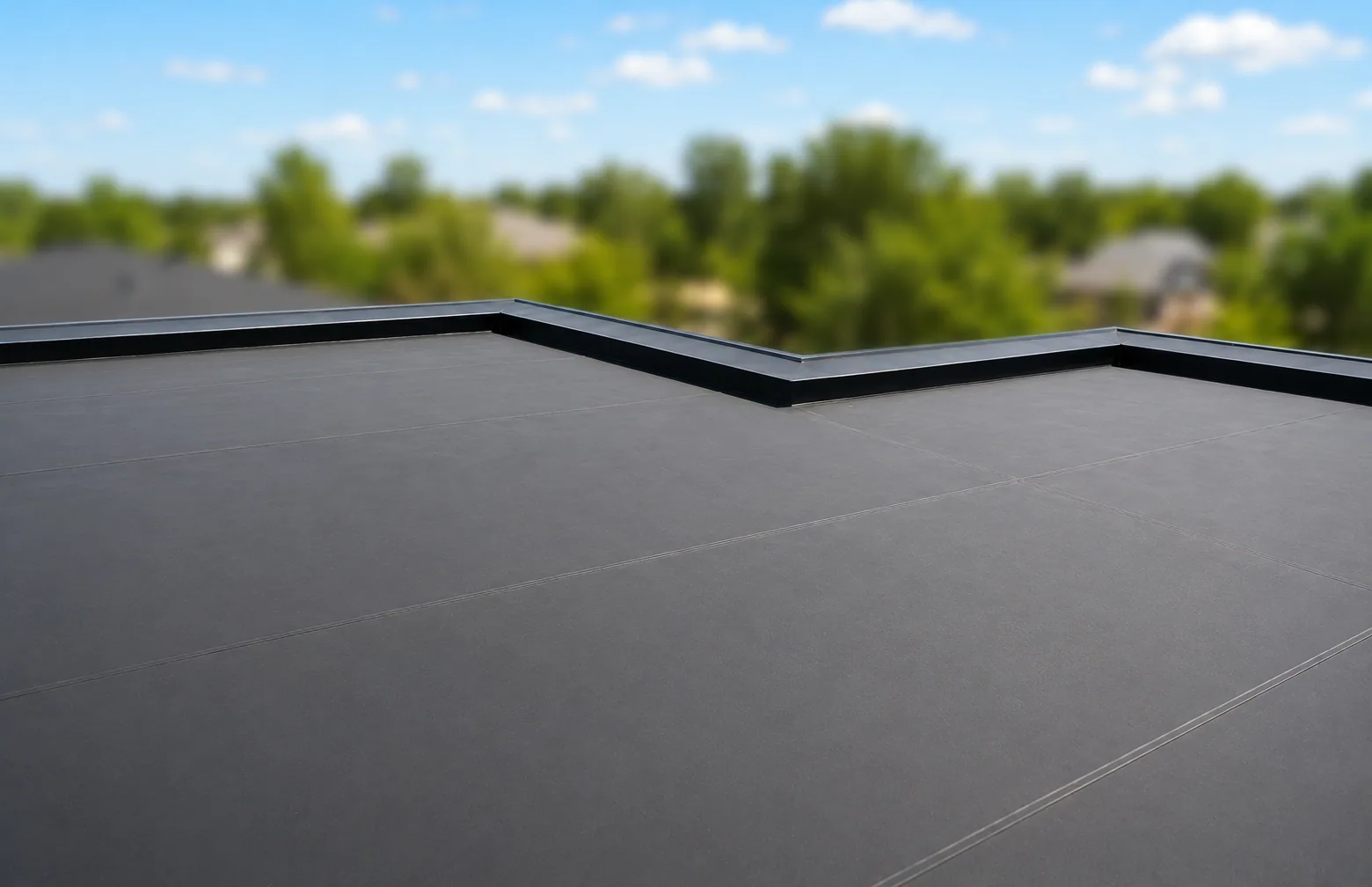
Why is the rubber pulling off the wall? Black membrane stretched tight against a parapet like a drum skin is EPDM shrinkage, and a facility director who notices it will find, on the roof, a gap at the base of the wall where the sheet has pulled back from its flashing. EPDM is a synthetic rubber, rolled out in large sheets and joined with tape or adhesive, and it has a long record in cold climates because it stays flexible at low temperatures.
In New Bedford, MA, an EPDM roof meets a record low of minus 12 F, about 32.5 inches of snow a year and wind that comes off Buzzards Bay. We check the seams, the flashing, the way the sheet is held down and the condition of the insulation beneath it, and we mark each finding on the roof plan with a number. You see the plan and the reasoning before anything is quoted.
How are EPDM seams made and how do they fail?
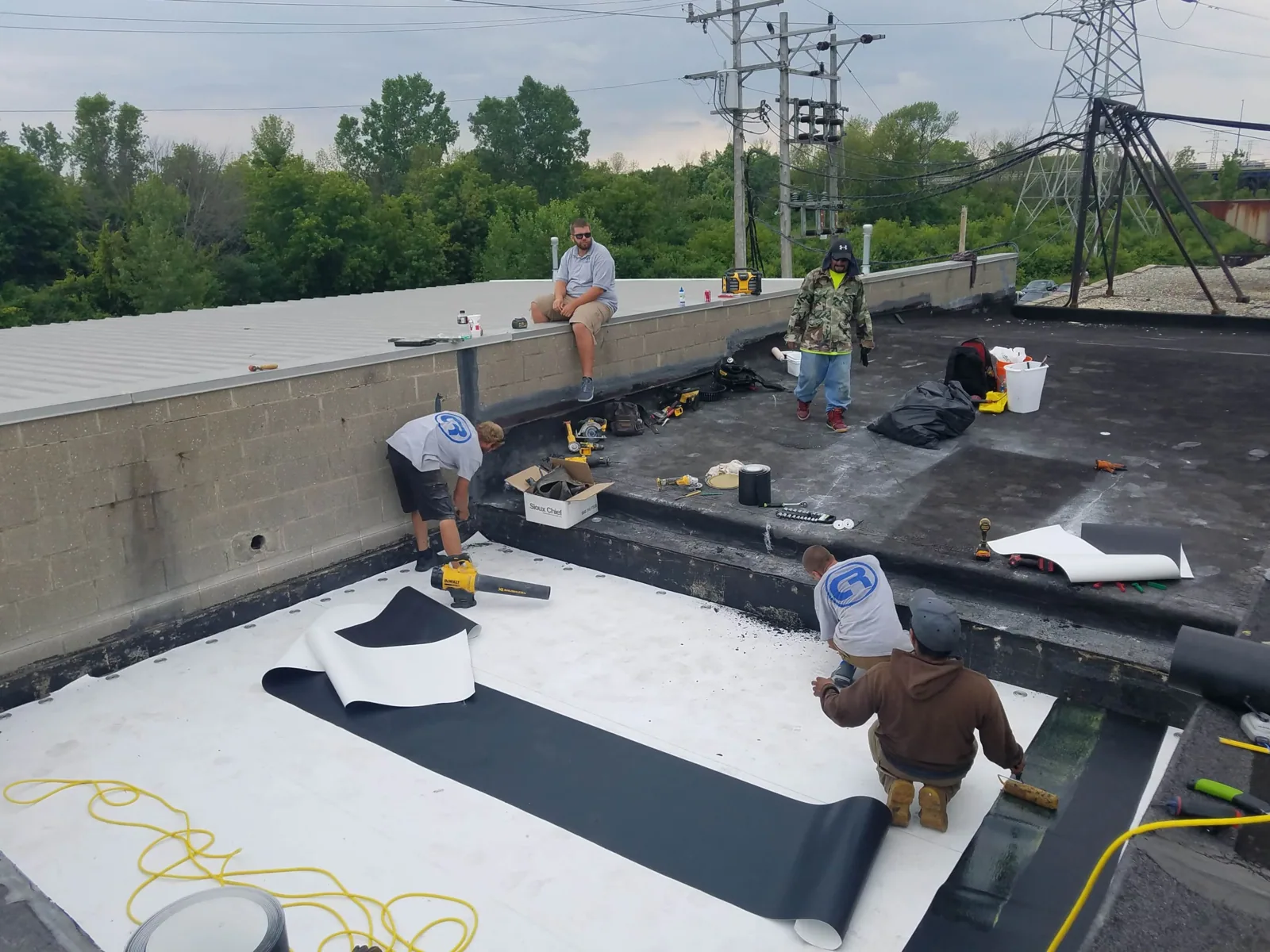
Unlike a welded sheet, EPDM seams are bonded with splice tape or liquid adhesive, and they depend on the cleanliness of the rubber when they were made. A seam fails by peeling from one edge, by opening at a T-joint or by losing adhesion where dirt or moisture was trapped. The signs are a visible gap, a flapping edge, or a dark line where water has crept in.
We run a probe along each seam and press on the lap to check bond strength. Lap sealant at the edge of the seam is a second line of defense, and it hardens and cracks with age. Repair means cleaning the rubber, applying primer and a new strip of tape or a cured-in-place patch, then rolling it firmly. A seam that was repaired once and failed again tells us the surface prep was wrong, and we repair it differently the next time.
Why does an EPDM roof draw away from walls and curbs?
EPDM shrinks over time, slowly in the field and sharply at the edges. The sheet is held at the perimeter by fasteners, adhesive or ballast, and as it contracts it tightens against the pinned points. At a parapet, the membrane lifts off the wall, bridges the corner and pulls the flashing out of the termination.
We look at every wall-to-roof transition for the gap, the bridging and the tension marks. Shrinkage can be relieved by cutting the sheet free, installing new flashing and adding fasteners or adhesive at the edge. Where it is widespread, the sheet has done its work, and a commercial roof replacement or a recover is the better investment. Parapet termination bars that have loosened or lost their sealant are repaired in the same visit, because water enters at a pulled termination fastest.
What happens to a ballasted roof in a hurricane wind?
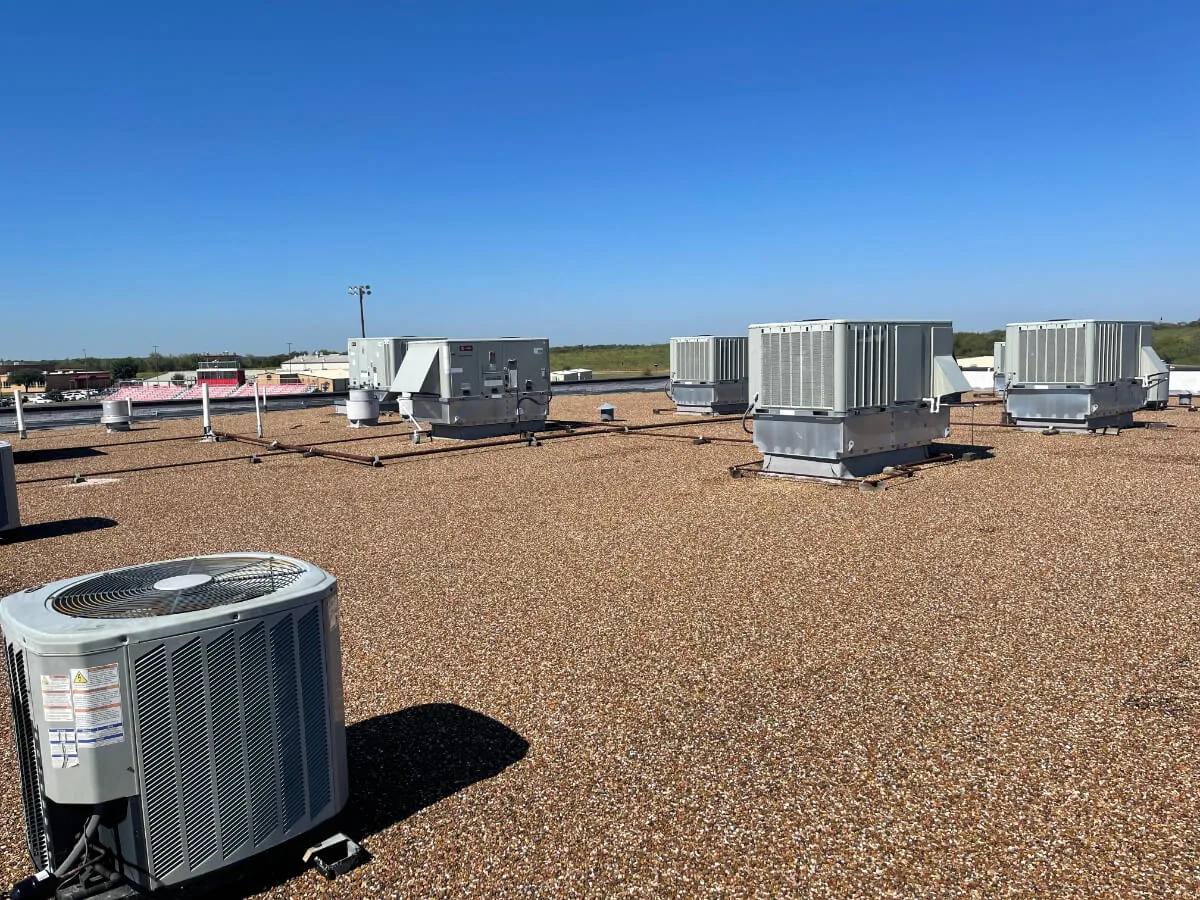
Many EPDM roofs are ballasted, which means the sheet lies loose on the insulation and is held by a layer of stone or pavers. Ballast displacement is the failure we watch for. Hurricane Bob raised 89 mph gusts over Buzzards Bay in 1991 and Hurricane Carol raised 80 to 110 mph winds across eastern Massachusetts in 1954, and a gust at the corner of a roof can lift stone and expose the sheet.
We check that ballast is even, that the weight is concentrated at the perimeter and corners as designed and that no area has been scoured to the membrane. Bare spots, piled stone and stone in the drains are the signs. Where ballast has been removed for work and not replaced, we restore it. The weight also matters for the structure, and on an older deck it is part of the question of whether the roof can hold more.
How does EPDM carry a South Coast winter?
A normal winter leaves about 32.5 inches of snow in New Bedford, mostly between December and March, and the January 2015 blizzard laid down 24.1 inches on Fall River. EPDM stays flexible in the cold, and that is its strongest point in winter. A black sheet also warms in sun and sheds snow earlier than a white one.
The weak points in winter are drains, edges and foot traffic. A drain that freezes leaves meltwater standing on seams, and an edge with loose metal admits wind-driven snow. We check sumps, tapered crickets and gutters, and we mark walkways where crews have worn the sheet. Rubber is also easier to puncture under a snow shovel than a thick welded sheet, so we recommend shovel guidelines and walk pads where traffic is regular.
What is wet under the rubber?
An EPDM sheet hides what lies beneath it, and a leak that entered at a lap may travel along the insulation for yards before it drops through the deck. A roof that has leaked for a year or two usually carries wet board, and the wet board stays wet under a black membrane. We use an infrared moisture survey to map warm and cool patterns after sunset, then cut cores at the suspect areas to confirm.
The result is a map of dry, damp and saturated insulation, which decides how much comes out. A roof with a few wet patches can be repaired by cutting out the board and patching the sheet. A roof with widespread moisture is a replacement candidate, and the map shows the owner how many square feet are affected before anyone prices the work.
Where does EPDM fit next to the other systems?
EPDM is a reasonable choice for large, simple roofs with few penetrations and for owners who want a proven cold-weather membrane. It is less suited to roofs with heavy grease exposure, where a PVC or KEE sheet resists better, and to roofs with many complex details that a welded sheet handles more easily. Compared with TPO roofing, it trades reflectivity for flexibility, and compared with built-up roofing, it trades layered redundancy for lighter weight.
On an older masonry building such as the Wamsutta, Hathaway or Kilburn mills in New Bedford, or the Metacomet and Union mills of Fall River, weight and parapet height matter. A roof recover with EPDM over a sound existing roof can save tear-off, if a moisture scan and core cuts confirm that the assembly is dry.
Commercial Roofing Questions
How do I know whether EPDM seams are failing?
Probe and press. A seam that lifts, a lap sealant that has cracked and a dark line along an edge are warning signs. We test a sample of seams on every EPDM roof and mark the open ones. A tape repair at an early stage is far cheaper than a ceiling and insulation replacement.
Is black EPDM a problem for cooling costs?
A black surface absorbs heat, which raises the roof temperature in summer. Whether that matters depends on how much cooled space is below and how thick the insulation is. White EPDM is available, and a reflective option such as TPO may be better for a heavily cooled building.
Can an EPDM roof be repaired or does the whole sheet have to be replaced?
Repairs are common. Patches, new seam tape, new flashing and replaced termination bars all extend the life of the sheet. If shrinkage is widespread or the insulation is wet over a large area, replacement costs less over time. The findings on the roof plan make the comparison clear.
What happens to the stone when the roof is replaced?
It is removed, set aside or disposed of, depending on its condition and the new system. A new ballasted roof may reuse clean stone. If the new system is adhered or mechanically attached, the stone goes, and the structure carries less weight.
Ready to review the roof scope?
Request a Roof AssessmentKeep Reading