Property Types We Roof
Cold Storage Roofing in New Bedford, MA
Freezer and cold storage roof inspection, repair and replacement in New Bedford, MA, with attention to vapor control, wet insulation and frost on the ceiling.
Request a Roof Assessment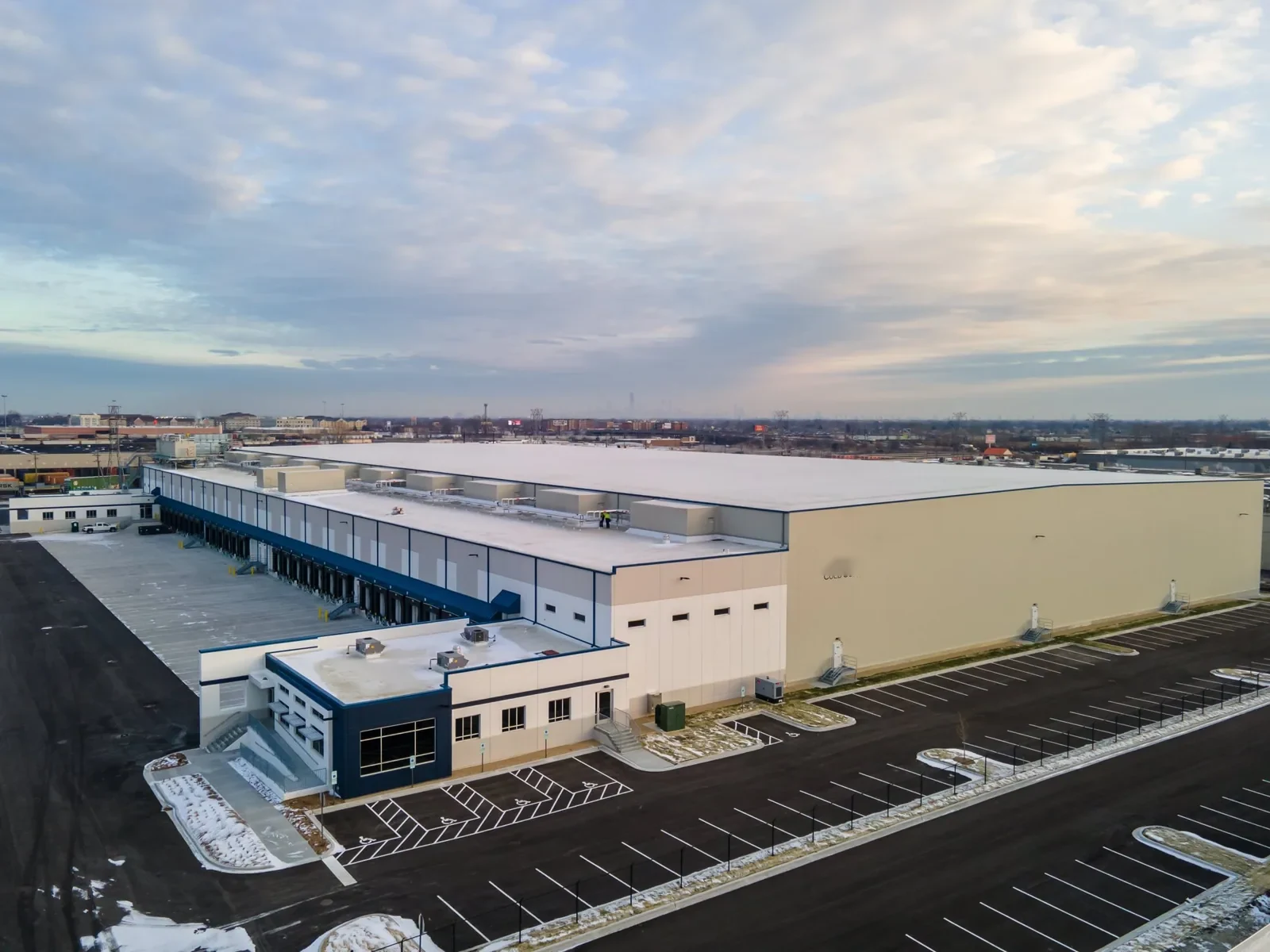
Is that frost on the freezer ceiling a refrigeration problem or a roof problem? A facility director standing under it wants to know before the next defrost cycle, and the first thing an inspector finds on the roof above is usually a wet patch of insulation that has stopped doing its job. In a cold storage building, a small amount of moisture in the roof assembly does more than stain a ceiling tile. It turns into ice inside the insulation, it raises the load on the compressors, and it lets frost build on the underside of the deck until it falls onto product. A cold storage roof in New Bedford, MA has to keep the weather out, but it also has to keep the building's cold in, and those two jobs depend on the same layers.
We probe the seams, run a moisture scan and cut cores where the readings are high, so the report says which parts of the assembly are dry and which are not.
Why is a freezer roof harder to keep dry than an ordinary one?
In most buildings, warm indoor air pushes moisture up toward the roof in winter. In a freezer, the vapor drive is reversed in effect, because the interior is colder than the outdoors for most of the year, and warm humid air outside tries to move into the cold assembly. Any opening in the vapor retarder, whether at a penetration, a wall-to-roof transition or a lap, lets humid air reach a cold surface and condense. Over time the insulation accumulates water that cannot dry, because there is no warm interior to carry it away.
That is why insulation thickness, vapor retarder continuity and flashing quality matter more here than on a typical roof. A repair that keeps rain out but leaves a gap in the vapor layer solves half the problem, and we say so in the report.
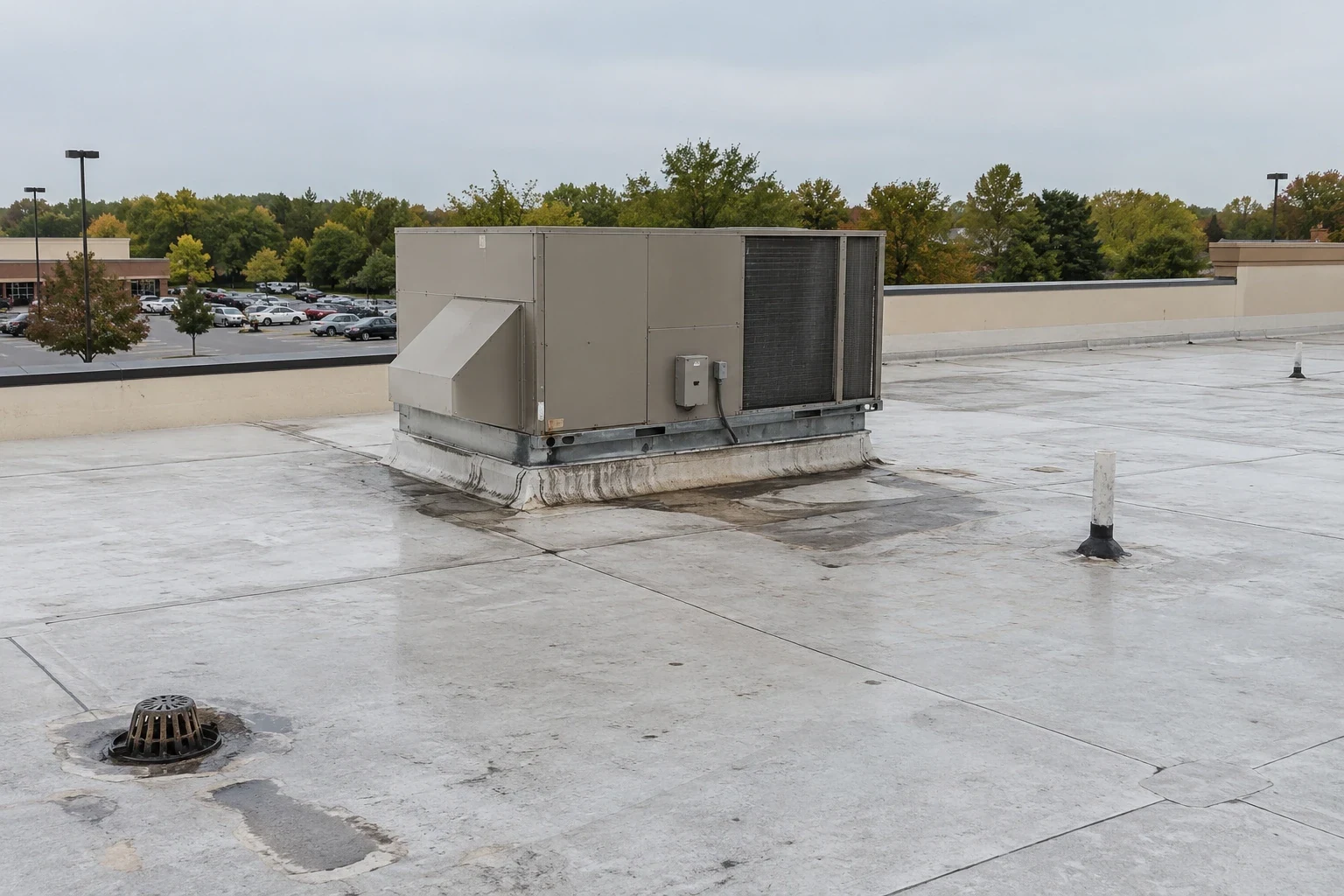
Rooftop condensers and refrigeration lines add another route. Each line that crosses the deck needs a sleeve, a boot and a seal at the vapor layer, and the seal at the warm end of the line is usually the one that fails. We open those penetrations during the inspection and look at the insulation around them, because a boot can look sound from the surface while the insulation beneath it is soaked.
What does the local cold chain ask of its roofs?
From 1999 through 2019 New Bedford Harbor ranked first among American fishing ports by value, and its 2019 catch was worth $451 million. Seafood moves through a port like that on a clock, and chilled product needs buildings that hold temperature without interruption. Freight moves inland along Route 24, where a Stop & Shop distribution center is the named employer in Freetown, and along Route 140, where Ocean Spray is headquartered in Lakeville; any chilled product handled along those routes depends on a dry, tight roof.
For owners of perishable product, a roof failure is rarely a cosmetic problem. It can mean lost stock, a failed audit or a shutdown while the insulation is replaced. Hurricane Bob left more than 60 percent of residents in southeast Massachusetts and southeast Rhode Island without power in 1991, and a freezer building that loses power also depends on a dry, tight roof to hold temperature while generators carry the load.
Where does condensation start on a cold storage roof?
We trace condensation to three places first. The first is penetrations: refrigeration lines, conduits and drains that cross the deck. The second is the perimeter, where the roof meets a wall and the vapor retarder has to turn the corner. The third is the membrane itself, at seams that have opened slightly, allowing humid air to reach cold insulation below. We probe each one, and where the readings are high we cut a core and examine the layers.
An infrared moisture survey shows the pattern of wet insulation across the roof, but in a cold building the temperature difference between interior and exterior also changes what the camera sees. We take that into account, verify with core cuts and report what we actually find, not just what the image suggests.
Interior signs help us choose where to cut. Ice crystals on a ceiling, a seasonal drip after a thaw, or rust blooming on fasteners all point toward moisture, and facility staff often know exactly when they started. We ask for that history and walk the roof directly above the affected area before we place a single core.
How do wind and snow load affect an insulated box?
A cold storage building is a heavily insulated box, and its flat roof meets wind the way any other does, so wind lifts at its corners and edges the way it does on any other. Hurricane Carol sent a record 20-foot tide into New Bedford in 1954, and Hurricane Bob put gusts of 89 mph across a Buzzards Bay station in 1991. We check the edge metal, the gravel stop and the coping joints, because a lifted edge lets humid air and rain into the thickest insulation on the building.
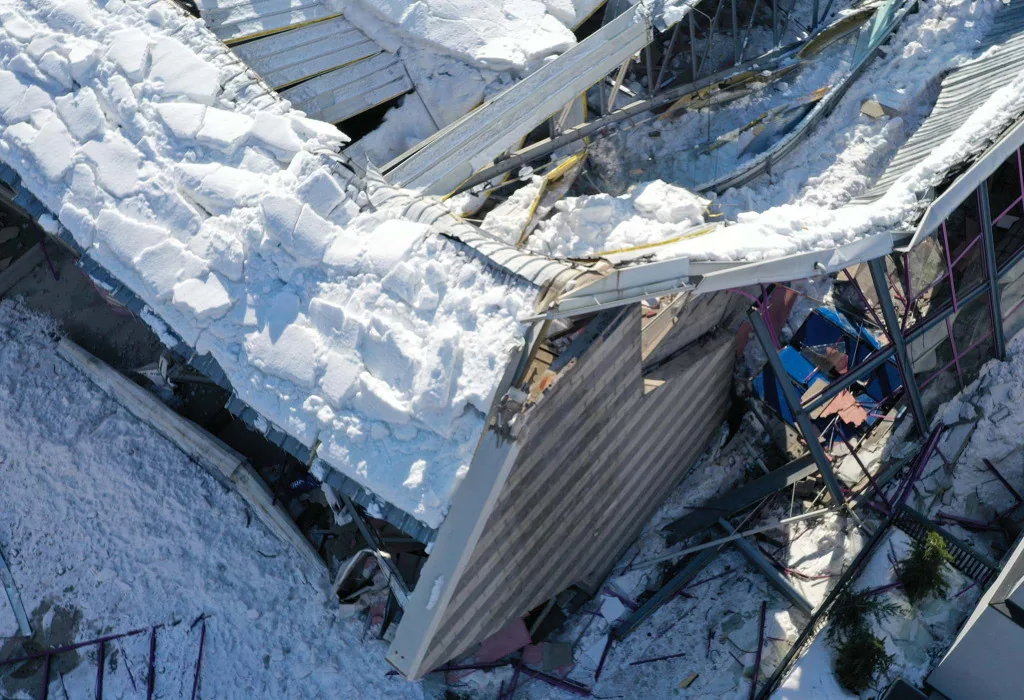
Snow adds its own weight. New Bedford averages 32.5 inches a year, and when it melts it should leave through the drains. A choked drain sump or a missing tapered cricket leaves standing water on a membrane that cannot afford to be wet, and a snow and ice damage inspection after a heavy winter is worth the visit.
What are the repair and replacement options?
If the moisture is limited to a few details, targeted repair with a restored vapor seal can bring the roof back. If wet insulation covers a broad area, replacement is usually the better choice, because new insulation and a continuous vapor retarder fix what patches cannot. A cover board and insulation upgrade during a replacement can raise the thermal performance of the roof, which helps the refrigeration system as well as the membrane.
Work on a cold storage building has to protect product, so we coordinate with operations on tarping, staging and access. The same logic holds for a warehouse or a grocery store with refrigerated sections. Cost drivers are insulation thickness, the number of penetrations, the vapor retarder detail and the size of the wet area.
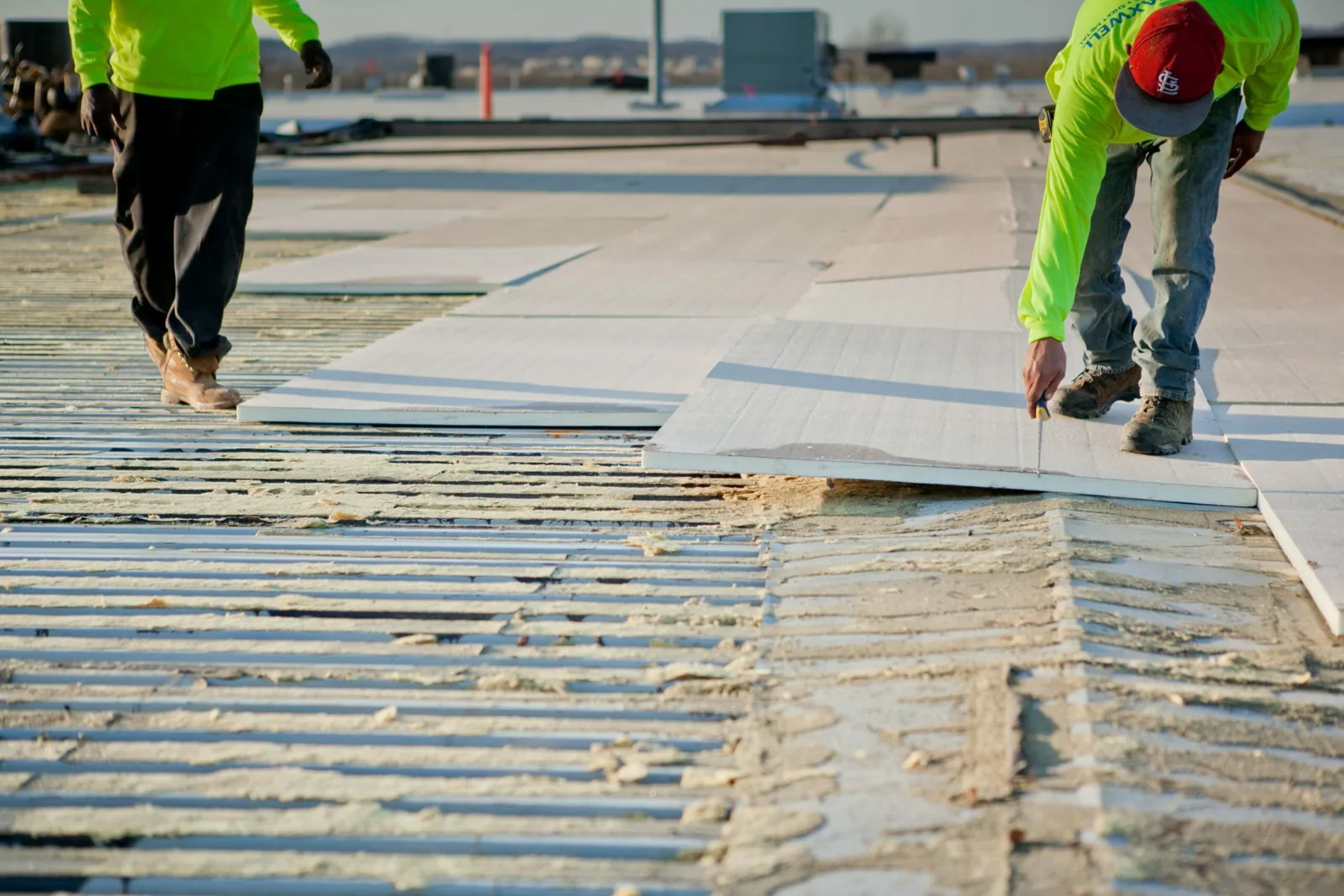
A phased replacement keeps product moving. We open one section at a time, install insulation and the vapor retarder together, and close the section with the membrane the same day so the cold assembly is never left open overnight. The next section starts only after the first has been inspected.
Commercial Roofing Questions
How can we tell whether frost on the ceiling comes from the roof or from the refrigeration system?
A moisture scan of the roof above the frosted zone settles it. If readings are high there, humid air or water is reaching the insulation from above, and the cure is in the roof assembly.
Can a freezer roof be replaced while product stays in the building?
Often it can, in sections, with interior protection and a plan for the loading doors. We lay out the sequence with operations so product temperature never depends on an open deck.
Does thicker insulation always solve a cold storage roof problem?
Thickness helps only if the vapor retarder is continuous and the insulation stays dry. A thick, wet layer performs worse than a thin, dry one, so the moisture reading comes before the thickness.
What records are worth keeping for a cold storage roof?
Core cut locations, moisture scan results, flashing repairs and refrigeration line changes. With those, the next inspector can compare conditions instead of starting over.
Which roof systems suit a freezer building on the South Coast?
Reinforced single-ply membranes such as PVC and TPO, or a spray foam system in some cases, each suit different buildings. Our recommendation follows the inspection, the existing assembly and the exposure of the site.
Ready to review the roof scope?
Request a Roof AssessmentKeep Reading