Roof Systems
KEE Roofing in New Bedford, MA
KEE (PVC-alloy) roofing in New Bedford, MA for roofs that take grease, oils and chemical exhaust, with welded seams and a clear view of how the sheet ages.
Request a Roof Assessment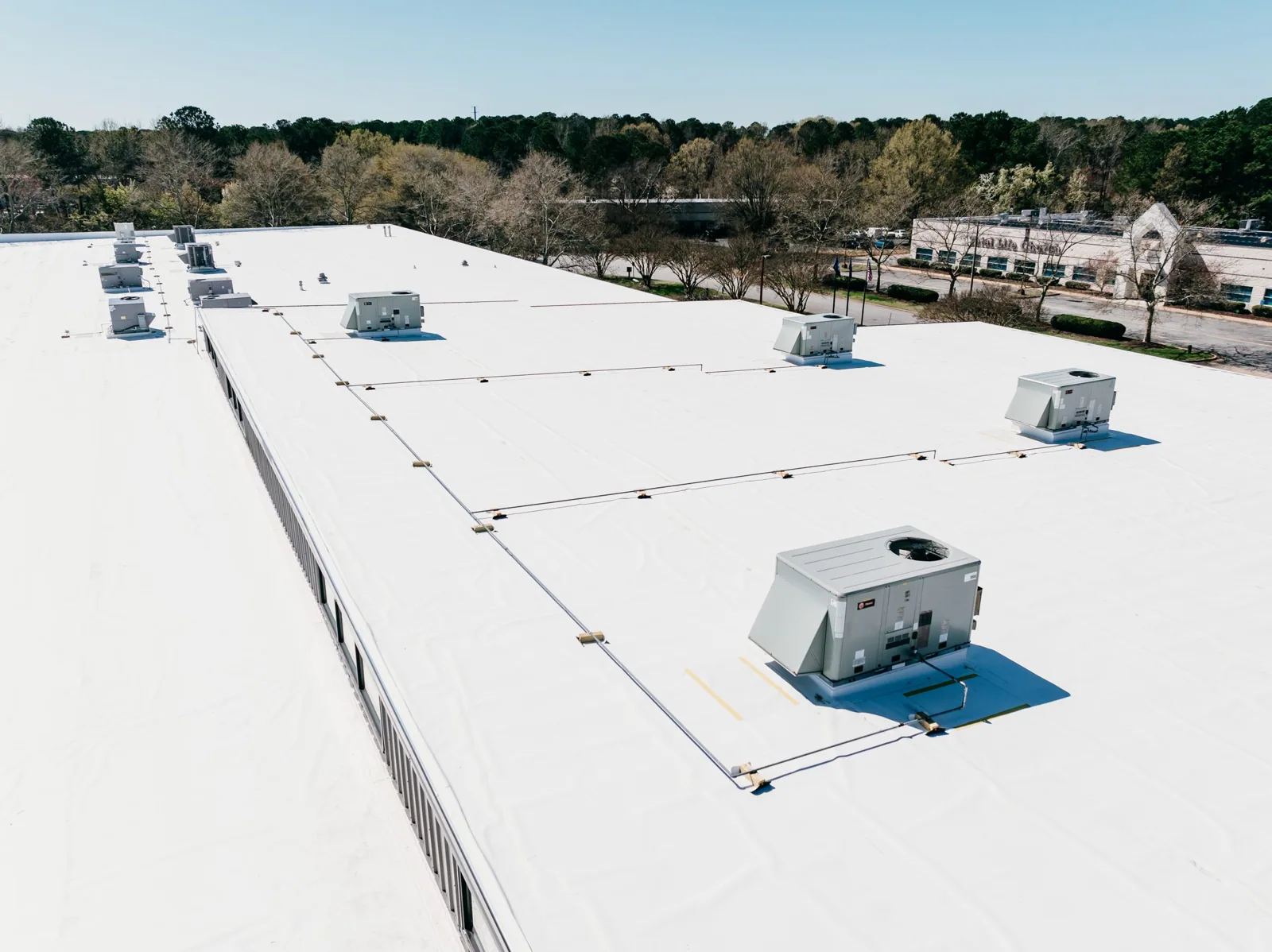
Why does the membrane around the exhaust fan look different from the rest of the roof? A facility director who has noticed a dull, swollen or tacky patch downwind of a vent is seeing what contamination does to a sheet that was not chosen for it, and the first thing an inspector would find there is membrane that has softened enough to take a fingerprint. KEE is the PVC-alloy sheet built for those spots, and it is chosen when the roof carries grease, oils, fats or chemical vapor.
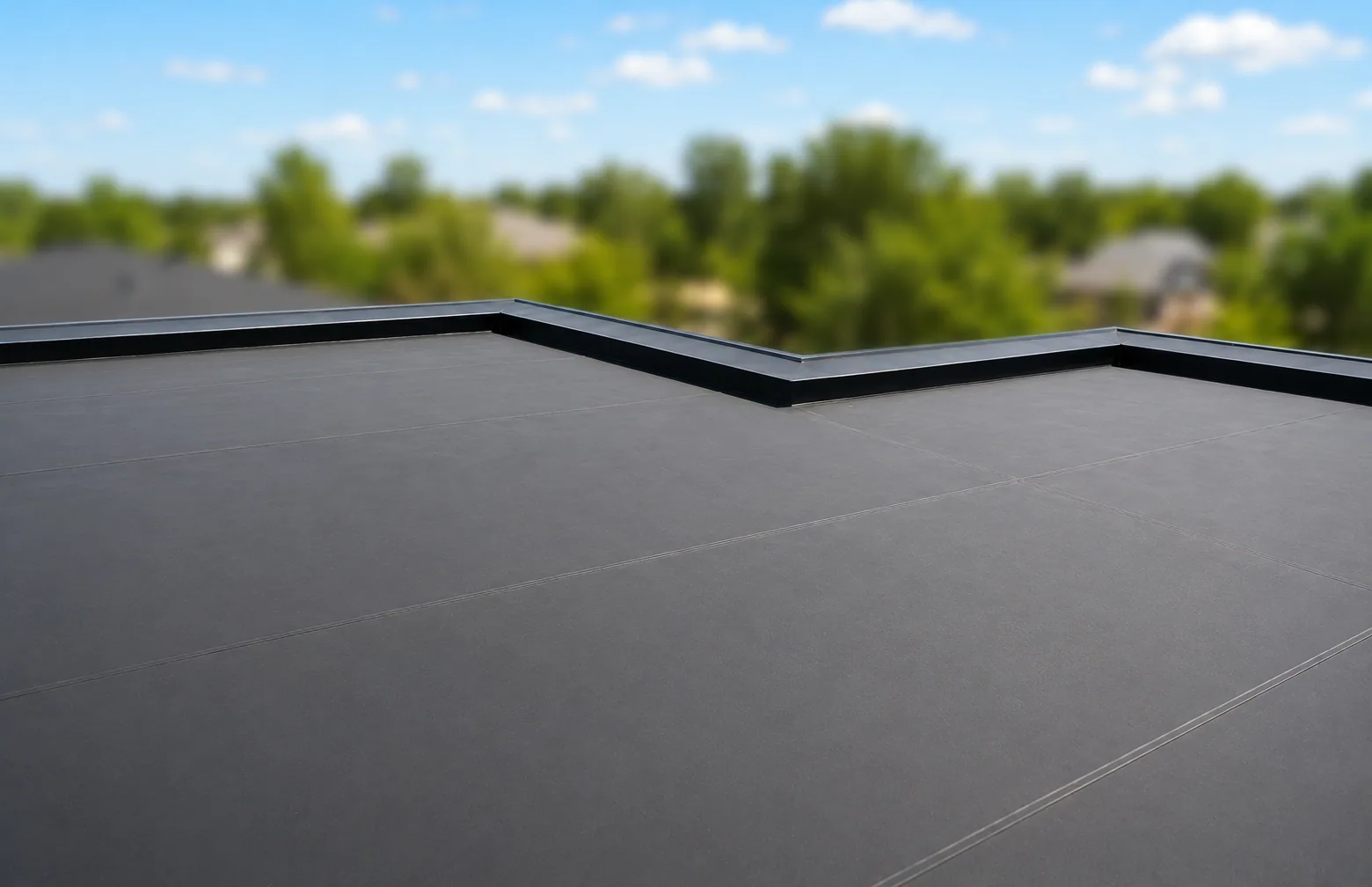
The name comes from ketone ethylene ester, a polymer blended into a PVC base. It keeps the sheet flexible without the plasticizers that migrate out and stiffen ordinary PVC over the years. In New Bedford, MA, we look at what vents onto the roof, how the sheet is attached and welded, and what the insulation beneath is doing, and we mark each finding on the roof plan before anything is quoted.
When is KEE the right sheet and when is it too much?
KEE belongs on roofs with real contamination: restaurant and commercial kitchen exhaust, food and fish processing, laboratories and manufacturing that releases oils or solvents. The harbor held the top spot among US fishing ports by value from 1999 to 2019, with a $451 million catch in 2019, so a roof over processing or cold-storage space can see steady exhaust and washdown vapor.
It is too much for a plain office or storage roof with no exhaust, where TPO roofing costs less and performs well. It also sits close to PVC roofing in how it is installed, so the choice between them turns on the contaminant and the budget. We write the exposure on the plan, outlet by outlet, and choose the sheet to match what each outlet puts on the roof.
The decision gets easier on the roof, because the membrane shows its exposure. A pale ring of residue around a fan, a soft zone near a vent or a drain basket coated in grease is evidence that the current sheet is losing the contest, and a short chemical compatibility check by the manufacturer's data confirms the match before we order material.
How do we check a KEE seam?
KEE is joined with hot air, and a sound weld is smooth, even and fused across the full overlap. We probe the edges, press along the lap and look for the telltale gap, the wrinkle or the wavy line that marks a poor weld. T-joints, penetrations and corners deserve the closest look, because the welder worked with less room there.
Contaminated roofs add a second concern: residue on the sheet. Grease on a seam can interfere with a repair weld, so we clean the surface, test a small area and weld a patch only after the surface is ready. A seam repaired over a greasy surface will fail again. We record each weld, each patch and each test on the plan, which gives the next inspector a reference for the roof's history.
What does harbor wind do to the attachment?
Wind has reached 89 mph over Buzzards Bay with Hurricane Bob in 1991 and 80 to 110 mph across eastern Massachusetts with Hurricane Carol in 1954. A KEE membrane is attached with plates and fasteners, with adhesive or with ballast, and the perimeter and corners take the most uplift. We inspect the plates for back-out, check the fastener pattern against the edge zones and press on the sheet near the parapet to feel for looseness.
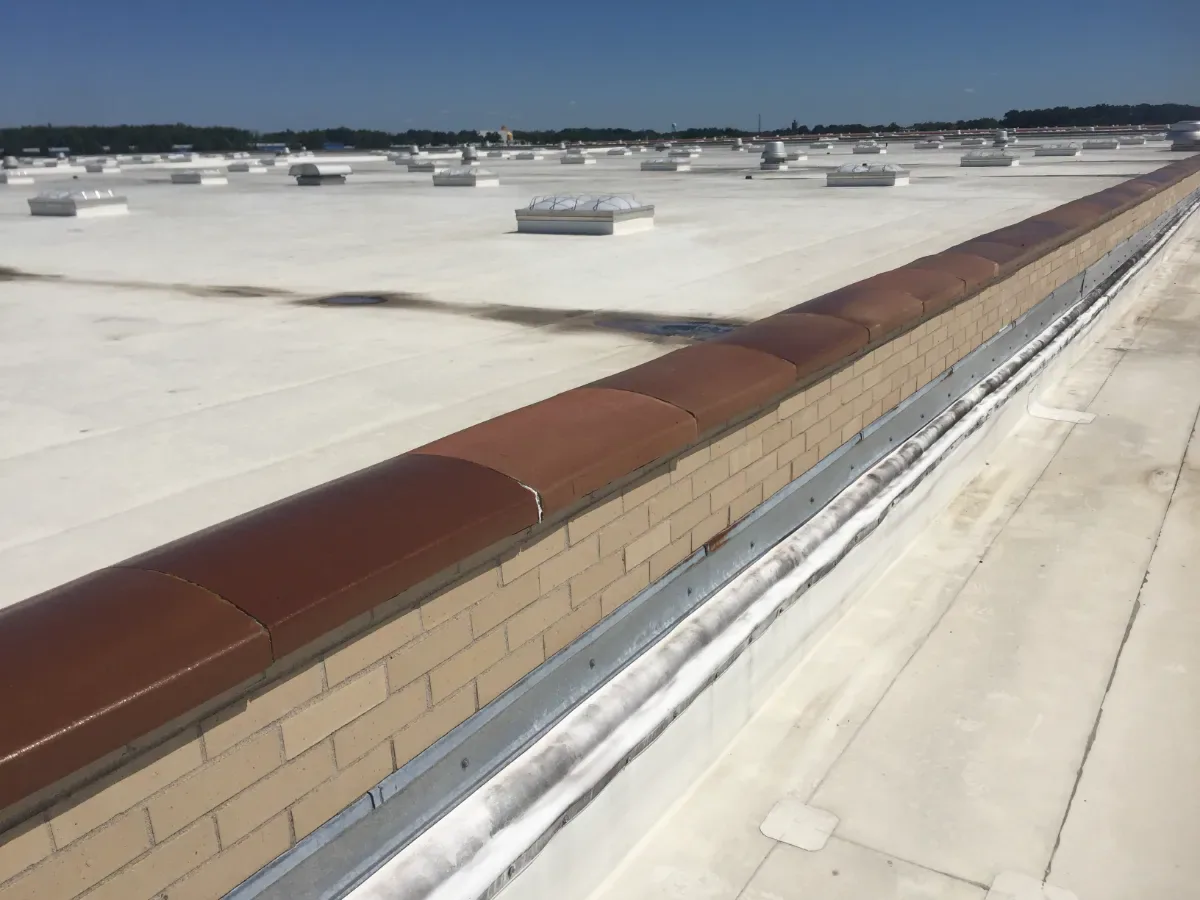
The edge metal, gravel stop or coping holds the perimeter, and our edge metal and gutter work ties it to structure with fasteners that match the substrate. On the waterfront, a loose edge is a repair on the day it is found, not at the next budget cycle.
How does it behave in a South Coast winter?
Winter delivers about 32.5 inches of snow in an ordinary year, mostly between December and March, and the record low is minus 12 F. KEE stays flexible in the cold and resists the cracking that stiff membranes show at seams and flashing. It handles winter foot traffic reasonably, but a shovel edge can still cut it.
The winter weak points are the same as on any low-slope roof: frozen drains, ponded water and loose edges. We check sumps and tapered crickets, clear debris and mark low spots on the plan. Meltwater running across a grease patch can carry residue to a drain, so we look at drain baskets near exhaust as well. A commercial roof repair after winter often starts at a drain, a seam and a termination bar, in that order.
What does the sheet need around rooftop equipment?
Exhaust fans, makeup air units and condensers create the contamination, and they also create curbs, penetrations and walkways. The detail at each curb should be a welded flashing in the same sheet, a raised base and a termination secured to the curb. Grease trays catch drips at kitchen fans, and walkway pads protect the sheet where service technicians walk.
Southcoast Health, Titleist and Riverside Manufacturing are among the city's major employers, and a roof over a plant, a kitchen or a lab is where exhaust outlets decide the sheet. Which roofs carry exhaust heavy enough to call for KEE is settled by the outlets themselves. A manufacturing plant roofing inspection looks at each outlet and says which sheet the exposure calls for.
Can KEE go over a roof that already leaks?
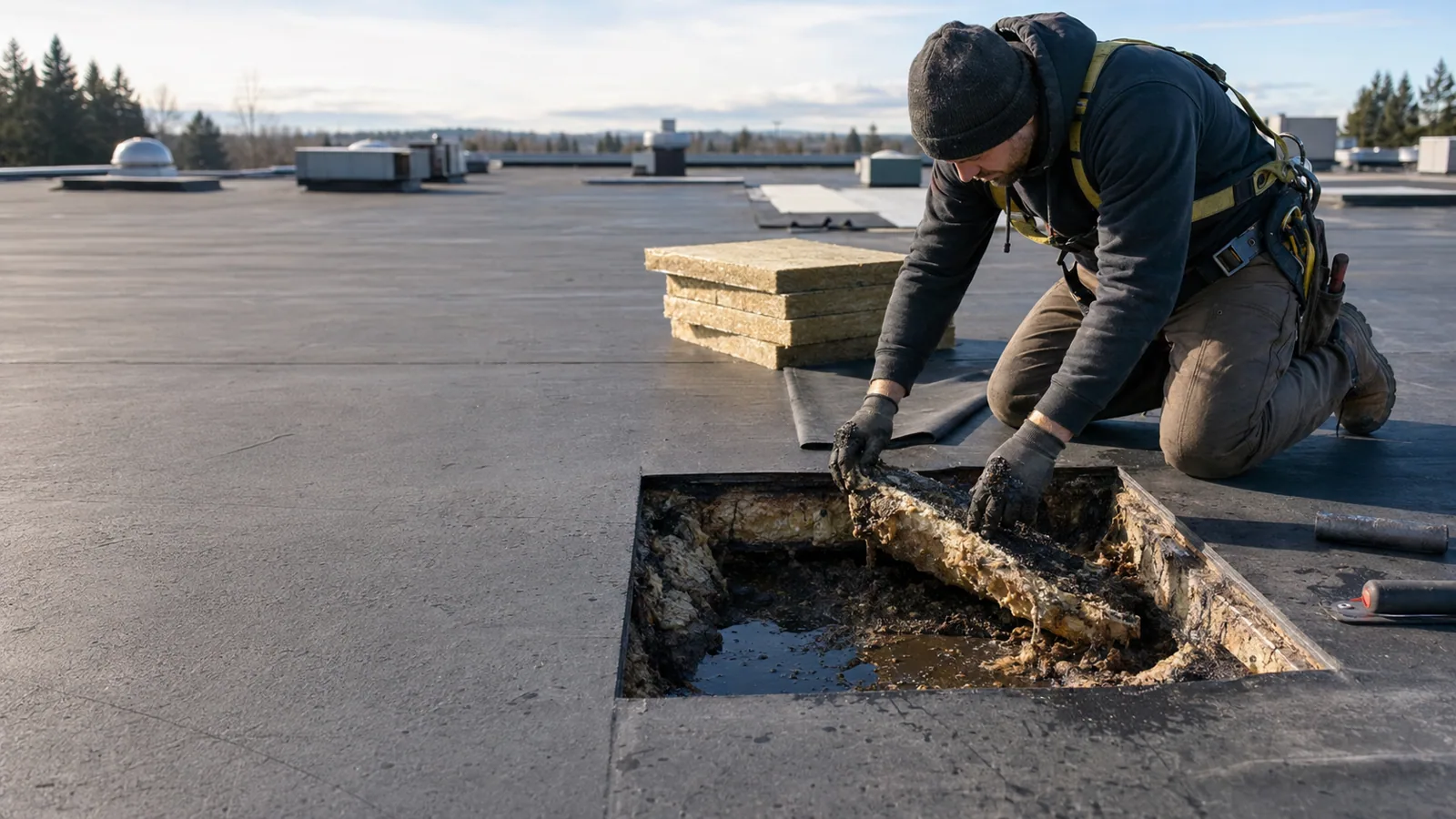
Only after the leaks are understood. A moisture scan and core cuts show whether the insulation is wet, and wet board comes out before any new membrane goes down. If the existing roof is dry and sound enough to accept a recover, a cover board separates the old and new layers, and the KEE sheet is welded on top.
On older buildings like the Wamsutta, Hathaway and Kilburn mills in New Bedford, parapet height and wall flashing cap what is possible, and the plan records each limit. A full commercial roof replacement with KEE gives a clean base and lets the drainage be corrected at the same time.
Commercial Roofing Questions
How do I know if my roof needs KEE instead of ordinary PVC?
Look at what the outlets put on the roof. Heavy grease, animal fats, oils and strong chemicals tax ordinary sheets more than KEE. If the membrane near an outlet is soft, swollen or sticky, the exposure is too hard for the current sheet. We test it and recommend a match.
Does KEE cost much more than other single-ply sheets?
It usually costs more than TPO and somewhat more than standard PVC. Where contamination is real, the premium buys a longer life for the sheet. We price the options side by side so the owner sees the whole life cost.
Can a patch be welded to a greasy KEE roof?
Only after cleaning. Residue stops a weld from fusing properly. We clean the surface, test a small area and weld the patch once the sheet accepts it. A patch on a dirty surface will lift, so skipping this step is a false saving.
What does the roof plan show for a roof with several fans?
Every fan, curb and outlet with a number, a photograph, the condition of the membrane around it and a recommended action. The plan also shows walkways, drains and containment, so the owner can plan the repair in the order that protects the building.
How long does KEE take to install compared with other single-ply sheets?
The pace is about the same as PVC because the welding and attachment methods are alike. Cleaning and containment around outlets add time, and weather sets the final schedule. We give the facility director a section-by-section plan with dates.
Ready to review the roof scope?
Request a Roof AssessmentKeep Reading