Industries We Serve
Roofing for Manufacturers in New Bedford, MA
Plant roof inspection, process-exhaust curb repair and phased replacement for manufacturers near New Bedford, MA, planned around production and shutdowns.
Request a Roof Assessment
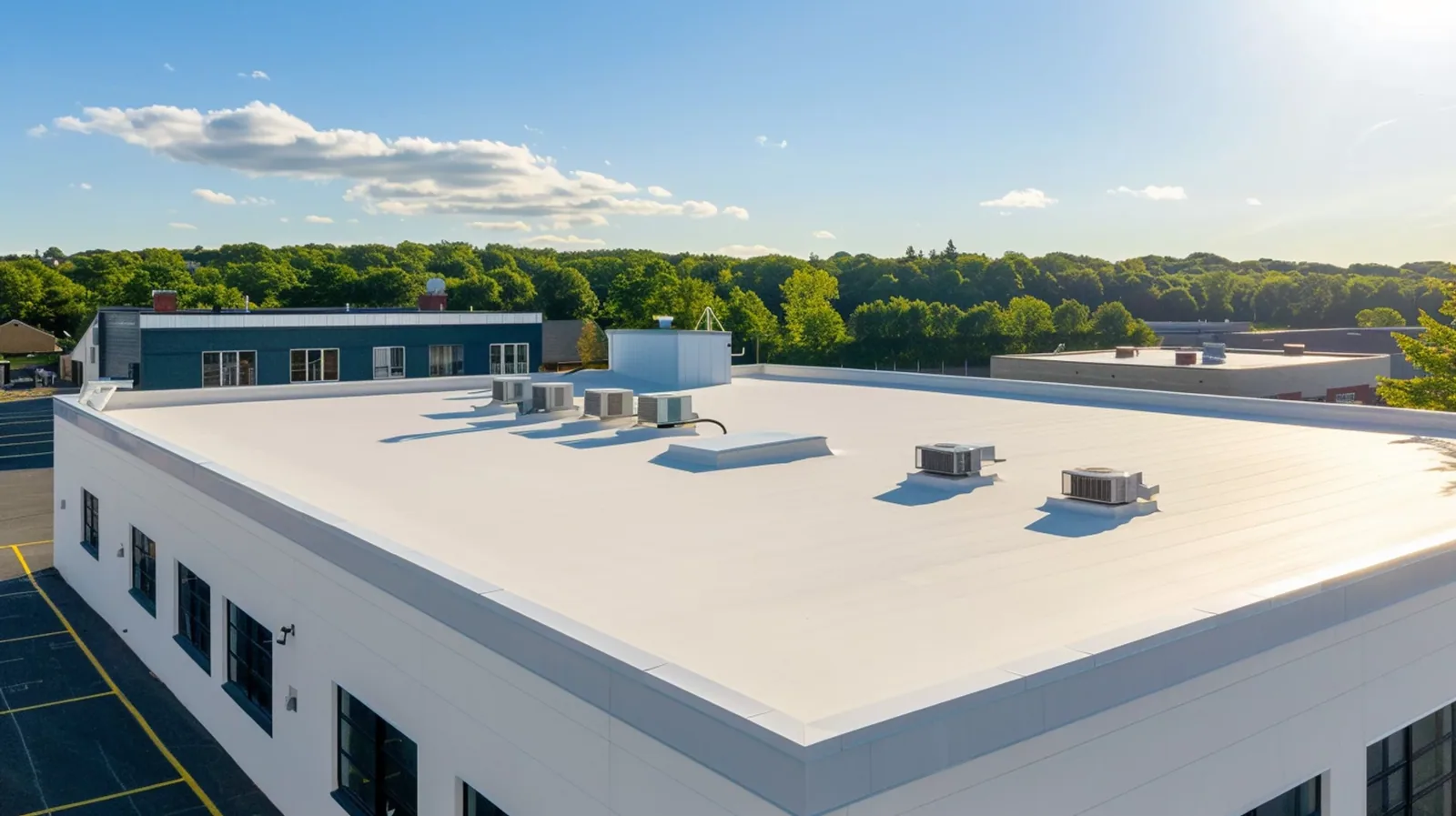
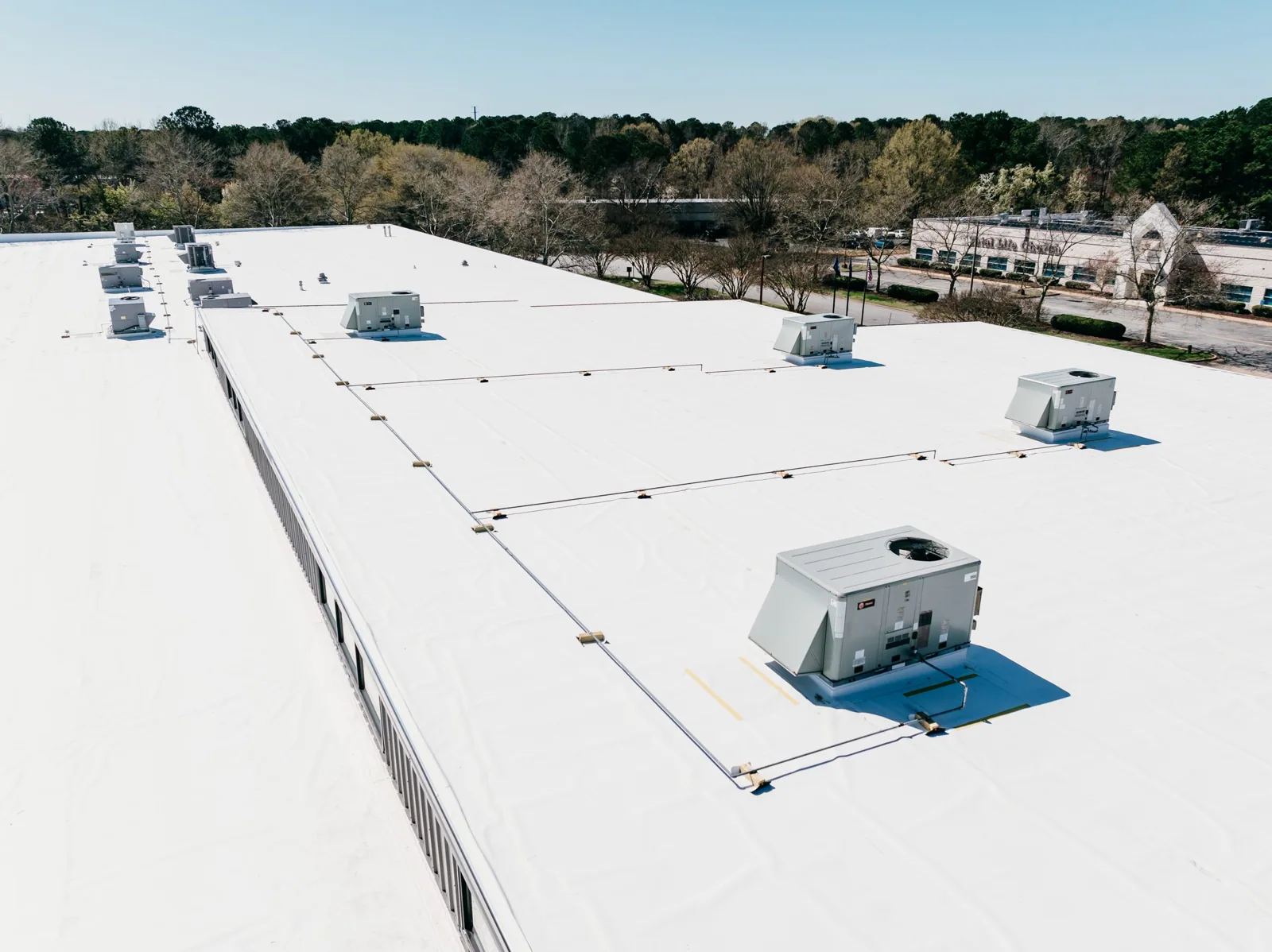
What does a production line lose in the hour it takes to find where the roof is leaking? A plant manager near New Bedford, MA does the arithmetic with a tarp over a machine and a supervisor asking whether to stop, and the answer depends on a roof plan that was drawn long before the leak. The first thing an inspector finds on a manufacturing roof is that the penetrations outnumber the repairs on record: process exhaust, dust collection, makeup air, skylights and old stacks from equipment that left years ago. We probe the seams around each opening, scan for wet insulation and mark every item on the plan in the order the production floor would feel it.
With the plan in hand, a plant manager can schedule roof work in the same shutdown window as the equipment work and avoid a separate disruption.
What does the inspector find on a plant roof that has grown with the plant?
Plants add equipment far more often than they add roof, so the sheet is crowded with curbs, ducts, stacks and supports installed in different decades. The inspector finds boots that no longer fit, abandoned penetrations patched with sealant, ducts that rest on the membrane and drain lines that spill onto one spot. Fastener back-out shows on older mechanically attached sheets, and lap sealant dries where exhaust heats the surface.
Chemical and heat exposure matter too. Process exhaust can carry oils, solvents or alkaline mist that softens some membranes and leaves a visible stain pattern downwind of the stack. We follow the stains, test the sheet and recommend a compatible membrane in the affected zone, usually a PVC or KEE sheet.
Skylights on older plants are another source. The domes crack, the curbs rust and the gaskets dry, and some were covered over long ago but left in the deck below. We list each skylight, covered or not, and grade it.
Why does the roof belong in the production plan?
Water on a production floor is a safety event, a quality event and a schedule event at once. It can short electrical gear, contaminate product, stop a line and trigger a stand-down for slip hazards. A roof leak over a packaging area or a finishing line is rarely a roof problem alone; it is a product problem the roof started.
That is why we rank plant roofs by what lies below: clean areas, electrical rooms, finishing and packaging lines, stock and raw material. A manufacturing plant roof over a clean room gets a shorter inspection interval than one over a dry storage bay, and the plan shows the reason for each interval.
The record helps with insurance and audits too. A plant that can show dated roof inspections, a log of repairs and a plan for the next replacement answers an insurer's questions in minutes and gives a customer auditor the confidence that the building protects the product.
Where does the region's manufacturing base put the roof under pressure?
The Acushnet Company, maker of Titleist golf equipment, was founded in 1910 and is described as one of Southeastern Massachusetts's most enduring industries, while Nye Lubricants, a Fairhaven industrial lubricant maker whose roots go back to 1844, is another local employer. Taunton adds Reed & Barton's complex, a designated historic district, a General Dynamics Mission Systems factory, and the 800-plus acres of Myles Standish Industrial Park, where manufacturing sits beside office, high-tech and distribution tenants.
Those settings range from a historic complex such as Reed & Barton's to an industrial park of manufacturing and distribution buildings. We inspect each with the same routine but different emphasis: wall and parapet interfaces on the older buildings, perimeter attachment and equipment curbs on the newer ones. A plant in Fairhaven or Taunton gets that division of attention.
How do snow and drainage affect a wide plant roof?
Snow on a plant roof is part of an ordinary year's 32.5 inches, and one blizzard in January 2015 left 24.1 inches in Fall River. A wide plant roof holds a lot of snow, and heat from the process below can melt it unevenly, sending water to the nearest low spot. Sawtooth skylights and monitors collect drifts that melt into the valleys.
We check every drain sump and scupper before winter and look at the slope toward each outlet. Where the roof ponds, tapered crickets or added drains can move water off the sheet. Where the building's own heat melts the snow too fast, we look for overflow routes that keep meltwater off the wall.
Interior drains on a large plant roof run through the building, and a cracked leader inside a wall can look like a roof leak. We follow the drain line when the stain appears below a drain and test it before the membrane is blamed.
What do coastal storms do to industrial roofs?
Wind has already tested plants in this region, with 89 mph gusts over Buzzards Bay in Bob's 1991 passage and 80 to 110 mph across eastern Massachusetts when Carol came through in 1954. Plants have long perimeters, tall equipment and roof-mounted stacks that take wind from every side. A loosened stack or a shifted duct can open its flashing, and rain follows.
We inspect stack and duct restraint, curb fasteners, edge metal and parapet terminations. After a storm, a quick sweep of the roof catches openings while a patch still works. Our infrared moisture survey finds insulation that has taken water even when the surface looks sound.
Roof-mounted dust collectors and fans carry vibration into their curbs, and loosened fasteners show up first as a rattle and later as a leak. We tighten what we can on the visit and list what needs a bigger fix.
What should a plant manager ask before a roof project starts?
Ask how the work will be sequenced around production, whether any section needs a shutdown, how fumes and dust will be kept out of clean areas and what happens to the roof when equipment is added or removed later. Ask how penetrations from abandoned equipment will be removed and flashed over.
Ask also whether the same crew can handle a flex industrial building on the same campus, and whether a logistics operation next door follows the same plan.
If a plant expansion is under way, ask how the roofing will be coordinated with the general contractors on site, since a roof opened for a new duct run is also a roof that has to be closed by the end of the day.
Commercial Roofing Questions
Can a manufacturing roof be replaced without stopping production?
Often, if the work is sectioned and the production floor is protected. Tear-off proceeds in bays that are closed by evening, noisy tasks are scheduled around sensitive operations and clean areas get sealed protection. Some sections may need a short shutdown, and we plan those to coincide with scheduled equipment downtime.
What happens to the roof when a machine is removed or added?
The roof opening or curb for the old machine must be removed and flashed, and a new penetration must be made with proper curbs and flashing. Too often the work is done in a rush and left to the equipment contractor. We ask for notice of every equipment change so the roof is closed or opened correctly.
Which membrane suits a roof with chemical exhaust?
PVC and KEE sheets are formulated to resist many oils and chemicals, and they are the usual choice around exhaust stacks and discharge points. The exact choice depends on what the exhaust carries, so we ask for the compounds involved and test a sample of the existing membrane before recommending a replacement.
Which parts of a plant roof earn a shorter inspection interval?
Areas above clean rooms or electrical rooms, then the zones around process exhaust. A yearly walk with a second pass after winter and after any major storm is the floor for the rest. The report records each visit, and the interval changes as the findings change, so effort follows risk.
Ready to review the roof scope?
Request a Roof AssessmentKeep Reading