Service Areas
Commercial Roofing in Newport, RI
Commercial roofing in Newport, RI: hospitality and visitor-facing roofs, installation-area access planning, edge metal, drainage and repair or replacement.
Request a Roof Assessment
Which detail fails first on a roof over a business that has to stay open for visitors? In Newport, RI, we start at the edge metal and the wall-to-roof transitions, because a leak over a dining room, a guest room or a gallery costs the owner more than the repair itself, and those perimeter details are where wind and rain get in ahead of any other failure.

Tourism is Newport's primary commercial enterprise, and the town also hosts Naval Station Newport, home to the Naval War College, the Surface Warfare Officers School and the Navy Supply Corps School. A building that serves visitors and a building on installation property ask different things of a roofer, so we find out which one we are standing on before we choose the order of the inspection, and every finding is marked on the roof plan so the owner can see the pattern. The walk goes edge first, then penetrations, then the field of the roof, then the drains, and the owner gets the findings in that order with a photograph for each.
What does a roof over a visitor-facing building have to protect?
A hotel roof protects guest rooms, corridors and mechanical spaces, and a restaurant roof protects a kitchen and a dining room that cannot close for a week of repairs. In both cases we run a moisture scan before touching the surface, so we know whether the insulation under a stained area is wet and how far the damage has spread beyond the visible mark.
The next step is the exhaust and equipment. Kitchen fans deposit grease on the membrane, rooftop units leak condensate onto it and technicians walk the same paths every week, and each of those leaves a wear pattern that a seam probe finds in minutes. Because a visitor season does not wait, we plan the work in sections that can be dried in each day, and we give the property manager the order in writing before any material arrives. Price on this kind of roof follows the count of rooftop units, any wet insulation and the share of the roof a crew can work without closing an entrance or a dining area.
Seasonal peaks matter in a town built on visitors. A restaurant that fills its terrace in summer and a guest house that books weekends through the fall each have a window when the roof can be opened, and the plan works backward from the owner's busiest dates, so the tear-off falls in the quietest weeks and the crew is off the roof before the first holiday weekend. Wind off the water also sets the order of the day: lift work happens early, before afternoon gusts build.
What does the 1938 storm tide tell us about a Newport roof?
The 1938 hurricane reached its peak water level at Newport, 11.5 feet over mean sea level. That number describes water, not wind, but it marks Newport as a town that has met a major storm, and the roof questions that follow start at the edge.
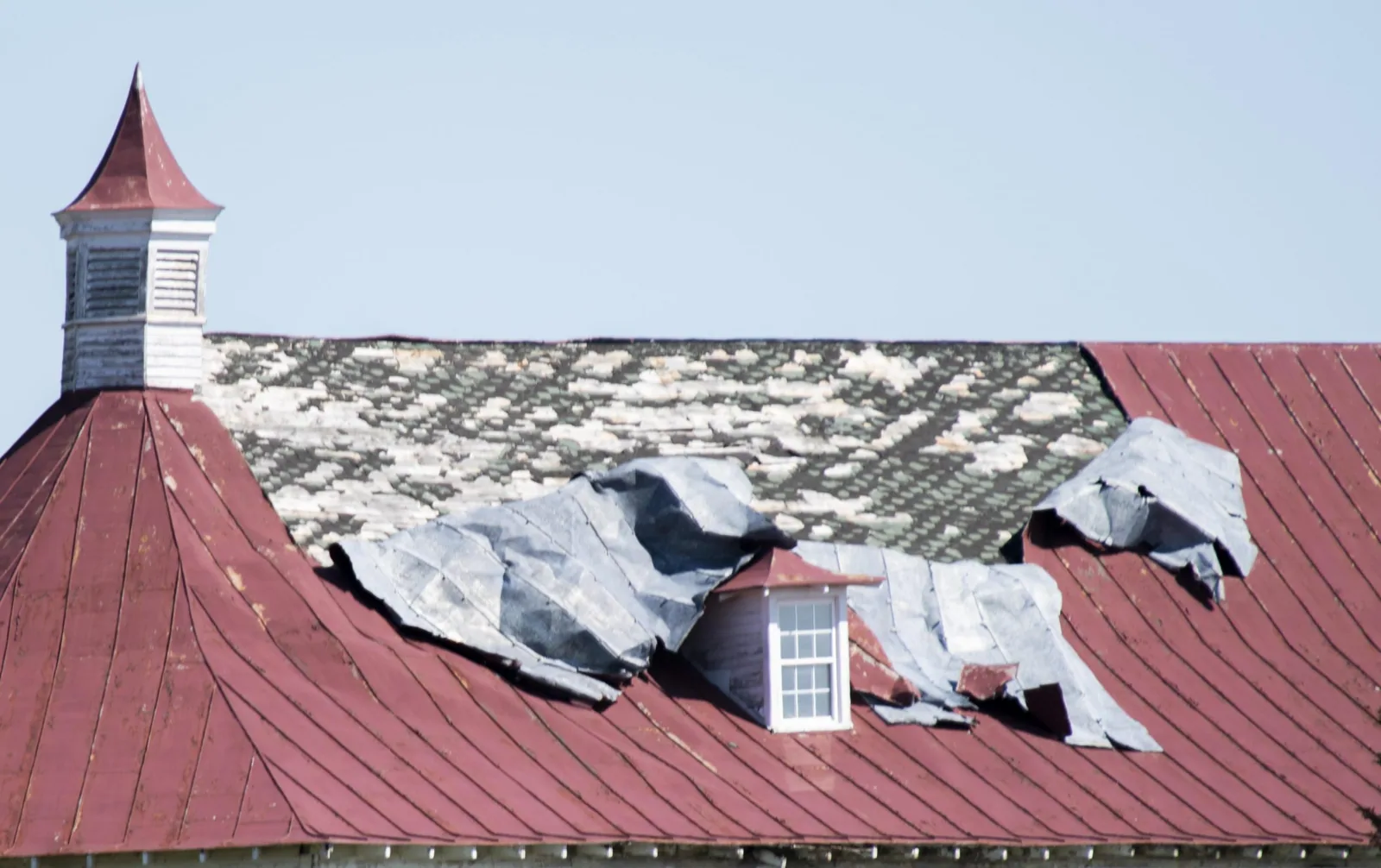
The probe covers edge metal that has lifted, gravel stop that has shifted, laps that have opened and fasteners that have backed out, and it runs along the seams nearest the edge, where a storm loosens attachment first. After a wind event the sequence is the one for wind damage repair: close the opening, log the pattern and keep the permanent fix on a separate price line. A hurricane damage scope adds a check of rooftop equipment anchorage and flashing at every curb, since a unit that shifted in a storm opens its own flashing.
How does installation property change the schedule?
Naval Station Newport hosts the Naval War College, the Surface Warfare Officers School and the Navy Supply Corps School, and roofing on installation property follows its own rules: access and escort procedures, badging, scheduling around operations and roof design to the Unified Facilities Criteria. We describe those rules in general terms because each installation sets its own, and an owner or contracting officer is the one who issues the access instructions.
For commercial buildings in the surrounding town, the ordinary commercial approach applies. A military installation roofing job or a naval facility roof does need base access, and we ask early who sponsors the visit and what hours are allowed.
How much rain and snow does a Newport roof carry?
Newport's own record runs to about 47.45 inches of precipitation and about 26 inches of snowfall a year. That volume tests every drain, sump and scupper on a low-slope roof, and snow settles on the lee side of equipment, where it melts slowly and refreezes at the outlet. We clear outlets and look for ponding stains before winter, since a blocked drain sends a thaw against the nearest seam.
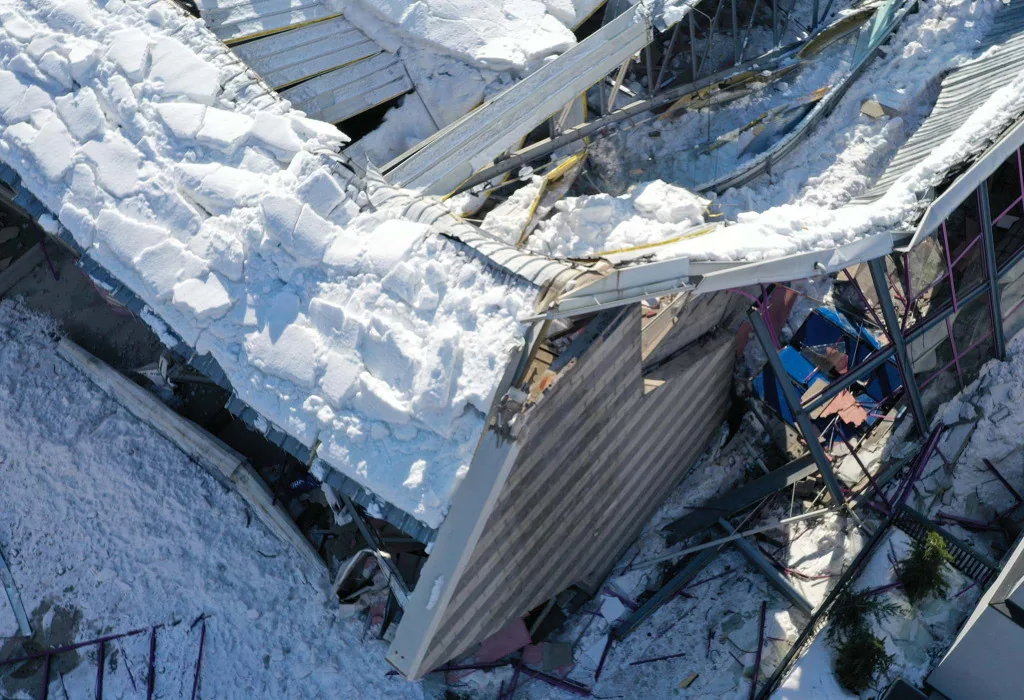
After a storm, snow and ice damage shows at drains, valleys and the roof edge, and those are the places we probe first. Winter repairs are held to a temporary seal, with the permanent work set for a clean, dry surface, because lap sealant and adhesives need both the right temperature and a substrate free of frost.
How do we read an older building with a collection or finishes to protect?
Many Gilded Age mansions built from 1870 to 1915 are open as museums, and any building that holds a collection, fine finishes or archives raises the cost of a leak well above the cost of the repair. A flat porch roof, a connecting section or an addition may not match the main roof, so each section is identified, probed and marked separately.
Flashing and drainage details matter most on those sections: the through-wall flashing where a flat roof meets masonry, the gutters and downspouts that carry water away from the wall and the drain sumps on any low-slope area. The owner receives a written note of what each section needs, in order of urgency, so protection of the interior comes first and appearance-sensitive work follows a plan.
What are the choices once the findings are on paper?
Repair, recover or replace is a question the probe answers. A roof with a few failures and dry insulation is a repair candidate. A roof with wet layers, widespread open seams or a membrane that has pulled away from a wall is a candidate for replacement or a recover, and the proposal sets each path beside the others with its cost drivers. Whatever review a Rhode Island building needs, from the town or elsewhere, is flagged at the first walk. Middletown and Portsmouth get the same sequence, and the owner sees the roof marked up before any price appears.
Commercial Roofing Questions
Can roof work be scheduled around a busy visitor season?
In sections. Each section is dried in before the crew leaves, noisy work moves outside peak hours and the property manager has the order in writing before material arrives.
Does a roof near the harbor need a different edge detail?
It needs a sound one. Every roof gets a probe of the edge metal, gravel stop and fasteners at the perimeter, and a site with open exposure gets a closer look at how the edge is attached.
What access rules apply on installation property?
The installation sets them, usually escort and badging steps plus limits on working hours. We ask who sponsors the visit and submit the crew list and schedule for approval.
How is a leak over a collection or a guest room handled?
Interior protection comes first. A moisture scan and seam probe then trace the entry point, and the owner receives a note naming the cause, the temporary measure and the permanent repair.
What speeds up the first walk?
The roof plan, earlier inspection notes and the date of the last leak. Photographs of stained ceilings help us pick the starting point.
Ready to review the roof scope?
Request a Roof AssessmentKeep Reading