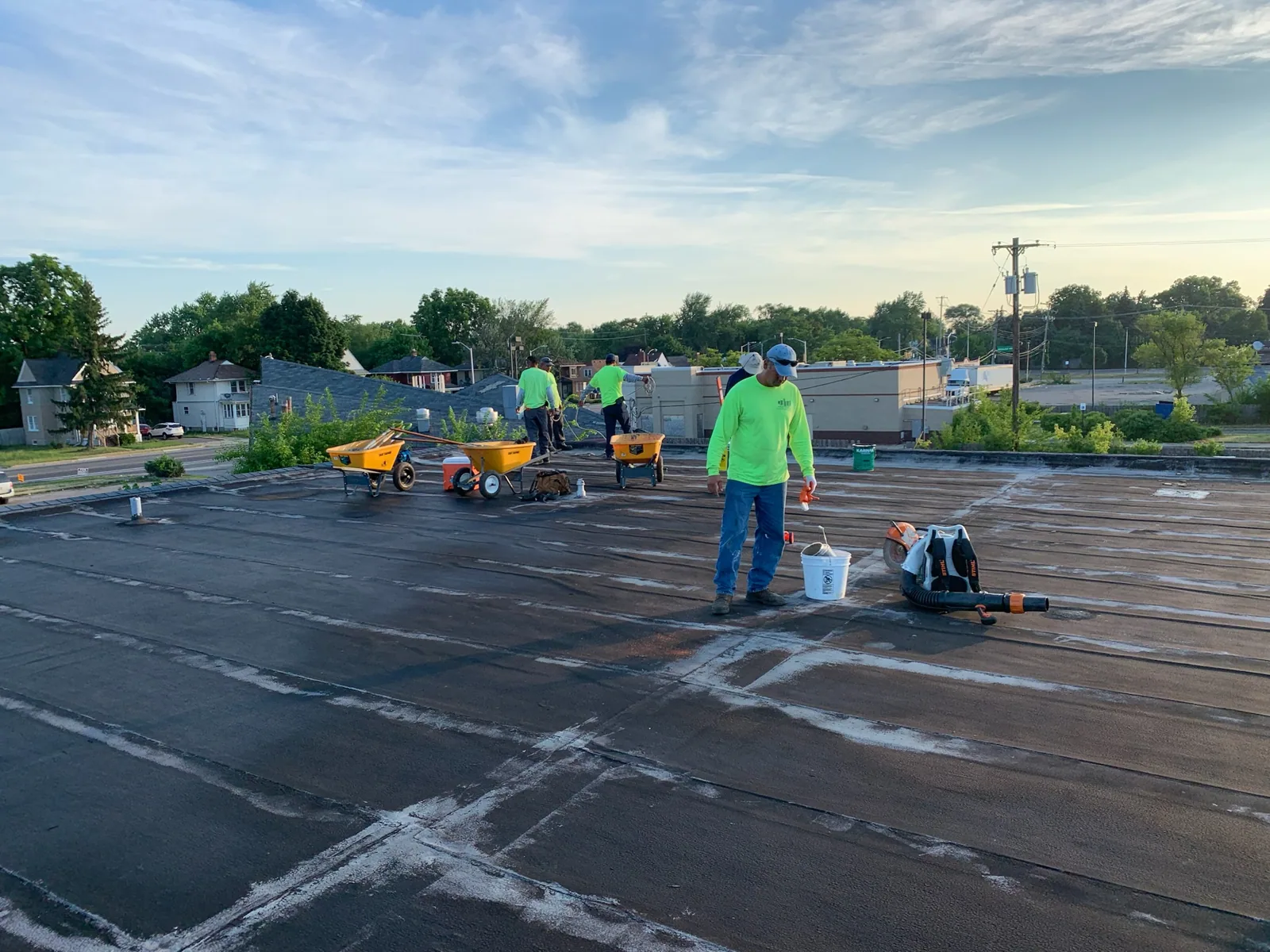
Roof Systems
Modified Bitumen Roofing in New Bedford, MA
SBS and APP modified bitumen roofing in New Bedford, MA: lap and flashing inspection, wind and snow stress, mill details, and repair or replace findings.
Request a Roof Assessment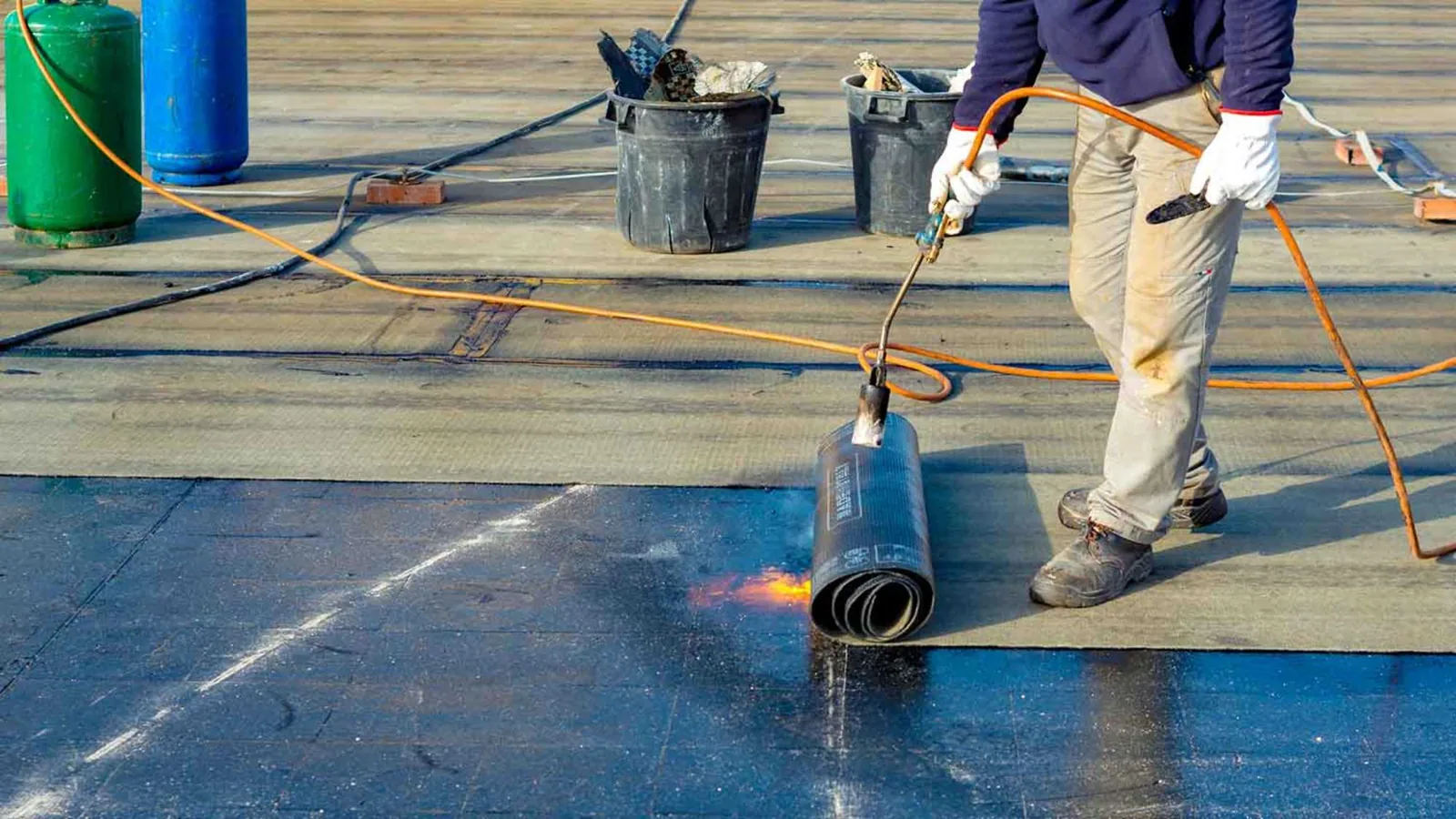
Why does a roof that looks black and sound from the lot still drip at the same corner every March? A facility director who has watched that stain return is usually dealing with a modified bitumen roof whose granulated surface looks fine while a lap, a flashing or a stripping ply has quietly opened, and the first thing an inspector would find with a probe in hand is a seam edge that no longer resists the point. Modified bitumen is an asphalt sheet blended with a polymer, laid in two or three layers and tied into the walls with its own flashing sheets.
In New Bedford, MA, that sheet sees a harbor wind, a winter of about 32.5 inches of snow and a spread from minus 12 F to 107 F on record. We read the laps, the flashings and the insulation beneath, and every finding goes on the roof plan with its location before any price is discussed.
What is the difference between SBS and APP sheets?
SBS sheets are blended with a rubber-like polymer, which lets the asphalt stretch and recover as the deck moves through a cold night. APP sheets are blended with a plastic polymer and tend to hold their shape in heat. Both arrive as rolls with a granulated or foil top surface, and both are joined at laps where the asphalt is softened, by torch, hot asphalt, cold adhesive or a self-adhering backing. A multi-ply built-up roof shares the same asphalt chemistry in layers of felt, and the two are often confused on an older building. The installation method matters as much as the sheet, because a lap that was heated unevenly will show a thin, dull edge years later. On the roof plan we record which type the sheet appears to be, how it was applied, and how many layers sit above the deck, since each answer changes what repair is realistic.
Where does a modified bitumen roof leak first?
Usually at a side lap, an end lap or a flashing, long before the field of the roof fails. We run a seam probe along the laps and look for bleed-out of asphalt at the edge, which tells us the lap was heated enough to bond, and for fishmouths, where the edge of a sheet has curled and left a channel for water. At the walls, the stripping ply or base flashing is the next stop: a split in a flashing at a parapet termination or a curb will let water run behind the sheet and show up two bays away. A patch on that kind of defect lasts only if the surface is dry and clean, so we note moisture in the substrate before recommending the repair. Where a roof has been patched many times, we count the patches and mark them, because a roof covered in repairs is telling the owner something about the sheet beneath, and the count belongs on the plan next to the leak history.
How does harbor wind test the edges?
Uplift on this system comes from storms such as Bob, with 89 mph gusts over Buzzards Bay in 1991, and Carol, with 80 to 110 mph winds across eastern Massachusetts in 1954. A modified bitumen roof resists that kind of uplift mostly through its attachment to the substrate and the strength of its edge metal. We check the gravel stop or edge metal for fastener back-out and open joints, the sheet beneath it for lifted laps, and the corners, where uplift concentrates. A loose perimeter is the finding that most often turns a small repair into a larger one, so it goes near the top of the list we hand to the facility director.
What do snow, ice, and thaw cycles do to the sheet?
Winter snow in New Bedford totals about 32.5 inches, mostly December through March, and a single January 2015 blizzard dropped 24.1 inches on Fall River. Snow load matters less to the membrane than what happens when it melts. Meltwater that cannot reach a drain sits against the laps, and a freeze at night pushes ice into any gap that opened during the day. We look at drain sumps, tapered crickets and scupper outlets, and we check whether the sheet around them has blistered or cracked. Modified bitumen tolerates standing water better than some single-ply sheets, but long exposure speeds the wear of the surface granules and the laps beneath them. A heat-welded TPO sheet handles snowmelt differently, with welded seams in place of asphalt laps, and that comparison matters when a replacement is on the table.
Which South Coast buildings carry this system?
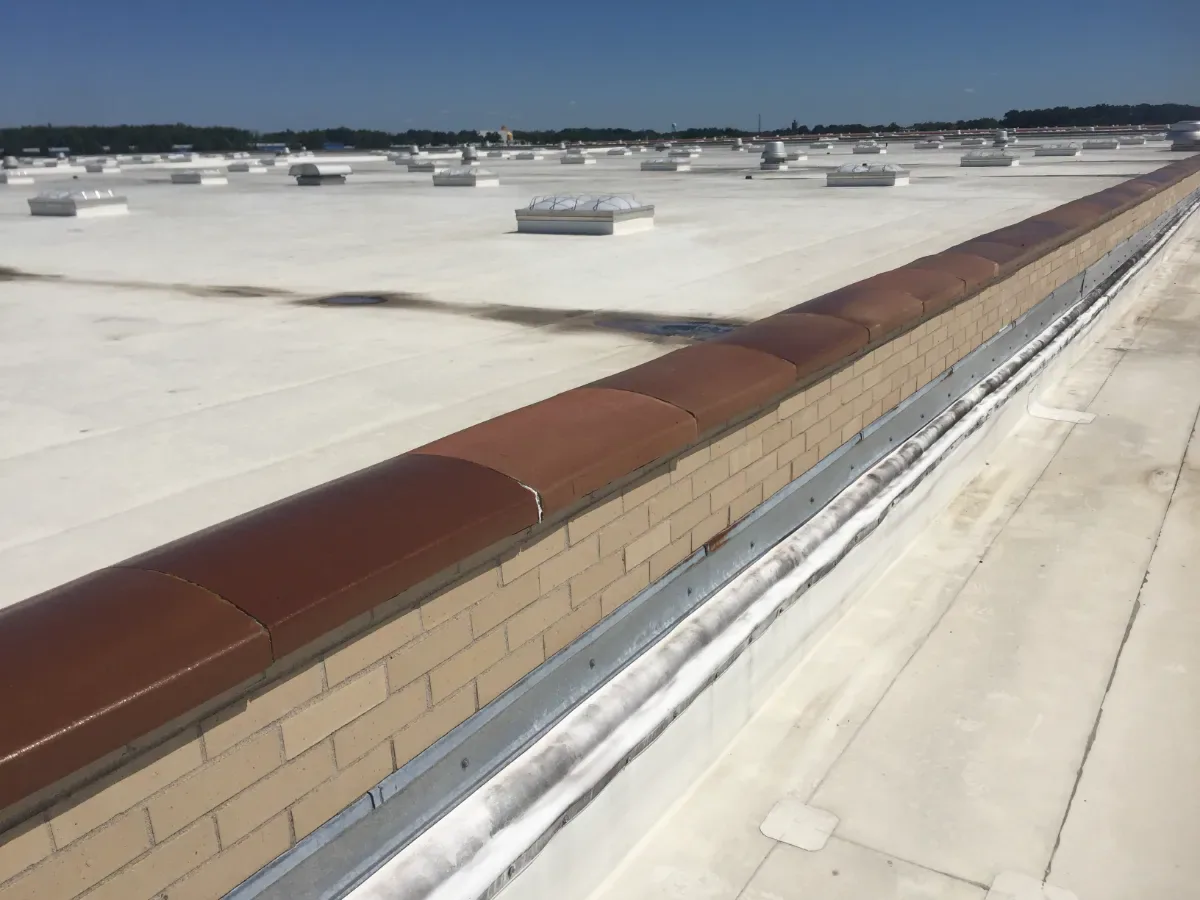
Modified bitumen is common on older flat roofs and on roofs with many penetrations, because the sheets can be cut and flashed around odd shapes. New Bedford has many 19th-century mill buildings, including the Wamsutta, Hathaway and Kilburn mills, and Fall River's granite and brick mills add more. A mill roof often has high parapets, through-wall flashing and several rooftop additions, so the flashing details drive the findings. The system also suits commercial buildings in the New Bedford Business Park and industrial roofs along the Route 24 corridor, where roof traffic and equipment add wear.
On a roof with several additions, each tie-in between an older sheet and a newer one is probed separately, since that joint moves more than either sheet does on its own.
When is repair enough, and when is it time to recover or replace?
We cut a core and run a moisture scan before answering. A dry roof with sound laps and a few open flashings is a repair. A roof with wet insulation in several bays points to a replacement, and a roof with dry insulation and a tired surface may take a recover or a silicone coating. The 10th Edition of the state building code, drawn from the 2021 IBC and effective October 11, 2024, applies to this scope, and its requirements are confirmed before the quote is final. Cost moves with the layers to strip, the wet insulation found, the flashing to rebuild and the staging room around the walls and entrances.
Commercial Roofing Questions
How can I tell whether the laps are failing?
A probe along the seam edge tells you. A healthy lap shows a thin line of asphalt at the edge and resists the point. A failing one lifts, shows a gap, or has dust and debris packed beneath it. We mark each location on the roof plan with a photograph.
Can a leaking modified bitumen roof be patched?
Often, yes, if the insulation below is dry and the surface can be cleaned. The patch should extend well past the defect and tie into sound material. A moisture scan before the patch shows whether the area is isolated or part of a wider wet zone.
Does a torch-applied roof carry extra risk?
Open flame near a building calls for a fire watch and a plan for combustible materials at the edges and penetrations. For that reason many projects use cold adhesive or self-adhering sheets near sensitive areas. We state the method and the precautions in the scope.
How does the granule surface affect wear?
The granules shield the asphalt from sunlight. When they wash into the gutters or drain sumps, the asphalt beneath ages faster. Bare patches in a worn roof are the first place we check for cracking, and a handful of granules in a drain sump is the signal that the surface is shedding.
Can modified bitumen be recoated?
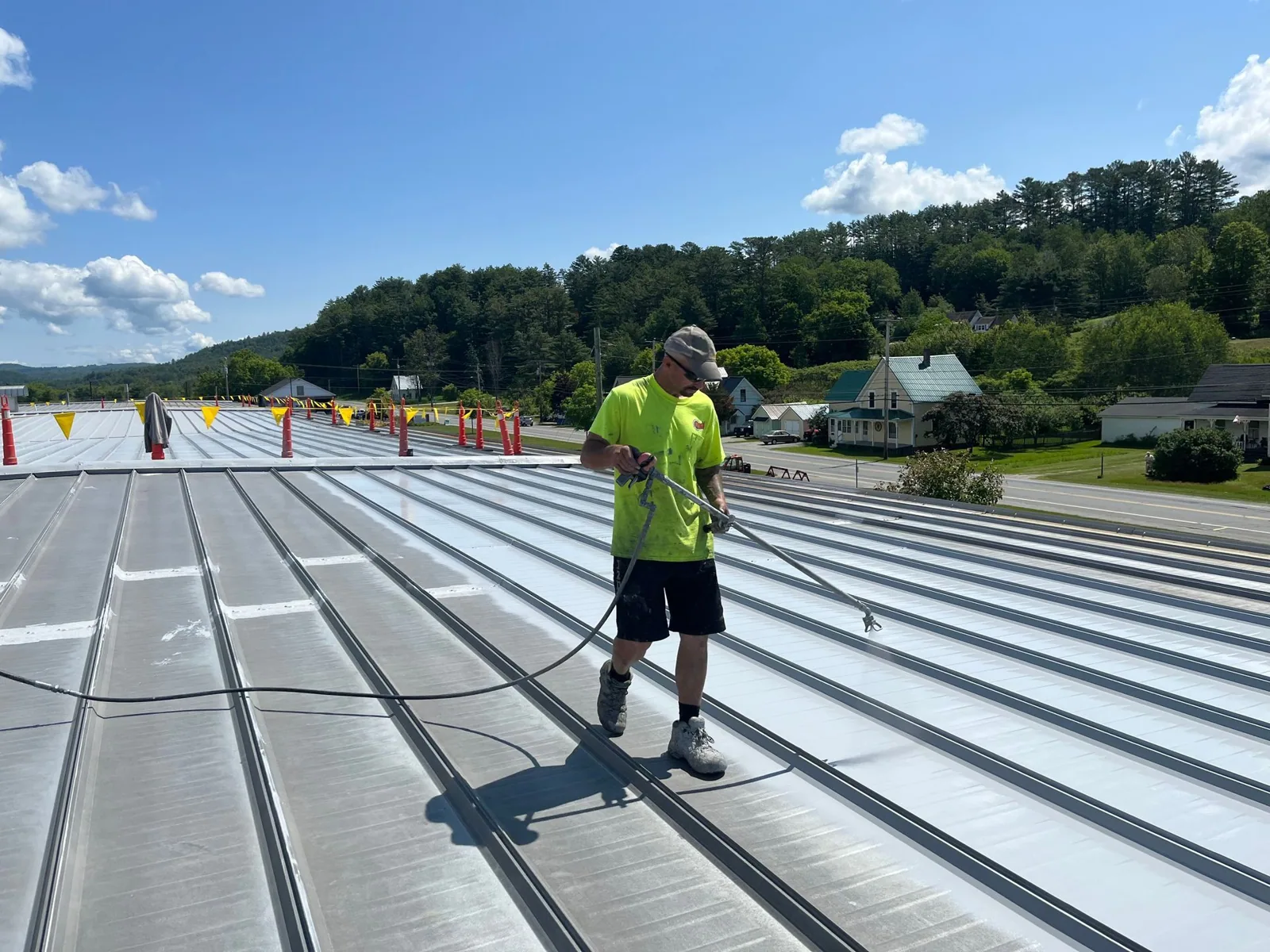
It can accept a reflective coating when the sheet is sound, dry and clean. The coating protects the surface from sun and weather but does not repair open laps, so those are fixed first.