Commercial Roofing Services
Commercial Roof Drains and Scuppers in New Bedford, MA
Correct commercial roof drainage in New Bedford, MA with drain, scupper and cricket inspections tied to ponding, overflow and interior conditions.
Request a Roof Assessment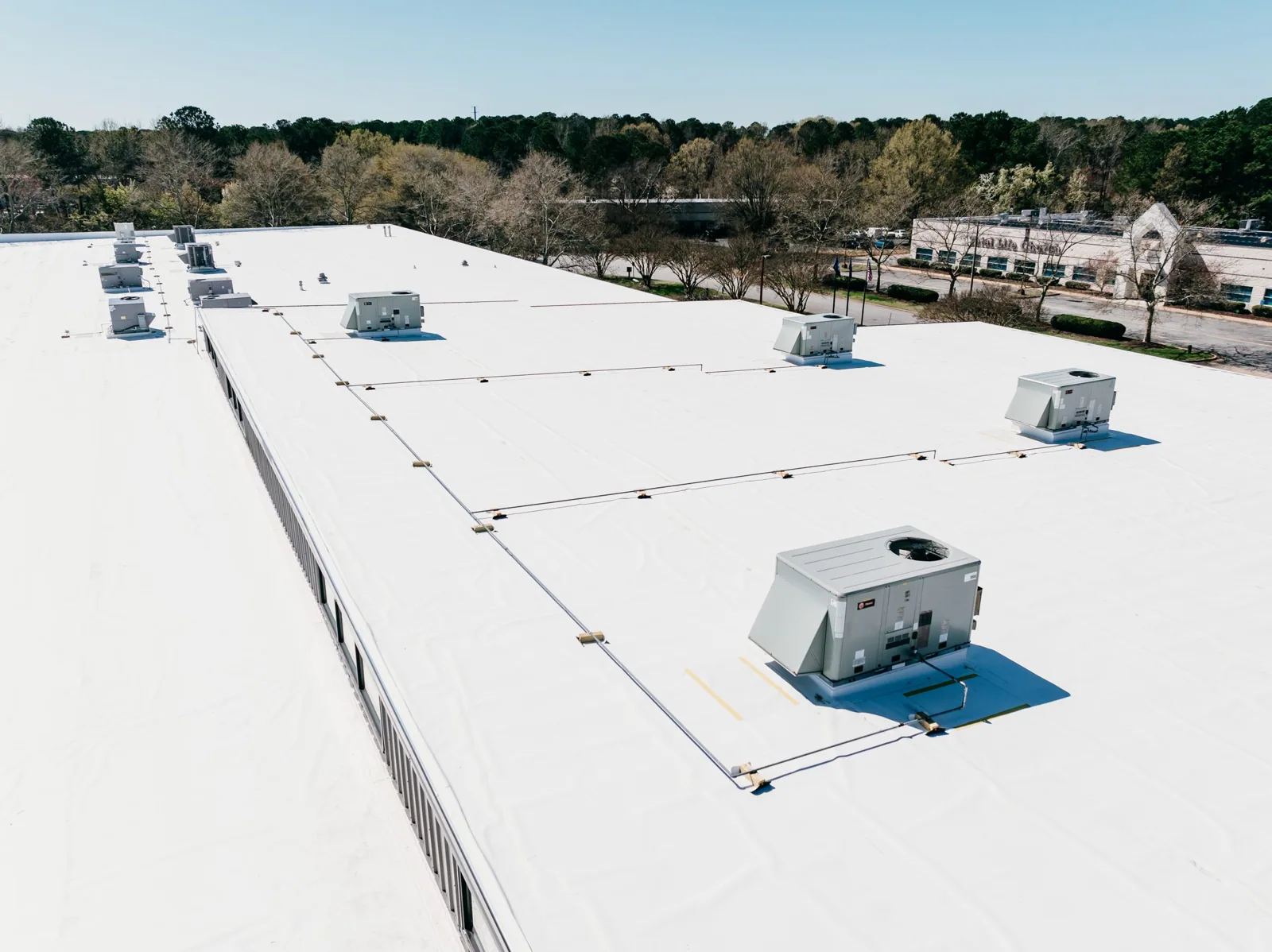
Where does water sit after the roof should have drained? Start at the low point and follow the path back to the outlet. In New Bedford, MA, we inspect drain sumps, scuppers, downspouts and the surrounding membrane to find whether the problem is debris, slope, a failed connection or a low area that needs a different correction.
A clear grate does not prove the drain works. Debris can collect below the basket, a downspout can be restricted, or a settled section can leave water outside the sump. We mark the ponding area, check the overflow path and explain what should be cleaned, repaired or redesigned before water reaches the roof assembly.
What do we check at a drain sump?
We inspect the grate, clamping ring, drain bowl, flashing and visible discharge connection. The sump should draw water from the roof surface without pulling the membrane loose or leaving a sharp transition around the bowl. We clear accessible debris and check whether the outlet carries water freely. If the drain body is cracked or the flashing has separated, routine cleaning will not solve the leak risk.
We also look at the roof around the drain. Tapered crickets can direct water toward an outlet, but the arrangement must fit the existing deck and insulation. A commercial roof inspection records whether the low area is isolated or part of broader settlement. We mark the condition with photographs so an owner can compare it after repair or the next maintenance visit.
How should an overflow scupper work?
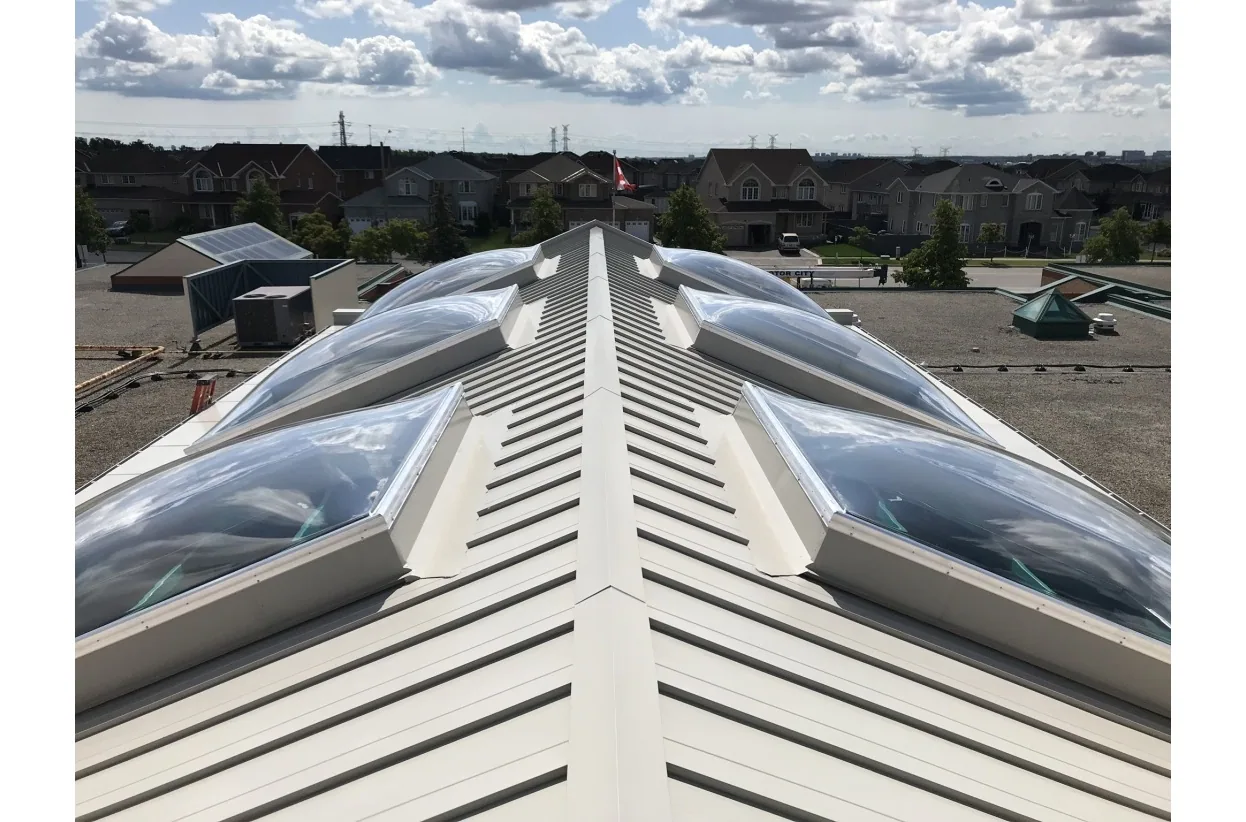
A scupper provides a visible escape route when primary drainage cannot keep up. We check its opening, slope, flashing and discharge path, then look for staining or erosion where water leaves the wall. A blocked or poorly terminated scupper can send water into a parapet or down the exterior face. We identify the metal and membrane transitions around the opening before proposing repair.
At parapets, the wall-to-roof transition deserves the same attention as the drain itself. We inspect counterflashing, lap sealant, coping joints and any through-wall flashing that carries water away from masonry. When an outlet is clear but ponding remains, the cause may be slope or insulation rather than a blockage. We keep those conditions distinct so the repair does not stop at the most visible component.
When is ponding more than a cleanup item?
Weather records for New Bedford show 52.21 inches of precipitation spread across about 124 days in a year, alongside 32.5 inches of snow, most of it from December through March. That weather puts repeated demand on drainage. We record the depth and extent of ponding after the surface has had time to drain, then check for softened membrane, open seams, biological growth and insulation that may have absorbed water.
Some retained water follows a blocked inlet and clears after cleaning. A broad shallow area may point to settled insulation or a deck condition that needs further evaluation. We may recommend a moisture survey or core cut to determine whether water is below the surface. A test area and marked roof plan help keep that investigation focused instead of opening the entire roof without a reason.
What does snow change at the outlets?
Snow can cover drains and hide the route water takes as it melts. We check accessible outlets and overflow openings, look for ice at the grate, and note whether meltwater can reach the sump. The January 2015 blizzard left 24.1 inches in Fall River and 26 inches in East Freetown. Those totals show why winter drainage checks need to account for snow cover and thaw timing.
We do not cut or chip ice in a way that can puncture the membrane. The safer response depends on the roof material, access and current conditions. Once the surface is clear, we inspect around the drain ring and scupper flashing for movement or damage. If a leak follows the thaw, our leak tracing work connects the interior stain with the roof condition rather than assuming the outlet caused it.
What drainage repairs can be made?
Repairs range from clearing a strainer and resealing a drain flange to replacing damaged flashing or correcting a defined low area. We match the repair materials to the roof assembly and check whether the existing drain is large enough for the roof layout. If a scupper is too low, blocked or leaking through the wall, we document the opening and explain what access the correction requires.
For broad ponding, a tapered cricket or insulation adjustment may help move water, but only if the roof structure and existing system support that work. We may compare a localized correction with a replacement scope when the insulation or deck condition changes the decision. Our maintenance service can then revisit the repaired outlets and track whether water leaves the roof as intended.
We also inspect the overflow route where a parapet contains the roof. A secondary outlet should remain visible and clear, with flashing that directs water away from the wall assembly. If the opening is blocked by later work or an added layer, we show the obstruction and discuss a correction that preserves access for future cleaning.
How is the drainage work recorded?
We provide the outlet location, photographs, repair description and any remaining concern. On a roof with several drains, we label each one so a later visit can tell which sump was cleaned or rebuilt. We also note the overflow route and whether rooftop equipment or stored materials obstructed access. That record helps an owner prioritize the next repair without treating every low spot as the same condition.
Buildings near the New Bedford Waterfront may have different wind exposure from a roof farther inland, but drainage still depends on the actual slope and outlet. We check each roof section and its discharge path. For a property with several buildings, a roof condition report can keep the outlets and repairs distinct. If you send the roof plan and photographs of the standing water, we can arrange a visit and identify what should be measured before a correction is priced. We note whether each outlet was flowing, whether water remained near the sump, and whether the membrane or flashing showed a related defect. That record gives the next visit a clear comparison point and helps the owner see whether a repair changed drainage or only corrected one visible opening.
Commercial Roofing Questions
How long should water remain after rain?
The answer depends on the roof layout and weather, but persistent ponding deserves a closer look. We record the location and depth after drainage time, then inspect the outlet, membrane and insulation before recommending a correction.
Can you clear a drain without replacing the roof?
Often. If the restriction is debris and the surrounding flashing and membrane remain sound, cleaning may restore flow. We check the drain connection and nearby seams so the visit does not stop at the grate.
What if the drain is open but water remains?
Then slope, settlement or wet insulation may be involved. We map the low area and determine whether a moisture test, core cut or drainage redesign would answer the question.
Should snow be removed from the scupper?
Only with a method that protects the membrane and safe access. We inspect the opening and roof conditions first, then explain whether clearing is appropriate or a different temporary measure is needed.
Can a scupper leak through the parapet?
Yes, if the flashing, sleeve or wall transition has opened. We inspect both sides where accessible and document the connection before selecting a compatible repair.
Ready to review the roof scope?
Request a Roof AssessmentKeep Reading