Roof Systems
PVC Roofing in New Bedford, MA
PVC single-ply roofing in New Bedford, MA: chemical and grease resistance, welded seams, cold-weather flexibility and what a probe finds on an aging sheet.
Request a Roof Assessment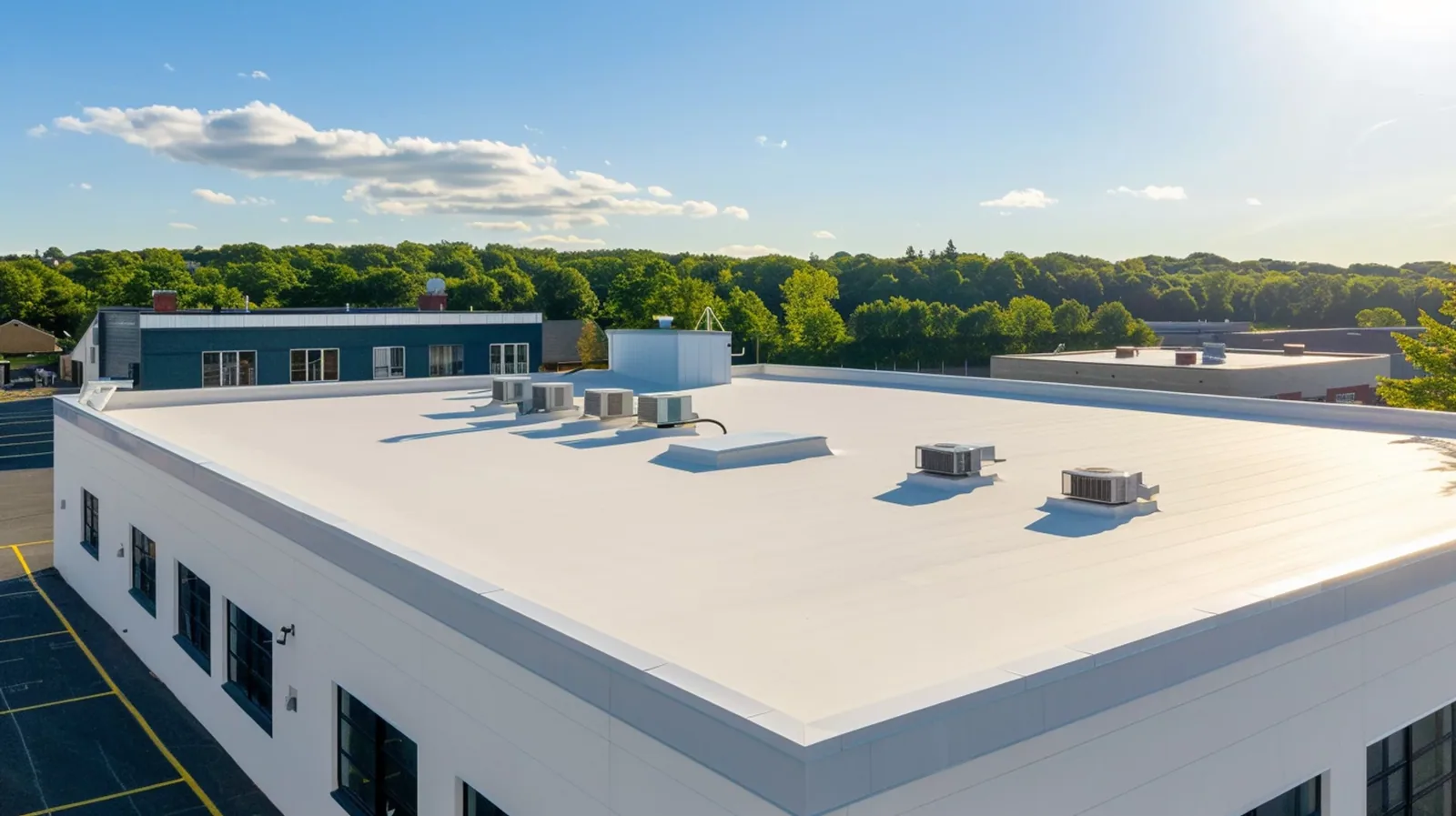
What is on the roof besides rain? A facility director who asks that about a kitchen exhaust fan, a fish-processing vent or a laboratory stack is already thinking like an inspector, and the first thing an inspector would find near such an outlet is a membrane that has softened, stained or swollen where grease and chemical vapor land on it. PVC is the single-ply sheet made for that exposure, and it is worth choosing when the roof carries more than weather.
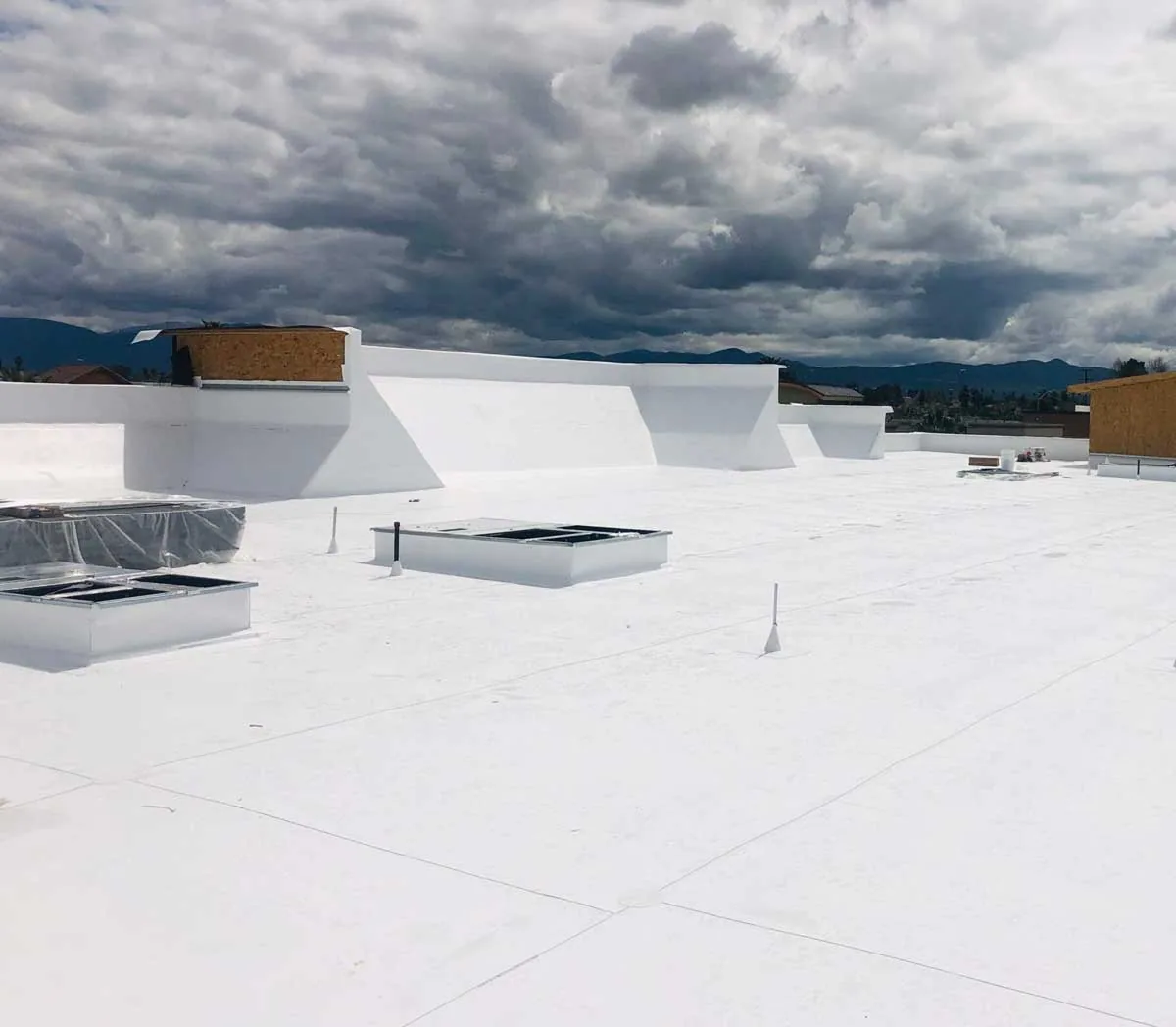
In New Bedford, MA, PVC roofing is a heat-welded membrane that resists many oils, fats and chemicals, stays flexible in winter and forms seams that fuse into the sheet. We look at what the roof sees, how the sheet is attached, how the seams have aged and what the insulation below is doing, and we mark the findings on the roof plan before any price is mentioned.
When does PVC beat the other single-ply sheets?
PVC earns its place where the roof is contaminated. Restaurant and food-service exhaust deposits grease on the surface. Industrial exhaust can carry chemicals. Labs and some manufacturing leave residues that attack membranes not made for them. A plasticized PVC sheet resists many of those attacks and keeps its flexibility, so a seam near an exhaust outlet is less likely to harden and split.
It is also a candidate for waterfront buildings and for roofs with heavy foot traffic, because the sheet is tough and the welds are strong. We do not recommend it for every roof. A plain office roof with no exhaust may be well served by TPO roofing at a lower cost, and we say so when we see it. The roof plan notes what each outlet puts on the membrane, and the membrane is chosen to match.
How do we judge a welded PVC seam?
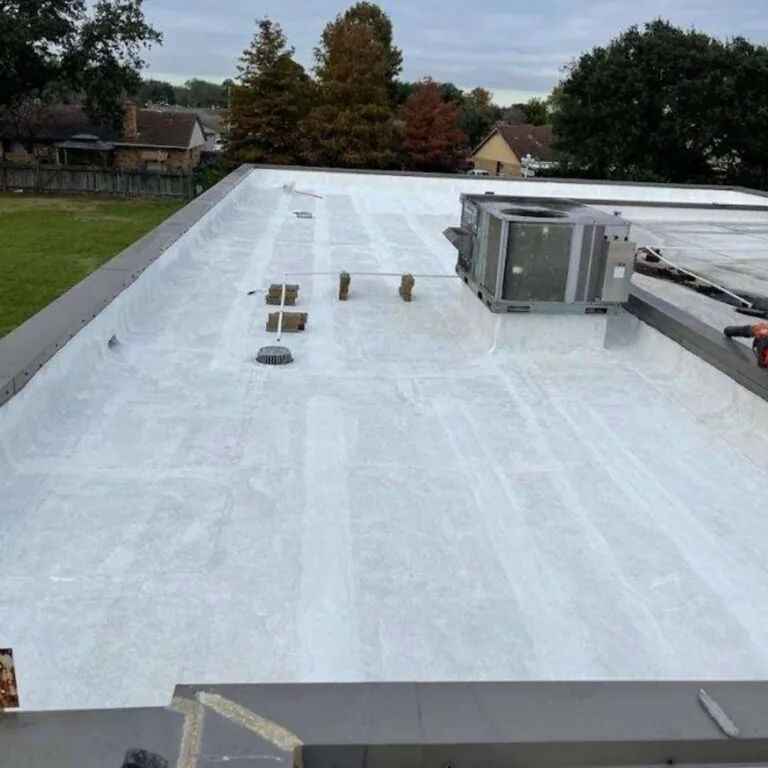
Hot-air welding fuses the overlapping sheets, and a good seam is uniform, flat and slightly glossy at the edge. We run a probe along it and look for gaps, wrinkles and cold welds. Weak welds are likelier at T-joints, around penetrations and in corners where the welder had the least room.
On an older PVC roof, a plasticizer loss can make the sheet stiffer and more brittle, and it may begin to shrink. The shrinkage pulls the membrane away from walls and curbs, and the weakest flashing opens first. We press on flashing at inside corners, look for tension marks and check the fasteners at the base. A small repair with a welded patch or a new flashing section can restore the roof if caught early. In the cold, PVC stays workable, and the record low in New Bedford of minus 12 F matters because a flexible sheet is easier to weld and repair in a cold snap.
What holds a PVC roof against harbor wind?
The attachment pattern for this sheet answers to Hurricane Bob's 89 mph gusts over Buzzards Bay and Hurricane Carol's 80 to 110 mph winds across eastern Massachusetts. A PVC sheet is attached with fasteners and plates, with adhesive over a prepared substrate or with a ballast layer, and each method has to be sized for the wind zone.
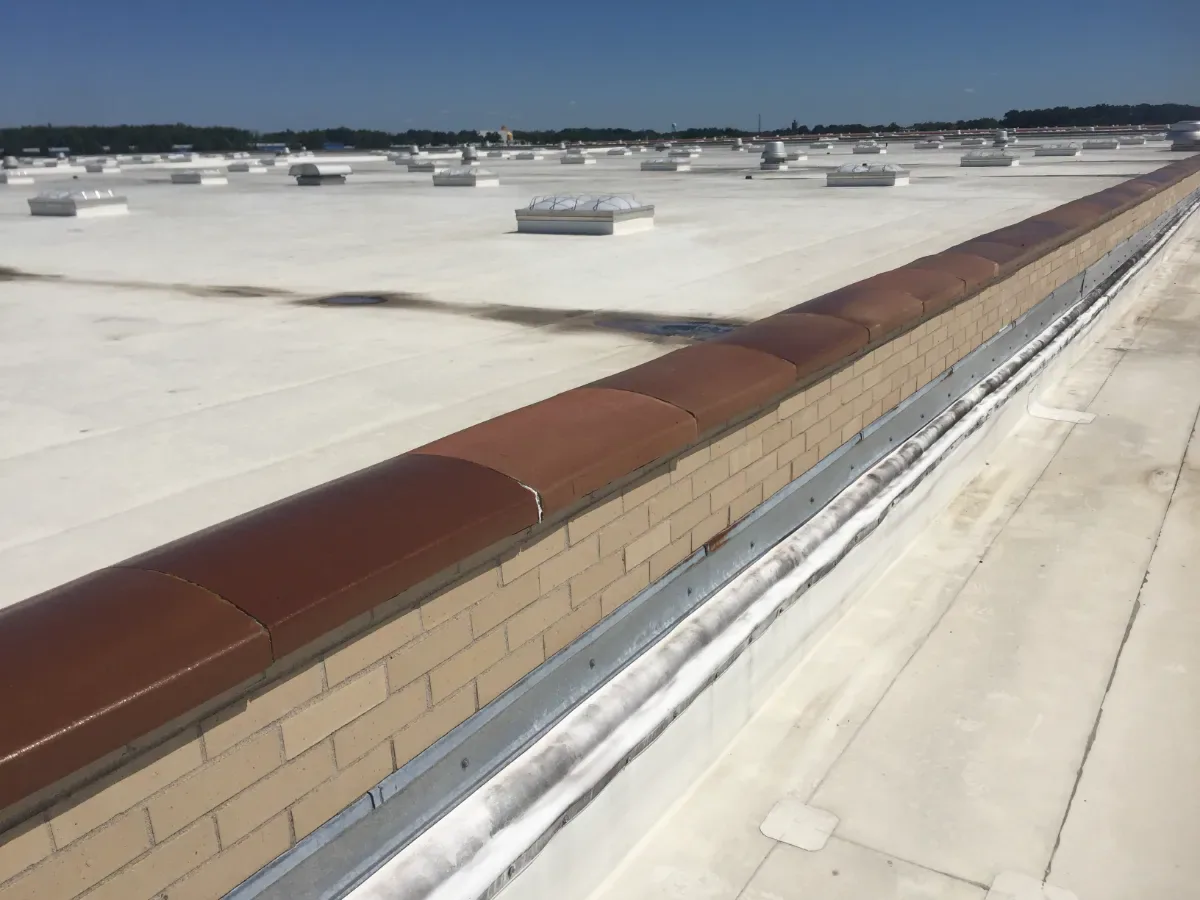
On a waterfront building we pay close attention to the perimeter and corners, since uplift concentrates there. We inspect plates for back-out, check edge metal for loose fasteners and look at the termination bars along walls. The waterfront is the most exposed setting in the city, and a loose gravel stop or a lifted edge there is repaired the day it is found. Our edge metal and gutter work is part of every PVC scope near the harbor.
What does a roof over a kitchen or a lab need?
Exhaust fans over kitchens, food-processing areas and laboratories deposit residue on the roof. Grease softens many roofing materials and makes foot traffic slippery, and the residue gathers at the fan curb and runs downslope. A good PVC detail uses a grease-resistant membrane, a raised curb, a grease containment tray or a drain and a protective walkway.
We inspect each exhaust location for staining, soft membrane and clogged drains. A chemical-tolerant sheet earns a look wherever a hospital vents lab or kitchen air, and St. Luke's Hospital in New Bedford, with its Level II trauma center and rooftop helipad, shows how specialized hospital roofing can be. A restaurant roofing project has the same needs on a smaller scale.
How does PVC handle snow, ice and ponding?
Winter snow in New Bedford runs around 32.5 inches, mostly from December through March. A PVC roof carries that load as well as any single-ply sheet, but the drains and edges still decide whether meltwater leaves or sits. We check drain sumps, tapered crickets and low spots. Ponded water on a seam is a warning, and a frozen drain is a leak waiting to happen.
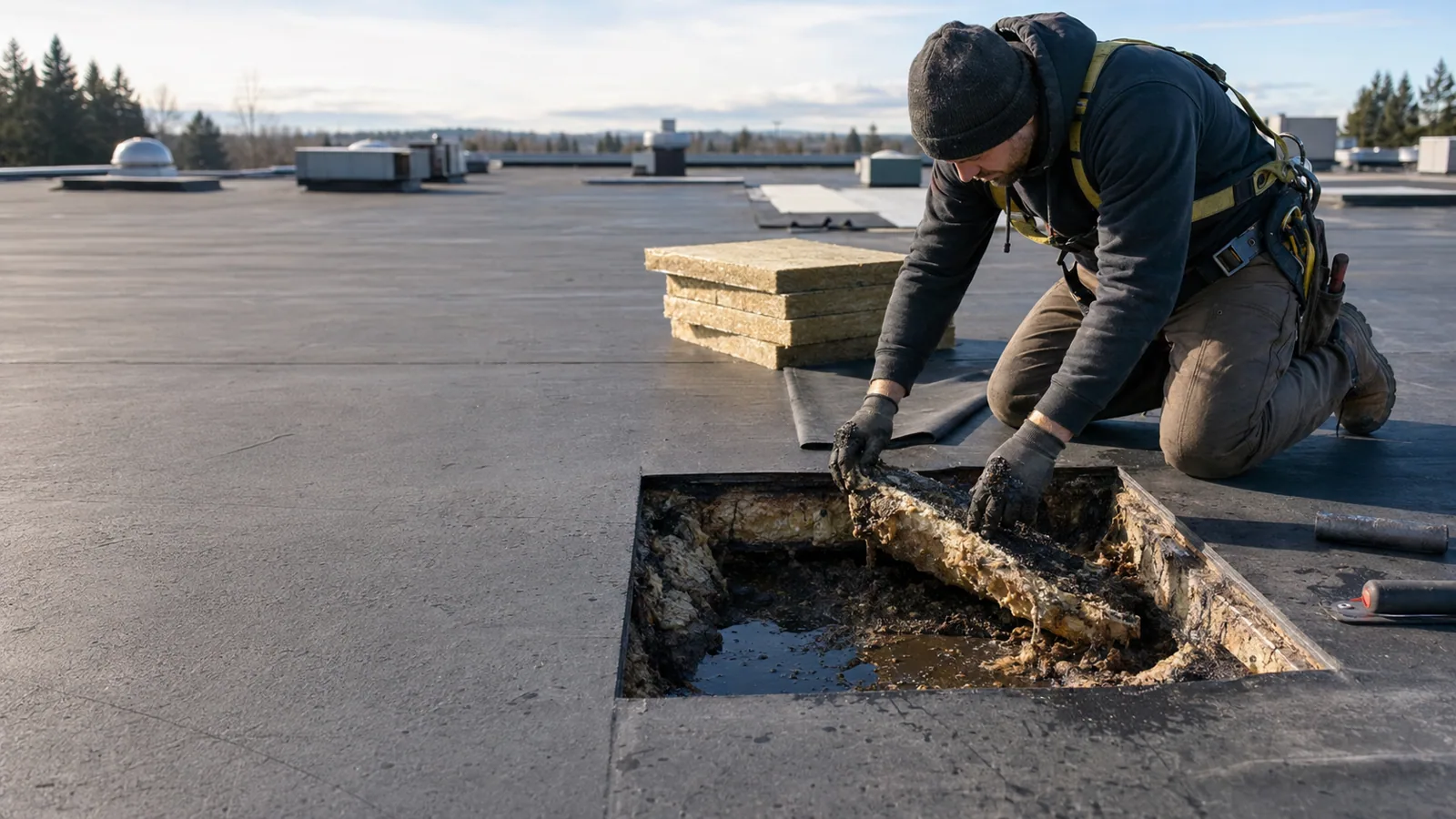
Foot traffic in winter matters as well. Crews clearing snow or servicing equipment can scrape or puncture a sheet, so we mark walkways and recommend protective pads at repeated paths. Where a roof has been punctured, a welded patch restores it, and where the puncture is old and the insulation below is wet, a commercial roof repair scope includes removal of the wet board.
Can PVC go over an old roof or into a mill?
PVC can be installed as a recover over a sound, dry roof with a suitable cover board, and it can be mechanically attached over a deck that suits fasteners. A moisture scan and core cuts confirm whether the existing assembly qualifies. On an older building such as the Wamsutta, Hathaway or Kilburn mill in New Bedford, parapet height, wall flashing and deck capacity limit the system, and each limit is recorded on the roof plan.
If the old roof is wet, the wet insulation comes out first. A commercial roof replacement with PVC gives a clean base, new insulation and new flashing, and it lets the roof drain properly. In some cases the choice between PVC and KEE roofing, a PVC-alloy sheet, turns on the type of contamination, and we explain why.
Commercial Roofing Questions
How do I know whether my roof needs a chemical-resistant membrane?
Look at what vents onto it. Kitchen exhaust, food processing, laboratory stacks and some manufacturing leave residue that attacks ordinary sheets. We check the membrane near each outlet for staining, swelling or softness. If we find them, PVC or KEE is worth discussing.
Is PVC more expensive than TPO?
Usually the material costs more, and the installation is similar. The extra cost pays off where chemical or grease exposure would shorten the life of a cheaper sheet. We price both when the choice is open so the owner can compare the whole life cost.
Can grease on the roof be cleaned off?
Surface grease can be cleaned, but a sheet that has absorbed it may have swollen or softened. We test the membrane near the outlet, and if it is damaged we replace the affected section and add containment so the next grease deposit stays off the roof.
What happens to the seams as PVC ages?
The seams are welded and normally outlast the field, but plasticizer loss can stiffen the sheet and cause shrinkage. We probe seams and check flashing for tension. Catching shrinkage early lets us repair it with new flashing instead of a full replacement.
Do you have to shut down the kitchen to roof over it?
Not usually. We cover air intakes, coordinate the exhaust fan schedule with the manager and phase the work around meal hours. For the curb itself we may need a short shutdown, which we arrange in advance.
Ready to review the roof scope?
Request a Roof AssessmentKeep Reading