Commercial Roofing Services
Commercial Roof Edge Metal and Gutters in New Bedford, MA
Inspect commercial roof edge metal, coping, gutters and downspouts in New Bedford, MA, with repairs matched to the roof assembly and wall transition.
Request a Roof Assessment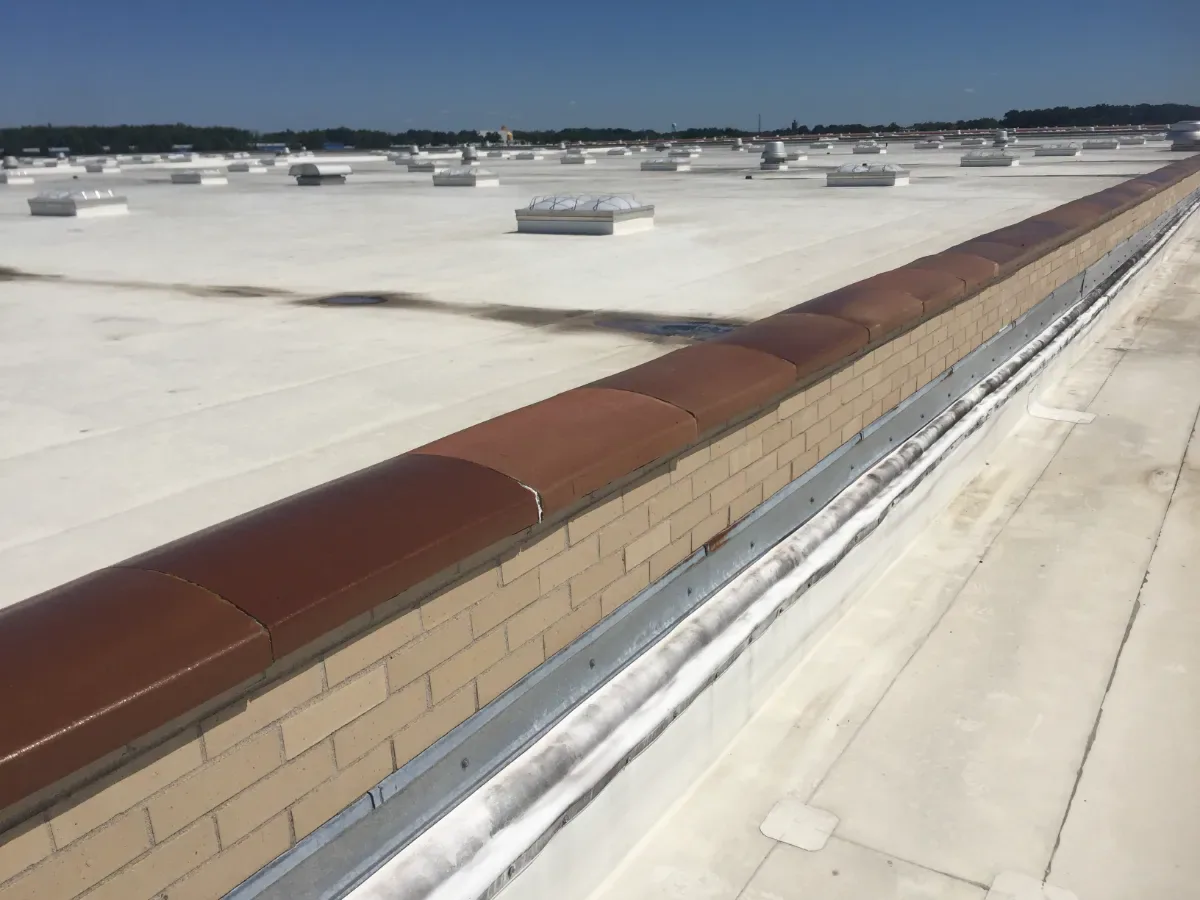
What is moving at the roof perimeter? Start with the edge metal, coping joints and gutter support, then check how each piece meets the membrane and wall. In New Bedford, MA, we inspect those transitions for loose fasteners, open seams, failed sealant and any route by which water could reach the roof deck or masonry.
Edge repairs need more than a bead of sealant. The metal must be secure, the substrate must hold its fasteners, and the flashing must connect to the roofing system without trapping water. We photograph the condition, mark the affected run and explain whether the repair calls for refastening, replacement metal, membrane work or a broader look at the parapet.
Where does wind test the perimeter?
Wind uplift presses hardest at corners and edges, where a loose gravel stop or coping joint can open and let rain reach the wall. We check fastener back-out, metal laps, cleats, sealant lines and the membrane termination beneath the edge. If a section moves under pressure, we examine the substrate and attachment pattern before choosing a new fastener or replacing the assembly.
Hurricane Bob produced gusts up to 89 mph at a Buzzards Bay station in 1991, and Hurricane Carol brought a record 20-foot storm tide to New Bedford in 1954. Those events explain why a coastal roof inspection should document the condition at corners, parapets and rooftop equipment transitions instead of treating perimeter metal as cosmetic trim.
Fastener choice matters as much as the metal itself. Stainless or coated fasteners resist the damp that collects at a harbor-side edge, and spacing is tightened at corners where uplift peaks. We note the fastener type found on the roof and the type installed, so a later inspector can tell at a glance whether a run was reset to the exposure or only tightened.
What should a parapet coping protect?
Coping covers the top of a parapet and sheds water away from the wall, while its joints allow movement without leaving a gap. We look for open seams, failed splice plates, loose cleats and staining below the cap. The counterflashing and membrane termination below it need a separate check. A tight coping joint does not correct a flashing defect hidden behind the metal.
New Bedford’s Wamsutta, Hathaway and Kilburn mills are examples of the city’s 19th-century mill stock, where roof edges meet substantial masonry. We inspect the actual wall-to-roof transition and note where through-wall flashing, counterflashing or parapet repair is needed before water moves into the building.
How do gutters and downspouts affect the roof?
We check gutter pitch, hangers, seams, outlets and the discharge point. A sagging run can hold water and debris; a loose downspout can discharge against a wall or foundation. At the roof edge, the gutter apron must extend beneath the roofing as intended. If the membrane or metal edge has been cut short, replacing the gutter alone can leave the upper connection open.
New Bedford receives about 52 inches of precipitation across roughly 124 days each year, so a restricted outlet can be tested repeatedly. We photograph the gutter line and note whether water backs up at the outlet, overflows the fascia or reaches a roof edge. When the problem begins at a blocked primary drain, a drain and scupper inspection can address the low point as part of the same drainage review.
How is the metal repair selected?
First we identify the metal type, attachment and adjacent roofing. A small open joint may need compatible sealant and a secure splice; a loose run may need new cleats or replacement sections. Where corrosion has thinned the metal or fasteners no longer hold, covering the surface can conceal rather than correct the failure. We show the affected length and keep a repair scope tied to those locations.
At the New Bedford Waterfront, wind exposure and working building access can make roof-edge condition a practical maintenance concern. If the membrane termination has lifted under the edge, our storm damage repair or commercial roof repair scope identifies both the metal and the membrane work needed to close the transition.
We also inspect corners and changes in elevation, where short metal pieces and sealant joints often meet a longer run. The repair must let water shed outward and keep the membrane termination supported. If we find damaged wood nailer or a loose cleat, we document that substrate condition before setting new metal. This prevents a replacement cap from being fixed to a surface that cannot hold it.
What access and sequencing should be planned?
We confirm roof access, safe staging, tenant activity and any equipment or loading restrictions before work. A gutter replacement may require exterior lift access, while coping work may need a clear roof perimeter. We coordinate the route with the facility contact and protect the area below from falling tools or removed metal. On an occupied building, work sequencing should leave required exits and service routes available.
If a roof has several additions, the edge detail may change at each transition. We label the runs separately and record the metal profile, termination and condition so later repairs do not assume one continuous assembly. The condition report can also note locations where new rooftop equipment or future membrane work must reconnect to the perimeter.
Exterior work can affect entrances, loading areas and pedestrian routes below the roof edge. We identify those areas with the property contact and set the staging plan before the crew arrives. If a gutter section discharges near a doorway or service lane, we agree on temporary protection and access timing. Those details keep the roofing scope connected to how the building is used each day.
What should the closeout show?
We provide before-and-after photographs, the repaired run, materials used and any condition that remains open. The record identifies whether we refastened the edge, replaced a section, repaired membrane flashing or cleared a gutter. If a downspout discharge remains outside the roofing scope, we state that clearly so the building owner can plan the next trade.
For a New Bedford property with a long parapet or several roof additions, a marked plan helps the facility team find the exact location during its next inspection. A maintenance visit can check the repaired joints and outlets after seasonal weather. That follow-up lets the owner compare the edge condition over time rather than reopen the same question from memory. We leave the marked location with the facility team for reference.
Commercial Roofing Questions
Can loose coping be secured without replacing it?
Sometimes. We inspect the metal, cleats, fasteners and substrate first. If the components remain sound, refastening and joint repair may be appropriate; corroded or poorly attached sections may need replacement.
Why does a gutter overflow when it looks clean?
Pitch, outlet restriction or downspout capacity may be the issue. We check the full path from the gutter to its discharge, then look at the roof edge detail that feeds water into the run.
Will sealant stop a leaking parapet?
Only when the joint is the actual failure and the adjoining metal is sound. We inspect the coping, counterflashing and membrane termination before deciding whether sealant, flashing repair or metal replacement is needed.
Can edge work be done while the building is occupied?
It can be planned around operations when roof access, exterior staging and the area below are coordinated. We agree on the work zone and sequence with the facility contact before removing metal or moving materials.
What should be checked after strong wind?
Look for displaced metal or debris from a safe vantage point and report active water entry. We inspect fasteners, joints, terminations and rooftop equipment, then document movement before recommending repair.
Ready to review the roof scope?
Request a Roof AssessmentKeep Reading