Service Areas
Commercial Roofing in Fall River Industrial Park, Fall River, MA
Commercial roofing in Fall River Industrial Park, Fall River, MA: upland wind exposure, fastener back-out, ballast and snow-load checks on industrial roofs.
Request a Roof Assessment
Does an upland industrial roof face the same wind as one on the waterfront? It does not, and the difference is where an inspector starts. The park lies north of Wilson Road with Route 24 on its west side and Riggenbach Road on its east, in a city built on hillsides that climb more than 200 feet from the water, so its upland buildings face a wind exposure unlike the waterfront's. A roof in the park is marked first at its perimeter, its fasteners and its drains, with the questions of wind uplift and snow load placed side by side.
What does the hill do to wind on a roof?
Elevation raises exposure. A building on a rise has less shelter from trees and structures, and wind reaches the roof edge and corners with more force than the same wind at a lower, more protected site. A perimeter has to survive the kind of storm that New Bedford's records describe, Bob's 89 mph gusts over Buzzards Bay in 1991 or Carol's 80 to 110 mph winds across eastern Massachusetts in 1954, wherever the building stands.
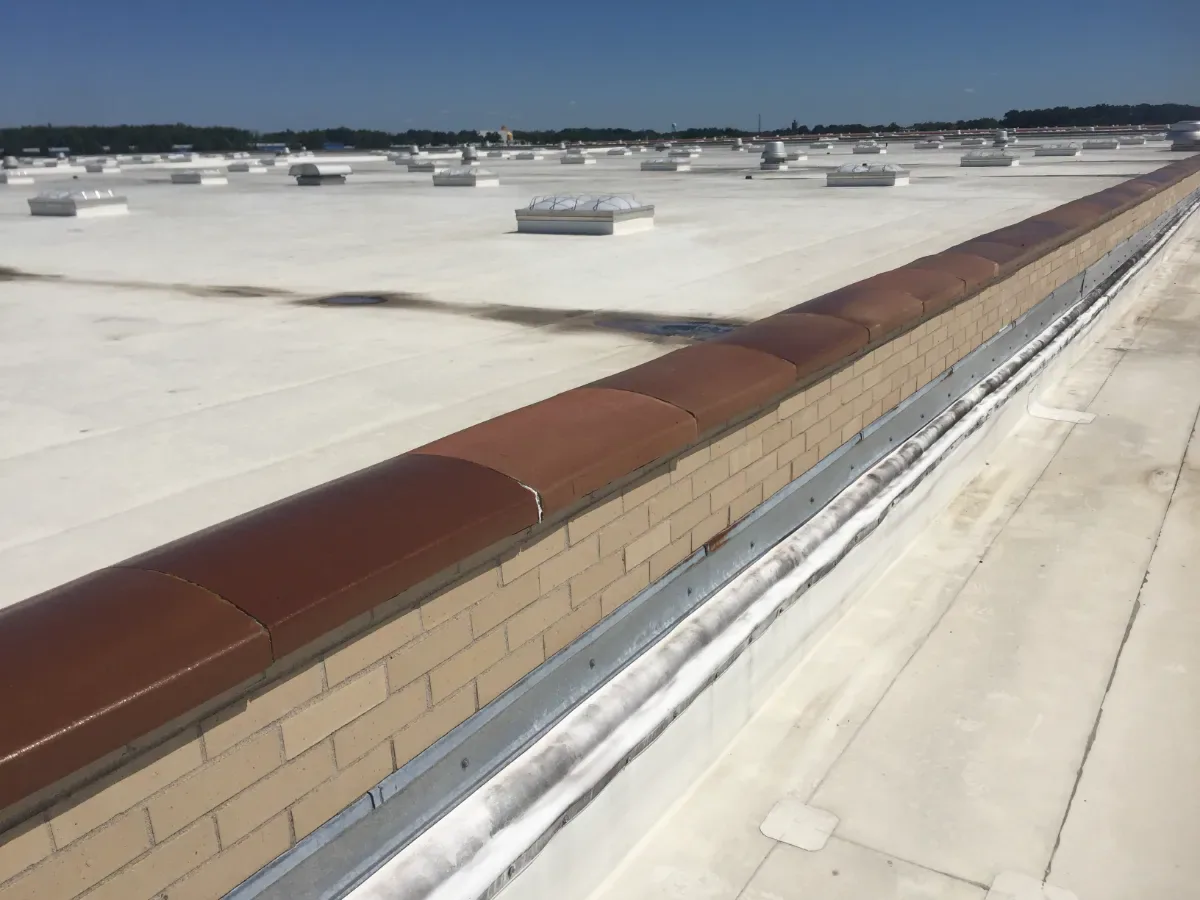
We look at the edge metal, the gravel stop, the fastener spacing at the corners and the lap sealant on every splice near the edge. On a membrane roof, we check the attachment pattern against what the manufacturer calls for at the perimeter and corner zones. Where a roof has lost its edge strength, the repair is at the perimeter, not in the field, and the edge metal work is priced by the linear foot.
What happens to large metal and membrane roofs over time?
A large industrial roof is usually one of two things: a metal panel roof fastened through the panel, or a low-slope membrane over insulation and deck. Each has its own failure. On metal, fasteners back out as the panels expand and contract, the washers dry, and the holes widen into leaks. On a membrane, seams open, flashings shrink away from walls, and rooftop units wear the sheet where technicians walk.
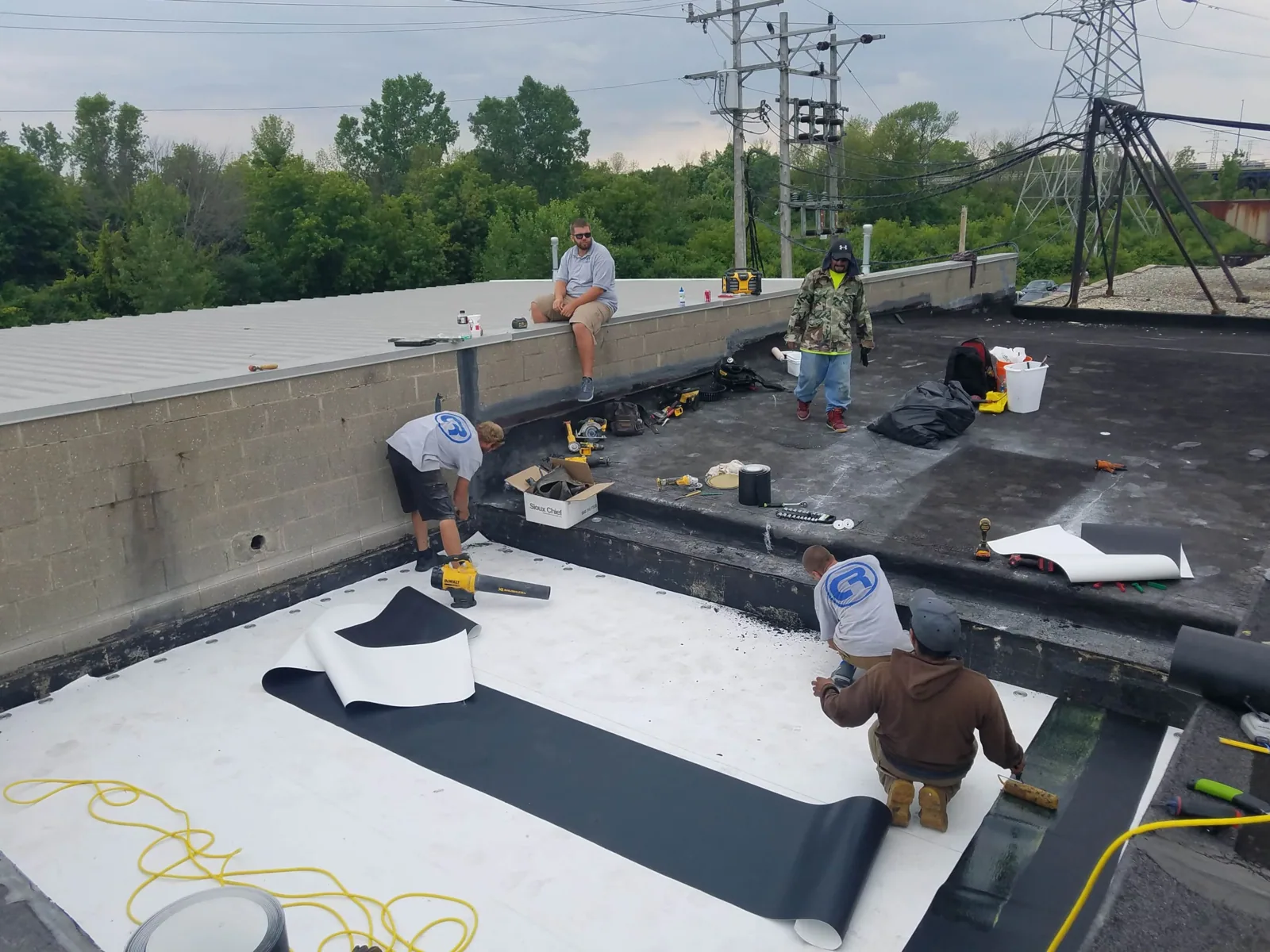
We probe the seams, check the fasteners row by row, measure membrane shrinkage at the walls and look for ballast displacement where stone is used. Each finding is numbered on the plan with its position. For a metal roof the repair may be fastener replacement and lap sealant. For a membrane it may be a new termination bar and sealant. When the problems are widespread, the options are a coating, a recover or a replacement, with cost drivers set out for each.
Large roofs also need a record of what was added after the first installation. A rooftop unit relocated for a production change, a vent cut for a new process, a conduit run added by an electrician: each shows as a patch, a boot or a curb of a different age, and the roof plan lists them by number so the next repair crew can tell original details from later ones.
How much snow does a wide roof carry?
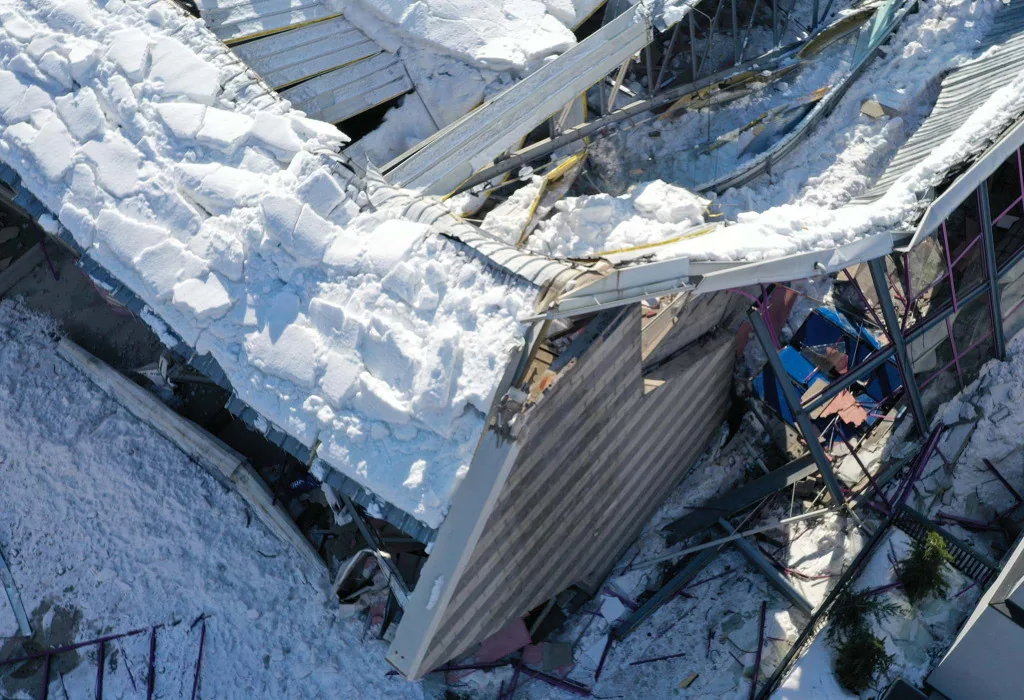
Fall River received 24.1 inches of snow in the January 2015 blizzard. New Bedford averages 32.5 inches of snow a year, mostly from December through March, with 52.21 inches of precipitation over about 124 days and a record low of minus 12 F. A wide roof gathers that snow in valleys, behind parapets and around rooftop units, and the melt runs to drains that may be partly clogged.
An inspector marks the drain sumps, the tapered crickets that lead water to them and any area where ice has formed at the edge. Ponding that persists after a thaw gets a position on the plan and a recommendation: added taper, a new drain or a scupper. Ice at edges can pull gutters and metal loose, so the gutters and leaders are checked in the fall, before the first freeze, when cleaning is cheaper than repair. Our snow and ice damage repair starts with the drainage.
Which kinds of industrial buildings do these checks serve?
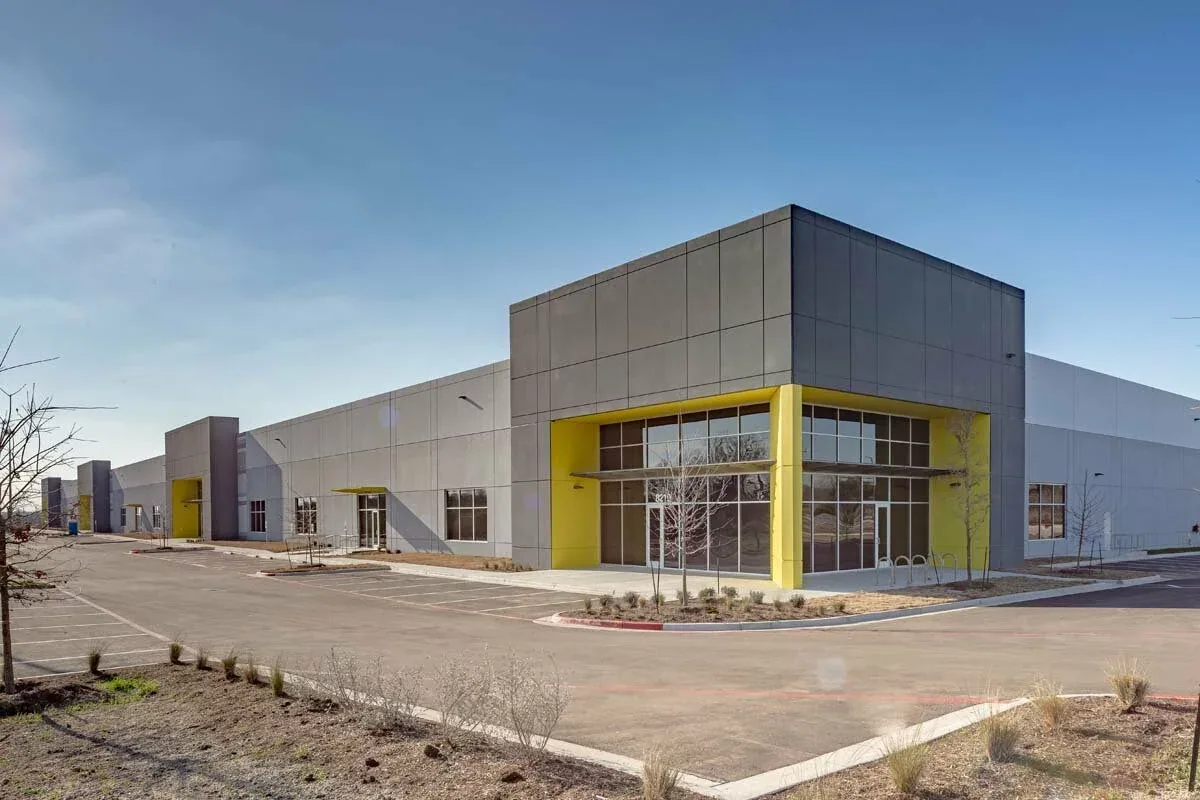
The checks apply across the building types that fill an industrial park: storage and warehouse roofing, manufacturing plant roofing and distribution center roofing. We ask the owner for the roof plan, the use of the building and the equipment on top, and the first visit confirms the roof type by core cut.
Use changes what we look for. A production building may have exhaust that discharges onto the roof. A warehouse may have dock canopies and many roof drains. A distribution building may have large skylight areas and roof hatches. Each has a different set of terminations to probe. The plan records them and ranks each by the risk of water entry.
How is roof work scheduled around operations?
An industrial building keeps shifts running, trucks arriving and dock doors open. Roof work is planned in sections, with staging away from dock doors and a clear route for deliveries. Loud work is moved to the hours the plant manager chooses. Interior protection goes up under any area where the deck is open, and each section is closed against weather by evening. Winter limits adhesives and sealants, so the larger work runs from late spring into fall. The park is reached off Route 24, the Fall River Expressway, which borders it on the west, and we plan truck and crane access with that approach in mind.
Wilson Road, Route 24 and Riggenbach Road frame the park, so crews and trucks approach from known directions, and a shared road means the staging plan has to say which lot holds the lift, which holds the dumpster and where the delivery truck waits. Neighbors learn the schedule through the property manager's notice, which we draft and the manager sends.
What does a first visit include?
Send the roof plan and the last inspection notes. We walk the roof with a probe, a moisture meter and a camera, mark each finding and review it with you on the roof. The roof condition report follows, with photographs and a priority for each item. Owners with properties elsewhere in the city can use the same format for Fall River buildings, and so can owners east of the Taunton River in Somerset.
Commercial Roofing Questions
How do I know if fasteners on my metal roof are backing out?
Look for raised screw heads, dark rings around fasteners and stains below the panel seams. We check every row with a driver, replace loose screws with oversize ones and reseal laps. A roof with many failures may need a retrofit.
What is ballast displacement?
On a ballasted roof, stone holds the membrane down. Wind and drainage can move the stone, leaving bare membrane exposed to sun and wind. We re-spread the stone, check the sheet for damage and clear stone from the drains.
Does an upland site need a different attachment pattern?
The pattern comes from the manufacturer and the wind design for the building, and it is checked in the field. If the existing attachment falls short at the corners and perimeter, we add fasteners or plates there.
Can part of a roof be replaced while the rest is kept?
Yes, when the remaining roof is dry and sound. A moisture scan finds the wet areas, and those come out. The new section is tied into the old with a proper termination and a transition detail.
When should gutters and leaders be cleaned?
In early fall, before the first freeze, and again after the winter. Ice and snow load edges and gutters, and cleaning in the fall costs far less than repairing pulled metal in January.