Roof Damage Repair
Snow and Ice Roof Damage Repair in New Bedford, MA
Snow load, ice dam and freeze-thaw damage repair for flat commercial roofs in New Bedford, MA, with drain clearing, moisture scans and perimeter repairs.
Request a Roof Assessment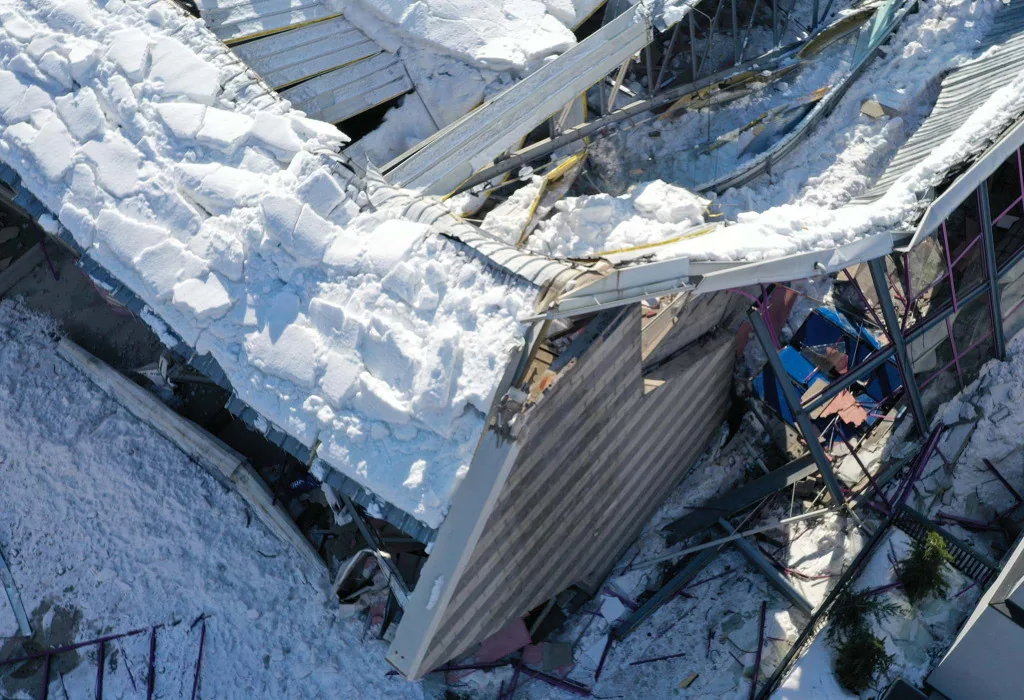
Did the snow do this to the roof, or was the roof already failing when the first flakes fell? A facility director looking at a brown ring on a ceiling tile along the north wall in March is usually looking at meltwater that has found a way under a frozen edge, and the inspector's first finding is a drain sump packed with ice, a gravel stop lifted by a frozen lap and a low spot where the sheet has stayed wet since January. Snow and ice roof damage repair in New Bedford, MA starts at the drains and the perimeter, moves inward to the insulation, and ends with each finding marked on the roof plan so the work addresses the cause and not only the stain.
What does the inspector find after a heavy snow season?
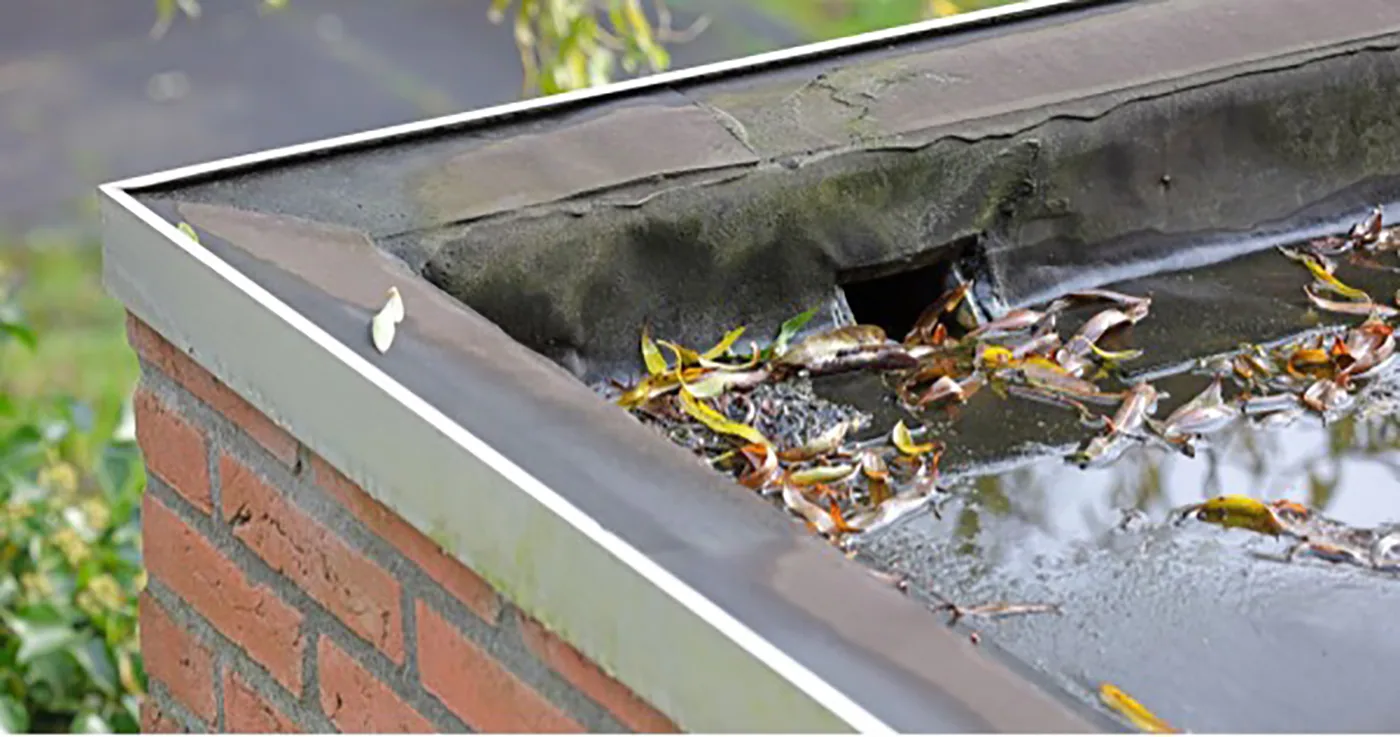
Snow rarely damages a flat roof evenly. It collects behind parapets, around rooftop units and in every low spot where drainage was already poor, and the weight of the pack adds to whatever the roof was carrying before. We look first at the drain sumps and scuppers, because a blocked outlet turns meltwater into a pond that sits on the sheet for days, and then at the places where the deck has dipped enough to show a depression in the membrane.
Beneath the ice we look for crushed or displaced insulation, fastener heads that have pushed up through the sheet and seams that opened as the membrane contracted. New Bedford's snowfall averages 32.5 inches, most of it from December through March, so the roof spends a long season under load, and damage found in March is often the result of weeks of cycles rather than a single storm.
How does an ice dam form on a commercial roof?
Heat escaping from the building warms the roof surface above it, melts the snow from underneath and sends meltwater down the slope toward the colder edge, where it refreezes in a ridge. The ridge holds back the next melt, which backs up under laps, under the gravel stop and into the wall-to-roof transition. On a low-slope roof the same thing happens at scuppers and edge drains that freeze shut, so water stands against the parapet and works into every joint it touches.
The stain that results appears at the perimeter, often along the same wall year after year, and the inspector reads it as an insulation and drainage question as well as a membrane question. Poor edge insulation, a missing air seal or a high drain can each produce it. We check drains and scuppers and the thermal path at the perimeter before recommending a patch, because a patch alone leaves the cause in place.
What did the January 2015 blizzard show about roof loads?
The January 2015 blizzard piled 24.1 inches onto Fall River while East Freetown got 26.0, and both numbers are reminders that a single storm can add more than a typical month of snowfall. Wind during such a storm moves snow off the open field and drops it in drifts behind parapets, beside penthouses and against taller neighboring walls, so the load on a few feet of roof can far exceed the average over the whole surface.
After a storm of that size we look at the drift zones first, where the deck may have flexed, the membrane may have stretched and any rooftop equipment may have been pushed on its supports. Owners in Fall River and Freetown can use the same approach for any heavy storm: locate the drifts from the wind direction, inspect the deck from below, and look for fresh cracks in the interior wall finish that suggest movement.
What does freeze-thaw do to a membrane that has been wet?
New Bedford has recorded a low of minus 12 F, and cold of that kind stiffens a membrane and shrinks it against its fasteners and its flashings. When water has already entered the insulation, each freeze expands it and each thaw lets it settle, and over a winter the cycle widens small gaps into open seams. A seam failure that appears in February is often the end of a process that began with a minor lap defect the previous summer.
With 52.21 inches of precipitation falling over about 124 days in an average year, there are many chances for water to find a gap before a cold snap. We scan for wet insulation, probe the laps nearest the drains and the walls, and measure any shrinkage at the edges. If the board is wet, it is cut out and replaced, and the cause of the entry is rebuilt, which is how a ponding water repair and a snow repair often turn into one scope.
How should snow come off a roof, and how should it not?
A shovel with a metal blade can cut a sheet that has hardened in the cold, and an ice chipper can peel a flashing from a wall. Where removal is necessary, we leave a thin layer of snow over the membrane, use plastic or rubber-edged tools, clear the drains by hand and work from the outer areas toward the drains so that meltwater has somewhere to go.
Removal is a decision for the owner and, in a heavy snow, the engineer. If the deck shows signs of distress, such as a visible dip or a door that sticks below, the roof is cleared in controlled stages and monitored. On a long, wide roof we plan clearing in strips so that the weight comes off evenly, and we ask the structural engineer to sign off on the order.
What gets repaired, and when can it be done in winter?
Temporary repairs can be made in cold weather: we clear drains, seal open laps with cold-applied products, patch with tape and cover wet areas to stop further entry. Permanent repairs wait for temperatures that allow adhesives to cure and membranes to weld, though some heat-welded patches can be done in a short winter window with preheating and shelter.
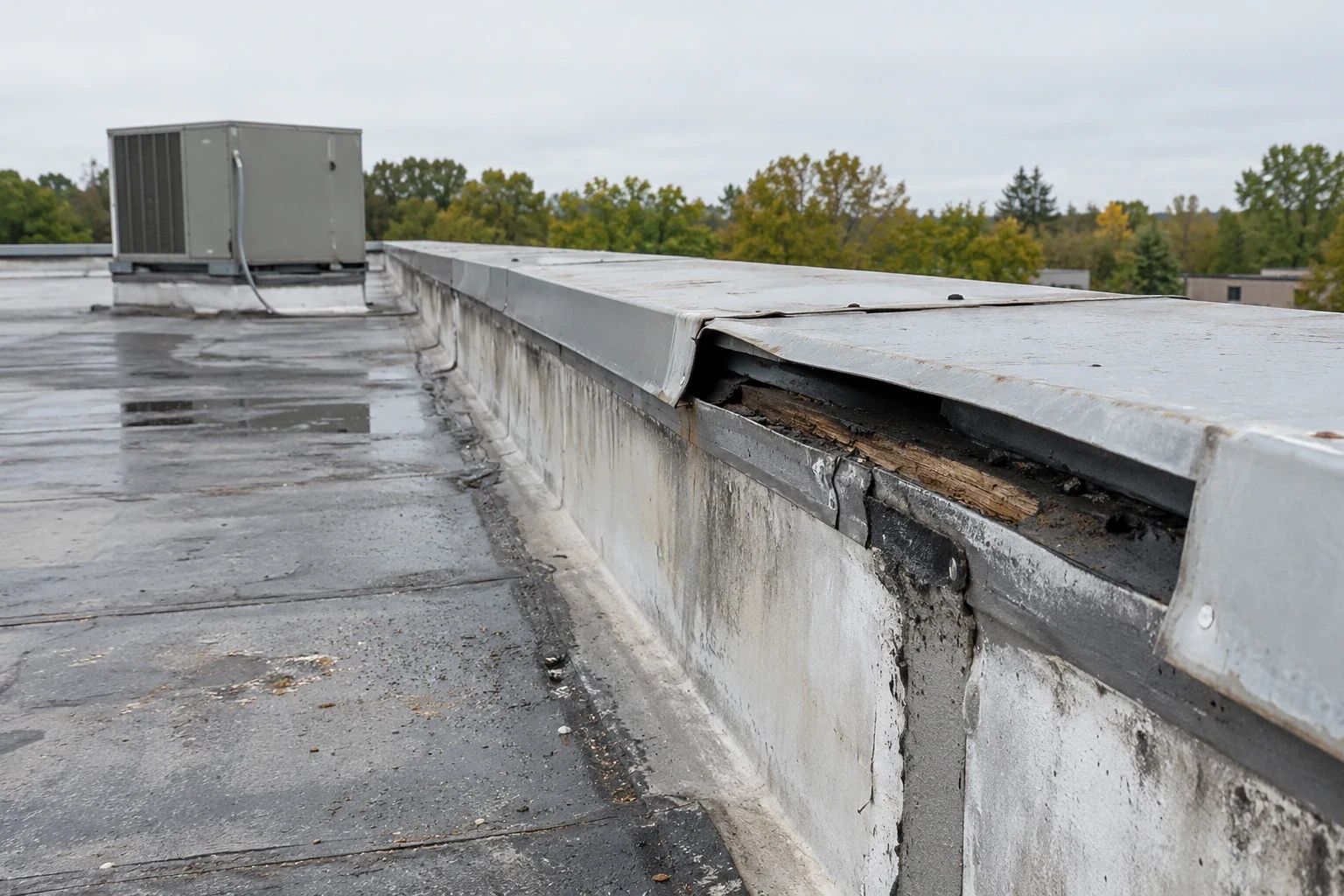
The permanent scope usually includes drain rebuilds, replacement of wet insulation, resetting of lifted fasteners, edge metal repairs and flashing repairs at the walls. For buildings such as the 19th-century mills in New Bedford, the parapet and the through-wall flashing are examined with the field, since an ice-damaged termination lets water behind the wall. Any urgent leak can go to emergency roof repair while the permanent work waits for spring.
Commercial Roofing Questions
Is a ring of stains along one wall every March an ice dam problem?
Often, yes, and it tends to repeat in the same place. Meltwater refreezes at the edge, backs up under laps and enters at the wall transition. We check the drains and scuppers, the insulation and air seal at the edge and the flashing before any patch, since patching without fixing the cause leaves the ring to return.
How does a blizzard change the load on a flat roof?
Wind moves snow into drifts behind parapets and beside penthouses, so some areas carry far more than the average. In the January 2015 blizzard Fall River took 24.1 inches while East Freetown took 26.0, and a drift can pile far deeper. We inspect drift zones first and bring in an engineer if the deck shows distress.
Can temporary repairs be made in freezing weather?
Yes. We clear drains, seal open laps with cold-applied products, tape and cover wet areas to stop further entry, and number every measure on the plan. Permanent repair waits for temperatures that let adhesives cure and sheets weld, unless a short winter window with shelter and preheating permits a welded patch.
What tools should crews use to remove snow from a membrane?
Plastic or rubber-edged tools, hand clearing at drains and a thin layer of snow left on the sheet. Metal blades and ice chippers can cut or lift a membrane that has stiffened in the cold. We mark any spot where a tool touched the surface so the next inspection can check it.
Why does a seam open in February when it was fine in autumn?
Cold shrinks the membrane against its fasteners and flashings, and wet insulation expands as it freezes. A lap defect that was closed in summer can open over a winter of cycles. We probe seams near the drains and walls, scan for wet board and repair the cause along with the seam.
Ready to review the roof scope?
Request a Roof AssessmentKeep Reading