Roof Damage Repair
Seam Failure Repair in New Bedford, MA
Seam failure repair in New Bedford, MA probes every lap, finds why it opened and closes it with a welded or spliced fix. Send the roof plan for a seam map.
Request a Roof Assessment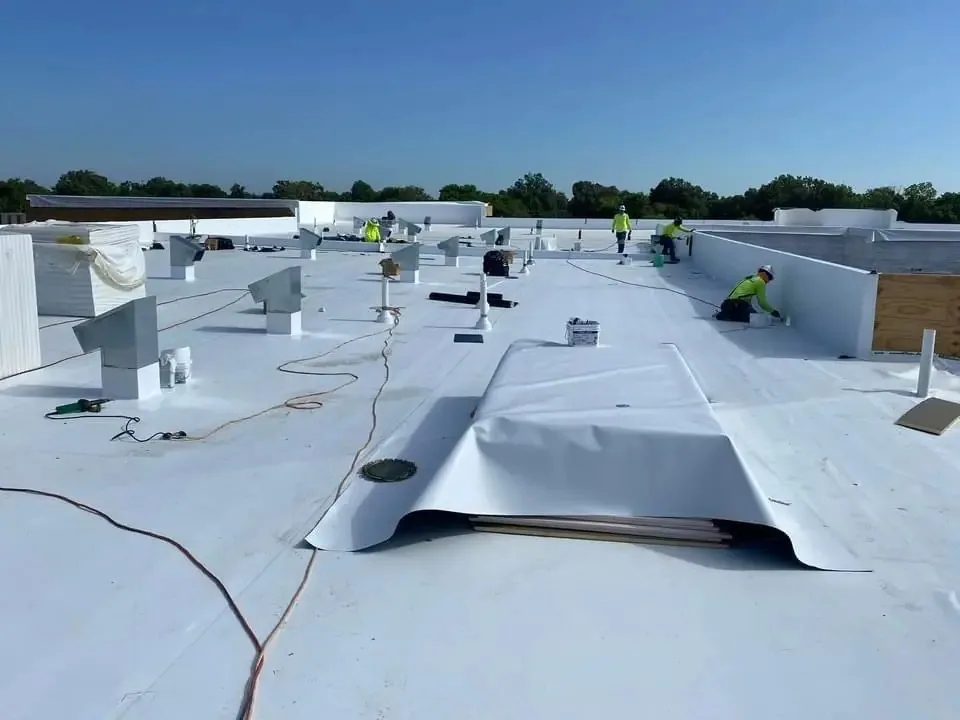
Is a seam that opens in February a winter problem or a construction problem? In almost every case it is both, because cold shrinks the membrane and pulls on the lap, but only a lap that was already marginal gives way. A seam failure repair in New Bedford, MA therefore starts with a seam probe along the full length of the opening and well beyond it, since the visible gap is the sample and the weak welds on either side are the population.
What does the seam probe actually tell us?
We run a blunt probe under the edge of each lap with steady pressure and read what it finds: a bond that holds, a bond that peels with a light push, a void behind a closed edge or a weld that never fused. On a heat-welded single-ply roof a good weld shows a thin line of melted membrane at the edge, and a lap without that line is suspect even when it looks tight.
The same walk records the condition of the sheet around each failure. Brittle membrane that cracks when flexed will not take a new weld, and a seam in that material needs a different repair than a seam in supple sheet. Every probed lap, good or bad, is marked on the plan with a symbol so the seam map shows the roof as a whole.
T-joints, where three layers of membrane meet at a lap intersection, deserve a second pass, because the stepped thickness makes them the hardest place to get a full weld and the first place a cold snap finds the shortfall. We probe each one separately and photograph those that need rework.
Why do seams open in winter when they were welded in summer?
Recorded temperatures here run from minus 12 F to 107 F, a swing of 119 degrees that a membrane has to absorb by expanding and contracting. A lap seam sits at the point where two sheets are joined and carries the whole movement of the run, so the more length between expansion points, the more the weld is asked to do.
Membrane shrinkage compounds it. A sheet that has aged and lost plasticizer pulls toward its own center, and the pull concentrates at walls, curbs and seams. We measure the gap at the failed lap, look at how far the sheet has drawn back from adjacent details, and use that to judge whether a cover strip will hold or whether the field has reached the end of its life.
How does fastener back-out open a seam?
On a mechanically attached roof the seam sits beside a row of fasteners that hold the sheet to the deck. When a fastener backs out, the plate rises, the membrane lifts around it and the edge of the lap is pried from below, so a perfectly good weld can peel without any defect in the weld itself.
We check the plates on both sides of an open lap and reset or replace those that have lifted, then test the deck for withdrawal resistance where rust is visible. Welding over a rising fastener produces a clean-looking seam that peels again in the next wind event, and a wind damage inspection often finds that open seams and backed-out fasteners belong to the same story.
How are seams repaired on different membranes?
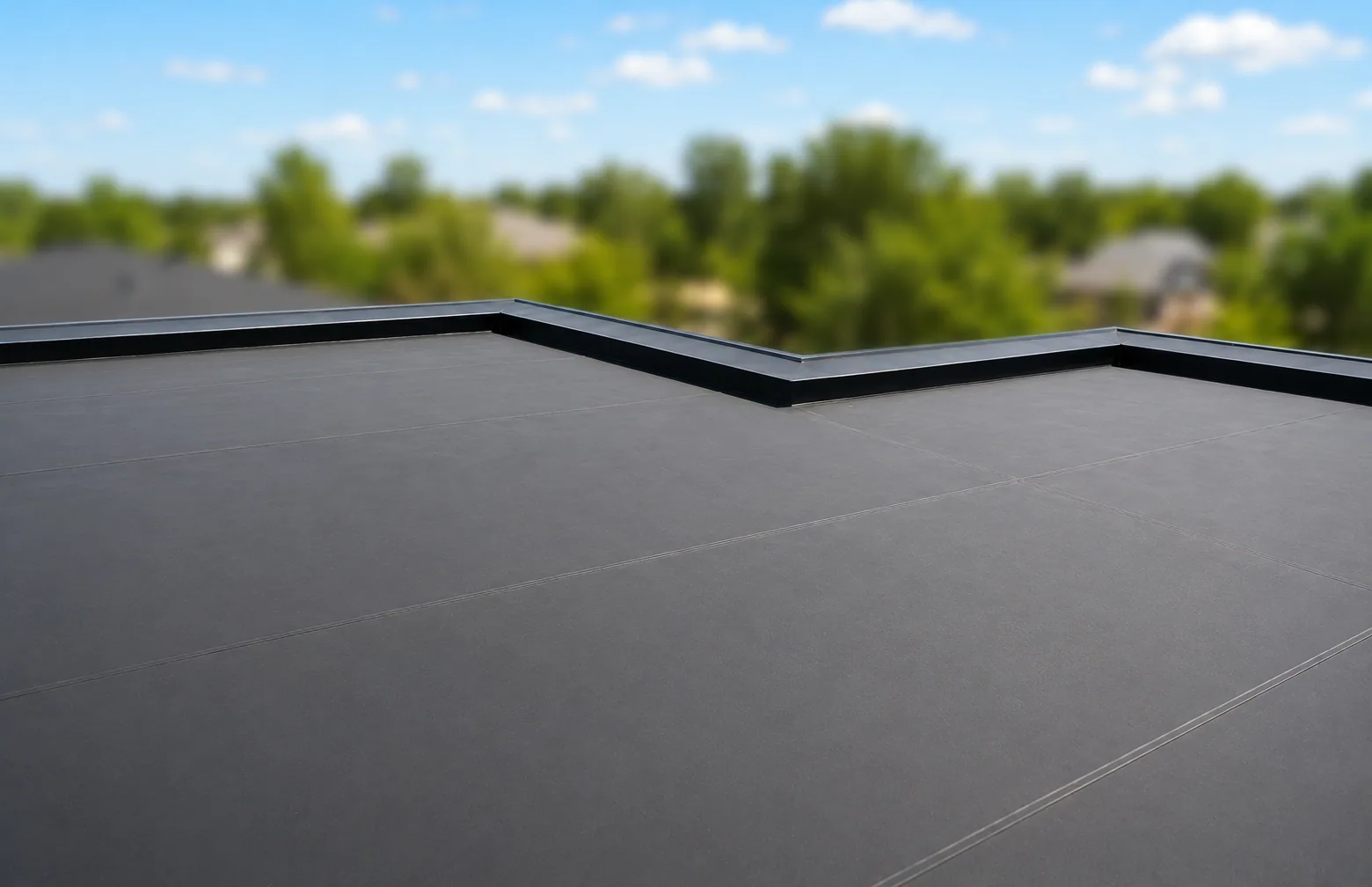
On TPO and PVC we clean both surfaces, heat weld a cover strip over the open lap and probe the finished edge. On EPDM the lap is cleaned back to fresh rubber, primed and closed with splice tape or adhesive under firm pressure along its length.
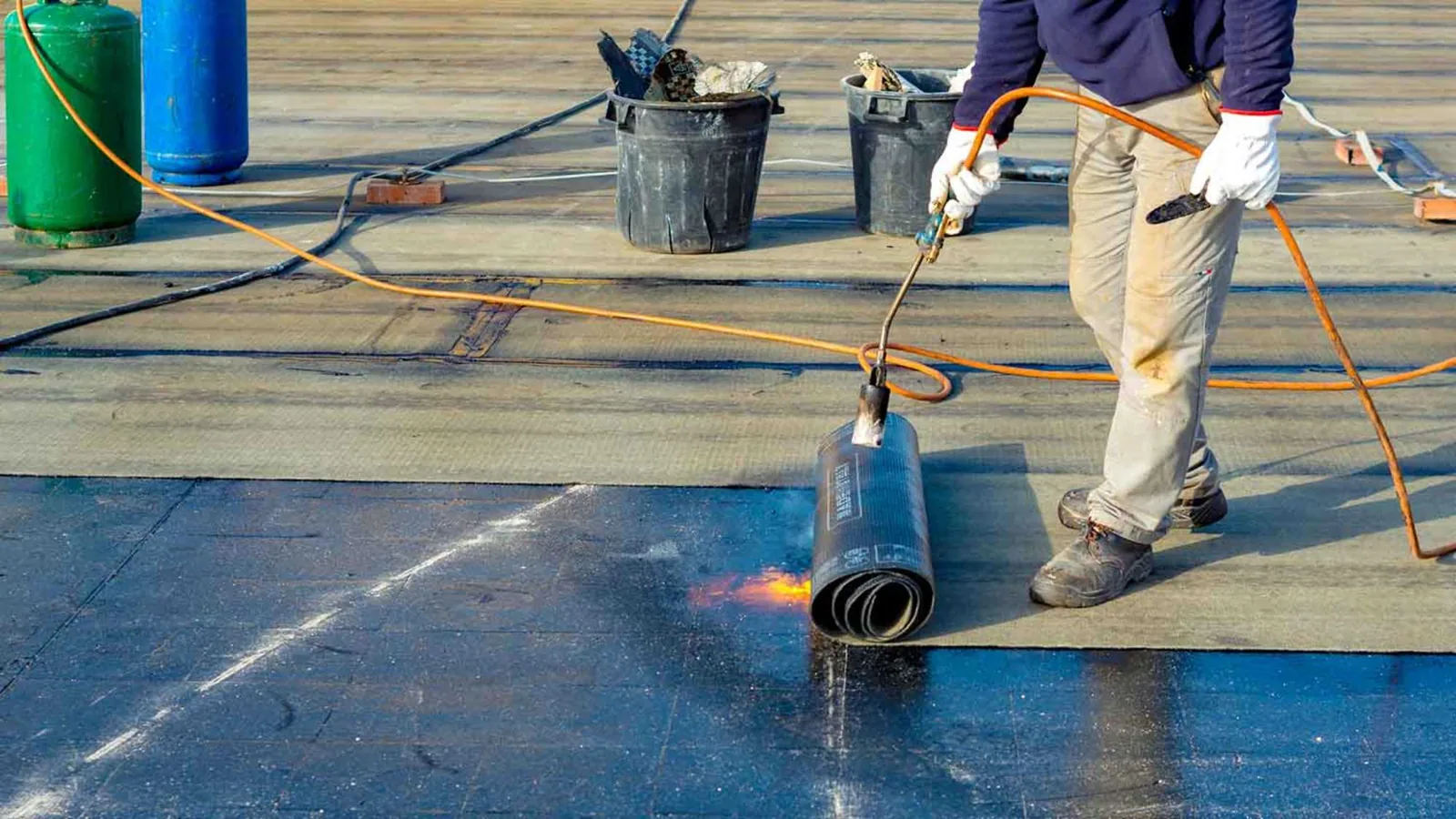
On modified bitumen and built-up roofs the failure is usually a lifted lap or a stripping ply that has peeled at an edge, and the repair is to reheat or recut the lap, set a new strip in compatible cement or torch it down, and seal the edge with lap sealant. Aged membrane complicates all of these, and when a sheet is too brittle to weld we say so and propose a liquid-applied detail or a larger scope.
Every repaired lap receives the same last step: a second probe after the material has cured, with the result written on the plan, so that the seam map shows which laps were fixed, which were tested and which were left alone and why.
What do long roofs in the industrial parks need?
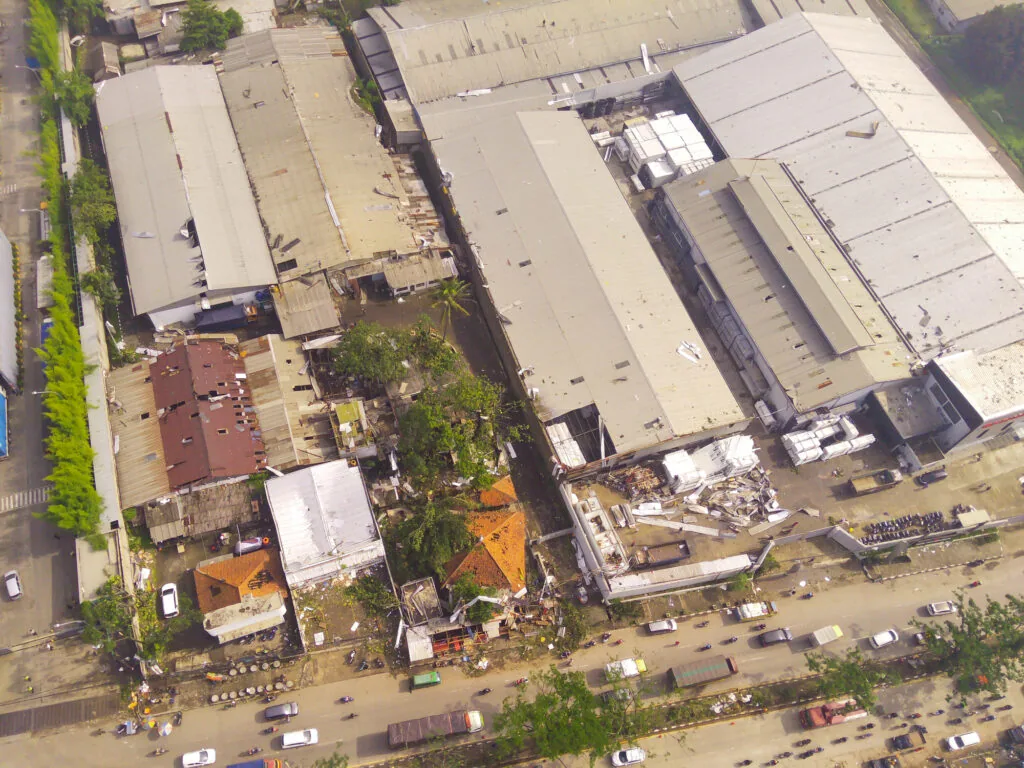
The wider the roof, the more seam length it carries. Seam length adds up fast in the New Bedford Business Park, where 44 companies and about 4,500 jobs were counted in 2013, and in Taunton's Myles Standish Industrial Park, which covers more than 800 acres. On a wide commercial roof a seam survey is a mapped job, with every lap logged by location and condition.
The repair order follows risk. Active leak zones come first, then long runs near drains where water collects, then edges and corners. A seam beside ponded water goes to the top of the list because it carries load all the time, and a seam that sits over occupied space ranks above one that sits over a stairwell.
When are open seams a sign the sheet is finished?
A few opened laps in an otherwise supple sheet are a repair scope. Seams opening across the field, a brittle sheet that cracks on a slight bend and repeated repairs in the same bays say that the membrane has reached the end of its service, and chasing laps one at a time adds up to more than the cost of a new sheet. We present the seam map, the core results and the cost drivers for both paths, and the owner chooses with the evidence in hand.
The decision often turns on moisture. If the insulation under the seams is dry, strip repairs can carry a sound sheet for years, supported by a seasonal maintenance walk that re-probes the repaired laps each spring. If a moisture scan shows wet board along the failed runs, the seam is only the visible part of a larger loss.
Commercial Roofing Questions
Is a cover strip as strong as the original weld?
A properly welded strip over a clean lap carries stress as well as the original bond. The weak point is the strip's own edge, so we probe every edge after welding and mark the result on the seam map.
Can a coating close an open seam?
No. A coating protects a sound seam from weather but does not replace a bond, and coating over an opened lap hides the gap while water still enters. The joint is welded or spliced first.
How cold is too cold to weld a seam?
Welds and adhesives need dry surfaces and workable temperatures, so in a hard freeze we close the opening temporarily and schedule the lasting repair for a window in which materials cure properly. A temporary seal is priced separately.
How many seams should we expect to fix?
We count after probing, not before, and report each open lap, each suspect lap and the repair for both. Ground-level estimates miss laps that look closed, so the probe result sets the scope.
Are seam repairs recorded for warranty purposes?
Yes. Each repaired lap is logged with its location, the cause we found, the method and photographs before and after, which gives a manufacturer or adjuster a complete record.
What happens to the neighboring seams?
They are probed and marked. A failed lap is often one of several on the same run, and testing them while the equipment is on the roof costs far less than another visit.
Ready to review the roof scope?
Request a Roof AssessmentKeep Reading