Industries We Serve
Roofing for School Districts in New Bedford, MA
District-wide roof inspection, ranked capital plans and summer-window replacement for school districts near New Bedford, MA, built for committee review.
Request a Roof Assessment
How does a superintendent explain a roof line item to a school committee in five minutes? The answer is a ranked list with photographs, because a committee that can see the stained deck and the open seam does not need a lecture on membranes. The first thing an inspector finds when a district near New Bedford, MA asks for a roof review is that the buildings were built in several eras, the roofs were replaced in several others, and the capital plan lists ages that no longer match what is on top of the deck. We probe the seams on every roof, scan for moisture where the readings call for it and write the findings as a ranked list the committee can follow.
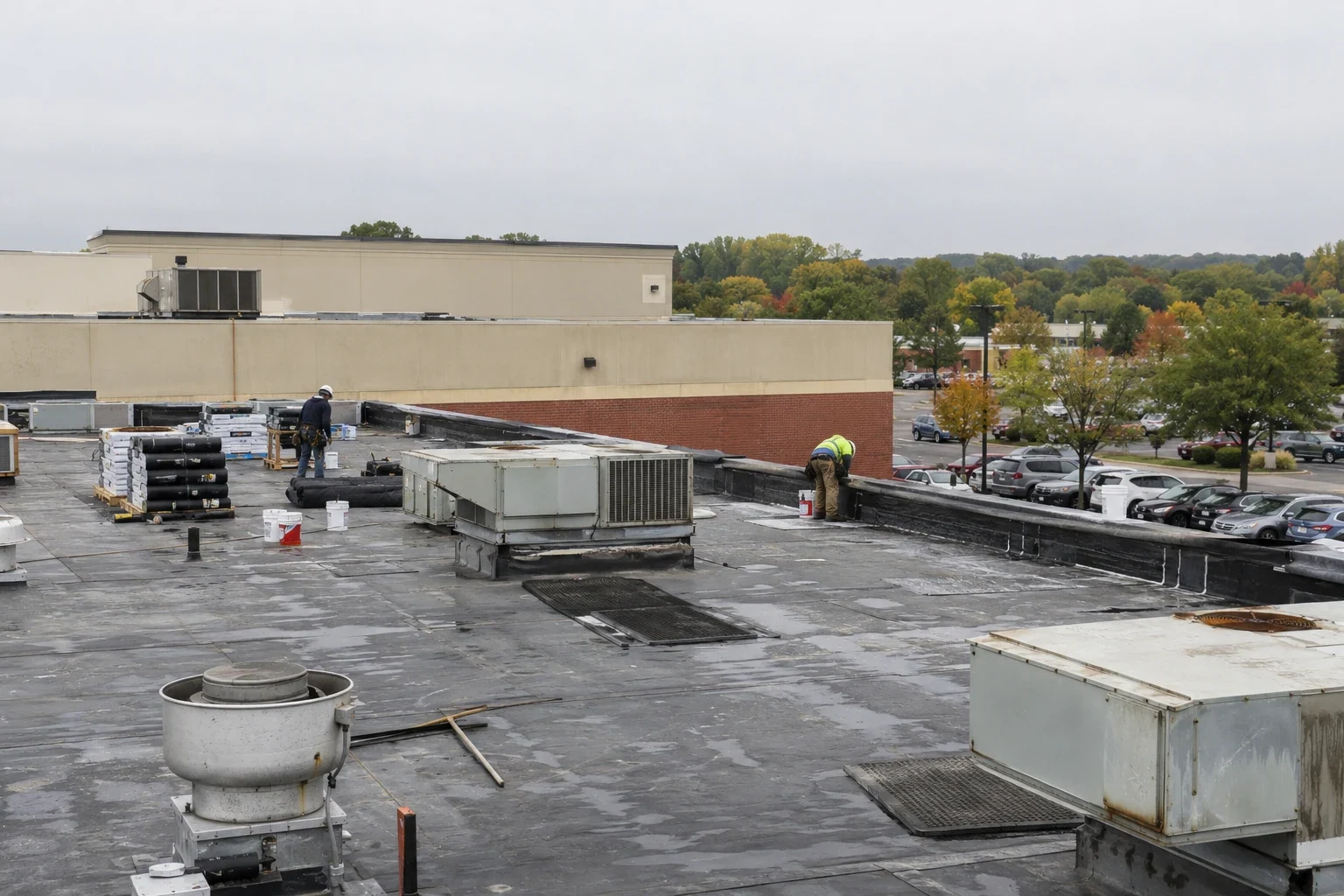
The ranking is the thing a district can defend: the roofs that threaten classrooms first, the ones that can wait second, and the interval that keeps watch on the rest.
What does the inspector find across a district of mixed buildings?
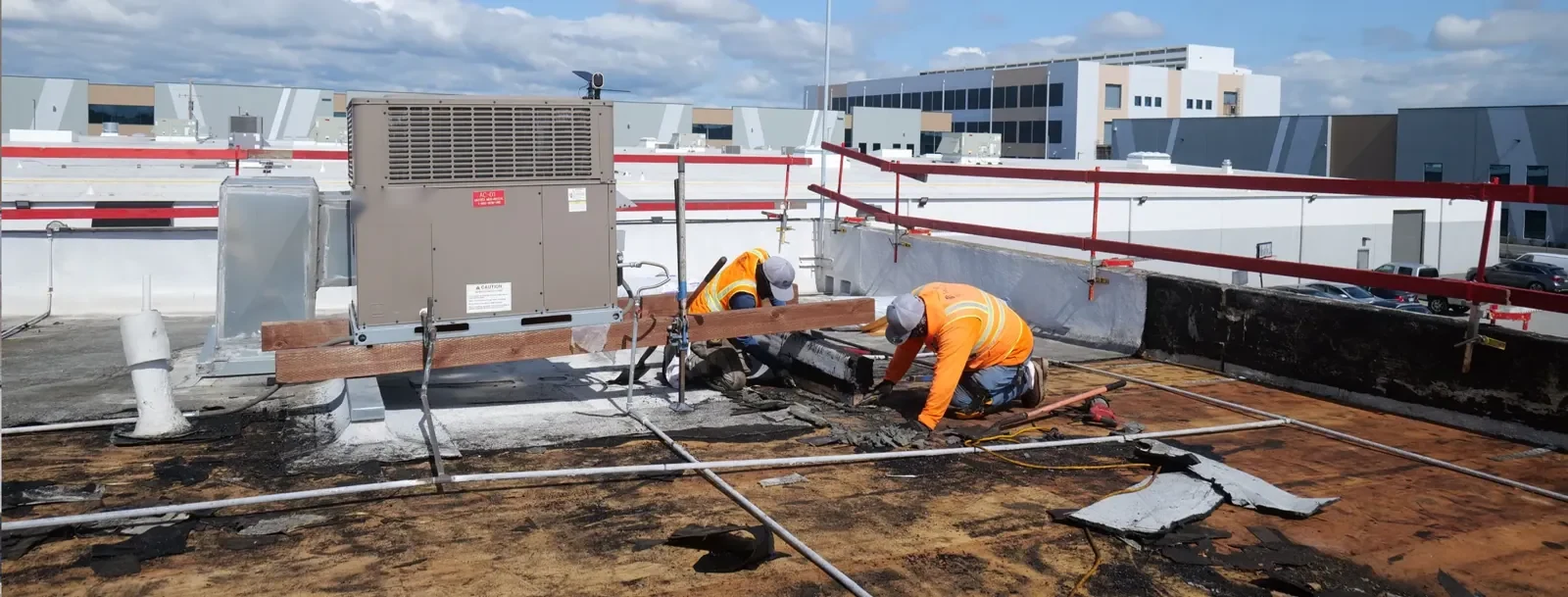
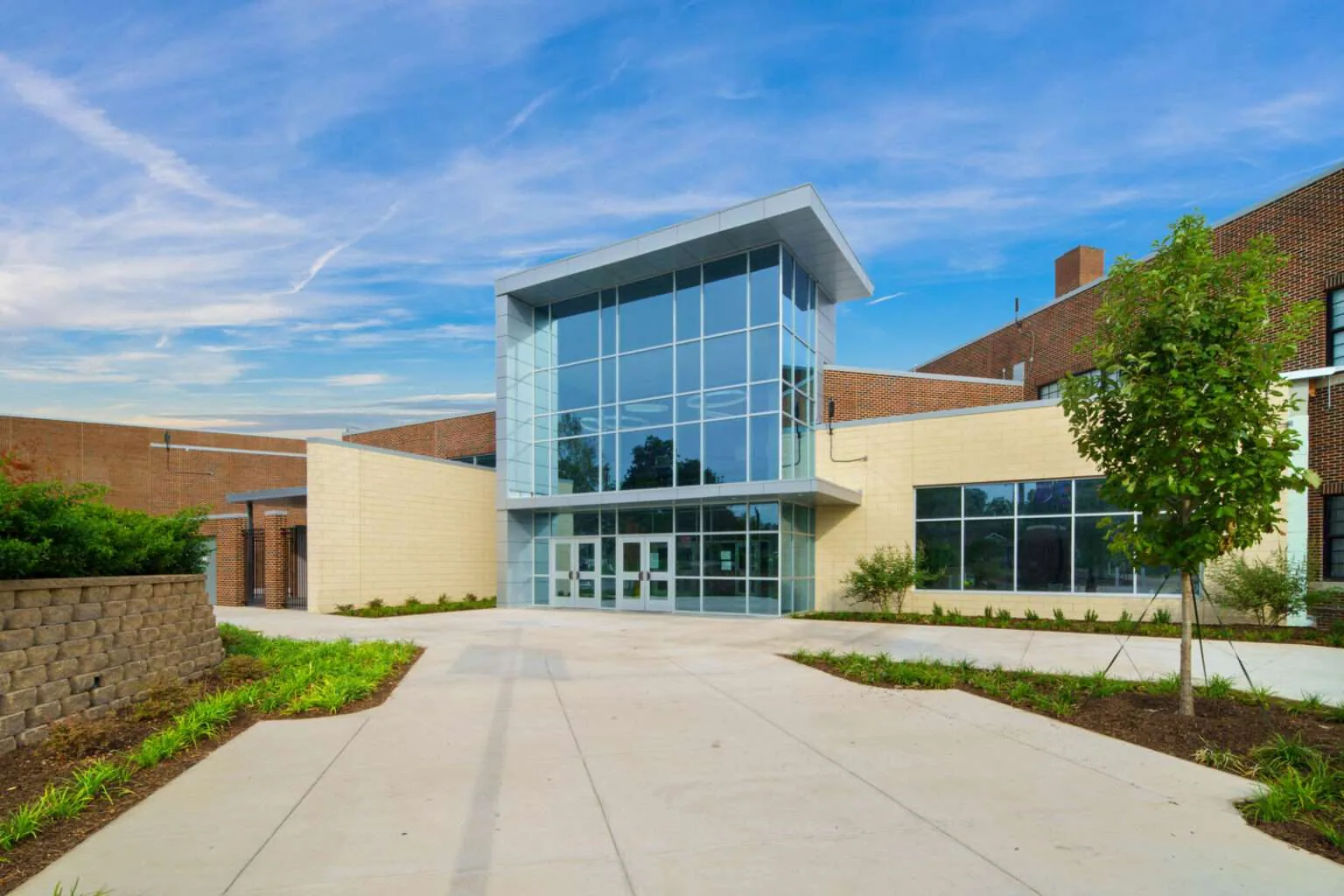
Districts commonly hold older masonry elementary schools with flat roofs and deep parapets, mid-century wings with built-up roofs and gravel, and newer buildings with single-ply membranes over metal deck. The inspector finds different failures in each. In the old buildings, through-wall flashing and parapet terminations open first. In the mid-century wings, lap sealant dries and gravel slips toward the drains. In the newer ones, fastener back-out and seam movement appear at corners and curbs.
Each school also has additions, gymnasiums and cafeterias with their own roofs and their own equipment. We grade every roof area separately, photograph the findings and add the room use below, so the district can see risk where it matters.
Roof hatches, ladders and guard rails matter more at a school than at most buildings, because maintenance staff, contractors and sometimes students pass the access points. We note any hatch that does not seal, any ladder that rubs the membrane and any missing rail, since each is both a leak path and a safety item.
Why does a district need one grading scale?
A district that grades roofs differently at each school ends up comparing opinions. A single scale, applied with the same photographs and the same marks, lets the facilities director rank all buildings fairly and lets the committee see why one school is ahead of another. It also protects the district against the charge that a roof was funded because of who asked loudest.
Grades come from the seam probe, the moisture scan and the core cuts, and the definitions stay fixed year after year so schools can be compared. A roof capital plan then shows a multi-year sequence with costs, which the committee can adopt in the same way it adopts any other capital schedule.
Where do the region's schools put pressure on a roof budget?
The area's schools range from the Bristol County Agricultural High School, which operates a farm along the Taunton River in Dighton, to private academies such as Tabor Academy in Marion, a school for grades 9 to 12. Those buildings sit in different wind and snow exposures, from river valleys to harbor shorelines, and the roof plan notes the exposure for each school.
A district should not assume that one number applies to every school. Coastal buildings see more wind, inland buildings hold more snow, and buildings with large gymnasiums have long spans that flex under load. We record the exposure and the roof geometry for each building so that the inspection interval fits the site.
Districts also share equipment across buildings. A boiler contractor, a ventilation contractor and an electrician all walk school roofs in the course of a year, and each leaves a mark. A roof access log kept by the facilities office, with a name and a date for every visit, turns a mystery puncture into a traceable event and lets the district ask the right contractor for the repair.
How much does winter shape the maintenance calendar?
Annual snowfall is 32.5 inches on average, mostly December through March, and the blizzard of January 2015 left 24.1 inches in Fall River. School roofs carry that snow through the heating season, and meltwater runs to drains that must be clear to protect classrooms below. A fall drain visit and a spring walk after the thaw catch most winter damage while it is still a small repair.
Our preventive roof maintenance visits follow that calendar and leave a dated report for each school. The report lists what was cleared, tightened and sealed, and what remains open for a larger repair.
What do hurricanes and winter storms ask of school roofs?
In 1954 Hurricane Carol's winds ran 80 to 110 mph across eastern Massachusetts, and in 1991 Hurricane Bob's gusts reached 89 mph over Buzzards Bay. A roof failure in a storm closes more than classrooms, since gyms and cafeterias serve evenings and weekends too. We inspect edge metal, coping and rooftop equipment restraint at every building and flag those that need work before the season.
A district budget should reflect 780 CMR 10th Edition, the state code built on the 2021 International Building Code and in force since October 11, 2024. We note which buildings would need changes to meet the current edition so that the district's budget reflects it. On a single campus, a school roof is graded wing by wing, with the room use below noted beside each finding.
What should a district ask a roofing contractor?
Ask how the contractor will schedule heavy work around the school year, how many buildings can be completed in one summer and how phasing works if a project spans two. Ask how the contractor protects students, staff and bus lanes, and how a leak during the school year is handled.
Ask also how the contractor's reports will fit the district's own capital tools, and whether the same approach serves other public agencies in the same town that share maintenance staff or buildings.
Finally, ask for the summary page to be written for the committee and the detail pages for the staff. One document, two readers, no retyping, and a clear path from the committee's vote to the work order. A healthcare system in the same community faces the same ranking problem, with patient areas below the roof.
Commercial Roofing Questions
How many schools can be reroofed in a single summer?
Roof areas, access and crew availability set the number, and the usual limit is material delivery and the length of the break. A district can phase work across summers and use the school year for repairs. We lay out the options with a schedule and the risks to each school if a phase slips.
What should the committee see in a roof report?
A ranked list of roofs, a photograph for each major finding, the room use below, a cost range for the recommended work and the year it is proposed. A one-page summary on top lets members read quickly, with the detail behind it for the facilities staff.
Can a roof repair be done during the school year?
Yes, for most repairs. Work happens away from entrances and bus lanes, noise is scheduled outside testing, and the crew keeps the area protected. Larger replacements are better left for summer. If a leak occurs, an emergency crew can stop the water at any hour and the permanent repair follows.
How does a district decide whether a recover or a tear-off is appropriate?
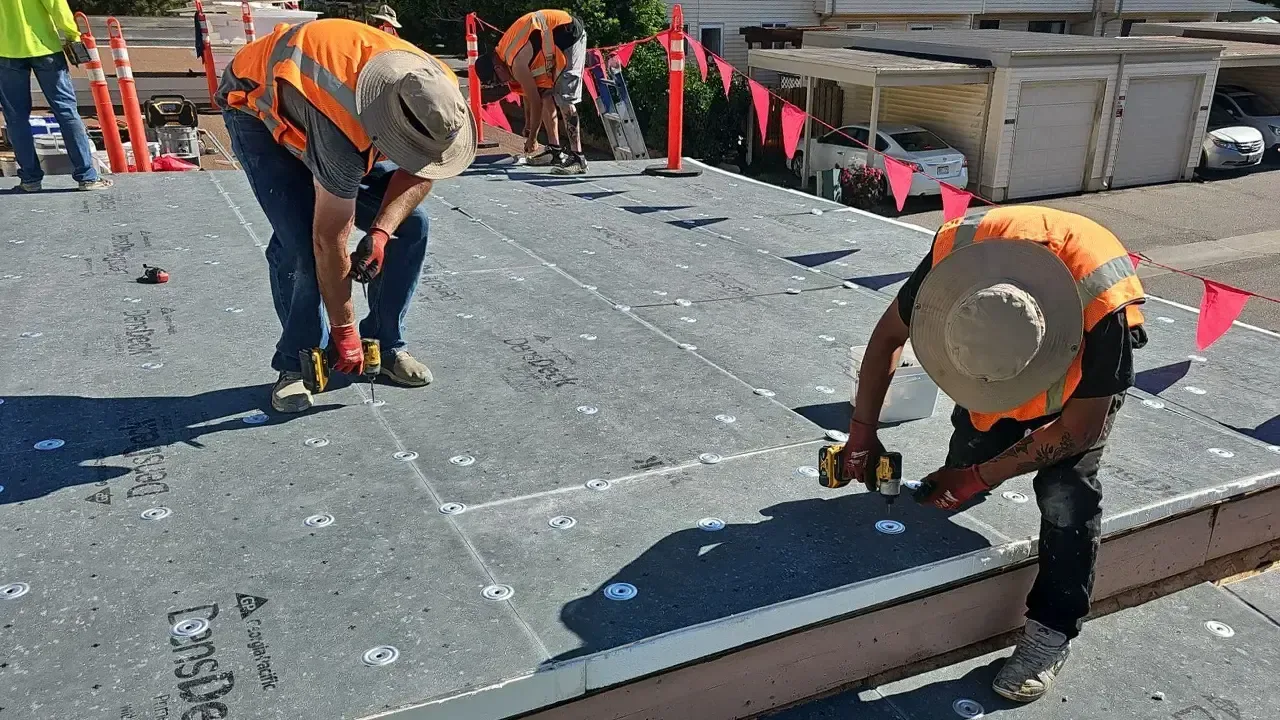
Core cuts and moisture readings decide it. Before a school roof is covered over, the insulation must test dry, the deck must be sound and the framing must take another layer, while the code limits layer count. If any of those fail, tear-off is the right choice, and the readings show why.
Ready to review the roof scope?
Request a Roof AssessmentKeep Reading