Service Areas
Commercial Roofing in Dighton, MA
Roof inspection, metal roof repair, flat roof seam work and replacement for Dighton, MA farm, shop and office buildings, with clear written findings.
Request a Roof Assessment
Which roof does a rural suburban town have more of, the flat membrane over a small office or the metal panels over a barn? In Dighton, MA the inspector's first question is the roof type, because a community of small farms, 22.6 square miles and 8,101 residents at the 2020 census carries both, and each fails in its own place. Dighton is described as a rural suburban community whose former cotton mills, paper mills and manufacturers have left, so the roof work we plan there covers small buildings: shops, offices, farm structures and service buildings.

On membrane roofs we probe the seams; on metal roofs we check the fasteners; every finding is logged on the roof plan ahead of any decision.
How do metal roofs on farm and shop buildings fail?
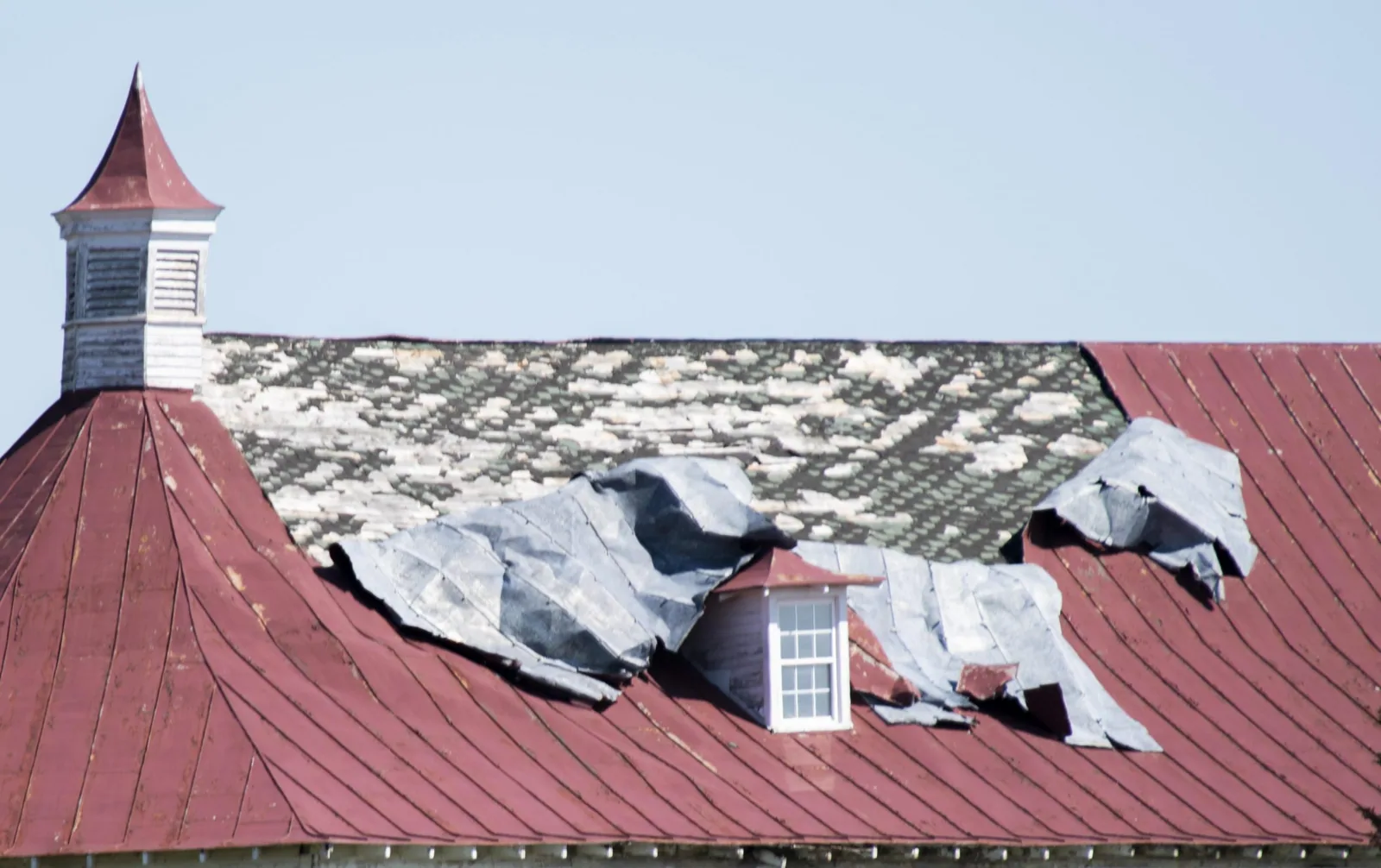
Metal panels fail at their fasteners, laps and trim. Metal swells and shrinks with each day's temperature, and a screw can ease out a fraction at a time until its washer stops sealing. A raised screw head with a rust ring is the first sign. We press on those screws, replace failed ones with larger fasteners and renew lap sealant that has cracked.
Rust is the second concern. It starts at cut edges, scratches and dents that hold water. Early rust spots get brushed, treated and primed, and any panel rusted through gets replaced. The rule is simple: stop rust before it spreads under the paint.
Dents get a look as well. A dent that holds water breaks the coating, and rust follows. We mark each dent on a sketch, test whether the coating has cracked and note which ones to watch after the next storm.
What does a small flat roof need?
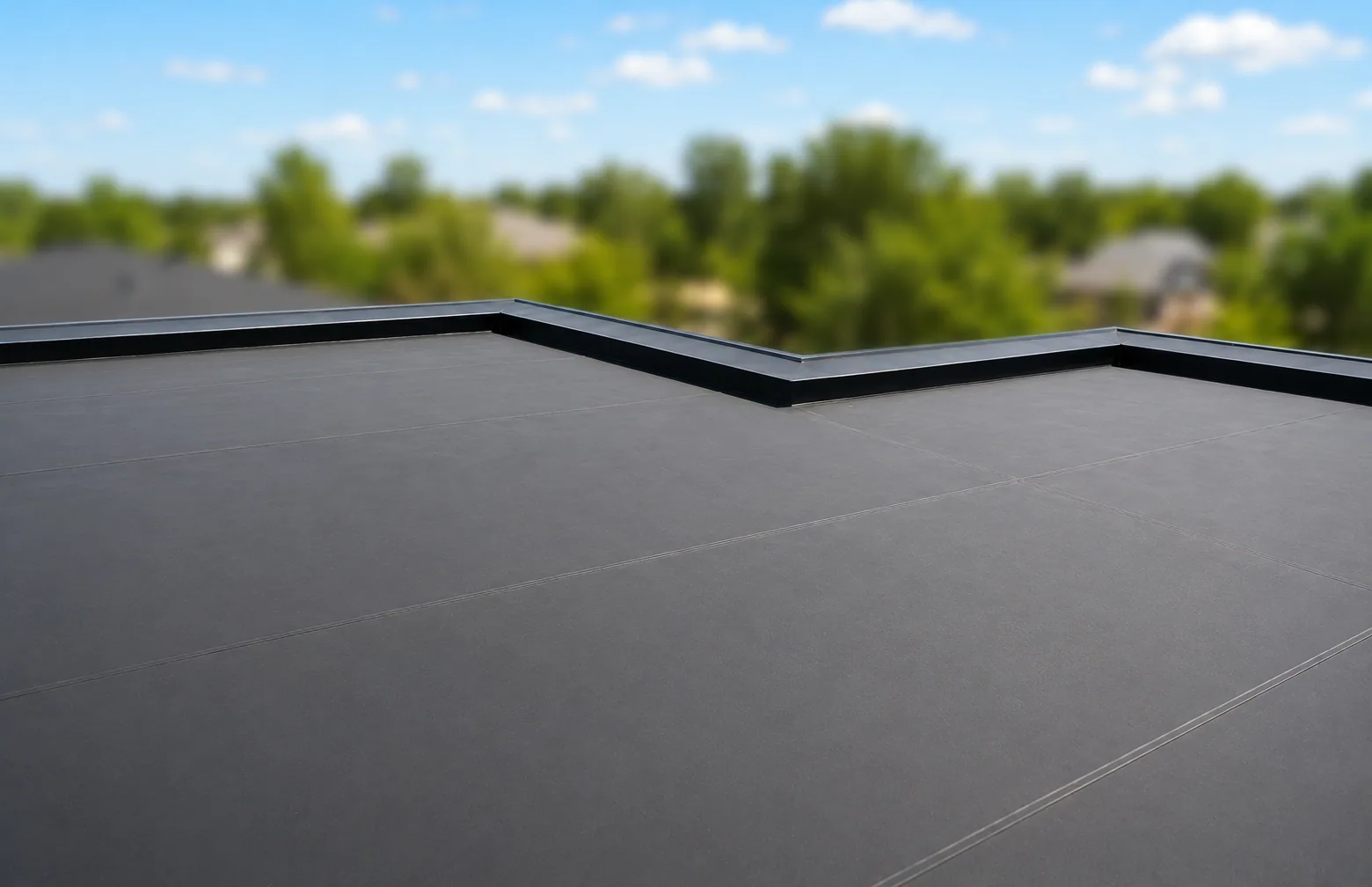
A small office or shop with a flat roof relies on a few details: the seams, the drain or scupper, the flashing at the wall and the boot at each pipe. Because there are few of them, the cause of a leak is easier to isolate. We start at the high point and follow the slope down, probing every seam and photographing each termination.
On a single-ply roof such as EPDM, lap sealant and seam tape are the usual weak points. On a thermoplastic sheet, the weld edge is probed along its length. A seam probe takes minutes and tells more than a photograph.
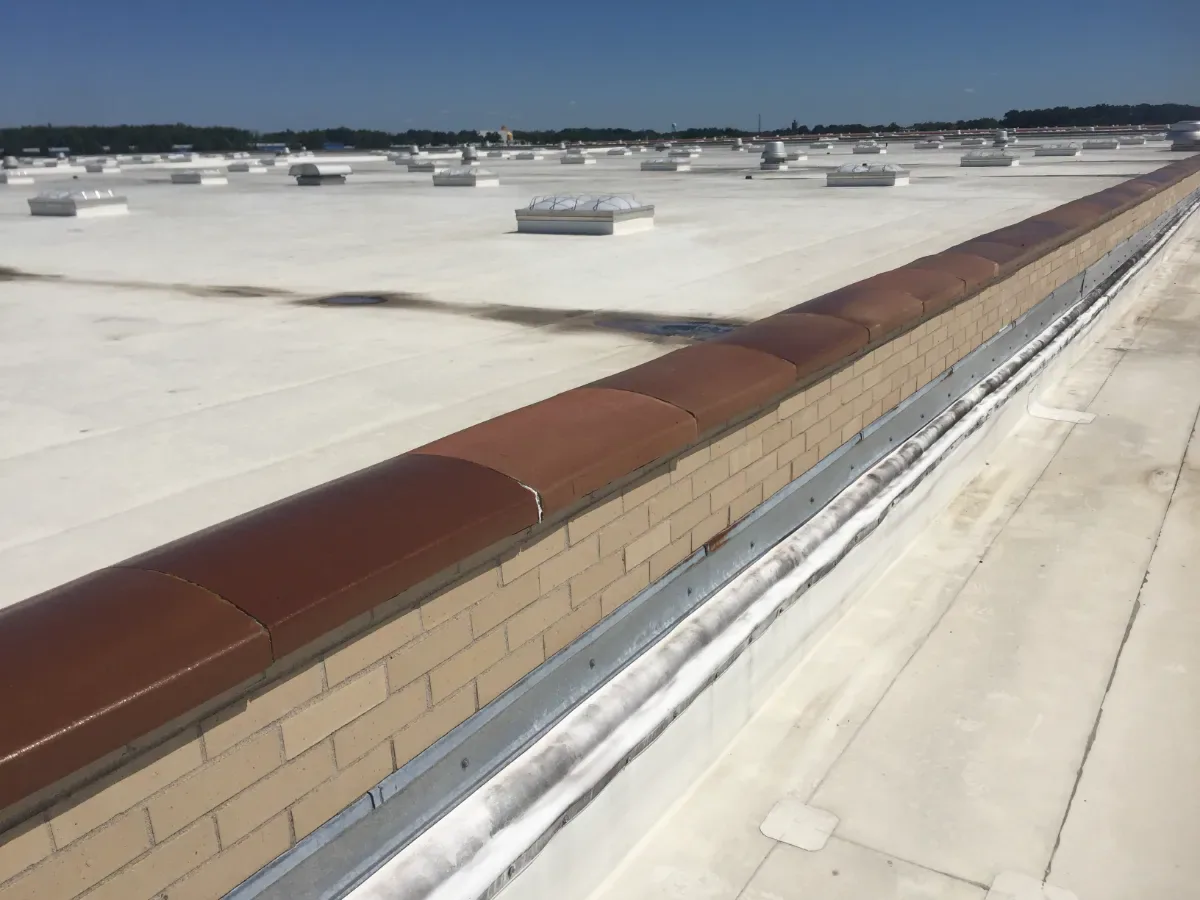
Drains and scuppers come next. A small roof sheds a lot of water through a single outlet, and a clog sends it back across the membrane. We clear debris, check that the outlet carries flow to a leader and look for a dirt ring that shows where water stood after the last rain.
Does the Taunton River change anything for roofs?
The Berkley-Dighton Bridge, opened in August 2015, carries two lanes over the Taunton River, and Bristol County Agricultural High School operates a farm along the river in Dighton. A site near open water takes wind across the surface, and we check the grade around a building for places where storm runoff could stand.
Regional history frames the edge check. In 1991 Hurricane Bob pushed a surge of 10 to 15 feet into Buzzards Bay, and the storm of 1938 put New Bedford under eight feet of flood water. Both storms struck the region in other years, and they explain why edge metal, gravel stop and gutters come first on every wind damage check. We tug on each length, probe the fasteners behind it and photograph any gap. Any length that moves under hand pressure is marked for refastening before the next wind event.
How much snow and ice should a roof expect?
New Bedford's record low is minus 12 F and its record high 107 F, a spread of 119 degrees that every membrane and fastener has to absorb. A roof in Dighton shares that winter pattern, and snow loads valleys, low spots and the area behind rooftop units.
Ice at gutters and drains forces water under the first course of the roof. We check gutter slope and hanger spacing, clear debris and look for edge metal that has pulled away. A gutter and edge metal repair often costs far less than the water damage a failed edge allows. Downspouts that end at the wall wet the foundation, so we check where they discharge.
How are school-farm and public buildings scheduled?
A working school farm and its barns run on a calendar of classes, animals and seasons. Roof work there is scheduled around feeding, class hours and the growing season, and we keep animals and students clear of the work zone. Lifts and materials are staged on firm ground, away from paths.
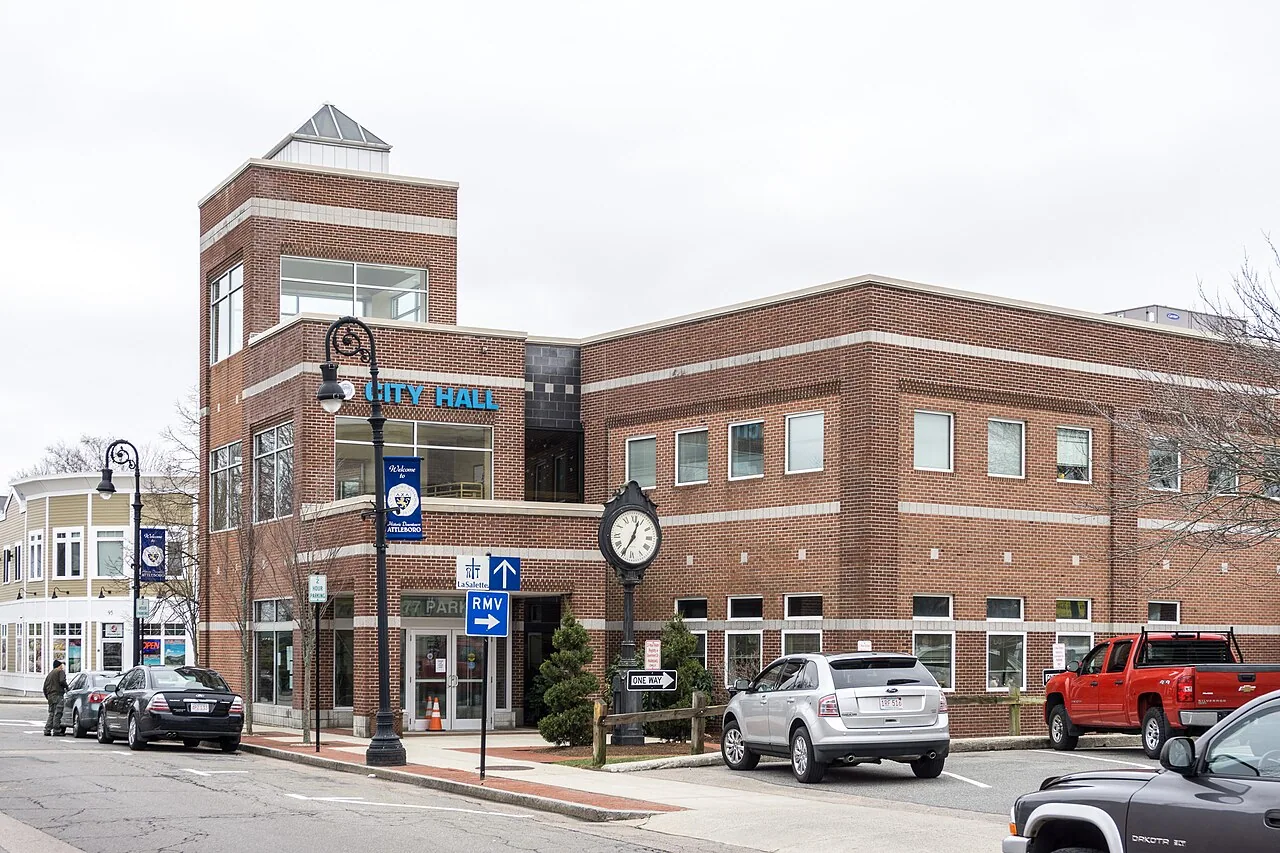
The same planning serves any government building roof. We write the schedule, name the zones, post the safety plan and close each section before the shift ends, so the building stays dry and in use. For farm structures with animals or stored feed, covered staging and a clean closeout matter as much as the membrane itself.
When is a repair enough, and when is it not?
Small defects such as a cracked boot, a handful of loose screws or a lifted seam call for repair. Surface wear on a sound roof can be coated. Soaked insulation, rust spreading across panels or a soft deck calls for replacement. A core cut or a moisture scan picks the winner.
Each choice carries a different schedule. A repair is a matter of hours, a coating asks for a run of dry days, and a replacement needs a planned window with weather protection. The report states the time each requires and what it asks of the building's users, so the owner can fit the work to the calendar.
Owners in Berkley and Taunton follow the same path. Cost follows area, deck condition, access and penetrations, and a rural lot adds travel and delivery time that we state up front. We also give a written range for each option, so the owner can weigh a repair this year against a replacement next year.
Commercial Roofing Questions
How can I tell whether screws are backing out on a metal roof?
Look for raised heads, small rust rings and stains in a line along the ribs. Press on a few. A loose one turns freely or sits above the panel. A screw in a worn hole is replaced with a larger one.
Is a small roof cheaper to repair than to replace?
Often, since there are fewer details to flash. The deciding factor is moisture in the insulation or deck. A core cut tells us in minutes whether a repair will hold.
Can a barn roof leak from condensation?
Yes, under uninsulated metal when warm air meets cool panels. A stain that shows up on a cool morning and fades by afternoon is condensation; one that follows rain is a leak.
What does ice at the eaves do to a roof?
It blocks meltwater, which then backs up under the first course. Clear gutters, a good slope and tight edge metal keep water moving. We check all three on a winter visit.
How does a rural location change the schedule?
Travel and delivery time add to the day, so we plan parts and materials ahead and finish the repair on the first trip when the roof allows. Larger jobs are staged so that the crew is not driving back for a missing part.
What should I send before a first visit?
Tell us the roof's age, what the building holds and where water has appeared; a plan helps if one exists. We probe, photograph and explain before pricing anything.
Ready to review the roof scope?
Request a Roof AssessmentKeep Reading