Commercial Roofing Services
Commercial Roof Repair in New Bedford, MA
Planned repair of membrane seams, flashing and edge metal on commercial roofs in New Bedford, MA, with each finding marked on the roof plan before work starts.
Request a Roof Assessment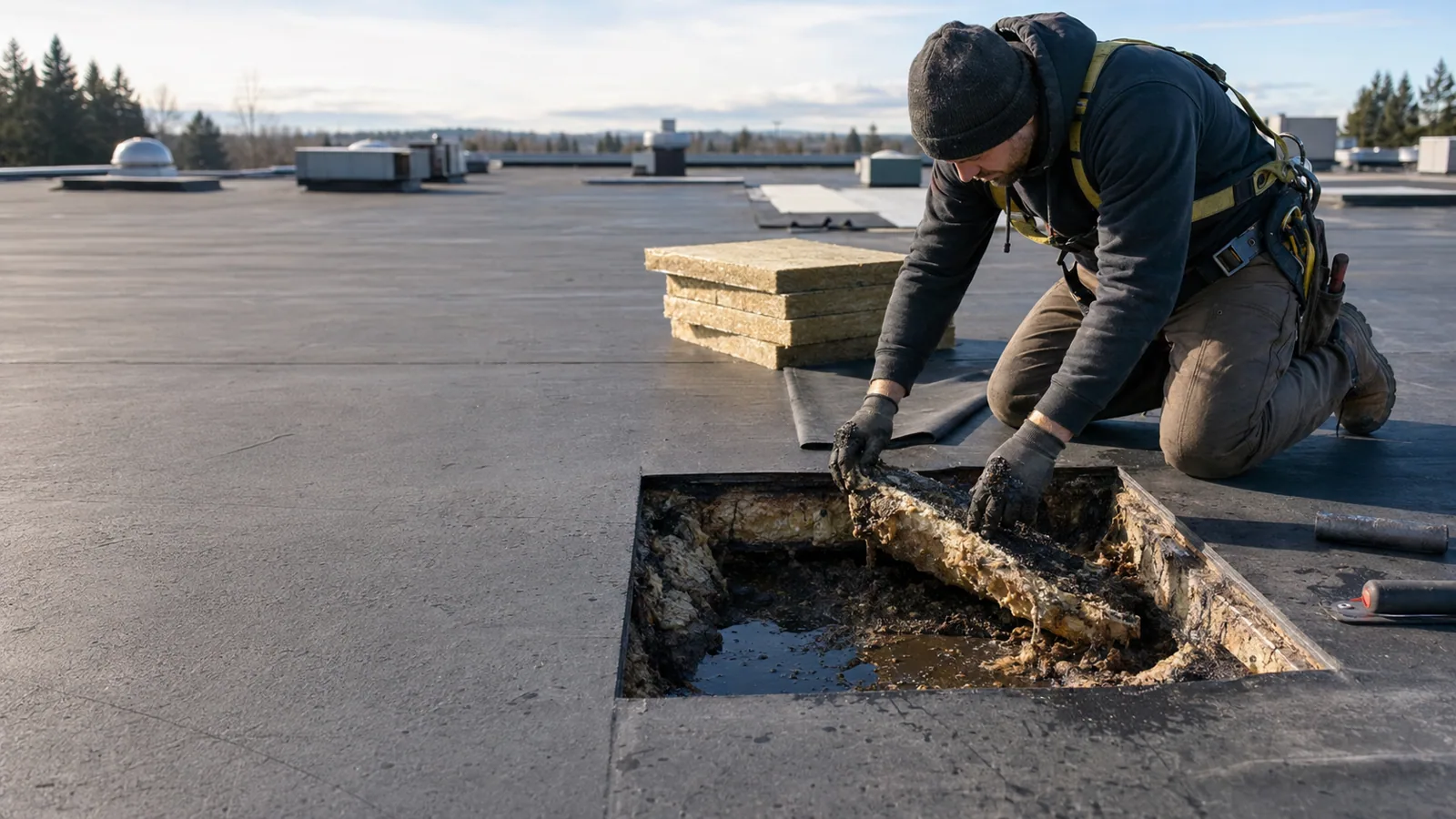
How many repairs is too many? A facility director who has paid for the same corner three times is already asking that question, and the answer comes from walking the roof with a probe, a camera and a roof plan instead of a ladder and a tube of sealant. A planned repair in New Bedford, MA starts with every open seam, loose flashing and failed termination marked and numbered, so the work addresses causes and not symptoms.
We separate what a repair can fix from what it can only delay. Some roofs reward careful repair for years, and others have crossed a line where each patch costs more than the next season of protection it buys. The inspection tells us which kind of roof you own.
What do we look for when we walk the roof?
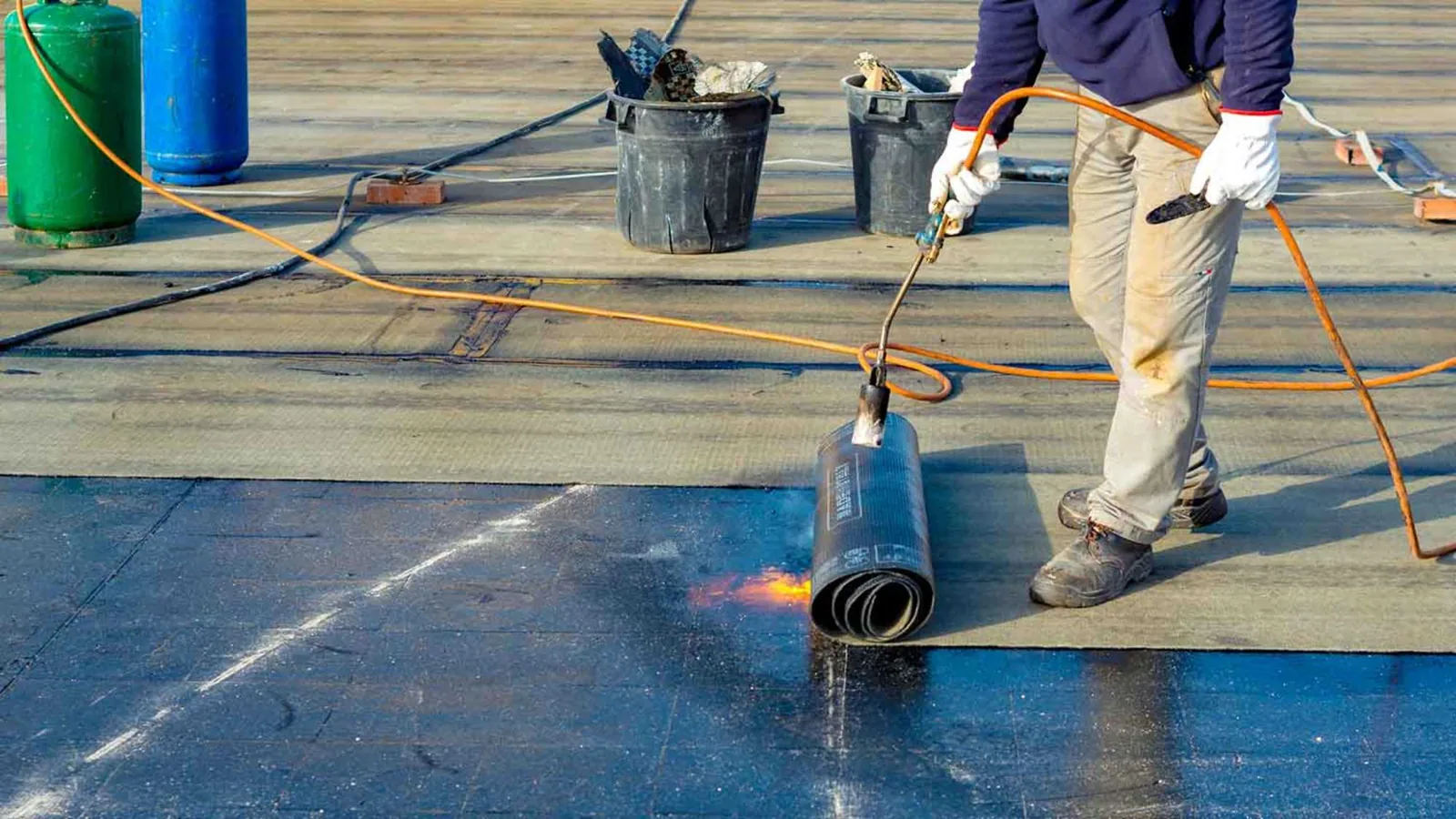
We begin at the seams, since a seam probe finds open laps and weak welds that look closed from standing height. We check fastener back-out on mechanically attached systems, membrane shrinkage pulling away from walls and curbs, and stripping plies that have lifted at the edges. On a modified bitumen roof we look for granule loss and splits along the laps, and on a single-ply roof we look for cracks at the flashing, pitch pockets that have dried out and sealant that has cracked or pulled free.
Every finding goes on the roof plan with a photograph, a location and a recommended fix, so you can see which items are urgent, which are routine and which are cosmetic. That plan becomes the basis for pricing and for the next inspection.
Where do commercial roofs on the South Coast fail first?
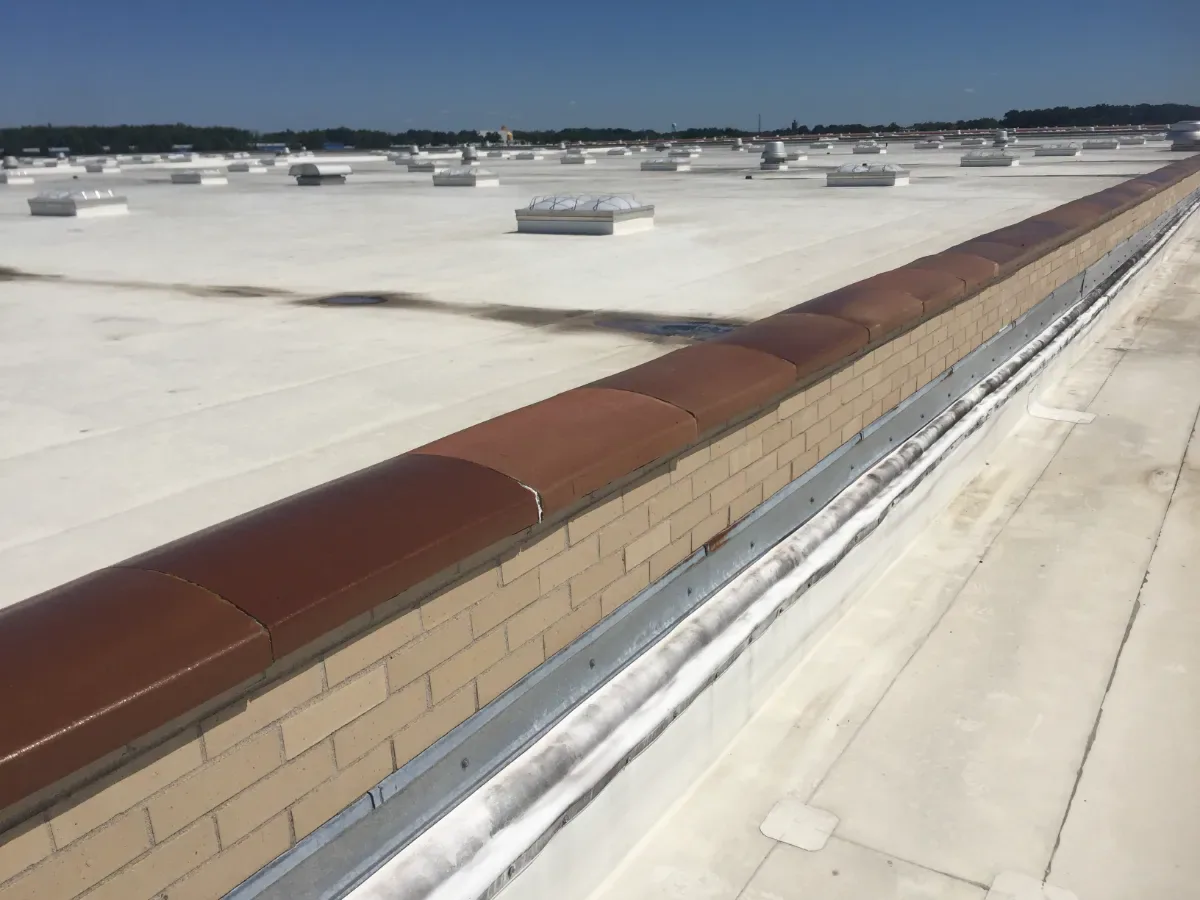
Terminations and transitions fail before fields do. The place where a membrane meets a parapet, a rooftop unit curb, a pipe or a wall is where thermal movement, wind and water all concentrate, and older buildings add more of them. The Wamsutta, Hathaway and Kilburn mills are reminders of how much wall edge a roof may have to meet, and a flashing that was fine at installation can open as masonry and membrane move at different rates through the year.
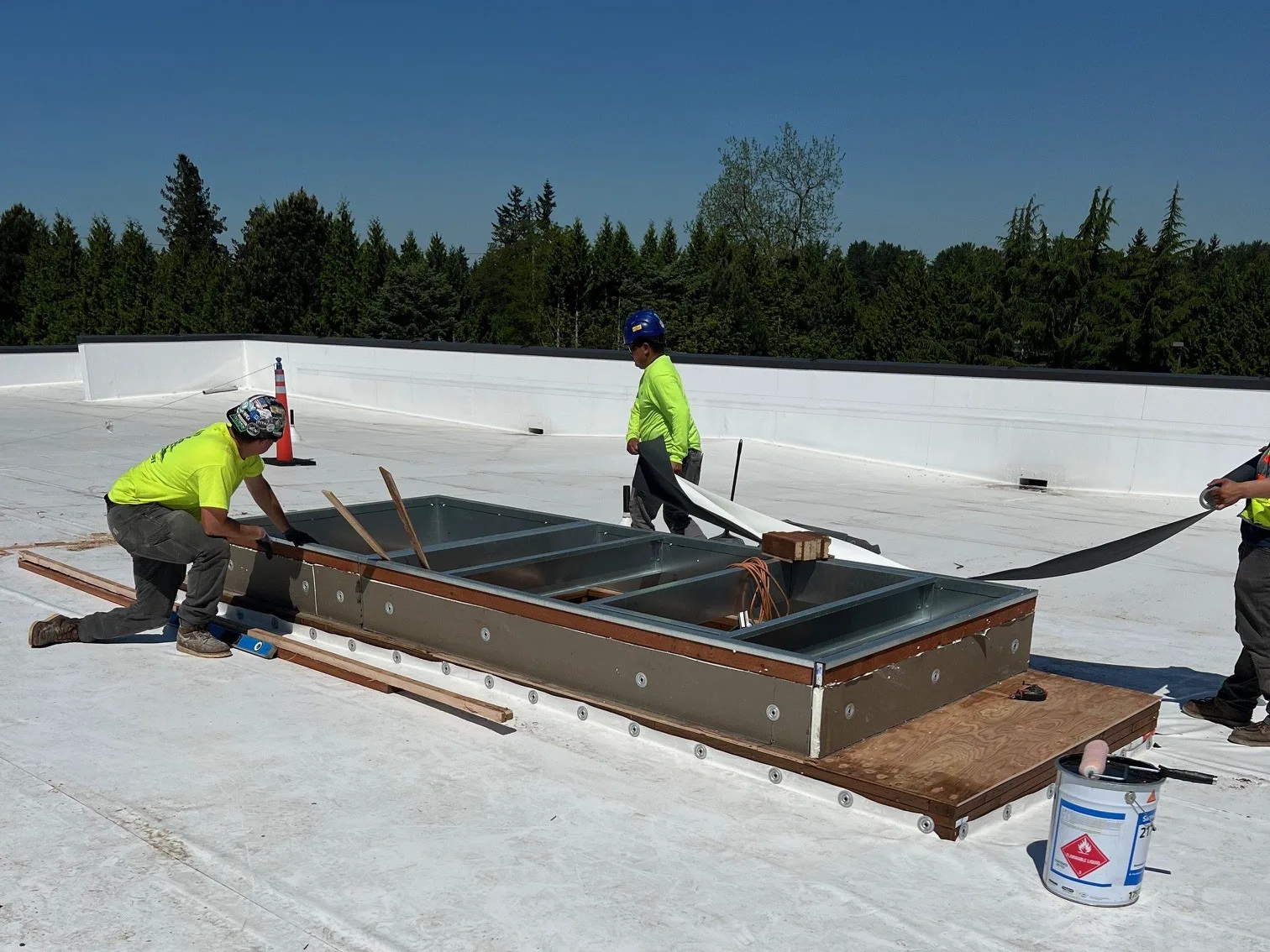
We repair these joints by cleaning the substrate, replacing the flashing rather than smearing over it, and tying the new work into sound membrane. A patch that sits on top of a failing base will fail with it.
What does the wind do to edge metal and copings?
Wind lifts roofs from the perimeter. Hurricane Bob drove gusts of 89 mph across Buzzards Bay in 1991, and the same pull acts on edge metal in lesser storms every year. Loose gravel stops, open coping joints and corroded cleats give the wind a place to start, and once a membrane edge flutters it works the fasteners loose along the wall.
Our edge metal and coping repairs replace damaged sections, add fasteners where they are missing and restore sealant at the joints. On roofs near the harbor in Fairhaven and New Bedford, we treat the perimeter as the first place to look and the last place to compromise.
How do snow and meltwater damage a roof that looks sound?
An average New Bedford winter brings about 32.5 inches of snow, and a single January 2015 storm left Fall River under two feet. Snow rarely damages a membrane by weight alone. The damage comes when meltwater collects at a clogged drain or a scupper set too high and then freezes overnight, pulling at seams and loosening sealant with each cycle.
We clear and test every drain, inspect roof drains and scuppers for height and clearance, and correct the low spots that hold water. Where a drain has sunk below the surrounding membrane, a small tapered section can fix a recurring ponding problem for a modest cost.
When does repair stop making sense?
The line is usually moisture. A roof with isolated defects over dry insulation is a good repair candidate. A roof with wide areas of wet insulation, widespread seam failure or a deck that has started to corrode is telling you that repairs will keep chasing damage that is already spreading. We present both paths with the costs and the expected outcomes, and we do not push you toward the larger project unless the findings support it.
When a leak is active and the cause is still unknown, our leak tracing starts the diagnosis. When replacement is the better course, our commercial roof replacement service starts from the same documented findings, so nothing you paid to learn is wasted. For roofs that can still be saved, a sound repair paired with preventive care often moves the replacement date back by several years.
How are repairs scheduled around operations?
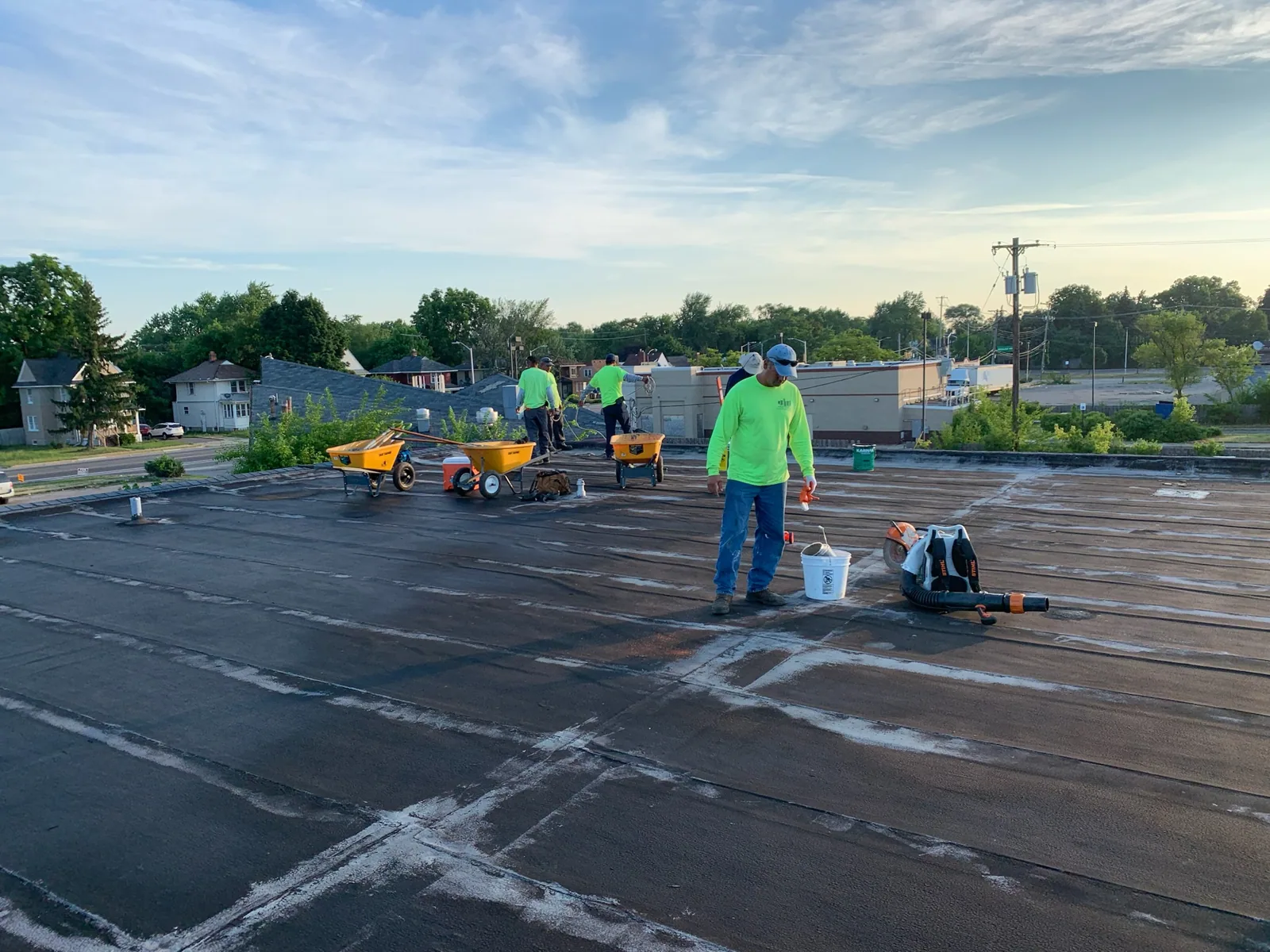
Most repairs are short, and we plan them around tenant hours, loading schedules and deliveries. For a distribution building near Route 140 or a retail strip in Dartmouth, we agree on access points, rooftop routes and hours before the crew arrives. Hospitals, schools and food facilities get extra care with fumes, noise and fall protection, and we mark exclusion zones on the roof plan. The crew leaves the roof clean, and you receive a closeout summary with photographs of each completed repair.
If your property is in Wareham or along the Route 6 and Route 28 retail centers, we include travel and staging in the schedule so the repair window is accurate. A repair near the New Bedford Business Park or in Taunton follows the same sequence: access, safety, repair, photographs, closeout.
We also set a re-check date for large repairs, usually after the first heavy rain or the first thaw. A repaired seam or flashing that is going to move will show it in that first stretch, and returning to look is cheaper than discovering a failure through a stained ceiling. Items that are not urgent go into a maintenance list with a target season, and you decide which to fund and which to hold, with the consequences of waiting stated plainly.
The same list feeds your capital planning. When the findings accumulate in one zone of the roof, they show where the aging is concentrated, and that pattern helps you time the next larger project.
Commercial Roofing Questions
Which repairs can wait until warmer weather?
Cosmetic items such as faded coatings and minor sealant wear can wait. Open seams, torn flashing and missing edge metal should not, because each storm widens them. We rank every item on the plan so you can schedule the urgent work now and the rest when conditions improve.
Why do patches near parapets keep failing?
Parapet walls move differently from the membrane, and a patch that bonds only to the surface will peel as the two shift. A durable repair replaces the base flashing, secures the termination at the top and cleans the substrate so the new material bonds to sound material.
Can repairs be done in cold or damp weather?
Some can, with the right materials, but adhesives and hot-air welds need clean, dry surfaces and reasonable temperatures. We use temporary protection when conditions are marginal and schedule the permanent repair for the next good window.
How do you decide the repair is worth the money?
We compare the cost of the repair to the remaining service life it provides, using moisture readings and the roof's condition. If the repair buys several seasons of dry performance, it is worth doing, and if it buys only a few months, we tell you.
Will you document the repair for my records?
Yes, every repair is photographed before and after and tied to a location on the roof plan. That record helps with warranty questions, insurance conversations and future budgeting, and we deliver it with the final summary.