Service Areas
Commercial Roofing in New Bedford Business Park, New Bedford, MA
Commercial roofing in New Bedford Business Park, New Bedford, MA: seam probes, rooftop equipment curbs and drainage checks for industrial and office roofs.
Request a Roof Assessment
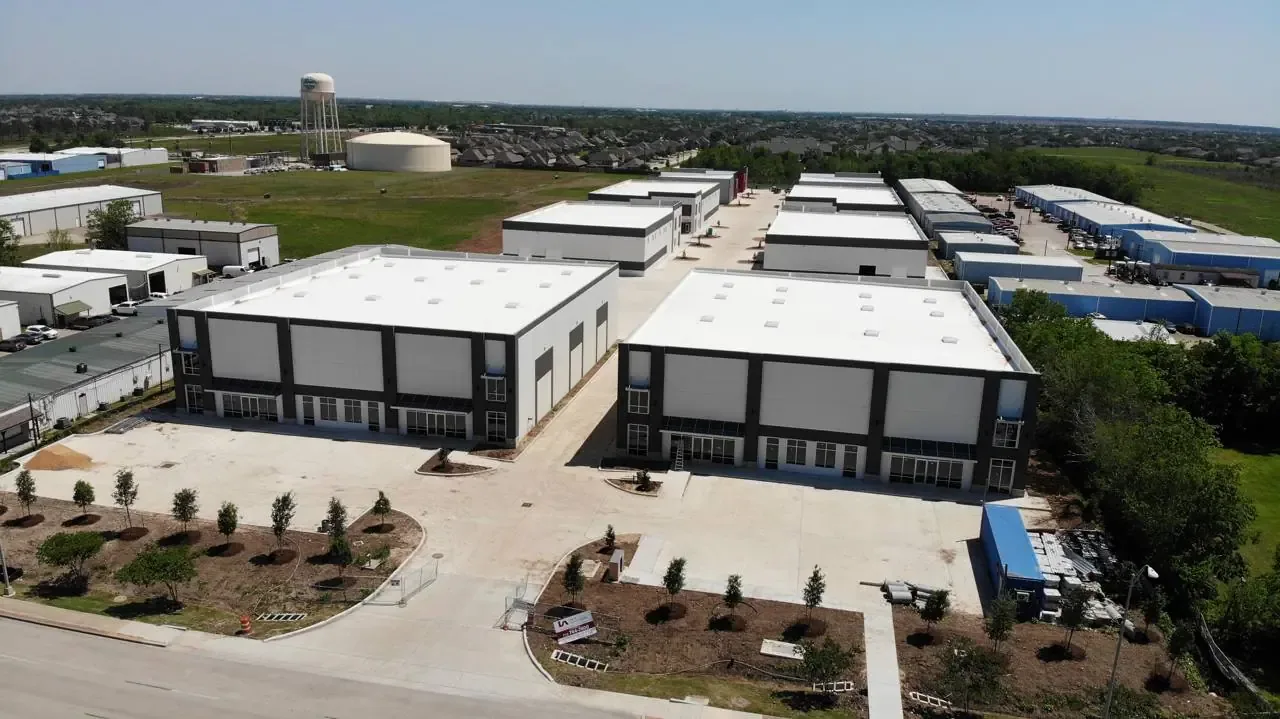
Why does a business park roof leak in the same three places year after year? Because a park full of light manufacturing, signage, electronics and office users keeps adding rooftop equipment, and every added curb, conduit run and exhaust fan is a new termination for the membrane to hold. A 2013 description called the New Bedford Business Park the home of 44 companies and about 4,500 jobs, and the second-biggest park of its kind in Massachusetts. Roofs on buildings like these tend to share one pattern: the field of the membrane is sound more often than not, and the details around the equipment are where findings collect.
Where do park roofs start to leak?
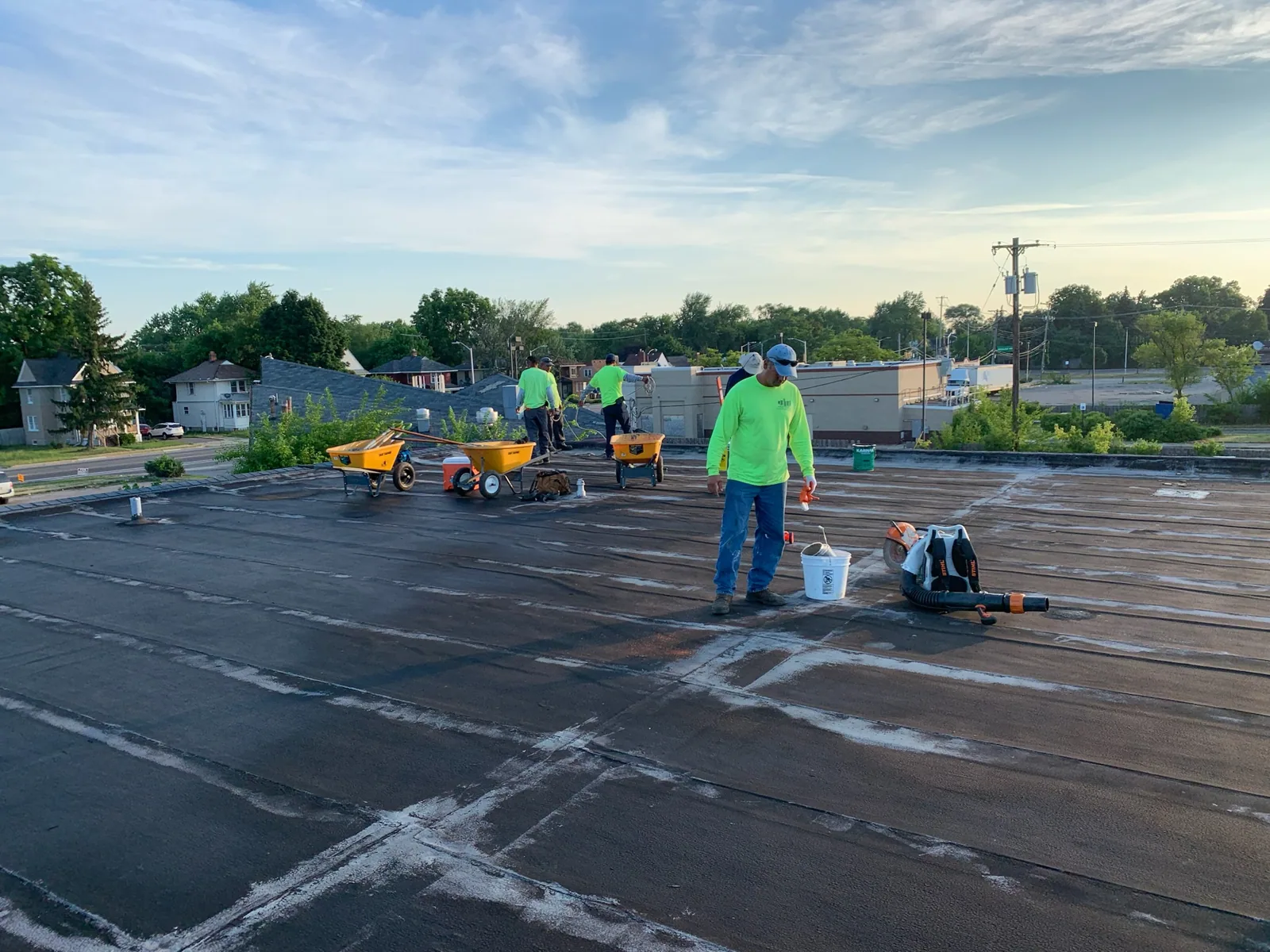
On a commercial roof of this kind, the first marks go at the curbs, the pipe boots, the wall-to-roof transitions and the seams within a few feet of the rooftop units. Technicians walk to the same equipment over and over, and the membrane along that path wears faster than the rest. We probe each seam, check the lap sealant on every splice, look for fastener back-out in the plates and photograph the base flashing at each curb.
Tenants named at the park include Titleist, Aerovox, Poyant Signs and Gold Peak Industries, among them a 65,000-square-foot leased facility. Whatever the roof on any one building turns out to be, the list of what we look for on a roof serving light industrial and office users is the same: units added after the roof was built, conduit laid across the membrane, and lines that have never been flashed.
What should be done about equipment that keeps being added?
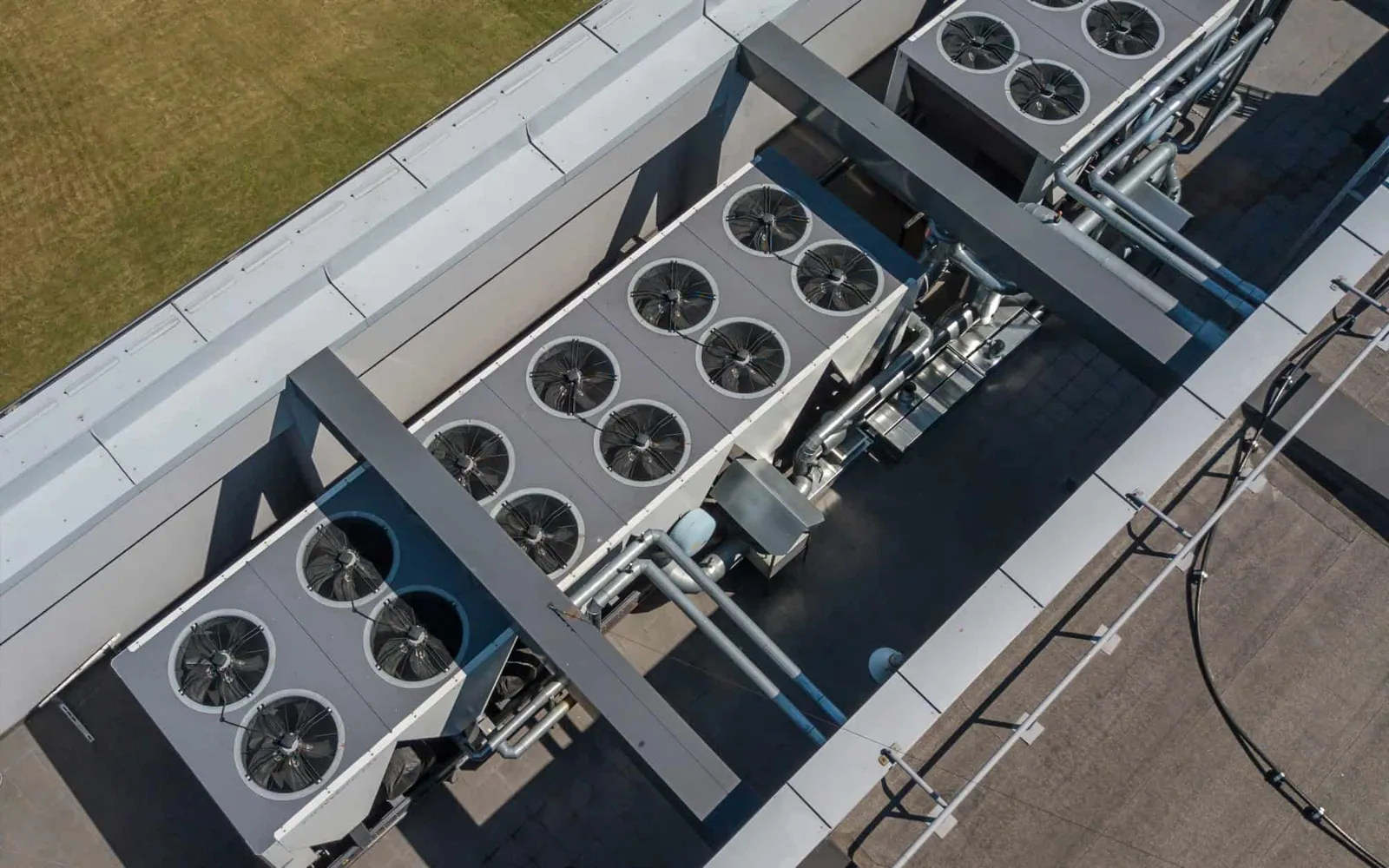
Rooftop units, exhaust fans and satellite or antenna mounts are added by tenants, and a roof remembers each one. We map every unit, curb and support on the plan, record whether it is flashed to the membrane manufacturer's method and mark any that bear directly on the sheet. A support that rests on bare membrane concentrates a point load, and over a few seasons it wears a hole.
The remedy is usually modest. A curb or equipment support gets a proper flashing, a pad under the foot of a pipe support spreads the load and a marked walk path keeps technicians off the weakest seams. When a tenant leaves and the equipment goes with them, an open curb should be capped and flashed, not left for the next storm. We list those orphaned openings on the plan so the owner can budget for them.
What does a 45-acre extension mean for roofing?
The park's newest 45-acre extension, opened with an 800-foot road, is its largest contiguous lot and is planned for one three- to eight-story building serving software, biotech or medical device users, with the 2,000-acre Acushnet Cedar Swamp State Reservation all around it. New construction at that wooded edge brings roofs that are harder to reach and more exposed to wind, and the tree line raises the odds of leaves and branches in the drains.
On a taller building, access for inspection and repair is part of the design, with permanent ladders, hatches and tie-off points set where a technician can reach them. The questions worth settling are drain placement relative to the trees, overflow scuppers, wind uplift at the corners and perimeter, and walkway pads to every unit. An owner planning that roof now can ask those questions before the membrane is chosen.
How do snow and storms change the schedule?
Over a year the snow adds up to about 32.5 inches, most of it in December through March, inside 52.21 inches of precipitation that falls on roughly 124 days. Two storms set the wind record for the area: Bob in 1991 with 89 mph gusts across Buzzards Bay, and Carol in 1954 with 80 to 110 mph winds across eastern Massachusetts. A flat roof of any size meets that weather with long, open exposure at every edge.That shapes when work is done. Adhesives and sealants need workable temperatures, so major repairs and replacement run from spring into fall, with winter held for securing loose metal, clearing drains and temporary protection. We schedule roof work around production shifts, avoid blocking dock doors and keep loud work away from offices where a tenant has asked. A replacement is planned in phases so the building keeps operating, and the sequence is written before the first panel of insulation is removed.
Which roof system suits a park building?
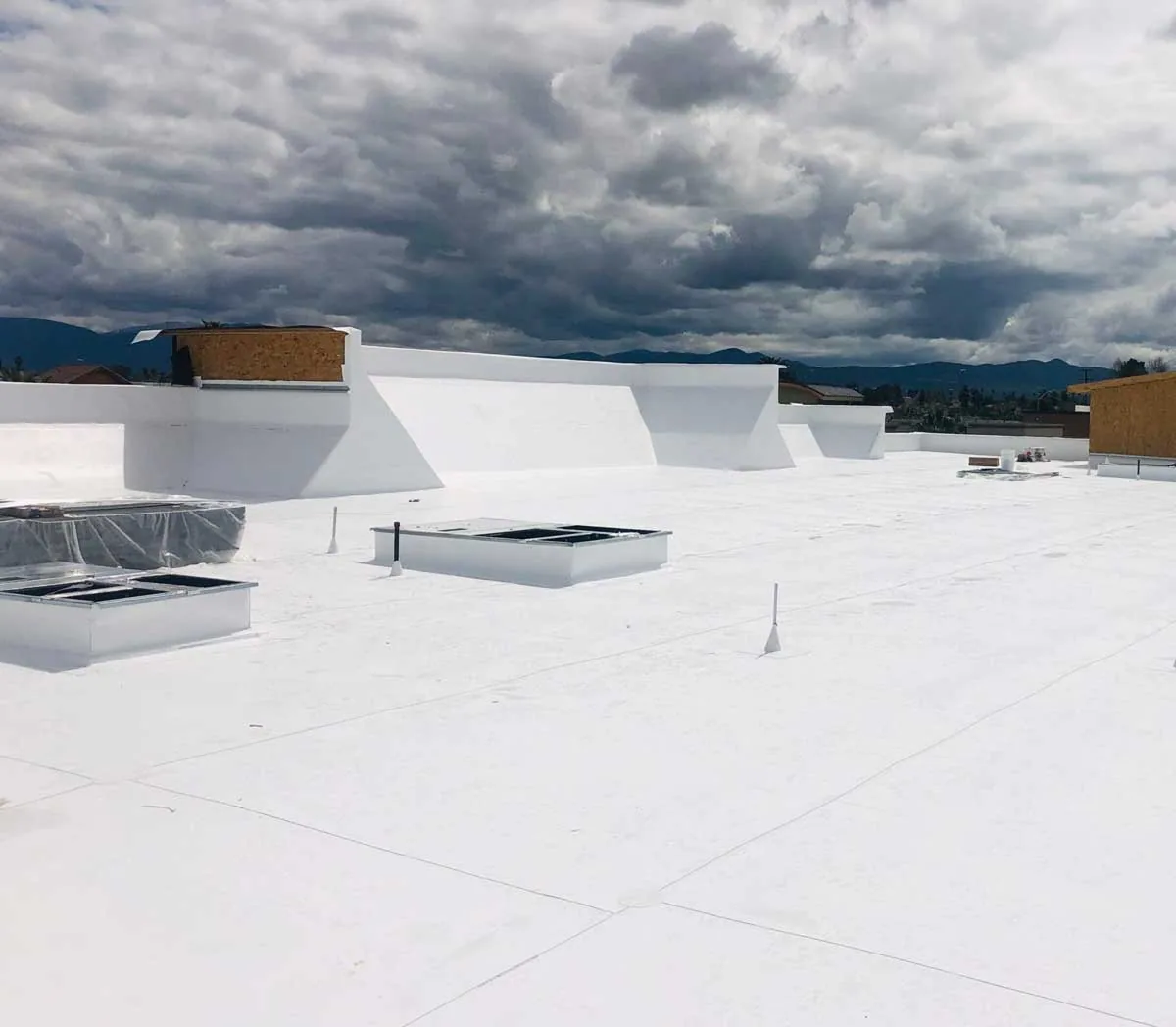
There is no single answer, and we do not sell one. A low-slope light industrial roof with many penetrations often does well with a welded TPO membrane, because the seams can be tested by probe and flashings can be fabricated on site. A roof with heavy rooftop traffic may justify a thicker sheet and walkway pads. A building with a metal roof needs fastener, lap and sealant attention instead.
The decision follows the core cut and the moisture scan. If the insulation is dry and the membrane is sound, a restoration or recover may be enough. If the insulation is wet, the wet area comes out. We give the owner the options with cost drivers named: the area, the number of penetrations, the insulation thickness and the access. Owners with several buildings can use a multi-site roof program to schedule the work across years, and owners with buildings in Dartmouth or Acushnet can fold those roofs into the same plan.
What does a first visit include?
Before the visit we collect the roof plan and the last inspection notes; on the roof we carry a probe, a camera and a moisture meter. Every finding is numbered on the plan, with a photograph and a note on what it means for the budget. The report separates repair now, repair soon and plan for replacement. Buildings used for fabrication or assembly receive the same treatment described for manufacturing plant roofing, and the written findings follow the visit within days. Each finding carries a position, a photograph and a priority, so a facility director can hand the page to an owner or a lender without translation. If a past leak report exists, we match it to the roof position it points at, since a stain on the ceiling and an opening on the roof are rarely in the same spot.
Commercial Roofing Questions
How do we know whether a rooftop unit was flashed correctly?
Look at the curb base. A properly flashed curb has membrane turned up the side, sealed and terminated near the top, with no raw edges. We probe the corners and the seam at the curb, since those are the points that open first.
Should an empty curb be removed or capped?
Capped and flashed is the minimum, and removal with a patched deck is better when the curb will not be reused. An open curb lets water into the building and the insulation, so it goes on the repair list with a price.
Can a business park roof be replaced while production continues?
Yes, in sections. We plan staging away from dock doors, protect interior spaces under open areas and close each section the same day. Production managers tell us which areas are most sensitive, and the sequence starts elsewhere.
What are the signs of wet insulation?
Soft spots underfoot, a membrane that feels spongy, blisters, and repeated leaks that seem to move. A moisture scan finds them before a core cut confirms the condition, so only a few cores are needed.
How long does an inspection report take to arrive?
Within a few days of the visit for an ordinary building. The report includes the numbered roof plan, photographs and a short description of each finding and its priority.
Ready to review the roof scope?
Request a Roof AssessmentKeep Reading