Industries We Serve
Roofing for Real Estate Investors and REITs in New Bedford, MA
Acquisition roof surveys, hold-period capital planning and repair-versus-replace pricing for investors and REITs with property near New Bedford, MA.
Request a Roof Assessment
What is the roof worth to a buyer who has thirty days to close and a lender who wants a number? That figure sits between the age printed on a warranty and the water found in the insulation, and the only way to know it is to look under the membrane. The first thing an inspector finds on a building offered for sale near New Bedford, MA is that a roof sold under one age often carries patches from several different years, a corner that ponds and a curb that has been flashed twice. We probe the seams, scan for moisture, cut cores where the scan points and report the findings in terms a deal team can price.
Priced correctly, a roof is a negotiation item. Priced wrongly, it is a surprise in year two of the hold.
What does an acquisition survey find that a seller's summary does not?
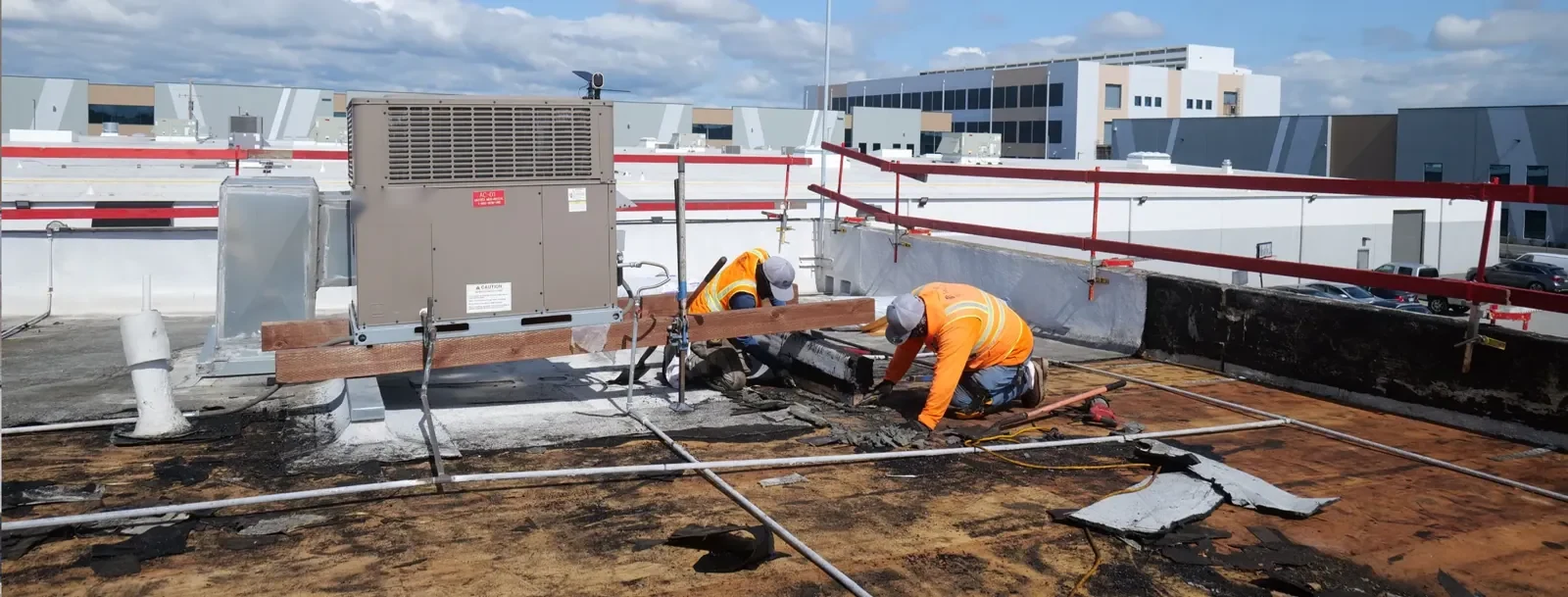
A seller's summary lists the age of the roof and the last repair. A survey finds what the membrane is doing now. We look for seam failure, fastener back-out, lap sealant that has dried, membrane shrinkage at walls and curbs and drains that no longer carry water. An infrared pass maps insulation that has absorbed water, and cores confirm the layers, thickness and wetness at selected points.
The survey also records what cannot be seen: roof areas that were inaccessible, equipment that blocks the sheet and ceilings that were not opened. Those gaps are written into the report so the buyer can price the risk that remains. The due diligence roof survey is built to fit inside the inspection period.
Roof-top solar leases, telecom equipment and signage leases add another layer. Each has a mounting footprint and a penetration, often installed under a separate agreement, and the survey lists them so the buyer knows which items belong to a third party and which belong to the roof.
Why does the roof change the price and the hold plan?
A roof near the end of its life is a capital event at a known cost. A roof that looks fine but is wet is a capital event at an unknown time. Either one affects the price, the reserve and the timing of any refinancing. A survey that names the remaining life, the repairs needed now and the replacement window turns an uncertainty into a line in the model.
Over the hold period, the same record supports roof capital planning. The investor can see which assets will need replacement in which year, spread the spending and avoid a cluster of replacements in a single quarter, which tightens pricing and crew availability.
Lenders and appraisers read the same document. A roof section in the property condition report that cites measured moisture, core data and photographed defects carries more weight than a general remark, and it can shorten a negotiation over holdbacks and escrows.
Where are the region's repositioning opportunities, and what do they do to a roof?
Fall River's mills, many built of local granite or red brick, have been reused for studios and performance venues. Silver City Galleria, the Taunton mall, closed in February 2020 and was torn down by May 2021. The Brayton Point site in Somerset covers 306 acres, stopped generating on May 31, 2017, and has been proposed for offshore wind connection use. Each of those stories is a change of use, and a change of use is a moment to look at the roof.
A roof that was adequate for one tenant may not suit the next. New rooftop equipment, new loads and new tenant hours change what the roof must carry and when it can be worked on. A repositioning in Fall River or Somerset starts with that question.
How should an investor read the weather record?
New Bedford averages 52.21 inches of precipitation over about 124 days and 32.5 inches of snow, mostly December through March, with a record low of minus 12 F and a record high of 107 F. Fall River measured 24.1 inches in the blizzard of January 2015. A survey done in summer should read the roof in light of those winters, because the marks they leave, such as ponding rings, split seams and lifted terminations, are still there to be read.
We look for those marks and price repairs accordingly, and we recommend a spring follow-up after the first winter of ownership. That second visit shows how the roof handled one full cycle under new management and gives the asset manager a baseline.
For a multi-asset buyer, we compare roofs on the same scale across properties, so the ones that need the most capital in the first two years stand out from those that can wait.
What does storm history mean for an insurer and a lender?
Insurers and lenders know Carol's record 20-foot storm tide at New Bedford and 80 to 110 mph winds in 1954, as well as Bob's 89 mph gusts over Buzzards Bay in 1991. They ask about edge metal, parapets and rooftop equipment restraint. A survey that documents those items in photographs answers the question before it is asked.
Since October 11, 2024, Massachusetts' 780 CMR 10th Edition, built on the 2021 International Building Code, has governed replacement roofs. We note where an existing roof would need to change to meet the current edition, since that affects both budget and scope. Our roof warranty management work keeps the paperwork tied to the roof.
If the roof is under a manufacturer warranty, the survey checks whether the maintenance conditions of that warranty were met. Missed drain cleanings or unapproved penetrations can limit coverage, and the buyer should know before relying on it.
What should a deal team ask a roofing consultant?
Ask how many roofs can be surveyed in the inspection period, what the report will contain and whether the numbers come with photographs and core data. Ask how the contractor separates immediate repairs from capital planning, and how access to occupied space is handled.
Ask whether the contractor can work alongside the general contractors doing the rest of a repositioning, and how the findings will be handed to the property management company after closing, so that the survey becomes the first page of the operating file and not a closed deal document.
Commercial Roofing Questions
How quickly can a roof survey be completed inside a thirty-day inspection period?
A typical building can be walked, scanned and cored within days of access, with the report following shortly after. For portfolios, we sequence the surveys by priority so the largest and oldest roofs are done first. Access dates and weather are the usual constraints, and we raise them at the start.
Does a seller's warranty settle the roof question?
No. A warranty may cover certain defects for a certain term, but it does not say what condition the roof is in now or whether the paperwork has been kept current. We review the warranty and the maintenance record and compare them with the field findings before the buyer relies on either.
What does an investor do with a roof that needs replacement in two years?
Price it as a known capital item, schedule repairs that keep it dry until then and set a reserve. If the building is to be repositioned, the replacement can sometimes be combined with the new use, saving mobilization and avoiding a second disruption. The survey gives the cost range to support the choice.
How do changes of use affect roof planning?
A new use brings new equipment, loads and operating hours. A converted mill with new rooftop units, or a retail center with a new principal tenant, needs curbs, supports and flashing that match the new loads. We review the roof against the planned use before the lease is signed and flag any work that should be done first.
Ready to review the roof scope?
Request a Roof AssessmentKeep Reading