Service Areas
Commercial Roofing in Westport, MA
Commercial roofing in Westport, MA: village retail and farm-community buildings, wind and edge checks, drainage, snow and seam repair or replacement.
Request a Roof Assessment
Where does wind find the weakest point on a roof that has already come through a storm like Hurricane Sandy? Sandy hit Westport on October 29, 2012 at about 70 mph and caused power outages, and an inspector looks at a Westport building with that kind of wind in mind: the edge metal first, then the wall-to-roof transitions, then the rooftop units that sit where the wind loads a curb.
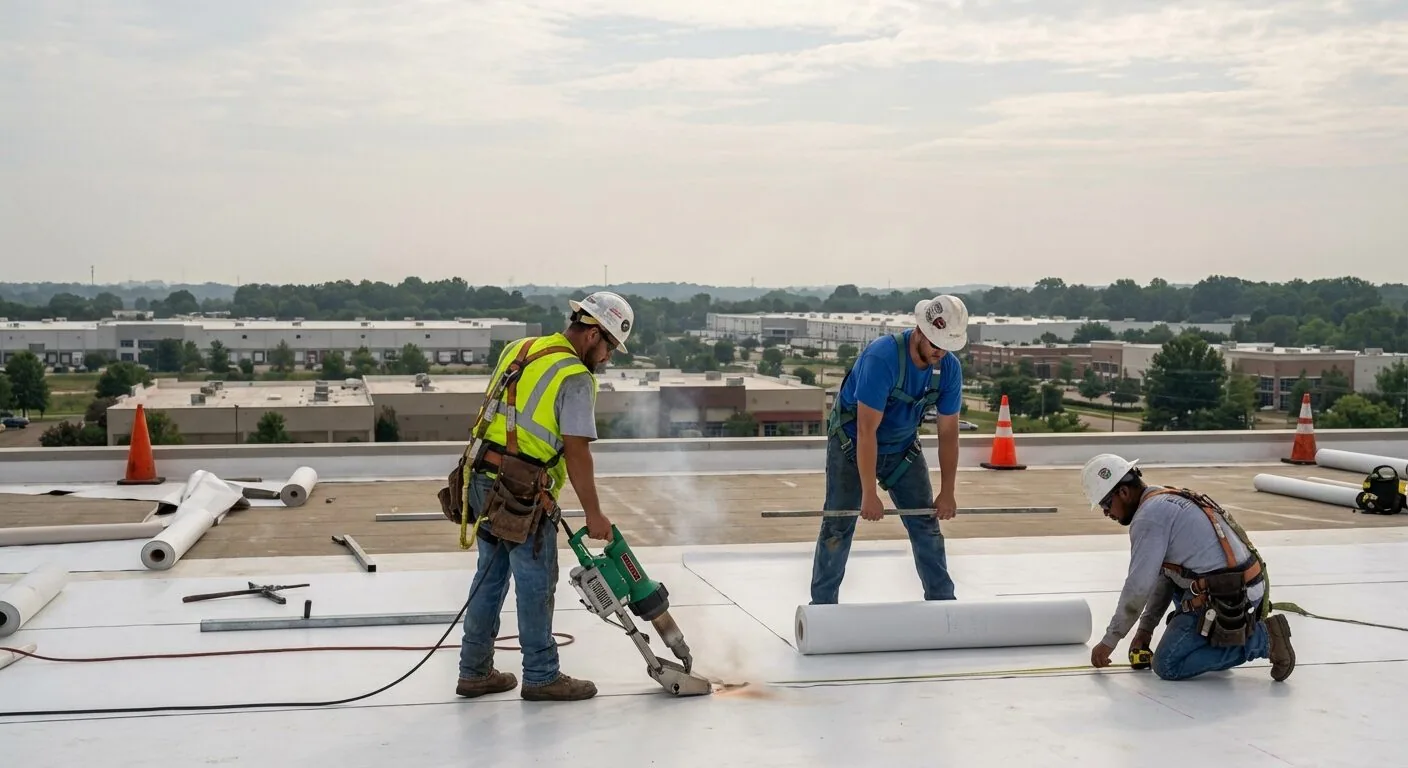
Westport's Central Village has town offices, retail stores and businesses, and Route 6 runs through the town, so commercial roofs here range from small village buildings to larger retail structures along the road. The town also covers 64.4 square miles, about 22 percent of it water, and is a Right-to-Farm community with a large farming community. We start with a commercial roof inspection that identifies what the building is and how its roof was put together before anything is recommended.
What did a 70 mph storm leave on the roof?
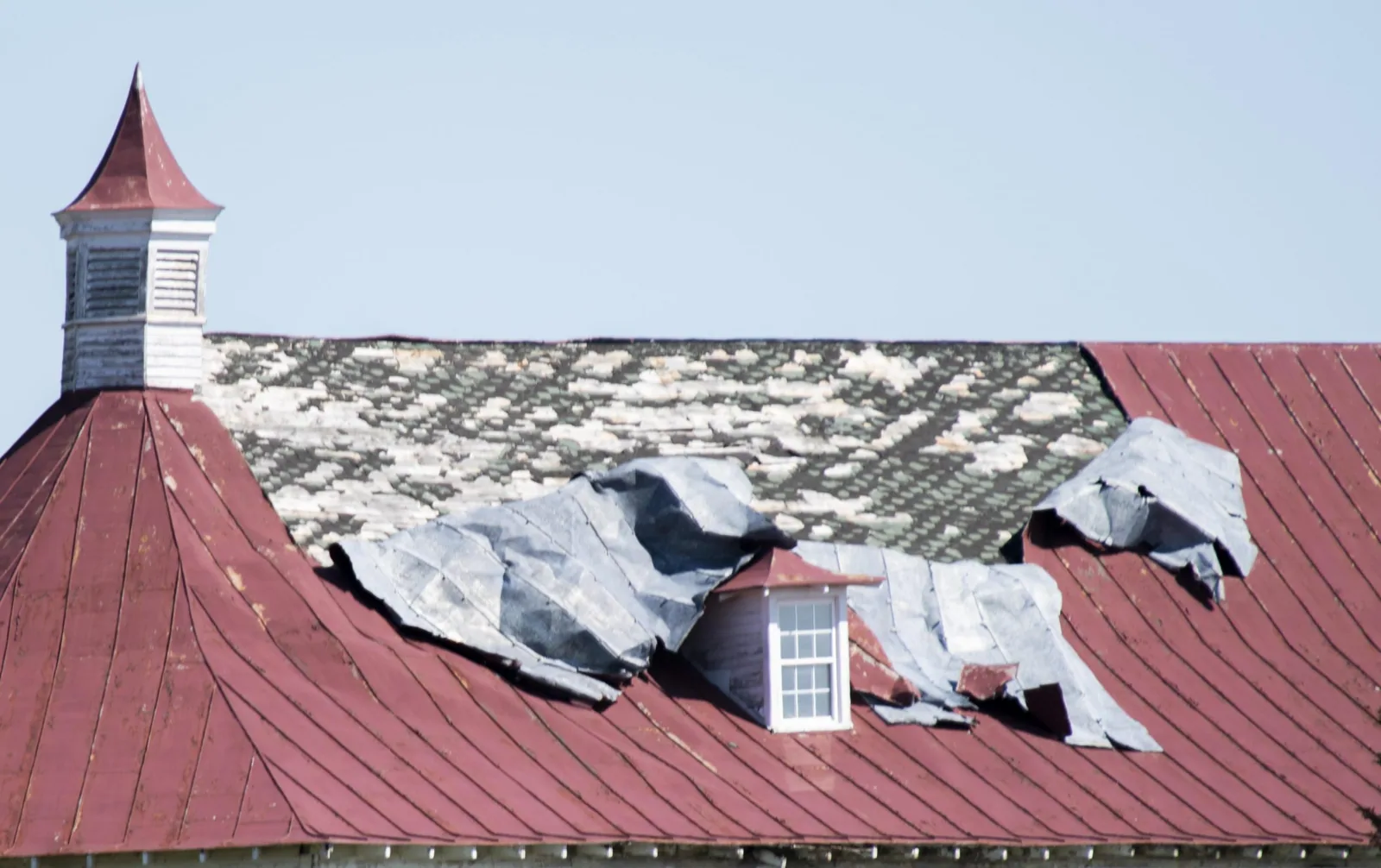
Wind damage on a commercial roof is rarely a single event. A storm loosens an edge, the next rain gets behind it, and the damage shows up at a ceiling tile weeks later. By then the owner may have forgotten the storm, which is why we ask for the date of the last high-wind event and the first stain, and compare them with what the roof shows. After a storm we look for lifted gravel stop, displaced edge metal, open laps and fasteners that have backed out. We also look for the pale, scuffed areas where a membrane has flapped against a loose attachment, because that movement weakens the sheet.
Every finding is placed on the roof plan with a location so the facility director can see the pattern. If the wind came from one direction, the damage usually lines up on one side of the building. A wind damage roof repair first seals the opening, then restores the edge and attachment so the next gust meets a tight perimeter.
How do village and highway buildings differ?
A building in the village core may have parapets, a flat or low-slope roof and a tight lot where staging is limited, while retail along Route 6 may be wider and carry more rooftop equipment. The roof system and the access plan change with each, so the plan and the last inspection notes are requested before the first visit.
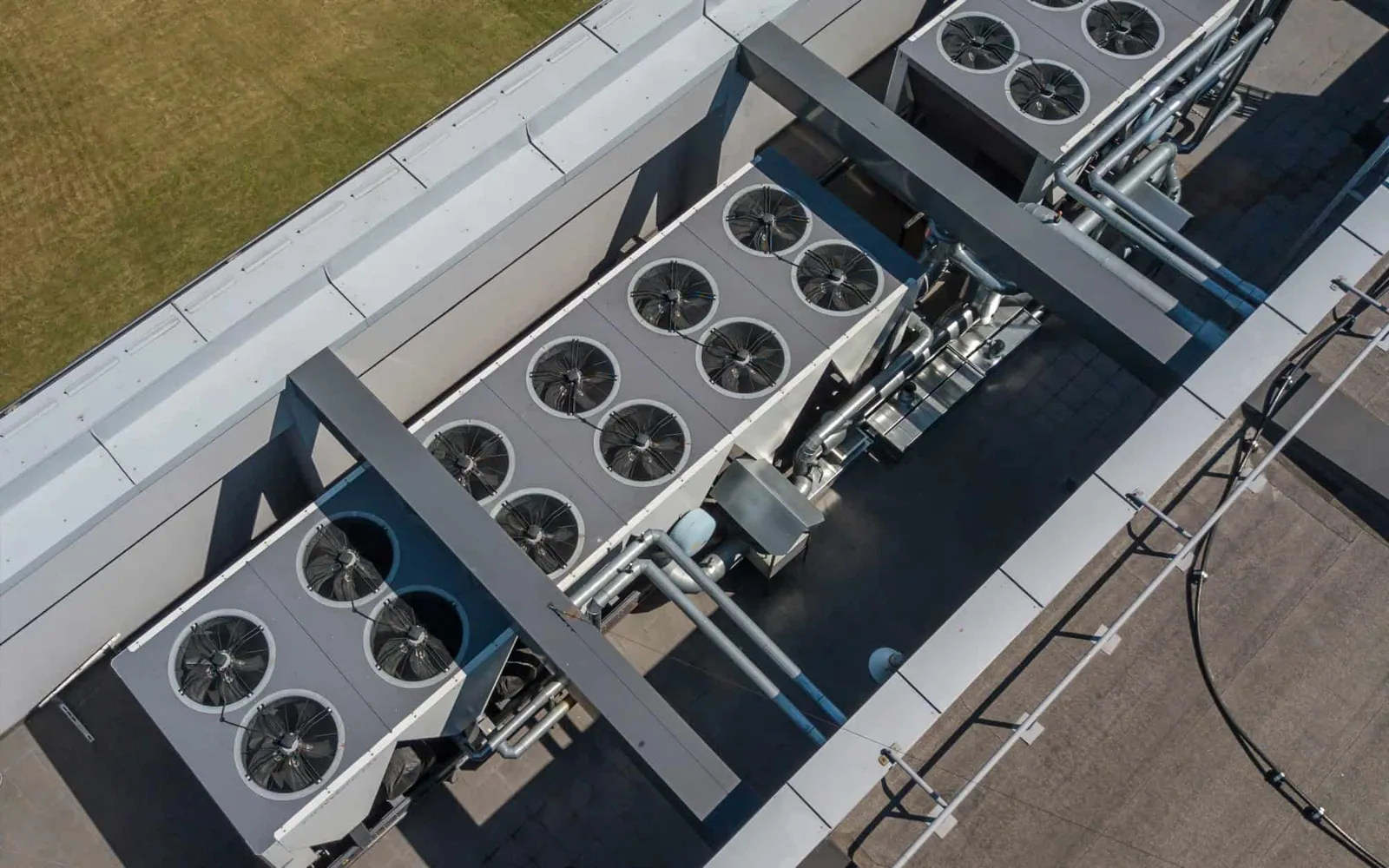
On a village building, the through-wall flashing and the parapet termination are the first places to probe. On a wider retail roof, the seams, the equipment curbs and the drains matter most. We mark each curb and penetration, check the flashing around it and decide with the owner whether a rooftop equipment curb and support needs resetting or whether sealing is enough.
What changes on a building tied to a farm operation?
Westport is a Right-to-Farm community, and some commercial buildings may serve agricultural uses such as storage, processing or sales. If a building does serve a farm, the roof questions shift: livestock or equipment storage may bring moisture, ventilation and corrosion into the picture, and a metal roof may need fastener and panel checks that a membrane roof does not.
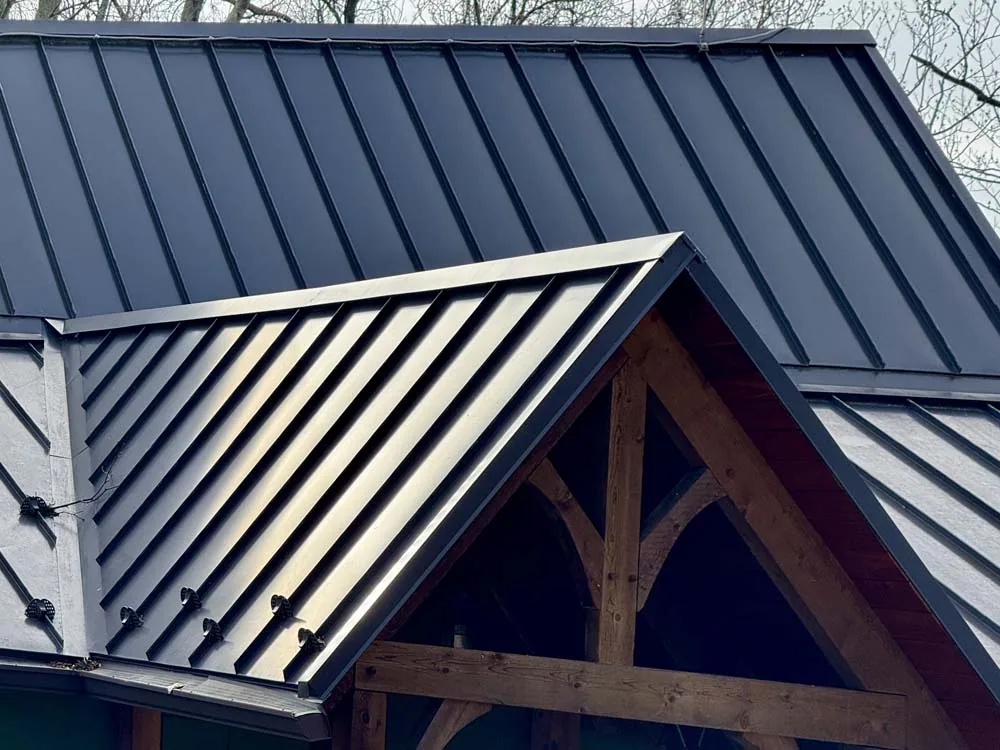
For a metal roof, we check the fasteners, the panel laps and the sealant at penetrations, since movement and weather loosen them over time. A standing seam metal roof has different seams and clips from an exposed-fastener panel, and the inspection starts by identifying which one is on the building. With exposed fasteners, the washers harden and the screws back out, so we check each one near the ridge and the eave and replace those that no longer seal. The scope names what was confirmed and what needs a closer look, and it separates routine upkeep from items that cannot wait for the next budget year.
Condensation is a second concern in any building that holds animals, produce or equipment, because warm, damp air rises to the underside of a metal panel and drips as if the roof leaked. We tell the two apart by looking at where the moisture appears, whether it follows rain and whether the panel is wet on the underside only. A true leak follows the weather, while condensation follows the temperature, and the repair for each is different.
How do rain and snow load the drainage?
Westport's average annual precipitation is 43.82 inches, with January and February the snowiest months. That is a lot of water to move off a low-slope roof, and the work is done by a few drains and scuppers. When one is blocked, water backs up against the nearest seam and flashing, and a roof that looks dry can be hiding a wet corner.
Regionally, New Bedford sees about 32.5 inches of snow a year, concentrated from December to March, which gives a sense of the load. We clear the outlets, check the sump and look for ponding stains, then probe the membrane nearby. Drain and scupper work is often the cheapest fix on the roof and the one that prevents the most expensive one. Where a drain is set well above the low spot, we explain whether lowering the body, adding a sump or adding tapered insulation is the right choice, and what each does to flashing heights at the walls.
Hurricane Sandy on October 29, 2012 reached Westport at about 70 mph, which is a reminder that a roof here can meet tropical wind late in the year, after the owner has stopped watching the forecast.
What are the choices once the findings are on paper?
Repair fits local failures where the insulation is dry; wet layers, widespread seam failure or a shrunken membrane point to recover or replacement. Each option in the scope lists what is kept, what is removed and what could move the price, and a number is given only after the owner and our inspector have walked the roof together. The price turns on roof area, wet insulation, penetrations, deck condition and how much of the roof can be reached safely, each shown as a separate line.
A larger project follows 780 CMR, 10th Edition (October 11, 2024), the state code based on the 2021 International Building Code, along with the town's permit process. A building in nearby Somerset or Dartmouth gets the same write-up, so the first job can be picked.
Commercial Roofing Questions
How quickly should a roof be looked at after a windstorm?
As soon as it is safe to walk. A lifted edge or open lap admits water with the next rain, so openings get sealed first and the permanent repairs are recorded apart. The record helps if an insurance claim follows.
Does a village building need a different kind of inspection?
Yes. The parapet, through-wall flashing and drains matter most on an older, smaller roof, while seams and equipment curbs matter more on a wide retail roof.
What if the building serves a farm operation?
We ask what is stored or processed beneath the roof, since moisture, ventilation and corrosion change the checks. The inspection then follows the roof type actually in place, and we tell the owner which findings relate to the use of the building and which to the roof itself.
What decides whether a metal roof can be repaired in place?
The condition of the panels and fasteners. Isolated loose fasteners and failed sealant are repairs, while widespread corrosion or panel distortion points to a larger scope.
Does the work need a permit?
Larger projects usually do, under the state code and the town's process. We ask the town about permit requirements before finalizing the scope.