Roof Systems
Standing Seam Metal Roofing in New Bedford, MA
Standing seam metal roof inspection and repair in New Bedford, MA: clip and seam checks, wind uplift, snow slide, and penetration flashing findings.
Request a Roof Assessment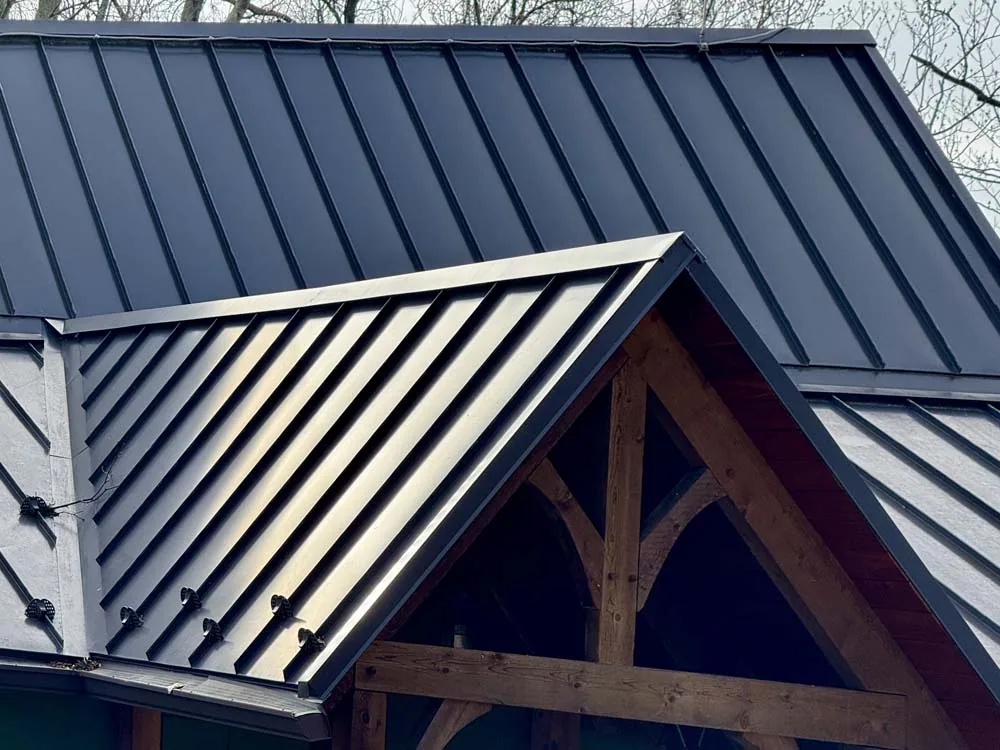
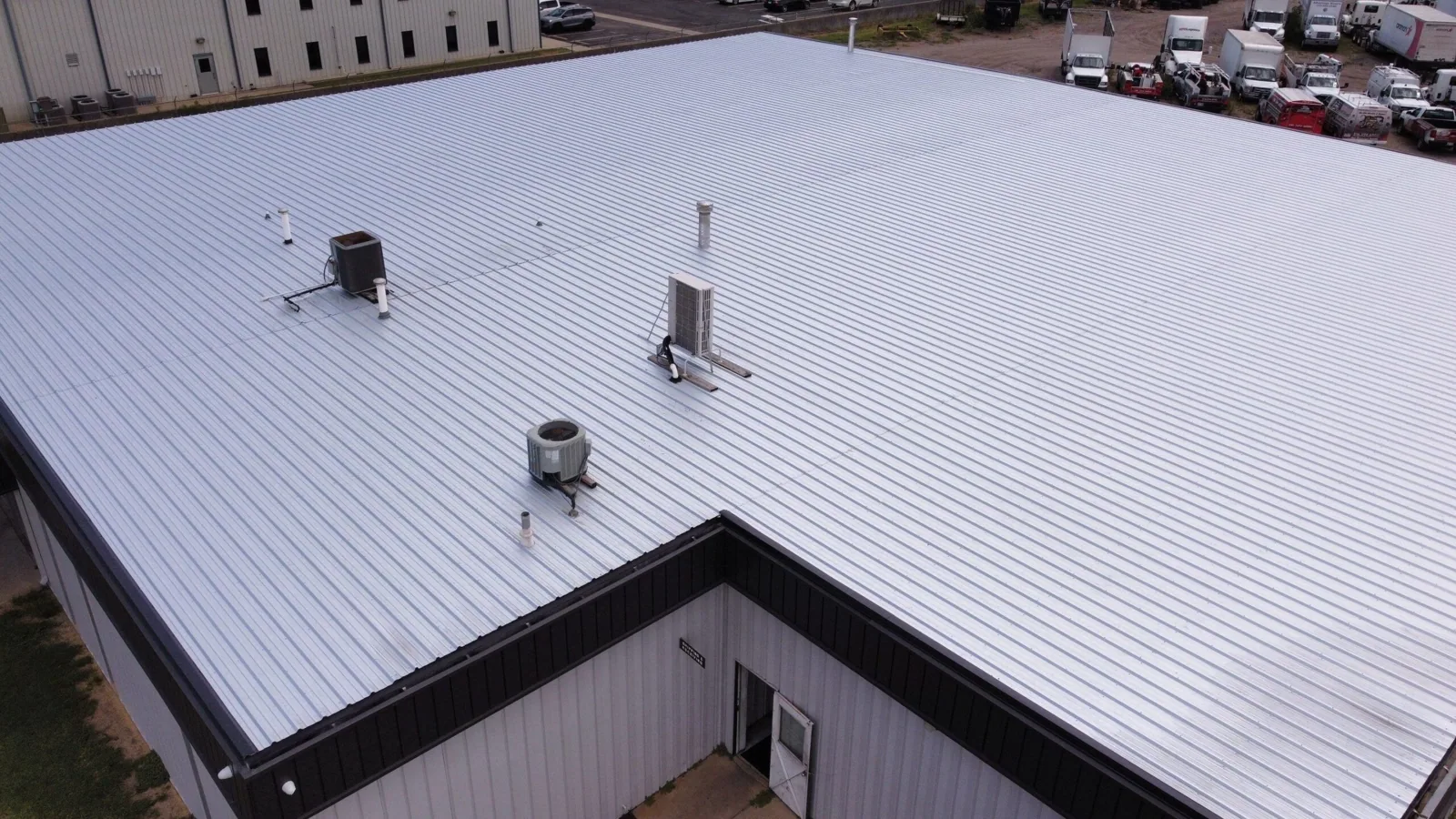
Does a metal roof with no exposed screws ever need an inspection? A facility director who assumes the answer is no usually finds out in January, when a stain appears below a rooftop unit, and what an inspector would find first is a seam that is tight along its length and a failed sealant joint at the curb that interrupts it. A standing seam roof is made of long metal panels with raised seams that lock together, held to the deck by concealed clips so the panels can expand and contract without tearing.
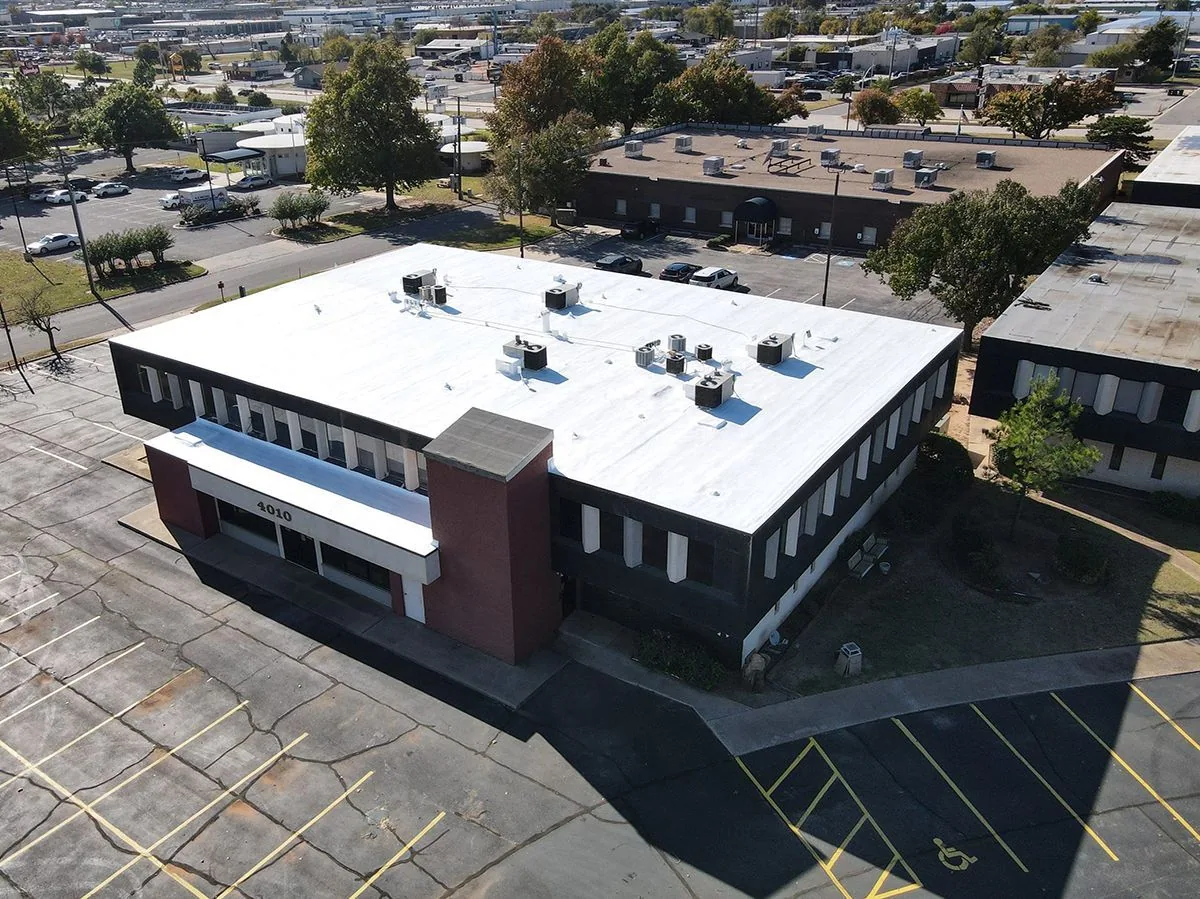
In New Bedford, MA, those panels meet a harbor wind, about 32.5 inches of snow a year, and summers that have touched 107 F. We walk the seams, the clips where they can be reached, the trim and every penetration, and each finding goes on the roof plan before a price is discussed.
How is a standing seam roof put together?
Panels run from the eave to the ridge or to a transition, and each one clicks or is mechanically crimped to its neighbor. Clips fixed to the deck hold the panels down while letting them slide, which is the feature that separates the system from a screwed-down metal roof. Under the panels sits a substrate and often an underlayment, and on commercial buildings the insulation may be below the deck. Every one of those layers matters when water gets in, so we look for the point where the panel, clip and trim meet, and we note the metal type and finish, since coating wear at a cut edge is a place corrosion begins. Panel width, rib height and seam style are recorded too, because a repair part has to match the profile on the roof, and a mismatch is a leak waiting at the next thaw.
What does a seam probe show on metal?
On a metal roof the seam probe is a gloved hand and a flat tool, run along the seam to feel for a rolled edge that is open or a crimp that did not close. A snap-lock seam can come apart in high wind if the clips beneath it are loose, which is why a roof in an exposed spot gets a closer look at its clips. A mechanically seamed one stays closed unless the metal has been deformed. We look at side laps, end laps where panels are spliced, and the sealant that fills them. Dirt tracking inside a lap is the sign that water has been moving in and out of it, and that location is marked for a repair that goes deeper than a bead of sealant.
How does the harbor wind load the panels?
Hurricane Bob's gusts of 89 mph over Buzzards Bay in 1991 are the kind of load the edge zones are designed around. Uplift on a metal roof is greatest at the eaves, rakes and corners, so those zones need more clips, tighter spacing and stiffer trim. We check the edge metal and trim for fastener back-out, open joints and bent drip edges, and we look at panel ends for lifted clips. A trim piece that has begun to peel is the cheapest repair on the roof and the most expensive one to ignore. After a named storm or a hard nor'easter, the first walk looks for panels that have shifted on their clips, ridge caps that have opened, and fasteners at the trim that stand proud of the metal. Each is photographed and logged with its location so the owner can see whether the roof moved or only looked as if it had.
What happens when a slope sheds its snow?
Metal is slick, and snow that has built up all week can release in one sheet. The January 2015 blizzard put 24.1 inches on Fall River, and a normal New Bedford winter adds about 32.5 inches, mostly December through March. A roof that drains over a walkway, an entrance, a loading door or a lower roof needs snow retention, and we check that the guards are fastened to the seams as designed and not drilled through the panel. We also look at gutters and downspouts, which fill with ice, and at the valley where two slopes meet, where meltwater concentrates and a poorly lapped panel will leak.
Where do penetrations and curbs cause trouble?
Every vent, pipe and rooftop unit interrupts the panels, so each one is flashed with a boot, a curb or a pitch pocket. Rubber boots crack in sun and cold, and the sealant around a curb dries out. We inspect those details first because they are the usual cause of a leak on an otherwise tight metal roof. Where a unit sits on a roof curb, a small diverter above it sheds water around the curb, and we check that it is not packed with debris. The curb and support details are repaired by cutting back sealant to a clean joint and installing new flashing. Any new unit set on the roof later needs its own curb flashed into the panels, not screwed through them, and the plan records where that was done.
Which buildings suit standing seam, and what does it cost to maintain?
The system suits roofs with enough slope to shed water and owners who want a long service period without frequent recoating. An owner with several buildings in a park such as Taunton's Myles Standish, which spans more than 800 acres of manufacturing, office, high-tech and distribution space, or in the New Bedford Business Park, needs the same trim and flashing details repeated across roofs, and this system's repeatable panel details help. Maintenance is mostly seam and sealant care, trim fastener checks and drain clearing. A metal roof retrofit can add a new standing seam over an older exposed-fastener roof when the structure can carry the load. Owners comparing it with a TPO membrane or a modified bitumen roof should ask what each costs to keep dry over the first two decades, not only what it costs to install. A metal roof asks for less attention to seams and more attention to trim and penetrations, while a membrane asks for the opposite. The roof plan shows which set of details the owner is signing up to keep.
Because panels are cut to length, a replacement panel has to match the original profile and finish, so we photograph the rib shape and note the gauge before ordering.
Commercial Roofing Questions
Is a leak on a standing seam roof usually in the panel itself?
Rarely. Leaks cluster at penetrations, trim, end laps and seams that were not fully closed. We trace the stain to the nearest of those details before cutting any panel.
Can panels be repaired without replacing them?
Often, yes. Small holes are patched with compatible metal and sealant, and open laps are reclosed. A panel that is dented but watertight is usually left alone and noted on the plan.
What does thermal movement do to a metal roof?
The panels lengthen in heat and shorten in cold, sliding on their clips. Trim and flashing that were fixed rigidly across that movement tear or open, and we look for that pattern first.
Does a metal roof need a coating?
Factory finishes last a long time, but cut edges, scratches and fastener heads are weak points. If the finish has worn, a compatible coating can extend service, as long as the seams are sound and clean.
How does ice build up at the eave?
Heat from the building melts snow, and the water refreezes at the cold eave. The result is a dam that backs water under the panels. Insulation, ventilation and a sealed eave detail reduce it.