Service Areas
Commercial Roofing in Dartmouth, MA
Commercial roof inspection, repair and replacement in Dartmouth, MA, from the I-195 and US 6 commercial districts to the Buzzards Bay shoreline.
Request a Roof Assessment
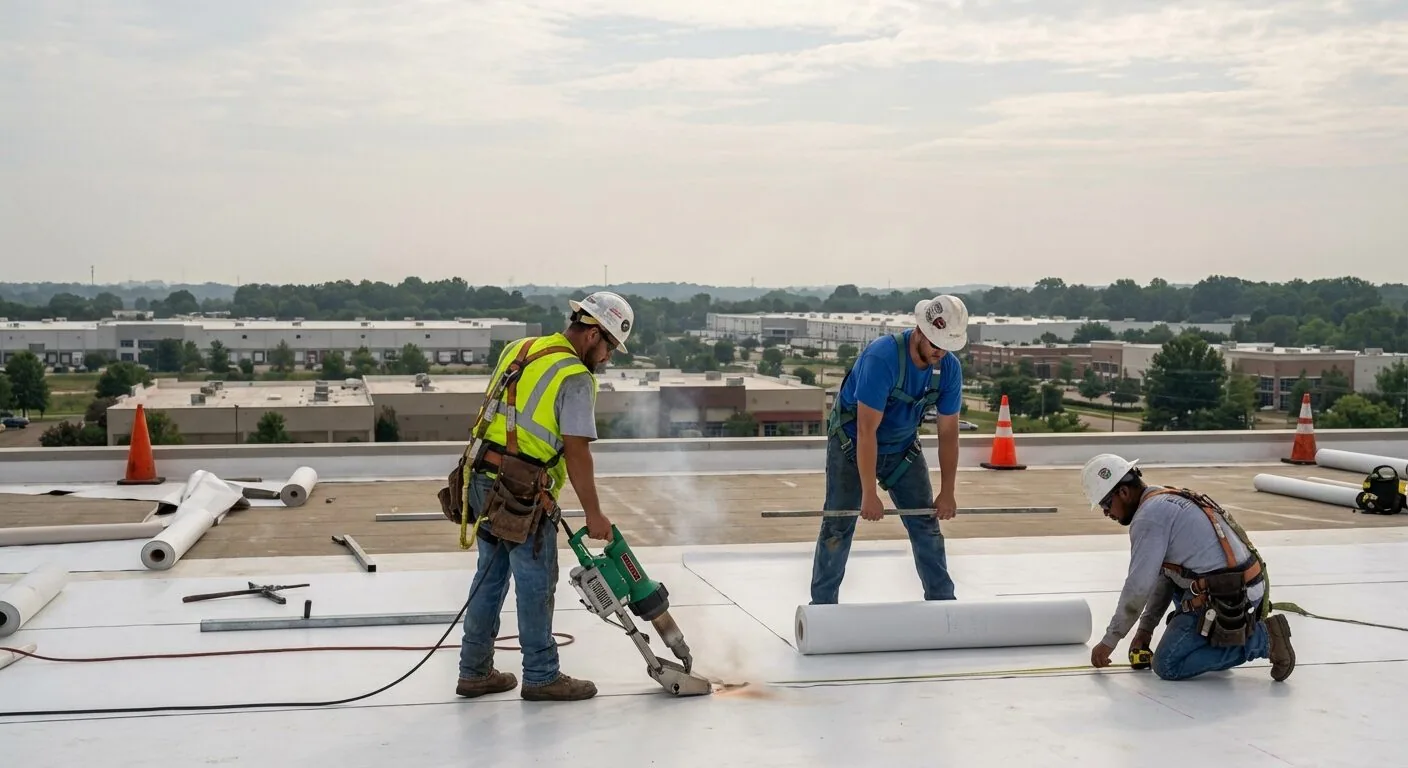
Why does a roof in the commercial districts of northern Dartmouth stain after the same kind of storm that leaves a Buzzards Bay shoreline building dry? Because the first thing an inspector would find is that the two roofs face different stresses: the northern roofs near I-195 and US Route 6 deal mostly with equipment, traffic and drainage, while the southern roofs near the water take the wind first. Dartmouth, MA has both settings, and we inspect, repair, recover and replace low-slope and metal commercial roofs across them. Findings from each visit are marked on the roof plan and walked on the roof, and only then is a quote written.
What do roofs along the I-195 and US 6 districts need checked?
The northern part of Dartmouth holds the main commercial districts, and I-195 and US Route 6 run parallel through it about one to two miles apart. Buildings in a commercial district usually carry rooftop units, exhaust fans, conduit and signage supports, and every one of those adds a curb, a penetration or a foot-traffic route. We map them, check the flashing at each and record where the membrane shows wear from technician traffic.
Seams and laps get a probe along their length, and the lap sealant is checked for cracking and lift. Drain sumps and scuppers are cleared and inspected. If a roof shows repeated repairs at the same curb, we tell the owner the detail has failed and recommend rebuilding it. A written commercial roof inspection puts each of those findings in order of urgency, so the owner can decide what to approve now and what to schedule.
Occupied retail and office space asks for a different rhythm of work. We confirm the tenant's hours, locate air intakes and entrances, and plan staging so deliveries and customers keep moving. Loud tear-off is scheduled in agreed windows, interior protection goes under any opening and sections are closed at the end of each day. The scope version states the sequence, and an access contact who can approve added work the same day keeps a concealed problem from stalling the job.
Where a property manager oversees several buildings along the two highway corridors, the inspection can be scheduled as one run, with the roofs taken in order of consequence, so a clinic or food tenant is seen before a storage building and the report carries a single ranked list.
How does the Buzzards Bay and Atlantic shoreline change the inspection?
The southern part of Dartmouth borders Buzzards Bay and the Atlantic Ocean, and about 37.5 percent of the town's area is water. Roofs close to open water meet wind with little in the way, and the region has measured what that means. The region has measured what that means: Bob in 1991 brought 89 mph gusts over the bay and a 5.8-foot surge to New Bedford, and Carol in 1954 left a record 20-foot tide there and 80 to 110 mph winds over eastern Massachusetts.
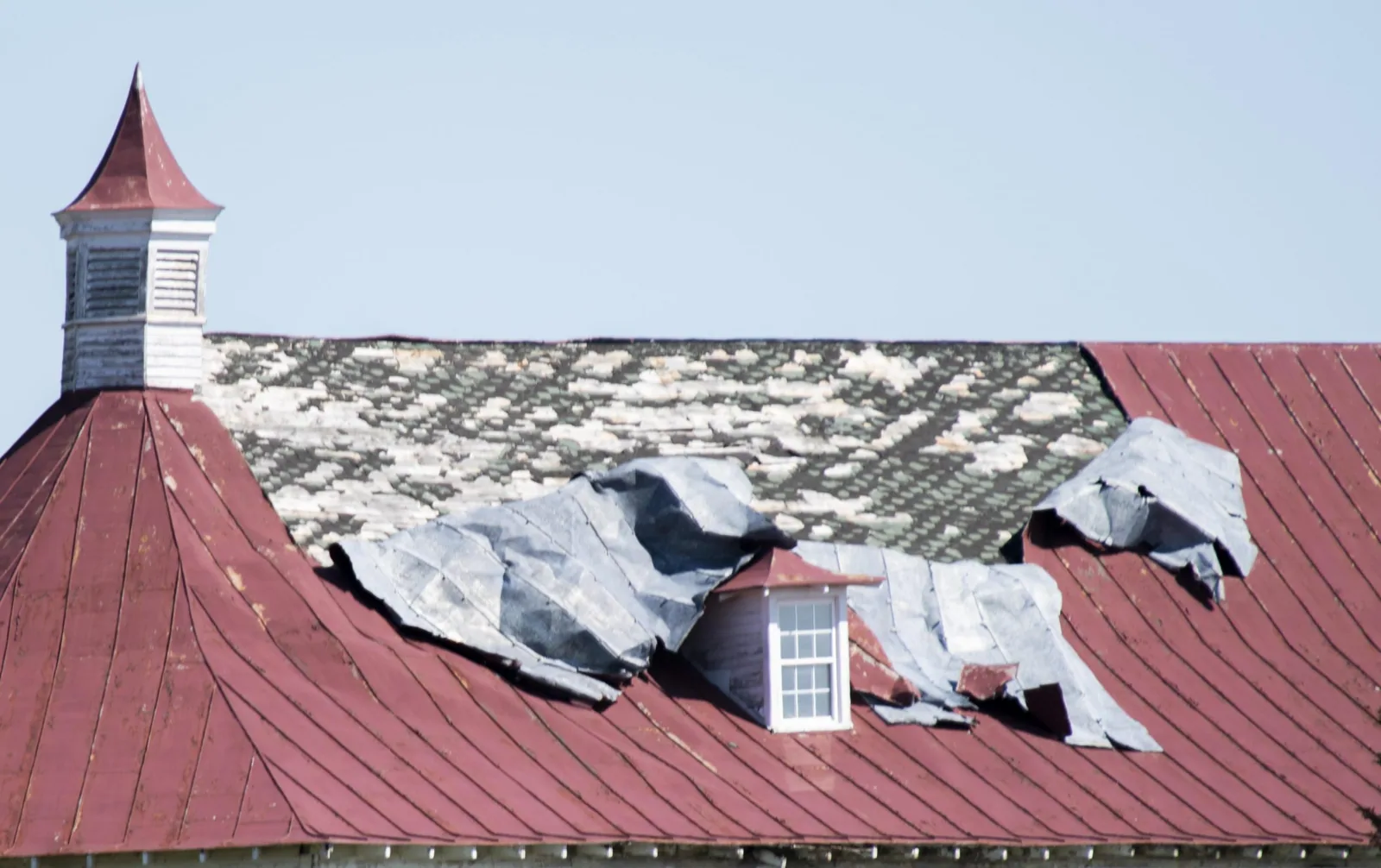
For a building near the shore, the perimeter is the priority. We check edge metal, gravel stops, termination bars and the first few feet of the field for fastener back-out, lifted edges and corrosion on metal parts. If wind has loosened an edge, wind damage roof repair restores the attachment and records the work with photographs, so the next inspection has a baseline.
Corrosion deserves its own line. Fasteners, edge metal and curb flashings near open water stay damp for long stretches, and a fastener that has lost holding power fails long before it snaps. We probe a sample at the perimeter and replace any that crumble or spin, because an edge with weak fasteners is the first place a storm will start peeling the membrane.
What does freight rail and an industrial track mean for a roof?
Freight rail runs through Dartmouth on the North Dartmouth Industrial Track, operated by the Massachusetts Coastal Railroad. A rail line suggests that some buildings in the area handle freight or storage. For any warehouse or industrial building, the questions we ask are the same: how large is the roof, how is it drained, what is on it and what is under the membrane.
Large industrial roofs have long seam runs, many drains and sometimes a lot of equipment, and a small defect can spread far under the sheet before a stain appears. A moisture scan across the field finds wet insulation before it shows, and a core cut confirms it. Our infrared moisture survey maps the wet area, and the repair is sized to that map.
How do snow and rainfall test a Dartmouth flat roof?
Next door in New Bedford a normal year means about 32.5 inches of snow, mostly December through March, plus 52.21 inches of precipitation over roughly 124 days. In the January 2015 blizzard, Fall River took 24.1 inches. Snow settles on low spots, meltwater has to find a drain and ice can form at parapets and drains. A roof that holds water for more than a day after rain is telling the owner something.
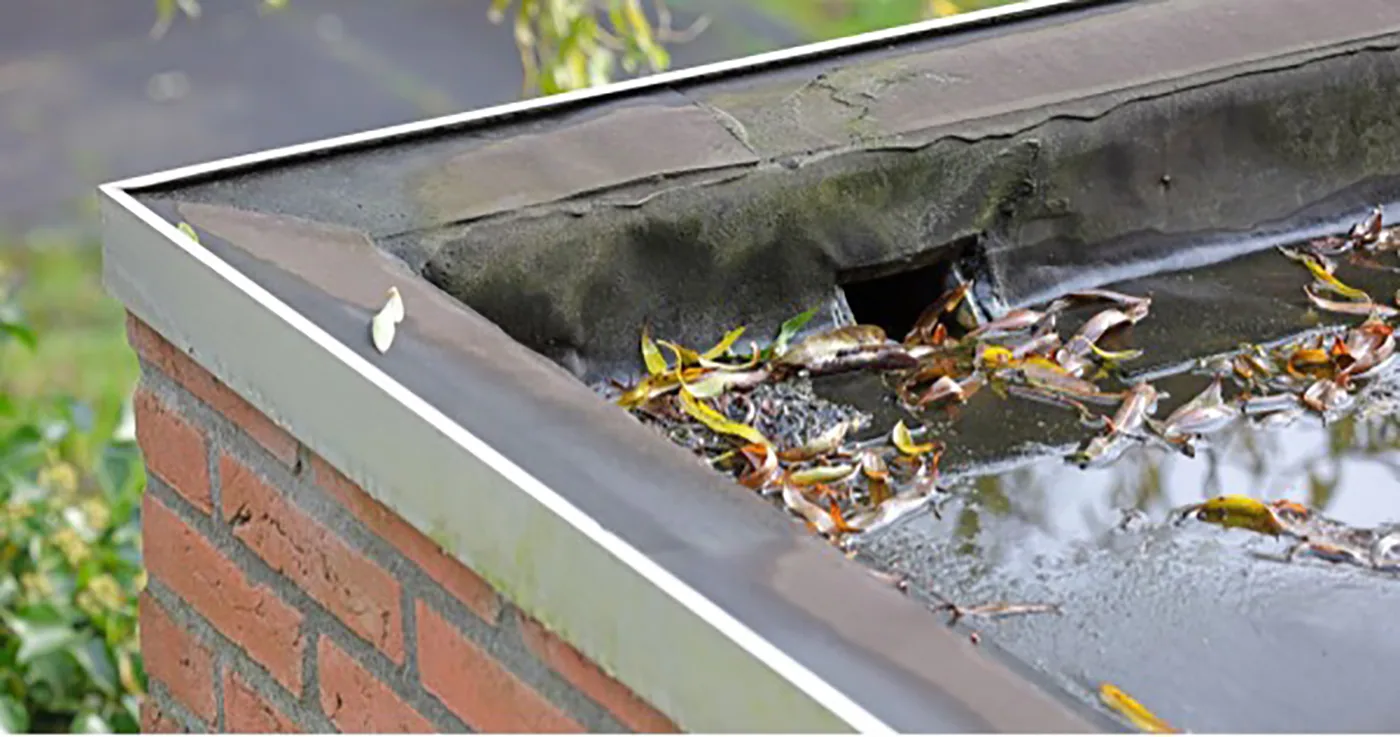
We check slope, drain sumps and tapered crickets, and we mark ponding on the plan. Where water stands, the fix may be an added drain, tapered insulation or a corrected scupper, and our ponding water repair work starts from the record. Fixing drainage protects seams and sealants and slows the aging of the membrane.
Snow removal needs a word of caution. Shoveling or plowing a membrane roof can cut the sheet, so we mark drains and walkways on the plan and advise owners to clear only what the roof's design allows. A short list of safe clearing areas, kept with the roof file, prevents a puncture that would otherwise turn into the next spring's leak.
What do education and institutional buildings add to the picture?
UMass Dartmouth has been on Old Westport Road near Smith Mills since the 1960s, with campus construction beginning in 1964. A campus that has grown since then can hold institutional roofs of several construction periods. Each roof gets a core cut and a moisture scan, and the report states what the layers are and what condition each is in.
Institutional work is phased around the academic year and daily operations, with interior protection and noise limits agreed in advance. Owners who want to compare options can look at EPDM roofing and TPO roofing for typical replacement choices, with the roofs of the New Bedford Business Park and Fairhaven as nearby comparisons.
Commercial Roofing Questions
How different are roof needs near I-195 and near the Dartmouth shoreline?
Northern roofs usually need attention to equipment curbs, traffic wear and drainage. Shoreline roofs need the perimeter checked first for wind and corrosion. The same inspection method applies to both, with the emphasis shifted to the exposure.
Does being near open water mean the roof needs a different system?
Not necessarily. It means attachment, edge metal and terminations deserve more attention, and the specification should account for wind exposure. We discuss attachment methods and edge reinforcement in the scope.
How do you decide between repairing and recovering a roof?
Moisture and the deck decide. A moisture scan and a few cores tell us if the insulation is dry and the deck sound. If so, a recover or a repair can work. If not, tear-off is the sound decision.
What if I have several buildings in Dartmouth?
We can survey them together and rank the roofs by condition and consequence. The report lists what is urgent, what can wait and what belongs in a capital plan.
Who answers an emergency call?
Emergency crews are available all day and night, holidays included. The first visit covers the opening and records it, and the permanent repair follows in suitable weather.
Ready to review the roof scope?
Request a Roof AssessmentKeep Reading