Property Types We Roof
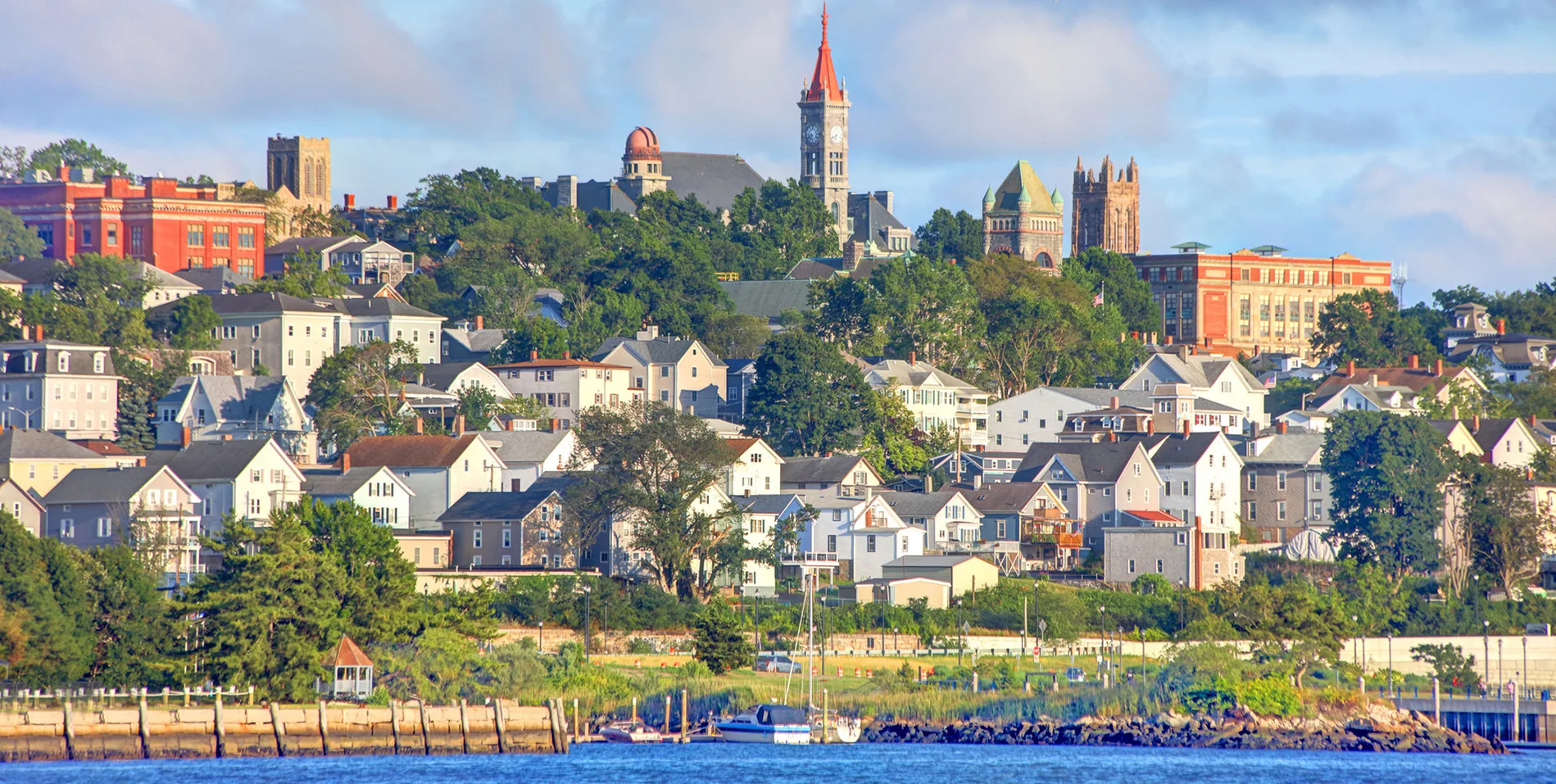
Warehouse Roofing in New Bedford, MA
Warehouse roof repair, recover and replacement in New Bedford, MA, with seam probes, edge metal checks and drainage fixes for large low-slope roofs.
Request a Roof Assessment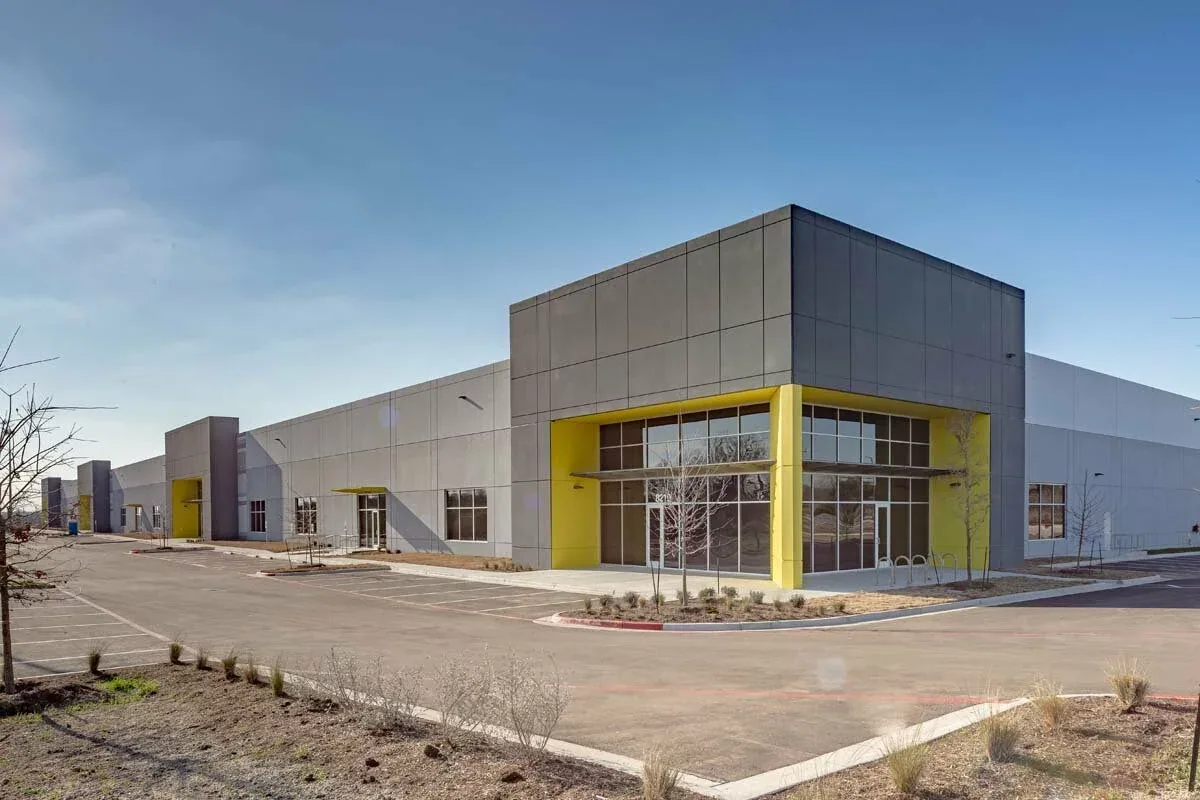
Why does the same corner of the dock bay keep dripping after every winter storm, even though the roofer patched it twice? On a warehouse in New Bedford, MA the first thing an inspector finds is usually not at the drip. It is a lap seam forty feet upslope that has opened a fraction, or a fastener that has backed out of the deck and lifted the membrane just enough to let water run along the insulation until it finds a joint. Warehouses reward patient inspection because their roofs are broad, their drains are few, and their interiors are full of stock that cannot be moved easily. We walk the field, probe the seams, trace the staining to its true origin and mark each finding on the roof plan, so the repair you approve is the repair the building needs.

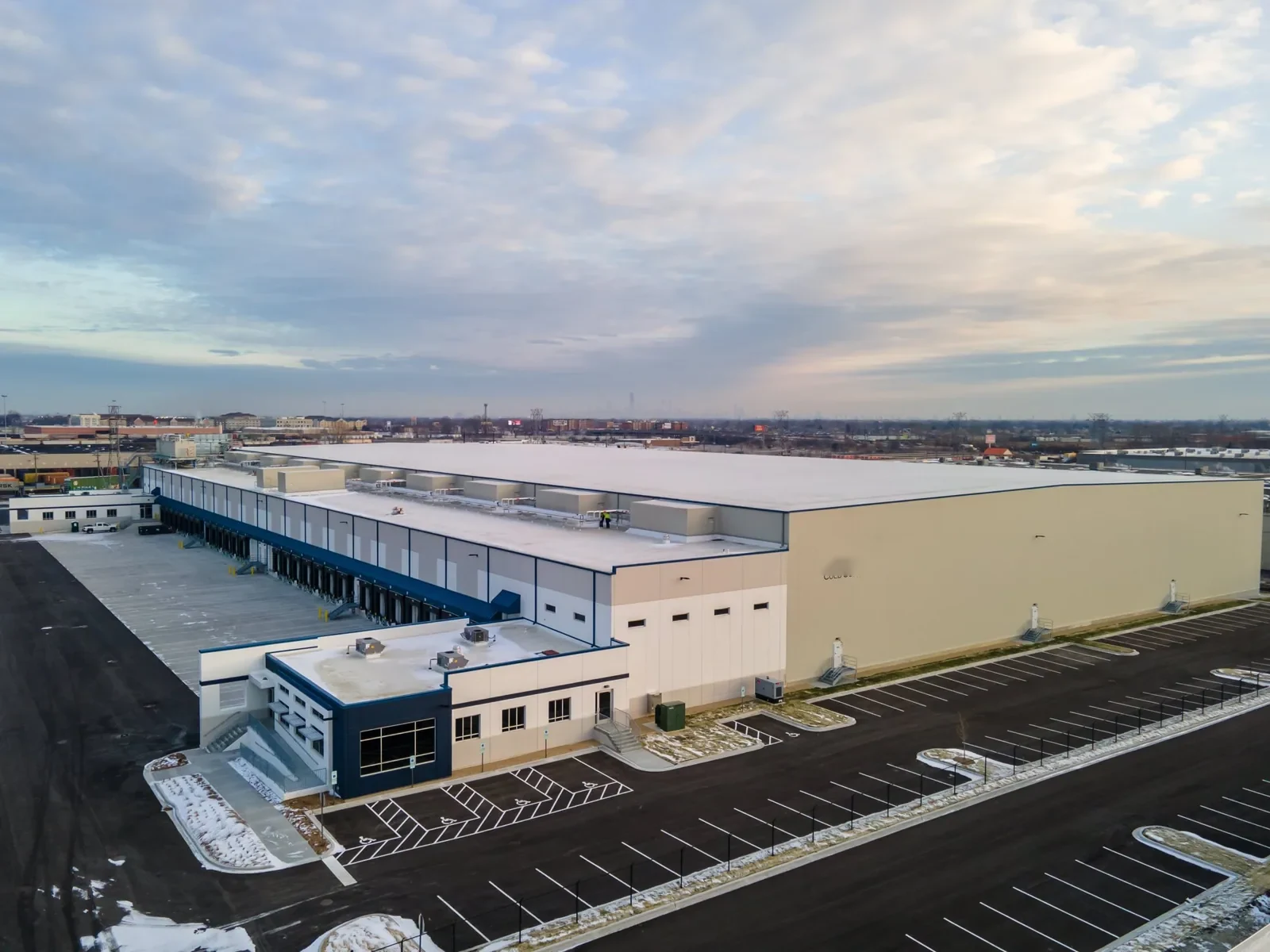
That approach holds whether the building is a modest storage shed off Dartmouth commercial streets or a larger building feeding the same freight routes as a distribution center, or a cold storage building with its own insulation demands.
What makes a warehouse roof different from other low-slope roofs?
A warehouse roof is mostly field. There are few penetrations compared with a hospital or a restaurant, which means fewer flashing details, but each one carries more consequence because the surrounding membrane is large and often unreinforced by foot traffic. The long runs of single-ply membrane move with temperature, and membrane shrinkage pulls at the wall-to-roof transition until the base flashing lets go at a corner. Roofs of this kind often sit on mechanically attached insulation over a steel deck, so we check for fastener back-out along each deck rib, listen for loose panels underfoot and look for the ridges that show where insulation boards have shifted.
Because the interior is usually open, a leak can travel a long way along a purlin before it drops. We follow the water to its origin with a moisture scan rather than trusting where the puddle forms on the slab.
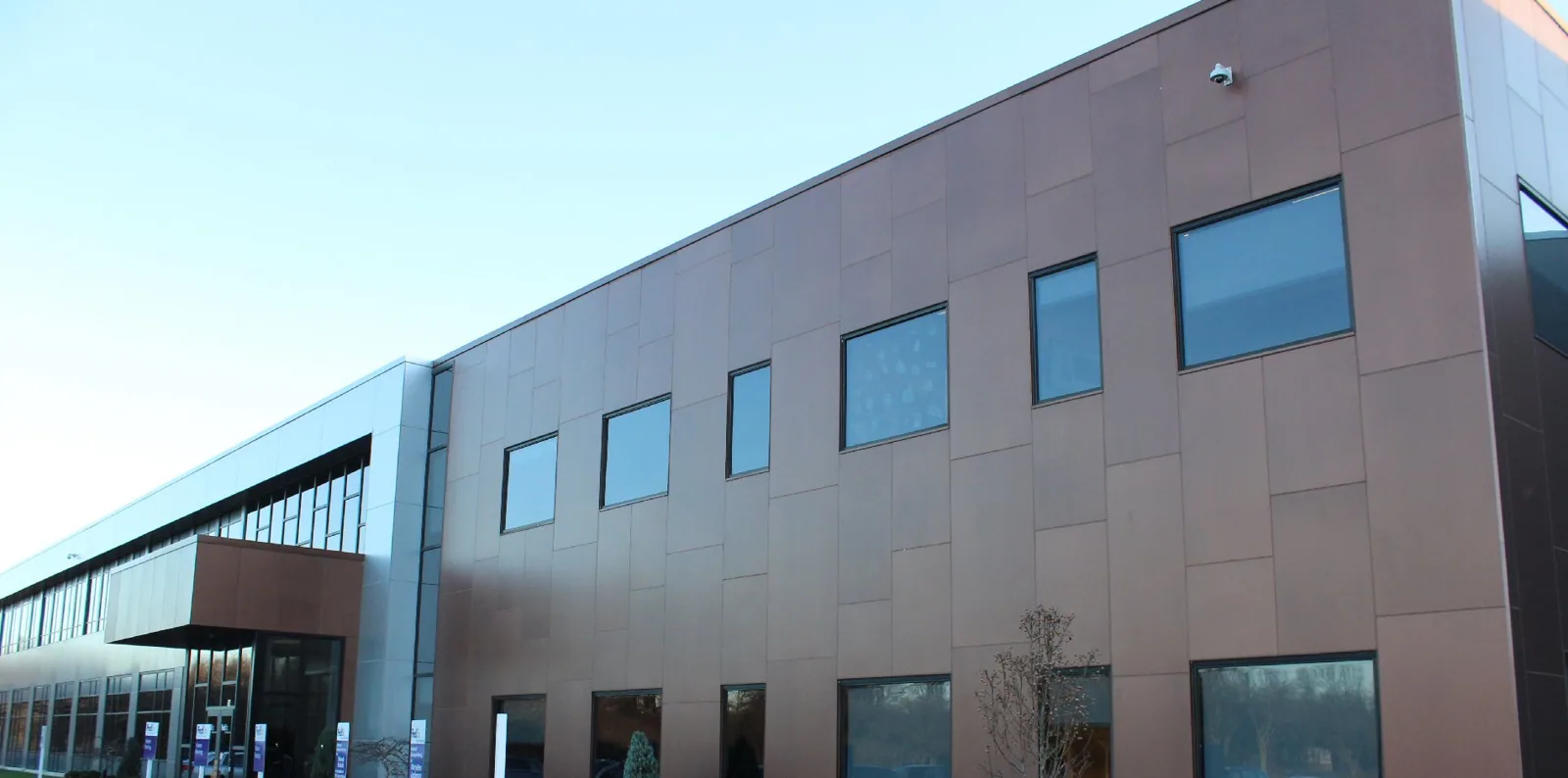
The edge between warehouse and office space matters too. Many warehouses include a finished office or showroom corner, where a heated, lower-slope section meets the larger storage roof at a step. That step is a classic through-wall flashing location, and we inspect it separately because the heat difference drives condensation and the wall movement tears at the termination.
Which parts of the South Coast carry the most warehouse roofs?
Beside I-495 in North Taunton, Myles Standish Industrial Park covers well over 800 acres of manufacturing, office, high-tech and distribution space, and a landlord there leasing to logistics tenants has a roof that must be judged on its own condition, never a neighbor's. Closer to the city, the New Bedford Business Park and the Fall River Industrial Park off Route 24 hold working commercial buildings of their own, and tenants in any of them tend to think about dock doors well before they think about drainage.
The roofs behind those facades differ widely. A single-ply membrane may be a few seasons old, a ballasted system may show ballast displacement piled against a parapet, and a built-up roof may have outlived a tenant or two. We treat each building as its own case, which is why the first visit is a physical inspection and not a catalog photograph.
How does coastal wind treat a roof this size?
Wind finds the perimeter first. A Buzzards Bay station recorded 89 mph gusts from Bob in 1991, and the tide from Carol in 1954 reached a record 20 feet in the city. A big roof turns that kind of event into uplift concentrated at the corners and edges, where the edge metal and the gravel stop are the only things holding the membrane to the building. We check that each piece is fastened at the spacing the manufacturer calls for, that joints are sealed, and that the adhesive or termination bar behind the metal still grips.
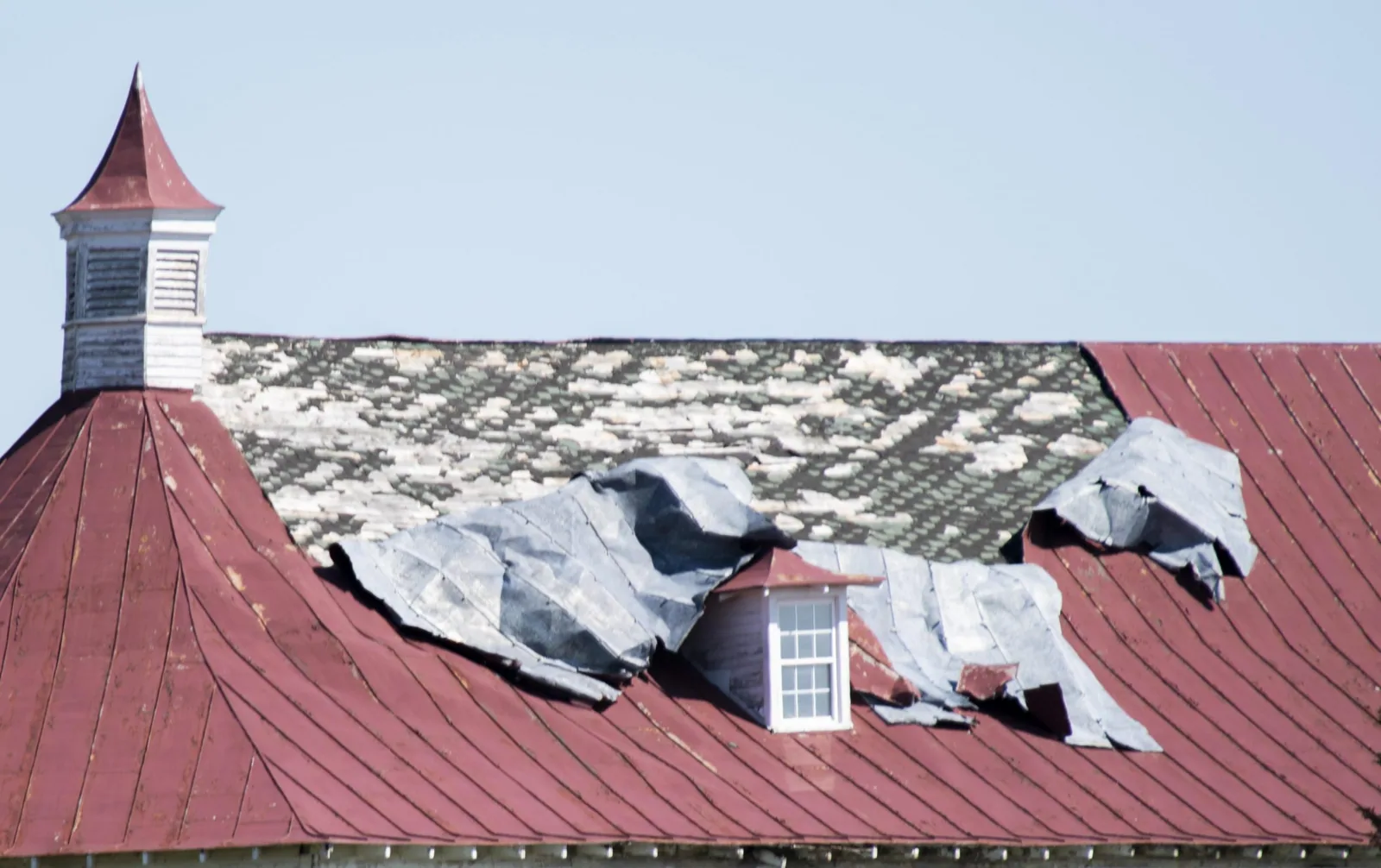
A warehouse with a loose gravel stop does not leak in the middle of a calm day. It leaks the week after a gale, when the perimeter has lifted and rain has had a night to drive in. Replacing a few feet of edge metal costs a fraction of replacing the soaked insulation behind it, and the sequence of repair matters. After a gale the sequence starts with wind damage repair at the perimeter, then moves inward along the fastener lines.
Where does winter water sit on a long roof?
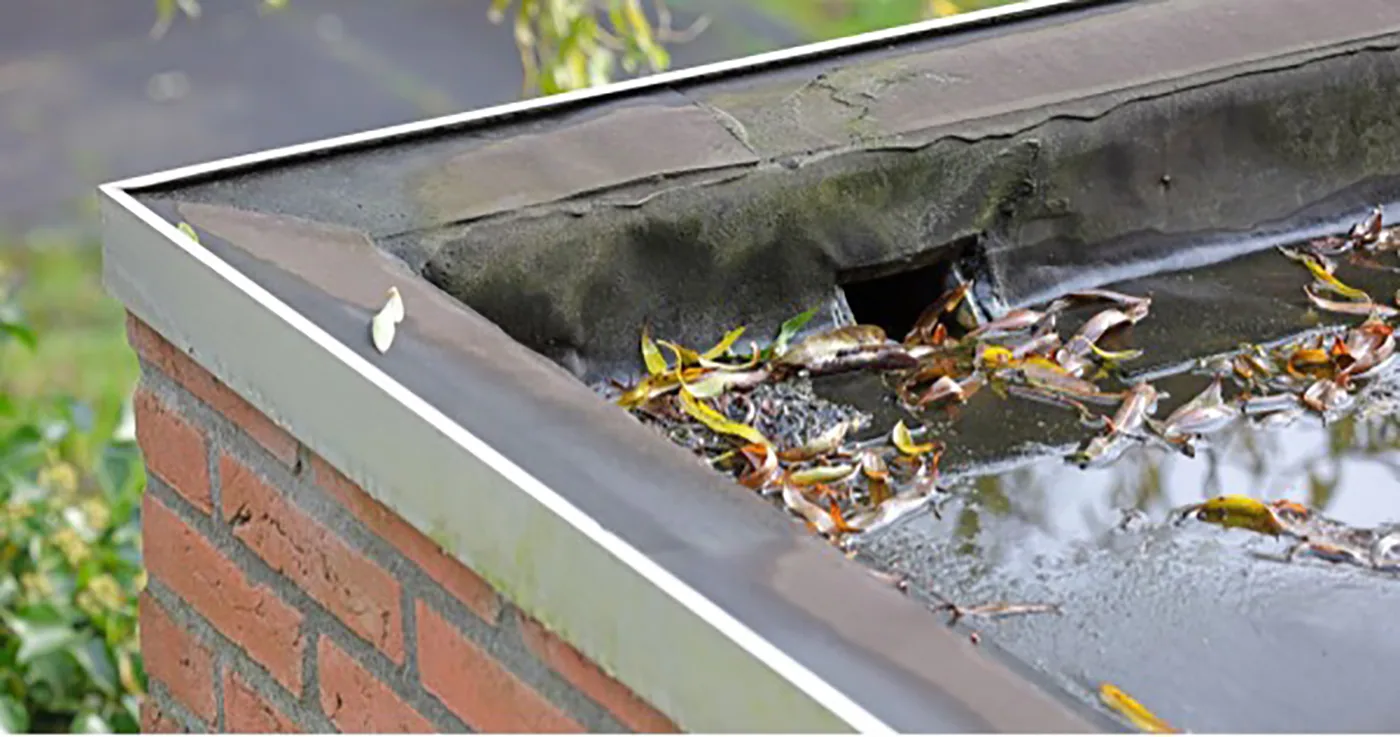
Snow totals about 32.5 inches in a New Bedford year, mostly December through March, and East Freetown received 26.0 inches in the January 2015 blizzard. On a flat warehouse roof, snow fills the low spots and then melts into them. If the deck has deflected under years of load, the lower bays collect water that does not drain, and every ponded area becomes a place where a seam sits submerged through freeze and thaw.
We look at the drain sump at each interior drain, at scuppers cut through the parapet, and at tapered crickets that were meant to push water toward them. Where ponding persists a day after rain, we measure it, mark it on the plan and tell you whether tapered insulation, a new sump or an additional drain solves it. The ponding water problem is rarely the membrane itself, and fixing the membrane without fixing the slope only resets the clock.
Should the roof be repaired, recovered or replaced?
The answer depends on what is wet. A warehouse whose insulation reads dry across most of the field is a candidate for targeted repair and a maintenance schedule. One that shows saturated insulation across a broad area is a candidate for replacement, because the membrane can be sound while the board beneath it has stopped doing its job. A recover sits between the two when the existing assembly is dry enough to hold a new membrane, and it avoids the cost and disruption of tear-off.
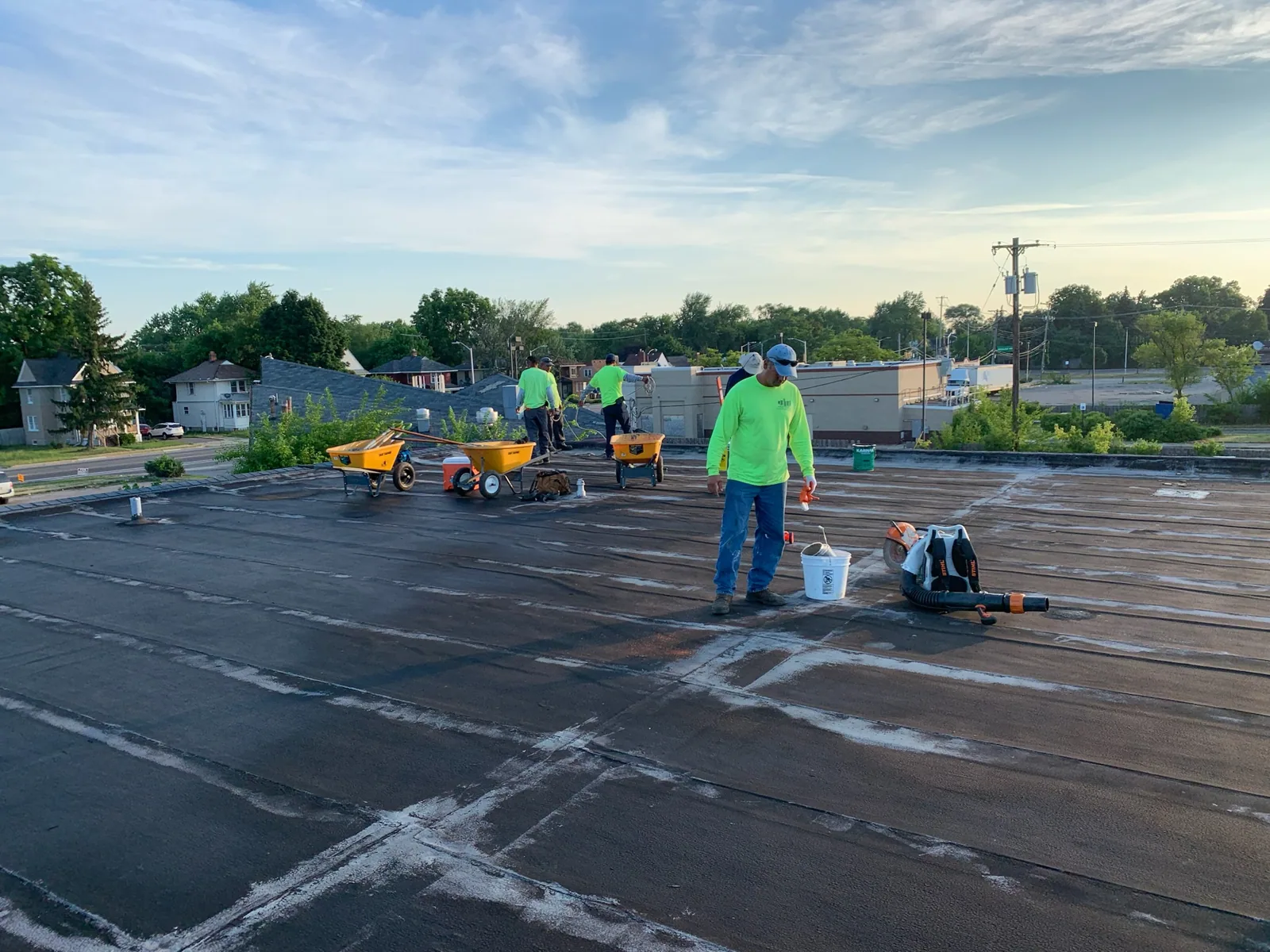
The building is occupied, and the dock is busy. We schedule around truck traffic, protect racking and stored goods, and stage materials where the loading doors stay clear. Cost drivers are the size of the area, the number of drain and curb details, the condition of the deck, whether insulation has to be replaced, and how much of the work can run while operations continue.
Commercial Roofing Questions
How do we find the leak when the stained area is far from the actual opening?
The route the water takes through insulation and along deck ribs decides it, so we start with a moisture scan and trace saturation toward the highest wet reading. The opening sits upslope of the stain, often at a seam, a fastener or a flashing corner.
Will a coating extend the life of a warehouse roof with wet insulation?
A coating covers the surface, but wet insulation stays wet underneath it, so the moisture readings tell us before we recommend one. If the board is dry and the membrane is sound, a restoration coating can be a reasonable choice.
What does an inspection cost compared with the risk of a storm leak over stored inventory?
Inspection is a modest line item next to the cost of wet stock, and it produces the plan that prices repairs. Weigh the value of what sits under the roof when you decide how often to look.
Do we need to move racking before roof work begins?
Racking near an active repair area is worth protecting, and interior tarps go up under suspect spots. We coordinate with your operations lead so aisles, dock doors and forklift paths stay clear while the crew works above.
Which details fail first on a single-ply warehouse roof in this region?
Seams, wall-to-roof transitions, and the terminations along parapets give way first, in that order on most older roofs. We probe each one during the walk and record the result with a photograph.
Ready to review the roof scope?
Request a Roof AssessmentKeep Reading