Service Areas
Commercial Roofing in Wareham, MA
Commercial roofing in Wareham, MA: Route 6 and Route 28 retail roofs, storm-surge and snow exposure, healthcare and agricultural buildings, and repair planning.
Request a Roof Assessment
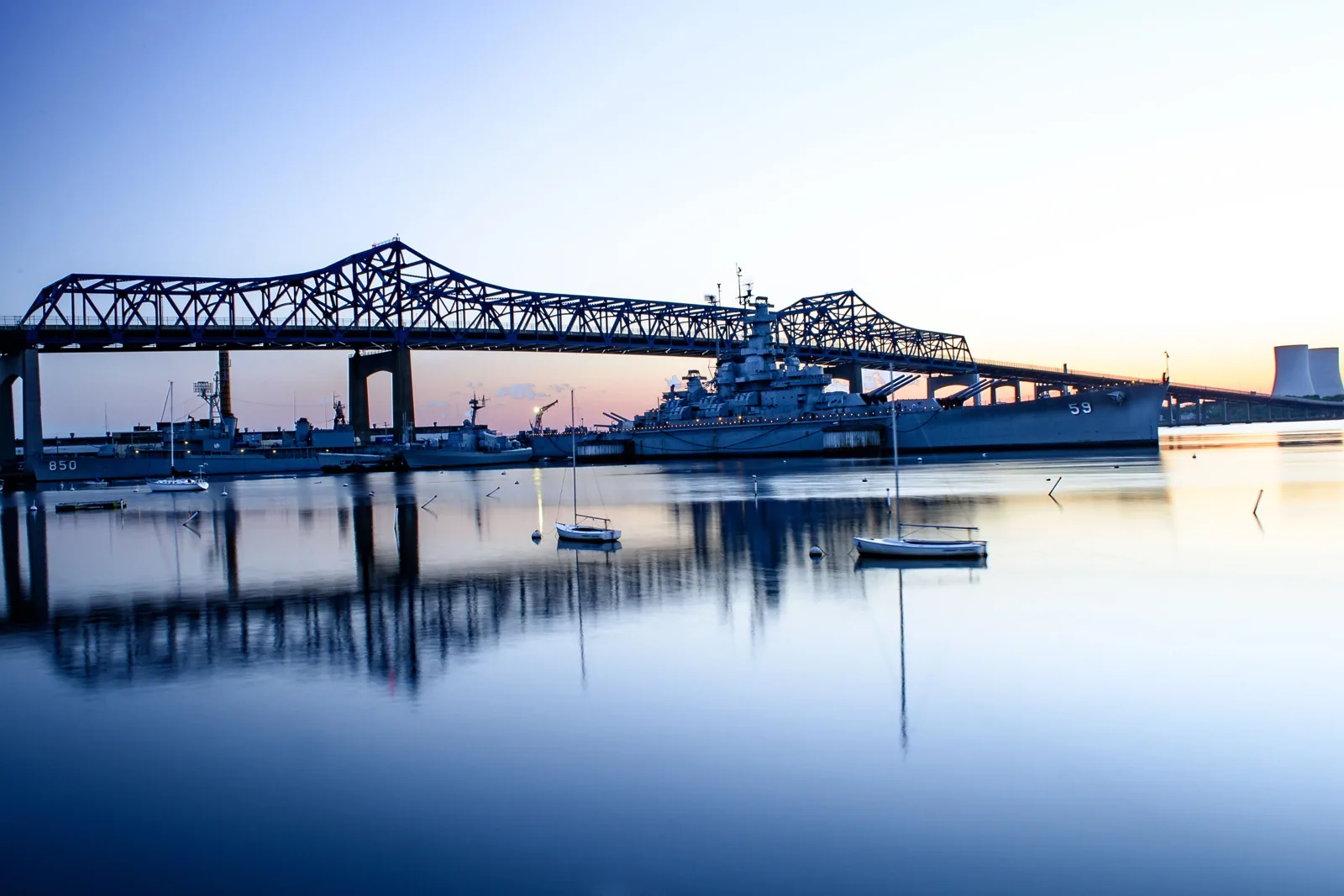
Did the surge of 12 to 15 feet that Hurricane Bob drove into the head of Buzzards Bay in 1991 change how Wareham's roofs are inspected? It changed what an inspector asks. The highest surges of that storm were observed in Wareham, Onset, Bourne and Mashpee, and a building that has been through a storm of that kind may carry repairs, patches and replaced flashing from the aftermath. The first job is reading that history from the roof.
Retail centers line Routes 6 and 28 in Wareham, including Wareham Crossing, which opened in 2007. Interstates 495 and 195 both end in the western part of town. Wareham is also headquarters of A.D. Makepeace Company, a large cranberry grower, and home to Tobey Hospital. A commercial roof inspection in Wareham starts by identifying which kind of building and which kind of roof is in front of us.
What does a roof carry from a storm that happened decades ago?
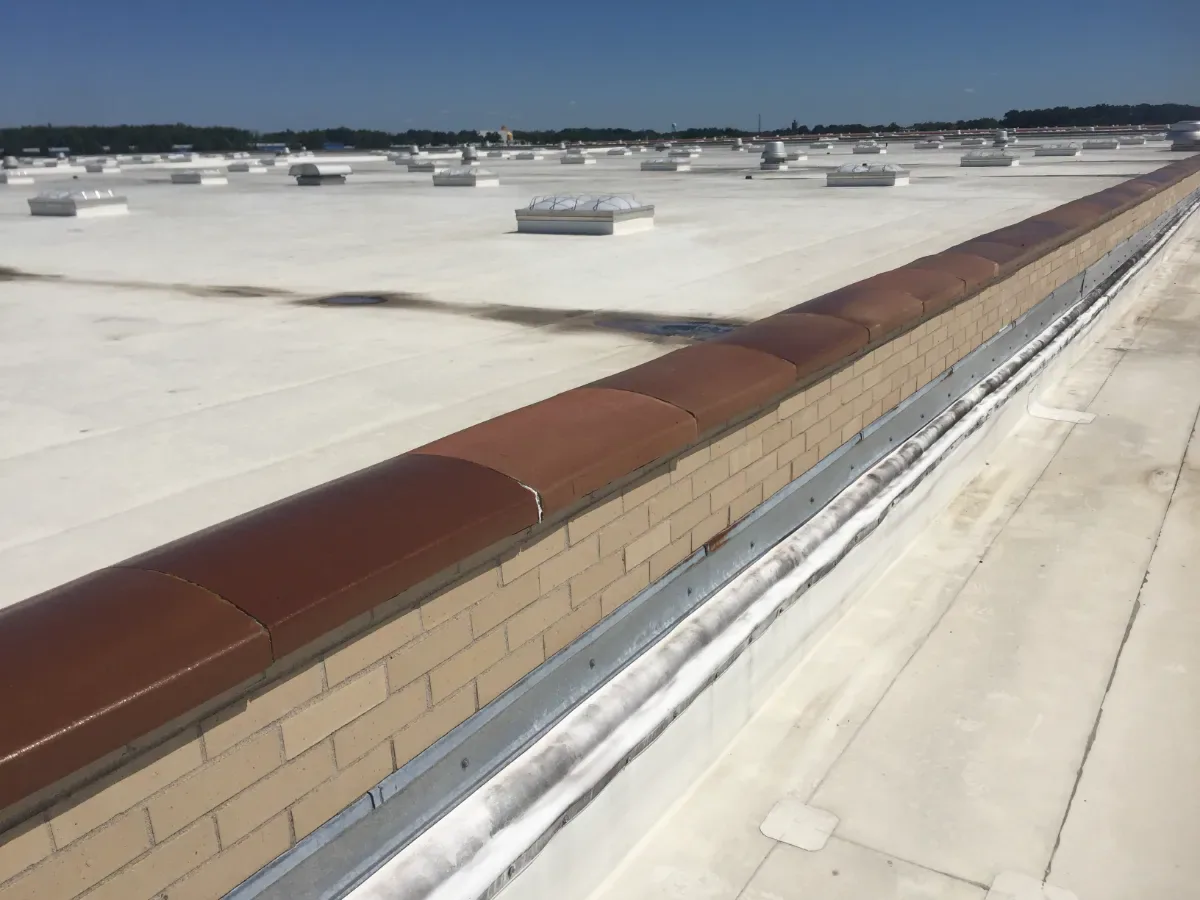
A roof that has been repaired after weather will show it. A patch over a patch, a replaced section with a different membrane, flashing that does not match the rest of the roof: each is a clue to where water entered. We probe the transitions between old and new material, because a seam between two different membranes is a place where movement and chemistry can fight each other.
We look at the roof, record what is there and ask the owner what is known. A roof condition report sets out the layers, the repairs and the open questions, so a future owner or lender can see the history in one place and a future inspector can pick up where we left off.
The same record answers a lender's or a buyer's questions. A due diligence review wants to know the membrane type, the remaining service life, the moisture findings and the cost of the first repairs, and a report built from a probe, a moisture scan and a core cut states them in numbers. Owners with several buildings can compare them side by side and see which roof is closest to failing, which is where the first dollars of a capital plan should go.
How do Route 6 and Route 28 retail roofs fail?
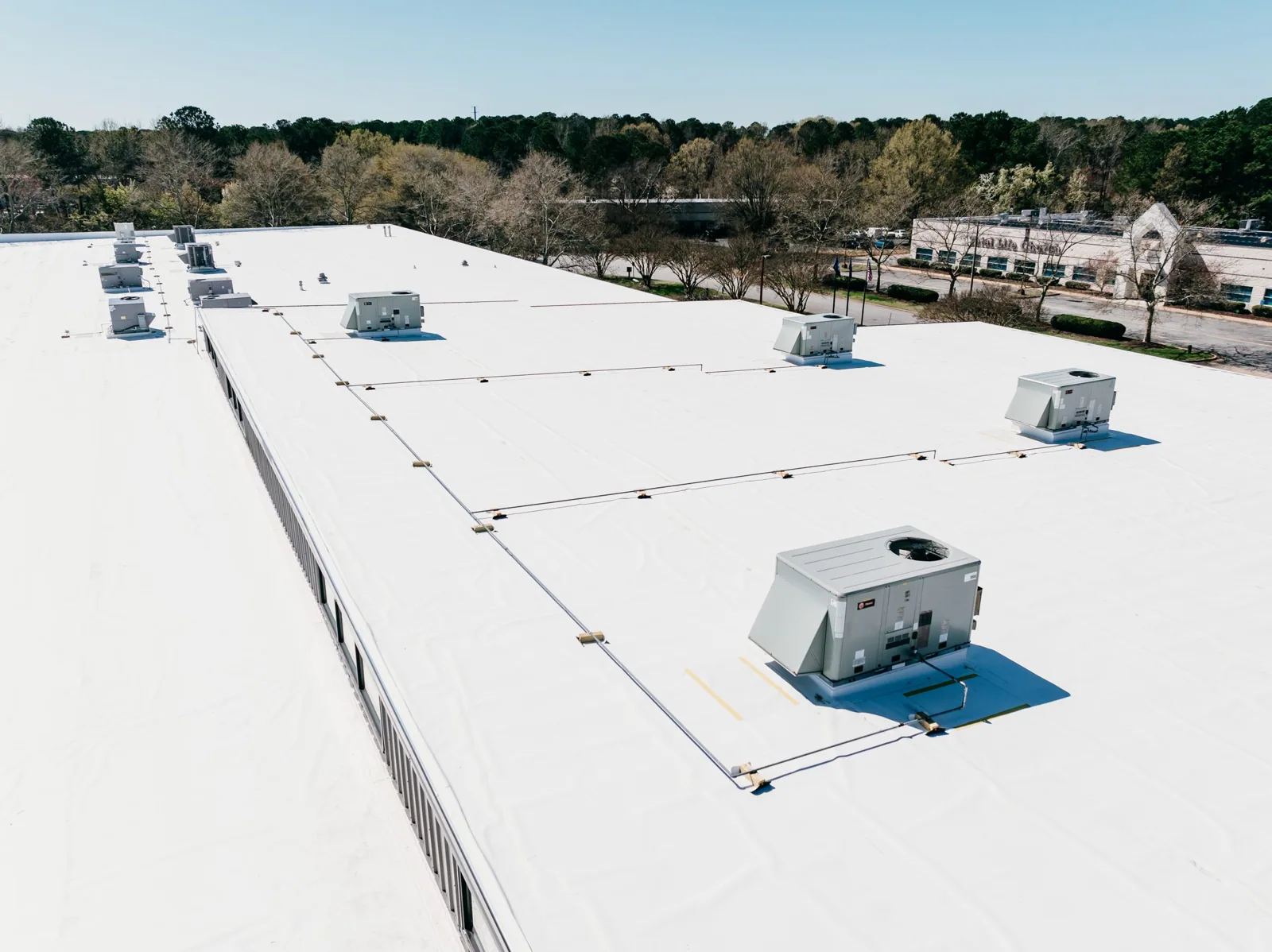
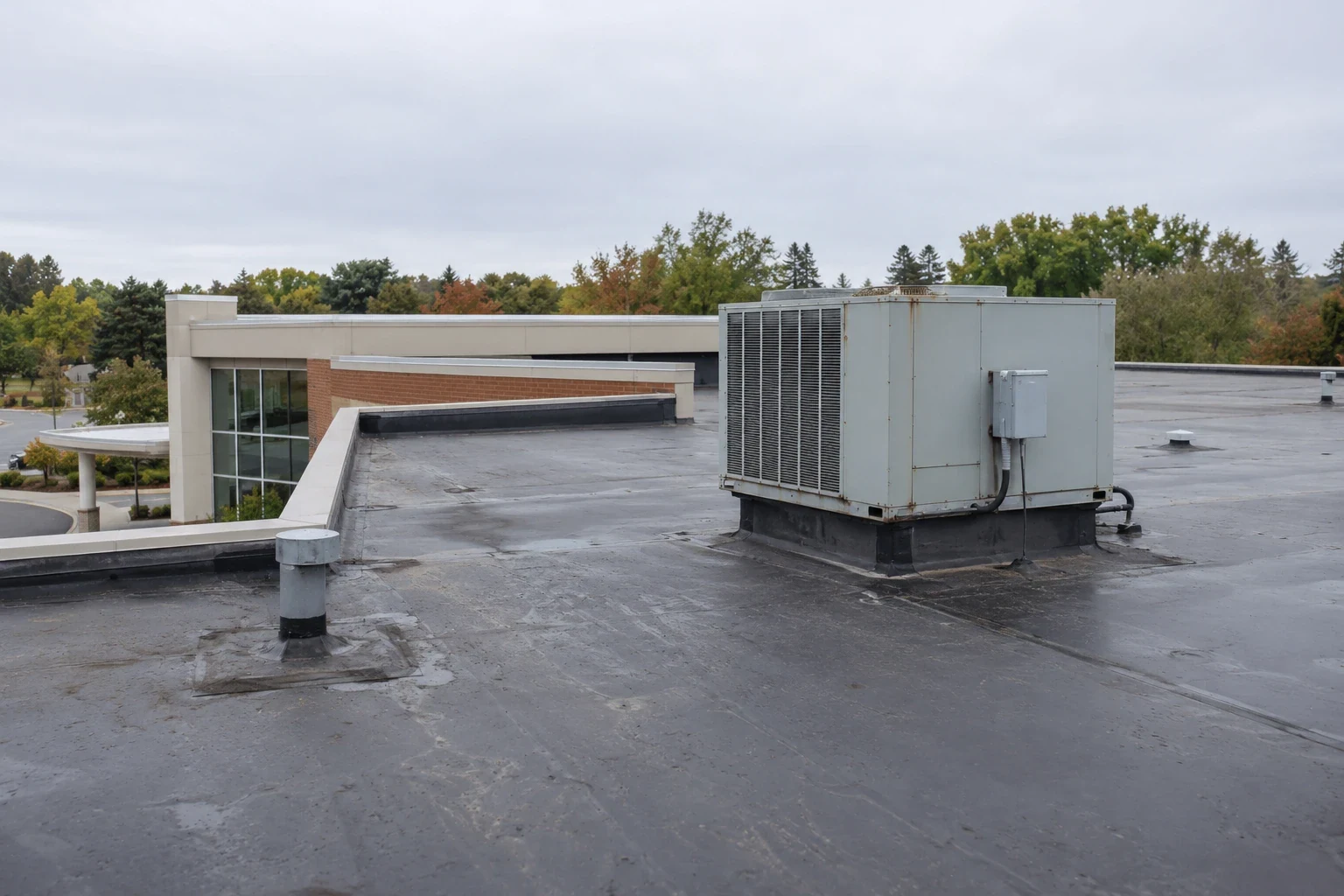
Retail roofs fail at their penetrations. A shopping center carries rooftop units, exhaust fans, vents and signage supports, and every one is a hole in the membrane. Different tenants add and move equipment over the years, so the flashing around each opening ages on its own schedule. We count the curbs, probe the laps around them and mark the ones that need resealing, resetting or replacing.
Wide roofs also collect water. A long run between drains means a long path for meltwater, and water that stays in a low spot past a day or two is a finding. We clear drains and scuppers and check the sumps, then probe the membrane nearby for softness. The report names which tenant's unit sits at each finding so the landlord can allocate the repair fairly.
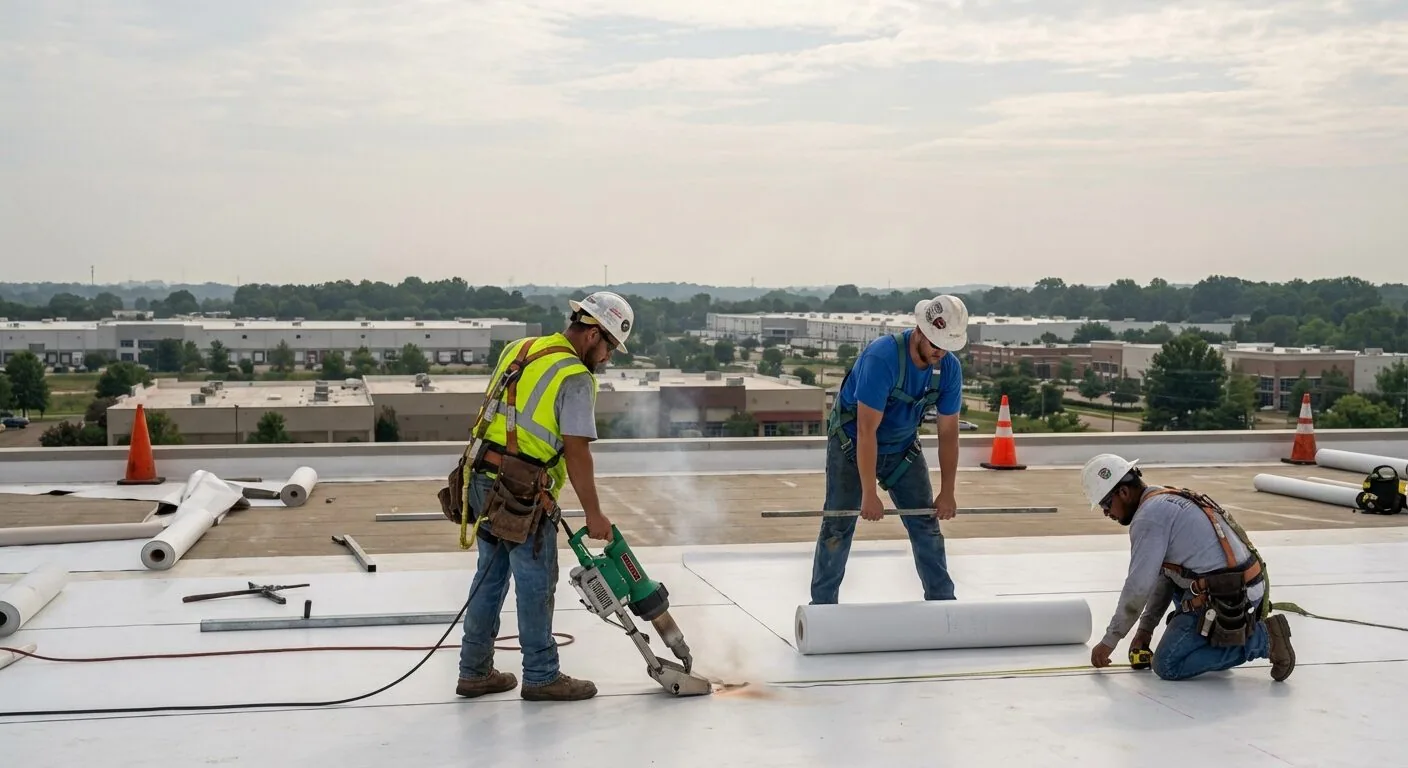
Access along a retail road needs planning. Trucks arriving at a center on Route 6 or Route 28 share the lot with shoppers, so we agree on a delivery time, stage materials away from entrances and fire lanes and keep the crew out of customer parking. Roof sections are opened in the morning and dried in before the crew leaves. If a forecast changes, the manager hears from us the same day, and the plan shows which section stays covered overnight.
Wareham's retail centers sit near the junction of Routes 6 and 28, where trucks and cars share the lot, so we lay out the lift position, the dumpster and the delivery lane on a sketch the manager approves before the first day.
How much does Wareham's snow load the roof?
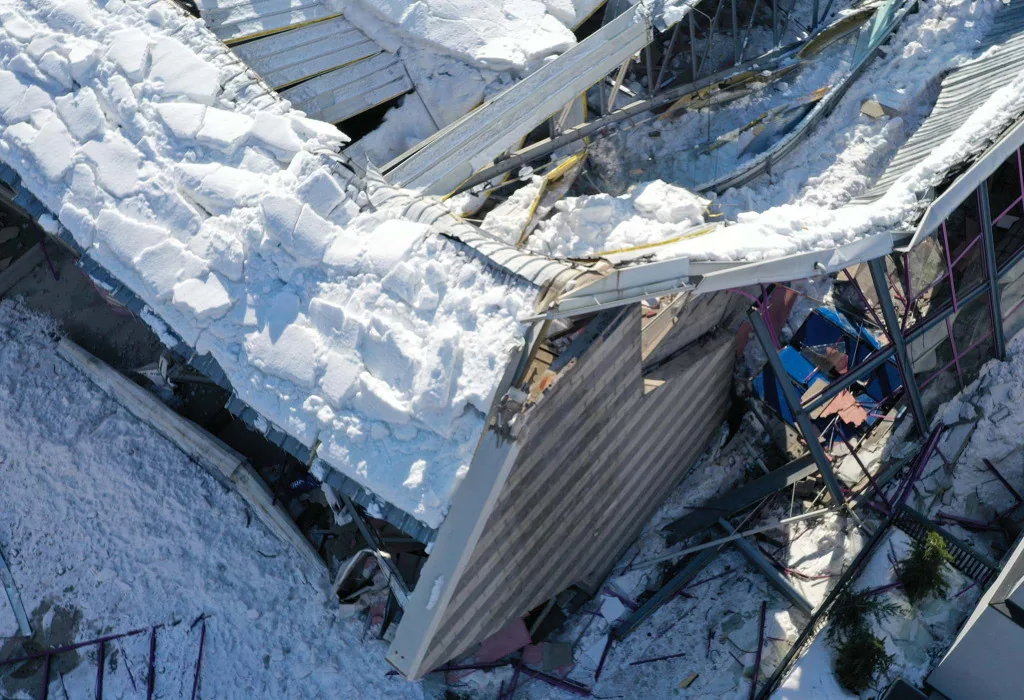
Wareham averages 37.8 inches of snow a year, more than the 32.5 inches New Bedford averages, and snow collects around rooftop units and against parapets. The weight of a drift can exceed the weight of the open field several times, so we look for signs of deflection, split seams at wall bases and displaced flashing at curbs after a heavy winter.
Meltwater is the second half of the problem. It runs toward drains that may be blocked, and it finds its way behind loose edge metal. When a heavy winter has done its work, snow and ice roof damage repair seals the openings first, then traces the cause: ponding, a depressed deck or compressed insulation. The scope names which cause we confirmed and which we only suspect.
Edge metal deserves its own look after winter. Ice and meltwater work behind loose coping and gutters, freeze and pry the metal away from the wall. We check the fasteners, the joints and the cleats along the perimeter, and edge metal and gutter repair resets or replaces failed sections so water leaves the roof by the route it was meant to take.
What do healthcare and agricultural buildings need?
Tobey Hospital and a large cranberry grower are both part of Wareham's commercial life, and they mark two ends of a range. Healthcare buildings need a dry interior, infection-control protection during work and a schedule that respects clinical hours. Agricultural buildings need roofs that handle moisture, ventilation and, on metal roofs, fasteners and sealant that loosen with movement.
We ask the facility director for the operating schedule, the restricted areas and the safe access routes, then write a plan around them. A medical office roof is handled differently from a storage building, and the proposal says how. For work in occupied spaces, noise and dust control are written into the scope before the first day. Where a hatch or stair is shared with another occupant, the access arrangement is settled in writing first.
What are the owner's choices once the findings are in?
Local failures over dry insulation are a repair job, while wet layers across a wide area or a membrane that has pulled from its edges are a recover or replacement case. The options are written out with what each keeps, what each removes and what might change the price, and the owner walks the roof with us before a quote.
For a larger project the governing code is 780 CMR, 10th Edition, which draws on the 2021 International Building Code and became effective October 11, 2024, plus the town's permit process. One layout of findings serves buildings in Marion and Rochester too, which makes the roofs easy to sequence. Roof area, wet insulation, penetrations and access set the cost, and each shows up as a separate line.
Commercial Roofing Questions
How can a roof show the history of an old storm?
Through its repairs. Patches, replaced sections and mismatched flashing show where water entered. We probe those transitions first and record what we find.
Why does a shopping center roof leak at the same units every year?
Because the flashing around those curbs has failed or the curbs have settled. We inspect every curb, report each condition and recommend a repair that addresses the cause.
How much snow can a flat roof carry?
That depends on the structure, which only an engineer can state. We look for signs of strain, such as deflection and cracked seams, and report them.
How do you protect a healthcare space during roof work?
Loud tasks wait for hours when the clinic is quiet, we cover the space below and the roof is closed daily. The facility director approves the plan in advance.
Do you work on metal roofs on agricultural buildings?
Yes. We check fasteners, panel laps and sealant, tell whether the roof is standing seam or exposed fastener and report what we find.