Service Areas
Commercial Roofing in Marion, MA
Commercial roofing in Marion, MA: harbor-side marine and school buildings, low-elevation storm exposure, edge and flashing checks, repair and replacement.
Request a Roof Assessment
What should a facility director check on the roof before a long season of heavy use begins? The seams and the drains, in that order, because a building that fills with people for months cannot afford a leak in week three. Marion, MA, is divided by Sippican Harbor and is home to one of the largest sailing fleets in Massachusetts, so many of its buildings serve marine, school and community uses that run on a seasonal calendar.
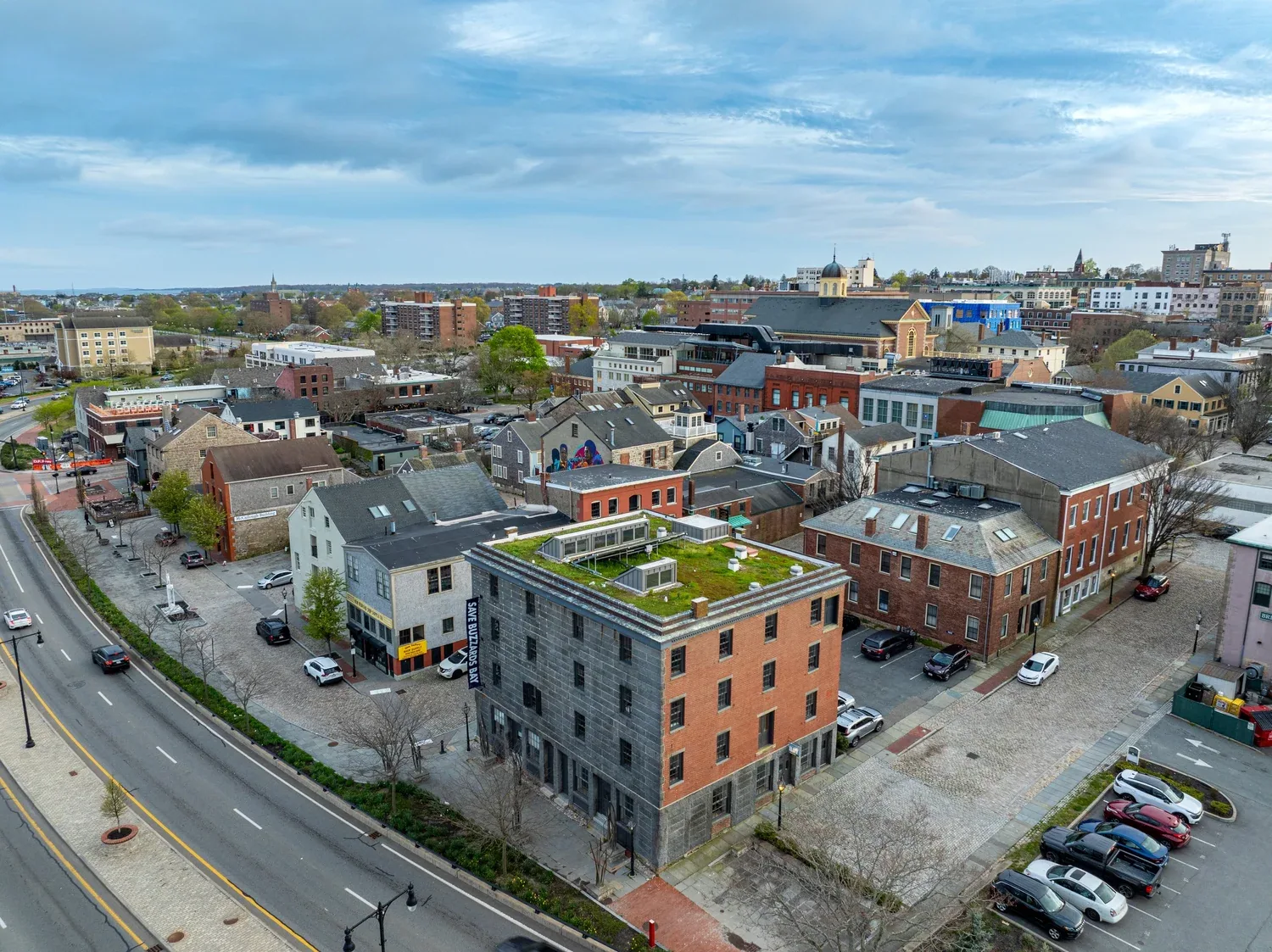
Water makes up about 46 percent of Marion's 26.1 square miles, and the town sits at an elevation of about 20 feet. Route 6 passes through, Route 105 meets it there and I-195 has an exit at Route 105. A commercial roof inspection in Marion starts from the plan and the last inspection notes, with a seam probe before the busy season starts.
How does a seasonal calendar change the roof schedule?
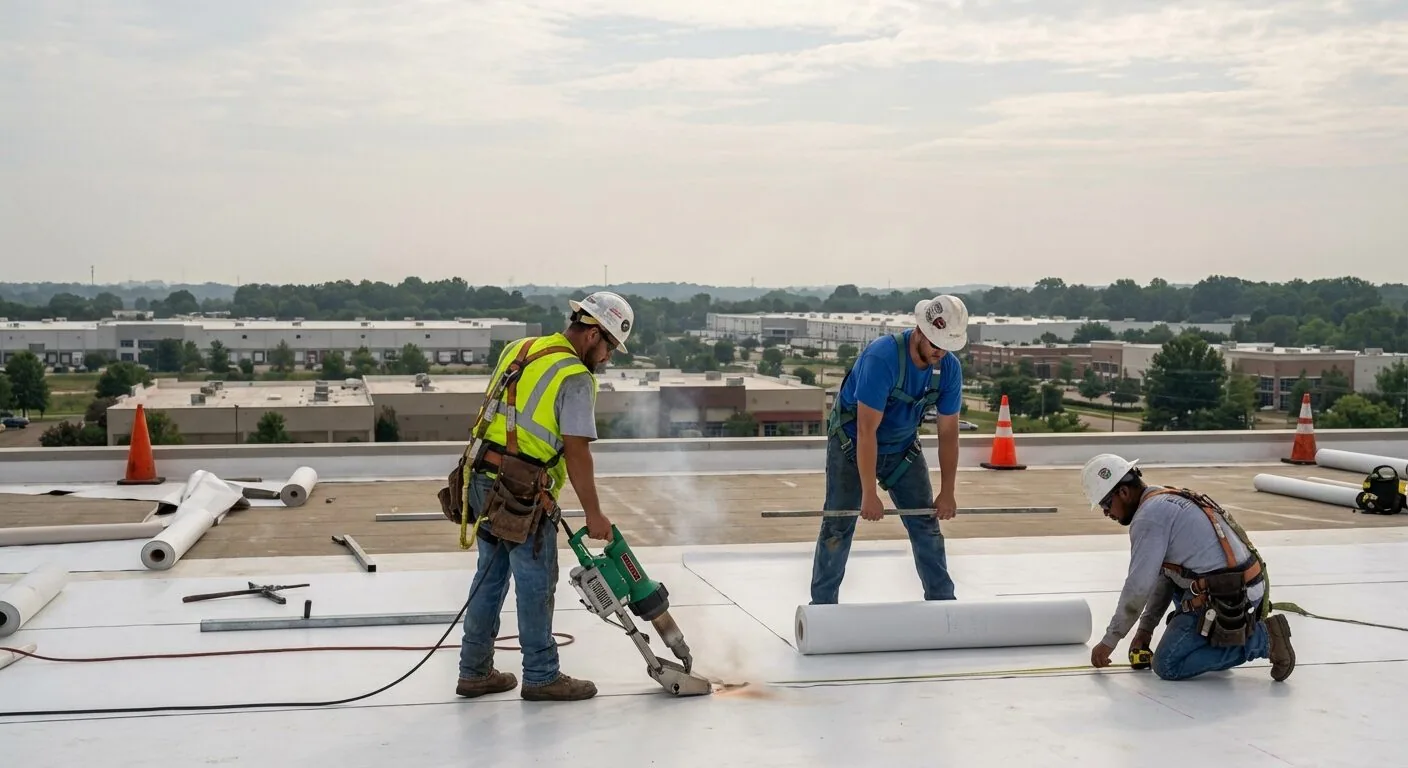
A building that is busy in summer and quiet in winter has a natural window for roof work, and it is usually the quiet one. We ask when the building is full, when it is empty and which weeks the owner can give us the whole roof. Work done in the off-season avoids noise and dust in the middle of programs, but it runs into cold, wet weather, so we plan around adhesive and sealant temperature limits.
A leak found in June is worse than one found in March, because the interior is in use and a closed room costs more. That is the reason to inspect in spring and fix what the probe finds before the season opens. A preventive roof maintenance visit clears drains, checks seams and flashing and gives the facility director a short list of items to address first. Items that can wait are marked with a reason, and items that cannot are priced right away, so the budget conversation happens before the ceiling tile falls, not after.
Boat storage, sail lofts and seasonal shops are quiet in winter, which makes February a good month for roof work, though the cold limits adhesives and the schedule has to allow for it.
What do school and campus buildings add?
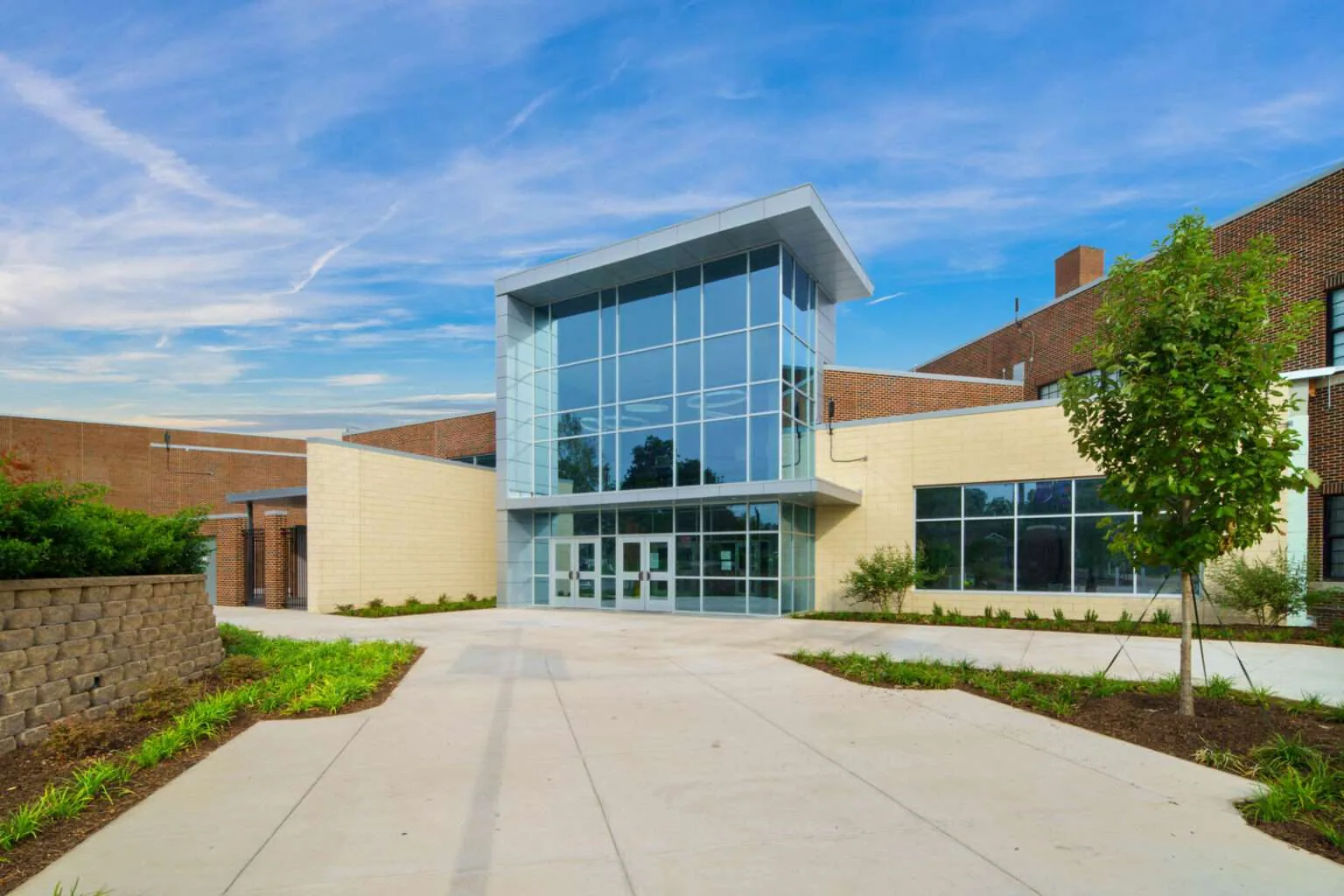
Tabor Academy, a private school for grades 9 to 12, is in Marion, and what a school building teaches an inspector is that roofs over classrooms, dining areas and gymnasiums are different assemblies with different tolerances for noise and interruption.
A gymnasium roof can be a long span with few drains, while a classroom wing may have rooftop units and a series of parapets. We schedule loud work for times when the building is not in use and keep a clear route for emergency access. A school roof project is written with the calendar of the building in view, and the owner approves the sequence before the first day.
Records matter on an institutional roof because the people who manage it change. A facility director who arrives in September inherits whatever the last one left, so we leave a roof plan with each drain, curb and penetration numbered, photographs tied to those numbers and a list of open questions. The next inspector can then see what changed and what stayed the same, which is the difference between a maintenance program and a series of one-off repairs.
What does a low, water-edged town ask of a roof?
Marion is low, about 20 feet above sea level, and nearly half its area is water. Bob's highest Buzzards Bay surges, 12 to 15 feet, were observed elsewhere on the bay, while the surge at New Bedford and Woods Hole peaked at 5.8 feet. A roof sits above the water line, but wind and driven rain reach it first and the damage shows up as a stain weeks later.
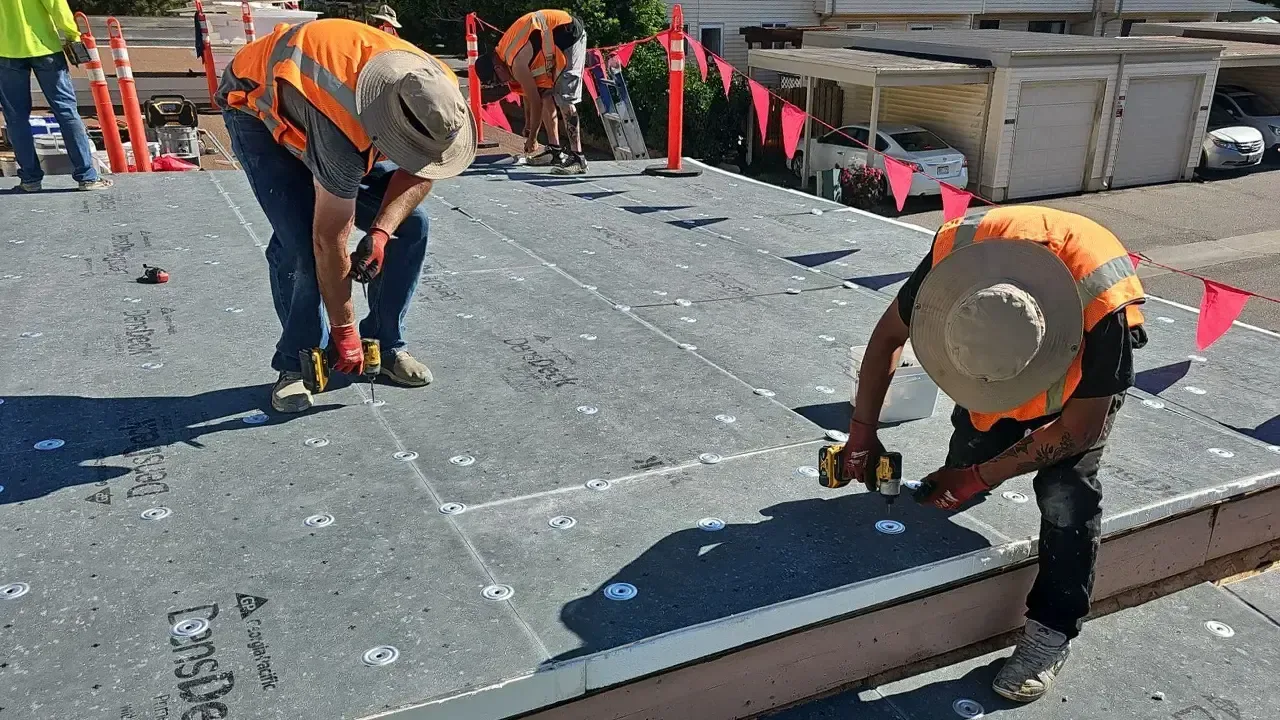
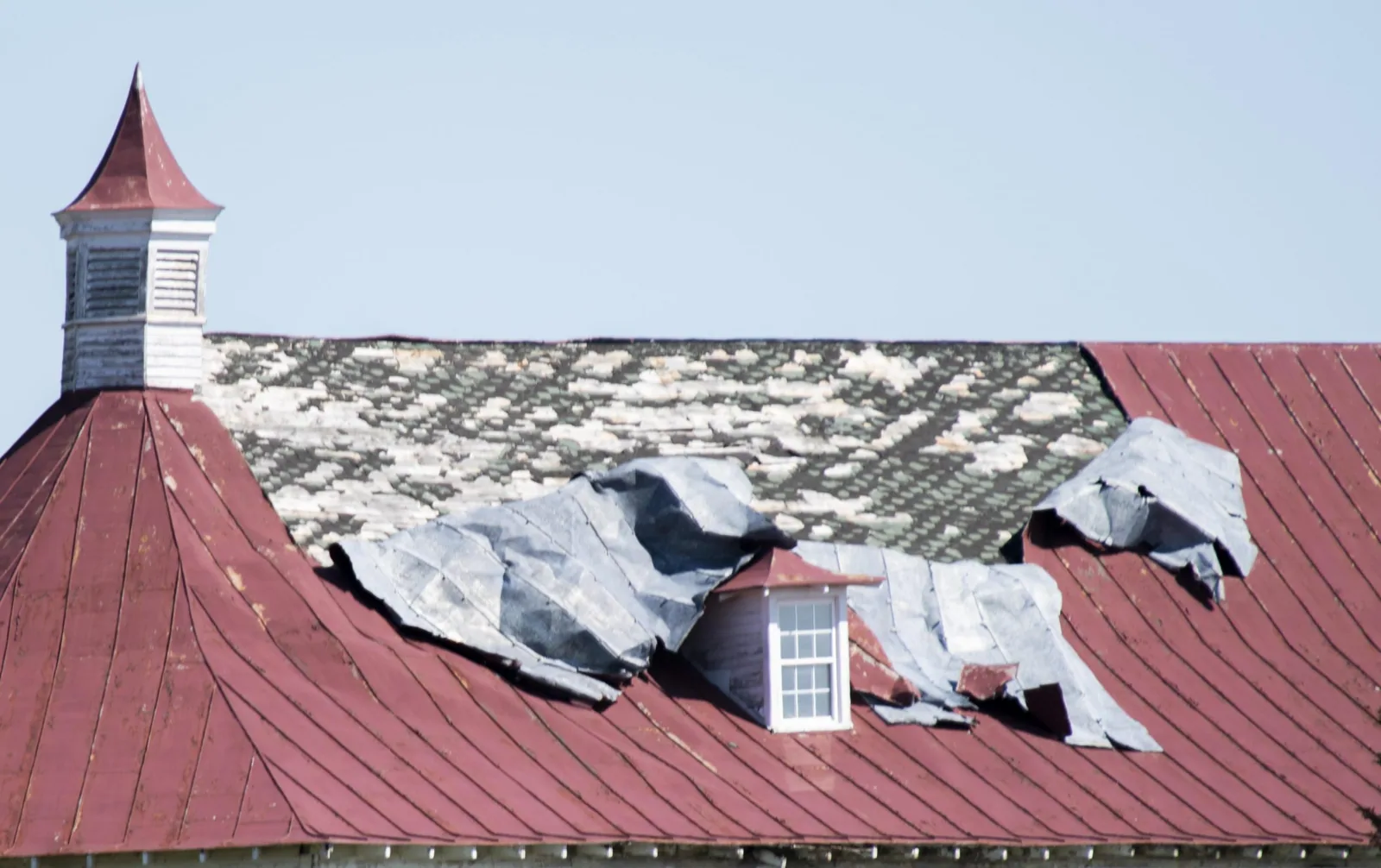
We check the edge metal, the parapet termination and the wall-to-roof transitions, then probe the laps and the fastener plates. Hurricane Bob also sent gusts of 89 mph over Buzzards Bay, a figure that explains why we look at wind damage in the perimeter before the field. A loose edge can let a storm start peeling the membrane, and the repair is far cheaper before it does.
Marine-service and boat-storage buildings raise their own questions. A metal roof over a large open bay needs its fasteners, panel laps and sealant checked, because movement loosens them and the washers harden. We identify whether the roof is standing seam or exposed fastener, then probe the seams, check the ridge and eave and look for corrosion at cut edges. If the building has skylights or roof vents, the flashing around each is checked as a separate item.
How do snow and meltwater load the drains?
Snow in New Bedford averages about 32.5 inches a year, falling mostly from December through March. Snow collects around rooftop units and against walls, and the meltwater must reach a drain through whatever is in the way. We clear drains and scuppers, flush lines where it is safe and probe the membrane near each outlet for stains and softness.
Standing water is the finding that decides the repair. A blocked outlet, a depressed deck and compressed insulation each hold water, and each has its own fix. A scan for moisture shows whether the insulation under a pond is wet, and a core cut, with the owner's approval, confirms the layers. The scope separates what was confirmed from what we only suspect.
Where a roof has no slope to carry water to the outlet, tapered insulation added in a recover or replacement can create it, and a cricket behind each curb sends water around the unit. Those are design changes, not repairs, so we price them separately and show the owner what they add to the cost and the roof height, and whether the wall flashing can still meet the required height afterward.
What are the choices after the findings?
Local failures with dry insulation are a repair. Wet insulation across a wide area or a membrane that has shrunk from its edges points to recover or replacement. For each option we set down what stays, what goes and what could change the price, and we quote only after walking the roof with the owner.
A larger Marion project follows the state's 10th Edition of 780 CMR, built on the 2021 IBC and in force since October 11, 2024, together with the town's permit process. The findings for Mattapoisett and Wareham buildings follow one layout, so the roofs can be ranked in a capital plan.
Commercial Roofing Questions
When is the best time to inspect a seasonal building?
In spring, before the busy season. A probe and a drain check then leave time to fix what is found while the building is still quiet.
Can roof work be done while the building is in use?
Yes, in sections closed each day, with noisy tasks outside programs. The facility director approves the sequence and the work window in advance.
What decides repair versus replacement on a long-span roof?
Moisture in the insulation. Dry layers and scattered seam failures are a repair, while wet layers across a wide area point to replacement.
How do you protect interiors when the roof is open?
We keep each open section small, dry it in daily and place protection over the area below. Forecast changes decide whether a section stays open.
Do you inspect after a storm?
Yes. We look for lifted edges, open laps and displaced flashing, seal openings first and record the permanent repairs separately.
Ready to review the roof scope?
Request a Roof AssessmentKeep Reading