Service Areas
Commercial Roofing in Mattapoisett, MA
Commercial roofing in Mattapoisett, MA: harbor-town storm exposure, Route 6 business roofs, edge and flashing inspections, repair and replacement planning.
Request a Roof Assessment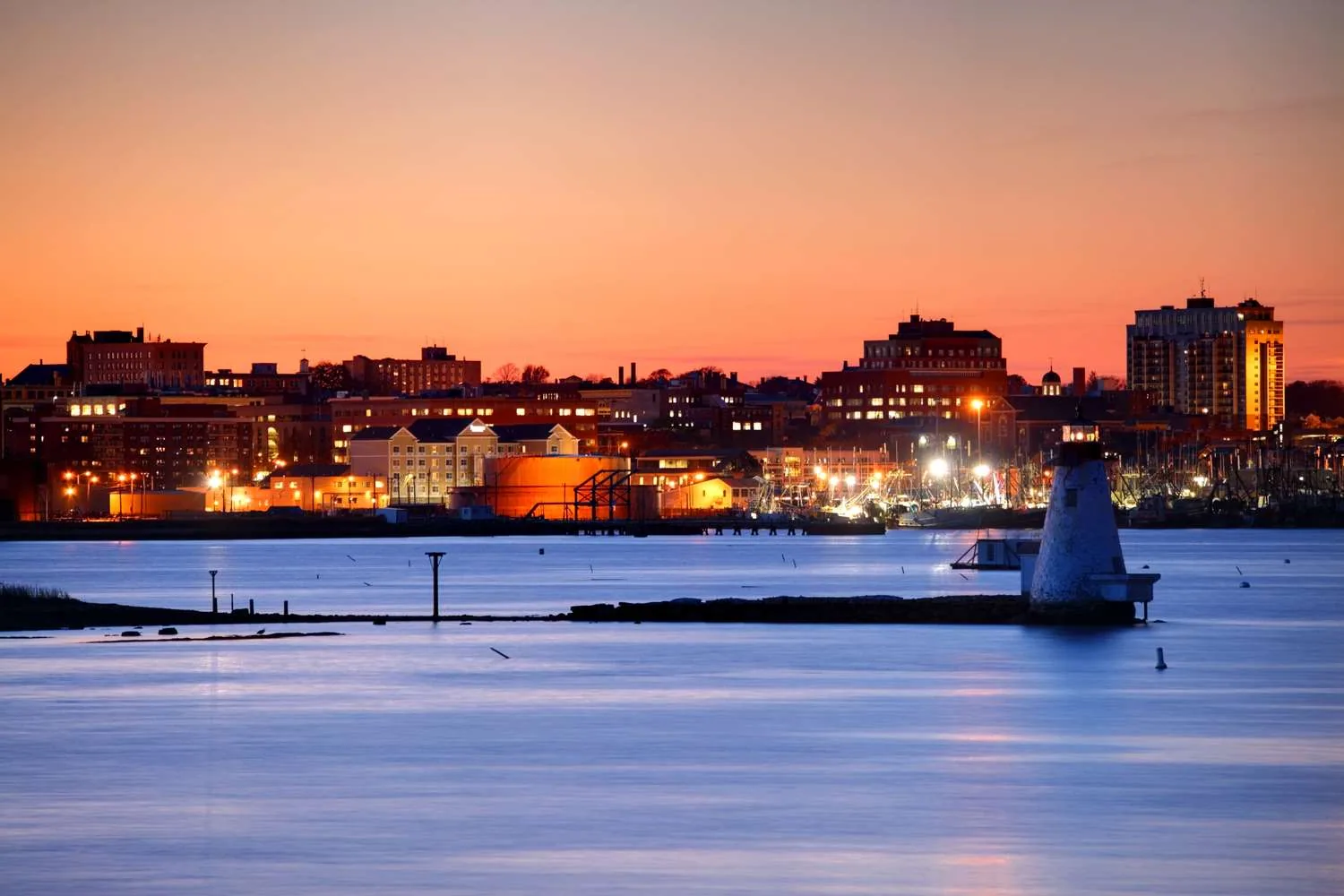
What does an inspector learn from a town where Hurricane Bob destroyed 29 of 37 homes on a single road? That a storm on Buzzards Bay does not take a building apart evenly. It finds the weakest connection first, whether that is a window, a porch or a roof edge, and then works inward. In Mattapoisett, MA, that history shapes how we read a commercial roof: the perimeter and the attachment come before the field.
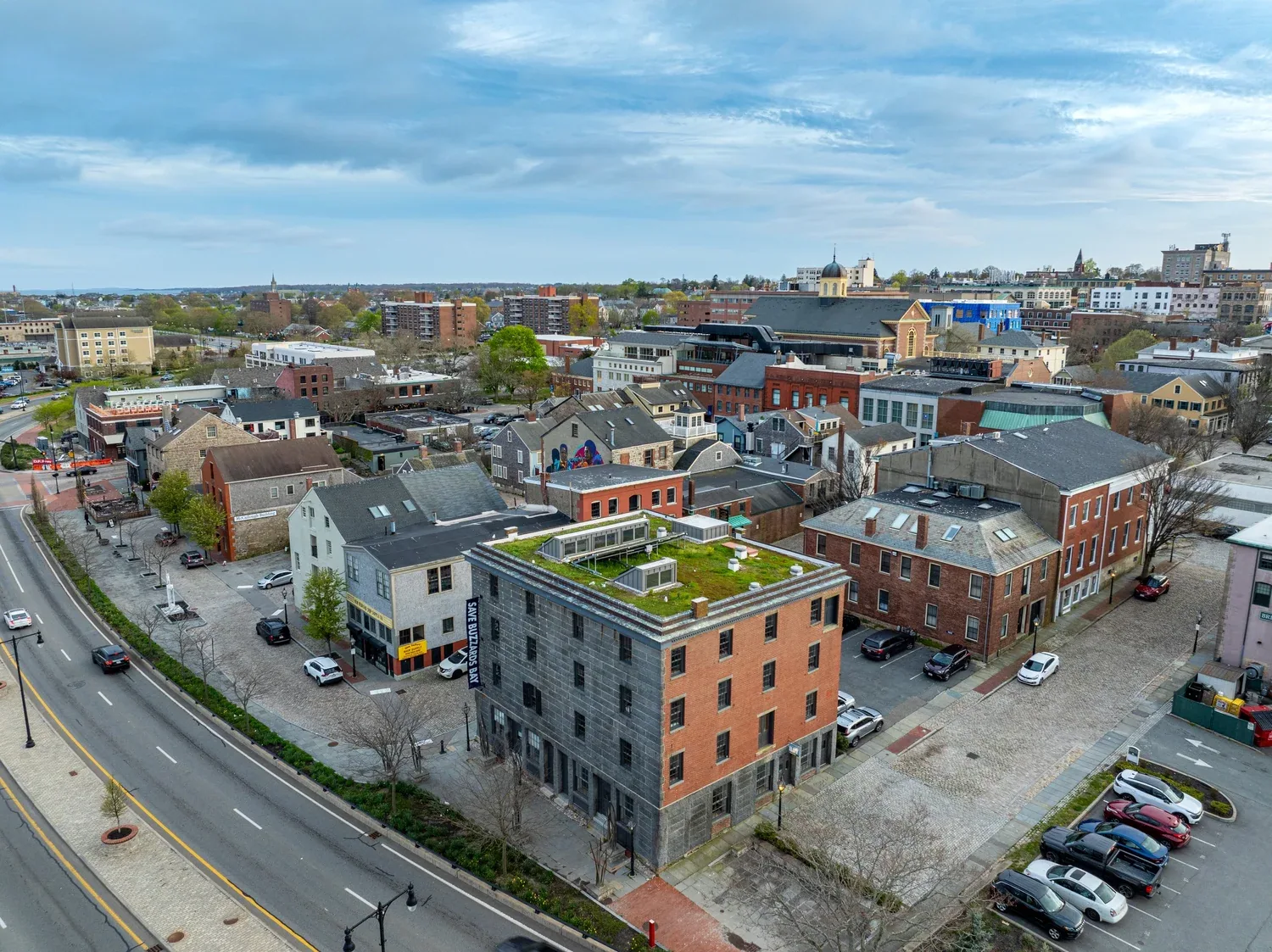
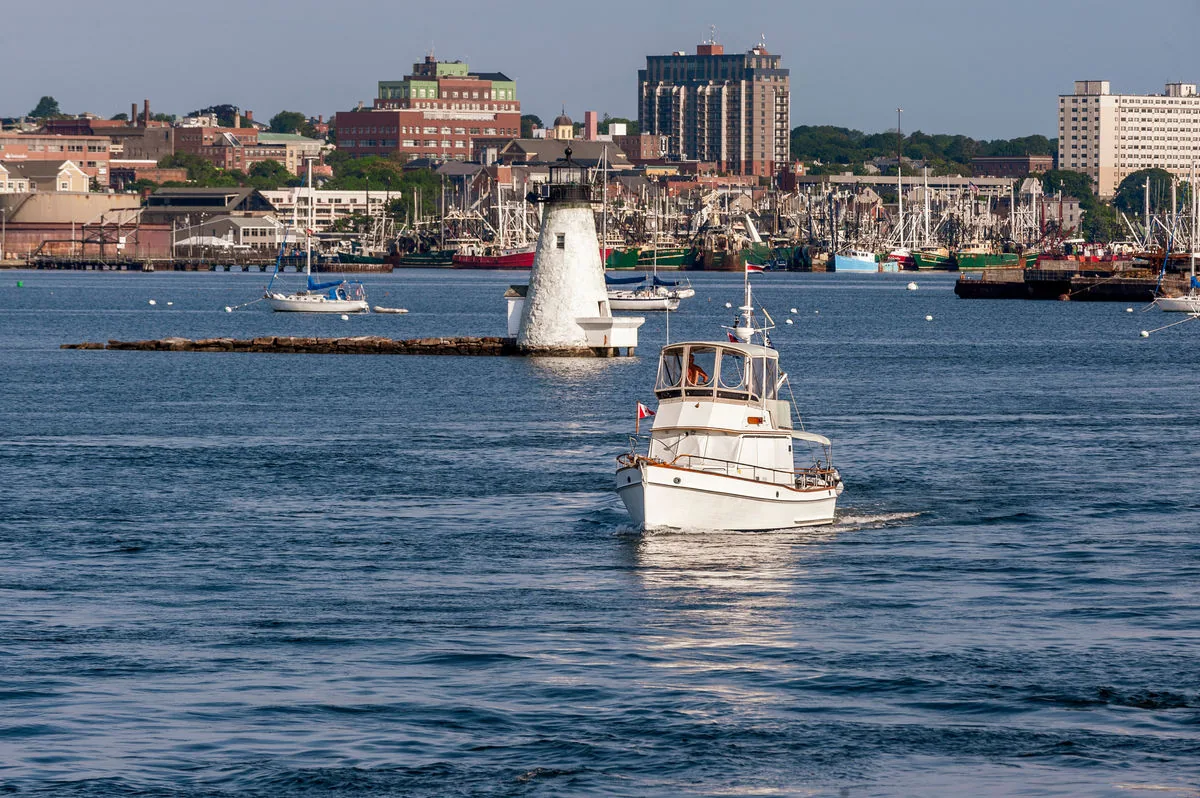
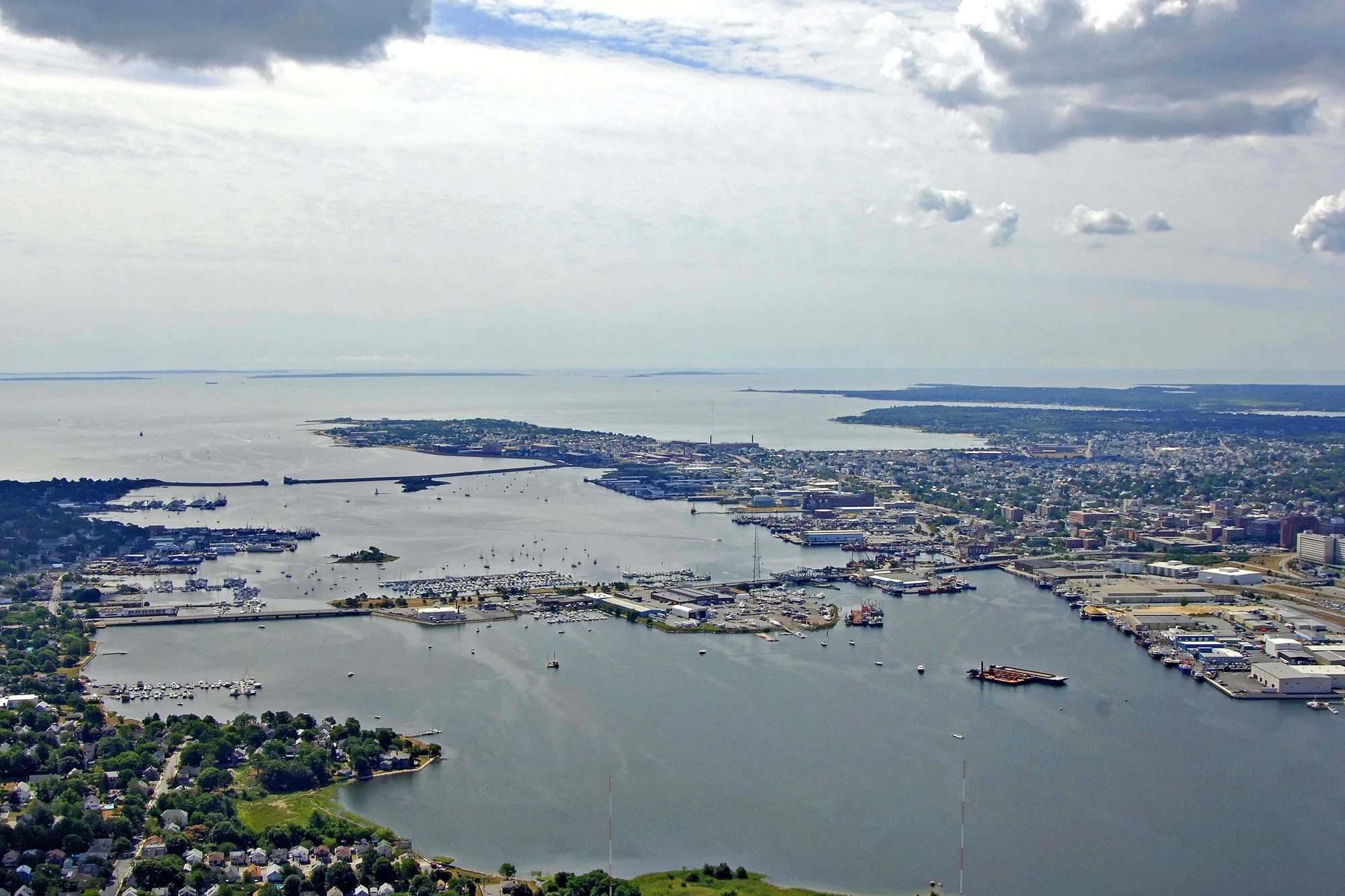
Mattapoisett Harbor is an arm of Buzzards Bay, and about 28 percent of the town's area is water. Route 6 is the main local road through town and I-195 Exit 31 serves North Street. The town is about 9 miles east of New Bedford at about 26 feet of elevation. A commercial roof inspection in Mattapoisett starts with the edge metal, the parapet termination and the way the membrane is attached.
Why does the roof edge come before the field?
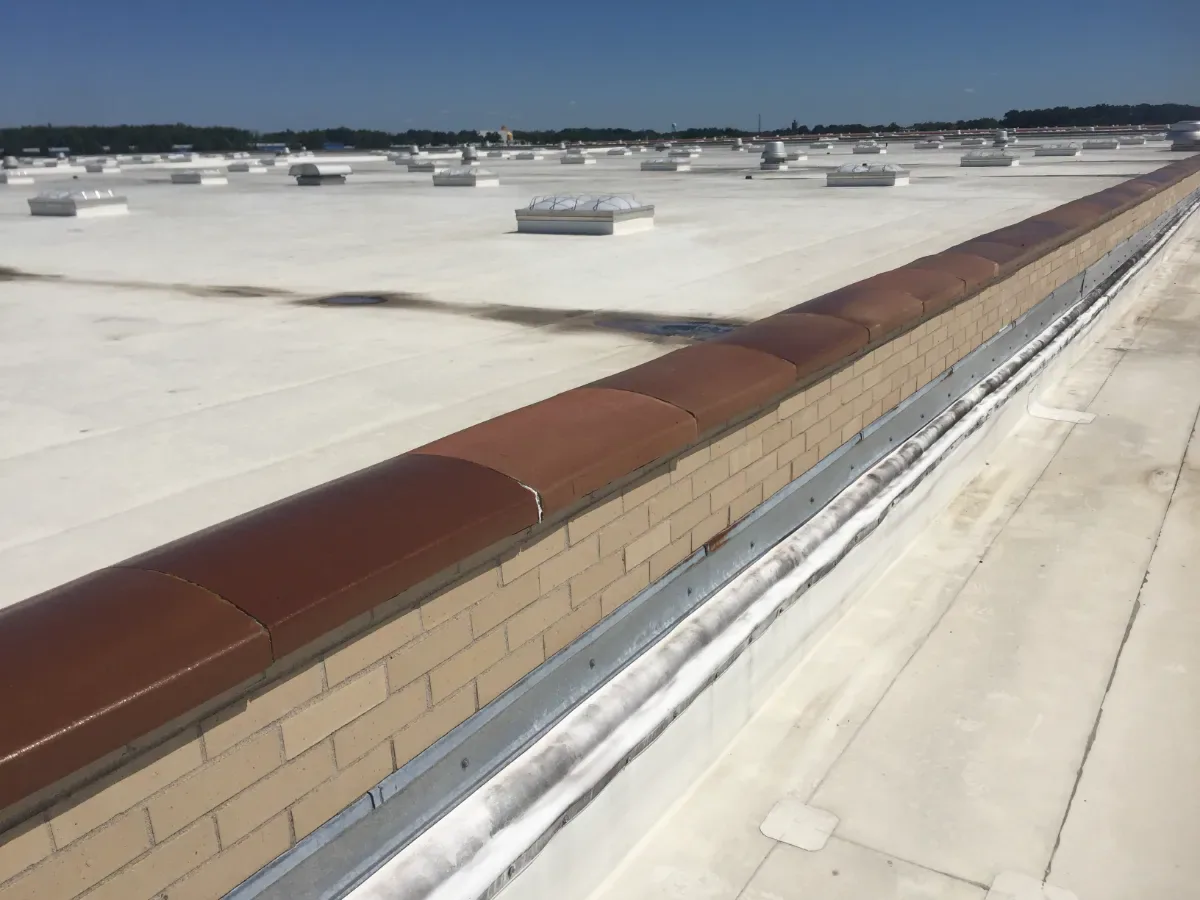
Wind lifts a roof from the perimeter. A gravel stop that has pulled up by a quarter inch, edge metal with backed-out fasteners or a membrane termination with dried sealant gives wind a place to start. Once the edge opens, the sheet can peel back across the field. We probe the lap sealant along the whole perimeter, check each fastener we can reach and mark any stretch that is loose.
In 1991, Hurricane Bob brought 89 mph gusts to Buzzards Bay, and its surge reached 5.8 feet at New Bedford and Woods Hole. Those are records for the bay and for New Bedford, not Mattapoisett measurements, but they show what a roof edge near the water can be asked to carry. Edge metal and gutter repair resets or replaces sections with a continuous, sealed line.
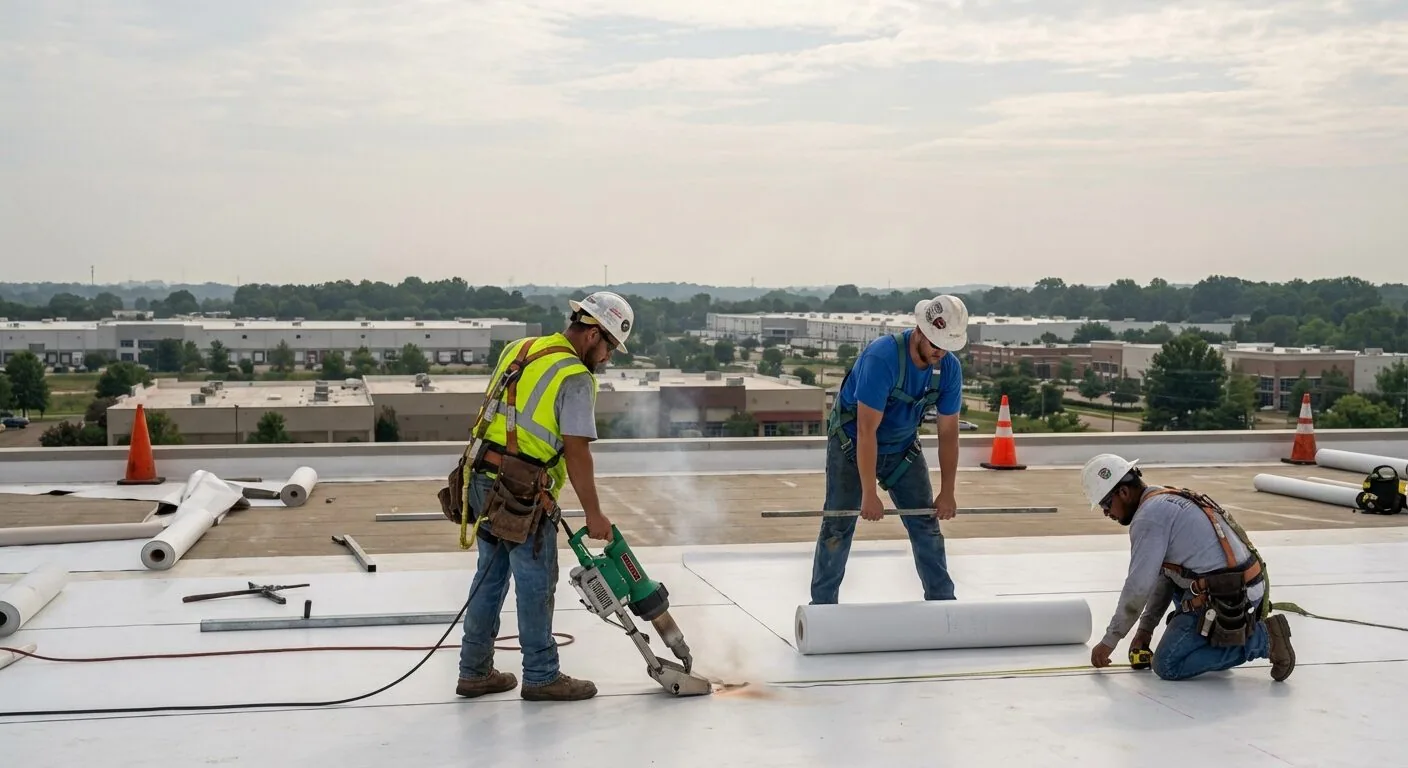
Attachment is the other half of the edge. On a mechanically attached membrane we check the fastener spacing near the perimeter, where wind uplift is highest, and look for plates that have pulled through the sheet. On a ballasted roof we look for displaced stone, since a bare patch lets wind lift the membrane. On an adhered system we press the sheet at the edge to feel for a bond that has let go. Each finding goes on the roof plan with a location.
Does a storm surge reach the roof?
Not usually, but it reaches everything below it. A surge floods the ground floor, shorts the electrical service and leaves a building without power, and a roof that is already compromised then lets in rain with no one to see it. Hurricane Bob cut power to over 60 percent of residents throughout southeast Massachusetts and southeast Rhode Island, and a leak during an outage can run for days before anyone notices.
After a storm, we inspect for what wind-driven rain left behind: lifted flashing, open laps, punctures from debris and standing water in low spots. Hurricane damage roof repair starts by sealing openings, then records the permanent repairs separately so the owner knows what was temporary. The record also helps with any insurance review that follows.
Power loss changes the order of work. If a building lost electricity, the first call is often to the electrician, and the roof is checked later, when a stain has already spread. We encourage owners to look at the ceiling the first dry day after a storm and to call before the next rain. A tarp or a temporary seal over a known opening costs little compared with replacing wet insulation, wet ceiling tile and the contents beneath them.
What kinds of commercial buildings does a harbor town have?
A harbor town can hold small retail buildings, marine service shops, offices and public buildings, and each has a different roof. We start from the plan and the last inspection notes, walk the roof and mark what is there: the membrane type, the number of penetrations, the drains and the wall flashing.
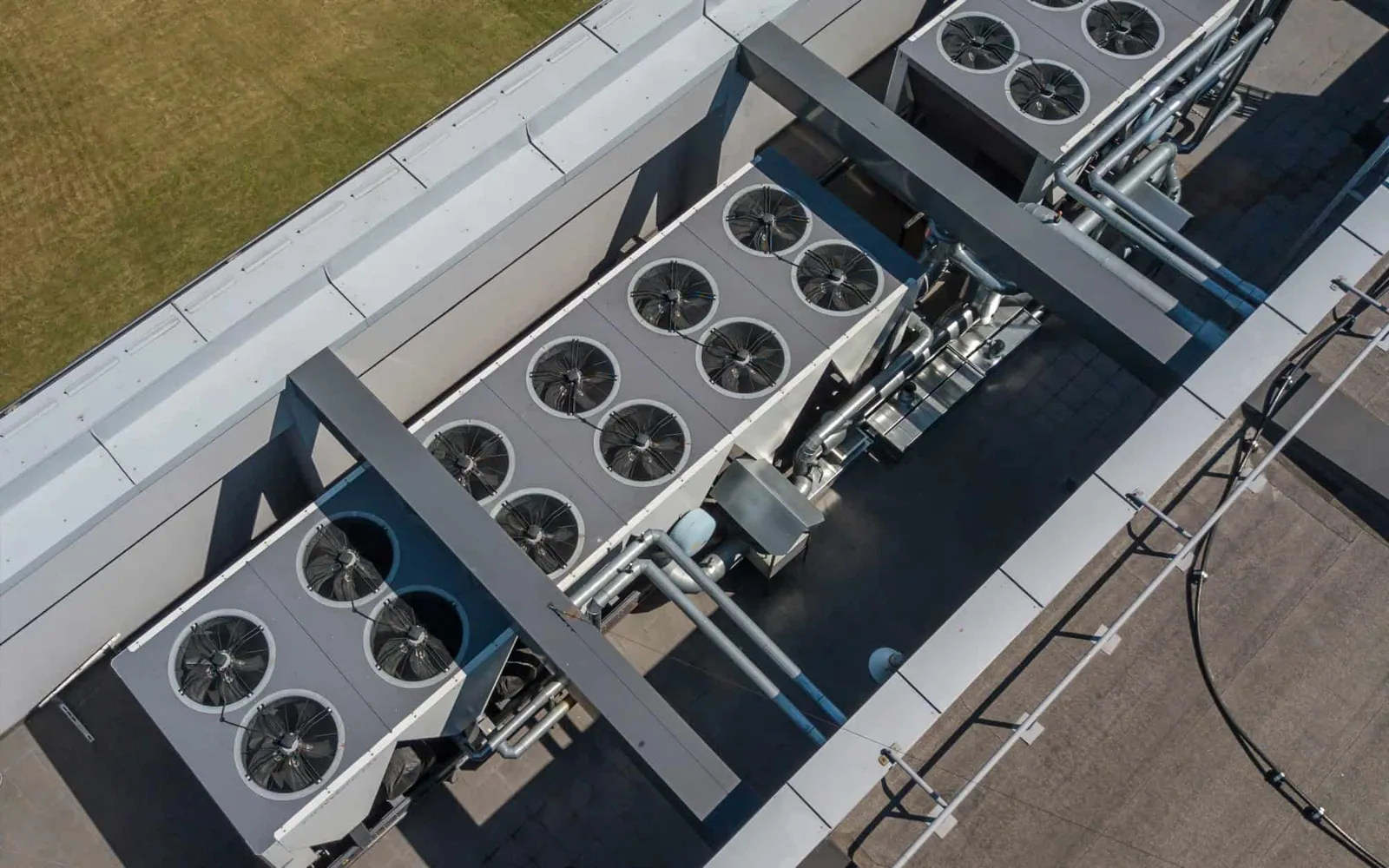
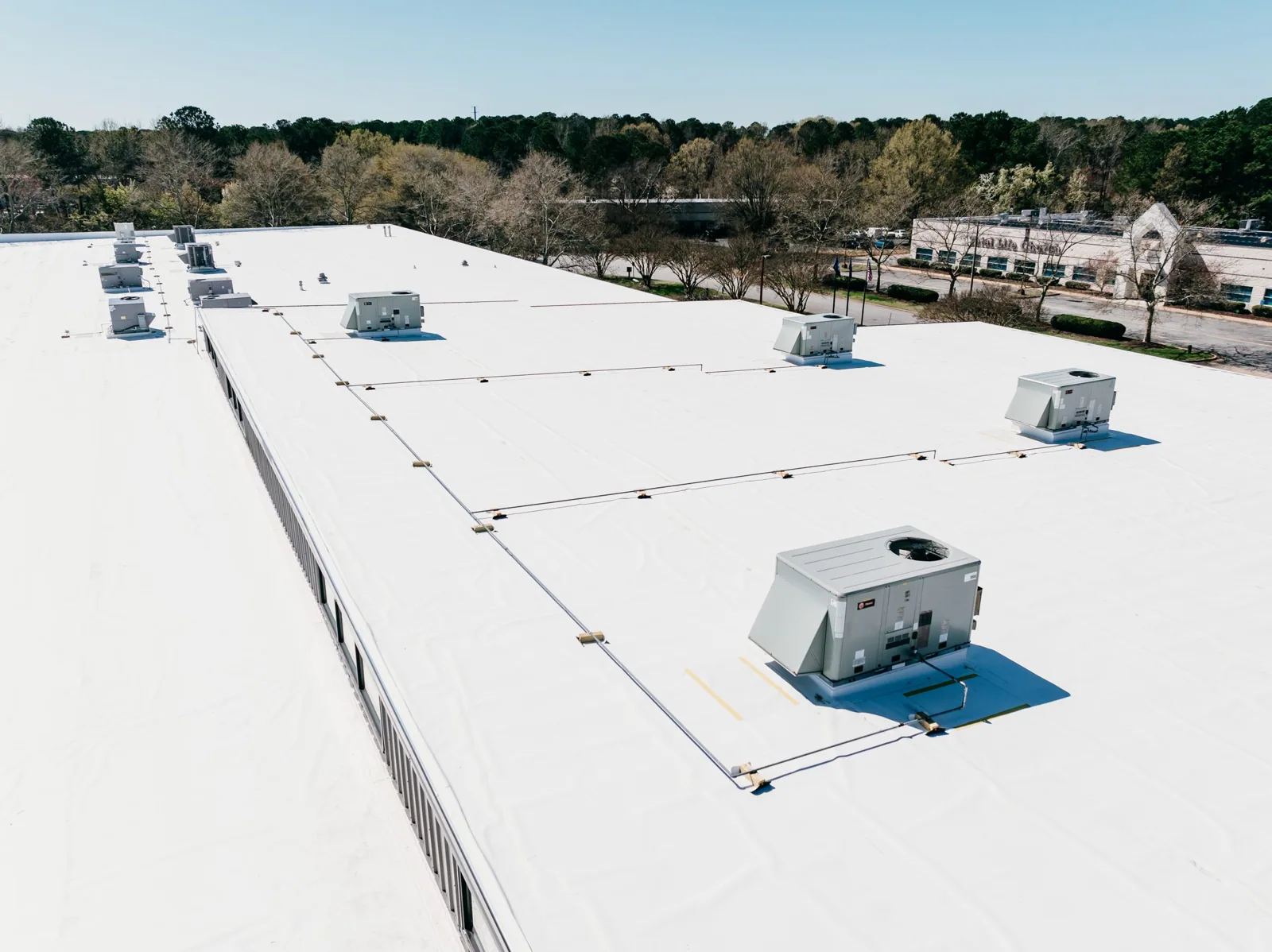
For a small building with a parapet, the through-wall flashing and the wall-to-roof transitions are the first stops. For a flat roof with rooftop equipment, the curbs and the seams around them matter most. A rooftop equipment curb and support that has settled can reverse the slope away from a unit, so we measure before choosing a repair. The scope names which findings we confirmed and which we only suspect.
Access in a harbor town can be tight. Narrow streets, shared lots and seasonal traffic on Route 6 limit where a truck or lift can stand, so we confirm the delivery route from I-195 Exit 31 and the staging area before the crew arrives. If the building is open to the public, we work in sections that close each day and keep walkways protected below.
Shared walls between a small shop and its neighbor need their own look, because flashing that runs across both buildings belongs to neither owner and is often the first thing to fail.
How do winter snow and meltwater test the drains?
In a typical year New Bedford sees about 32.5 inches of snow, nearly all of it December through March. Parapets and rooftop units hold snow, and the melt has to reach a drain by whatever route is open. A sump with debris or a cricket that has settled can hold water for days after a thaw, and standing water is where a membrane ages fastest.
We clear drains and scuppers, check the sump and probe the membrane near each outlet. A pond that lasts more than a day or two points to a blocked outlet, a depressed deck or compressed insulation, and each is fixed differently. A moisture scan shows whether the insulation beneath the pond is wet, which decides whether a patch will hold. We mark the wet area on the roof and on the plan, so the replacement section is sized from the survey.
What are the owner's options once the findings are in?
When failures are local and the insulation is dry, repair is enough; wet layers across a wide area or a membrane pulled from its edges call for recover or replacement. Every option comes with what it keeps, what it removes and what could shift the price, and nothing is quoted until we have walked the roof with the owner.
Larger work follows 780 CMR 10th Edition, the state code that took effect October 11, 2024 on the 2021 International Building Code, and the town's permit process. Buildings in Marion or Fairhaven get the same findings, so the roofs can be lined up and the first job chosen.
Commercial Roofing Questions
What is the first thing you check on a building near the bay?
The edge. Loose metal, backed-out fasteners and dried sealant at the perimeter let wind get under the membrane. We probe the whole perimeter before the field.
Should a roof be inspected after every major storm?
After any storm with damaging wind or heavy rain, yes. Lifted edges and open laps let in water on the next rain, and early repair costs less than repairing the ceiling below.
How do you tell storm damage from old wear?
Fresh damage shows clean edges and displaced material, while wear shows weathering and a repeating pattern. The report records both so the owner and any insurer can see the difference.
Can a small building be reroofed without closing it?
Often yes, in sections that are dried in each day. We confirm the access, protect the interior below and set the work window with the owner.
Does the building need a permit for a roof repair?
A small repair may not, while a replacement usually does. The town confirms the requirement before we finalize the scope.