Service Areas
Commercial Roofing in Fall River, MA
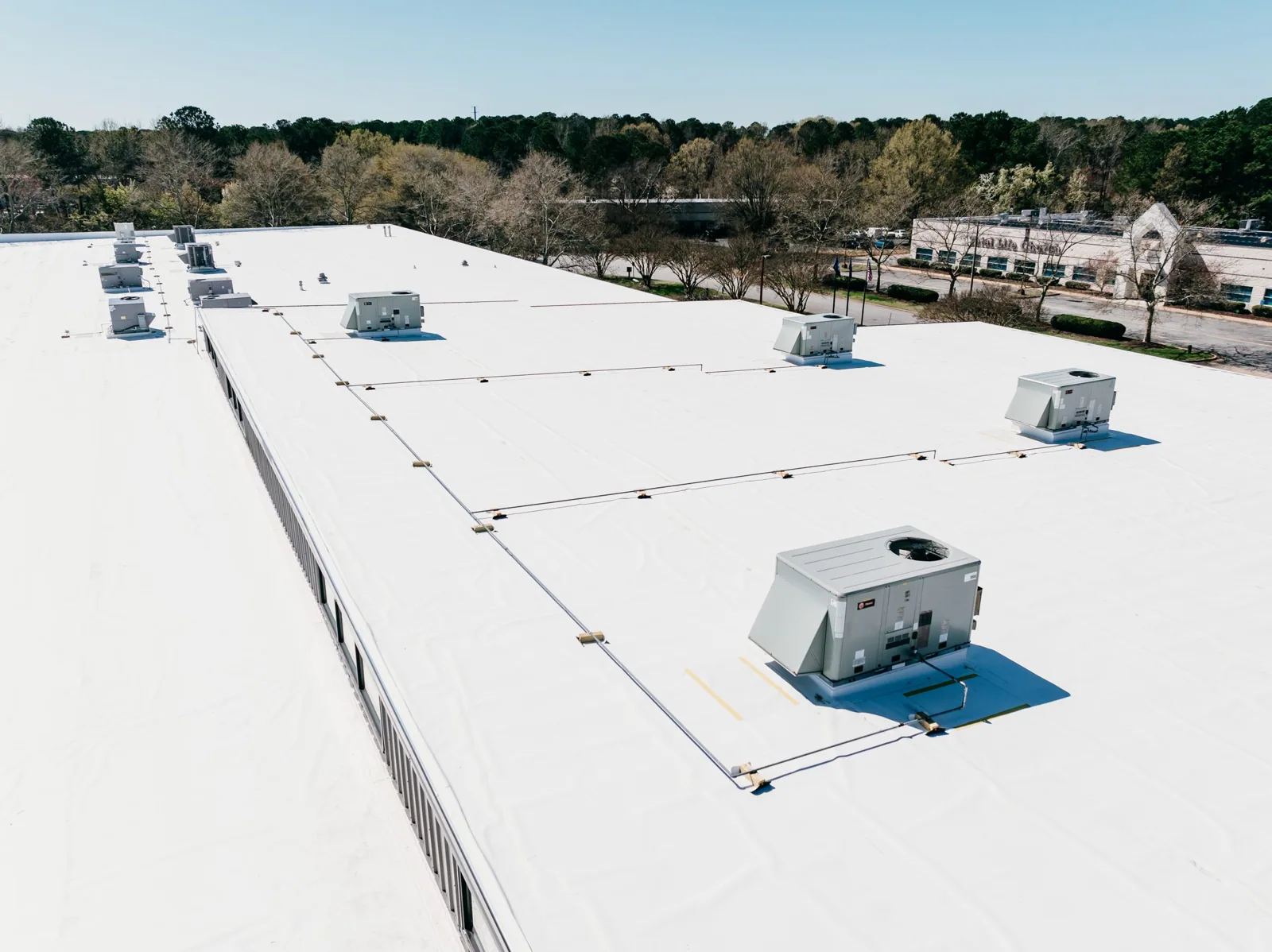
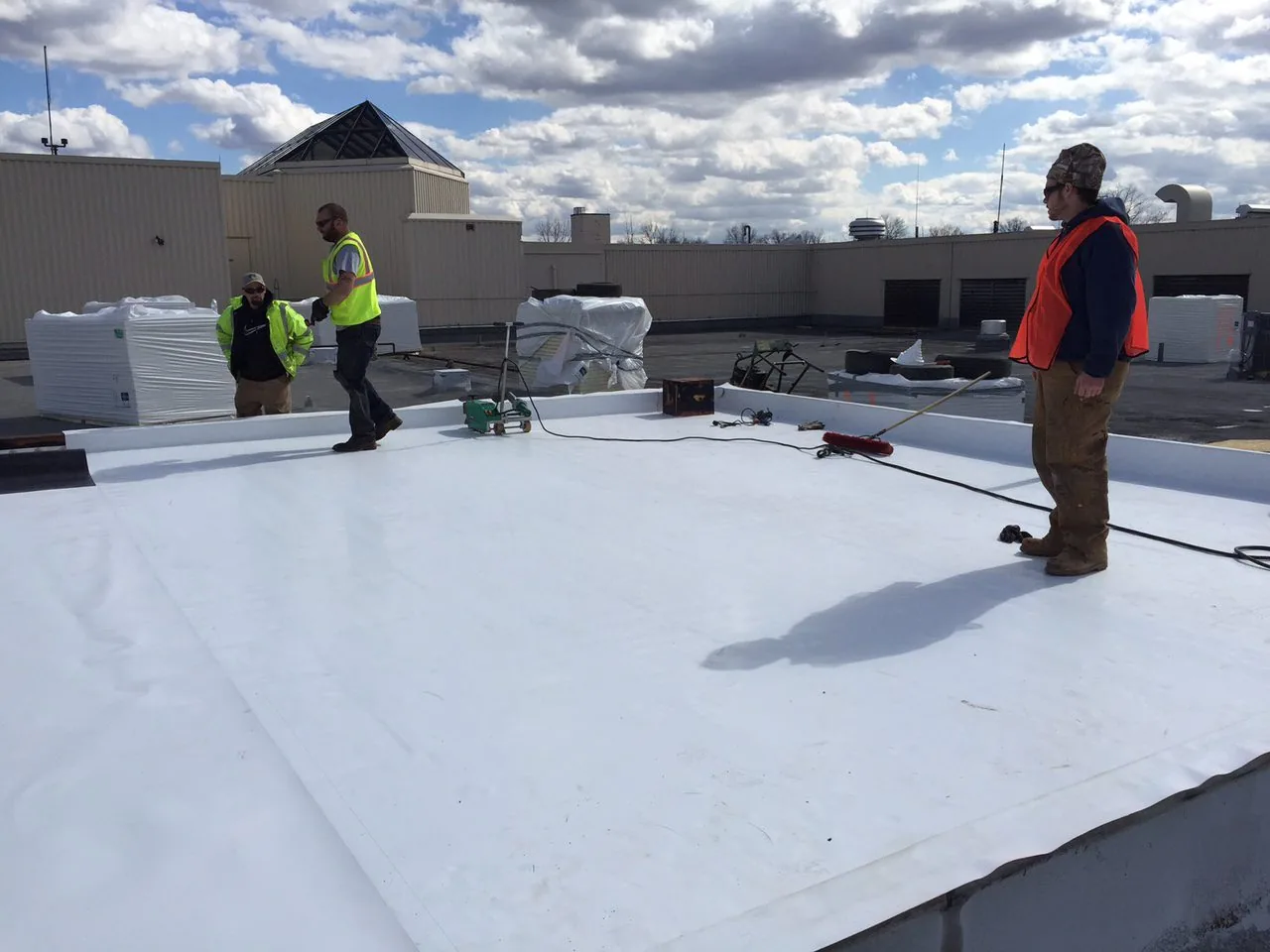
Commercial roofing in Fall River, MA: granite and brick mill roofs, reused mill space, highway-corridor and hospital-sector buildings, snow load and parapets.
Request a Roof Assessment
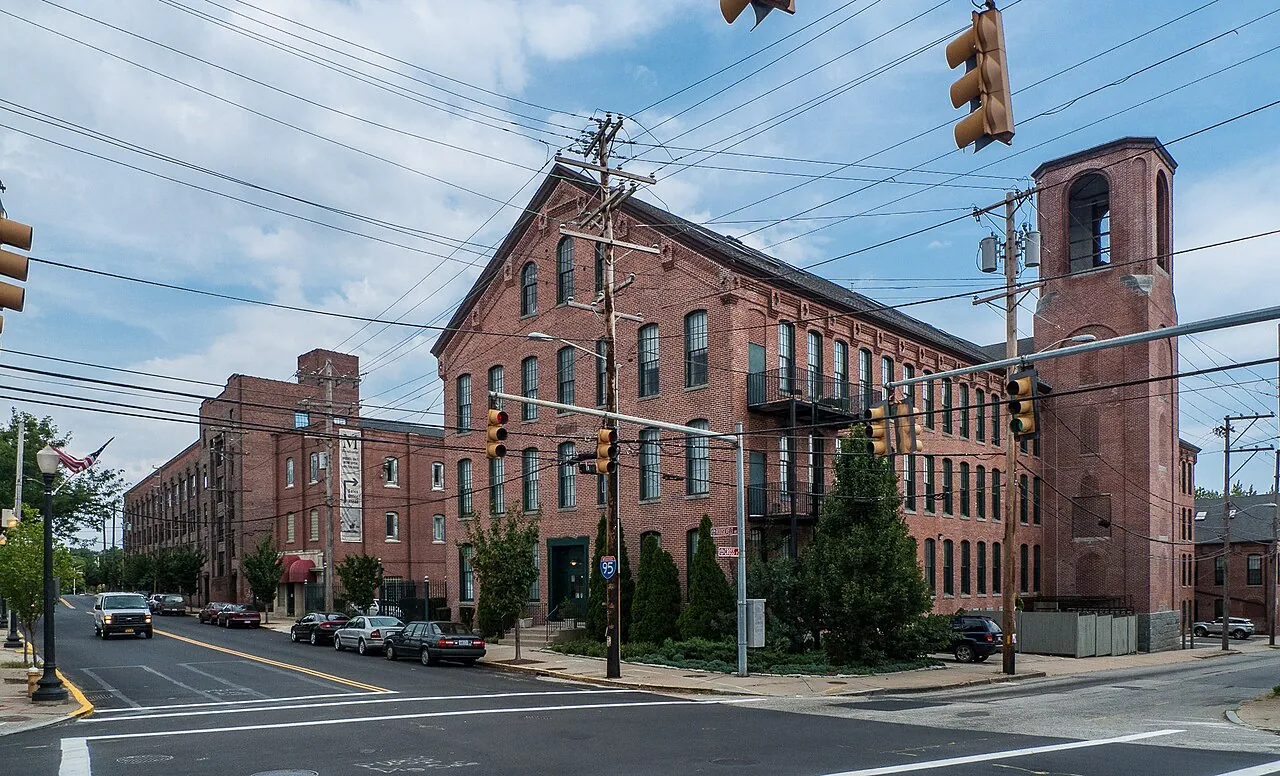
Which joint lets water in first, in a building of granite and brick that is older than the roof system on top of it? Almost always where the roof meets the wall. Fall River, MA, the tenth-largest city in Massachusetts with 94,000 residents at the 2020 census, has granite and red-brick textile mills, among them Metacomet Mill from 1847, Union Mills from 1859, Davol Mills and Sagamore Mills, and the roofs on that kind of building are marked first at the parapet terminations, the through-wall flashing and the drains.
How do granite and brick mills differ on the roof?
Many mills above the hill were built from local granite, while mills along the Taunton River and Mount Hope Bay were mostly red brick. The masonry differs and so does the way each wall treats water. Granite sheds it and holds heat. Brick takes it in, and its mortar joints weather faster. Where a membrane turns up a brick wall, an inspector probes the termination, presses on the mortar and looks for efflorescence that shows water moving through the wall.
The core cut tells us what the roof is, and the moisture scan tells us how wet the insulation is. Findings tend to cluster on a roof of this age: stripping plies at the laps, shrinkage where a single-ply membrane meets a wall, open seams near the drains and sealant that has dried at every penetration. Our drain and scupper checks start the first visit, because a stone or brick building with a clogged drain holds water against its own walls. We measure how far each sump sits below the surrounding roof, note any strainer that is missing or crushed, and photograph the pipe below the drain bowl wherever it can be reached, since a cracked leader inside a wall produces a stain that looks like a roof leak.
What changes when a mill becomes studios or performance space?
Vacant mill space has been reused for studios and performance venues, and a changed use changes the roof's job. A performance space cannot tolerate dripping over a seating area, a studio may hold equipment and finishes that water ruins, and new tenants add rooftop equipment that was never in the original plan. Every new curb or conduit is a new termination.
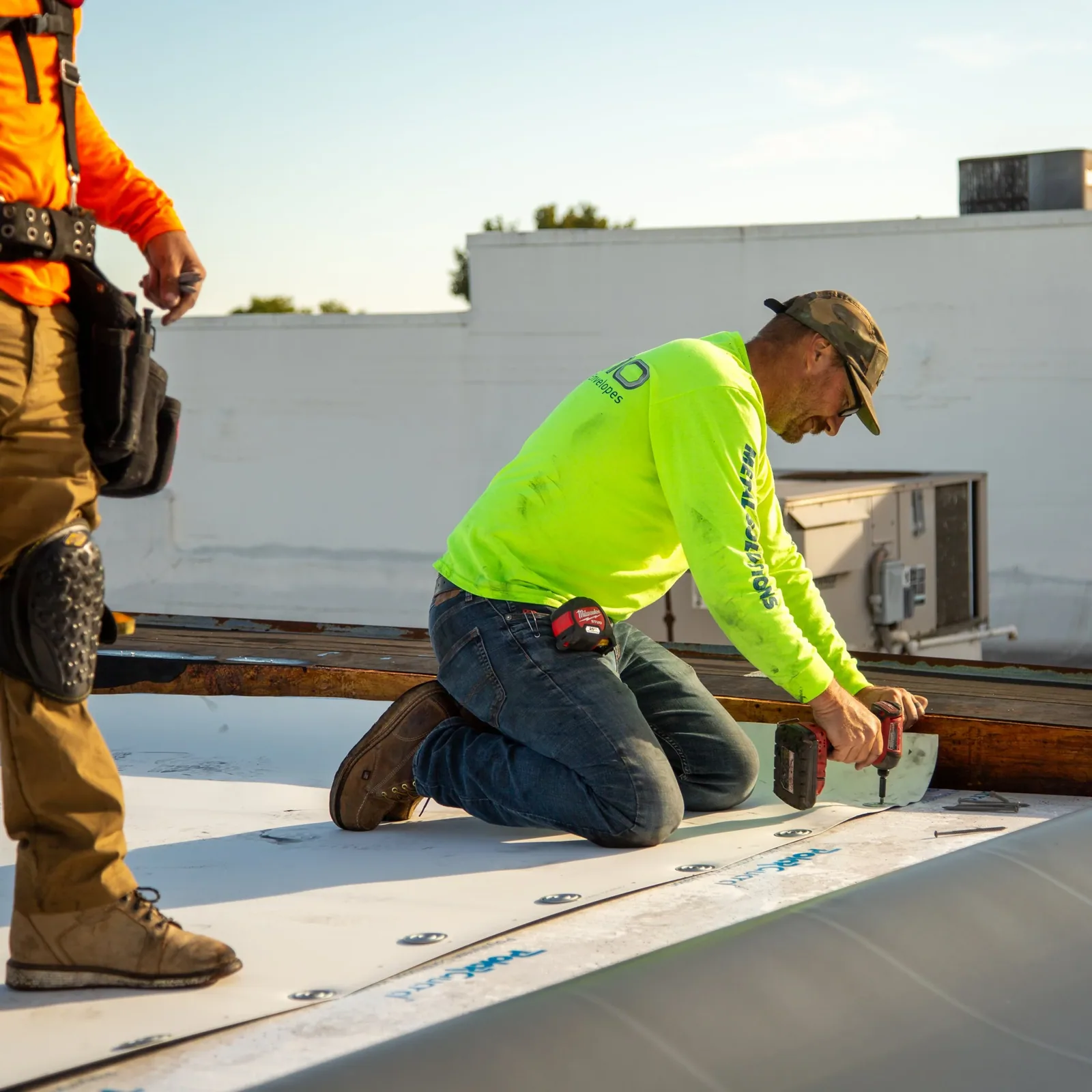
We map what has been added and flag what has not been flashed to the manufacturer's method. We also ask about hours of use, since a venue that runs evenings leaves mornings for roof work, and a studio with an open loft may need interior protection before a tear-off. The owner of a reused mill often wants to preserve the look of the building, so the scope separates what is visible from the street from what is not. Skylights and monitors that once lit the weaving floors are another detail to check, since the glazing seals and curb flashing age at a different rate than the field of the roof. A reroof over an occupied building is phased to keep the space operating.
What did the 2015 blizzard show about snow load?
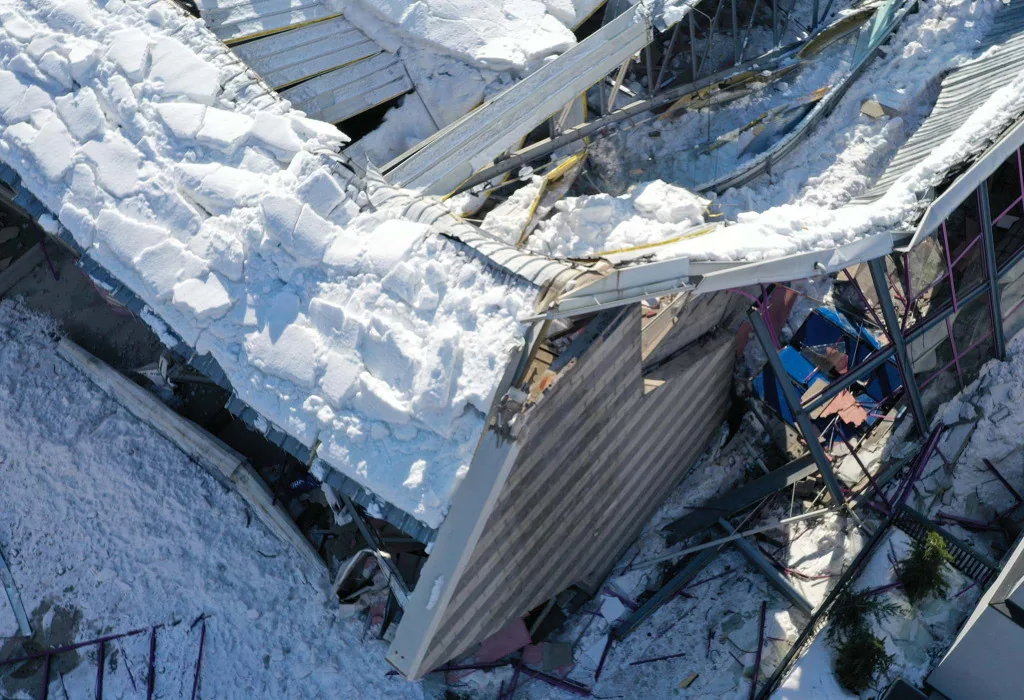
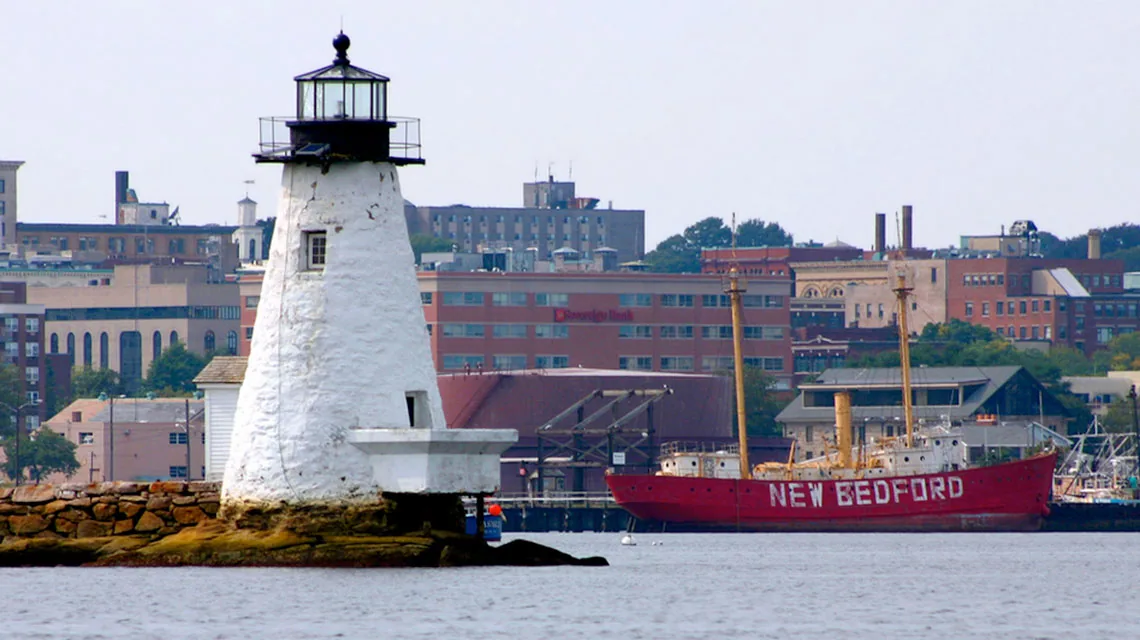
In January 2015 a single blizzard left 24.1 inches of snow across Fall River. Snow of that depth loads every low spot, packs against parapets and drives meltwater to drains that are not always clear. In neighboring New Bedford a usual year means about 32.5 inches of snow, mostly December through March, with 52.21 inches of precipitation falling on roughly 124 days and lows that have touched minus 12 F.After a storm like that, we look for ponding stains, deflection at the low points, torn flashing from sliding snow and ice dams at edges and gutters. A roof that ponded after the blizzard will pond again, so the correction goes on the plan: added taper, a new drain or a cover board that restores a flat surface. The snow and ice damage repair process documents each finding with a photograph for the insurer.
How do highway-corridor and institutional buildings fit in?
Interstate 195 runs through downtown and crosses the Taunton River at Battleship Cove on the Braga Bridge, built in the 1960s. Buildings near the corridor take wind and vibration, and the loading and parking around them shape how a roof crew stages. The health care side of the city is part of the picture too: Charlton Memorial Hospital merged in 1996 with St. Luke's in New Bedford and Tobey Hospital in Wareham to form the Southcoast Health System, and buildings in that sector run continuously.
For clinics, offices and other institutional buildings, the roof plan records every unit, vent and penetration, and the work is phased so no area is open overnight. Noise and odor limits go in writing before the first day. We schedule loud work for hours the facility director chooses, and we sweep the lot for fasteners at the end of every shift. A replacement is priced on area, penetration count and access, with insulation thickness and the cost of tear-off disposal listed separately so the owner can see what drives the number.
What do coastal storms add to the inspection?
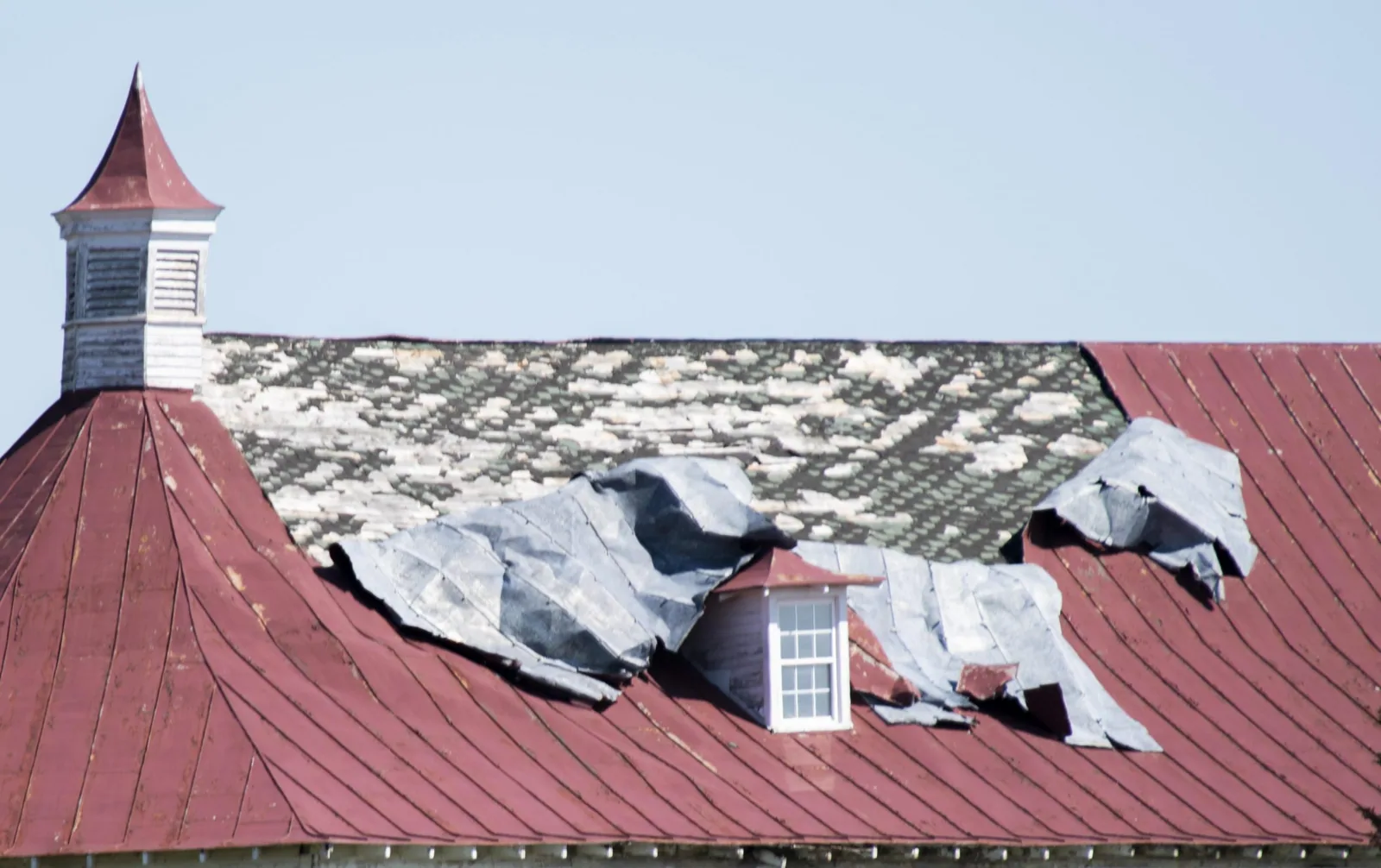
Bob in 1991 sent a surge of 10 to 15 feet up Buzzards Bay, with 89 mph gusts logged at a bay station, and Carol in 1954 carried 80 to 110 mph winds over eastern Massachusetts. Fall River sits on the same coast, and the inspection reflects it. Edge metal, gravel stops and parapet caps are checked for loose fasteners and open joints, because wind starts at the perimeter.We also look at rooftop equipment anchorage and the condition of curbs, since a unit that shifts in a gust tears the flashing around it. After a named storm the first visit covers the perimeter and the equipment, and the wind damage repair list is ranked by risk. Replacement work in Fall River is reviewed against 780 CMR 10th Edition, a state code built on the 2021 IBC that has applied since October 11, 2024.
What does a first visit include?
Send the roof plan and the last inspection notes. A probe, a moisture meter and a camera go up with the inspector, and each finding is numbered and talked through with you while you are both standing on the roof. The written roof condition report follows. For owners with more than one property, including industrial buildings near Fall River Industrial Park or in neighboring Somerset, the same report format lets the budget be set across the portfolio.
Commercial Roofing Questions
Can a granite or brick mill roof be repaired without touching the wall?
Often yes, when the problem is the membrane or the flashing. The termination is reset and sealed, and the wall is left alone unless the mortar behind it has failed. A failing wall is repaired first, because a new termination will not hold on it.
Will a change of use affect the roof plan?
It can. New tenants bring rooftop equipment, new loads and different hours. We update the roof plan for each addition, flash every curb and mark the walk path so the membrane is not worn through by service visits.
What does a ponded roof tell you?
It tells us the slope or the drain has failed. Water that stands more than a day after a thaw wets the insulation and strains the seams. We scan the area, mark the wet boundary and recommend added taper or a new drain.
When is the best season for mill roof work?
Late spring through early fall, when adhesives and sealants cure. Winter work is limited to securing metal, clearing drains and temporary protection. A spring inspection after winter loads gives the list for the summer.
How do I document storm damage for the insurer?
Photograph the damage before anything moves, note the date and the storm, and call us. We inspect, mark each finding on the roof plan and write the report with dated photographs, which the insurer's adjuster can follow without a second visit.