Service Areas
Commercial Roofing in Acushnet, MA
Commercial roofing in Acushnet, MA: seam and flashing inspections, roof repair, moisture scans and replacement planning for local business buildings.
Request a Roof Assessment
Who pays attention to the roof of a small commercial building until a ceiling tile stains and the plan cannot be found? In Acushnet, MA, the answer is usually a facility director or an owner who inherited the building with its roof history in a drawer, and the first job is rebuilding that history from what the roof itself shows. The seam probe, the flashing and the drains tell us more in ten minutes than an old invoice does.
The Acushnet Company, founded in 1910 and owner of the Titleist brand, is described as one of Southeastern Massachusetts's most enduring industries, and that long manufacturing history is a reminder that commercial buildings of many ages and uses can share one town. A commercial roof inspection in Acushnet begins by finding out what the building is, how the roof was assembled and what has been done to it since.
What if there is no roof plan on file?
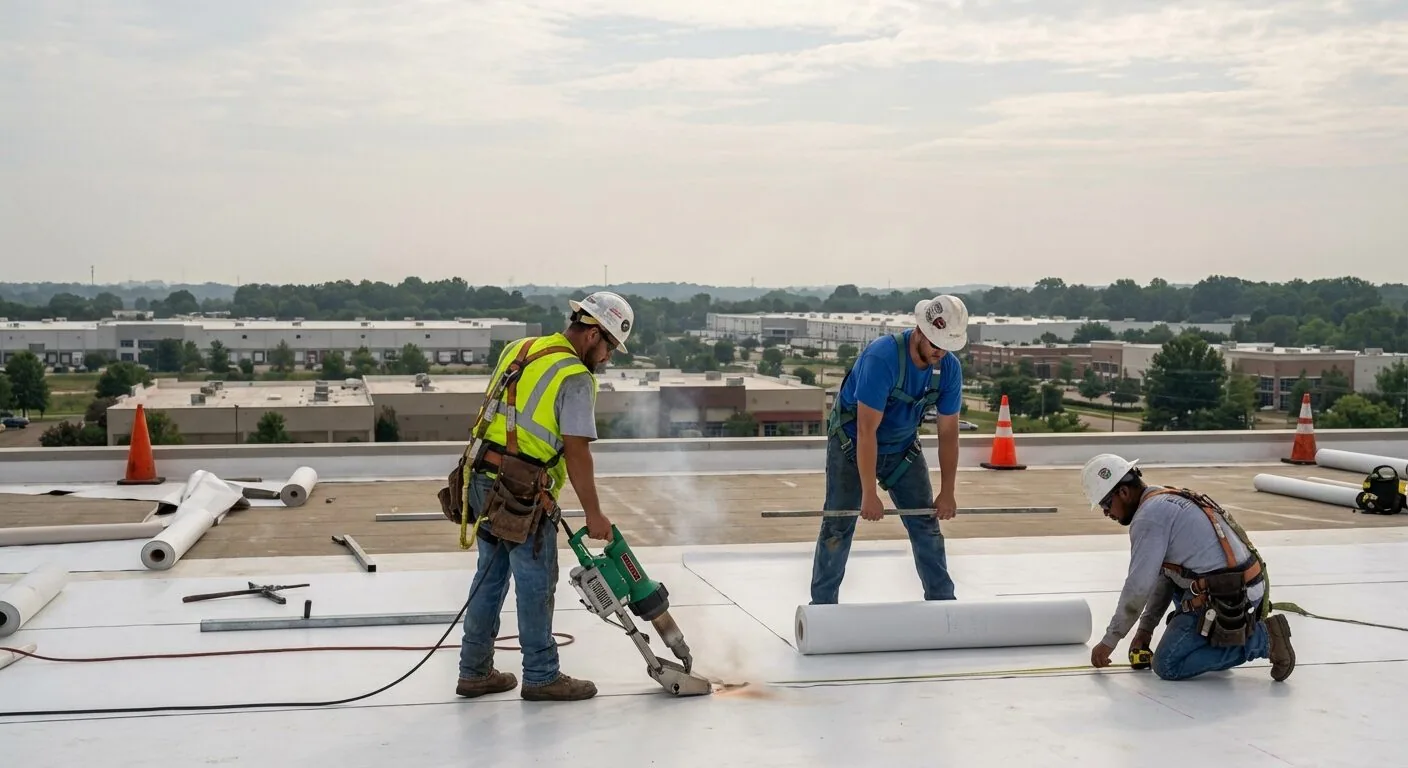
We build one. The first visit sketches the roof, marks every penetration, drain and wall transition and records the membrane type by touch, color and seam pattern. We probe the laps, check for fastener back-out and note where patches have been laid over earlier patches, since a stack of patches often shows where water has been getting in for years.
A written condition report follows, with photographs tied to locations and a short list of open questions: what needs a core cut, what needs a moisture scan and what cannot be known until a section is removed. A roof condition report becomes the owner's record for the next inspection, the next budget and the next buyer or lender who asks what is on the roof.
How do the town's roads affect scheduling?
Route 105 runs 2.8 miles through the northeast corner of Acushnet, Routes 18 and 140 pass just west in New Bedford, and I-195 passes just south of town through Fairhaven, with the nearest exits numbered 27 to 29. Those roads decide how materials arrive and how a crew reaches the site, and a building on a narrow lot or a shared driveway may limit where a lift can stand.
We confirm the delivery route, the staging area and the closest safe place to set a ladder or lift before the crew arrives. On a building that is open to customers, we plan the work in sections that close each day, with walkways protected below. Acushnet covers about 19 square miles, mostly land, so building types range widely and the access plan is written for the specific property, not the town. We also ask who holds the keys to the roof hatch, whether the stairs are clear and whether any tenant has equipment on the roof, since those details decide whether the first visit can proceed or has to be rescheduled.
What do coastal storms mean this far from the water?
Acushnet is not on the harbor, but the region's storm history is part of every inspection. Bob in 1991 took the lights out for over 60 percent of residents across the southeast corner of Massachusetts and Rhode Island, and Carol in 1954 pushed winds of 80 to 110 mph over eastern Massachusetts. A roof inland still has an edge, and wind finds a loose edge wherever it is.
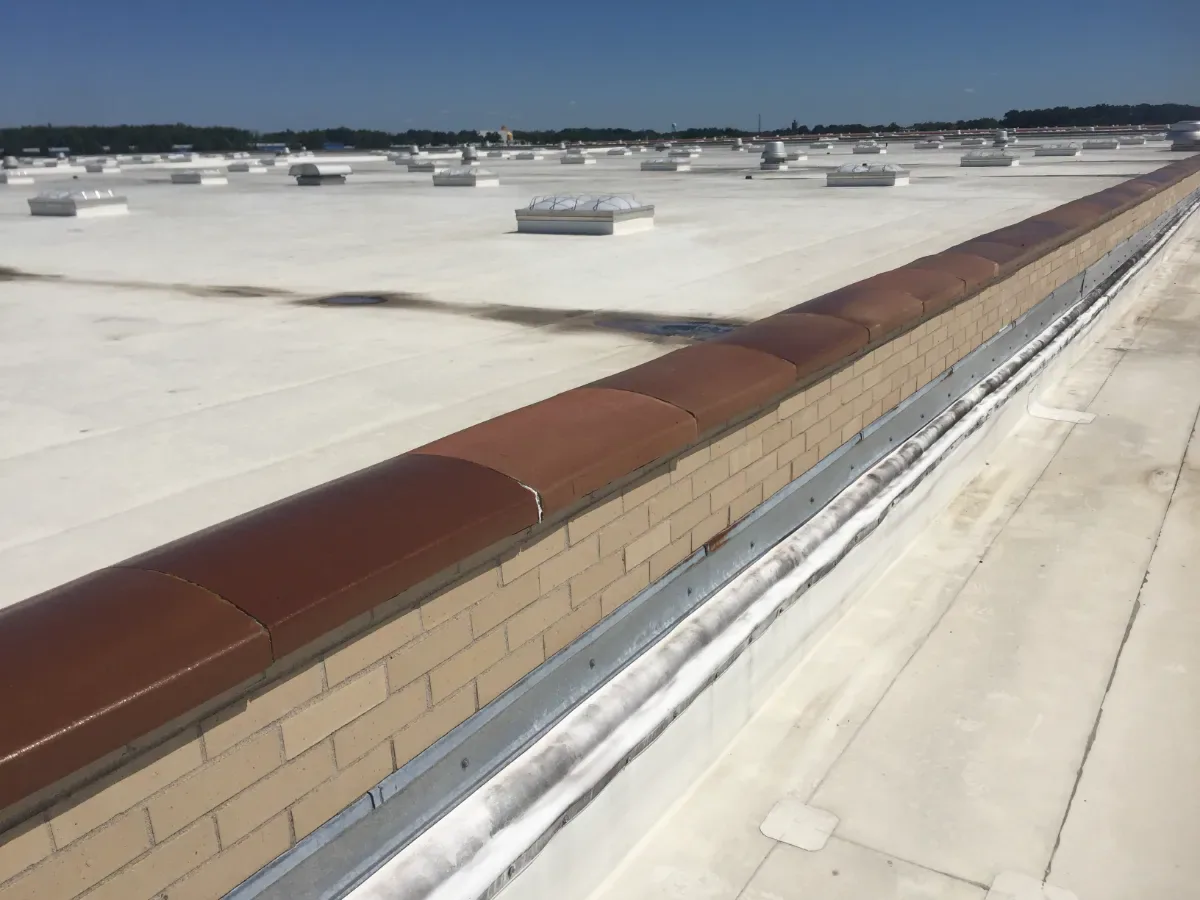
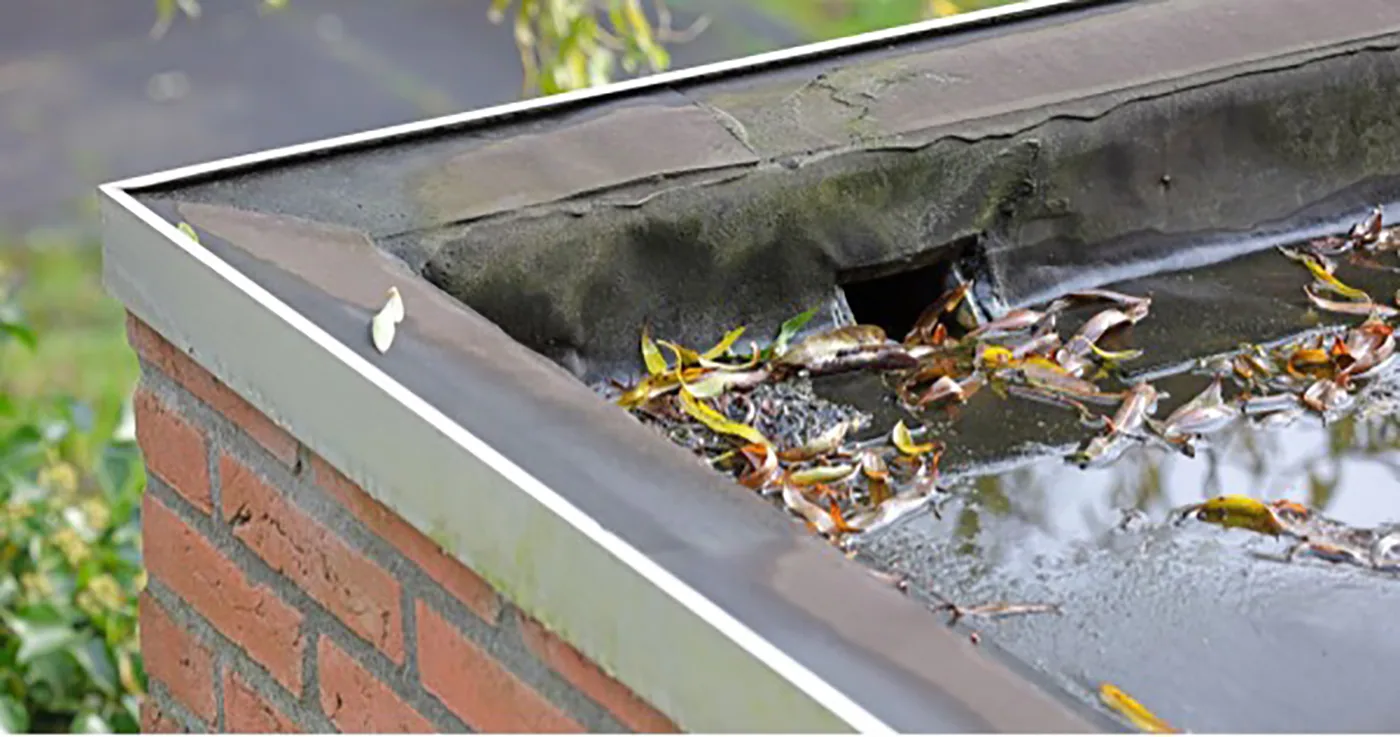
Inspection begins at the edge metal, the gravel stop and the parapet termination, and moves to the wall-to-roof transitions, where flashing has to resist wind-driven rain. If a storm has already passed, storm damage roof repair starts by closing every opening, and the permanent scope follows once the roof is dry.
How much does snow change the roof's condition?
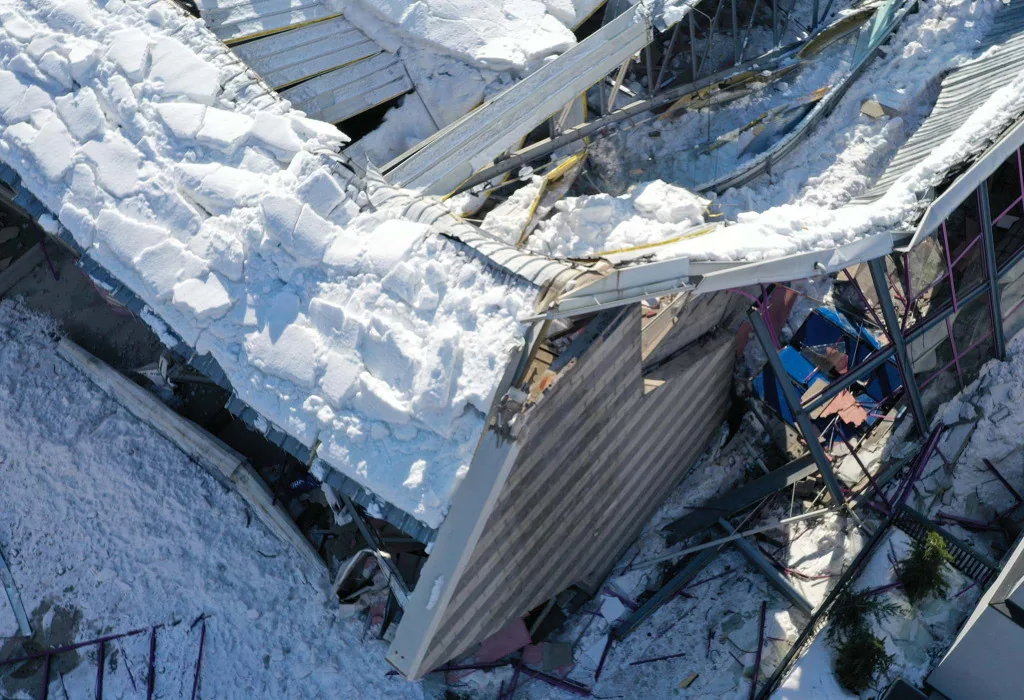
In January 2015 a blizzard put 24.1 inches on Fall River, and New Bedford's yearly snow, about 32.5 inches, falls mostly from December to March. Every low spot on a flat roof carries snow, and as it melts the water works toward a drain past anything in the way. A sump full of debris or a cricket that has settled will hold water for days.
We look at ponding water as a finding and then ask why it is there: compressed insulation, a depressed deck or a blocked outlet. Each cause has a different repair, and a moisture scan shows whether the insulation under the pond is wet. A tapered cricket behind a curb can send water around the unit, and a new sump can lower the drain below the low spot, but neither helps if the insulation beneath is already saturated. The scope names what we confirmed and what we only suspect, so the owner can decide whether a patch will hold or a larger repair is needed.
Meltwater also finds its way to the edges, and an edge that is already loose will let it behind the membrane. In late winter, staining on the interior wall below an eave is an edge finding and not a field finding. We mark it on the roof plan beside the nearest drain so the facility director can see the connection between the two and schedule the work in the right order, edge first and field second.
What are the owner's options after the inspection?
A roof with scattered failures and dry insulation is a repair. A roof with widespread seam failure, wet insulation or a membrane that has shrunk away from its edges is a recover or a replacement. We lay out each path with what it leaves in place, what it removes and what could change the price once the layers are open. Price rides on roof area, wet insulation, penetration count, deck condition and access, each listed apart so the owner can see which one moves the number. A recover over dry, firm layers saves tear-off, while wet or loose layers have to come out, and the proposal says which case the evidence supports.
The state's 10th Edition of 780 CMR, which rests on the 2021 International Building Code, has applied since October 11, 2024, so a larger project is permitted under it and we confirm the details with the town. A building in neighboring Fairhaven or Freetown can sit in the same table, so the roofs can be ranked for the budget.
Ask about the permit early. A recover or tear-off that needs one can add weeks before the first day on the roof, and the schedule should show that wait next to the work itself.
Commercial Roofing Questions
How do you find the membrane type without drawings?
By the seams, the color, the thickness at an edge and the way the sheet is attached. A small core cut, if the owner approves it, confirms the layers and whether the insulation is wet.
Is a patch over a patch a sign that the roof is finished?
It is a sign that water has been entering at the same place. We find out why before choosing between another patch and a larger repair.
What decides whether we need a moisture scan?
Recurring stains, a spongy feel underfoot or ponding that lasts more than a day or two. The scan shows where wet insulation sits and how far it spreads.
Can the work be staged on a building that stays open?
Yes. We work in small sections that close each day, keep walkways protected and set the work window with the facility director before the first day.
Where do materials come in for a job here?
We plan the delivery route from the nearest highway exit and confirm where a truck can stand. Narrow lots and shared driveways are settled before the crew arrives.
Ready to review the roof scope?
Request a Roof AssessmentKeep Reading