Service Areas
Commercial Roofing in Freetown, MA
Commercial roofing in Freetown, MA: wide-span warehouse and distribution roofs, snow load and drainage checks, seam repair and replacement planning.
Request a Roof Assessment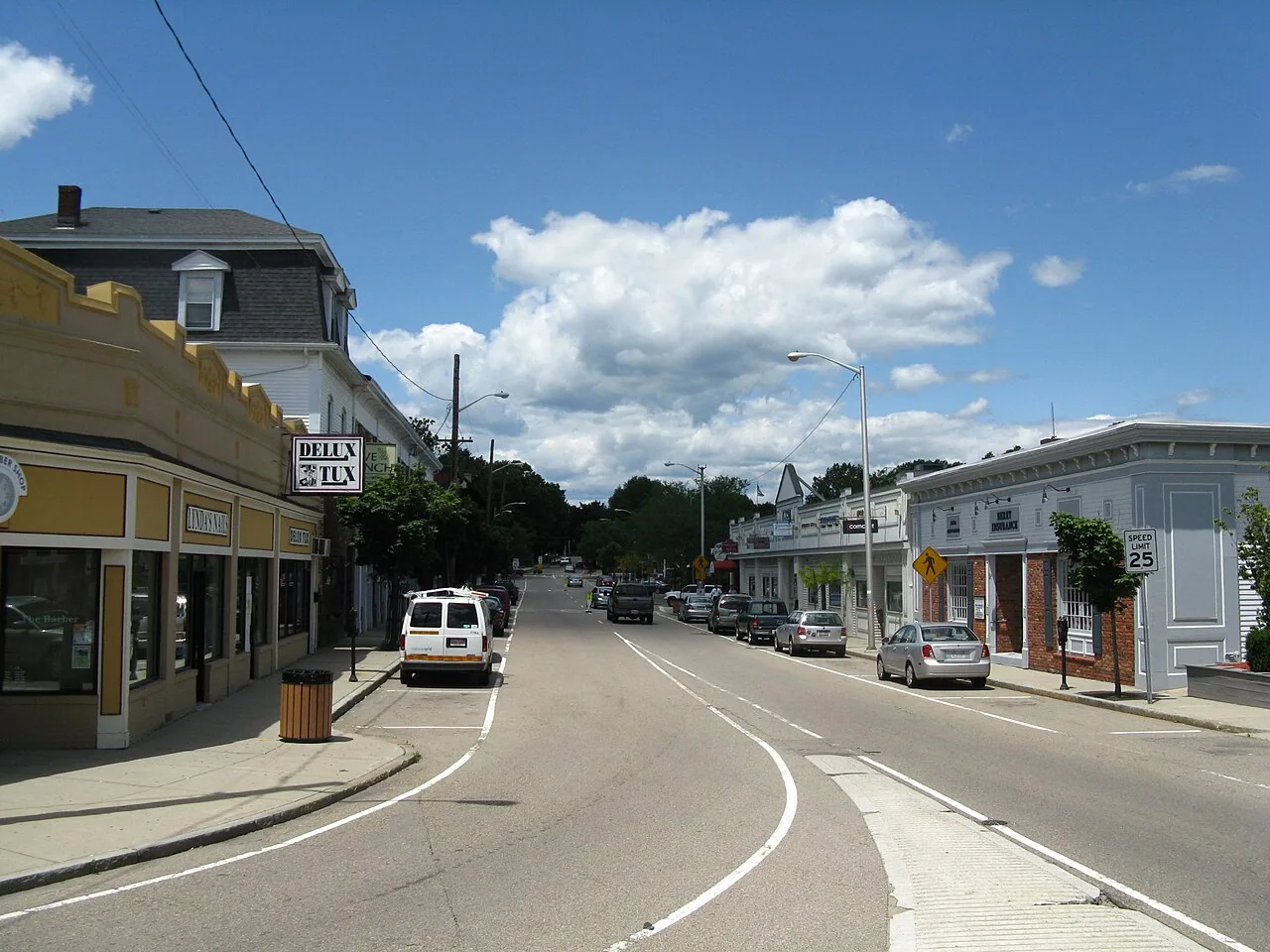
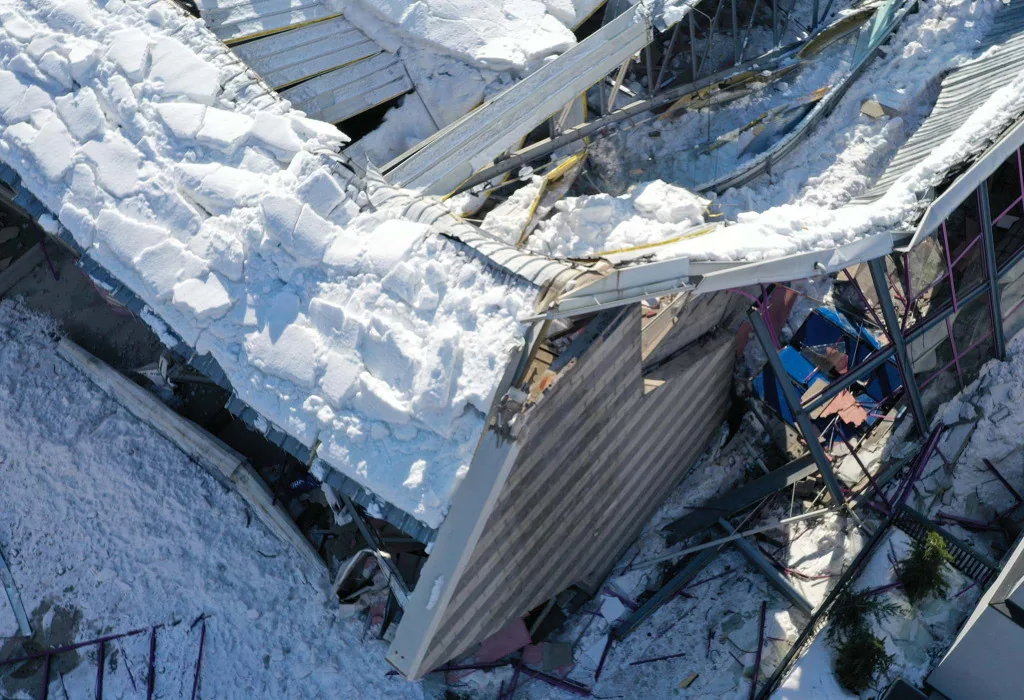
How much weight sat on the roof of a distribution building after the January 2015 blizzard, and where did the meltwater go? The storm dropped 26.0 inches of snow in East Freetown, and a wide, low-slope roof is where an inspector begins asking that question, because snow does not spread evenly. It drifts against parapets and rooftop units, packs into low spots and then melts toward drains that may or may not be open.
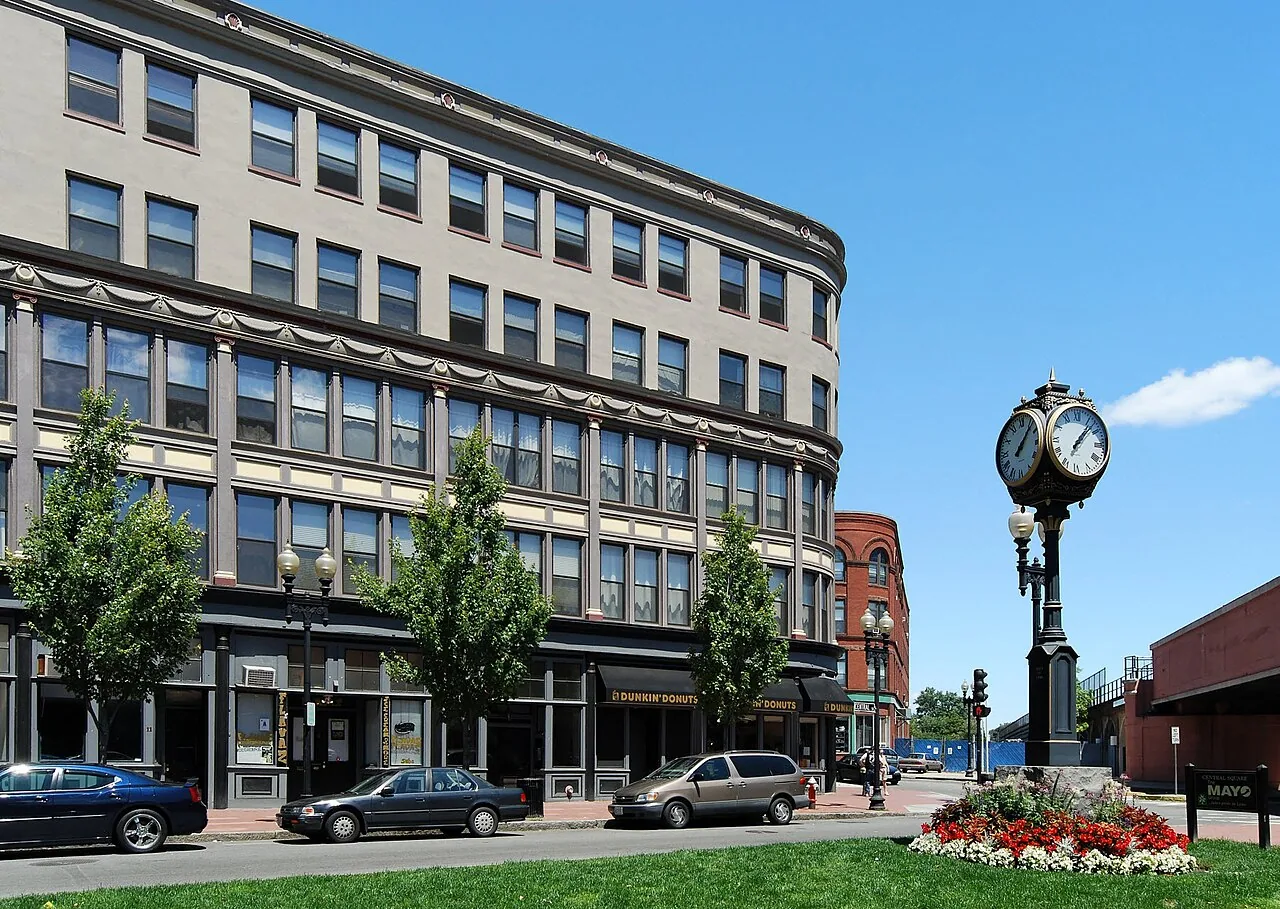
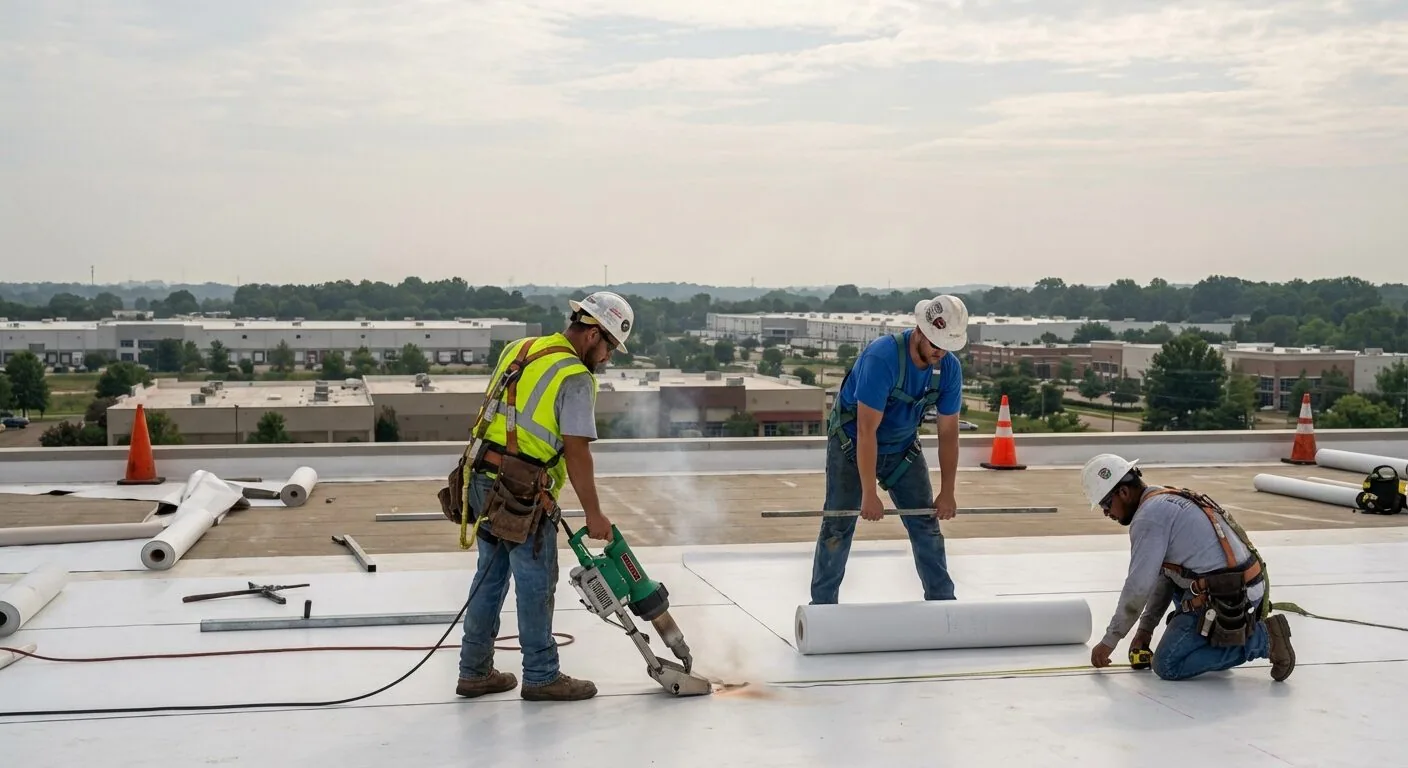
The employer named for Freetown is a Stop & Shop distribution center, and a wide-span building of that kind sets the pattern for the checks below. A commercial roof inspection in Freetown starts with the roof plan, the last inspection notes and a seam probe, then marks each finding where it sits on the roof.
What does a wide roof do with a heavy snow year?
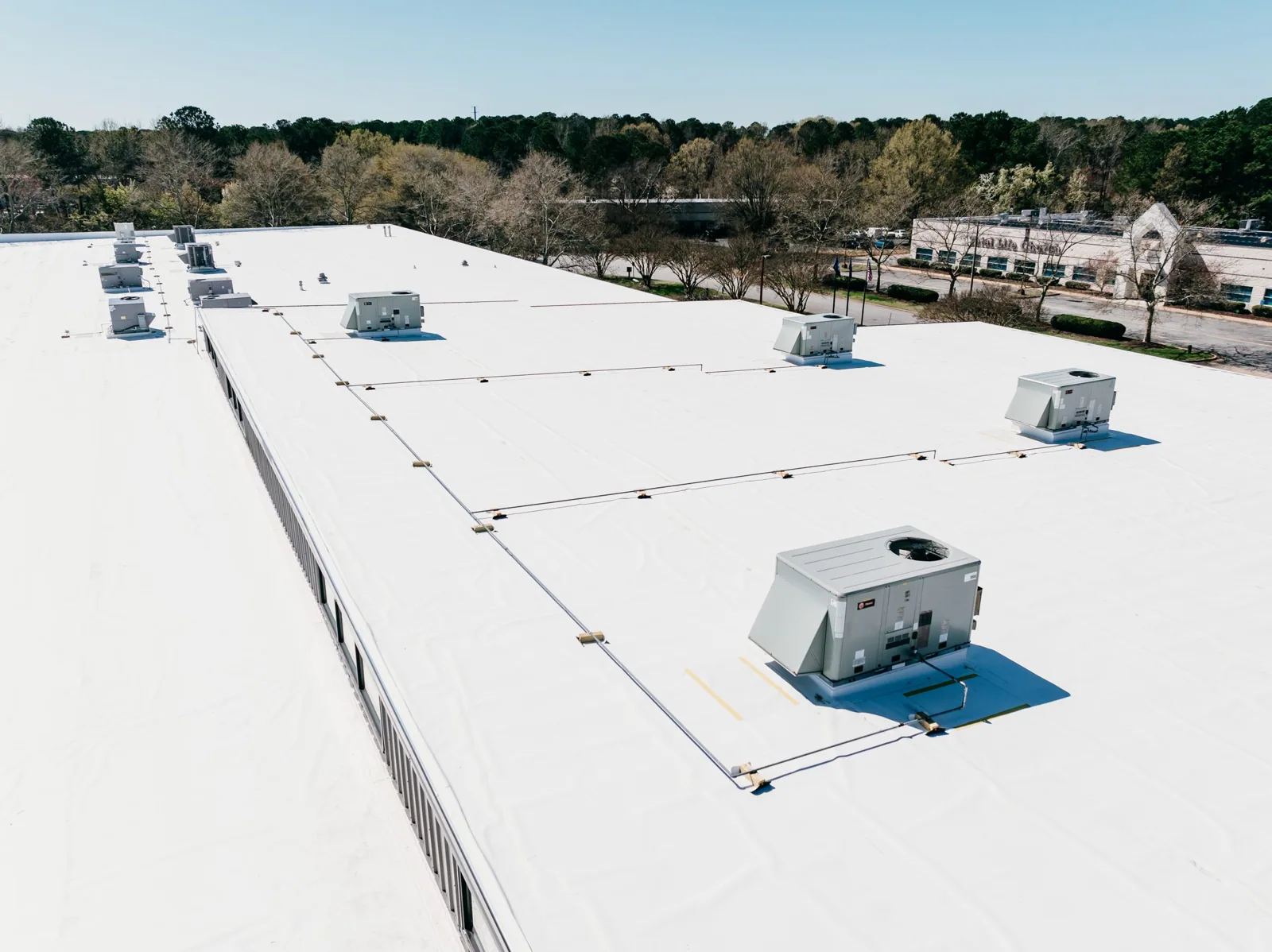
A wide span collects snow across a large area and then has to shed it through a small number of drains. Drifts form behind rooftop units and along parapet walls, and the weight of a drift can be several times that of the snow in the open field. We check whether the structure has shown any sign of deflection, whether the drains and sumps are open and whether the membrane has stretched or split at the places where the load concentrated.
A New Bedford winter brings about 32.5 inches of snow, mostly December through March, and the 2015 blizzard that dropped 26.0 inches in East Freetown is the kind of event that tests a roof once and shows its weak points for years afterward. After a heavy winter, we look for ponding in the low areas, cracked seams where walls meet the roof and displaced flashing at the curb. A snow and ice roof damage repair starts with the openings and then moves to the cause.
What does the seam probe find on a large membrane?
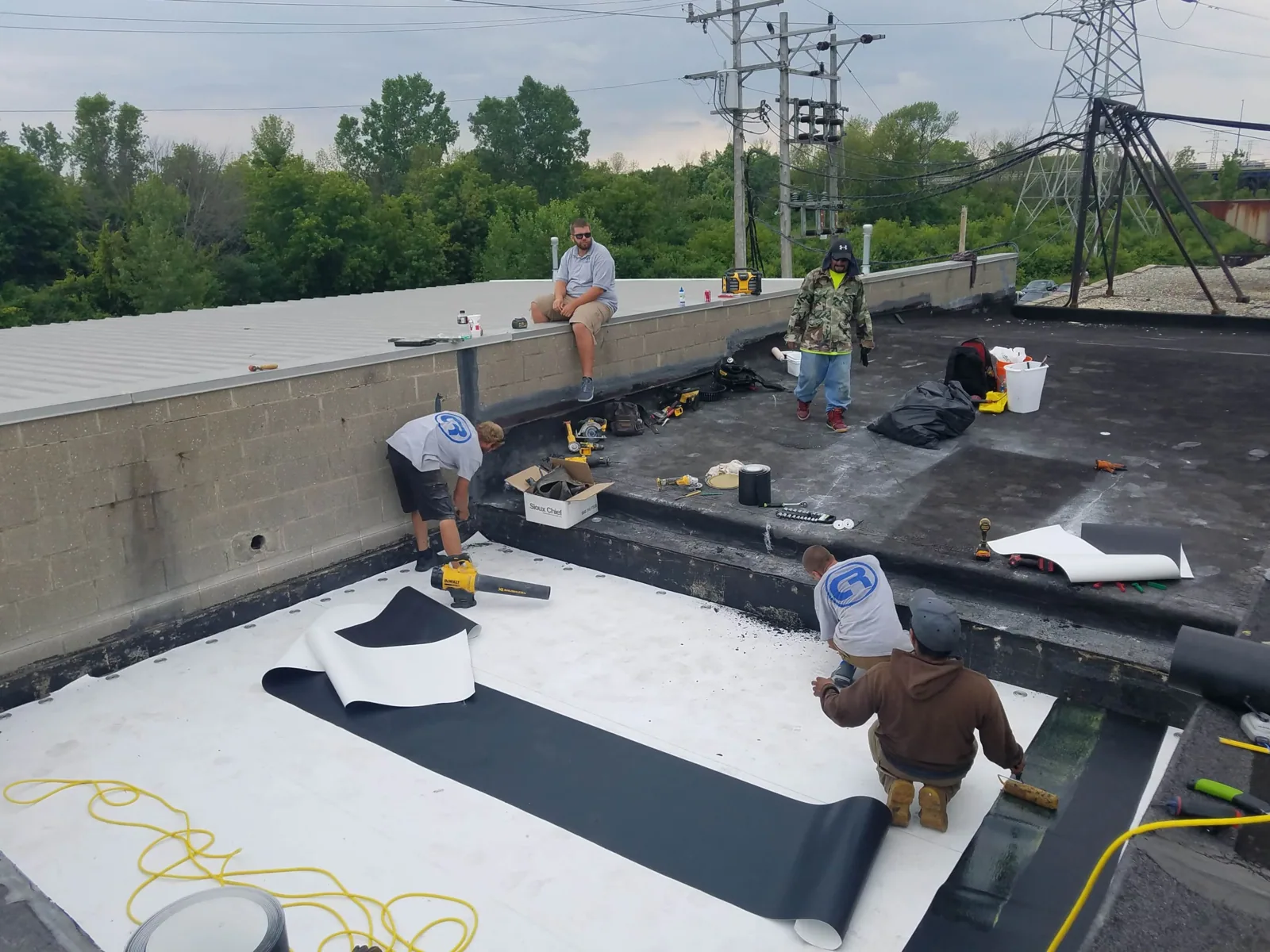
A wide membrane has long runs of seam, and seams are where a roof ages first. We press along the laps with a probe, looking for open edges, fishmouths, lifted corners and sealant that has dried and shrunk. Each lap that fails is marked on the roof plan, and a pattern of failures along one wall points to movement or ponding, not bad luck.
Fastener back-out is the other quiet finding. On mechanically attached systems, a fastener that has worked up under the membrane makes a ridge and eventually a puncture. We note the spacing, check the plates and look for loose or missing fasteners near the perimeter, where wind uplift is highest. A seam failure repair is quick when the failure is isolated, and the inspection decides whether it is.
How do drains and crickets handle meltwater?
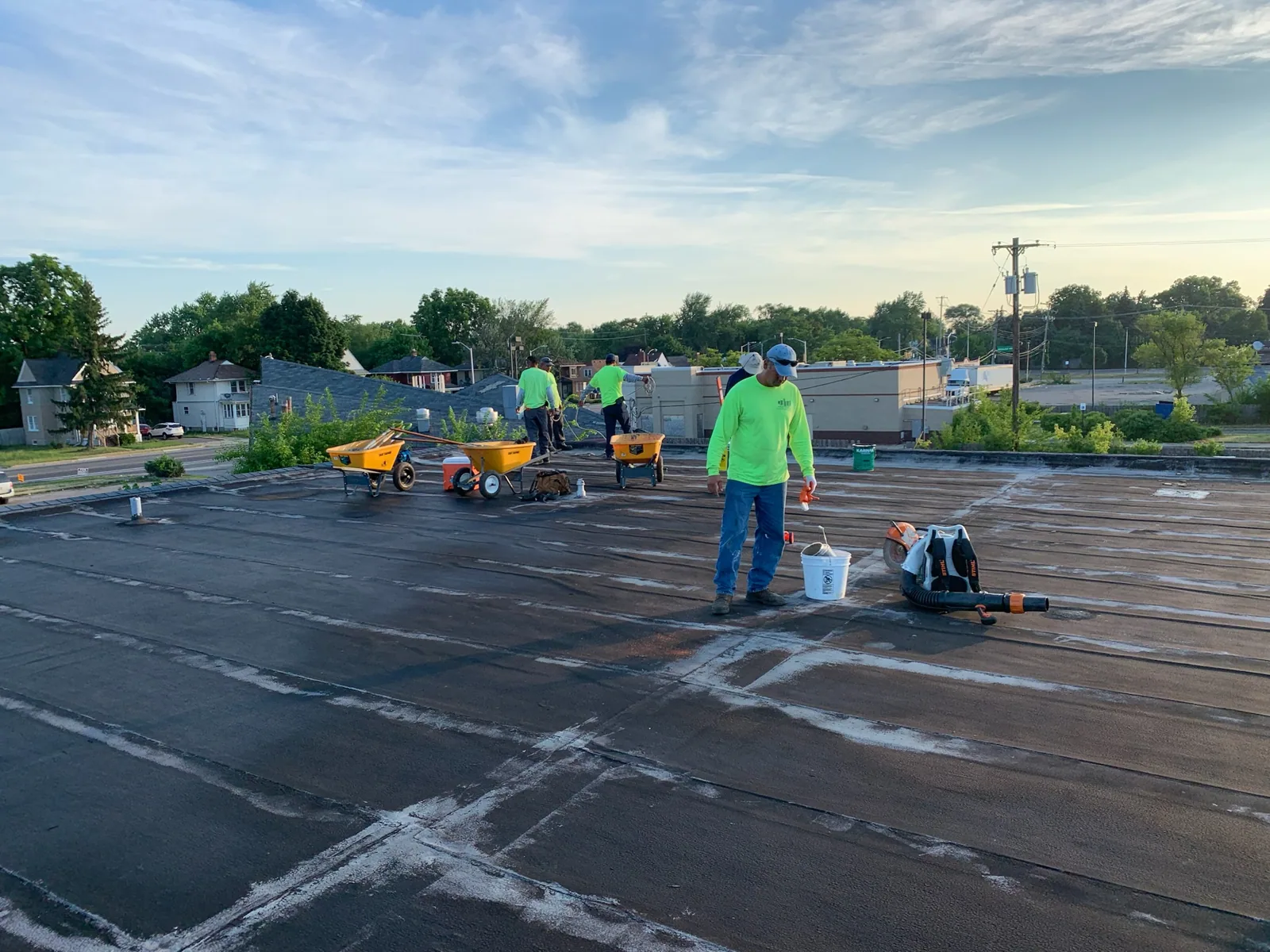
On a wide low-slope roof, a few drains carry the whole load, and each drain is only as good as the slope that leads to it. We clear the strainers, flush the lines where it is safe and look at the membrane near each sump for ponding stains. A drain that is set high or surrounded by debris will leave a pool that never drains fully.
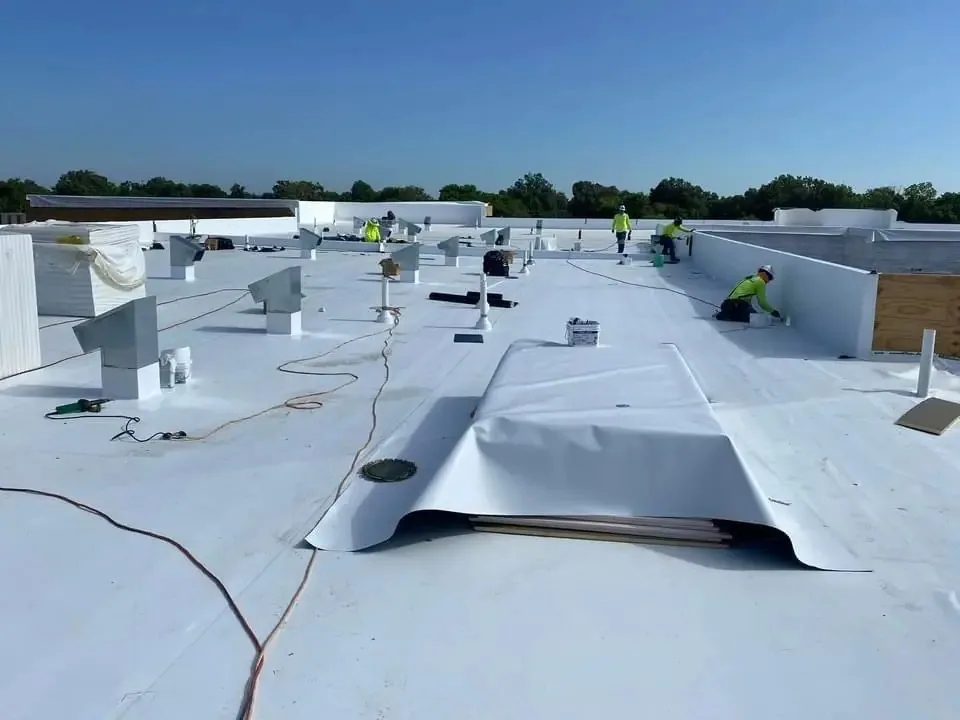
Tapered crickets send water around rooftop units and into the drain route, and a cricket that has settled or been omitted leaves a basin behind the unit. The drain and scupper work comes first, clearing and repairing each outlet, and where slope is missing across a wide area, tapered insulation added in a recover or replacement can carry the water to the outlet. We show the owner both the repair and the redesign, with what each leaves in place, and we price them as separate lines so the choice is clear.
How do Route 24 and Route 140 affect a roofing job?
Route 24, the Fall River Expressway, has three exits serving Assonet, and Route 140 has one exit serving East Freetown. Those exits give a crew and a material truck a way into town, but the last stretch to a building can be a local road or a long driveway, so we confirm the delivery route and the staging area before the truck leaves. Freetown covers 38.3 square miles and shares the Freetown-Fall River State Forest with Fall River, so a site may sit away from a main road.
On an operating distribution building, dock traffic and shift changes set the work window. We ask which areas of the roof sit above racked stock or cold space, schedule the open work for dry days and close each section at the end of the shift. The facility director approves the sequence, and the roof plan shows where each stage begins and ends.
Because Freetown shares a state forest with Fall River and covers 38.3 square miles, a delivery to a building off the main routes may involve a long drive on local roads, so we confirm turning space for a trailer and the gate or driveway width before a load is booked.
When is a repair the wrong answer?
Repair is the wrong answer once the insulation is wet over a broad area, the seams fail across the field, or the membrane has shrunk back from its edges. Patching a roof in that condition buys a season and costs more in the long run. A moisture scan shows which condition the roof is in, and a core cut, if the owner approves one, confirms the layers.
The alternatives are a roof recover overlay over dry, firm layers or a full replacement where the old layers have to come off. Freetown permits a larger project under 780 CMR 10th Edition, the state code drawn from the 2021 IBC and in effect since October 11, 2024. A site in Fall River Industrial Park or a neighboring town goes into the same ranking for the capital budget. A site near the Fall River line may share a highway exit with a Freetown site and still have a very different roof, so each one is read on its own evidence.
Timing matters as much as scope. Roofing in this climate is best done between the thaw and the first hard freeze, because adhesives and sealants need dry surfaces and moderate temperatures to cure. A project that starts in October can be caught by weather, so we ask early about the budget cycle and work back from it. If a roof cannot wait, we describe the interim steps that will keep it dry through winter, and the permanent work is scheduled for the first workable weeks of spring.
Commercial Roofing Questions
Can a roof carry a heavy snow load without any visible sign of strain?
Often it can, but the membrane and drains may show the effect later as ponding, split seams or displaced flashing. We inspect after a heavy winter and record any deflection or stretching we find.
What does a distribution building need most from a roof inspection?
A seam probe, a drain check and a moisture scan of the areas above racked stock. Those three findings usually decide whether the roof can wait or needs work now.
Why do leaks return after a patch on a wide roof?
Because the cause was upstream of the patch, such as ponding, a loose edge or wet insulation. We trace the cause before choosing the repair.
How do you protect stock during roof work?
We work in small sections, close each one daily and ask the facility director which interior areas need cover. Wet-weather forecasts decide whether a section stays open overnight.
Is a recover cheaper than a replacement?
Usually, when the existing layers are dry and firm. It saves tear-off and disposal, but it adds weight and height. The moisture scan decides whether it is an option.