Commercial Roofing Services
Commercial Roof Leak Repair in New Bedford, MA
Tracing and stopping active leaks on commercial roofs in New Bedford, MA, from the first moisture reading to a documented repair at the true entry point.
Request a Roof Assessment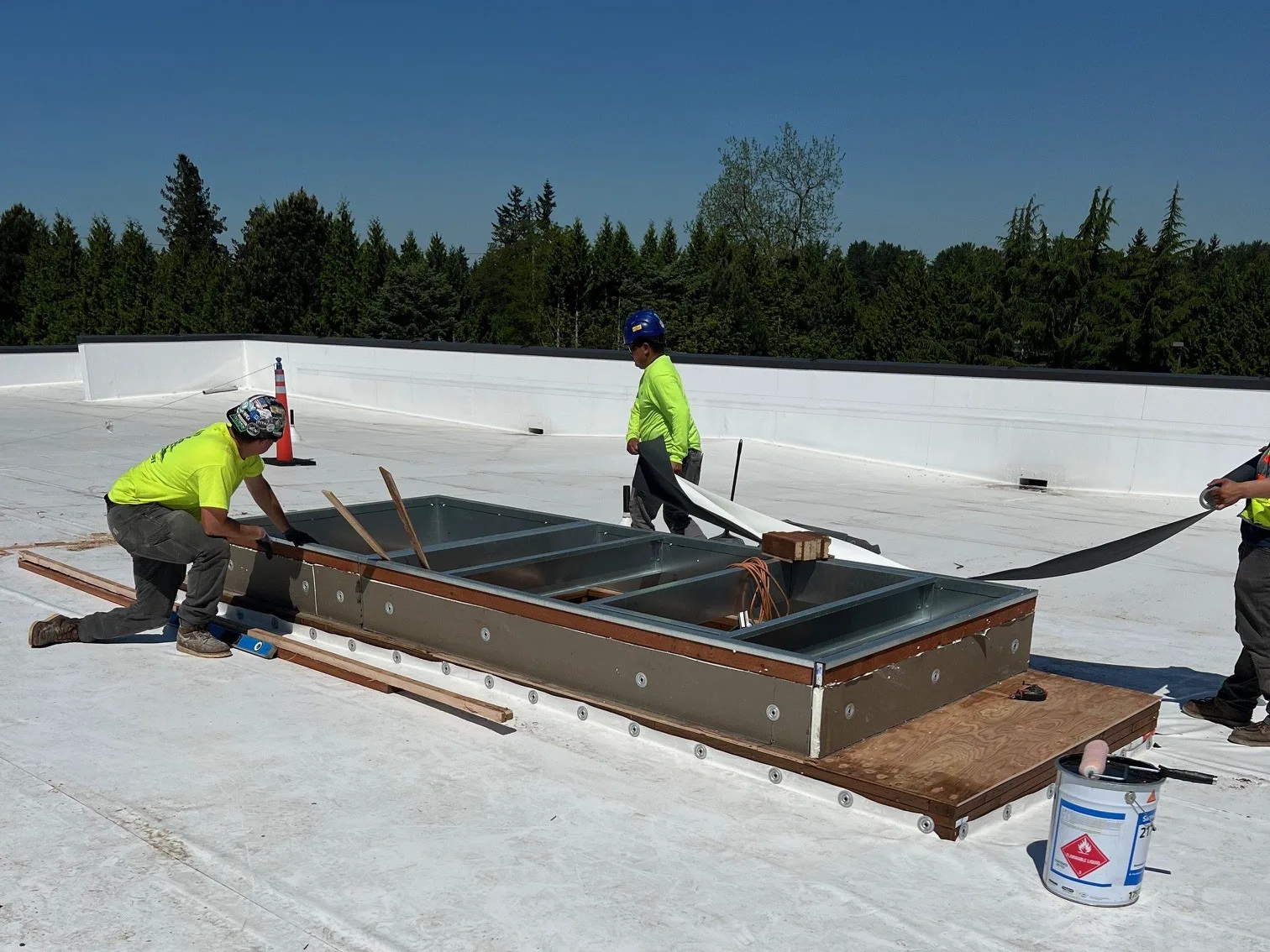
Who pays when the ceiling drips over a tenant's inventory? Before that question gets argued, the roof needs an answer about where the water actually enters, and an answer based on a guess is worth less than the cost of the ladder. Leak work in New Bedford, MA starts with the interior evidence, moves to the roof with a plan and a probe, and follows the water uphill until the entry point is confirmed.
A leak repair is only finished when the cause has been found, repaired and tested. Anything less is a temporary dry-out, and we will tell you which one you are buying before the first material goes on the roof.
How do we trace a leak that wanders?
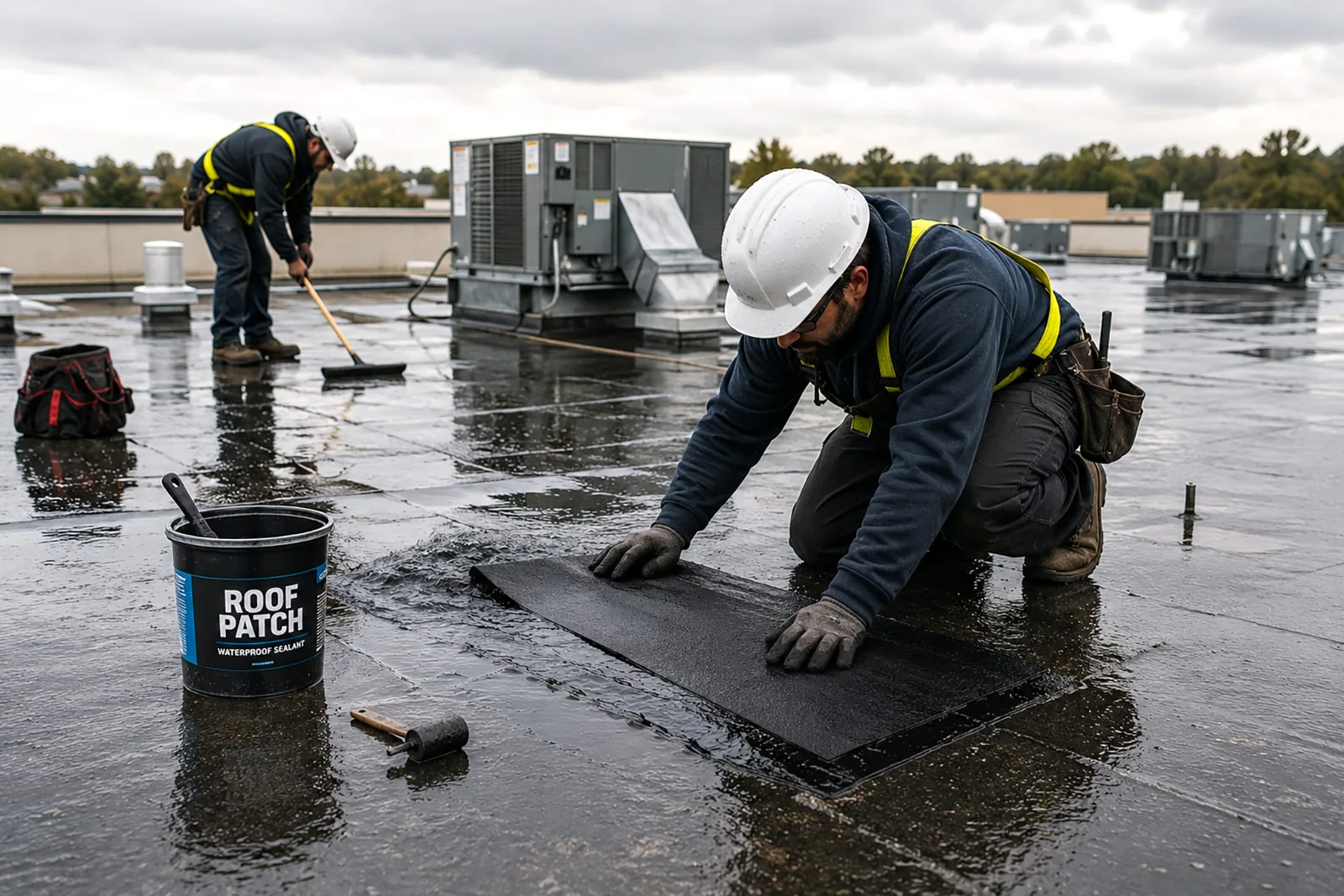
Water on a low-slope roof travels along the deck, down a fastener, through insulation joints and across a ceiling grid before it drips, so the drip point can sit many feet from the entry. We map every interior stain and measurement, then walk the roof in the area uphill from it. We probe seams, examine flashing at walls and penetrations, press on blisters and look for punctures from foot traffic and fallen debris.
When the surface evidence is unclear, we bring in infrared imaging or a capacitance scan to find the wet insulation that connects the entry point to the drip. If a test is needed, we isolate sections with controlled water, working from the low end of the roof upward, so the one test that produces a drip points to the actual entry.
Why do the same leaks return after a patch?
A patch placed over the drip location rather than the entry point holds only until the next heavy rain. Even a patch at the right place fails if it is laid over dirty, damp or aged material, because the bond never forms. We clean, dry and prepare the substrate, remove failed sealant, and use compatible materials so the repair behaves like the roof around it. We also check the lap or flashing edge of every patch, because a feathered edge that lifts will let water under the repair within a season.
The other cause of repeat leaks is saturated insulation. Once water is in the board, it travels along joints and returns through a different opening every time it rains. When our moisture scan shows a wide wet zone, we say so and discuss replacing the wet material before the next repair is paid for.
What do coastal storms do to roof details?
Wind-driven rain finds weak points that a quiet rain never touches. Hurricane Bob in 1991 pushed a 10 to 15 foot surge up Buzzards Bay and cut power to most residents of southeast Massachusetts and Rhode Island, and any roof that has been through weather like that deserves a close look at its details. Westport recorded about 70 mph winds during Hurricane Sandy in October 2012, and storms of that kind push water sideways into counterflashing, open laps and loose edge metal.
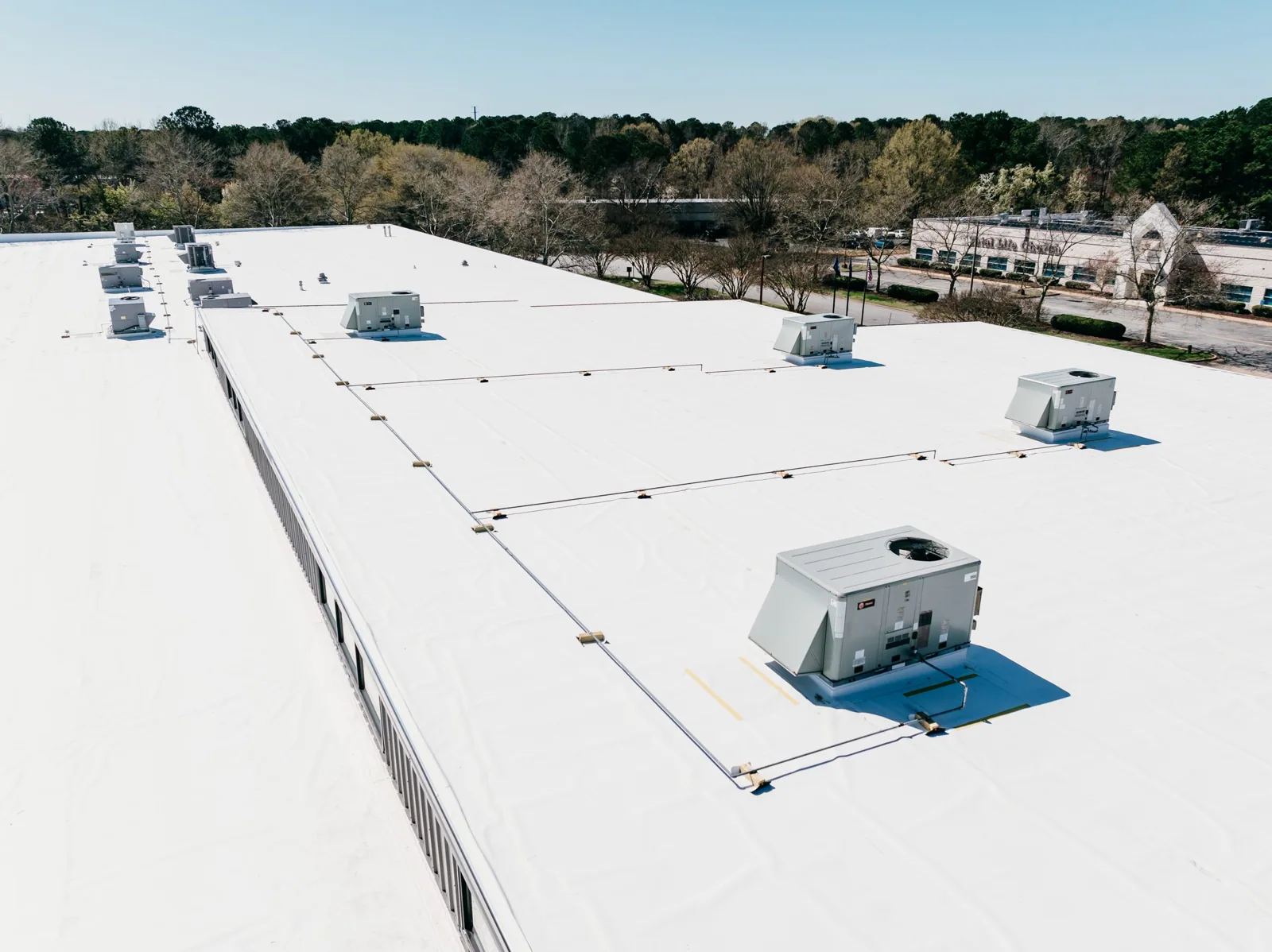
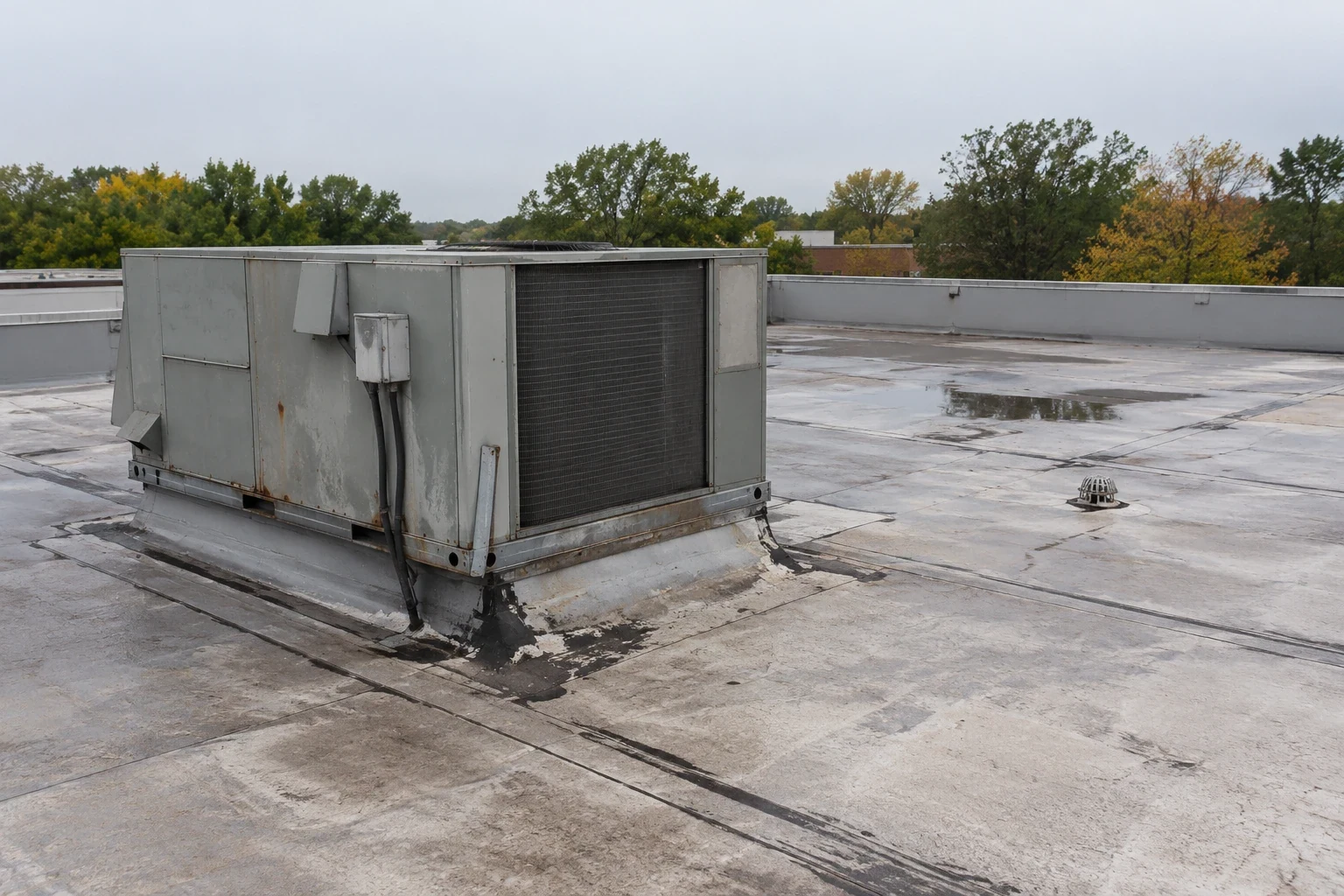
After a storm we focus on perimeter flashing, pitch pockets, rooftop unit curbs and any penetration that moved. Many leaks that appear after a hard blow trace back to a detail that was already marginal, and the storm only exposed it.
Why do leaks show up in winter and spring?
Snow cover hides problems, and thaws reveal them. New Bedford averages about 32.5 inches of snow, mostly from December through March, so a roof can sit under cover for weeks while meltwater works under a damaged seam. Ice at drains and scuppers forces water to back up behind it, where flashing may not be designed to resist standing water.
When a leak appears during a thaw, we look first at drain clearance and ice dams, then at the seams and terminations below the snow line. Temporary repairs in cold conditions use materials suited to low temperatures, and we plan the permanent repair for the first stable weather.
Where do leaks hide on mills, plants and waterfront buildings?
Older mill buildings, such as the Wamsutta, Hathaway and Kilburn mills in New Bedford, can carry parapets and wall transitions where water enters through failed counterflashing, open mortar joints and old penetrations. Industrial buildings at the New Bedford Business Park, which was described in 2013 as home to 44 companies, and in Fairhaven near the harbor, are places where we check rooftop equipment curbs and vent boots, which wear out over time on any roof.
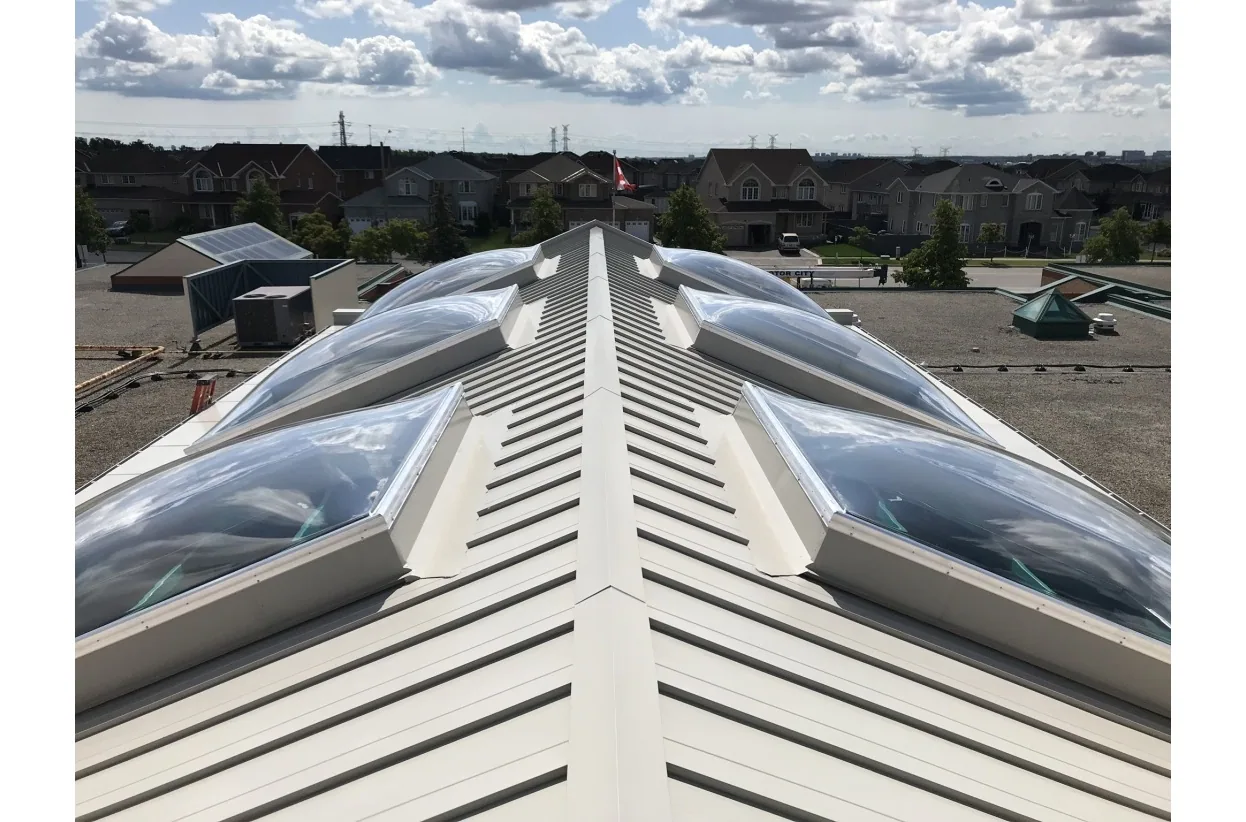
We check skylight and penetration flashing on every leak call, since small openings produce a surprising share of the interior damage.
What do you receive when the leak is stopped?
You receive a written summary that names the entry point, shows photographs of the failed detail before and after repair, and lists any related conditions we found nearby. If the leak caused interior damage, those photographs also help with insurance conversations, and our claim documentation support organizes the roof findings so an adjuster can read them quickly.
We also record the moisture readings around the repair so that a follow-up scan after a few months can confirm that the area is staying dry. A leak that is traced, repaired and verified leaves a record that makes the next budget decision simpler.
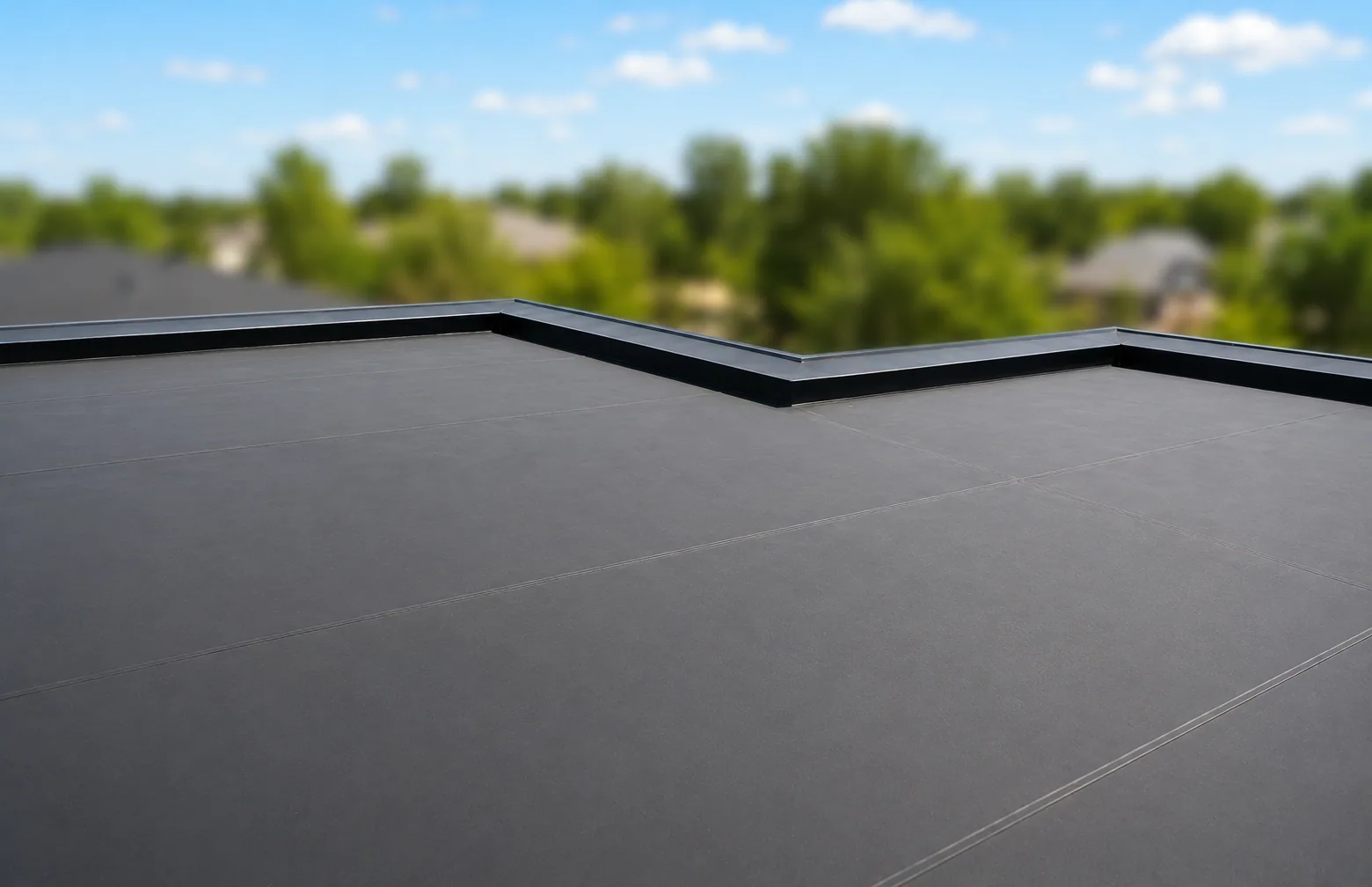
Sometimes the trace points to the membrane itself. On an aging EPDM roof, for example, shrinkage can pull the sheet away from curbs and walls, and a seam that looks tight in the field can open where two sheets meet a flashing. In those cases we repair the immediate leak and explain how much service life the membrane has left, so the repair spending matches the roof's future.
We keep leak calls separate from sales. If the roof has years left, we tell you that and fix the leak. If the findings show a larger problem, we describe it with evidence and give you time to plan, so the decision is yours and it rests on measurements instead of pressure.
What should be done before we arrive?
Protect inventory and equipment, collect photographs of the interior damage with dates, and note when the leak appears and during which weather. Those observations narrow the search quickly. If the leak is active and severe, our emergency roof repair response can dry in the building first and trace the cause afterward.
Commercial Roofing Questions
How long does it take to find the entry point?
A simple leak at a visible defect can be found during the first visit. Leaks that travel through insulation may need a moisture scan and controlled water testing, which takes longer but prevents a second visit for the same problem.
Can you stop a leak while it is raining?
We can control it. Temporary measures such as tarps, sealant and membrane patches reduce the damage during rain, and we complete the permanent repair when the roof is dry and the temperature allows proper bonding.
What if the leak comes from a neighboring wall or window?
We check the roof first and, if the evidence points to the wall or glazing, we tell you and document it. Sending you to the right trade is better than patching a roof that was never the source.
Is a leak a sign the whole roof has failed?
Not by itself. One leak at a single flashing on an otherwise dry roof is a repair item. Several leaks across the field, together with wet insulation readings, points toward a larger decision about replacement.
Will you test the repair?
Where access allows, we run a controlled water test over the repaired area and watch the interior for a drip. A repair that has been tested is a repair we can describe in the closeout summary with confidence.