Commercial Roofing Services
Commercial Skylight and Penetration Flashing in New Bedford, MA
Repair commercial skylight curbs and roof penetrations in New Bedford, MA with flashing inspections, compatible materials and documented transitions.
Request a Roof Assessment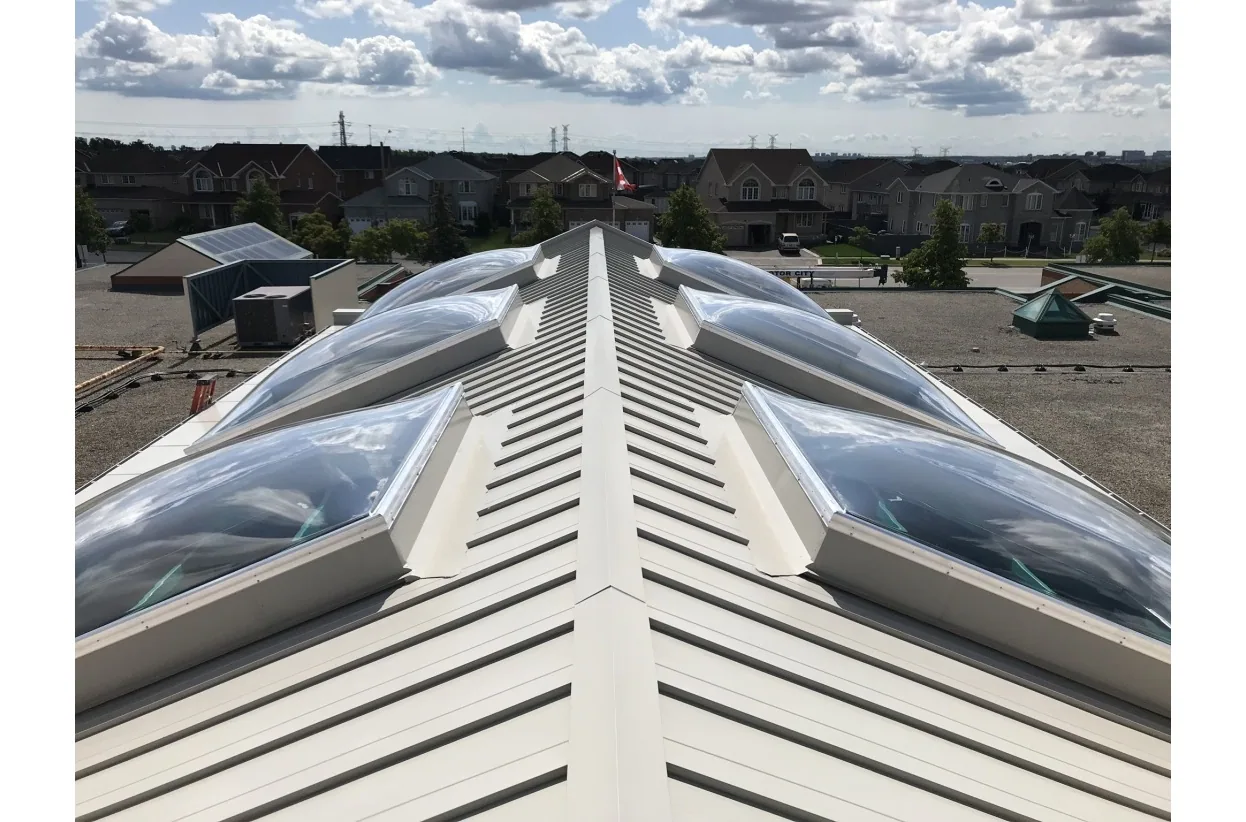
Which opening is letting water in? Begin at the curb or pipe boot, then inspect the flashing where it meets the membrane. In New Bedford, MA, we check skylights, vents, conduit and rooftop equipment for cracked sealant, loose counterflashing, open seams and movement at the wall-to-roof transition before choosing a repair.
A skylight can leak at its frame, curb or adjacent roofing, and those failures need different work. We inspect the inside and roof surface, photograph the transition, and note whether the opening is part of the original assembly or a later installation. That record helps the facility director direct the repair to the failed detail instead of coating or patching a broad area.
What do we inspect around a skylight curb?
We look for cracked glazing, loose frame fasteners, failed gaskets and a curb that has shifted or softened. At the roof, we inspect the curb height, base flashing, corner patches and the membrane laps around each side. If water collects against the uphill edge, a small cricket may be needed to direct it around the curb rather than leaving a low pocket.
Older mill buildings in New Bedford, including Wamsutta, Hathaway and Kilburn, can have many roof additions and changes over time. We compare the visible curb and roof layers, then mark which details need repair and which areas remain sound. A commercial roof inspection can also record nearby drains and other penetrations in the same roof section.
How do pipe and equipment penetrations fail?
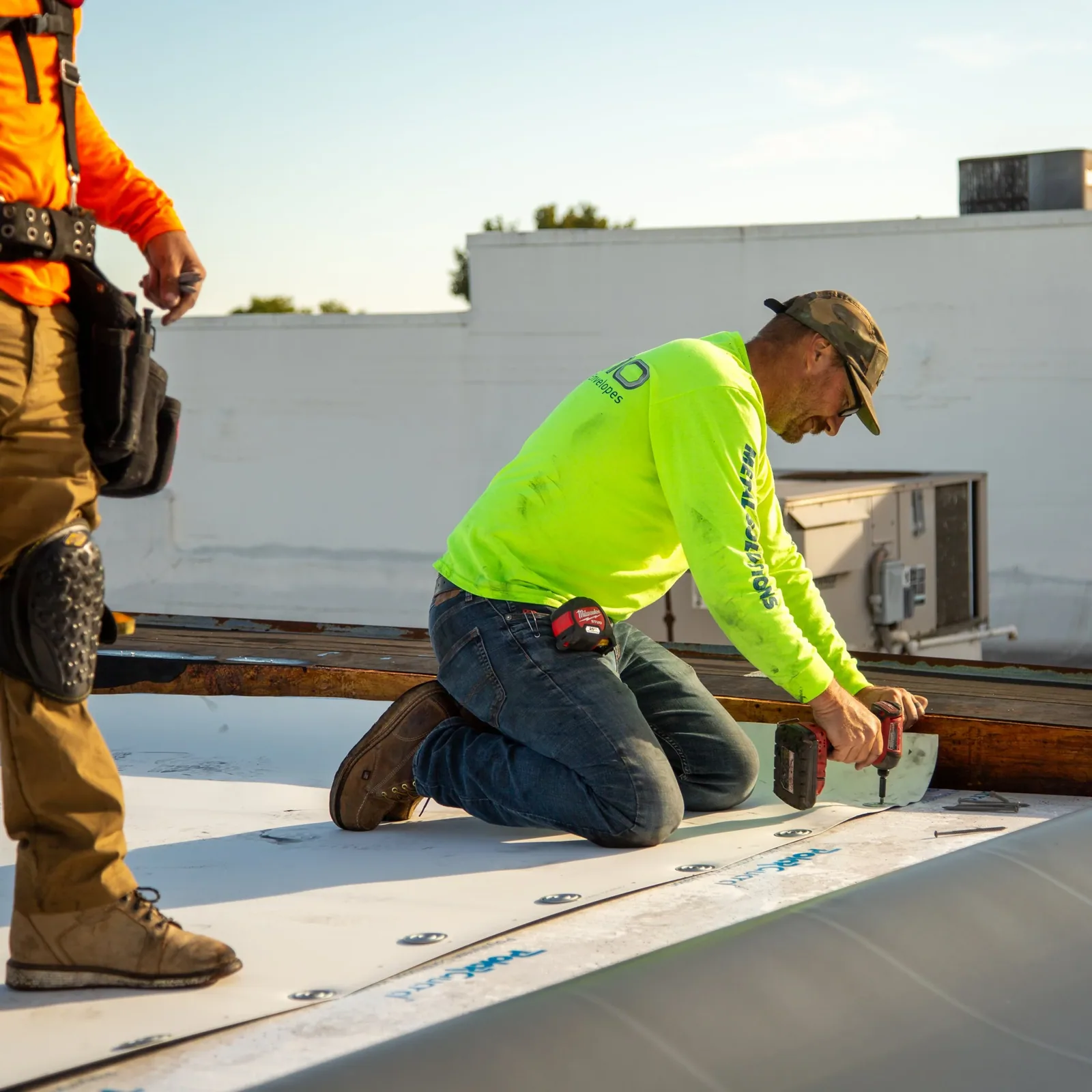
A pipe boot can split as the pipe moves or as the sealant hardens. Equipment curbs may have open corners, loose counterflashing or fasteners that have backed out. We probe the membrane seam and check whether the flashing is bonded to a clean, compatible surface. If the curb itself moves, a bead of sealant cannot restore the attachment or keep the assembly stable.
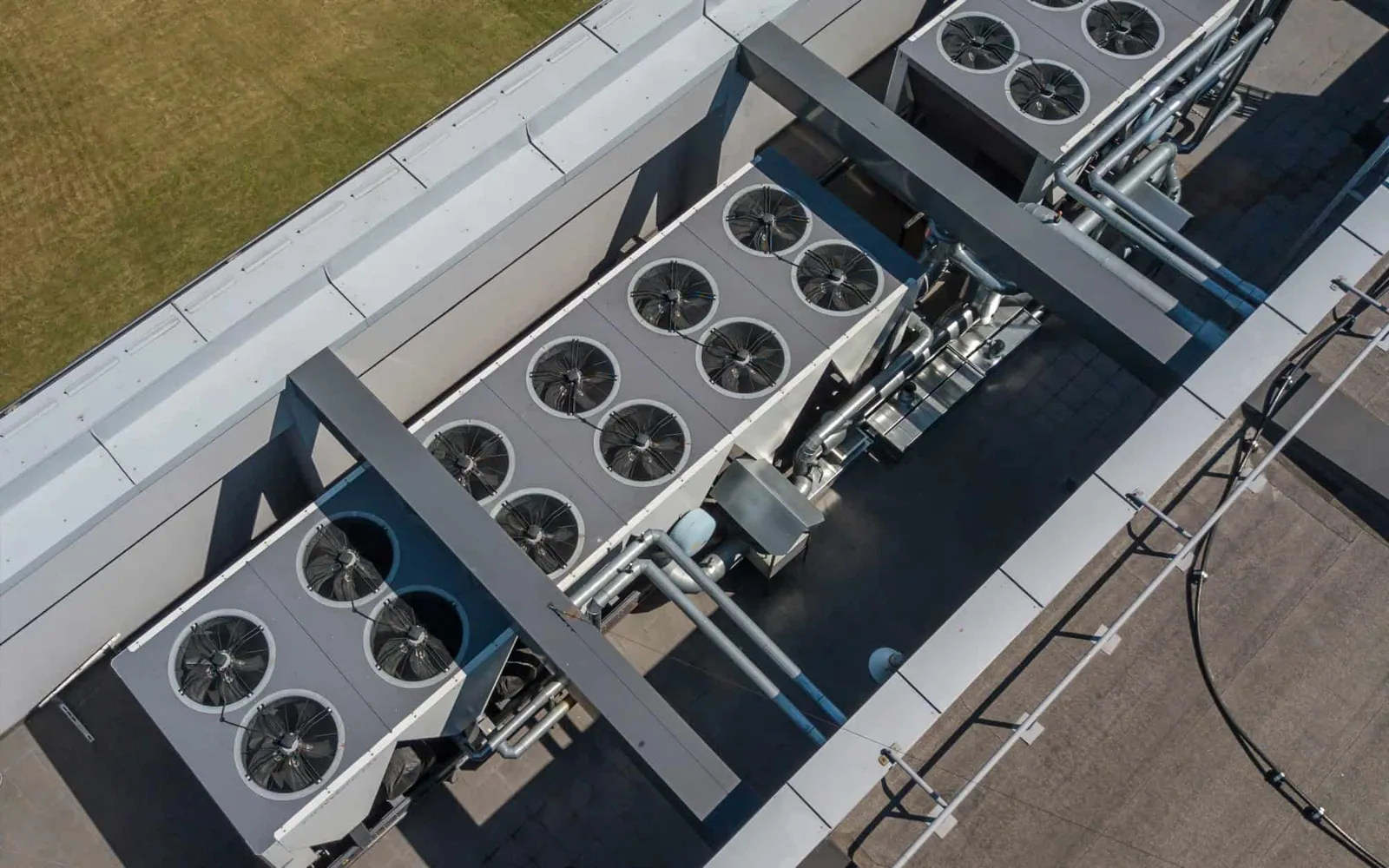
On a roof with several mechanical units, we label each curb and note the service route around it. That matters when maintenance contractors work above the membrane. A curb and support review can identify loose rails or unsupported transitions that need coordinated repair. We record the location so a later crew can find the same penetration without stepping across unrelated roof areas.
Why do roof transitions deserve a coastal check?
During Bob in 1991, a Buzzards Bay station measured an 89-mph gust and a 77-mph sustained wind; New Bedford and Woods Hole saw a 5.8-foot surge. Wind-driven rain can test flashing at a curb or frame. We inspect fasteners, laps and perimeter details for current evidence and document any change from prior photographs.
Buildings near the New Bedford Waterfront have their own roof exposure and operating needs. We inspect the actual opening, including its uphill edge and the membrane termination around it. A skylight may remain serviceable even when adjacent flashing needs replacement; we separate those conditions so the repair scope does not call for an unnecessary unit change.
Which materials belong in the repair?
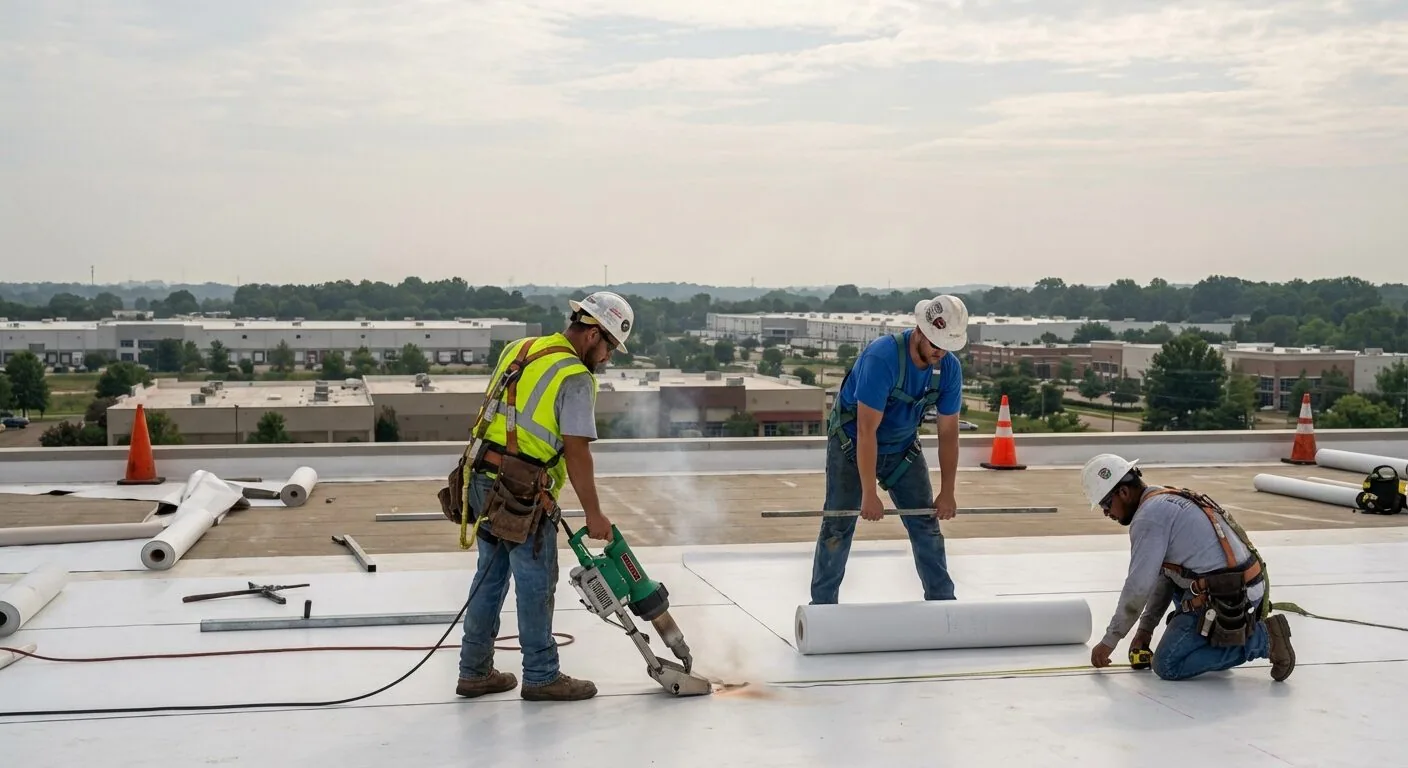
We identify the existing roof system before selecting flashing materials. A single-ply membrane needs compatible membrane and detail work; a built-up roof may require a different stripping ply and surfacing. We remove failed material to sound substrate, prepare the curb or pipe, and reinforce corners where the assembly requires it. The repair should follow the roof system, not simply the shape of the opening.
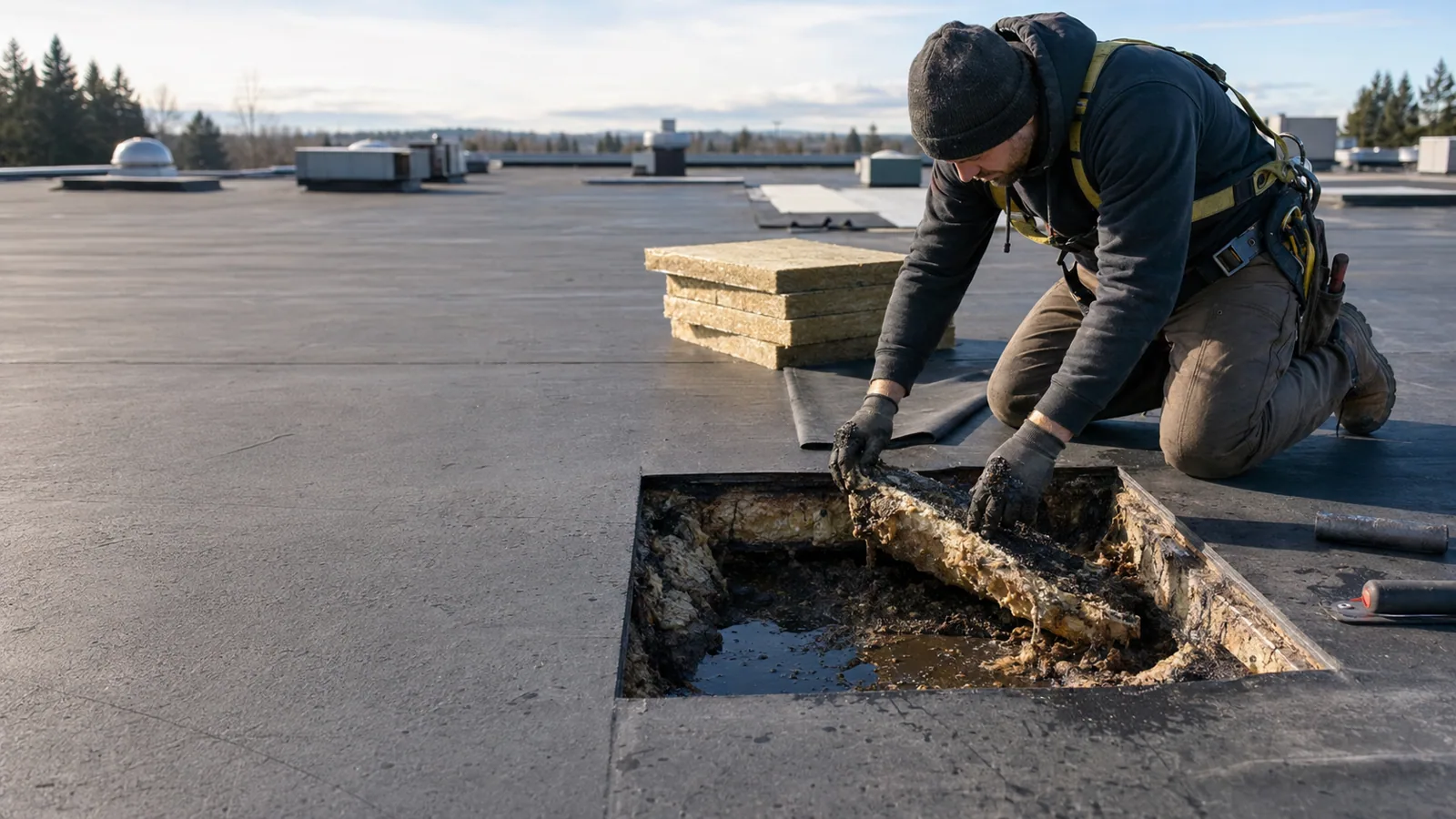
If the opening has repeated leaks, we check for concealed moisture around the curb and consider a moisture survey or selective core cut. When the wet area reaches insulation beyond the detail, we show that separately. The repair scope can address the penetration and any related membrane work without treating a single failed boot as evidence that the whole roof has failed.
When the defect is not visible, controlled testing can isolate the curb or penetration from adjacent roof areas. We work in small sections and watch the interior where access allows, then stop once the source is identified. The test result guides the repair; it is not a substitute for examining the fasteners, membrane bond and condition of the curb underneath the surface.
Glazing replacement and flashing replacement are often scheduled together even when only one has failed, because lifting a skylight to reach the curb exposes the frame, and a unit that has been removed once should not be disturbed again next year. We price the two as separate lines so an owner can see what each protects and decide whether to combine them.
How is access handled around active equipment?
We confirm equipment service routes, electrical clearances, roof access and building operations with the facility contact. If a unit must be shut down or a service technician needs to be present, that coordination happens before the flashing is opened. We protect nearby equipment and keep removed materials contained. For occupied buildings, we also agree how the crew will move between roof sections without crossing restricted work areas.
At the New Bedford Business Park, as at other occupied commercial properties, access depends on the particular facility and roof layout. The park had 44 companies and about 4,500 jobs in 2013. We plan from the roof plan and site contact, then record which openings were repaired and what should be checked at the next maintenance visit. Where multiple tenants share a roof, we identify the responsible contact for access and the time needed to protect equipment below. If the repair requires cutting away wet insulation, we explain how the opening will be closed before the day’s work ends. That sequence keeps the building protected while the flashing is rebuilt and gives the facility manager a clear update before the crew leaves.
What should the flashing record include?
We document the opening, curb or boot, roof assembly, materials used and photographs before and after the work. The note should identify any moisture found and whether adjacent membrane seams were repaired. If the skylight frame remains in place, we record its condition separately from the new flashing so an owner can track both without confusing one with the other.
A follow-up visit can check the corners and sealant after weather has worked on the repair. A roof condition report can preserve the opening locations and inspection photographs. Our maintenance program can revisit those locations along with drains, edge metal and other penetrations. For a building with multiple roof sections, we keep the locations distinct so the next repair starts with an accurate roof plan rather than a general note that one skylight once leaked.
Commercial Roofing Questions
Can a skylight stay in place while its flashing is repaired?
Often, if the frame and glazing are sound and the curb is stable. We inspect the assembly first, then separate frame work from flashing work so the scope addresses the actual failure.
Why does a pipe boot leak again after sealant?
Movement, a split boot or a wet, incompatible surface can defeat surface sealant. We inspect the boot, pipe movement and membrane bond, then replace or reinforce the detail as the roof system requires.
Will a moisture scan show the leak source?
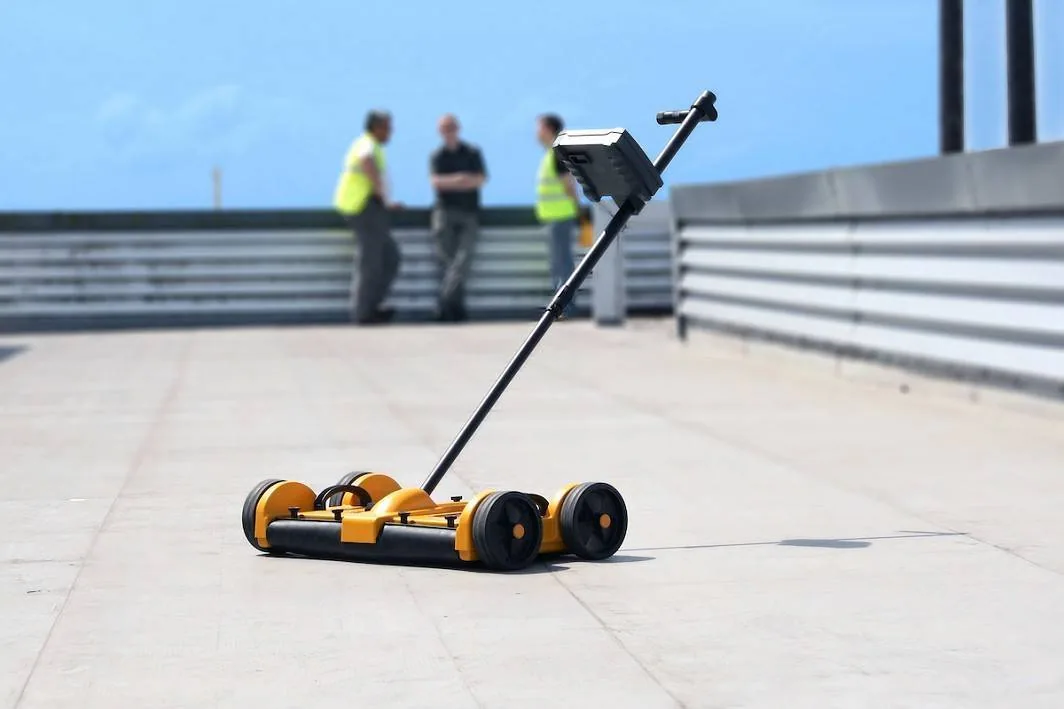
It can help locate wet insulation, but it does not identify every flashing defect by itself. We combine readings with the interior stain, curb condition and seam inspection to choose the next test.
Can the repair be made while equipment is running?
It depends on access and the work area. We coordinate around service requirements and protect the unit, and we arrange a shutdown only when the repair needs one.
What if several curbs are leaking?
We inspect and label them separately. Similar symptoms can have different causes, so each curb needs its own condition note and repair decision.
Ready to review the roof scope?
Request a Roof AssessmentKeep Reading