Commercial Roofing Services
Commercial Roof Maintenance in New Bedford, MA
Planned commercial roof maintenance in New Bedford, MA, with drain, seam and flashing checks that help owners prioritize repairs before they spread.
Request a Roof Assessment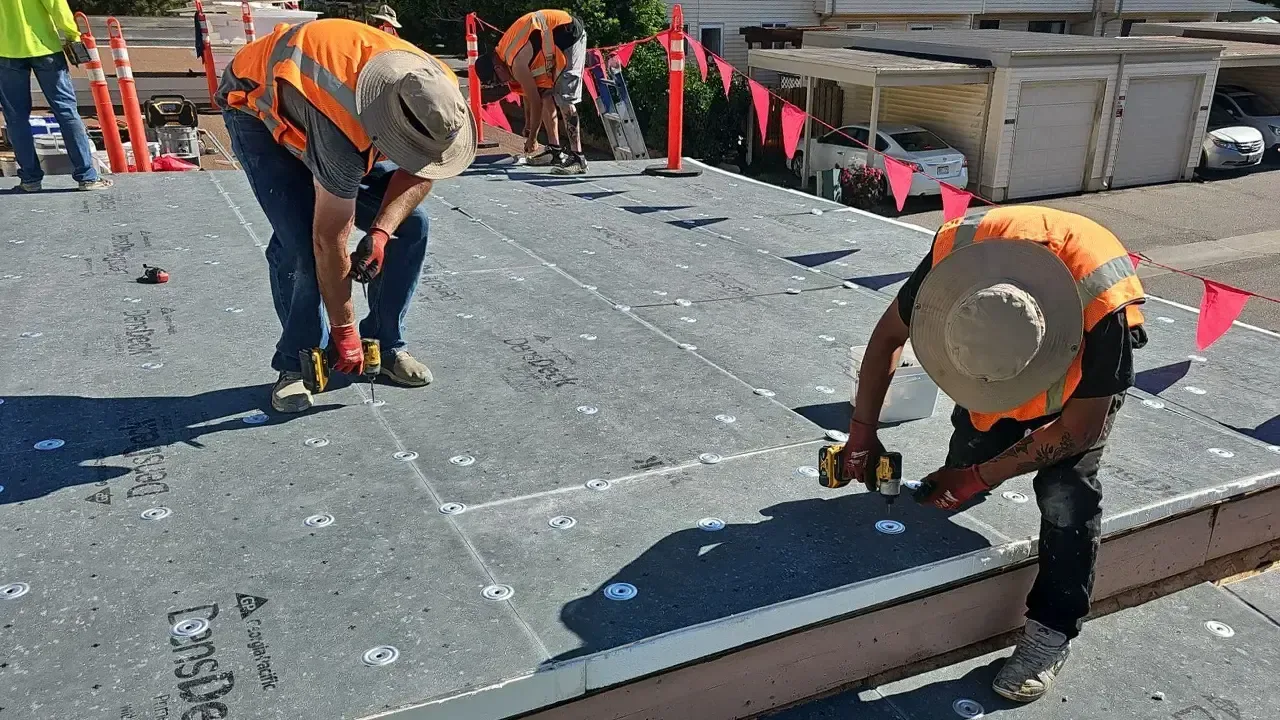
What is the first thing to check before a New Bedford winter settles in? Start where water should leave the roof: at the drain sump, scupper and downspout, then follow the low spots back toward the field. We build maintenance visits around visible roof conditions, not a calendar entry alone. The work gives a facility director a clear list of repairs, records what changed since the last visit, and helps keep a small defect from becoming a ceiling problem.
Our program pairs hands-on inspection with practical upkeep. We clear roof drains, examine seams and flashing, check edge metal, and photograph conditions that need attention. If the roof is sound, the record says so. If a repair is needed, we mark its location and explain why it belongs ahead of other work.
Where does water remain after rain?
A drain that looks open from the hatch can still be restricted by debris below the grate, while a scupper may be clear at the face and blocked at its outlet. We inspect the drain sump, strainers, overflow paths and discharge points, then note any standing water that remains after a reasonable drying period. The distinction matters because a recurring pond can expose seams and insulation to moisture long after a storm has passed.
New Bedford averages about 52 inches of precipitation over roughly 124 days each year, and snow averages about 32.5 inches, mostly from December through March. That is a steady drainage workload, not a single seasonal event. We compare ponding locations across visits, look for blocked paths or settled insulation, and recommend tapered crickets only when the roof layout and substrate support that correction.
Which seam or flashing needs attention first?
At a membrane seam, a seam probe can reveal an open lap before it admits enough water to stain a ceiling. We check laps, patches and terminations, then inspect the wall-to-roof transition at parapets, curbs and pipes. Where a 19th-century mill building such as Wamsutta, Hathaway or Kilburn has parapets, through-wall flashing and the upper termination deserve a careful look alongside the membrane itself.
We record the specific condition instead of writing “watch” beside an entire roof area. A loose lap sealant line, membrane shrinkage at a curb and a fastener backing out from edge metal are different repairs with different consequences. The maintenance report separates each item, includes a photograph and notes whether the surrounding surface is dry, brittle, displaced or still serviceable.
What changes after wind or surge exposure?
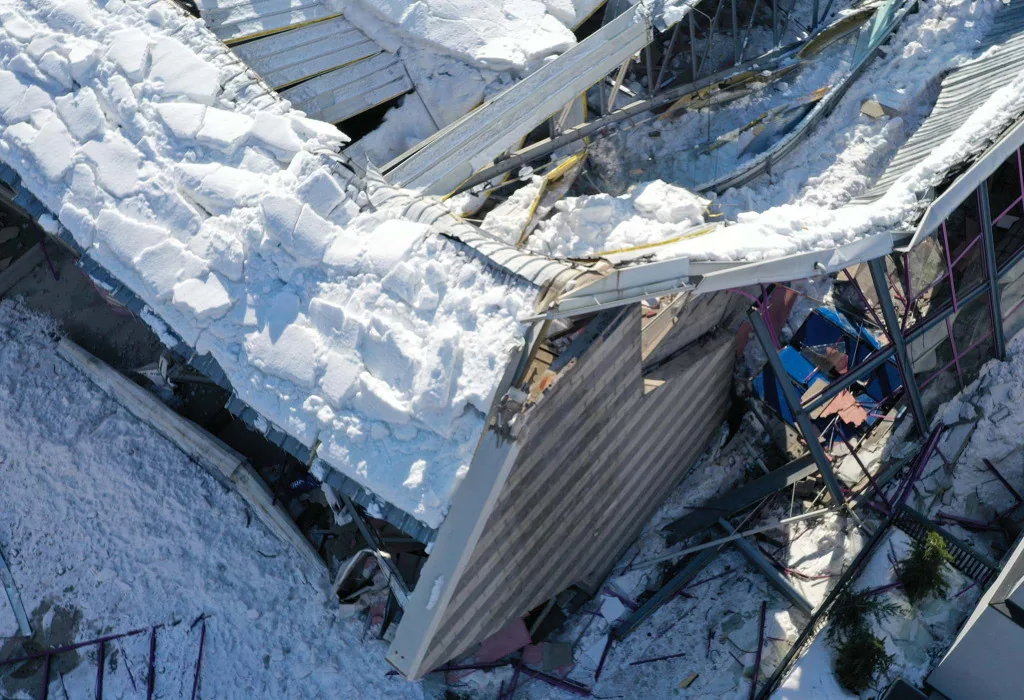
Storm history helps decide where to spend inspection time, but the roof must show the condition. The Buzzards Bay station registered a gust of 89 mph during Hurricane Bob in 1991; the same storm pushed the New Bedford and Woods Hole surge to 5.8 feet. We check perimeter metal, coping joints, rooftop equipment supports and loose ballast after a severe wind event, then record movement or impact rather than assuming every roof was damaged.
The roughly two-mile harbor hurricane barrier protects the inner harbor, yet it does not secure roof edges or penetrations near the New Bedford Waterfront. Waterfront buildings and the New Bedford Business Park can have different exposures and uses, so we tailor the walk to the roof plan and operating schedule. If a storm opens a detail, our storm damage roof repair work can address the immediate condition while the maintenance record keeps the broader roof history intact.
What should the owner keep between visits?
Keep the roof plan, prior photographs, repair invoices and warranty documents together. During each visit we can add dated images and a condition list that identify the same drain, seam or penetration from one inspection to the next. A useful roof condition report distinguishes a completed repair from an item that remains open, so an asset manager does not carry an old concern forward as if nothing changed.
Maintenance also connects field work to the capital calendar. When several areas need attention, we identify which repair protects the building now and which item can be budgeted for a later window. Our capital planning work can use those records to compare repair scope with replacement timing. The recommendation follows measured conditions, not the age of the roof by itself. For owners coordinating property management companies, the maintenance file can travel with the building across a change in staff.
How do visits fit an occupied building?
We confirm access points, rooftop equipment, tenant restrictions and any work that could interrupt operations before scheduling. A clinic, school, production floor and warehouse do not share the same access window. In a hospital setting such as St. Luke’s, with a rooftop helipad, the roof route and work area need to respect active operations. We coordinate the specific visit with the facility contact and keep tools, debris and open repair areas controlled.
At the end of a visit, we review the findings with the person responsible for the building. We explain which item is urgent, what evidence supports that priority, and what needs another test or access arrangement. A commercial roof inspection can establish a baseline when the maintenance history is incomplete; later visits then track changes against a known condition rather than guesswork.
What happens when a finding needs repair?
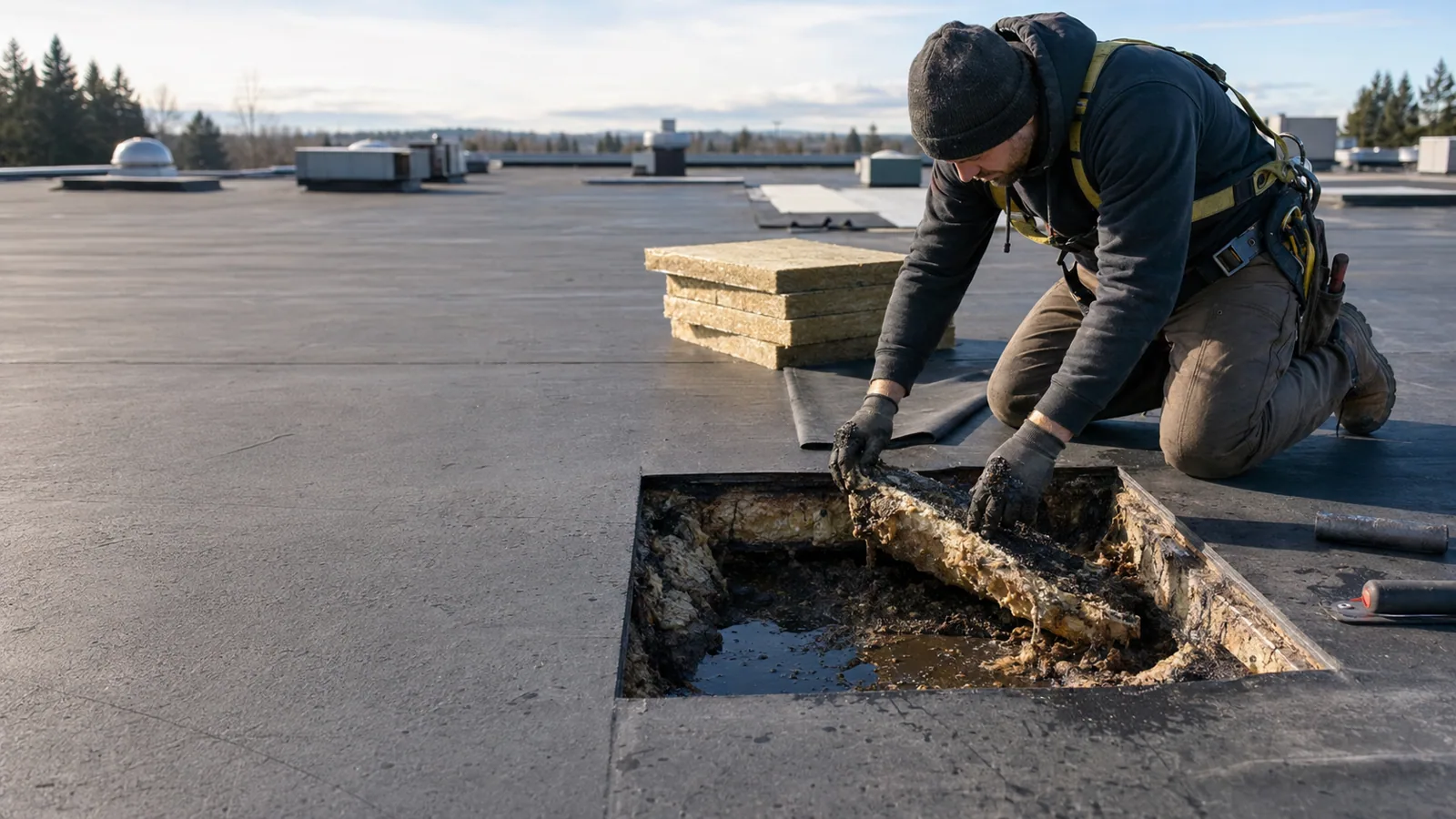
We mark the roof area, describe the failure and give a repair recommendation that matches the existing assembly. A split flashing at a curb may need compatible membrane and reinforcement, while a loose edge condition calls for checking the fastening pattern and substrate before replacement. If the field is dry and the defect is isolated, repair can be the sensible choice. If moisture extends into the insulation, we explain what a core cut or moisture scan would add before expanding the work.
Our commercial roof repair work uses the maintenance record as a starting point, not a substitute for confirming current conditions. For a building with more than one roof section, we keep the locations separate so a repair on one addition does not obscure a different drainage or flashing issue elsewhere. The closeout notes show what was changed and what remains for the next scheduled visit.
Commercial Roofing Questions
Can maintenance start if the roof has no drawings?
Yes. We can map the accessible roof during the first visit, identify drains and major penetrations, and note where a follow-up access or core cut would answer an unresolved question. Existing plans make that record faster, but they are not a condition for beginning.
Should the same areas be inspected after every storm?
A severe event changes the priority. We first check edges, rooftop equipment, flashings and drainage for movement or impact, then compare the findings with the prior photographs. A routine visit still covers the full accessible roof, including places where no leak has been reported.
How do you decide which maintenance item comes first?
An open seam over occupied space or a blocked drain with active ponding takes priority over a cosmetic defect. We explain the consequence, location and repair needed for each finding, then help the owner sequence the remaining work against access and budget windows.
Can maintenance continue while tenants are in the building?
Usually, with access planned around the building’s use. We confirm roof entry, keep materials staged in an agreed area and coordinate any noisy or disruptive task with the facility contact before work begins.
What if a roof needs more than routine upkeep?
We separate the condition that needs immediate repair from the larger decision. If moisture, repeated seam failure or widespread deterioration changes the scope, we document the evidence and discuss repair, restoration or replacement as distinct options.
Ready to review the roof scope?
Request a Roof AssessmentKeep Reading