Roofing Capabilities
Roof Capital Planning in New Bedford, MA
Roof capital planning in New Bedford, MA: replacement timing and budget ranges drawn from inspection findings, core cuts and moisture scans.
Request a Roof Assessment
Should next year's budget carry one replacement or three? A finance committee asks that in January, and the answer begins on the roof in the fall: a seam probe along the laps, a few core cuts where the field looks tired, and a moisture scan that shows how much insulation is already wet. Roof capital planning in New Bedford, MA turns those findings into a schedule of which roofs get repaired, restored or replaced, in what year and for roughly what range of money.
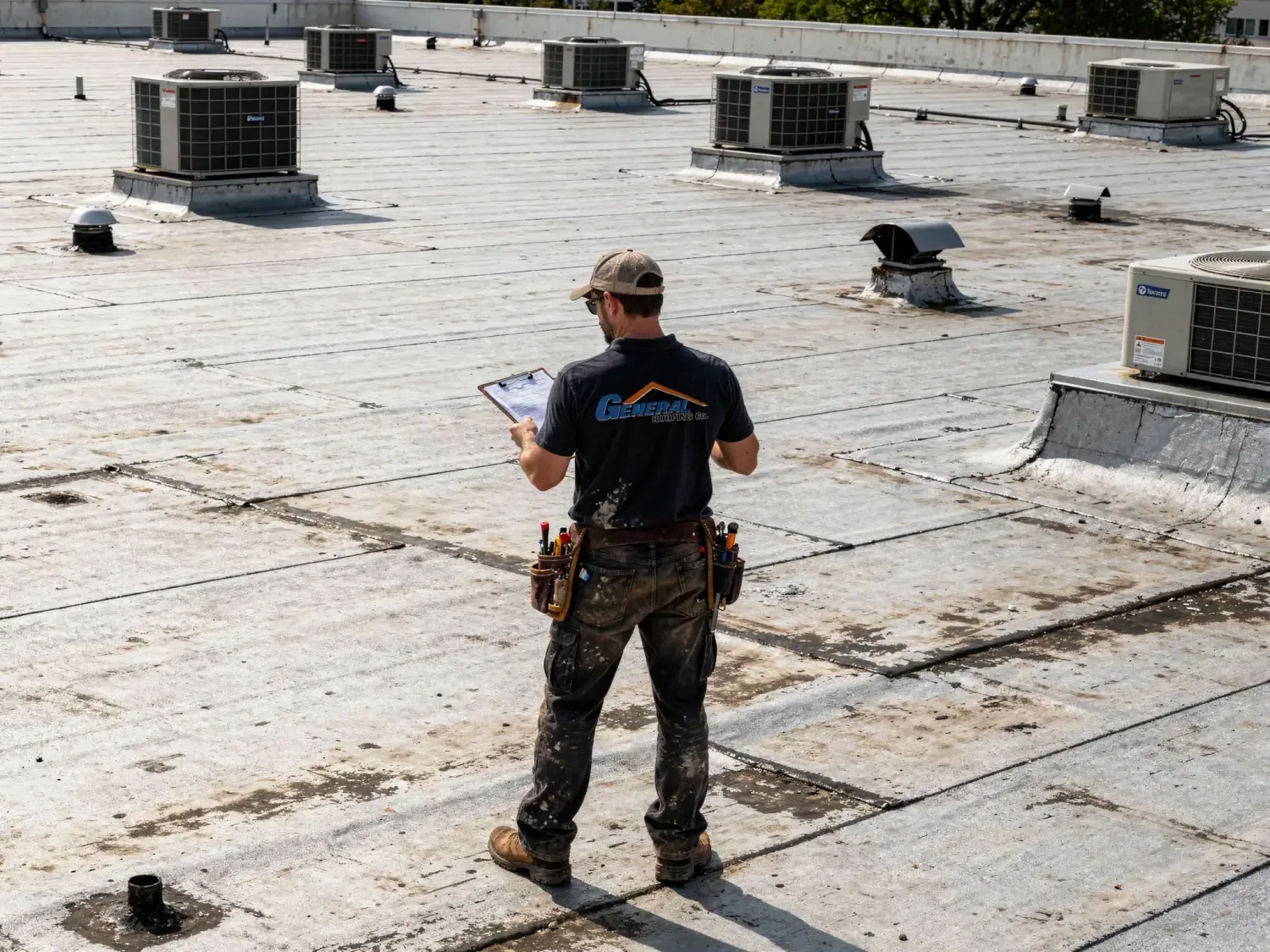
The plan is only as good as the evidence under it. A roof that looks old from the parking lot may have dry insulation and years left, while a newer roof with a failed parapet termination can be leaking into an office. We separate those cases on the roof before any number goes into the plan, and we mark the reason for each decision so a board can read it. Each page of the plan rests on written roof condition reports with photographs, so a committee member who has never been on the roof can see the stained deck, the open lap and the fastener back-out for themselves.
How do we decide when a roof should be replaced?
Replacement timing comes from three findings that can be checked on site. The first is wet insulation, confirmed by a moisture scan and by cores. The second is attachment, tested by pulling fasteners and checking the deck. The third is the repair record: when the same area has been patched several times, each repair costs money and buys less time.
If cores show dry insulation and a sound deck, a coating restoration or a recover may extend the roof for several years at a lower cost, and the plan says so. If the insulation is wet across much of the field, a patch only spreads the cost, and replacement is moved forward. The decision rests on the evidence we can photograph and mark on the plan, not on a fixed number of years.
What goes into a budget range?
A range reflects the things that move cost: the area of wet insulation, the number of penetrations, the height and access, the roof system chosen and the code requirements for insulation at the time of work. A replacement planned now is measured against 780 CMR 10th Edition, a Massachusetts code built on the 2021 IBC that took effect on October 11, 2024.
We express each roof as a low, expected and high range with the drivers named, so a committee can see why a mill roof with parapet and tie-in work costs differently from an open low-slope roof. We do not publish a figure in the plan that cannot be traced to a finding. The drivers are written next to the range so the number can be revised when a core or a scan changes the picture.
Timing within the year matters as well. A replacement bid in spring lets the material be ordered and the tear-off scheduled for the dry summer months, when sections can be opened wider and dried in faster. A job forced into January needs smaller open areas, temporary protection and more days, and each of those shows up in the price. The plan flags which roofs can safely wait for summer and which cannot.
How do storms and snow move the schedule?
New Bedford's weather makes deferral costly. Snow here amounts to 32.5 inches in an average year, falling mostly between December and March, within about 52 inches of precipitation spread over roughly 124 days. The record 20-foot storm tide came with Carol in 1954, and gusts reached 89 mph with Bob in 1991. A roof with loose edge metal or a worn gravel stop is a larger risk in a place with that history.
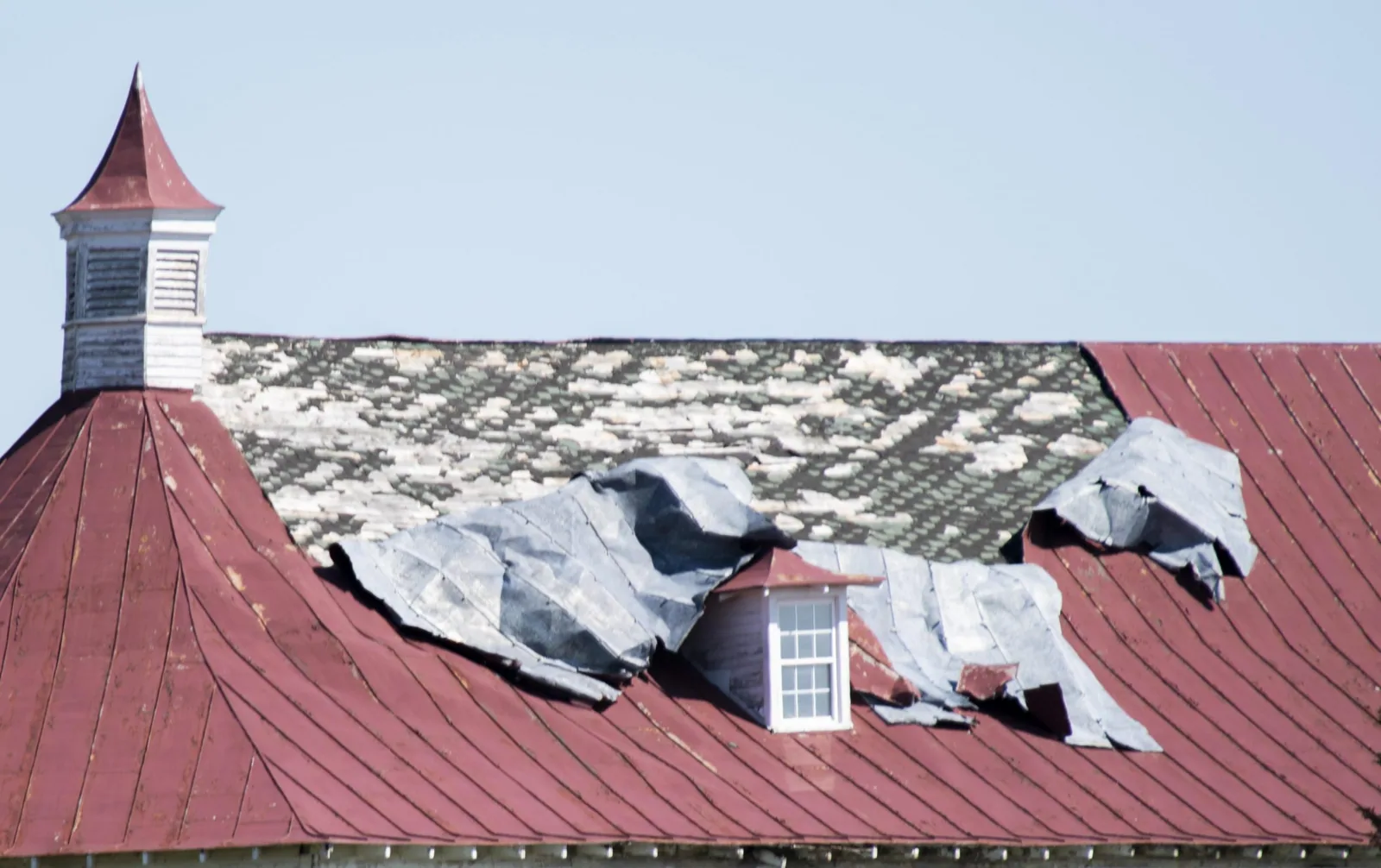
The plan therefore ranks perimeter and drainage defects ahead of cosmetic ones. A fastener back-out along an edge, an open lap sealant joint or a clogged drain sump is cheap to fix before winter and expensive after. The same logic applies to a wind damage roof repair that could have been prevented with a pre-season edge check.
How do we sequence roofs across a portfolio?
Sequence follows consequence. A roof over a clinical space, a production line or stored goods that cannot get wet moves up the schedule ahead of a roof over an empty bay with the same defect. After consequence, we group work by location and season, so a crew can handle two nearby buildings in one mobilization and large tear-offs fall in the dry months.
A landlord with buildings in the New Bedford Business Park, described in 2013 as the second-biggest business park in the state, and in Myles Standish Industrial Park in Taunton can plan both on one calendar. The plan names the year for each roof, the work, the range and the evidence, and it carries a short list of repairs that keep a roof serviceable until its replacement year.
The same method works for an owner of mill space, where the parapets and through-wall flashing often decide the scope. A mill building in New Bedford or Fall River does not follow the same schedule as an open low-slope building, so the plan prices the wall work as its own line and shows how much of the total it represents.
How often does the plan get revisited?
The plan is a working document. We revisit it after each inspection and after each major storm, and we adjust the year and the range when the findings change. A roof that held up better than expected moves to a later year; a roof that lost insulation to a leak moves earlier. The owner sees the reason for every change.
That discipline helps with lenders and boards, who want to see that deferred work is tracked and that a reserve matches the roofs. It also supports roof asset management records, so the capital plan and the condition record say the same thing about each roof.
Commercial Roofing Questions
How far ahead can a roof replacement be planned?
As far as the evidence supports. For a roof with a sound deck and dry insulation, a plan of five or more years is reasonable if it is revisited annually. For a roof with wet insulation, the horizon is shorter and the plan names the repairs that carry it to the replacement year.
Is a coating a substitute for replacement in the plan?
A coating belongs in the plan where cores show dry insulation and the membrane is sound enough to bond. It extends service without a tear-off. Where insulation is wet, a coating would trap moisture, so the plan shows replacement instead and explains why.
What is the cheapest year to replace a roof?
It is the year before water gets into the insulation. After that, the scope grows with each wet season. The plan flags the signs that mark the point of no return, such as repeated repairs in one area or ponding that persists after rain.
Can the plan include roofs that other contractors installed?
Yes. Any roof can be walked, cored and scanned. The condition grade comes from what the inspector finds, and the plan treats every roof on the same scale.
Does the plan cover emergency repairs?
It includes a reserve line for them, sized from the condition of the roofs. Emergencies are less frequent when the perimeter and drains are kept up, and the plan marks which roofs are most likely to need one.
Ready to review the roof scope?
Request a Roof AssessmentKeep Reading