Roofing Capabilities
Roof Asset Management in New Bedford, MA
Track every commercial roof in New Bedford, MA by condition, age and next action, so repair, maintenance and replacement money goes to the right building.
Request a Roof Assessment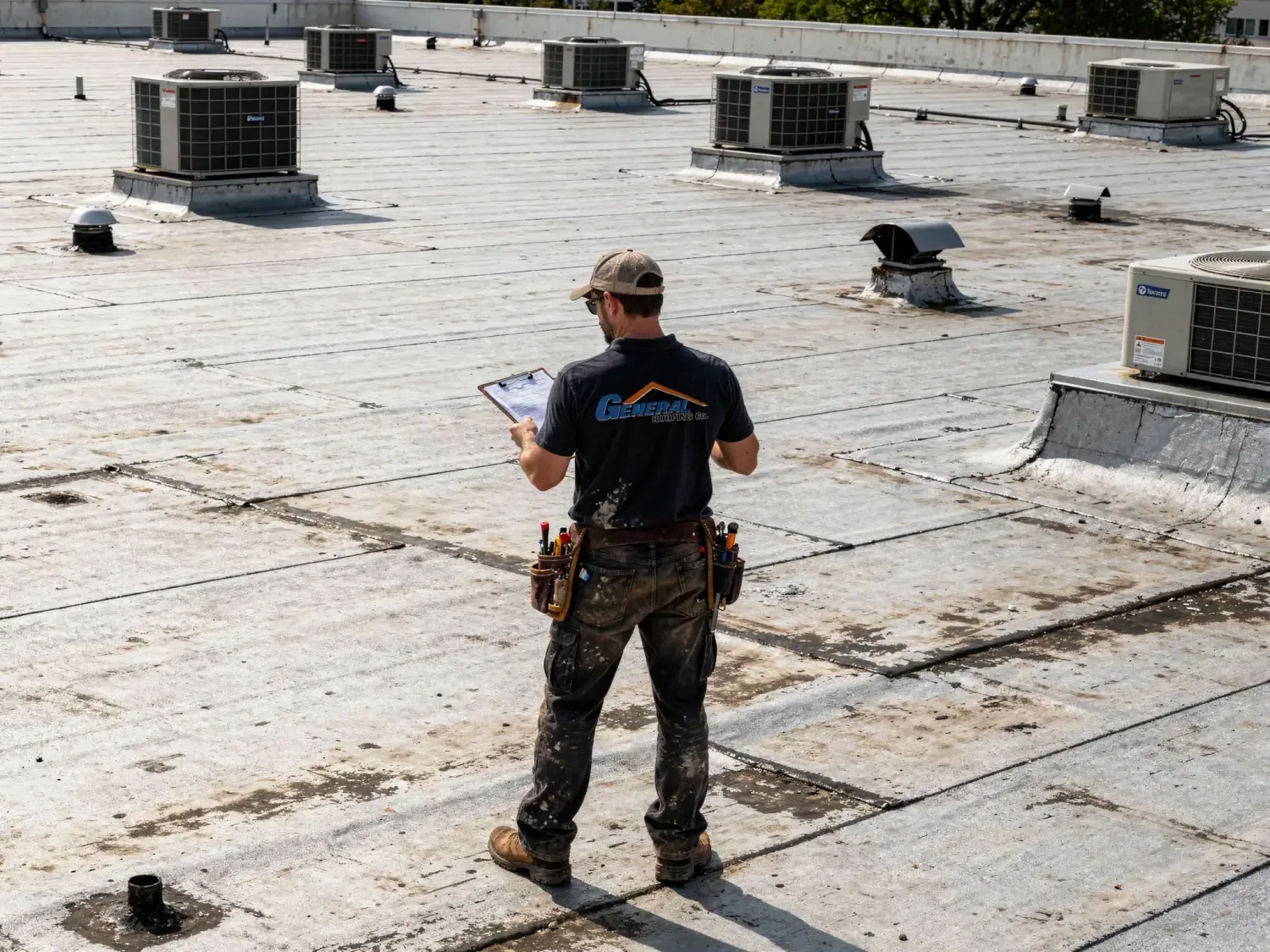
Which of your roofs is going to fail first? A facility director holding a stack of work orders usually cannot answer that from memory, and the answer starts on the roof itself, with the oldest seam probe finding, the last core cut and the date of the last repair, written down in one place. Roof asset management in New Bedford, MA is that record: each roof listed by building, area, membrane, age and condition, with the next action named and a rough year attached to it.
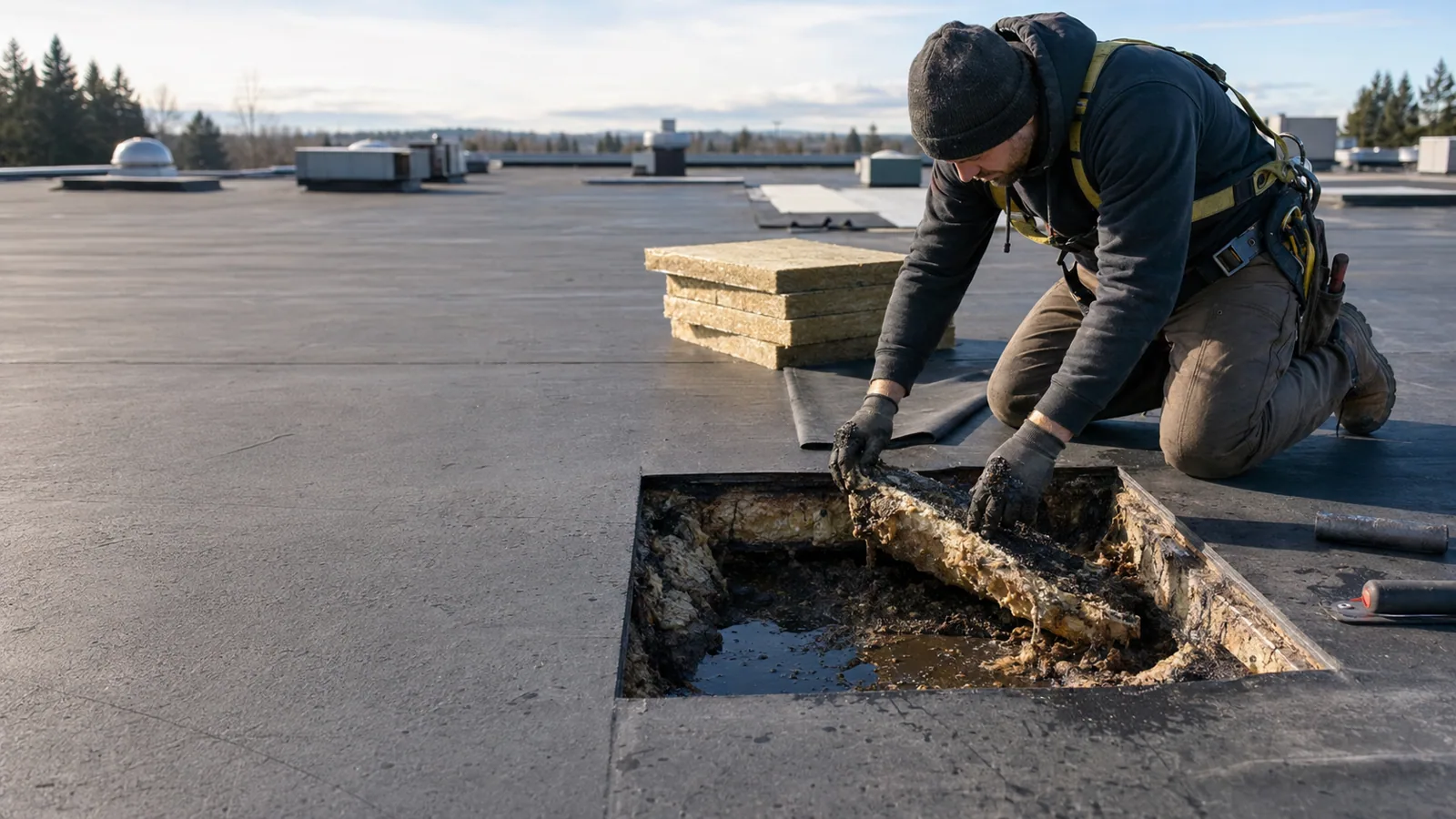
We build the record from hands-on inspection, not from a spreadsheet filled in at a desk. Each roof is walked, drains and seams are probed, edge metal is checked for fastener back-out, and the findings are marked on the roof plan. The result tells a director which building needs money this year, which can be maintained for several more, and which has a problem that a budget line has not yet noticed.
What goes into the record for each roof?
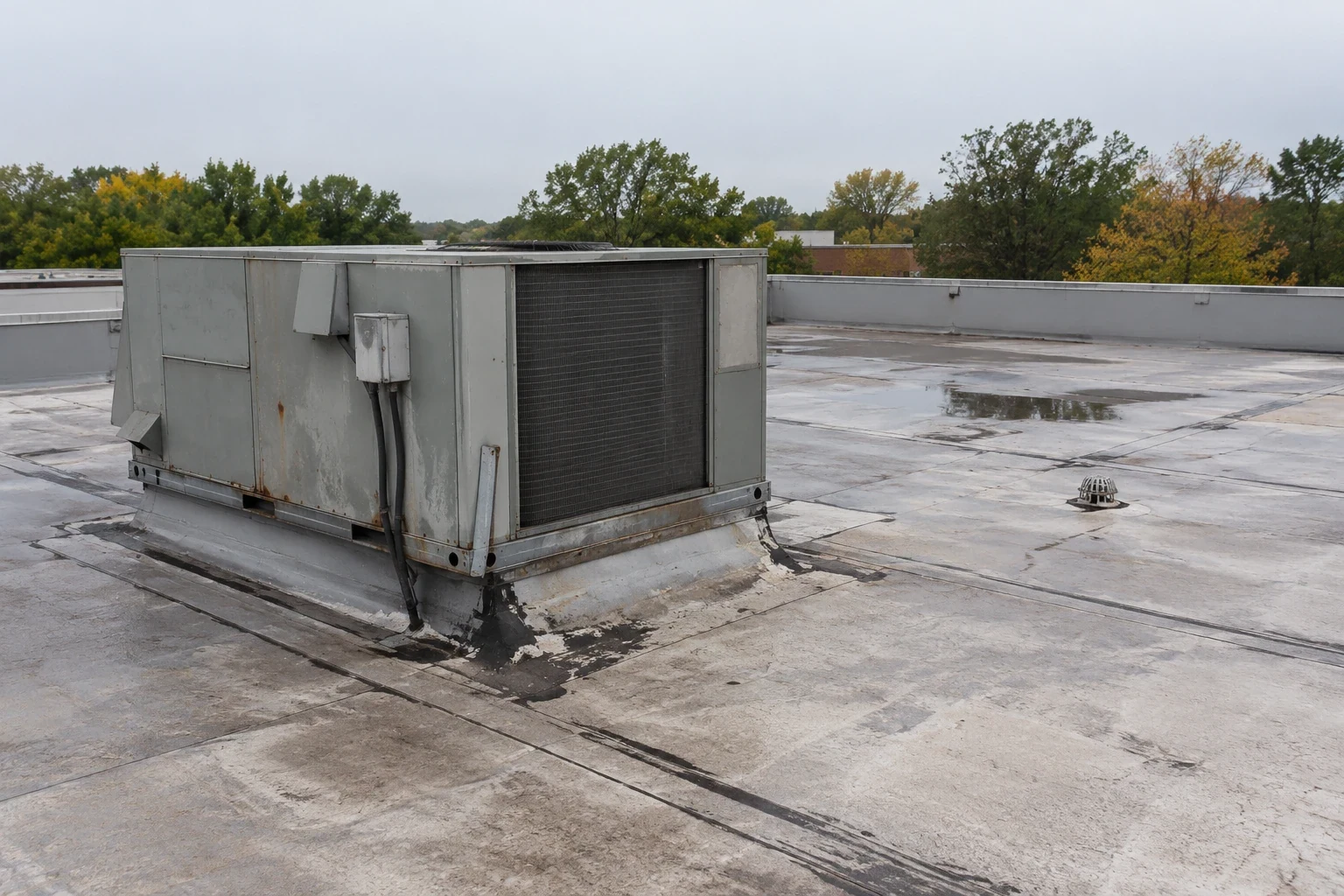
Every roof gets a page of facts we can defend: the building, the roof area, the membrane type, the number of layers found at core cuts, the insulation condition and the deck. We add the drains, curbs, skylights and penetrations, because those details produce more leaks than the open field does, and we photograph each one with a date so the next inspector sees what changed.
The condition grade is assigned from what the inspector found, not from age alone. A younger roof with ponding at a drain sump and open lap sealant can grade lower than an older roof that has been kept dry, and the record says why. Findings are tied to a location on the plan, so a ceiling stain inside the building can be traced to the roof area above it without a new survey.
How do mill buildings and newer industrial roofs get graded together?
New Bedford holds 19th-century mill buildings such as Wamsutta, Hathaway and Kilburn, and the business park and industrial areas add roofs of other ages and systems, so one portfolio can contain very different roofs. We grade each on its own evidence. On a mill, the through-wall flashing, the parapet termination and the roof-to-wall transition get as much attention as the membrane, because the wall-to-roof junctions are where water finds its way in.
On a newer low-slope building, the seams, the fasteners and the insulation tell the story. Both go into the same record, with the same grading scale, so a director can compare them side by side. Age matters less than evidence here: a mill roof recovered twice may have more life than a newer roof with fastener back-out along every wall, and the record says which is which. The comparison shows where each dollar goes furthest. It also shows when a mill roof needs a commercial roof repair now and a newer roof needs only a maintenance visit.
How do storm and snow history change the grades?
The record has to carry New Bedford's weather. The 20-foot storm tide of Carol in 1954 remains the city's record, and Bob in 1991 produced gusts to 89 mph and a surge of 5.8 feet at New Bedford. Over a year the city collects about 32.5 inches of snow, mostly December through March, within some 52 inches of precipitation on roughly 124 days.
Those figures do not grade a roof by themselves. They tell the inspector where to look: edge metal and gravel stops for wind, drain sumps and tapered crickets for the steady wet and snow load. The wind and snow loads are written against each roof's exposure: a building on the harbor side sits behind the roughly two-mile hurricane barrier but in a coastal wind zone, and the barrier protects the water line, not a loose gravel stop. After a major storm, the record gains a dated before-and-after set of photographs, which helps with a roof insurance claim and shows the next inspector what moved.
How does the record turn into a plan?
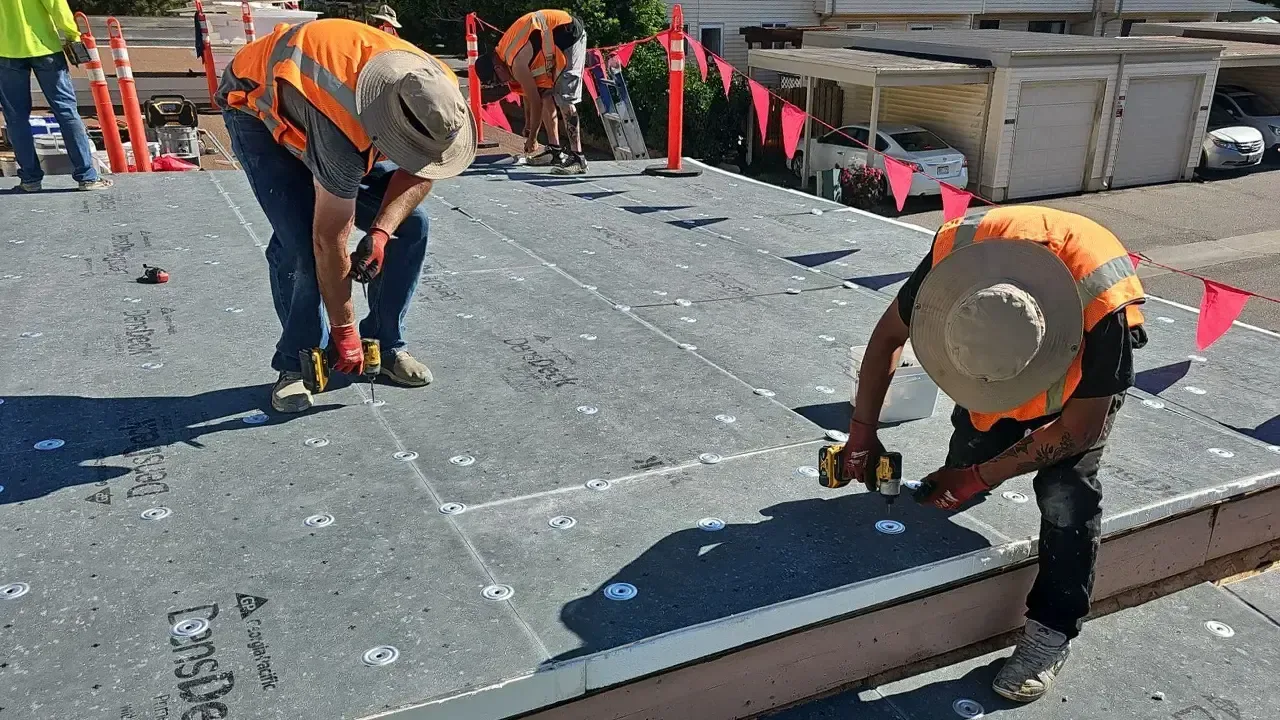
Each roof ends with a next action: monitor, repair, maintain, restore or replace. A roof with dry insulation and sound seams stays on a preventive maintenance cycle. A roof with a worn surface and dry insulation moves toward a coating. A roof with wet insulation across a large share of the field moves toward replacement, and the record shows the moisture scan or core results behind that call.
The actions are sorted by consequence. A roof over a patient room or a production line moves up the list ahead of a storage shed with the same defect, since the cost of a leak differs by what sits below. That ranking is what feeds roof capital planning, where each action gets a year and a budget range.
Who keeps the record current?
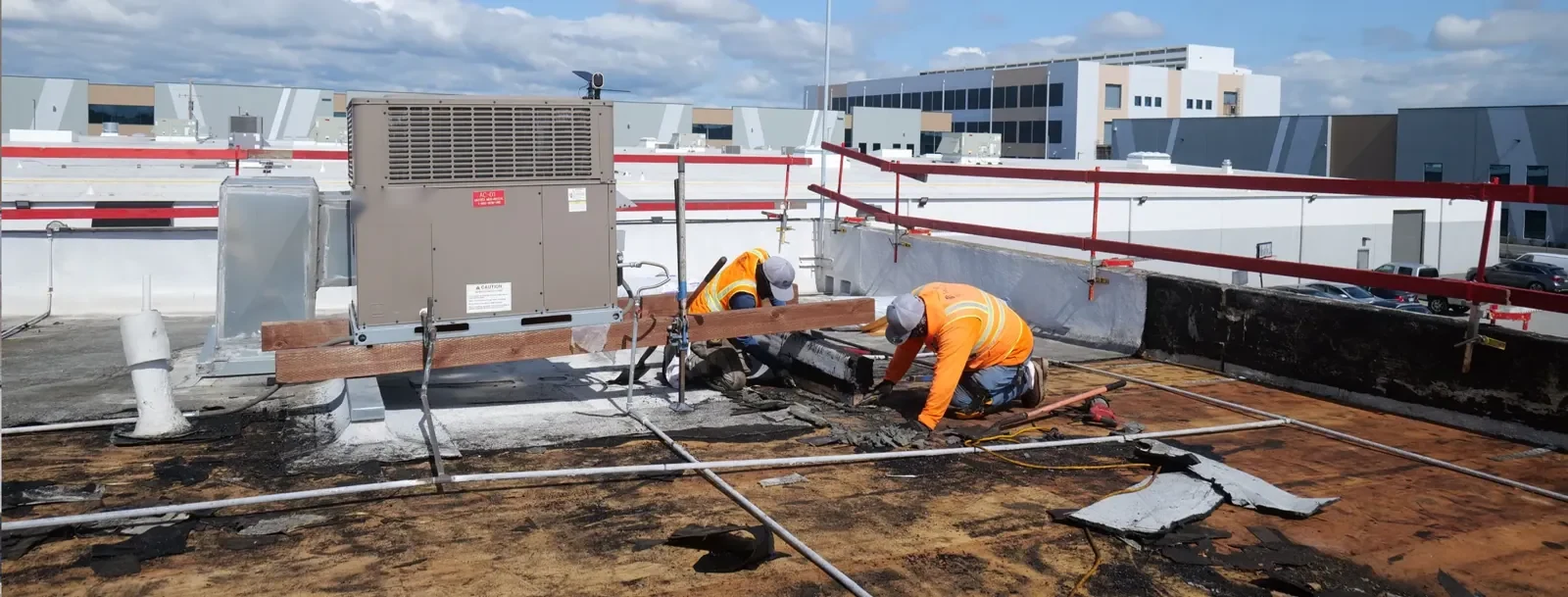
The record stays useful only if it is updated after every visit, repair and storm. We update it after each inspection and each job, noting what was found, what was done and what remains. Photographs and moisture readings are added, and the grade is revised if the evidence changes. A repair that held for two winters raises confidence in the surrounding membrane; a repair that failed in the same spot twice lowers it and prompts a core cut. Facility directors receive the update in a form they can share with an owner, a lender or an insurer, and a buyer's team reading it for an acquisition can follow the same pages, which is where due diligence roof surveys pick up the same evidence.
Records built this way outlast staff changes. A new manager can open the file and see the history of every roof without reading old emails. Owners with buildings in Fall River, Dartmouth and Fairhaven can keep them in one file and compare them on the same scale, and a larger owner can move from a single file to a full multi-site roof program without redoing the survey work.
Commercial Roofing Questions
What decides whether a roof needs a core cut or only a visual walk?
The first signal is a moisture scan or a pattern of repeated repairs. If the scan shows wet insulation, a core confirms the layers and the extent. If the roof is dry and the seams are sound, a visual walk with a seam probe is enough, and cores wait for the next question.
How often should the record be updated?
Whenever the roof changes or a visit finds something new. In practice that means after each inspection, each repair and each major storm, with a full walk at least once a year. The deciding factor is what the roof did since the last entry.
Can the record include roofs we do not maintain?
Yes. Any roof the owner holds can be walked and entered, whoever installed or repaired it. The grade comes from what the inspector finds, and the record is the same format for all of them.
What does an owner receive from the first round?
The owner receives a marked roof plan for each building, photographs tied to locations, a condition grade, a next action and a rough timing window. Moisture scan or core results are included where they were taken.
Does the record help with a lender or buyer?
It does, because it shows condition and next action in plain terms with photographs behind them. A buyer or lender can read the grades and the evidence, and the owner can show that the roof has been tracked and maintained.
Ready to review the roof scope?
Request a Roof AssessmentKeep Reading