Commercial Roofing Services
Commercial Roof Replacement in New Bedford, MA
Full tear-off and replacement of low-slope and metal commercial roofs in New Bedford, MA, planned around harbor wind, snow load and occupied buildings.
Request a Roof Assessment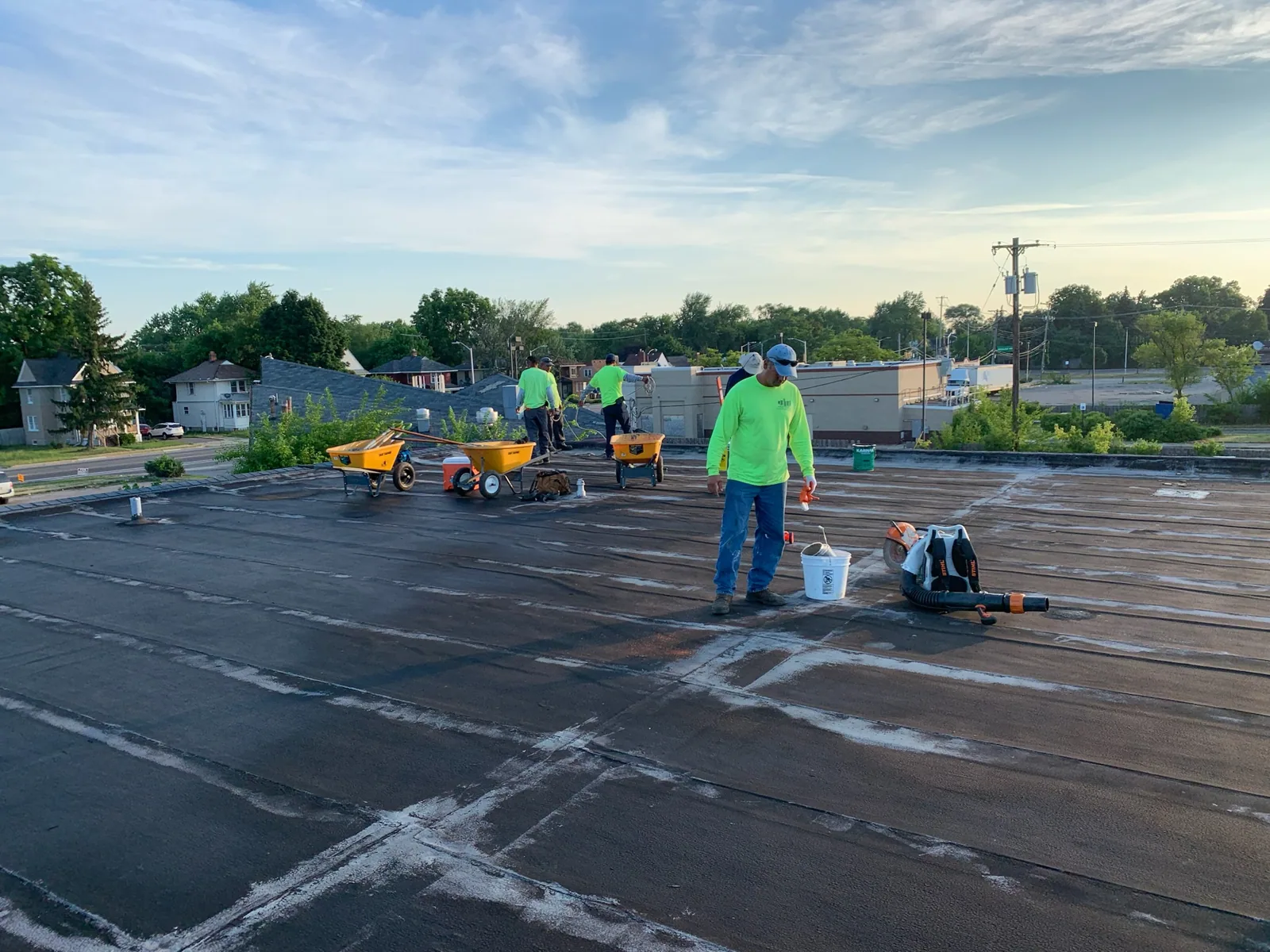
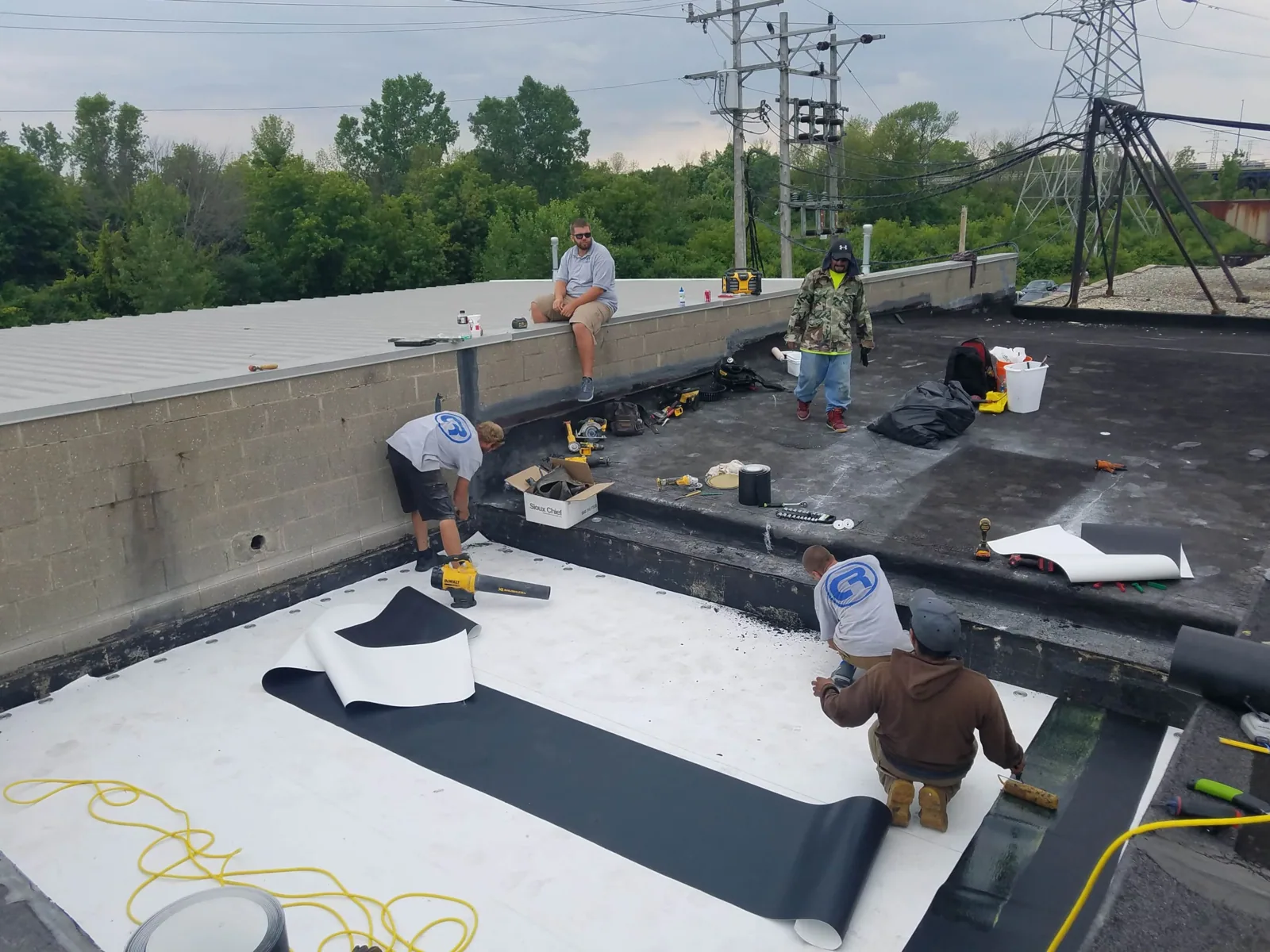
A facility director who asks whether a roof is finished is really asking whether the next repair will be the last one that makes sense, and the answer starts with a core cut, not with a calendar. We pull samples across the roof in New Bedford, MA, measure how much of the insulation has taken on water, and mark every seam, flashing and drain that has already failed so the replacement decision rests on what the roof is doing now. Full replacement means the old membrane comes off, the wet material comes out, and a new assembly goes down over a deck we have looked at with our own eyes.
On the South Coast that decision carries more weight than it does inland, because the wind comes off Buzzards Bay and the snow comes with it. A roof that has been patched four times over a decade is usually telling you something about its edges and its drainage, and we read that story before we write a scope.
What does a core cut tell us that a ceiling stain does not?
A ceiling stain tells you where water finally reached an interior finish. A core cut tells you what happened on the way down. We remove a small circular sample, look at the membrane, the adhesive or fastener layer, the insulation board and the deck, and we note whether the insulation is dry, damp or saturated. Saturated board does not dry out on its own under a membrane, and it stops insulating the building long before it starts to rot the deck beneath it.
We pair the cuts with a moisture scan so that the samples sit on a map instead of floating as anecdotes. When the scan shows wet insulation across most of a field, patching the membrane above it only hides the problem. When the wet area is confined to a corner near a drain or a rooftop unit, a targeted replacement of that zone can buy years, and we will say so plainly.
How do we decide between tear-off and a recover?
We tear off when the existing assembly is wet, when two layers already sit on the deck, when the deck itself shows rust or rot, or when the parapets and wall transitions need to be rebuilt from the substrate up. A recover over a sound, dry roof can make sense, but the deciding factor is almost always moisture, because a new membrane over trapped water becomes a vapor problem within a few seasons.
Massachusetts adopted the 10th Edition of 780 CMR, which is based on the 2021 International Building Code, with an effective date of October 11, 2024. That edition shapes how we document insulation, fastening and wind resistance on a replacement, and we confirm each project against the local building department before the first panel comes off.
What do harbor wind and storm history mean for a new roof?
New Bedford has lived through the weather that tests a perimeter. The record 20-foot storm tide of Hurricane Carol in 1954 swept into the city, and Hurricane Bob in 1991 put sustained winds of 77 mph and gusts to 89 mph at a bay station. Along Cove Road in Mattapoisett, Bob destroyed 29 of 37 homes, which shows what open shoreline can face.
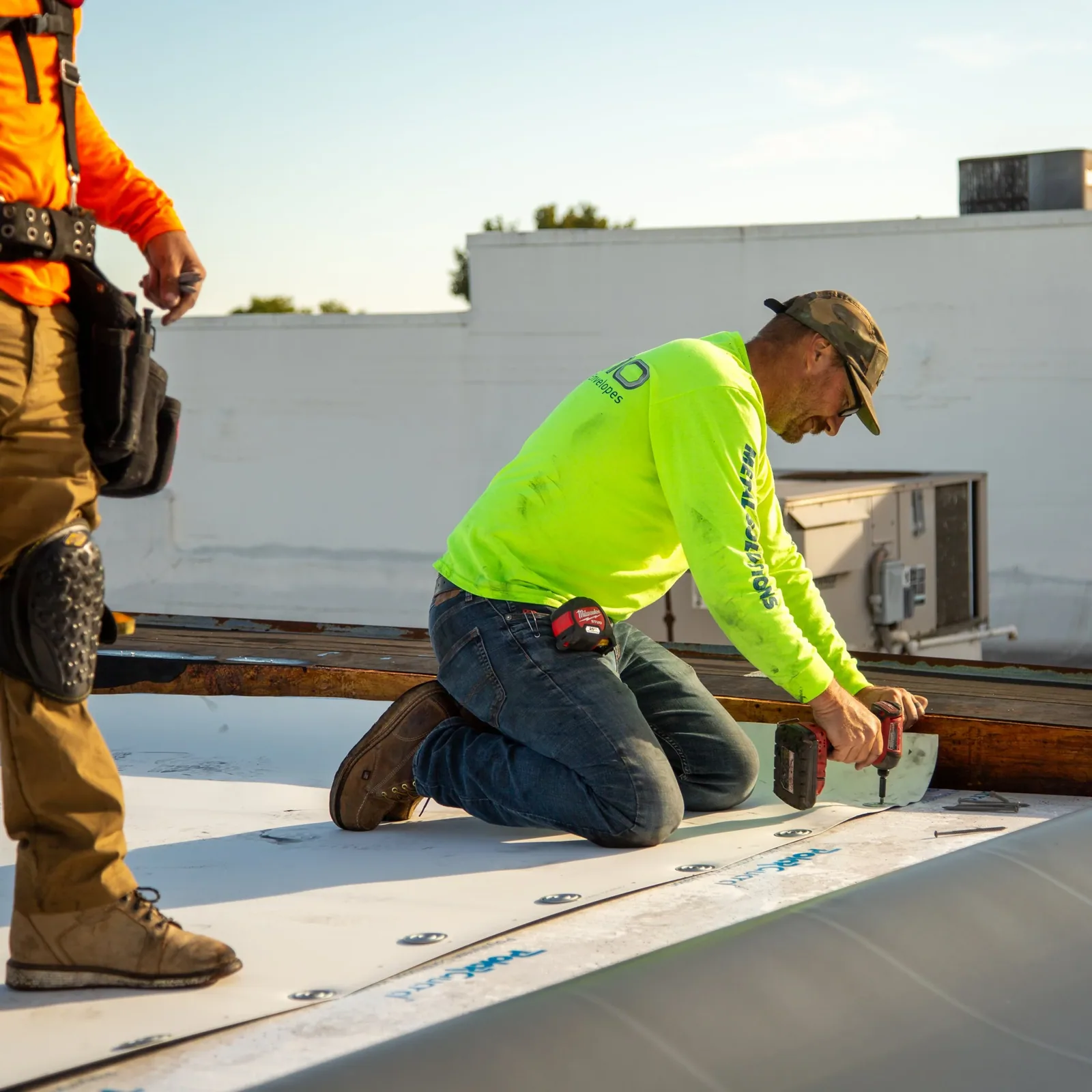
The hurricane barrier protects the inner harbor from surge, but it does nothing for a gravel stop or a coping joint on a roof two blocks away. On a replacement we increase fastening density at corners and perimeters, set edge metal over securely fastened cleats, and check the substrate behind every termination. The edge is where a roof fails first, so the edge is where we spend the most care.
Will the new roof carry a South Coast winter?
Snow totals in New Bedford run to about 32.5 inches in an average year, mostly between December and March, and the January 2015 blizzard dropped 24.1 inches on Fall River. Snow does not just load the deck. It melts on warm afternoons and refreezes at drains and scuppers overnight, and a roof with poor slope will hold that meltwater in the same low spots every winter.
During replacement we study where water sits. Tapered insulation and crickets can redirect flow to the drains, and we check each sump, overflow and the drains and scuppers for height and clearance. A reroof is the one moment when slope can be corrected at reasonable cost, and an owner who skips that step often pays for it in membrane wear at the ponding areas within a few years.
What changes on a mill or a waterfront building?
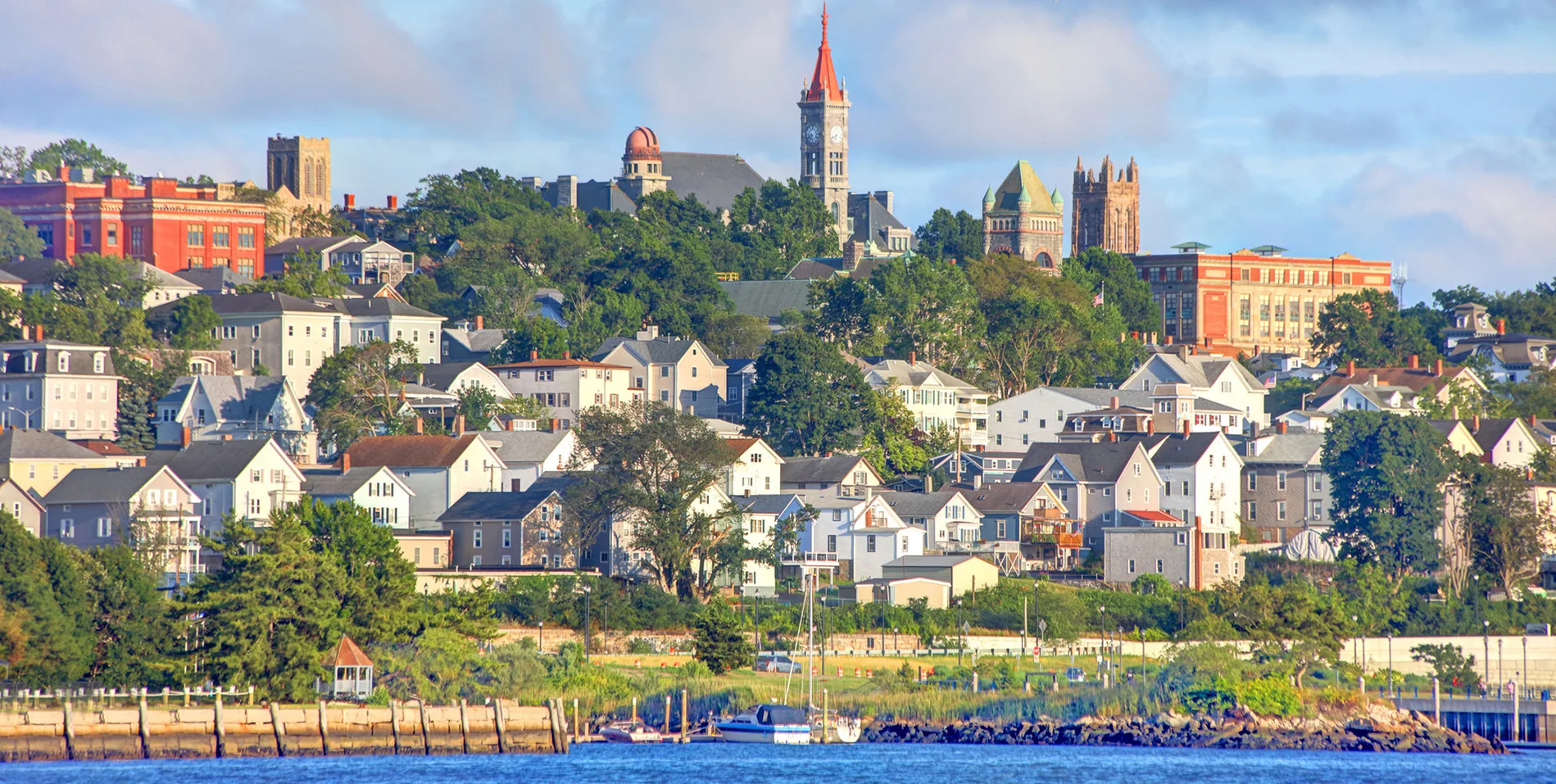
The 19th-century Wamsutta, Hathaway and Kilburn mills in New Bedford and the granite and red-brick mills of Fall River bring parapets, wall junctions and old penetrations that a modern membrane has to meet cleanly. Through-wall flashing and parapet terminations are slow, careful work on those walls, and we budget them as their own line because they often decide whether the roof performs.
Waterfront buildings near the working port bring a different set of questions: access for materials, crane placement near the harbor, and coordination with operations that cannot stop for a roof. Our occupied building reroofing planning handles the staging, the noise windows and the dust control.
Which membrane belongs on the replacement?
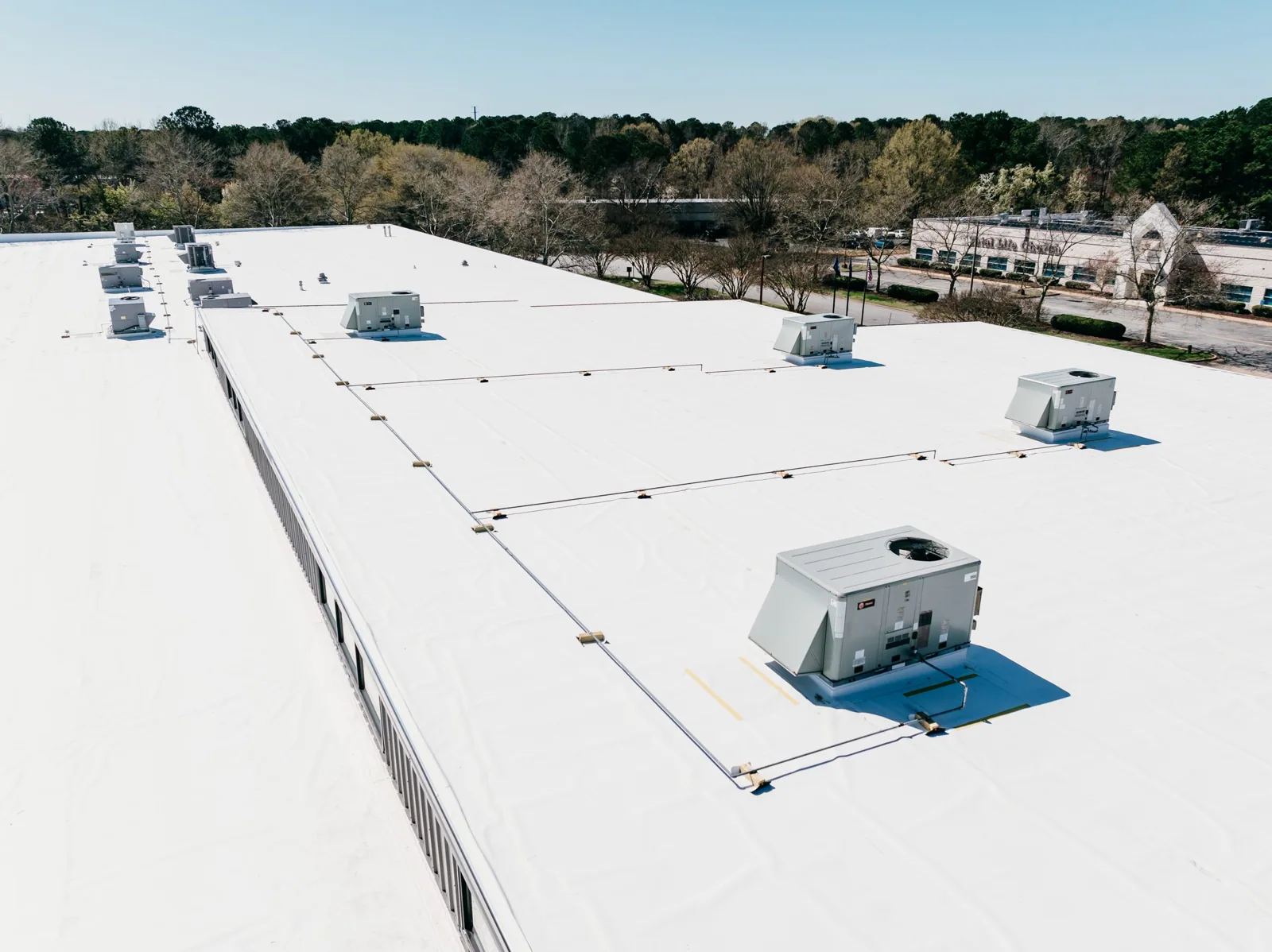
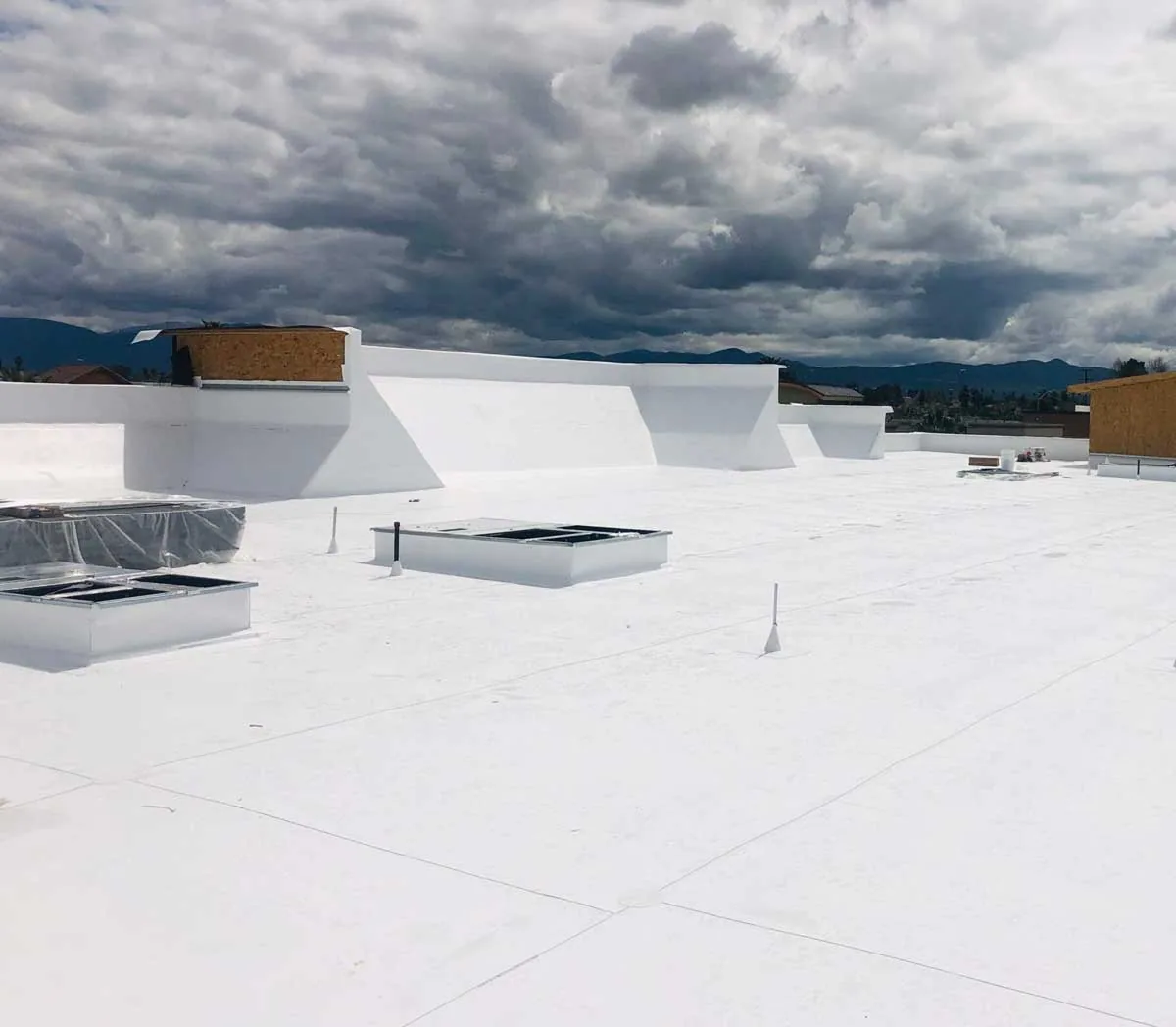
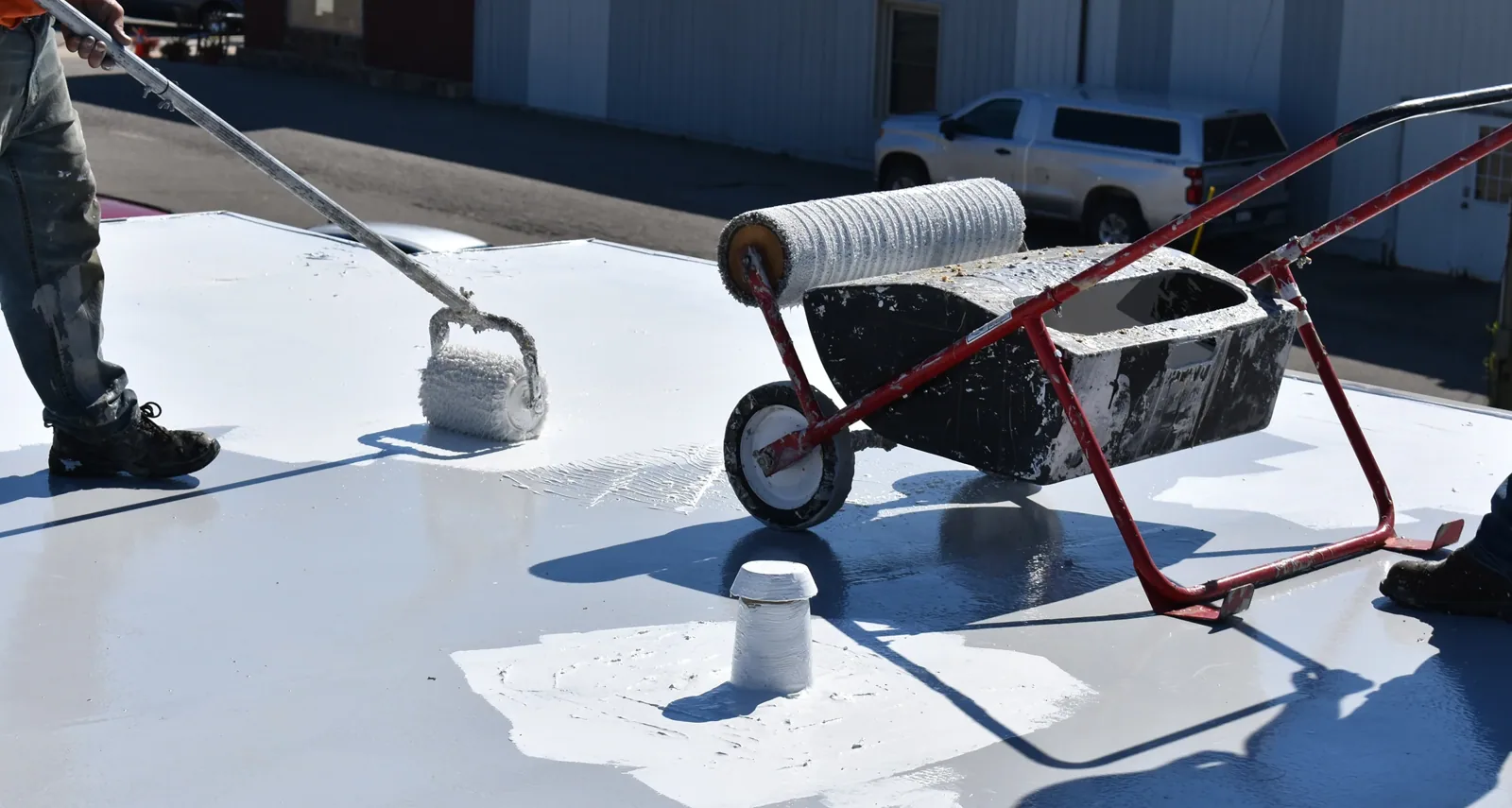
The choice follows the building. A TPO roof suits many large, flat roofs with simple geometry and heat-welded seams. A PVC roof earns its cost where grease, chemicals or heavy rooftop traffic are present. Modified bitumen and built-up systems remain sensible on roofs with many penetrations or foot traffic, and standing seam or retrofit metal works on steeper profiles. We explain the tradeoffs against your building use, your insulation targets and your maintenance plans, and we leave the final selection to you.
How long does the work disrupt the building?
Duration depends on the size of the roof, the number of penetrations and the weather window. We phase the tear-off so that no area is opened that cannot be dried in the same day, and we keep tarps, temporary seals and a crew ready in case a front arrives early. For facility directors serving tenants in Dartmouth, Fairhaven or along the Route 6 corridor, we share a written sequence that names which sections of the building are affected on which days.
If your property sits in a broader area such as Dartmouth, we plan truck access and material staging around your parking and loading needs.
Commercial Roofing Questions
How can I tell whether the insulation under my membrane is wet?
A moisture scan followed by core cuts at the suspect areas gives you the answer. The scan shows where readings run high, and the cuts confirm whether the board is damp, saturated or dry. We mark the results on a plan so you can see which areas need replacement and which can be kept.
Does a roof near the harbor need different fastening than one inland?
Yes, the perimeter and corner zones get more fasteners or adhesive coverage because wind loads rise there, and coastal exposure raises the stakes. Hurricane Bob's gusts of 89 mph over Buzzards Bay are the kind of event the edge detail has to survive, so we document the pattern and the edge metal attachment before the work starts.
What should I budget for beyond the membrane itself?
Budget for deck repair, insulation, tapered drainage, edge metal, flashing at walls and penetrations, and temporary protection during the work. Those items change with what the tear-off reveals, so we carry allowances for deck and insulation and report the actual quantities when the old roof is open.
Can a mill building in New Bedford keep its existing parapets?
Often the masonry stays, but the flashing and coping above it get rebuilt. We inspect the brick, the mortar joints and the through-wall flashing before deciding, because a membrane tied into failing masonry will leak at the wall no matter how good the field of the roof is.
When is the right time of year to replace a roof here?
Late spring through early fall gives the longest dry windows and the best conditions for adhesives and welds. Winter replacement is possible with the right materials and a careful plan, but the snow history, including the January 2015 blizzard, means we build flexibility into any cold-season schedule.
Ready to review the roof scope?
Request a Roof AssessmentKeep Reading