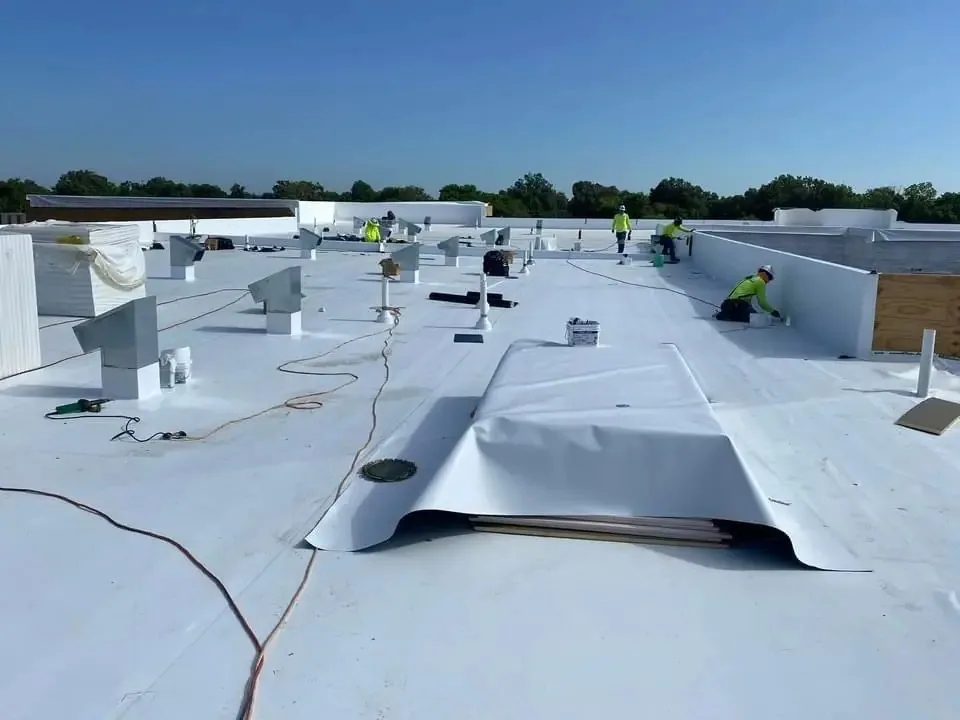
Roof Systems
TPO Roofing in New Bedford, MA
TPO single-ply roofing in New Bedford, MA: seam probes, wind attachment, snow and drainage details, and how a heat-welded white membrane ages here.
Request a Roof Assessment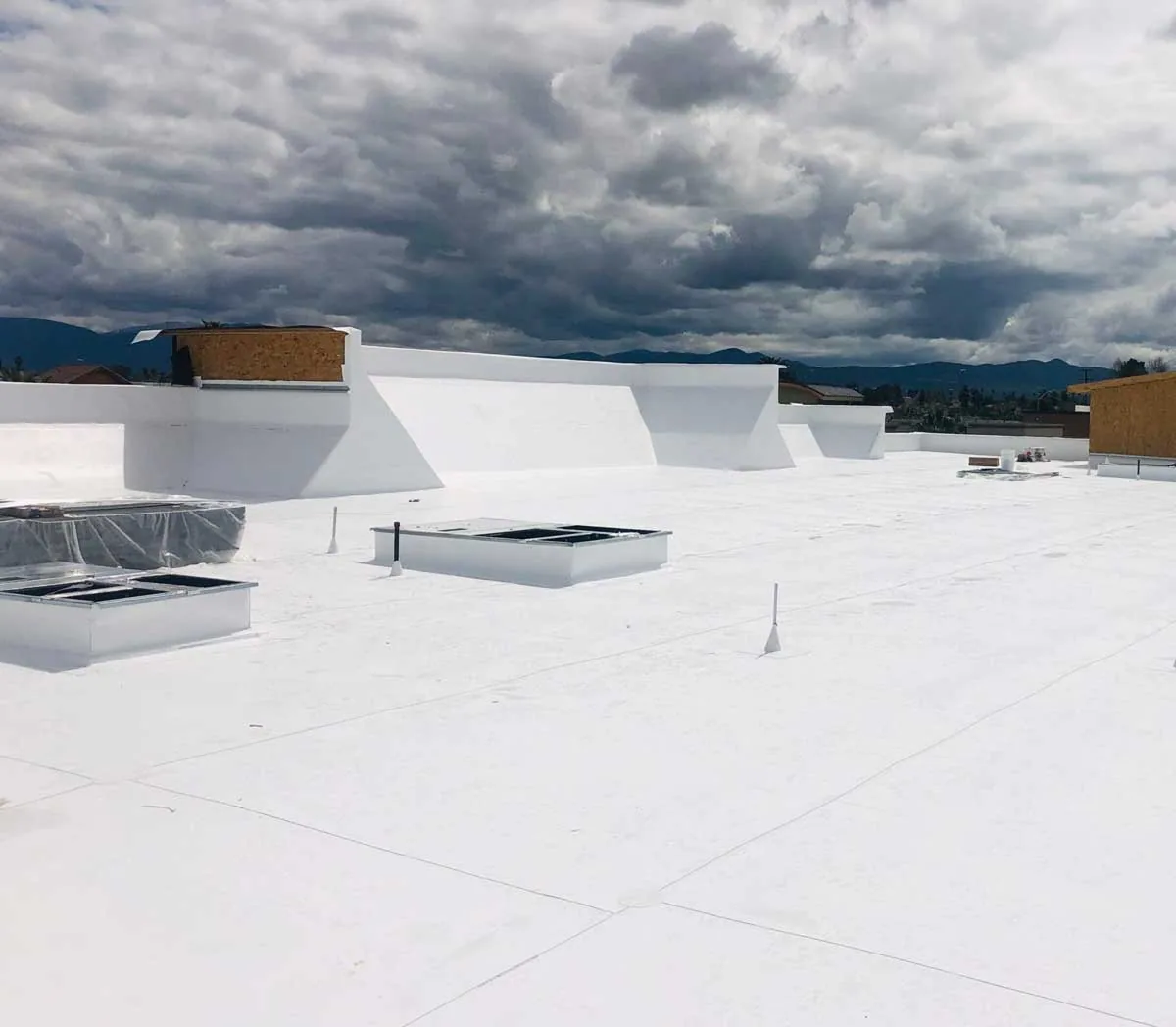
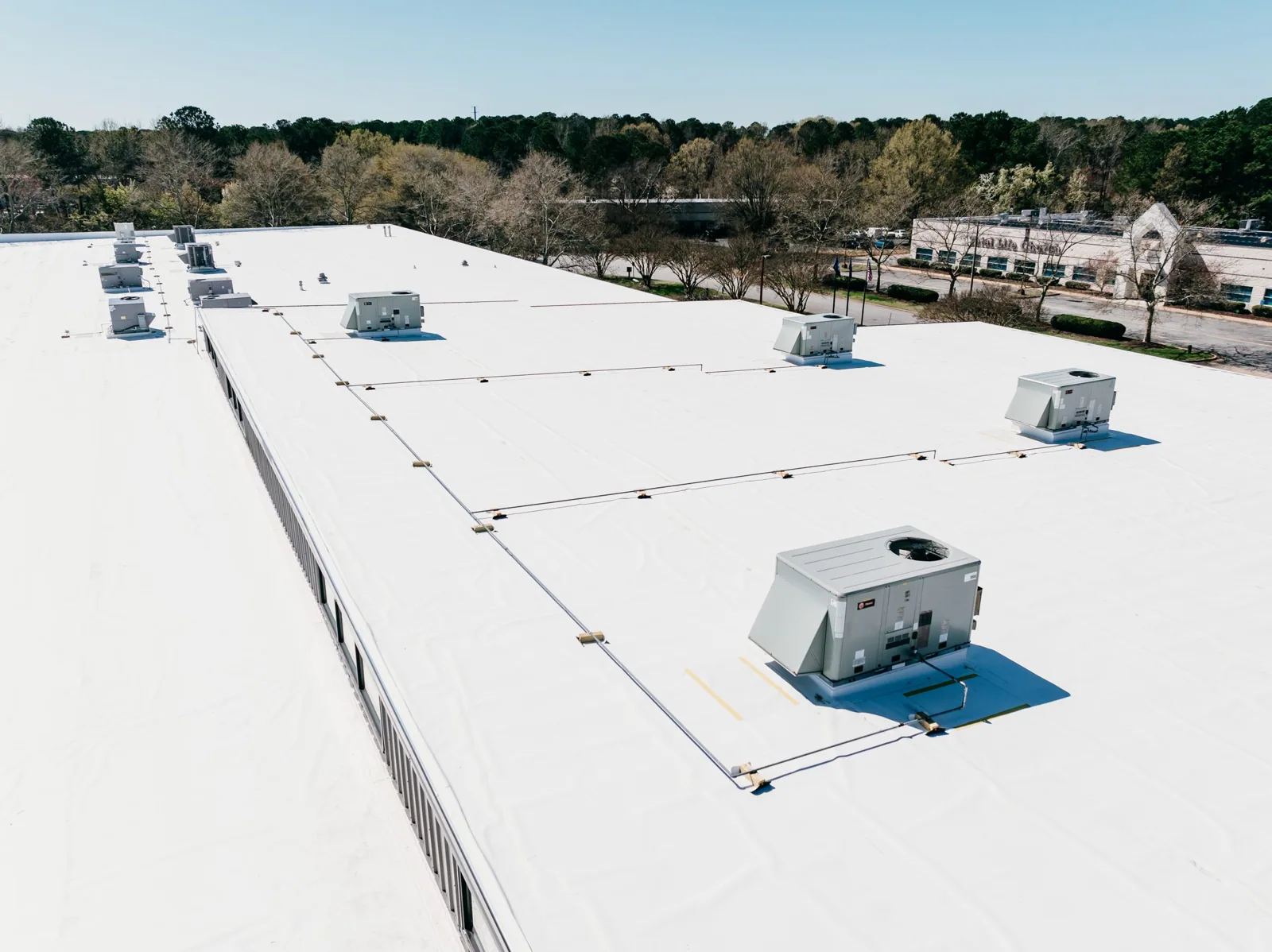
Is the seam still welded? A facility director should put that question to any TPO roof past its first decade, because the probe answers it fast: either the fused edge of the sheet pushes back against a gentle press or it has begun to lift. TPO is a single-ply thermoplastic membrane, usually white, rolled out in wide sheets and joined with hot air so the seam becomes one continuous layer of plastic.
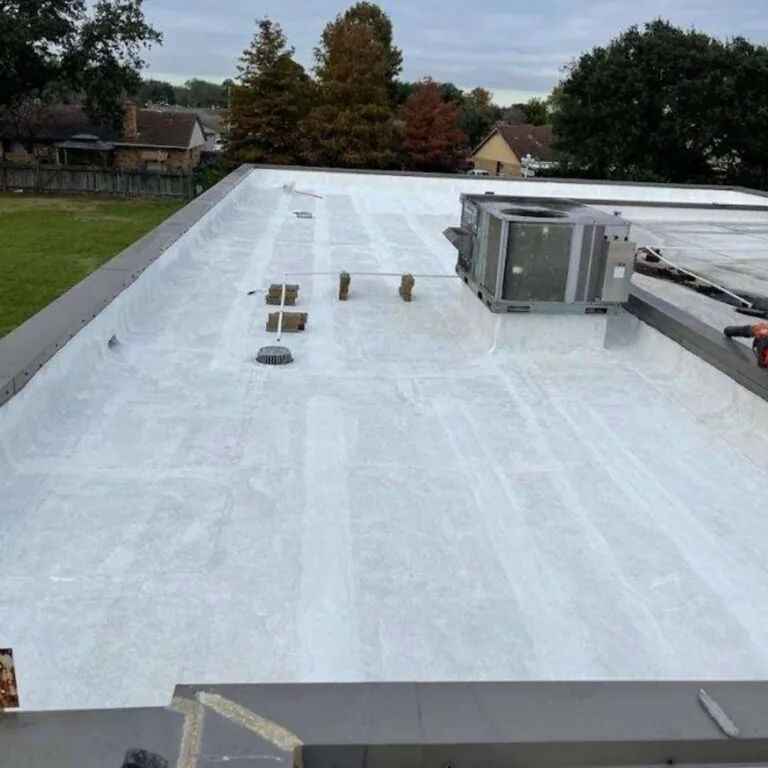
In New Bedford, MA, a TPO roof lives with a harbor wind, a winter that adds about 32.5 inches of snow and a record range from minus 12 F to 107 F. We look at how the sheet is attached, how the seams have aged, what the flashing is doing at walls and curbs and whether the insulation below is still dry. The findings go on the roof plan with a number beside each one, and we walk them with you before any price is discussed.
What does a healthy TPO seam look like?
A good seam is flat, consistent in width and bonded across its full overlap, with a thin bead of melted material at the edge. A probe slid along that edge should meet resistance everywhere. A weak seam shows as a gap that takes the probe tip, a wavy overlap or a dull, chalky strip where the weld was cold.
Seam failures cluster at three places: around penetrations, where the welder had to work in tight quarters, at T-joints, where three layers of sheet meet, and along edges where the membrane has shrunk. We probe every seam on the roof near those points, mark the open lengths and test a sample of the rest. Open seams are repaired by cleaning, hot-air welding a cap strip or patch over them and checking the weld again. Left alone, an open seam admits water into the insulation, and the repair that was small becomes a replacement of wet board.
How is the sheet held down in a storm?
TPO can be mechanically attached with fasteners and plates along the sheet edges, fully adhered with bonding adhesive or installed over ballast. Each method handles wind differently. A TPO roof near the water gets denser attachment at its perimeter and corners than in the field because of what Buzzards Bay has seen: 89 mph gusts in 1991 and, across eastern Massachusetts, 80 to 110 mph winds in 1954.
We check the fastener pattern, look for fastener back-out where a screw has lifted and pushed the plate up through the sheet, and inspect the adhesive bond by pressing on the membrane near edges. A billowing sheet is a warning that attachment has weakened. The edge metal is just as important, and our edge metal and gutter work ties the perimeter to structure so a gust cannot get under the sheet.
Why does a TPO roof pull away from walls over time?
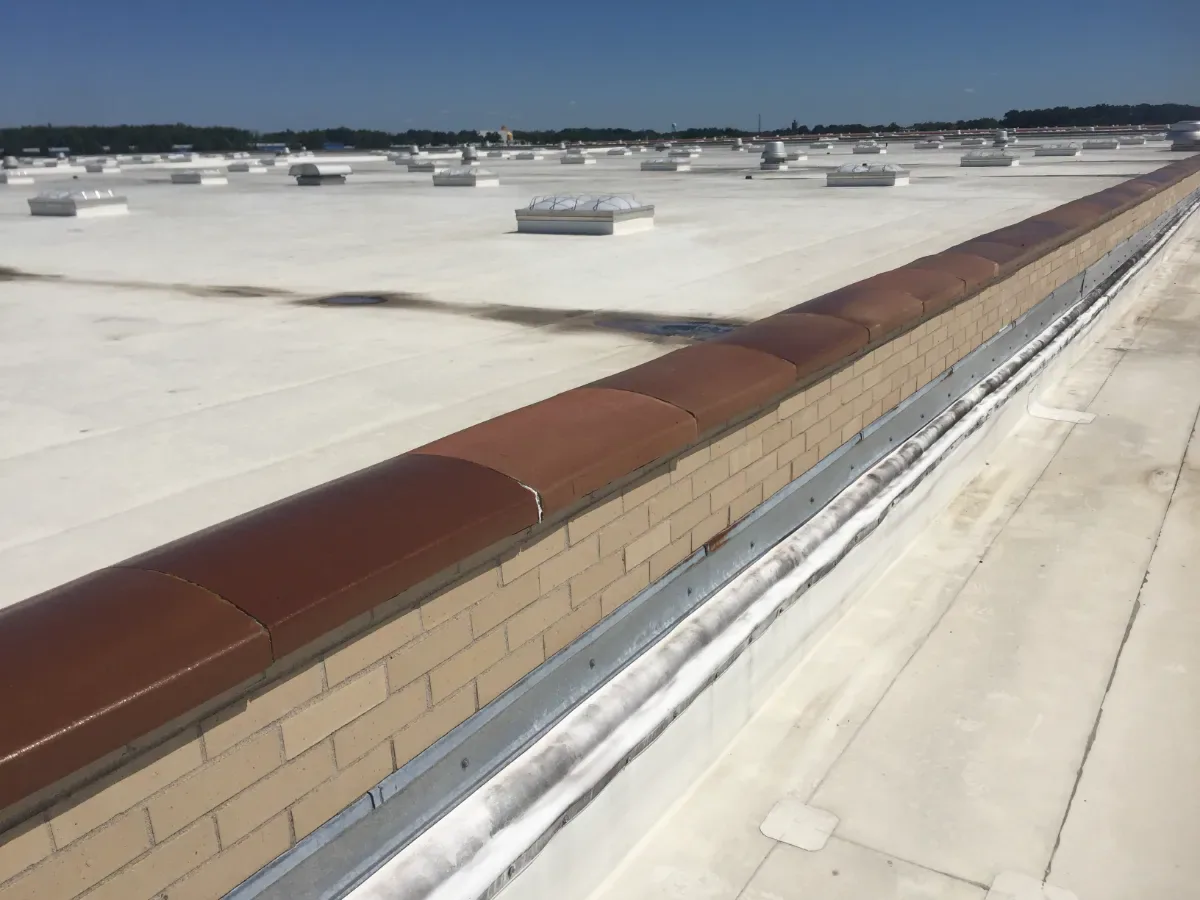
Membrane shrinkage is the slow failure that catches owners off guard. A thermoplastic sheet loses some plasticizer and contracts across years of heat and cold, and the contraction pulls the membrane toward the middle of a field while it is pinned at the edges. At a parapet or curb, the sheet tightens against the flashing, lifts off the wall and bridges the corner like a drum skin.
An inspector looks for that bridging, for gaps at the base of walls and for flashing that has pulled away at inside corners. Where shrinkage has begun, we can sometimes relieve it with new flashing and new fastening. Where it is advanced, the sheet will keep pulling, and a commercial roof replacement may be the better dollar. The roof plan marks every wall-to-roof transition with its condition so the choice is clear.
How do snow and meltwater test the membrane?
Snow in New Bedford adds up to roughly 32.5 inches in a normal year, mostly December through March, while one blizzard in January 2015 left 24.1 inches on Fall River. A white TPO surface melts snow slowly, so loads sit longer and meltwater runs to drains that can freeze. Ponded water on a seam softens the weld and stresses the sheet each time it freezes.
We look at drain sumps, tapered crickets behind curbs and any low area where water lingers for more than a day after rain. Standing water on a TPO roof is a warning because the sheet is thin relative to the weight of the water and because dirt and algae collect on the surface. Fixing it usually means clearing a drain, adding a tapered cricket or installing a new drain, and our roof drains and scuppers work covers.
What lies under the TPO and does it matter?
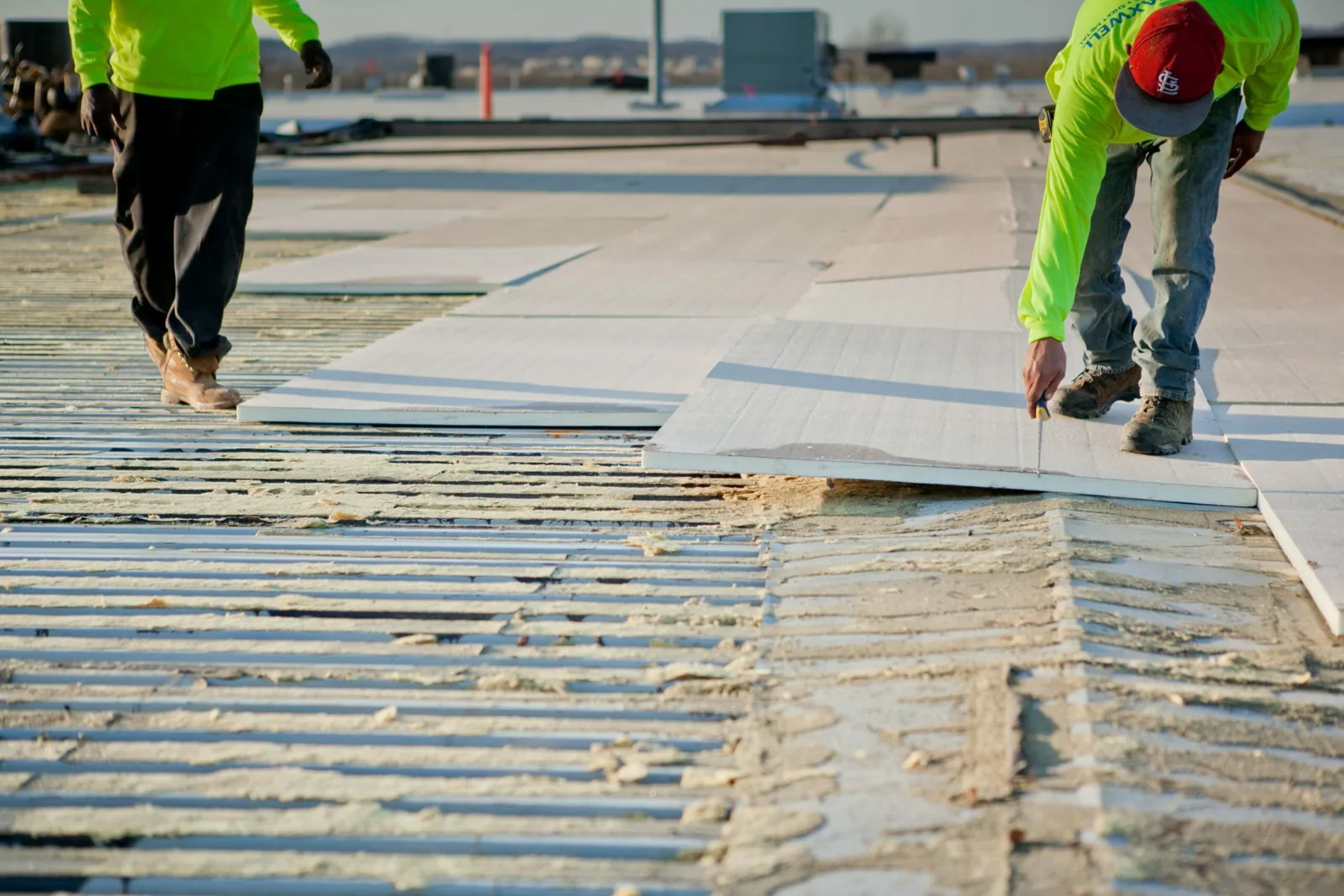
The sheet is only the top layer. Below it, rigid insulation and a cover board carry the foot traffic and the thermal performance, and a deck holds it all. A wet board loses its insulating value and its strength, and a soft area under foot is often the first sign. We use a moisture scan to find wet insulation without cutting the roof, then cut cores to confirm.
A cover board and insulation upgrade can protect a TPO roof from hail, foot traffic and fastener telegraphing, and it helps the sheet lie flat. On a mill or older masonry building in New Bedford, the deck and parapets set limits on thickness, so the insulation plan often starts from what the walls can accept.
Which South Coast buildings suit TPO?
Large low-slope roofs on distribution space, office buildings and retail suit TPO well, and it is often the practical choice for a recover over a sound existing roof. A distribution or light industrial building in the New Bedford Business Park, a park counted at 44 companies and about 4,500 jobs in 2013, is a natural place to weigh a single-ply sheet. A reflective surface also helps a cooled building, which is the logic behind cool roof installation.
TPO is less suited to roofs with many penetrations, heavy chemical exposure from kitchen exhaust or unusual geometry, where other single-ply sheets such as PVC roofing may hold up better, and EPDM roofing suits some roofs with heavy foot traffic. We name the trade-off on the roof plan, so the facility director sees why one membrane was chosen over another.
Commercial Roofing Questions
How can I tell whether TPO seams are failing before a leak appears?
Probe the edges. A seam that takes the probe tip, a seam with wavy overlap and a seam with chalky texture all warn of a weak weld. We also check the areas around penetrations and T-joints, because those fail first. Finding them early means a cap strip instead of a wet ceiling.
How long does a TPO roof last on the South Coast?
It depends on the thickness, the installation quality and the exposure, so we judge each roof by its condition and not by a number. A sheet that is flat, welded and dry beneath may outlast an older neighbor. We give you a range for remaining life with the findings behind it.
Can TPO be installed over my existing roof?
Often, if the existing roof is dry and sound and the code allows the added layer. A core cut and a moisture scan decide it. If the insulation is wet, it comes out first, and a cover board usually goes between the old roof and the new sheet.
What is the difference between TPO and PVC?
Both are heat-welded single-ply membranes. PVC resists grease, oils and many chemicals better and often costs more. TPO is a common choice for general roofs and offers reflectivity at a lower price. Where the roof sees exhaust or chemicals, we explain why PVC may be the better choice.
What does a TPO repair cost compared with replacement?
A seam or flashing repair is a small fraction of replacement. If the problems are scattered and the insulation is dry, repair is the right dollar. Where the sheet keeps shrinking and wet insulation spreads across a broad area, replacement is the cheaper path over the roof's remaining life.