Commercial Roofing Services
Cool Roof Installation in New Bedford, MA
Reflective cool roof systems for New Bedford, MA buildings, with the inspection findings, wind detailing and winter trade-offs that decide if white pays.
Request a Roof Assessment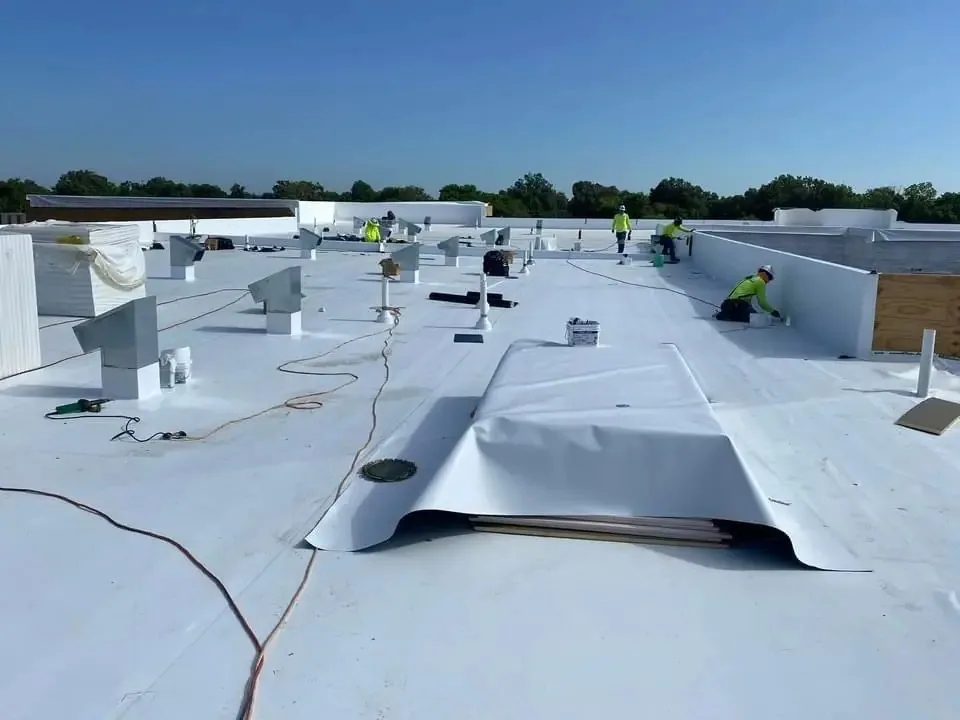
Will a white roof actually lower the cooling bill on a building that spends half the year in a South Coast winter? A facility director asking that is asking the right question, and the first thing an inspector would find on the roof is that the answer depends less on the color of the membrane than on what sits under it. A reflective surface over wet or crushed insulation saves nothing, and a reflective surface over a sound, dry, well-drained assembly can take a real edge off summer heat load.
So a cool roof in New Bedford, MA begins with a moisture scan and a core cut, not with a color chart. We mark the condition of the insulation, the deck and the existing membrane on the roof plan, explain what each finding means for the budget, and then decide whether the reflective system belongs on this roof, on a different roof in the portfolio or nowhere at all.
How much heat is the roof actually carrying?
New Bedford has recorded a high of 107 F, and a dark membrane in direct sun gets considerably hotter than the air above it. That surface heat moves down into the insulation, stresses the membrane and loads the cooling system below. A reflective surface sends much of that energy back, which lowers the surface temperature of the sheet and slows the thermal cycling that ages seams, flashings and sealants.
The benefit is largest where the space below is cooled, where the insulation is thin and where the roof is large compared with the walls. A one-story building with a big roof and a rooftop unit gains more than a tall building with a small one. We look at the top floor, the ceiling plenum and the mechanical layout before promising anything, because an uncooled storage building may see little return from a reflective surface at all.
What does a reflective roof give up in winter?
New Bedford averages about 32.5 inches of snow a year, mostly December through March, and the record low is minus 12 F. A reflective roof absorbs less winter sun, so it gives up a small amount of free heat when the building needs it. For many buildings on the South Coast that loss is smaller than the summer gain, but it is real, and a building with a heated space under a thin roof should weigh both.
The larger winter question is condensation. A roof that stays cold under a layer of snow can condense moisture inside the assembly if the vapor control and insulation are wrong. Insulation thickness and condition, the vapor retarder and any ventilated cavity are checked first, and the assembly we propose has to satisfy 780 CMR 10th Edition, the state code based on the 2021 IBC. A cool roof is a surface choice, and the assembly under it still has to work in January.
Which reflective systems suit a commercial roof?
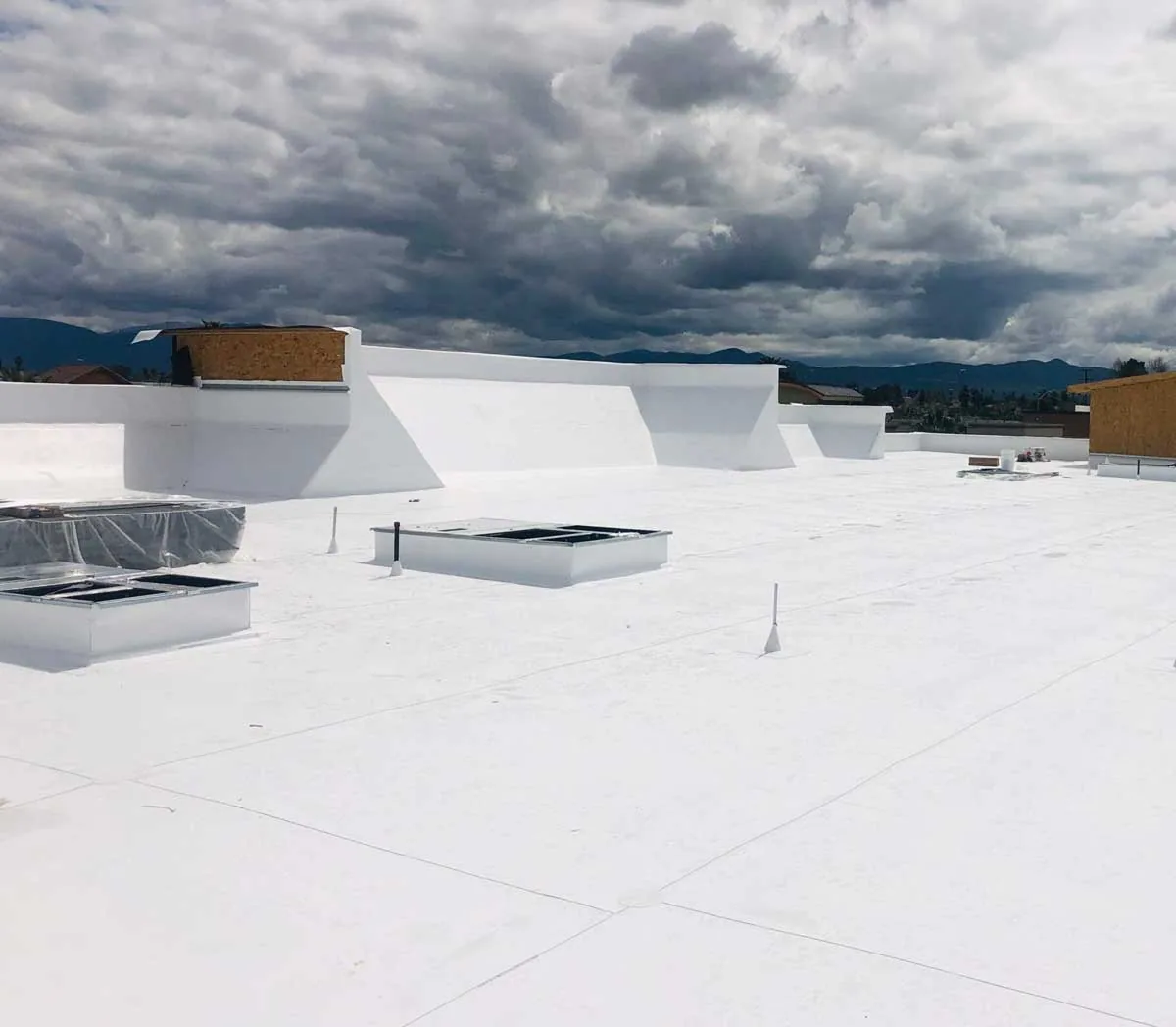
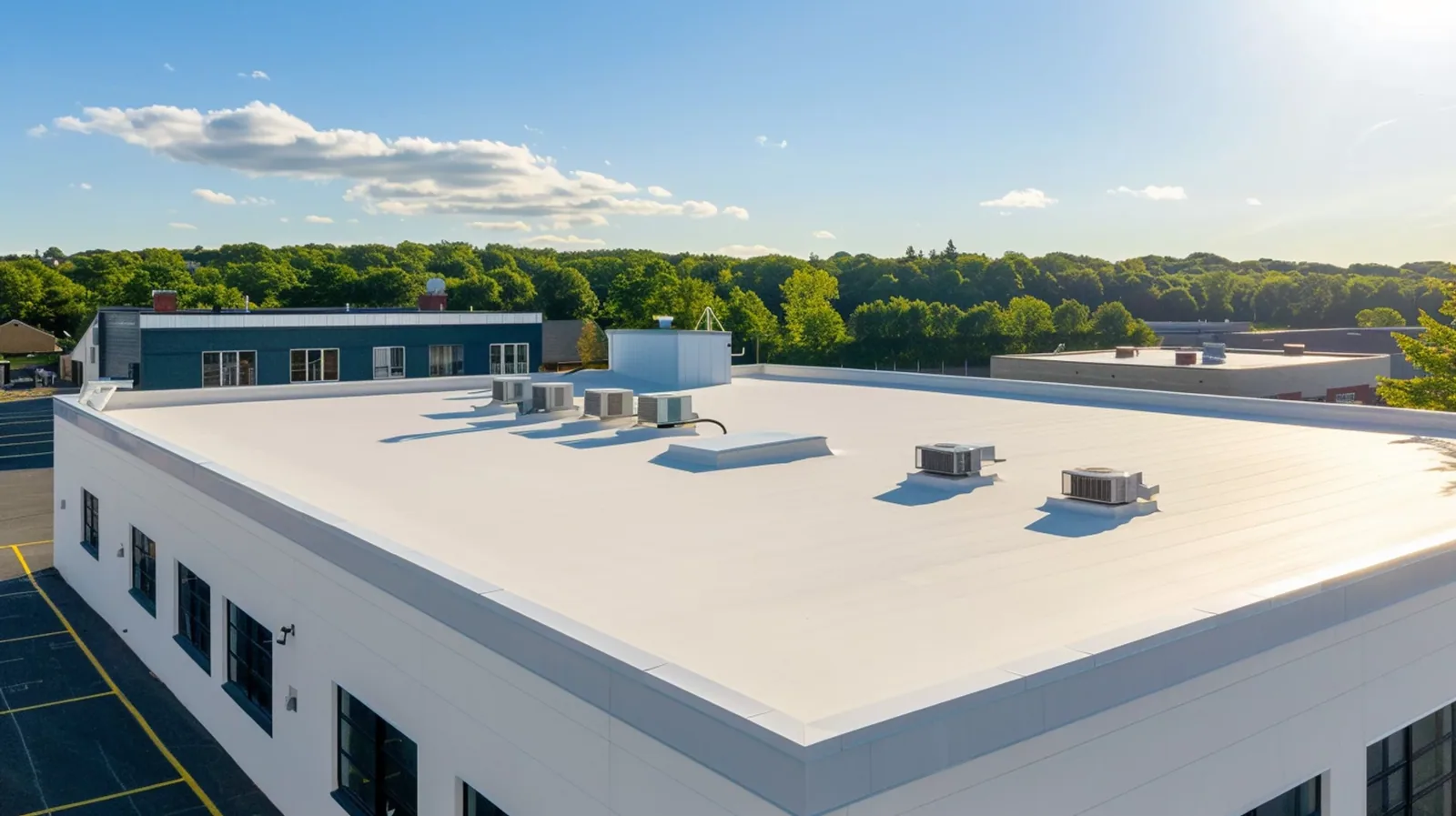
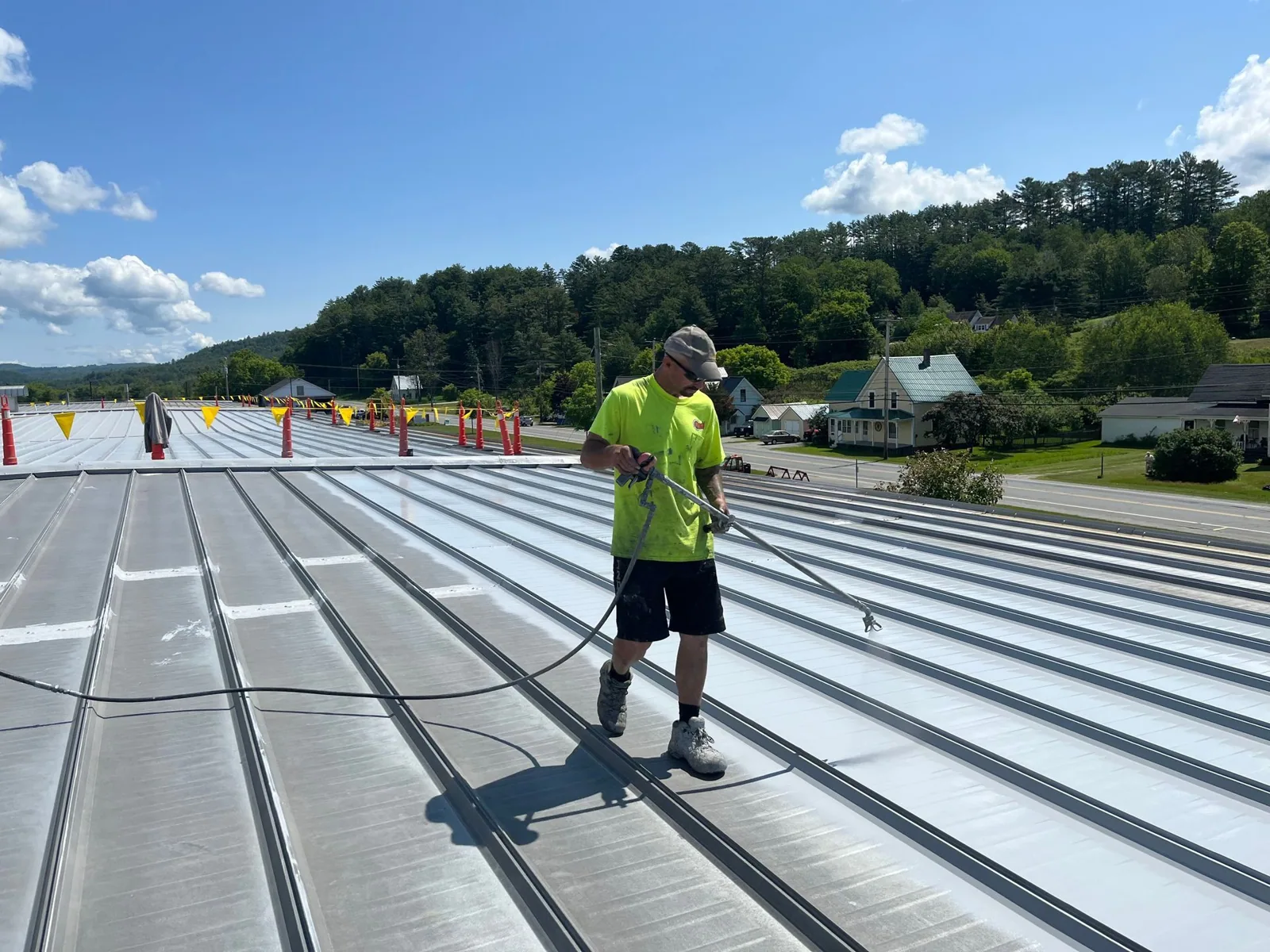
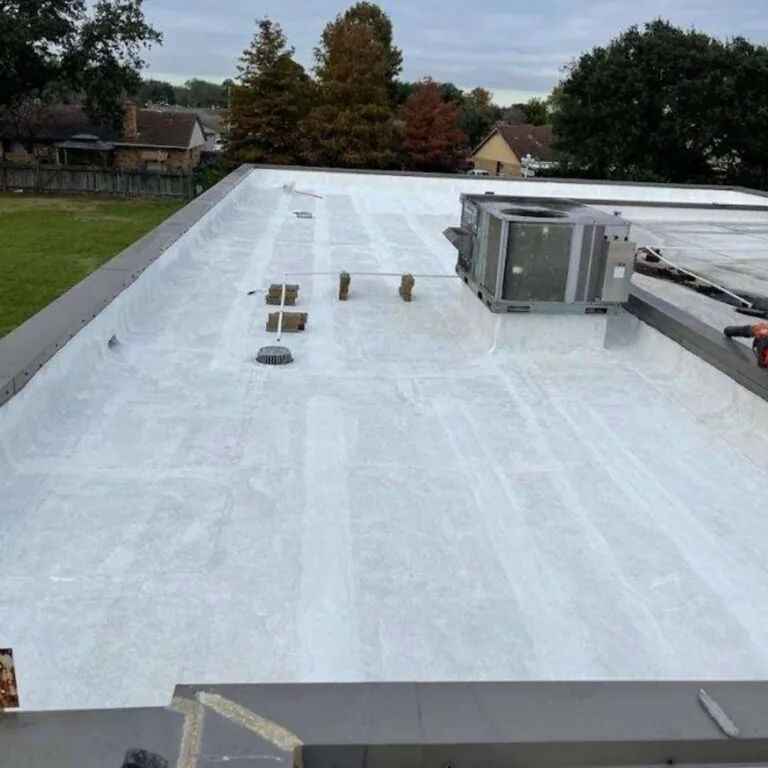
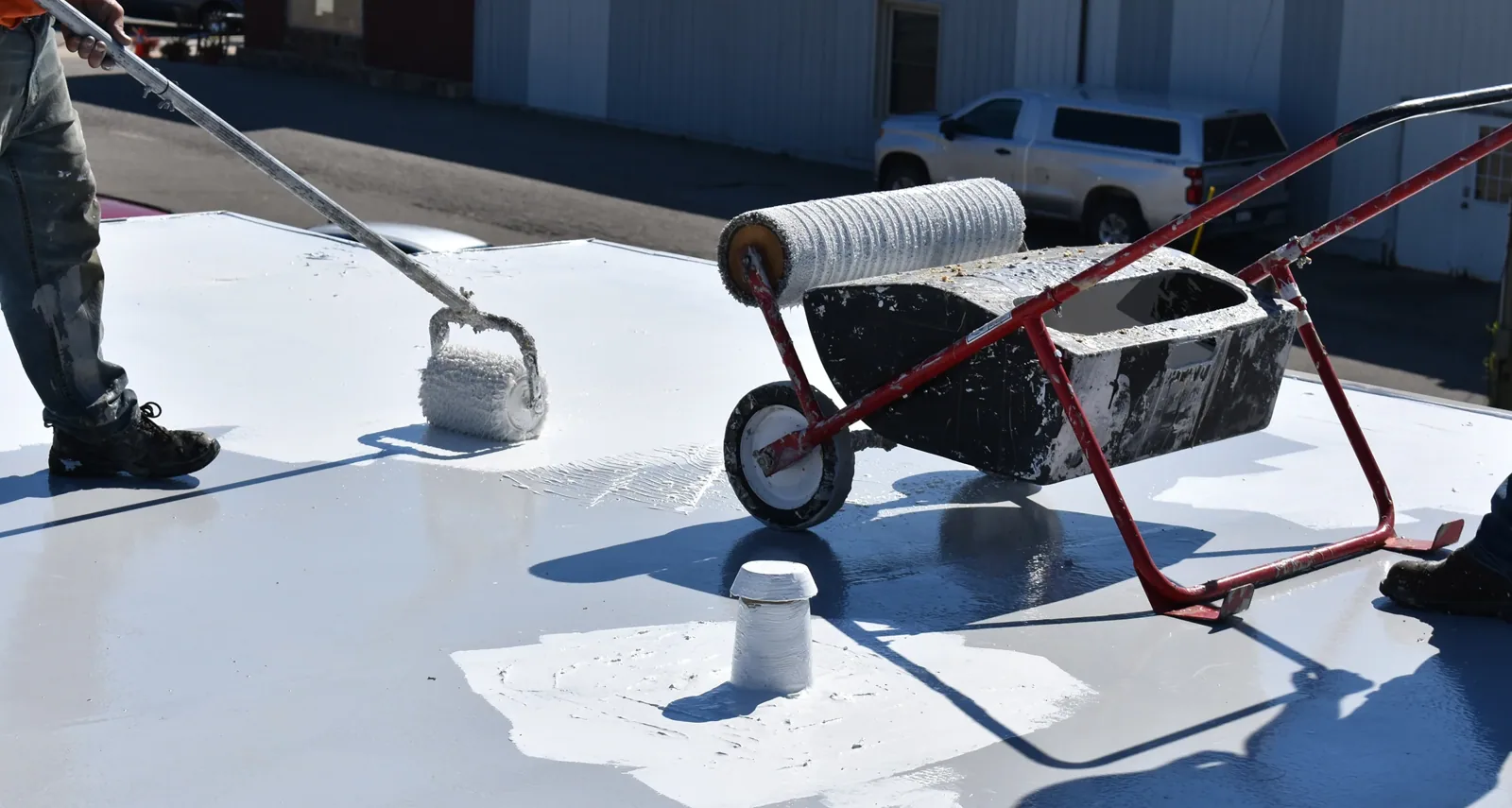
The common choices are white single-ply membranes and reflective coatings. A white TPO roofing or PVC roofing membrane is manufactured reflective and welded at the seams, which suits a replacement or recover. A reflective coating can restore an older, sound roof and add reflectivity without tear-off, using silicone roof coatings or acrylic roof coatings over a clean, dry surface.
Each has trade-offs. Single-ply membranes need fastening or adhesion that holds against wind, coatings need a compatible substrate, and both lose some reflectivity as dirt collects. We explain which fits your roof and what it will look like after three or four seasons, so the facility director is not surprised by a gray roof in the third year.
How is a cool roof held down against harbor wind?
Reflectivity does nothing for a membrane that has lifted. Hurricane Bob put gusts of 89 mph over Buzzards Bay in 1991, and Hurricane Carol in 1954 produced winds of 80 to 110 mph across eastern Massachusetts. On a new single-ply roof, that means fastener density along the perimeter and corners, adhesive coverage and edge metal that is fastened to structure. Along a waterfront building, the edge is where uplift starts.
We mark every perimeter detail on the plan, check the substrate for the adhesive or fastener to hold and confirm the edge metal. Our edge metal and gutter work is part of any cool roof proposal, because a pale surface with a loose gravel stop is a roof waiting for a storm.
Can an existing roof be made reflective without replacing it?
Sometimes. A coating can be applied to a roof that is dry, sound and clean, and a moisture scan and core cuts tell us whether it is. If the survey shows wet insulation, the coating would trap the moisture, so the wet sections come out first. If the existing membrane has widespread shrinkage, open seams or deep blisters, the coating will not hide them for long.
When coating is not appropriate, a recover with a new reflective sheet over a cover board is the next option. The roof coating restoration scope and the roof recover scope both start from the same findings, and we price them side by side so the choice is financial rather than guesswork. Where the existing roof is near the end of its life, a full replacement with a reflective sheet is usually the better dollar.
Which South Coast buildings benefit most?
Large, low-slope roofs on cooled buildings benefit most. In the New Bedford Business Park, which had 44 companies and about 4,500 jobs in 2013, we look at each roof for its cooled floor area before saying anything. The same test applies in Myles Standish Industrial Park in Taunton, which covers more than 800 acres of manufacturing, office, high-tech and distribution uses and therefore a wide spread of cooled and uncooled space.
Older mill buildings with several floors have smaller benefit-to-cost ratios, because the roof is a smaller share of the envelope. We say so when we see it. If the building is a warehouse with cooling, a reflective roof is worth a close look. If it is a mill with a tight budget, structural condition and drainage come first.
Commercial Roofing Questions
What decides whether a cool roof pays back on our building?
The cooled floor area below the roof, the thickness of the insulation and how many hours the cooling runs. We look at those three items on the walk and give you a reasoned yes, no or not yet. A building with a small cooled office under a large roof pays back differently from a fully cooled warehouse.
Does a white roof get dirty quickly near the harbor?
Every reflective surface loses some brightness as dust, soot and organic growth settle on it. Washing and maintenance restore much of it. We schedule a yearly visit to clean drains and check seams, and we recommend a rinse when the roof is visibly dirty.
Will a cool roof change the warranty options?
The manufacturer sets the warranty terms for each system, and they depend on the substrate, the details and the installation. We describe what the manufacturer's requirements are for the system we recommend, and we put those requirements in the scope so the roof is built to them.
Can a cool roof be installed while the building is occupied?
Yes, in sections. We stage the work so that each area is dried in before the crew leaves, and we plan loud or odorous steps for the hours that suit the tenant. Coatings need dry weather, and we choose product and schedule to match.
Ready to review the roof scope?
Request a Roof AssessmentKeep Reading