Roof Systems
Silicone Roof Coatings in New Bedford, MA
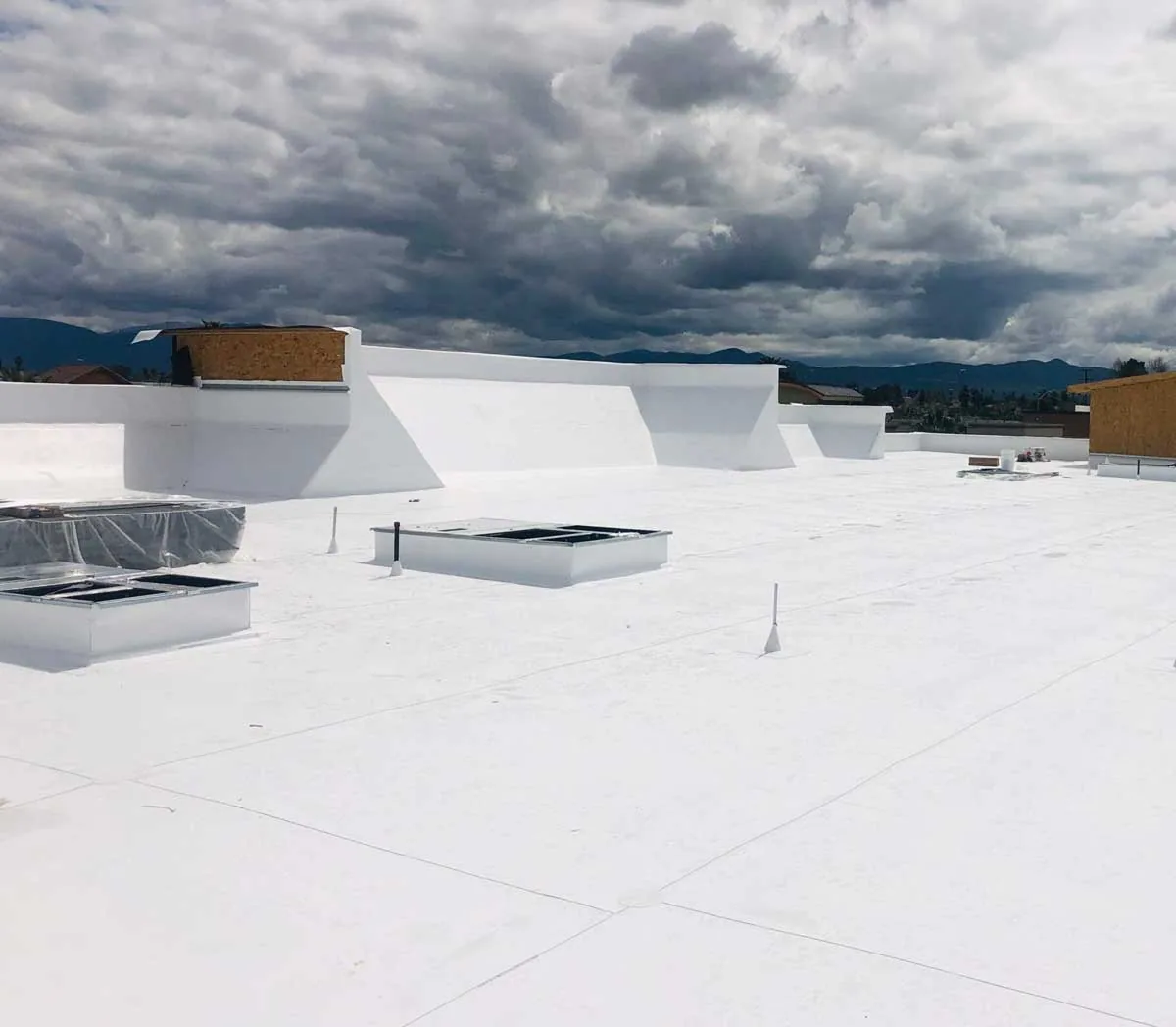
Silicone roof coating systems in New Bedford, MA: surface prep, adhesion and moisture scans, ponding performance, flashing treatment, and recoat timing.
Request a Roof Assessment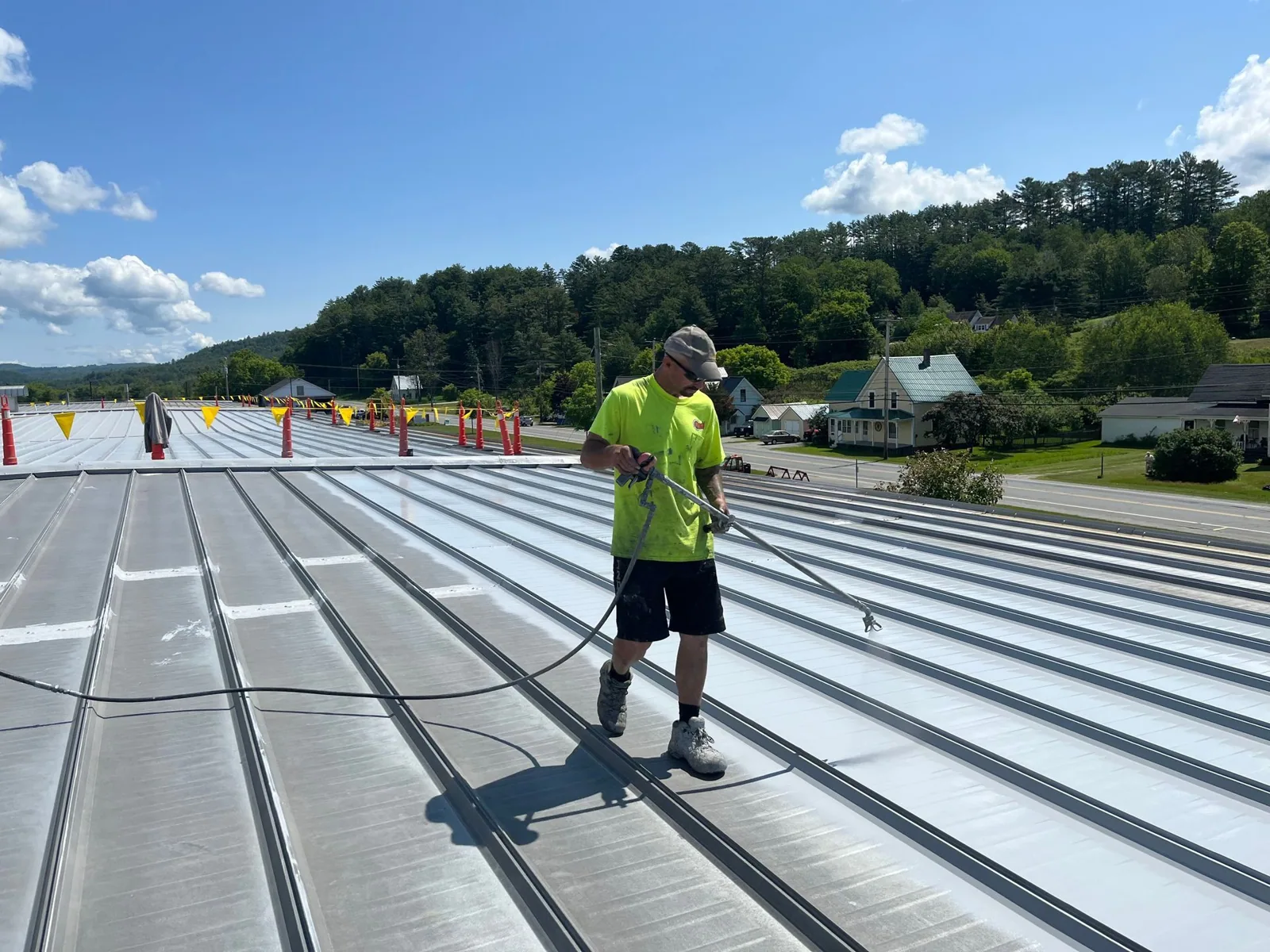
Can a coating really stop a roof that ponds water for days after every storm? A facility director standing under a stained tile usually wants a yes, and the first finding on the roof above is a low spot where the membrane has gone chalky and the seams at the edge of the pond have begun to open. Silicone is a liquid coating that cures into a flexible, waterproof skin, and it is the coating most often chosen when water cannot be moved off the roof quickly.
In New Bedford, MA, a coating faces roughly 124 days of precipitation a year, about 32.5 inches of snow and nights that have dropped to minus 12 F. We read the existing roof, the seams, the flashings and the insulation beneath, and we mark each finding on the roof plan so the owner knows whether a coating is the right answer before it is priced.
What does a silicone coating actually do?
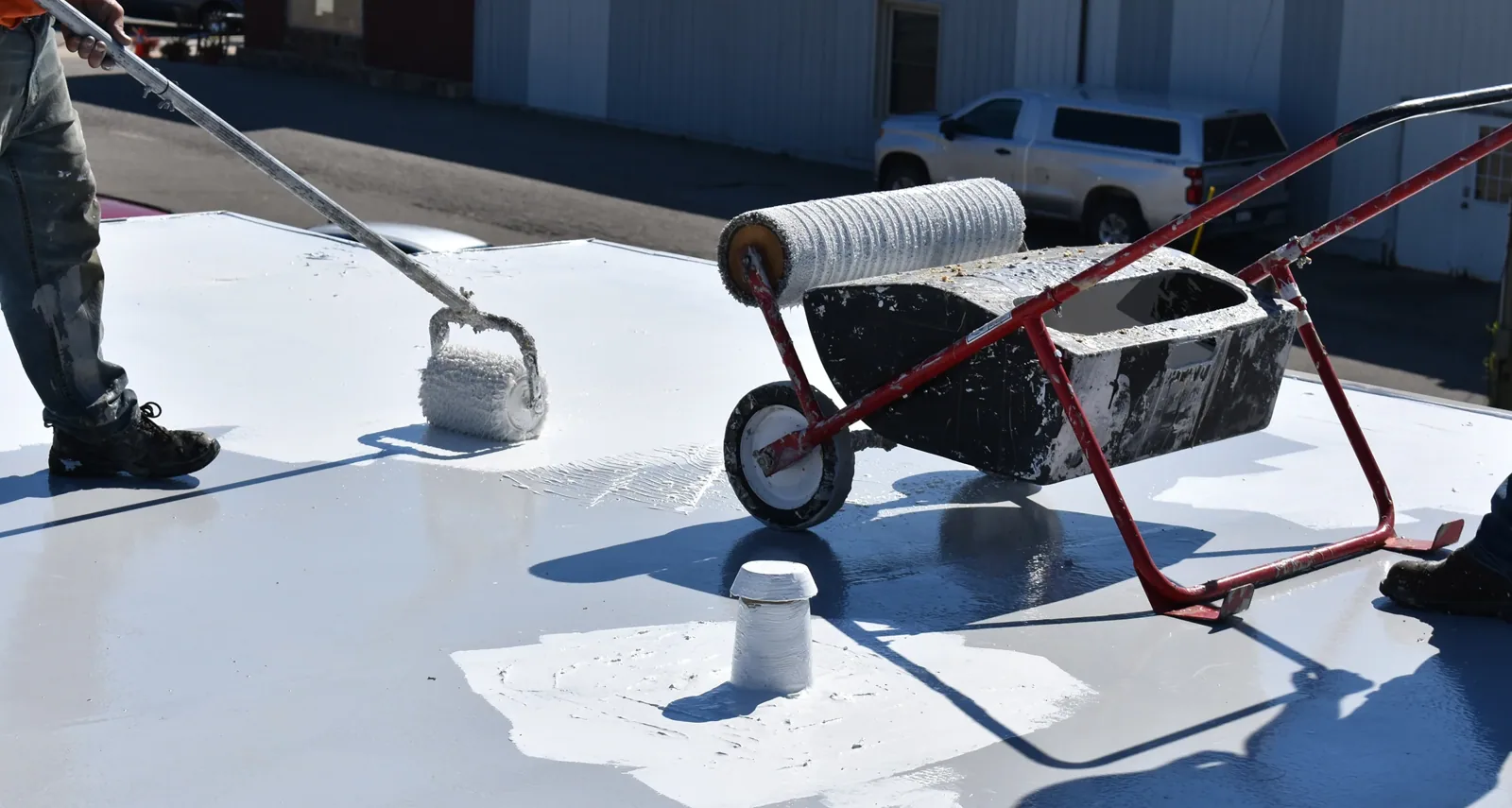
Silicone cures into a continuous layer that bridges small cracks, seals fasteners and lap edges, and reflects sunlight. It keeps its flexibility through the temperature swings a South Coast roof sees, and it holds up to standing water better than most coatings because it does not soften or wash out when wet. It does not add structural strength, repair open seams on its own or dry a wet roof. The film is also thin compared with a new membrane, which is why the thickness is specified and measured, and why bare spots at walls and curbs are checked before the crew leaves. The coating works as a skin over a roof that is already sound beneath, so every job starts with a decision about whether the substrate is sound. A roof that fails that test is not coated at all, and the owner is told why in the written findings, with photographs of the cores and the scan results next to the locations that failed. That keeps the conversation about the roof, not about the product, and it prevents a coating from being asked to do a repair's job.
How do we know the roof can take a coating?
We cut cores, run a moisture scan across the roof and probe the seams. A roof with wet insulation in a bay is not a candidate for that bay, because the coating would trap the moisture. A roof with dry insulation, secure seams and a stable surface is. We also pull a small test area to check adhesion, since silicone bonds well to some surfaces and needs a primer on others. Old modified bitumen with heavy granule loss, aged EPDM, metal and polyurethane foam each respond differently, and the roof plan records the substrate and the prep it needs. A pull test on a taped test patch, read after the coating cures, shows whether the bond is real. If the patch peels clean, the roof needs a primer or a different system, and we say so before the work is priced.
Why does surface prep take most of the job?
Coatings fail at the bond, not in the middle of the film. Power washing strips dirt, algae and loose coating first; then seams are reinforced with fabric and sealant, fasteners are sealed and the flashings at walls, curbs and penetrations are rebuilt, all before any coat goes down. Cracks and open laps are repaired, not covered. The roof must be dry and the weather settled, and in a region with about 124 days of precipitation a year that narrows the window. We schedule the work in sections so no area is left half-prepared when the forecast changes. Temperature matters too: the surface has to be above the dew point and above the minimum the product allows, and a cold, damp morning on the South Coast can push the start of a coating day back by hours. The crew leader checks surface temperature and humidity at the start of each shift and writes down the readings.
What do wind, snow, and ice do to a coated roof?
Hurricane Carol drove winds of 80 to 110 mph across eastern Massachusetts in 1954, and that history is why a coated roof still gets its attachment checked, not just its film. A coating does not hold a roof down, so the question after a storm is whether the roof beneath it stayed attached. We check the edges and the edge metal for loose fasteners. In winter, snow and ice can scrape a coated surface, and ice at a drain sump can pull the film loose. In the January 2015 blizzard Fall River took 24.1 inches of snow, and roofs carrying that load reveal their drainage problems in the thaw. Ice that forms in a sump can lift a coating at the edge of the drain, so we look at the film around every outlet after a hard winter and repair any lift before the next freeze.
What are the limits, and what will it cost to maintain?
Silicone is slippery when wet, so walkways and access points get a traction surface, and it attracts dirt, which can dull its reflectivity until it is washed. Once a roof is coated with silicone, most other coatings will not bond to it, so a future recoat is usually silicone again. The coating thins over the years and is renewed rather than replaced, and an annual walk with a thickness gauge tells the owner when the next coat is due. The cost drivers are the area, the condition of the substrate, the amount of seam and flashing work, and the number of coats. A roof coating restoration is typically less disruptive than a tear-off, and it avoids the debris and noise of removal. Review under the 10th Edition of the Massachusetts code, which follows the 2021 IBC, may apply, and we confirm that when the scope is set.
Which South Coast roofs make good candidates?
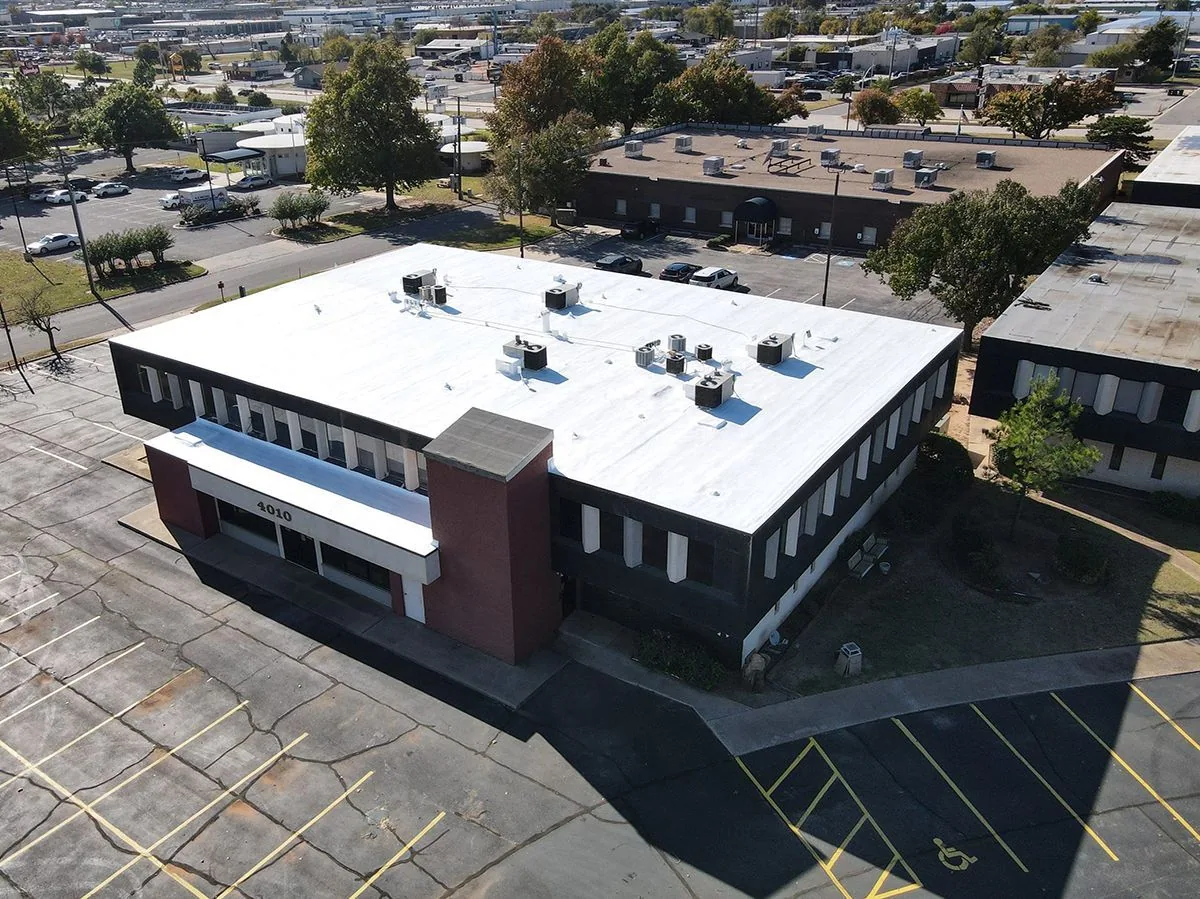
Flat and low-slope roofs with sound membranes and areas that pond are the clearest fit. A flat roof on a 19th-century mill building, such as the Wamsutta, Hathaway or Kilburn mills, is the sort of roof where drainage is a constant question, and a coating can extend its service when a scan shows the roof beneath is dry. Commercial buildings in the New Bedford Business Park and industrial roofs elsewhere on the South Coast can also be considered when moisture scans clear them. For a roof that is wet or failing, a modified bitumen or TPO replacement is the better path.
Commercial Roofing Questions
Can I coat over a leaking roof?
Only after the leak is traced and the wet insulation is removed or dried. A coating over trapped moisture blisters and fails. We scan first and repair the entry points before any coating goes down.
How many coats are applied?
Typically a base coat, reinforcement at seams and flashings, and a top coat, with the thickness verified. The specification states the film thickness, and we measure it as we go.
Does silicone work on metal roofs?
Yes, on sound, rust-treated metal with sealed laps and fasteners. The surface must be clean and primed where required, and open seams are fixed first.
Will the coating make the roof cooler?
A reflective coating lowers the roof surface temperature in summer, though it can collect dirt that reduces the effect until washed. Insulation values are unchanged.
How soon can foot traffic return?
Light traffic can return after the coating cures, and we mark walkways with protective pads where equipment access is regular. Dropped tools and boots can scuff a fresh coating.
Ready to review the roof scope?
Request a Roof AssessmentKeep Reading