Property Types We Roof
Distribution Center Roofing in New Bedford, MA
Roof repair, maintenance and replacement for distribution and fulfillment centers around New Bedford, MA, planned around dock schedules and peak freight weeks.
Request a Roof Assessment
What does a facility director say when a sorting line shuts down because water is dripping onto a conveyor? Usually something about the age of the roof, and the first thing an inspector finds is rarely age. It is a drain that clogged with truck-yard grit, or a roof curb for a dock exhaust fan whose sealant has split along one side. A distribution center in the New Bedford, MA area runs on a clock set by outbound freight, so a roof problem that interrupts the clock costs more than the repair. We start with the seam probe, the drains and the curbs, mark each finding on the roof plan and give you a written order of work you can slot into a quiet window of the shipping calendar.

A fulfillment building in Freetown or Fall River Industrial Park shares the logic of a warehouse roof, with more mechanical equipment on top, a heavier cycle of foot traffic and less room for a failure, so it is also a close cousin of a manufacturing plant roof.
Which corridors put distribution roofs under pressure?
Freetown is a useful example, because the Stop & Shop distribution center is the specific employer named there, and the town sits on Route 24, the Fall River Expressway, which has three exits serving Assonet, with a Route 140 exit serving East Freetown. Freight arrives and leaves along those routes at all hours, and the buildings that handle it carry rooftop exhaust, makeup air and refrigeration condensers of their own.
Further north, Myles Standish Industrial Park in Taunton includes distribution among its uses across more than 800 acres, and the Massachusetts Coastal Railroad provides freight service through Dartmouth, Wareham and Middleborough. Wherever the trucks and rail cars meet the dock, the roof above takes a steady load of vibration, exhaust and foot traffic from service technicians, and each of those wears at a membrane in its own way.
We keep these differences in mind when we write the report. A roof over a loading area gets a different set of notes than the quiet side of the same building, and a roof beside a rail spur gets notes about vibration where a roof beside an open yard does not.
Where do rooftop units and exhaust fans wear a membrane?
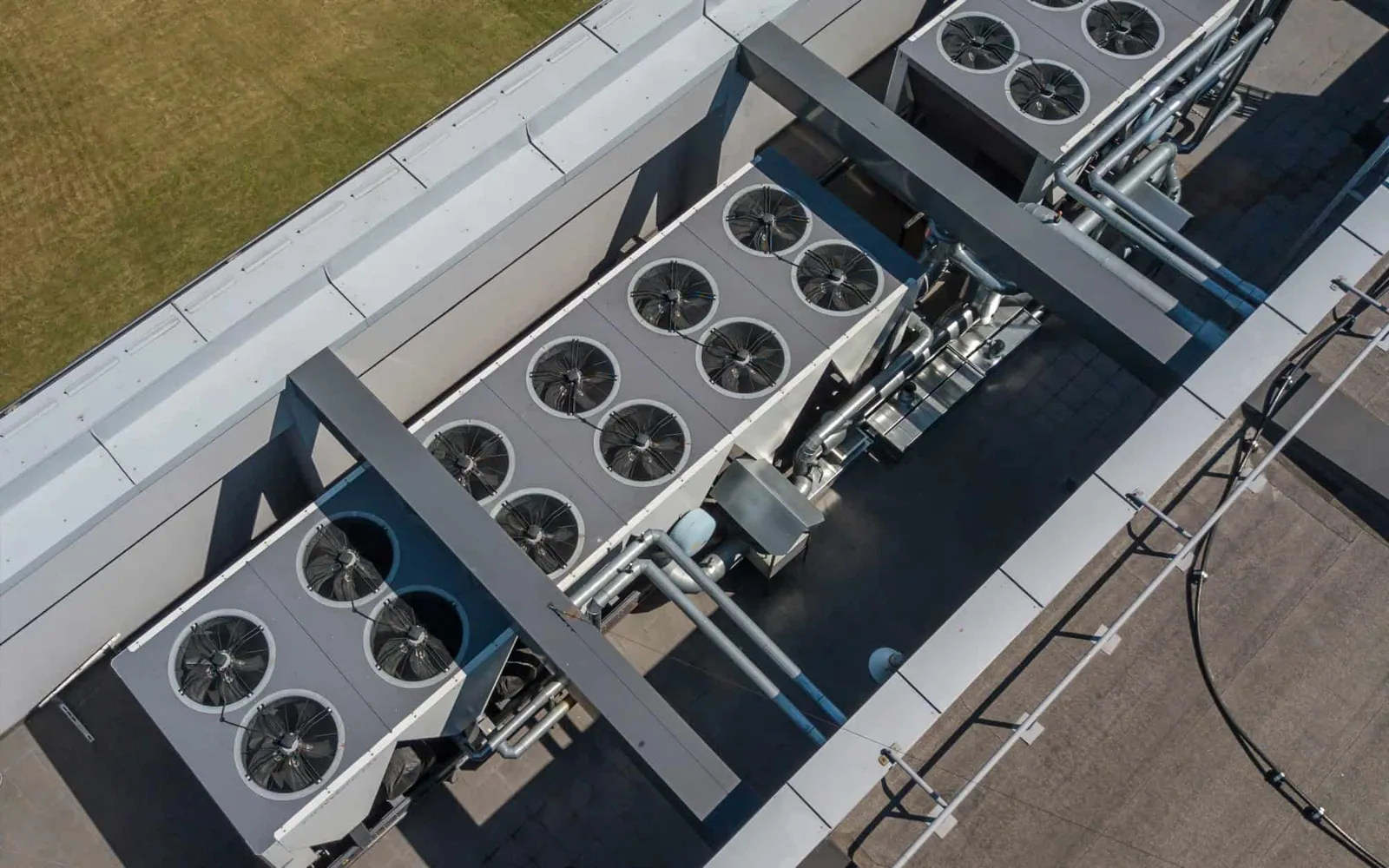
The membrane around a rooftop unit gets walked on more than any other part of a distribution roof. Technicians step off the walk pads, drag tools across the seam and leave filters and fasteners where they fall. We look for scuffed membrane, punctures near curbs, loose counterflashing on the curb itself and lap sealant that has cracked where a technician stood. Each of those is a small, cheap repair if it is caught on a visit, and an expensive one once water has run into the insulation below.
On any large roof, the curbs and supports for equipment deserve their own line on the roof plan. A curb that is too low, a pipe boot whose collar has split or a support without a pad in the right place can each bring water in beside a roof full of otherwise sound membrane. We mark them, photograph them and say whether the fix is a new flashing or a rebuilt curb.
Condensate lines are another quiet source of trouble. A line that drains onto the membrane year after year wears a spot that looks like ordinary dirt until the surface thins, and we mark the drip location so a splash block or a drain connection can be added during the next repair.
What does coastal wind do to a long, low building?
A long, low building is as exposed at the edges as a tall one is at the top. Hurricane Bob drove gusts of 89 mph past a Buzzards Bay station in 1991, and the 1938 hurricane left New Bedford under eight feet of water. Those are the storms that taught this coast about perimeter details, and the gravel stop and edge metal at a distribution center see the same wind year after year.
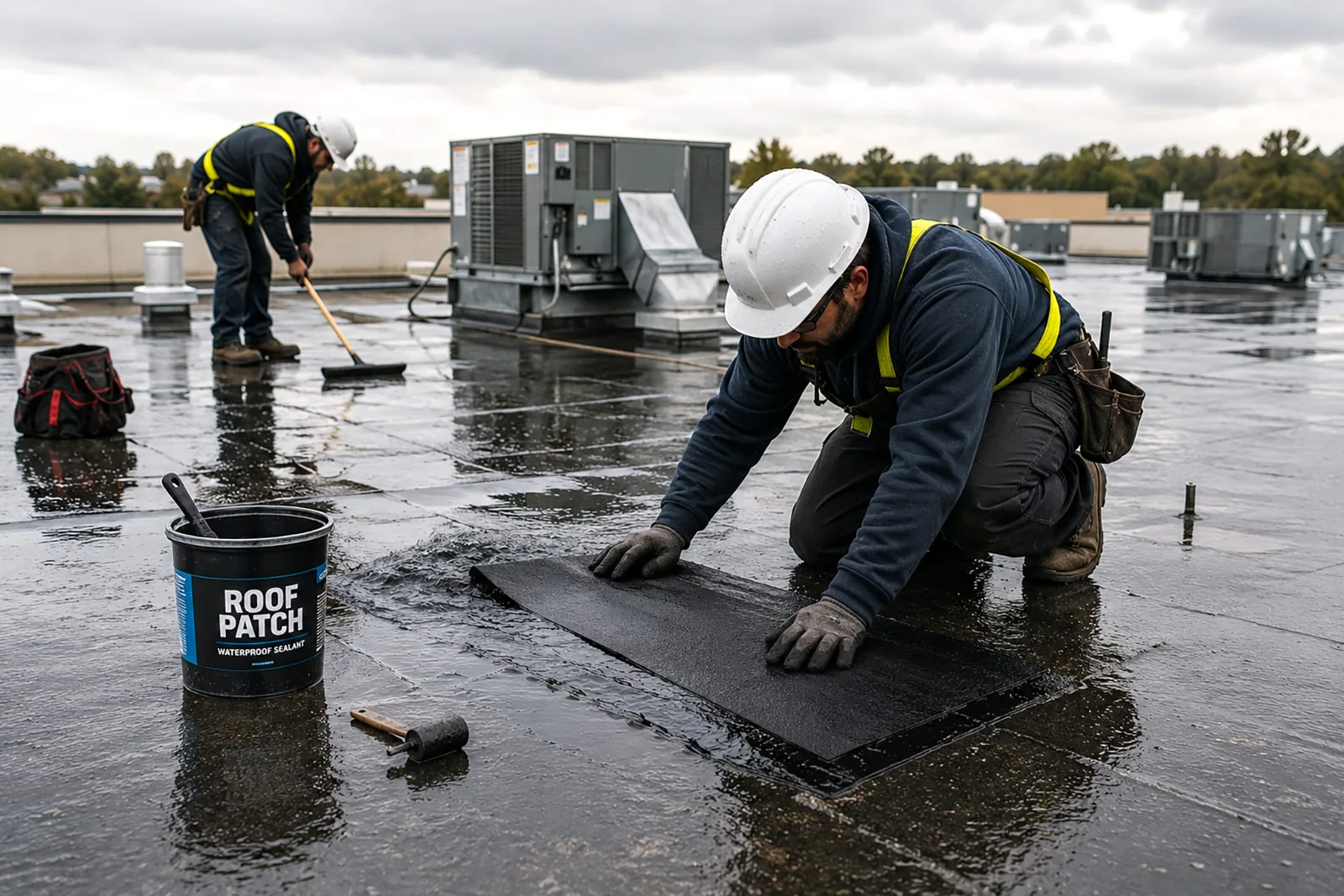
We check that the metal is fastened at the right spacing, that joints between lengths are sealed, and that the membrane under the flange has not lifted. When wind has already done its work, an emergency repair crew can dry in a torn corner the same day, and the permanent repair follows once the building is calm. Wet insulation near a dock door can be left until a convenient window, but a loose edge cannot.
How does snow load change drainage on a big flat roof?
New Bedford averages about 32.5 inches of snow a year, and the January 2015 blizzard dropped 26.0 inches in East Freetown. On a large distribution roof that snow melts toward whatever low point it finds, and a drain choked with debris turns a low point into a pond. Sustained ponding stresses seams, accelerates membrane aging and adds weight to a deck that already carries rooftop equipment.
We clear and inspect each drain sump, check that scuppers are open, and look at the tapered crickets that direct water toward them. If a roof does not drain well enough, the options run from additional drains to a tapered insulation layer installed during a recover, and we price each against the cost of the problem it solves.
Where a drain has failed outright, we look first at the pipe below the sump, because a crushed or disconnected line can send roof water into a ceiling space that nobody checks until it is soaked. A camera or a simple flow test tells us whether the line is clear, and the roof plan says who is responsible for the fix.
Can a roof program fit around peak freight weeks?
Most of the work can run on weekends or overnight, and the heavier jobs wait for the slowest weeks of the year. A building with one roof can be replaced section by section so that dock doors in active use stay protected. A portfolio with several buildings across Fall River, Taunton and the Route 24 corridor benefits from a multi-site roof program that sequences the oldest and wettest roofs first.
Preventive work lowers the number of surprises in the middle of peak weeks. A maintenance visit clears drains, reseals curbs, tightens edge metal and photographs the roof, so the next storm does not find a loose detail.
Cost drivers on a large distribution roof are the area, the number of penetrations, the condition of the deck, the thickness of insulation that needs replacement and the hours the crew is allowed to work. We give the owner a range, and then a firm number once the roof plan has been walked together.
Commercial Roofing Questions
How do we keep a roof repair from interrupting dock operations?
Scheduling does most of it. We agree on the days and hours that suit the shipping calendar, stage material away from truck lanes and keep a lookout at the dock side while a crew works above.
Does equipment on the roof change the repair approach?
Curbs, supports and refrigeration lines shape where we can stage material and how we flash. We note every penetration on the roof plan and decide whether to flash around it, raise it or remove it during a replacement. For a unit that is nearing the end of its life, the cleanest time to raise the curb is the same week the unit comes down.
What triggers a replacement instead of another round of patches?
Saturated insulation across a wide area and repeated leaks at seams rather than at details usually settle it. Moisture readings from a scan put numbers behind the choice.
Who decides which roof in a multi-building portfolio goes first?
Condition and consequence rank the list. A building with wet insulation and sensitive stock above the racking goes ahead of one with a clean report and a few years of service left.
Can an infrared scan tell us anything useful on a roof this large?
It shows where heat holds in wet insulation, which is the clearest way to map moisture across a broad membrane. We follow it with core cuts at the suspect areas so the report states what lies beneath.
Ready to review the roof scope?
Request a Roof AssessmentKeep Reading