Commercial Roofing Services
Roof Recovers and Overlays in New Bedford, MA
Recovering a sound commercial roof in New Bedford, MA instead of tearing it off, with moisture testing, code review and edge detailing before approval.
Request a Roof Assessment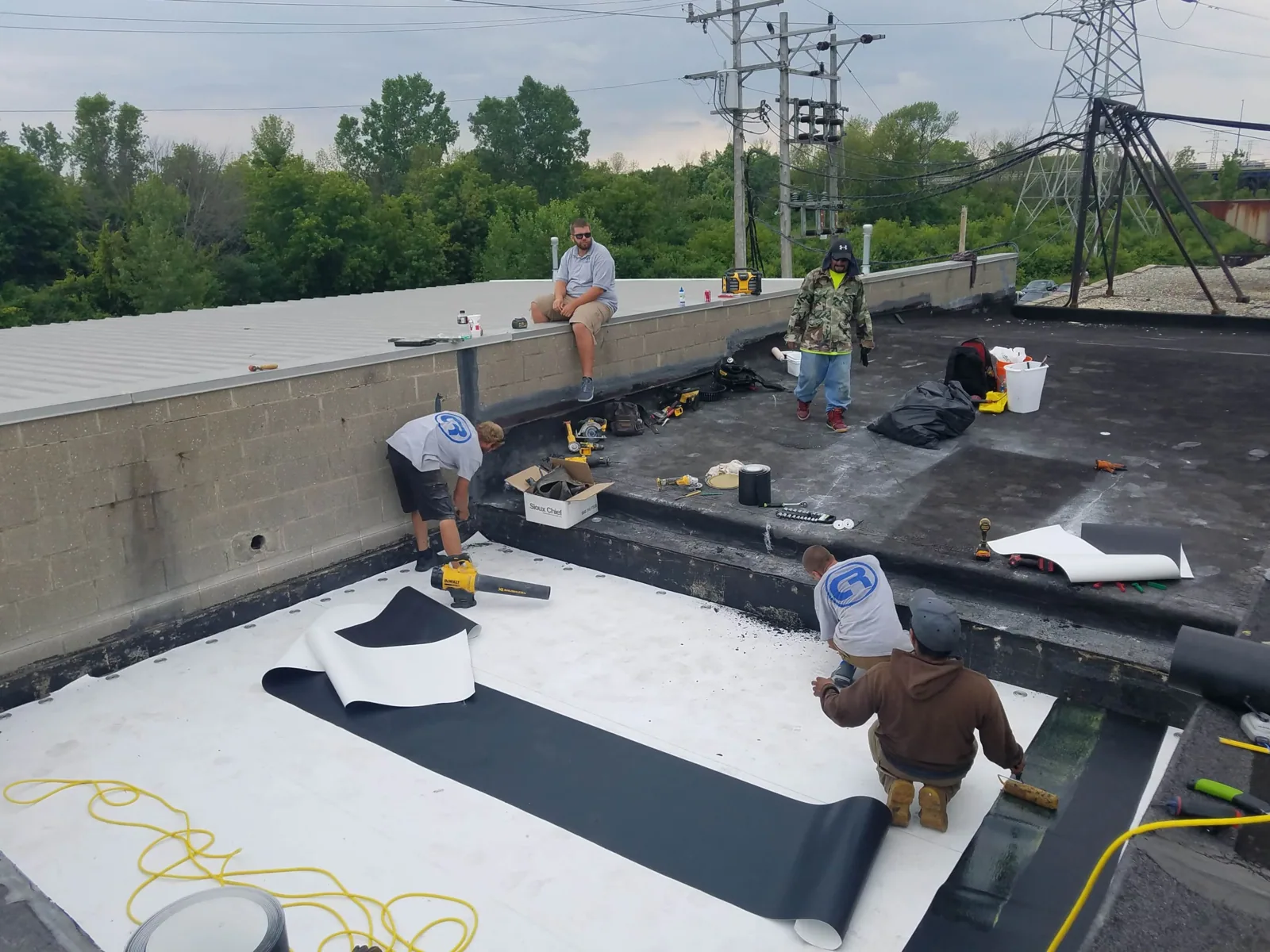
Can the old membrane stay? That is the first question a facility director asks about a recover, and the inspection answer depends on what is sitting underneath it. A recover leaves the existing roof in place and installs a new assembly on top, which saves disposal, shortens the schedule and keeps the building quieter, but it only works when the layers below are dry, flat and firmly attached.
In New Bedford, MA we begin with a moisture scan and a set of core cuts, because trapped water is the finding that ends most overlay plans. Where the roof qualifies, the savings are real. Where it does not, we say so before you spend money on a layer that would only seal the problem in.
What has to be true before an overlay is allowed?
Four findings decide it. The existing insulation must be dry across nearly all of the field, the deck must show no rust, rot or sag, the current membrane must be well adhered or mechanically fastened, and the roof must not already carry more than one layer. Any one of those failing moves the project back to tear-off, and we put the evidence on the roof plan so the reasoning is visible.
Our infrared moisture survey gives the first screen, and core cuts at the flagged areas confirm what the instrument suggests. We also walk the roof looking for blisters, ridges, open laps and fastener back-out, since each one tells us how the old system is behaving under its own weight and under foot traffic.
What does the code require when a roof is covered over?
Massachusetts uses the 10th Edition of 780 CMR, based on the 2021 International Building Code and effective October 11, 2024. A recover still has to meet the adopted requirements for wind resistance, fire classification and insulation, and the local building department has the final say on what is permitted. We confirm those points on each building before we price the work, because a recover that cannot be permitted is no saving at all.
The added weight also matters. A new membrane, a cover board and extra insulation add load to a deck that already carries a New England winter, and we check the structure against that combined demand rather than assuming the deck has room to spare.
Why does a cover board belong in the recover?
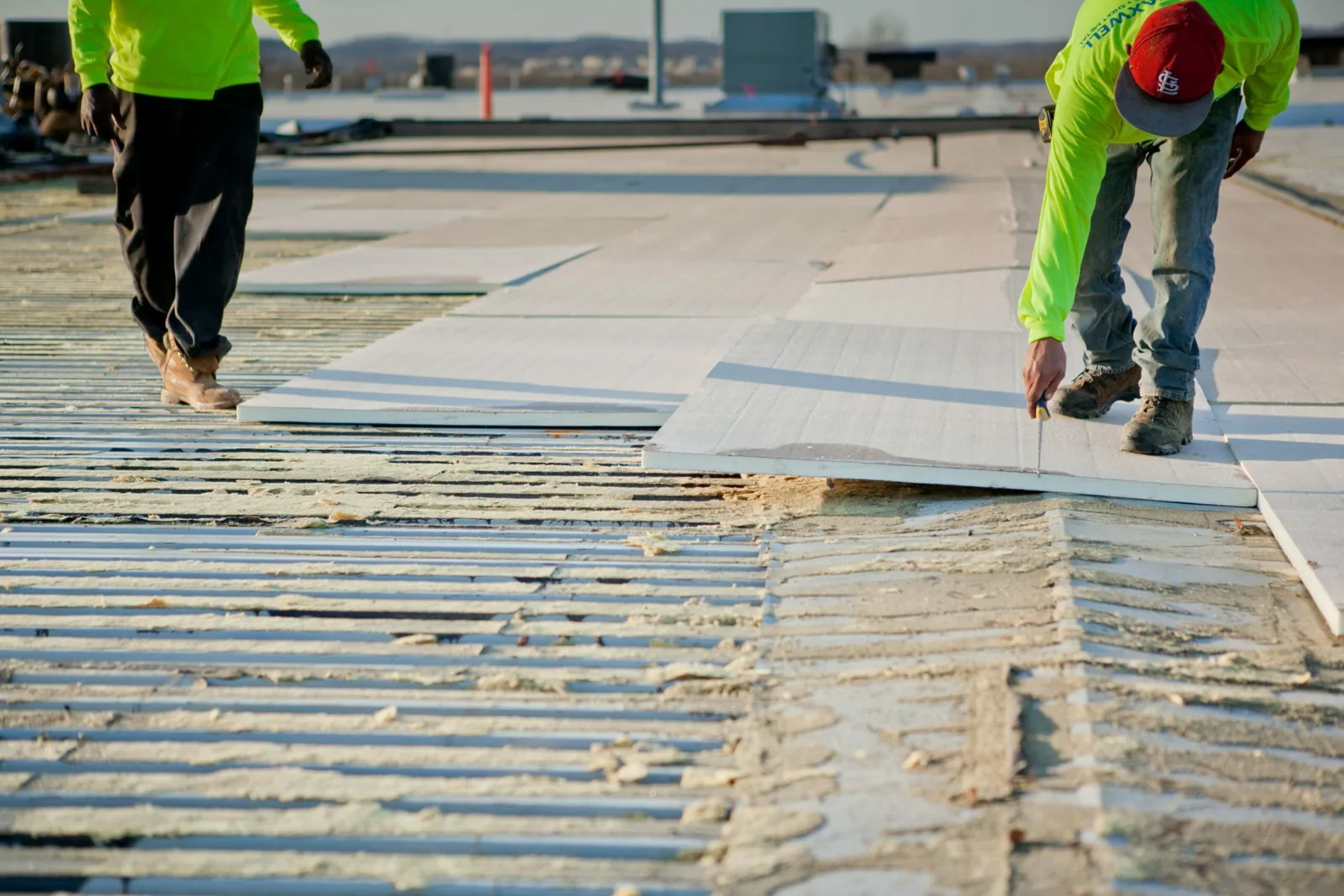
Between the old surface and the new membrane we install a cover board, usually a high-density gypsum or fiber product, so that the new roof sits on a clean, even substrate. It bridges blisters and ridges in the old roof, protects the new membrane from the old surface, and improves wind and hail resistance. Our insulation and cover board work sets the fastening pattern so the new layer is fastened to the deck through the old assembly, not just laid over it. Under a TPO membrane the board also gives the welded seams a firm, flat surface to bond against.
If the cover board is skipped, the old roof telegraphs through the new one, and seams settle into the low spots where ponding forms.
How does a recover hold up against harbor wind?
Taller assemblies change the edge. A recover raises the roof surface above the old gravel stop, and that means the edge metal, the parapet flashing and the base flashing heights all have to be rebuilt to match. Buzzards Bay recorded 89 mph gusts during Hurricane Bob in 1991, and the perimeter of any roof near the water has to be detailed for that kind of exposure. We lengthen the base flashings, fasten the edge with the denser pattern the zone requires, and replace coping where the old joints were open.
Edges are the detail that separates a recover that lasts from one that fails at the first strong nor'easter.
Does a recover change how the roof drains?
It can, and not always for the better. Adding layers lifts the field while the drains stay where they were, so the water has to climb a small ridge to reach the outlet. Snow in New Bedford totals about 32.5 inches in an average year, and the meltwater from that snow will find every low spot a recover leaves behind. We extend drain bodies where needed, add tapered insulation to restore flow, and examine the scuppers on parapet roofs for height and clearance.
If the drainage cannot be corrected on top of the old roof, a full tear-off and replacement is the better route.
Which buildings suit an overlay best?
Large, simple, low-penetration roofs are the best candidates, because the savings scale with area and the details are few. Industrial and distribution buildings along Route 24 and in the Fall River Industrial Park, where the park sits between Route 24 and Riggenbach Road, are places where we start screening, and warehouse roofs in the New Bedford Business Park are another. The park held 44 companies and about 4,500 jobs in 2013, and each building's roof is judged on its own findings.
Buildings with heavy rooftop equipment, many skylights or a history of repeated leaks are poorer candidates, since each penetration doubles the labor of a recover and hides the old problems.
What does the schedule look like on an occupied site?
A recover moves faster than a tear-off and produces less debris and noise, which is why it suits operations that cannot pause. We stage materials in the lot, hoist them in sections and close off the area under active work. For owners in Fall River and other South Coast municipalities, we provide a written sequence so tenants know which parts of the roof are open on which days.
Weather still sets the pace. We watch the forecast for temperature and wind before every adhesive or welding day, we keep the old roof protected at the end of each shift, and we hold back on work when conditions would compromise a seam. A recover that is rushed through a bad week costs more to correct than the days it saved.
Closeout includes a walk of the finished roof, a record of the cover board and fastening pattern, and photographs of every termination, so the file you keep describes the roof as built.
Commercial Roofing Questions
Can a recover go over a roof that has already been recovered once?
Usually not. Two layers on the deck is typically the practical limit for weight and fastening, so a second recover is rarely allowed. We confirm the layer count with core cuts and the building department before recommending any scope.
What happens to the warranty if wet insulation is trapped underneath?
Manufacturers generally decline to warrant a membrane installed over wet insulation, and the water will shorten the life of the new roof regardless. That is why we scan and cut first, and why we remove wet sections before the new system goes on.
How much will a cover board change the project?
It adds material and labor, but it protects the new membrane and improves the fastener holding, and it often decides whether the recover performs. We price it as its own line so you can see exactly what it adds to the total.
Will the building see more wind uplift after a recover?
The assembly is taller and the edges are more exposed, so the perimeter and corner zones receive a denser attachment pattern. Storms like Hurricane Carol in 1954, which drove a record 20-foot storm tide at New Bedford, remind us why the perimeter gets the most attention.
When does a tear-off cost less over the life of the roof?
When moisture, deck damage or drainage problems would force repairs inside a recover within a few years. A tear-off clears those problems at once, while a recover carries them forward under a new surface.
Ready to review the roof scope?
Request a Roof AssessmentKeep Reading