Property Types We Roof
Data Center Roofing in New Bedford, MA
Roof inspection, leak prevention and replacement for data centers and server rooms near New Bedford, MA, with hot-work controls and moisture monitoring.
Request a Roof Assessment
What happens to the racks if one seam lets go during a winter storm? A data center manager asks it before anyone else does, and the answer an inspector gives starts at the roof, not the server hall. The first thing we find on a technology building is the penetration map: every chiller line, generator exhaust, conduit chase and antenna mount that crosses the membrane is a place where a seal can fail over a room that has no tolerance for water. A data center near New Bedford, MA does not get a second chance at a roof leak, so the work is slower, more documented and more conservative than it is on a warehouse. We probe each seam, check each flashing and give the owner a written plan that shows where the roof is strongest and where it needs attention before the next storm.
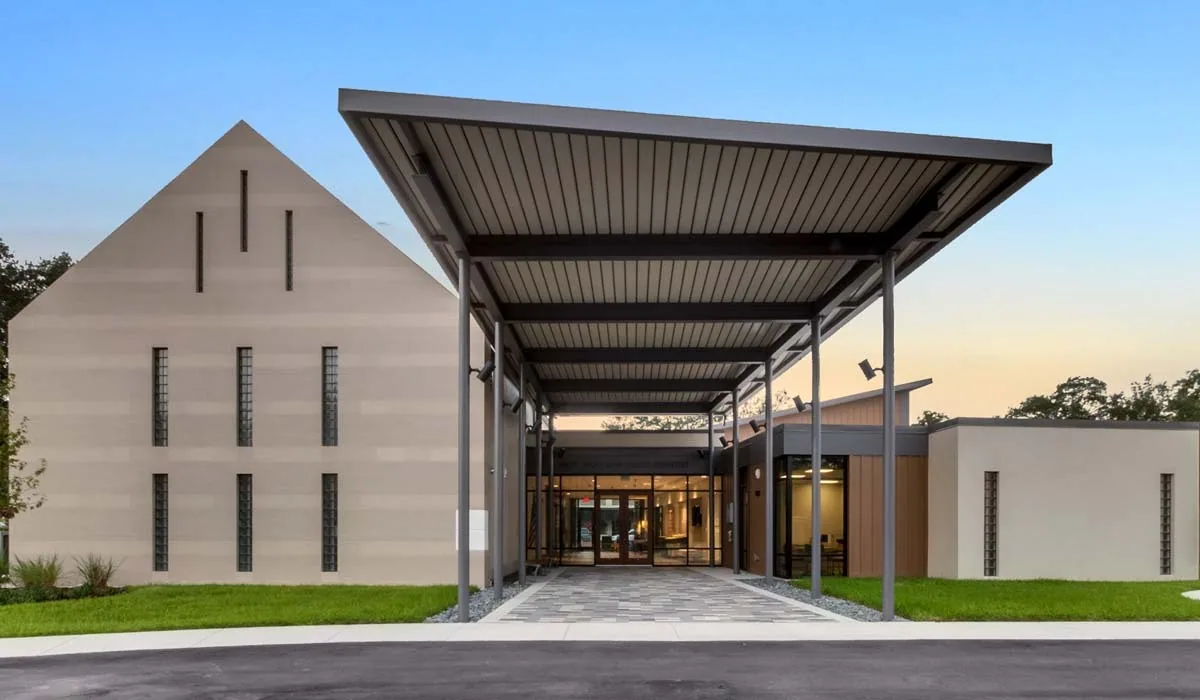
A technology building can sit beside an office building or a manufacturing plant, so the report separates what belongs to the server hall from what does not.
Why does a roof leak matter more over a server hall?
Water and electronics do not coexist. A leak that would be an inconvenience over a stockroom becomes an outage over a bank of equipment, and the cost is measured in downtime and recovery, not in drywall. Because of that, roof work at a data center puts a premium on prevention: a tight membrane, a short list of penetrations, drains that are known to be clear, and a way to detect moisture before it reaches the ceiling.
Many owners add leak detection under the membrane or at the ceiling line so they get warning of a failure before it reaches equipment. We recommend it when the roof is old or when the building has a large number of penetrations, and we coordinate with the facility team so the detection layout matches the roof plan.
Moisture risk comes from more than rain. Condensate from cooling equipment, a split chilled-water line on the roof and a clogged drain next to a unit can each send water toward the building. We include those sources in the inspection, because a membrane in good condition can still sit under a leaking pipe.
Where might technology and power tenants land on the South Coast?
The New Bedford Business Park describes a 45-acre extension, the park's largest contiguous lot, planned for a single three- to eight-story building for software, biotech or medical device users. The extension is surrounded by the 2,000-acre Acushnet Cedar Swamp State Reservation. At the water, the Marine Commerce Terminal has been leased for staging wind turbines and platforms, and offshore wind redevelopment has been proposed for the 306-acre Brayton Point site in Somerset, including an onshore connection point.
A technology tenant in the New Bedford Business Park, or a power user near the Somerset waterfront, starts its roof life in the same coastal wind zone as the older buildings. The details such a tenant will need are drainage that never backs up, flashing that tolerates wind-driven rain and perimeter metal that stays put.
How do we handle a roof crowded with equipment?
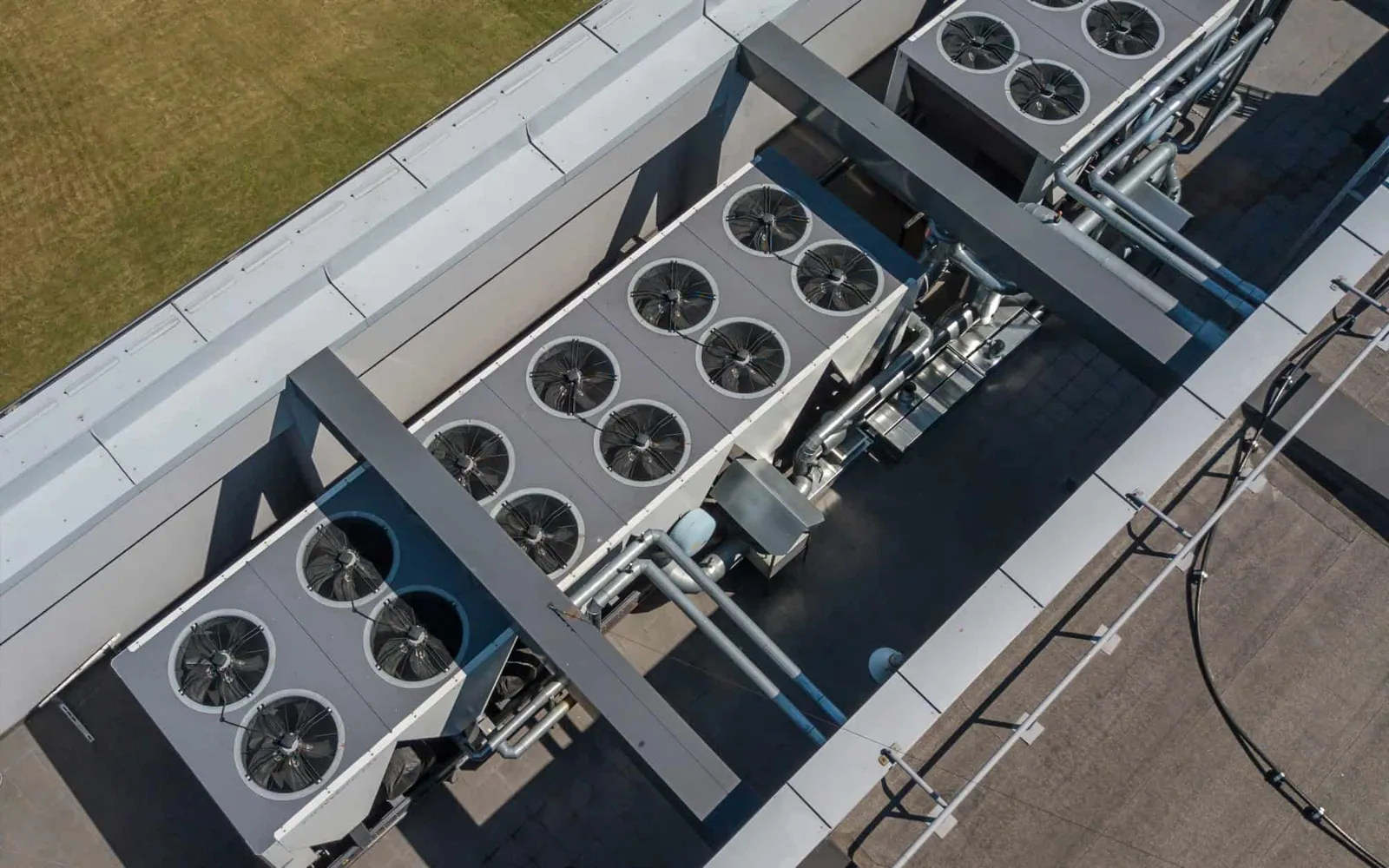
A data center roof carries chillers, dry coolers, generators, exhaust fans and sometimes satellite dishes, each on a curb or a rail. We map every one of them on the roof plan, inspect the flashing and verify that equipment supports do not rest directly on the membrane. Walk pads protect the routes technicians use, and where supports are unprotected, we mark them for a repair.
When equipment must be changed out, the roof around it is at risk. A crane lift can crush a membrane, and a new curb has to be flashed into the old one. We prefer to plan the roof repair with the equipment replacement, so the same visit that sets the new unit also seals the roof around it. The written scope treats equipment curbs and supports as their own line items, with a condition note and a photograph for each.
Can roofing be done without hot work near critical systems?
On a data center, torch-applied or hot-applied methods are rarely the first choice. Open flame near a server hall with sensitive fire suppression is a hazard that facility managers want to avoid. Heat-welded single-ply systems such as TPO and PVC use hot-air welding, mechanical attachment or adhesive instead, and cold-applied repair products handle small fixes.
We discuss the choice of method with the facility team and the fire safety lead before work begins. Where a hot-air weld is needed, we coordinate fire watch, suppress alarms only with the owner's permission and keep a record of every step. Notification protocols matter because a false alarm at a data center has its own consequences.
Fasteners and adhesives deserve attention too. A mechanically attached system puts fasteners through the deck, and we check that none have penetrated the ceiling below or struck a conduit. An adhered system avoids that, but needs a clean, dry substrate at install, so the schedule has to leave room for weather.
What storm history shapes a data center roof inspection?
Bob's 1991 surge, 10 to 15 feet into Buzzards Bay, was followed by outages for more than 60 percent of residents across southeast Massachusetts and southeast Rhode Island. Hurricane Carol produced winds of 80 to 110 mph across eastern Massachusetts in 1954. A data center that runs on backup power during a regional outage depends on its roof staying tight while generators run, and the edge metal, parapet terminations and wall-to-roof transitions are what stand between wind-driven rain and the equipment below.
Before hurricane season we clear drains, secure loose items and confirm that the perimeter is fastened. After a storm, an emergency repair crew is available around the clock, and a maintenance program keeps the inspection record current between events.
The most useful record a data center owner can hold is a dated roof plan with photographs, moisture readings and a list of open items. It tells the next inspector what changed, and it gives the owner something to show an insurer or an auditor after a regional storm.
Commercial Roofing Questions
How do we limit disruption when the roof sits above critical equipment?
Scheduling, containment and communication carry most of the weight. We agree on work windows, set interior protection where the facility team asks for it and report progress to a named contact each day.
Does a data center need a different roof system than an office building?
The membrane may be the same, but the attachment method, the insulation and the number of penetrations are scrutinized more closely. We recommend a system that minimizes seams and avoids open flame.
What is the value of a moisture survey on a roof that has never leaked?
It finds wet insulation that has not yet produced a stain. Catching it early lets the owner plan the repair on their own schedule instead of reacting to a drip over a rack.
How should roof access be controlled?
Through the same badge and escort procedures the facility uses for other vendors. We provide names and schedules in advance and log arrival and departure.
Can rooftop solar or new equipment be added without voiding a warranty?
It can, if the installation follows the membrane manufacturer's requirements for penetrations and walkways. We review the plan with the owner and the installer so the roof is protected before the first bracket goes down. A solar-ready roof lays out supports and walkways in advance, which keeps later installers off the bare membrane.
Ready to review the roof scope?
Request a Roof AssessmentKeep Reading