Commercial Roofing Services
Solar-Ready Roofing in New Bedford, MA
Solar-ready roof preparation in New Bedford, MA: condition checks, mount flashing, ballast and drainage planning so the roof outlasts the array above it.
Request a Roof Assessment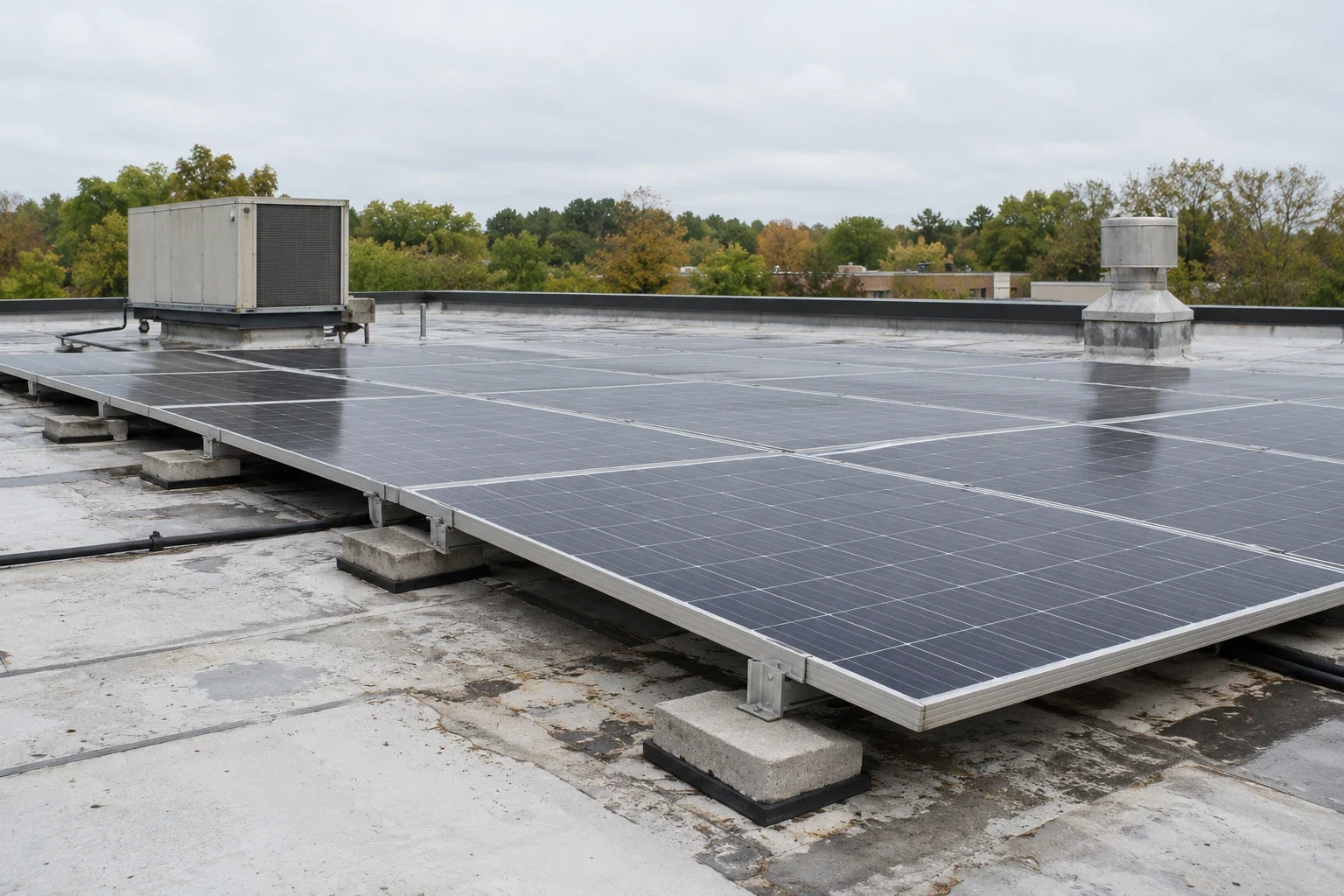
How old can the roof be before an array goes on top of it? A facility director who has a solar proposal on the desk is really asking how many years of membrane remain, because an array that outlives its roof means lifting every panel to replace the sheet underneath. The first thing an inspector would find on a roof like that is its remaining service life, taken from seam probes, a moisture scan and a handful of core cuts, not from the installation date on a drawing.
In New Bedford, MA, solar-ready roofing means three things in order: a roof that is sound enough to carry the array for its full term, mounting details that do not become new leaks, and a layout that leaves access to drains, seams and flashing. We mark each of those on the roof plan, explain what it costs and walk it with you and your solar contractor before anything is quoted.
What has to be true of the roof before panels go up?
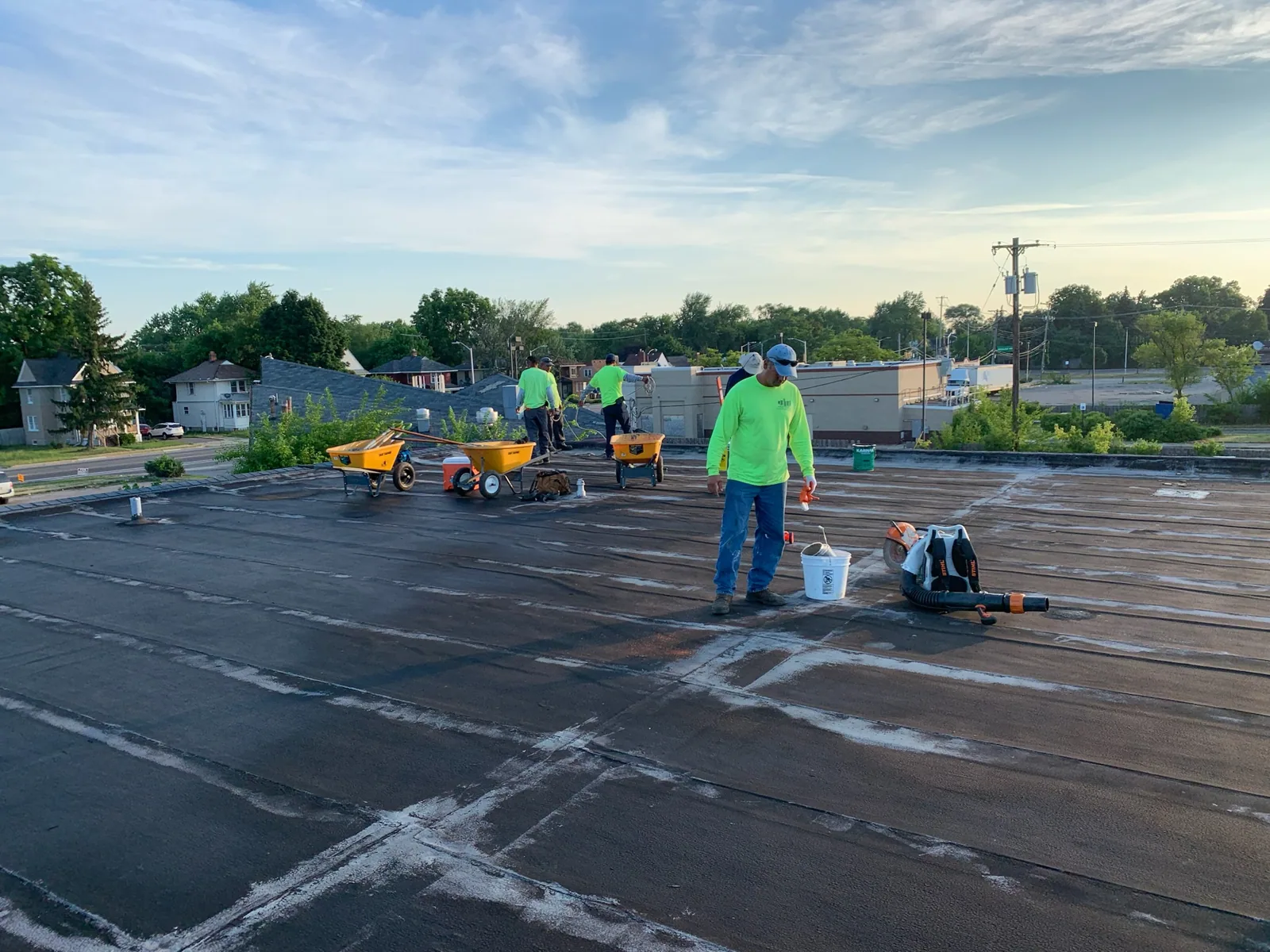
Dry insulation, a sound deck, tight seams and flashing that has years left. We scan for trapped moisture, because wet insulation under an array stays wet and nobody can see it. We cut cores to confirm the layers and the deck condition, and we probe the seams for separation and the field for shrinkage and blistering.
If the findings show the roof will need replacement within the term of the array, the sensible move is to replace first and put the new roof under the panels. That is cheaper than removing and resetting the array later, and it lets us choose a membrane, cover board and insulation sized for the load. Our commercial roof replacement scopes include the layout that the array installer provides, so the penetrations and walkways are planned from the beginning.
Ballasted or attached: how do the mounts meet the membrane?
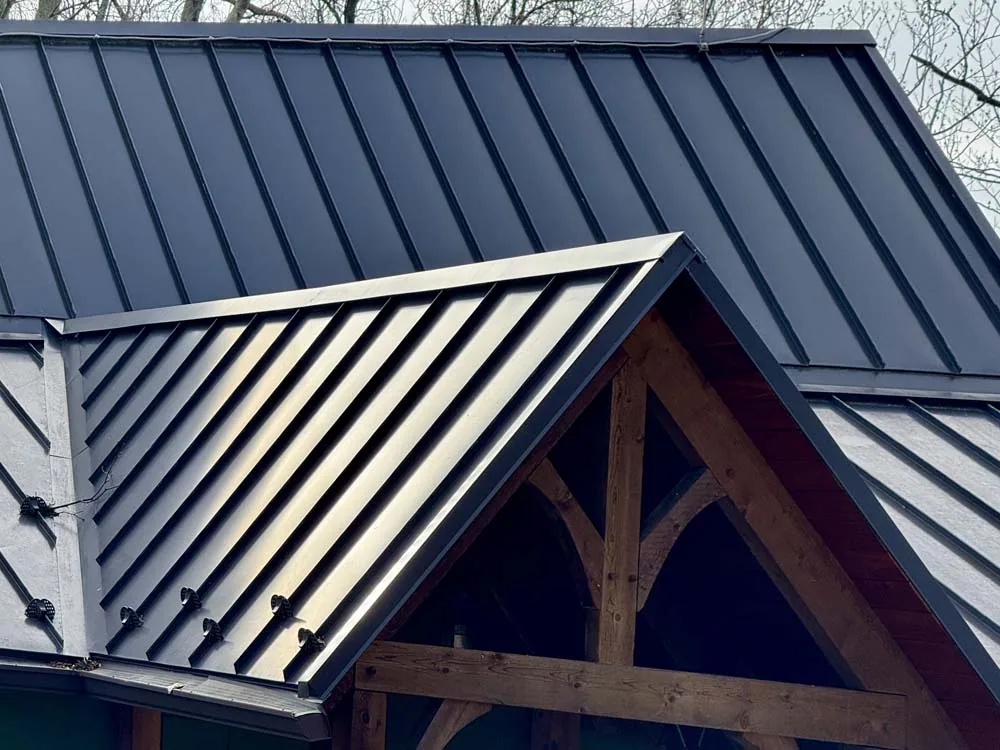
A ballasted array rests on the roof and uses weight and friction to stay put, which avoids penetrations but adds load and requires a protection layer under the supports. An attached array uses mounts fastened to the deck or structure, which adds penetrations that each need flashing. On a metal roof, clamps on the seams can avoid holes entirely, a point in favor of standing seam metal roofing when a new roof is on the table.
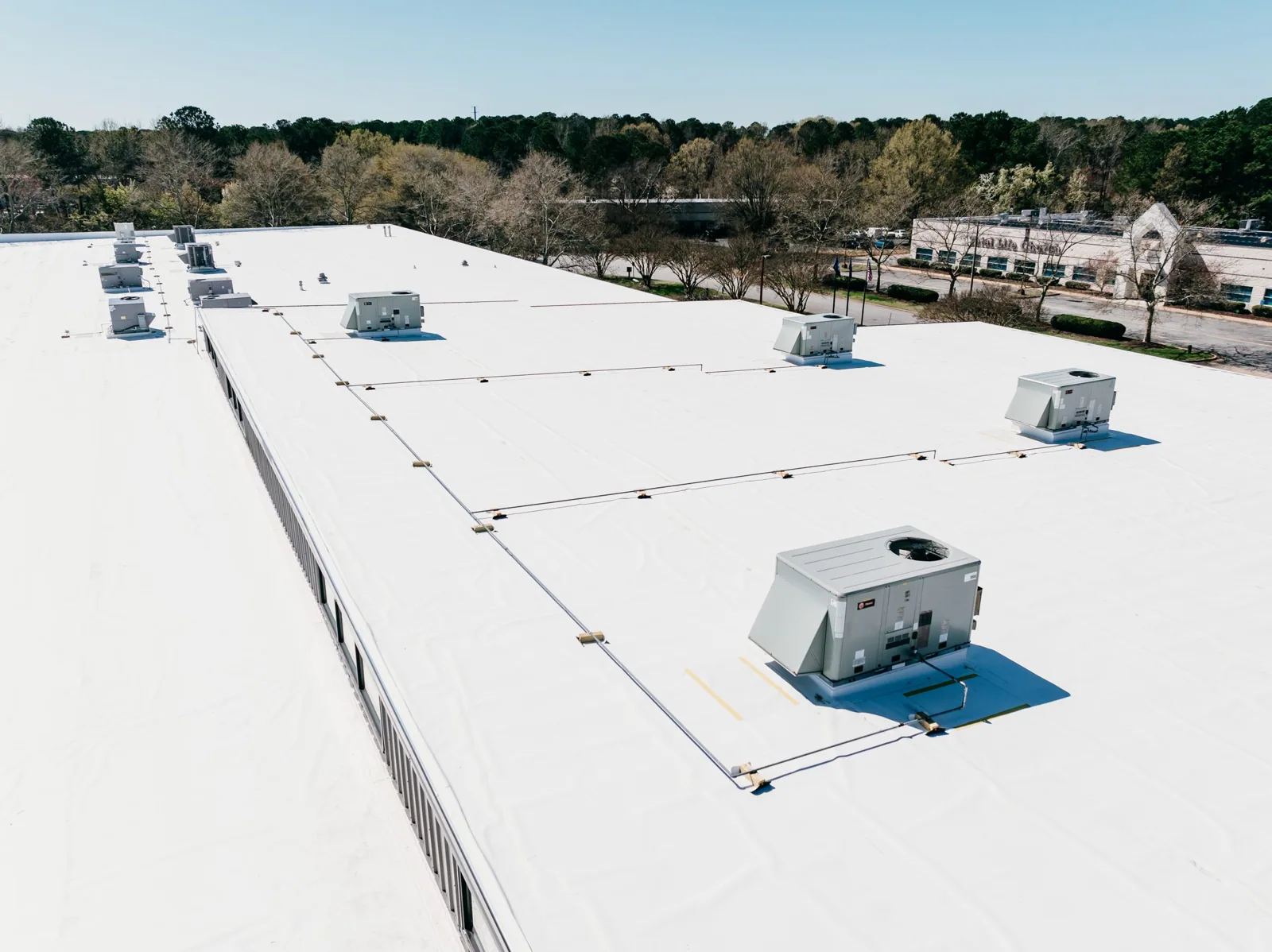
We check the deck and structure for the extra load, inspect the membrane beneath each ballast pad for wear and set walkway pads where service crews will walk. For every attached mount, we flash the penetration with a detail that suits the membrane, such as a pre-formed boot or a pitch pocket, and we record its location on the plan so the next inspector can find it.
What does hurricane wind do to an array?
Bob blew 89 mph gusts across Buzzards Bay in 1991, and Carol, in 1954, drove 80 to 110 mph winds over eastern Massachusetts; an array has to be fastened with both in mind. An array turns a roof into a set of sails, and uplift loads concentrate at corners and perimeters. Ballast displacement is the failure we watch for on ballasted systems: blocks that shift, a protection layer that slides and a membrane that gets scraped.
The state code that applies is 780 CMR 10th Edition, built on the 2021 IBC and in force from October 11, 2024. It sets the design wind approach that the engineer applies to the array. Our part is making sure the roof below can take the loads: membrane attachment, edge metal fastened to structure and flashing details that hold. A loose edge metal detail next to a panel row is a hazard for the whole array.
Where does the snow go and where does the water go?
Snowfall comes to about 32.5 inches in a typical New Bedford year, most of it between December and March. Panels shed snow in sheets, and that load lands on the roof below, on walkways and on the edge. Meltwater runs off the panel edge in lines that can erode a membrane or cut a groove in a coating where it falls repeatedly.
We look at where that snow will land and where the meltwater will flow, and we protect those areas with extra membrane or walkway pads. We also check that the array does not block a drain or a scupper. Roof drains and scuppers need to stay clear and accessible, and the layout leaves a service path to each one. The January 2015 blizzard put 24.1 inches of snow on Fall River, and a roof under an array sheds that much snow in a few hours of sun.
What if the array is already there and the roof leaks?
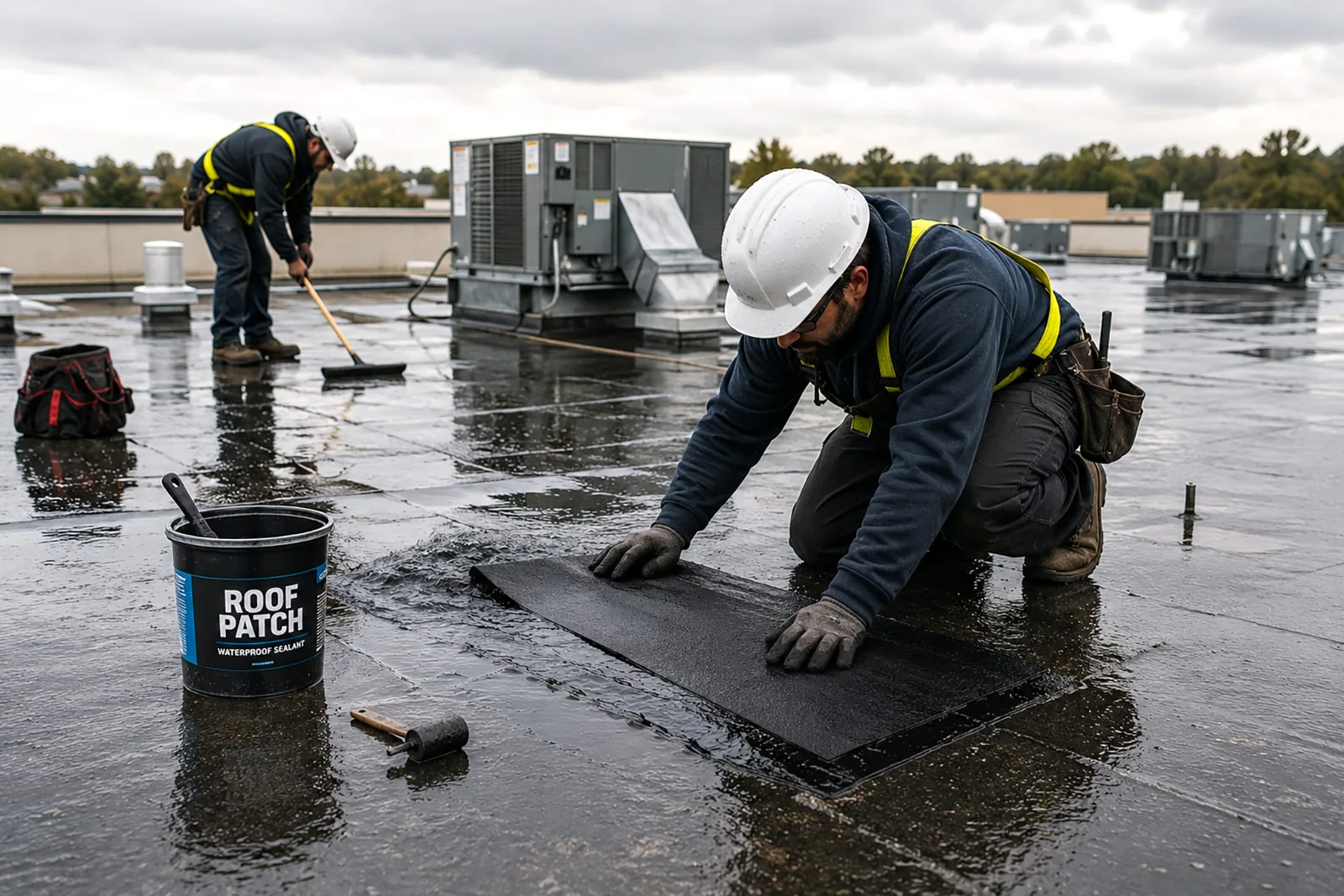
Working under and around an existing array is slower and costs more, but it can be done. We locate the leak using moisture scanning and dye or water testing, then decide whether the repair can be made with panels in place or whether a row must be lifted. Leaks under arrays often start at mounts and penetrations, and the fix is replacing flashing and sealant, not the roof.
When panels have to come off, we coordinate with the solar contractor so the electrical shutdown, disconnect and reconnect are handled by the right trade. A commercial roof leak repair under an array may also include photographs of the mount details, which become part of the roof file and help with the next inspection.
Which roofs on the South Coast are good candidates?
Large, flat, unshaded roofs with sound decks make the best candidates, and that describes a lot of warehouse roofing and industrial space. Taunton's Myles Standish Industrial Park spreads across 800-plus acres of manufacturing, office, high-tech and distribution space, which suggests how much commercial roof area the region holds.
The older mills in New Bedford and Fall River raise structural questions that have to be answered by an engineer before any array is considered, because older framing was designed for a different load. The Marine Commerce Terminal, leased for staging wind turbines and platforms, shows how much energy work already surrounds the harbor.
Commercial Roofing Questions
How do I know whether to replace the roof before the array goes on?
Compare the roof's remaining life with the array's expected term. If the roof will need replacement before the array is done, replace first. The moisture scan and core cuts tell us how much life remains, and we give you a range of years you can compare with the solar proposal.
Will mounting an array void the roof warranty?
It can, if the work is done outside the manufacturer's requirements. The manufacturer decides what is acceptable for its system. We describe those requirements before the array is designed, and we flash and protect the roof the way they require.
Who is responsible when a leak appears under an array?
Responsibility depends on the contract, but the cause usually decides it. We trace the leak to a mount, a flashing or a membrane failure and document it with photographs. That record helps the owner, the solar contractor and the roofer agree on who fixes what.
Does an array make the roof last longer?
It shades the membrane, which slows ultraviolet wear in the covered area. It also adds foot traffic, ballast contact and snow load in other places. Overall, the result depends on the details, which is why we inspect the roof under and around the array each year.
What should a roof plan show for a solar installer?
It should show the roof zones, drain locations, existing penetrations, areas of wet insulation, the access path and the structural notes. We prepare that plan from the inspection and share it before layout begins, so the installer works around the limits instead of discovering them.