Roofing Capabilities
Due Diligence Roof Surveys in New Bedford, MA
Roof surveys for acquisitions and refinancing in New Bedford, MA, with ranked repairs, remaining-life ranges and capital reserves ready inside the deal window.
Request a Roof Assessment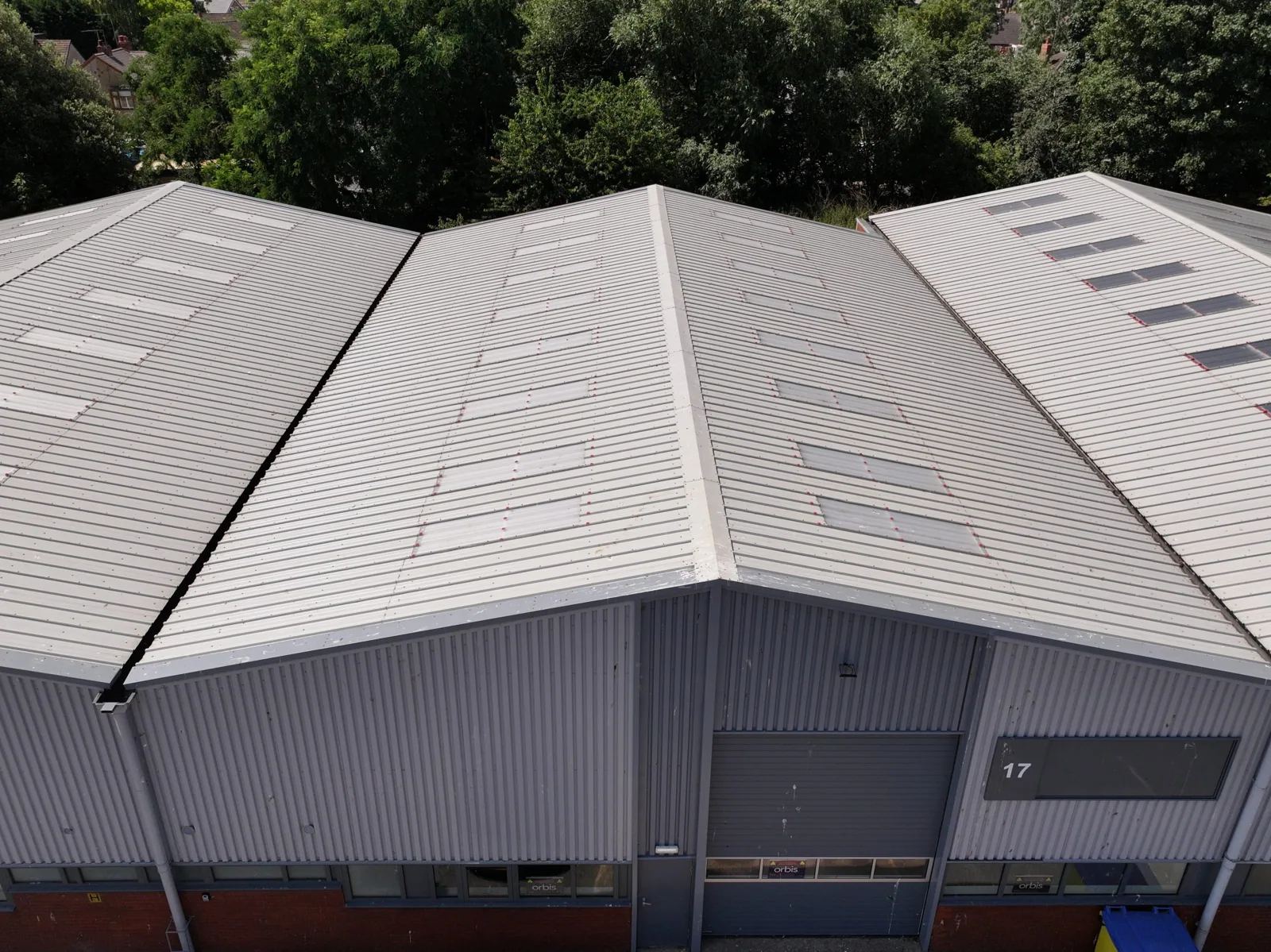
What will this roof cost in the first three years of ownership? A buyer's analyst with a purchase agreement open and a closing date on the calendar is asking for a number, and the inspector's first finding is that the seller's file answers part of the question while the membrane answers the rest: a patched field, a drain sump that holds water and a parapet termination that has opened at the corner. A due diligence roof survey in New Bedford, MA compresses a full condition review into the days the deal allows, ranks every finding on the roof plan and turns it into a repair list and a reserve the buyer or lender can use.

What can a survey cover inside a deal window?
A deal window is short, so the survey is organized to give the most reliable answers first. We start with the seller's documents, then walk the roof, probe the seams and the flashings, and scan the insulation for moisture. A drone pass over the full surface adds an overview of drainage and equipment, and cores at the suspect areas confirm what the scan suggests. Most of this work fits in a few days for a single building, and the written report follows on a timeline agreed at the start.
What a short window cannot show is how the roof behaves across a full year, so the report states what was seen on the day and what was inferred, and it flags areas where a second look in a different season would settle an open question. A drone roof inspection and an infrared moisture survey are used together because each answers a question the other cannot.
Which records should the seller hand over?
The roof plan, the date and scope of the last replacement, repair invoices, warranty documents, leak logs and any storm claims. Each document narrows the search on the roof: an invoice for a pipe boot points to a penetration worth probing, and a claim date points to a storm worth matching against damage. A missing file is itself a finding, because it means the roof's history will have to be reconstructed from the roof itself.
We read the warranty for its conditions and transfer rules, since coverage may not pass to a new owner without notice or a fee, and we look for repairs that could have affected it. The review feeds directly into roof warranty management after closing, so the buyer inherits an organized file rather than a binder of loose pages.
How are mill roofs and newer industrial roofs graded on the same scale?
The grading follows the roof, not the building's age. A roof on one of the 19th-century mills in New Bedford, such as the Wamsutta, Hathaway or Kilburn buildings, may have been replaced more than once, and its parapet, through-wall flashing and drain sumps are as important as the sheet. A newer flat roof on a distribution or manufacturing building has long runs of seams, many penetrations and a different problem with edge metal and fasteners.
We assign each roof zone a condition grade, a remaining-life range and a repair priority on the same scale, so a buyer can compare an older brick building with a newer industrial one on a single page. Buyers in the New Bedford Business Park, counted in 2013 at 44 companies, or in Taunton's 800-plus acres of Myles Standish Industrial Park, may weigh several roofs at once, and one scale makes the comparison possible.
How do storm and snow history enter the survey?
The coast sets two kinds of load. Carol's record 20-foot tide at New Bedford and winds of 80 to 110 mph in 1954, and Bob's 89 mph gusts at a Buzzards Bay station in 1991, set the standard we use when we inspect edge metal, gravel stops and fastener patterns with those numbers in mind. Snow adds 32.5 inches in an average year, mostly December through March, which loads every low spot and tests every drain.
The survey asks whether any storm claims were filed, whether edge details were upgraded after earlier damage and whether the drains are set to carry meltwater. We note any area where the roof shows signs of past wind lift or ice damage, and we match them against the seller's claim history. A wind damage pattern that the file does not mention is worth a question before closing.
What does the buyer or lender receive?
The deliverable is a written report that opens with a summary a decision-maker can read in five minutes, followed by the roof plan with numbered findings, photographs, moisture scan results and core logs. Each finding carries a priority: items that admit water now, items that will do so within a short period and items that can wait. The report ends with a repair list and a reserve schedule in cost ranges, so the buyer can price the deal or ask for a credit.
Lenders want evidence that the property can carry its debt, and a roof that needs replacement soon changes that picture. The report shows remaining life by zone and by year, which feeds a roof capital plan after closing. Investors who hold several buildings can use the same format across a portfolio, and the numbers line up from one report to the next.
What happens after the closing?
The survey becomes the first entry in the building's roof record. The buyer can order the high-priority repairs, set a maintenance schedule and plan the capital items against the reserve. For owners acquiring through a fund or a trust, real estate investors and REITs often ask for the roof data in a format that fits their asset system, and we provide the photographs, grades and costs in a form that can be loaded into it.
If the buyer acquires several buildings, the surveys are combined into one ranked list so the first year's budget goes where the water is entering. The file then supports annual inspections, and each later visit adds a dated entry so the roof's condition is tracked rather than rediscovered.
Commercial Roofing Questions
How long does a roof survey take for a single commercial building?
Field work usually fits within a few days: document review, a walk with seam probes and a moisture scan, a drone pass and cores at suspect areas. The written report follows on a date set at the start. Larger or multi-roof properties take longer, and we agree the schedule against the closing date before the work begins.
Can a survey tell a buyer when the roof will need replacement?
It gives a remaining-life range by roof zone, based on membrane condition, moisture, seams, flashing and drainage. A range is more accurate than a single year, because weather and use change the outcome. The report shows which zones carry the shortest ranges, so the buyer can plan the first reserve.
What does a missing roof file mean for the survey?
The roof itself has to supply the history. We read patches, layers, mismatched materials and prior repairs to reconstruct what has been done, and we record the gap as a finding. The buyer can then ask the seller for a credit or a longer inspection period, with the evidence in hand.
How does a survey treat an older mill roof?
It treats the parapet, through-wall flashing and drain sumps as equal in importance to the field. These are the details that lose water on masonry buildings, and they are graded on the same scale as the sheet. The result is a comparison a buyer can make against newer industrial roofs without switching standards.
Do lenders accept a contractor's roof survey?
Many ask for a written condition report with photographs, moisture results and cost ranges. Requirements vary by lender, so we ask for the lender's checklist early and format the report to answer it. A report formatted to that checklist answers the lender's questions on the first read.
Ready to review the roof scope?
Request a Roof AssessmentKeep Reading