Roofing Capabilities
Roof Warranty Management in New Bedford, MA
Roof warranty management for commercial buildings in New Bedford, MA: warranty files, repair methods that protect coverage, storm notices and sale transfers.
Request a Roof Assessment
Is the warranty on that roof still good, and who in the building would know? A facility director holding a leak report in one hand and a binder with no warranty page in the other is asking the question that decides whether the repair is a manufacturer's cost or the owner's, and the inspector's first finding is a patch of a different color, a repair done with the wrong sealant or a curb that was cut after the roof went in. Roof warranty management in New Bedford, MA means reading the document first, matching every repair to what it allows, and keeping the dated record that proves it.
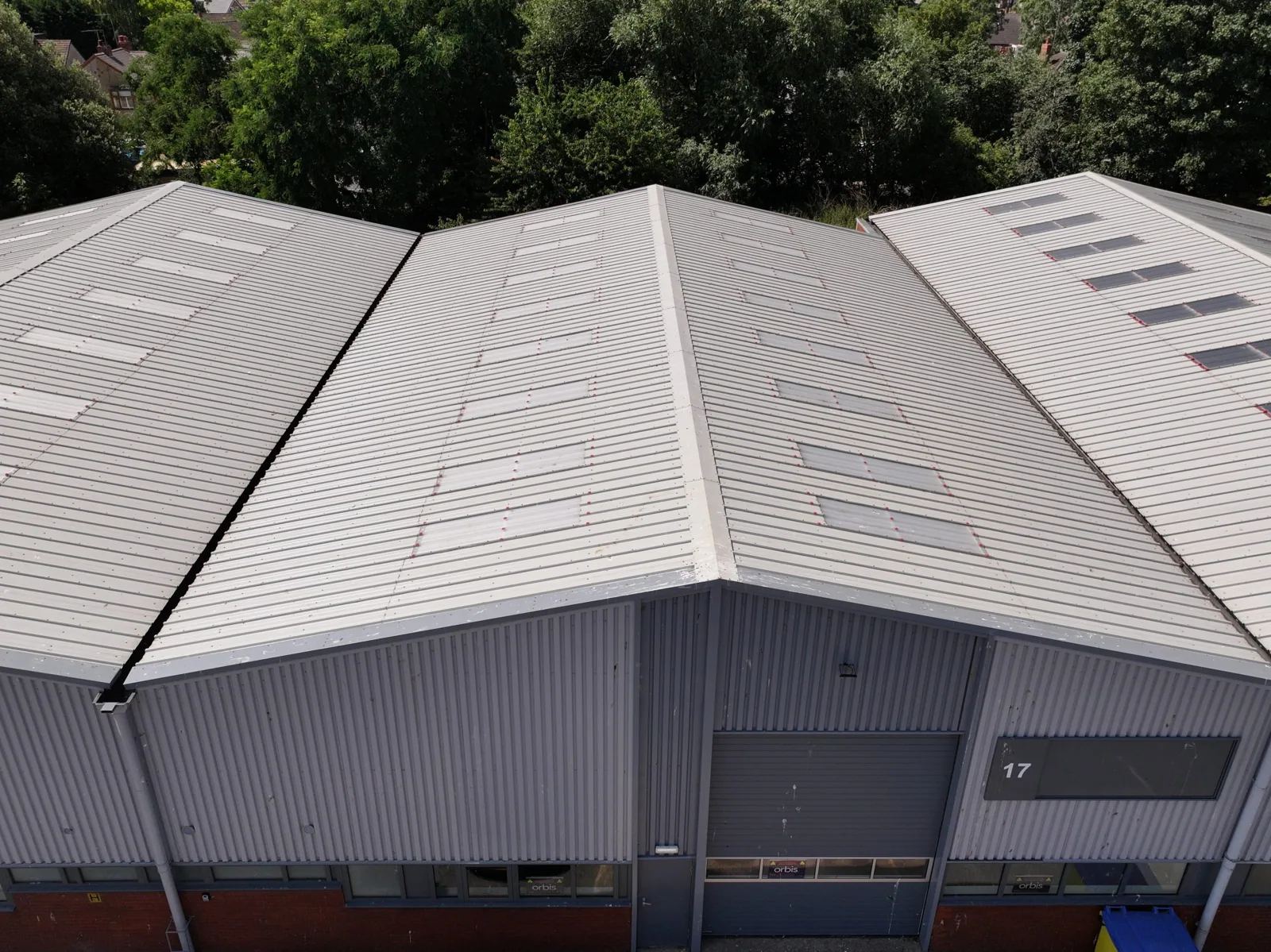
What does the warranty actually require of the owner?
A manufacturer's roof warranty is a contract with conditions, and the conditions matter as much as the coverage. Typical conditions include prompt notice of a leak, repairs made by an approved method, regular maintenance, limits on foot traffic and equipment changes, and no new penetrations or coatings without written approval. Many also set limits on wind speed, ponding water and the kind of damage covered, and they differ among manufacturers, so the generic summary in a brochure is no guide to a particular roof.
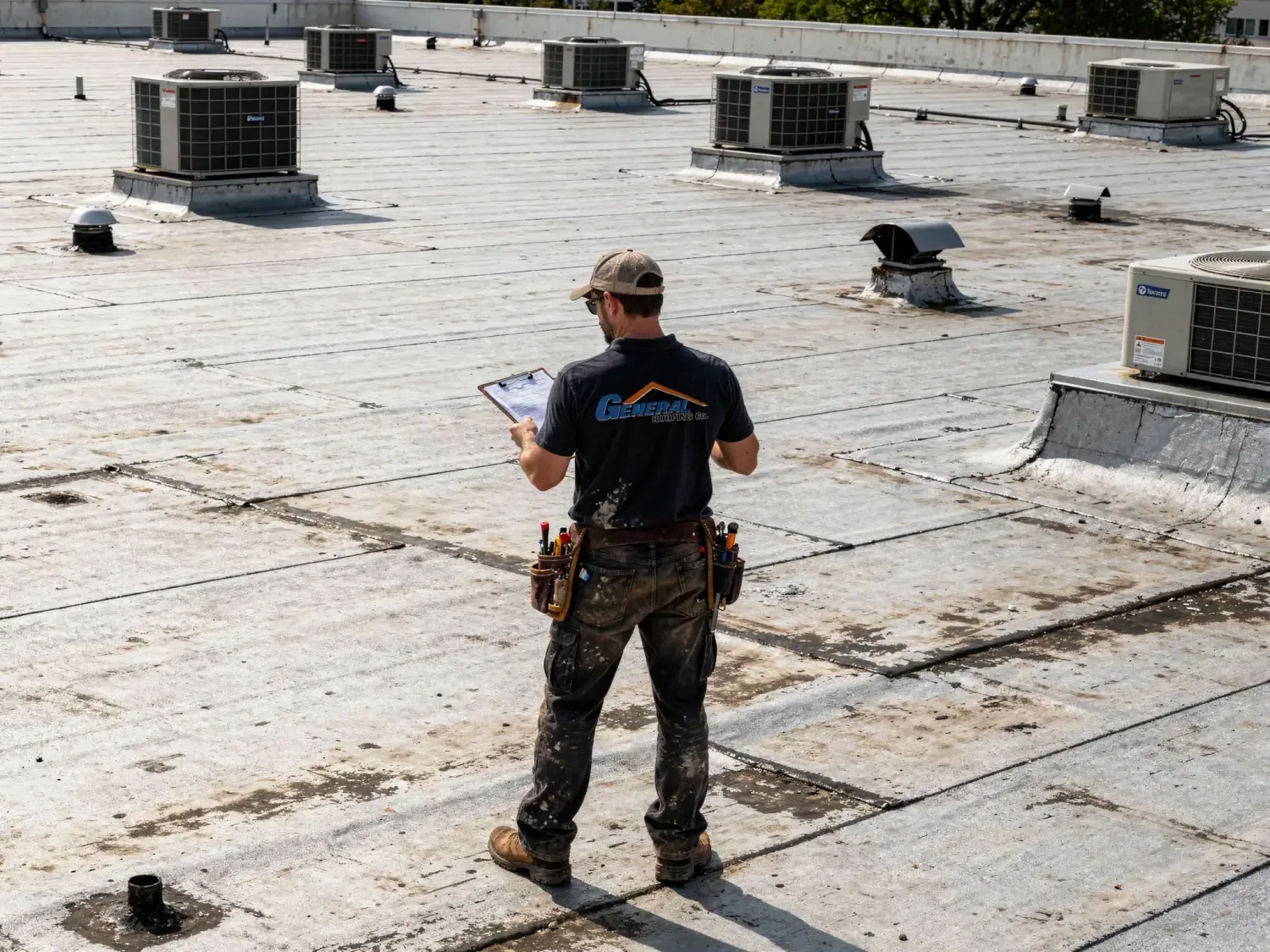
We read the warranty before touching the roof, mark each condition on the plan and list the ones that apply to the work at hand. A roof with a system warranty from one of the membrane manufacturers has different rules from one with only an installer's workmanship promise. If the document is missing, that fact is recorded too, and the manufacturer is asked what it has on file.
What belongs in the warranty file?
The file should answer six questions without a phone call: who issued the warranty, what it covers, when it began and ends, what the owner has to do, what has been repaired and what has changed on the roof since the day it was installed. We build it from the warranty itself, the installation record, the roof plan and each inspection, and we add a dated photograph and a note for every repair.
The plan is the center of the file. Every patch, curb, penetration and piece of equipment gets a number, and each number links to a repair note that says who did the work, with what material and under which condition of the warranty. When a manufacturer's representative arrives to look at a claim, the file shows the roof's history in an hour. A roof condition report becomes the baseline against which later changes are compared.
How does a repair affect the warranty?
A repair made the wrong way can void coverage that the right repair would have kept. A sealant that the manufacturer does not allow, a patch of a membrane that is not compatible with the field, a penetration cut by another trade without notice and a coating applied over a warranted sheet are the four most common causes. We check each against the warranty before the work starts, and we call the manufacturer when the document is unclear.
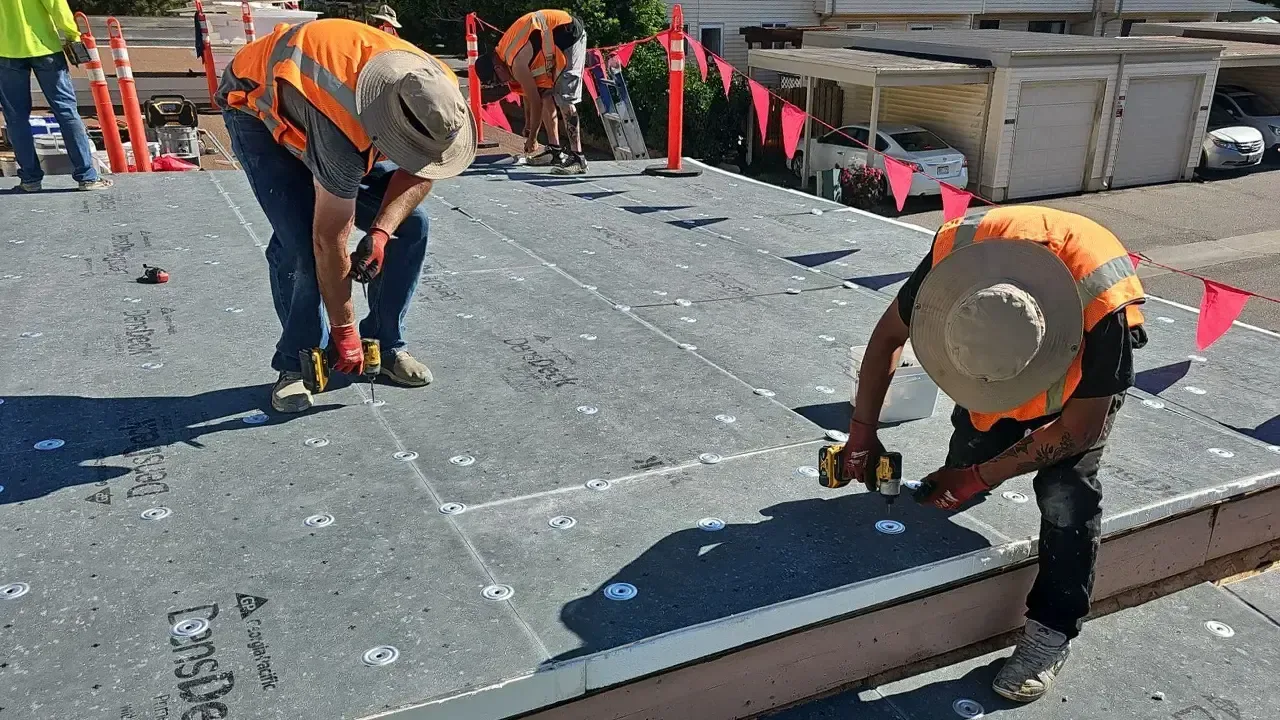
When the roof is under warranty and the defect is covered, the manufacturer decides how the repair is made, and we document the condition and let it inspect. When the defect is not covered, we repair to the manufacturer's detail so that coverage on the rest of the roof stays intact. Either way, the repair note names the method and the material, and the photograph shows the finished detail, so a later reviewer can see that the work followed the document. Required visits under preventive maintenance go on record.
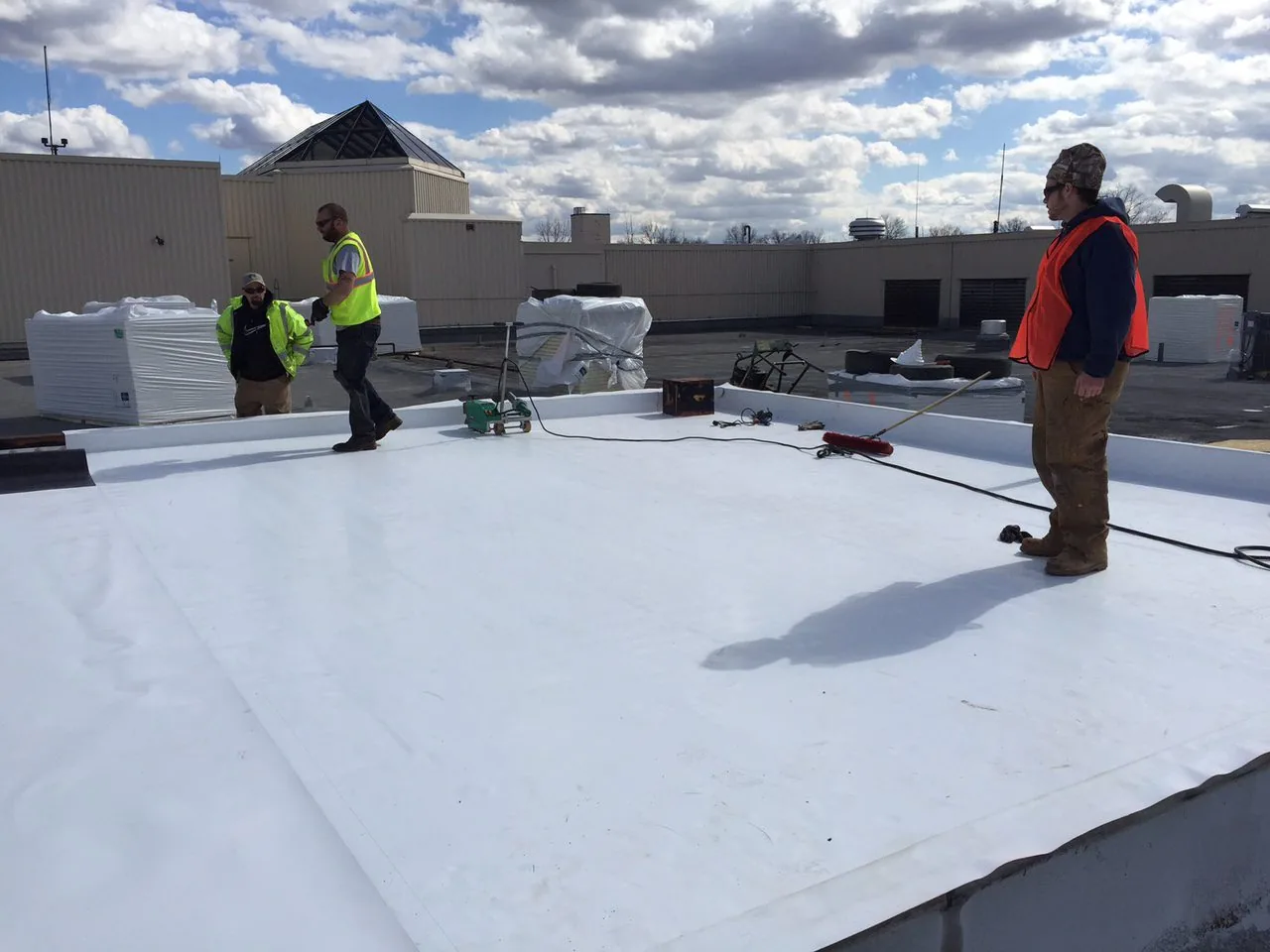
The evidence that a repair followed the document is physical as well as written: a seam probe along the finished lap, a core cut where the manufacturer asks to see the layers, and a photograph of the lap sealant at every reset termination.
How do storms and snow affect a warranty claim?
Wind and weather are where warranty language is most specific. Many warranties cap the wind speed they cover or exclude named storms, and many exclude damage from ponding water or from ice and snow loads. Hurricane Bob's gusts reached 89 mph at a Buzzards Bay station in 1991, and Hurricane Carol's winds ran 80 to 110 mph over eastern Massachusetts in 1954, so owners reading a wind limit in a warranty here have real numbers to compare it with.
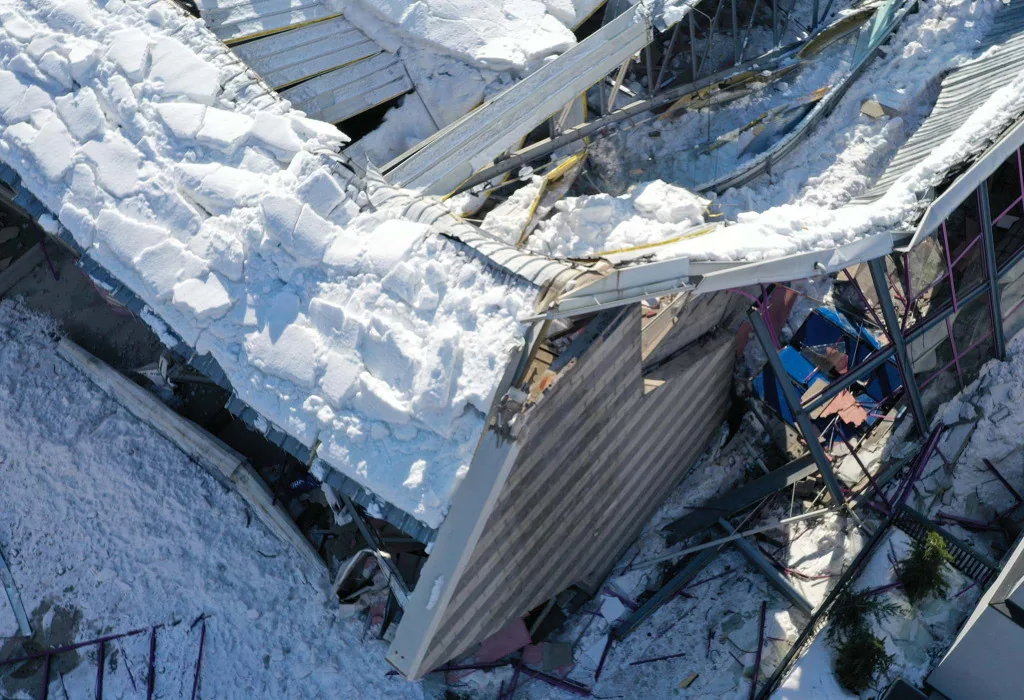
After a storm, we document the condition of the roof before and after, record the date and the damage pattern and send the notice the warranty requires within its time limit. Snow averages 32.5 inches a year in New Bedford, mostly December through March, and the same records show whether a winter leak began at a covered defect or at a drain that was never cleared. A hurricane damage record and a snow and ice record are kept separately.
What happens to the warranty when the building is sold or refinanced?
Most warranties are transferable only if the owner follows a set procedure, which can include written notice to the manufacturer, an inspection and a fee, within a time period after the sale. A buyer who assumes the warranty without checking may find it has lapsed. We prepare the transfer package from the file: the warranty, the repair history, the latest inspection and a statement of the roof's current condition.
Lenders and buyers also read the warranty as evidence of remaining life, so the file is part of a due diligence roof survey. A building in a park such as the New Bedford Business Park, home to 44 companies by a 2013 count, may have tenants and lenders asking for the roof file.
What if the roof has no warranty at all?
A roof on one of New Bedford's 19th-century mill buildings, such as the Wamsutta, Hathaway or Kilburn mills, may have no manufacturer's warranty on file, or one that expired long ago. The owner is then the only protection for the roof, and the record becomes a substitute for the paper. We build a condition file with photographs, a plan and a maintenance schedule, which shows an insurer or a buyer that the roof has been looked after.
When the owner decides to replace a roof, a new warranty can be specified at the start, with the term, the conditions and the maintenance visits written into the plan. A roof that is installed with its warranty in mind is far easier to keep covered than one whose paper is assembled afterward.
Commercial Roofing Questions
How can an owner find out whether a roof is still under warranty?
Start with the closeout file from the last installation, then the issuing manufacturer or installer. Warranty numbers are often printed on a roof plaque or in the permit record. We read whatever document is found, list its conditions on the roof plan and ask the manufacturer to confirm status in writing if the paper is incomplete.
Does a repair by another contractor void the warranty?
It can, if the method or material is not one the manufacturer allows or if notice was not given. We check each repair against the warranty before work begins and call the manufacturer when the document is unclear. A repair made to the manufacturer's detail keeps coverage on the rest of the roof.
What notice does a storm leak require?
Most warranties set a short period for written notice after a leak is discovered, and late notice can end a claim. We record the date, photograph the condition, send the notice and give the manufacturer access to inspect. Storm dates and wind readings from the nearest station go into the record to support the claim.
Can rooftop equipment be added without affecting coverage?
Only if the warranty allows it and the work follows the manufacturer's flashing detail. Many warranties require written approval before a curb or pipe is added. We check the document, plan the penetration and photograph the finished detail, and the new item goes onto the roof plan with its date and the trade that installed it.
What does a buyer need from a seller's warranty file?
The warranty itself, the repair history, the latest inspection and the transfer procedure and deadline. Without them a buyer cannot tell whether coverage survives the sale. A condition report adds the roof's current state, which lets the buyer and the lender see remaining life as well as paper coverage.