Roofing Capabilities
Roof Condition Reports in New Bedford, MA
Written roof condition reports for New Bedford, MA buildings: photographs, marked plans, moisture findings and ranked repairs a director can act on.
Request a Roof Assessment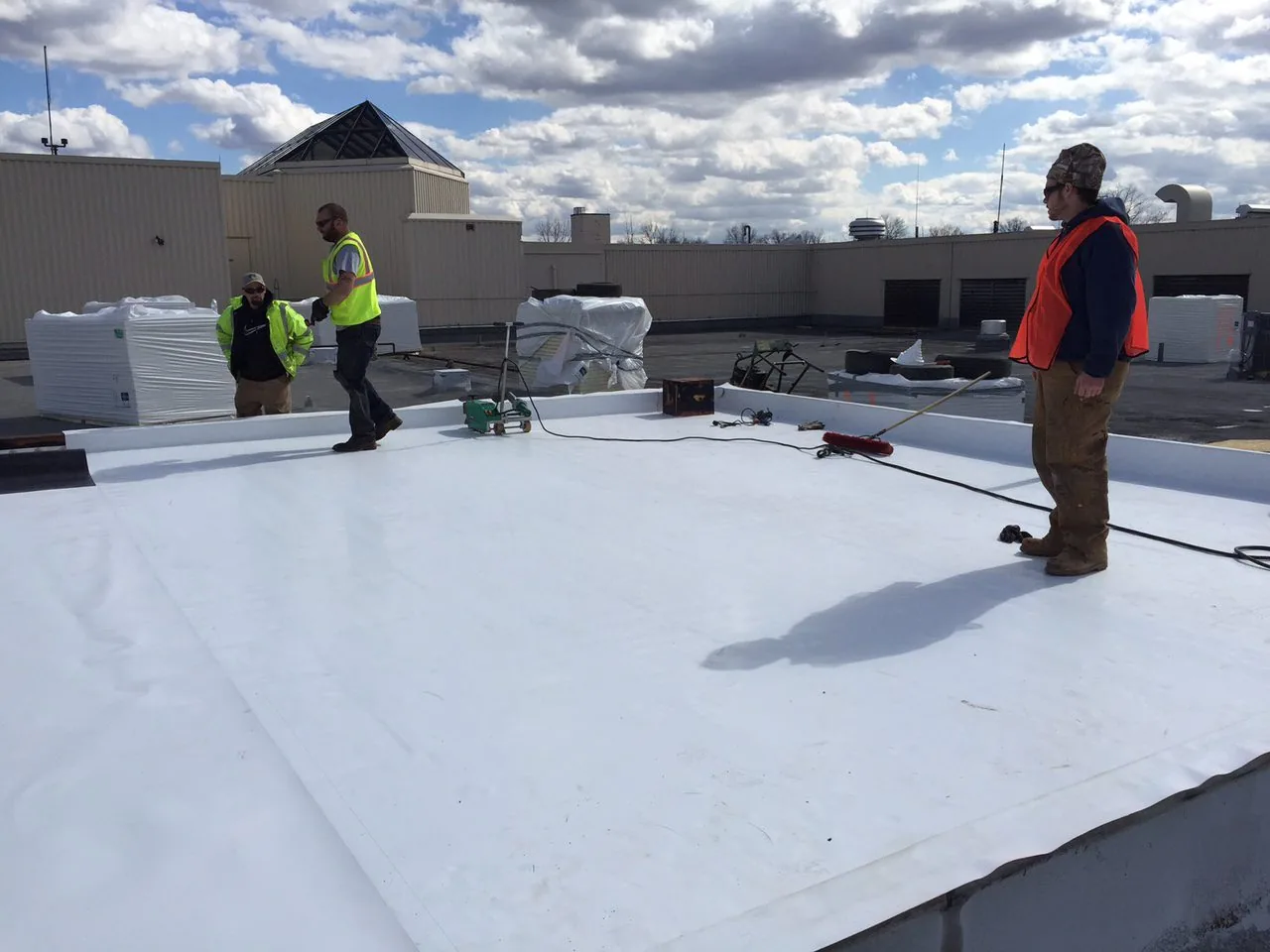
What does a person learn from a roof report if they have never climbed the ladder? The useful ones show the roof as the inspector found it: a plan with every finding numbered, a photograph tied to each number, and a sentence on why that finding matters to the ceiling below. A written roof condition report in New Bedford, MA is the document a facility director hands to an owner, a lender or an insurer when the roof comes up in a meeting.
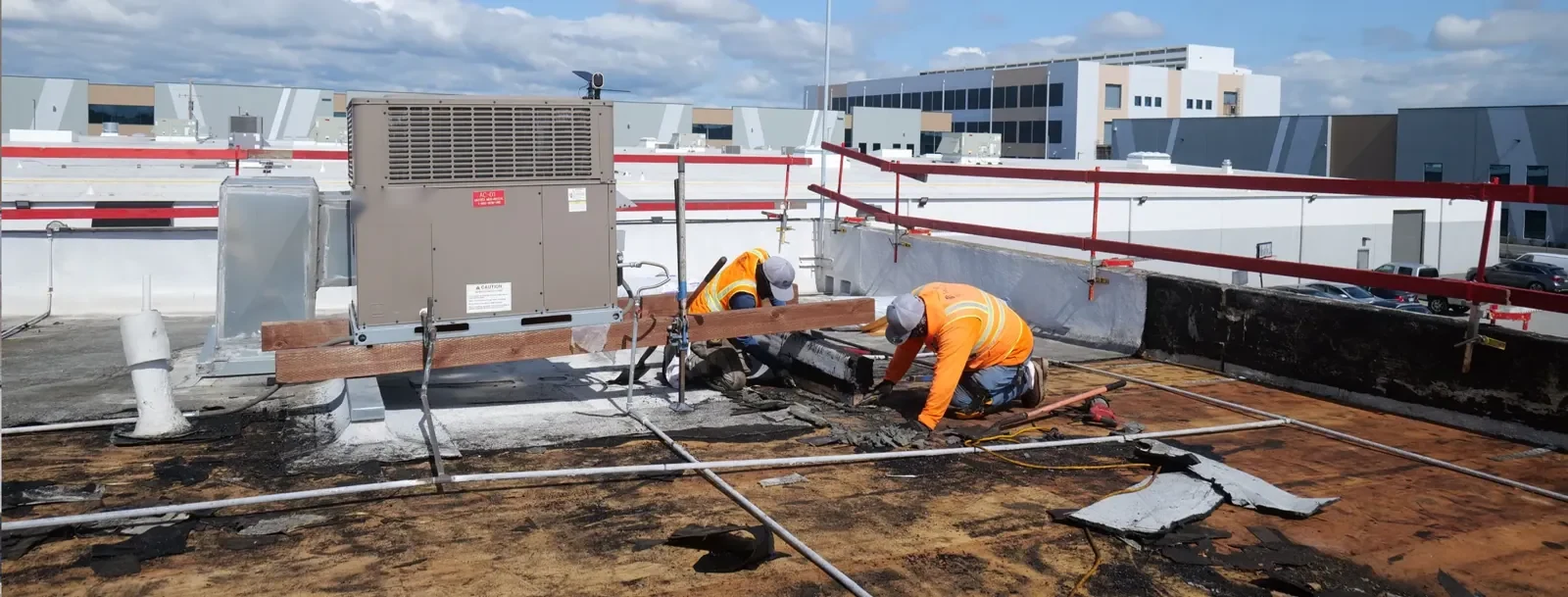
We write the report on the roof, not afterward from memory. The inspector walks the field with a seam probe, checks lap sealant and edge metal, marks fastener back-out, notes where water stands and photographs the details. Back at the desk the notes become a ranked list, so the first page tells a reader what to fix first and the rest of the report shows the evidence.
What is in the report, page by page?
The report opens with a summary of the roof's condition and a list of recommended actions in order. After that comes a marked roof plan with numbered findings, and a photograph for each number showing the defect, the surrounding surface and a scale reference. A short paragraph explains what the defect is, what it can cause and what the correction involves.
The later pages carry the technical evidence: core cut locations with layer descriptions, moisture scan results when a scan was done, drain and scupper observations, and a table of penetrations with their flashing condition. Warranty and installation information is included where the owner has it. Every page is dated, so the next inspection can compare itself against a known baseline.
Findings in the report follow the way water moves, from the roof edge inward, so a reader with time for only one page meets the perimeter first. Each photograph carries the number from the plan, the date and a short caption naming the detail, such as a parapet termination or a drain sump, and anyone who wants the full file can follow the same numbers into the core logs and moisture readings.
Which findings get ranked first?
Ranking follows consequence. An open seam over a server room outranks the same seam over a loading bay, and a clogged drain sump ahead of the first freeze outranks cosmetic staining. We rate each finding as urgent, near-term or monitor, and we write the reason. Urgent items are those where water is entering now or where a storm could remove material, such as loose edge metal or a membrane lifted at the perimeter.
Near-term items are defects that will worsen in a season or two: shrinkage at a curb, lap sealant that has cracked, ponding that persists. Monitor items are noted with a location and a photograph so the next visit can measure change. The report does not mix these categories, because a director deciding where the next dollar goes needs the separation more than the volume.
Each item also carries a short consequence line: what the finding does to the room below if it is left alone for one more winter. That line, not the photograph, is usually what moves a budget conversation, because a committee can weigh a stained deck against a cost range in a single sentence and move on to the next page.
How does a report treat a mill roof differently?
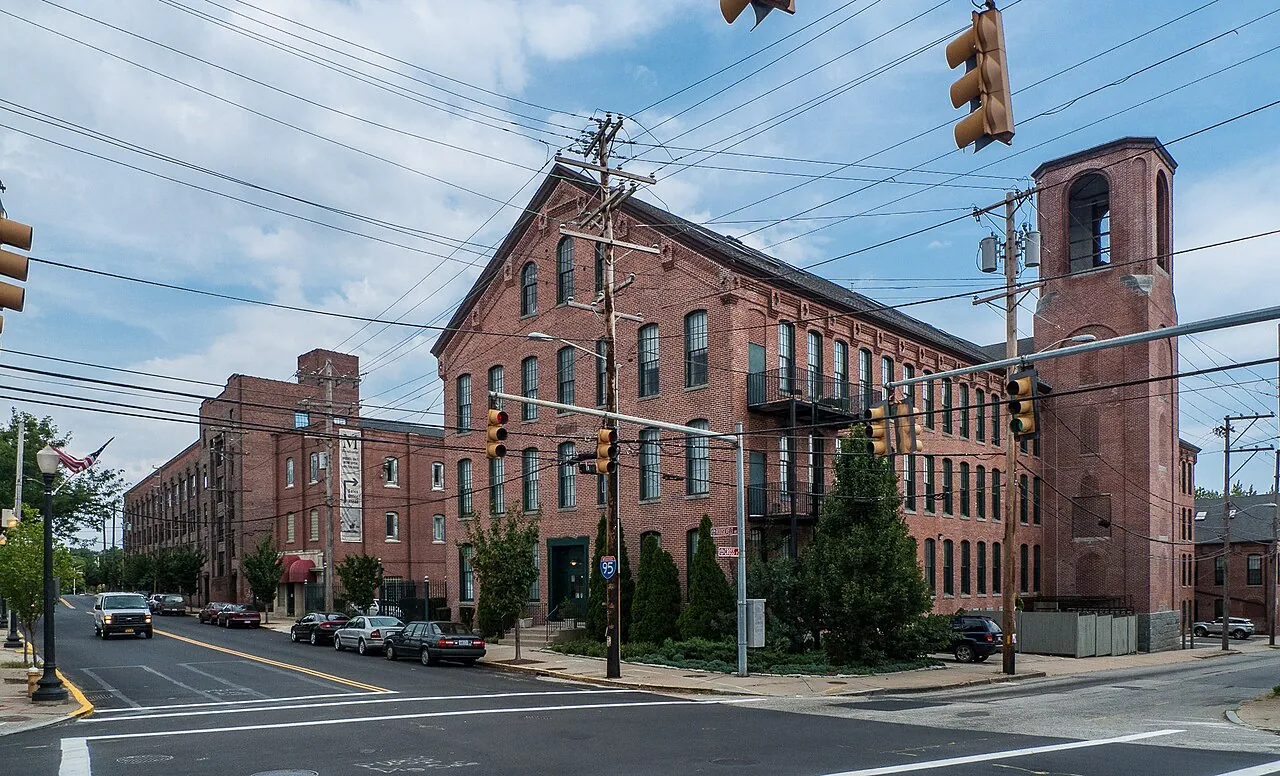
Fall River's granite and red-brick mills, such as Metacomet Mill, meet the roof at masonry walls, and New Bedford's 19th-century Wamsutta, Hathaway and Kilburn mills have wall junctions of their own to read. The report therefore gives the wall-to-roof transition, the parapet termination and any through-wall flashing their own section, with photographs of the brick, the mortar and the metal.
We also record the roof layers found at core cuts, since an older mill roof may carry more than one generation of repairs. If the deck is wood or heavy timber, the report says what was observed and what a recover or replacement would need to account for. These notes protect the owner from surprises when a repair crosses from membrane work into masonry or carpentry, and they help in a New Bedford mill district review where the building may be historic.
When do a drone or a moisture scan belong in the report?
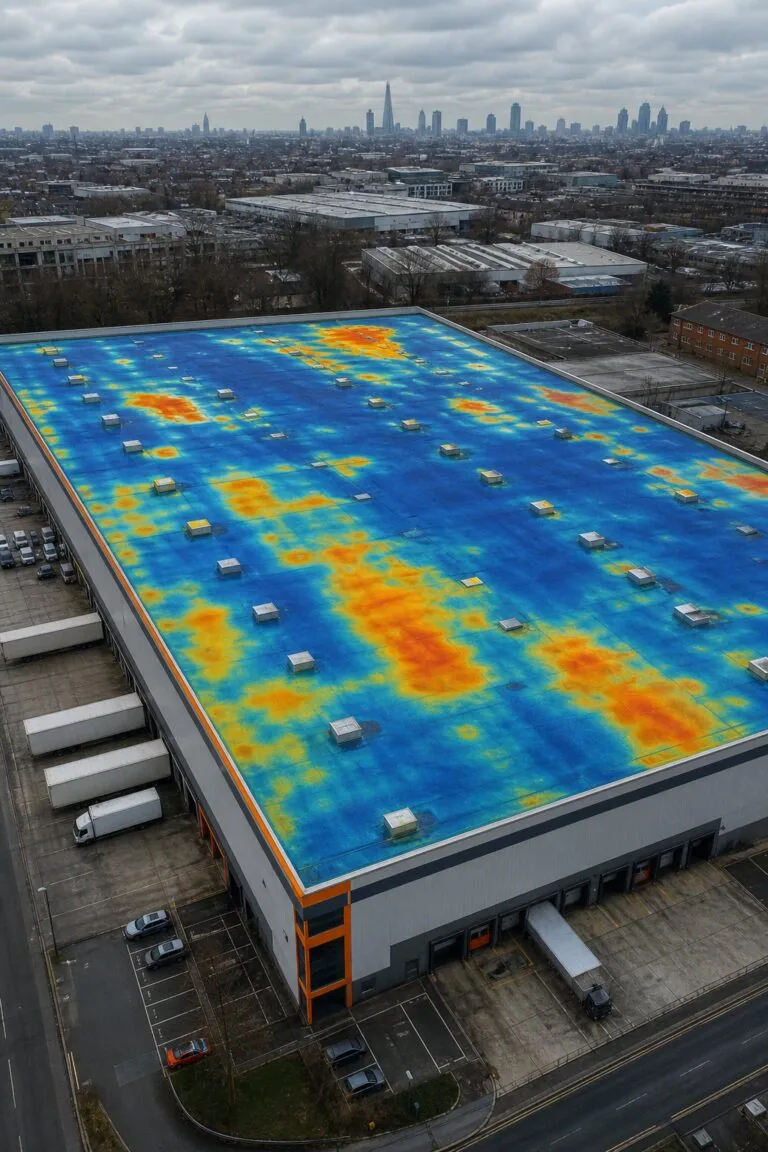
A drone roof inspection adds images of areas that are hard to reach safely, such as steep or fragile roofs, and gives a clean overview of ponding patterns and equipment layout. An infrared moisture survey shows where heat patterns suggest wet insulation, and cores confirm what the scan found.
Neither tool replaces the walk. The seam probe, the hand pressure on flashings and the sound of a hollow spot still come from a person standing on the roof. When the tools are used, the report says what each one found, where it was limited by weather or access, and what was verified by hand, so the reader knows which findings are measured and which are observed.
Who uses the report, and for what?
Directors use it to set repair priorities and to brief an owner. Owners use it to feed a capital plan. Insurers use dated photographs after a storm to separate new damage from old. Lenders and buyers use it to understand condition before a closing. A single report can serve all of them if it states findings plainly and shows its evidence.
New Bedford's storm record shows why dated baselines matter. The record 20-foot tide of Carol in 1954, Bob's 89 mph gusts over Buzzards Bay in 1991 and a snow average of 32.5 inches a year all show why dated baselines matter here. A report taken before the next storm lets everyone see what changed, and it shortens the argument over cause.
A report written for one building rarely stays with that building. When an owner moves to a multi-site roof program, the same page layout repeats for every roof, so a finance reader can turn from a mill in New Bedford to an industrial building in the Fall River Industrial Park without relearning the grades. The report also feeds warranty management, because a dated photograph of a repaired lap or a reset termination is exactly the evidence a manufacturer asks for when notice periods and maintenance conditions are reviewed.
Commercial Roofing Questions
How long does a report take to receive after the visit?
Roof size and whether scans or cores were done set the timeline. We deliver a short summary of urgent items right after the walk, so nothing waits on the full document, and the complete report follows once the photographs and findings are checked.
Can the report be used for an insurance claim?
Yes, when the walk happens near the storm date. Dated photographs and location notes separate storm damage from wear, and the report states what the inspector saw without guessing at coverage. The insurer and the owner both read the same record.
Does the report include prices?
It includes cost drivers and, when asked, budget ranges for each recommended action. Fixed prices come in a separate proposal, once the owner decides which items to pursue, so the report stays a record of condition alone.
What if the roof is in good shape?
Then the report says so, with the evidence: dry cores, sound seams, clear drains. A clean report is useful to a lender, a buyer or a board, and it sets the baseline for the next visit.
How is a report different from a quote?
A report records condition and ranks findings; a quote prices work. Keeping them separate lets the owner decide what to do with the findings, and compare any contractor's proposal against the same evidence.
Ready to review the roof scope?
Request a Roof AssessmentKeep Reading