Roof Systems
Metal Roof Retrofit and Restoration in New Bedford, MA
Metal roof retrofit and restoration in New Bedford, MA for exposed-fastener panels: fastener back-out, lap sealant, rust, condensation, and coating choices.
Request a Roof Assessment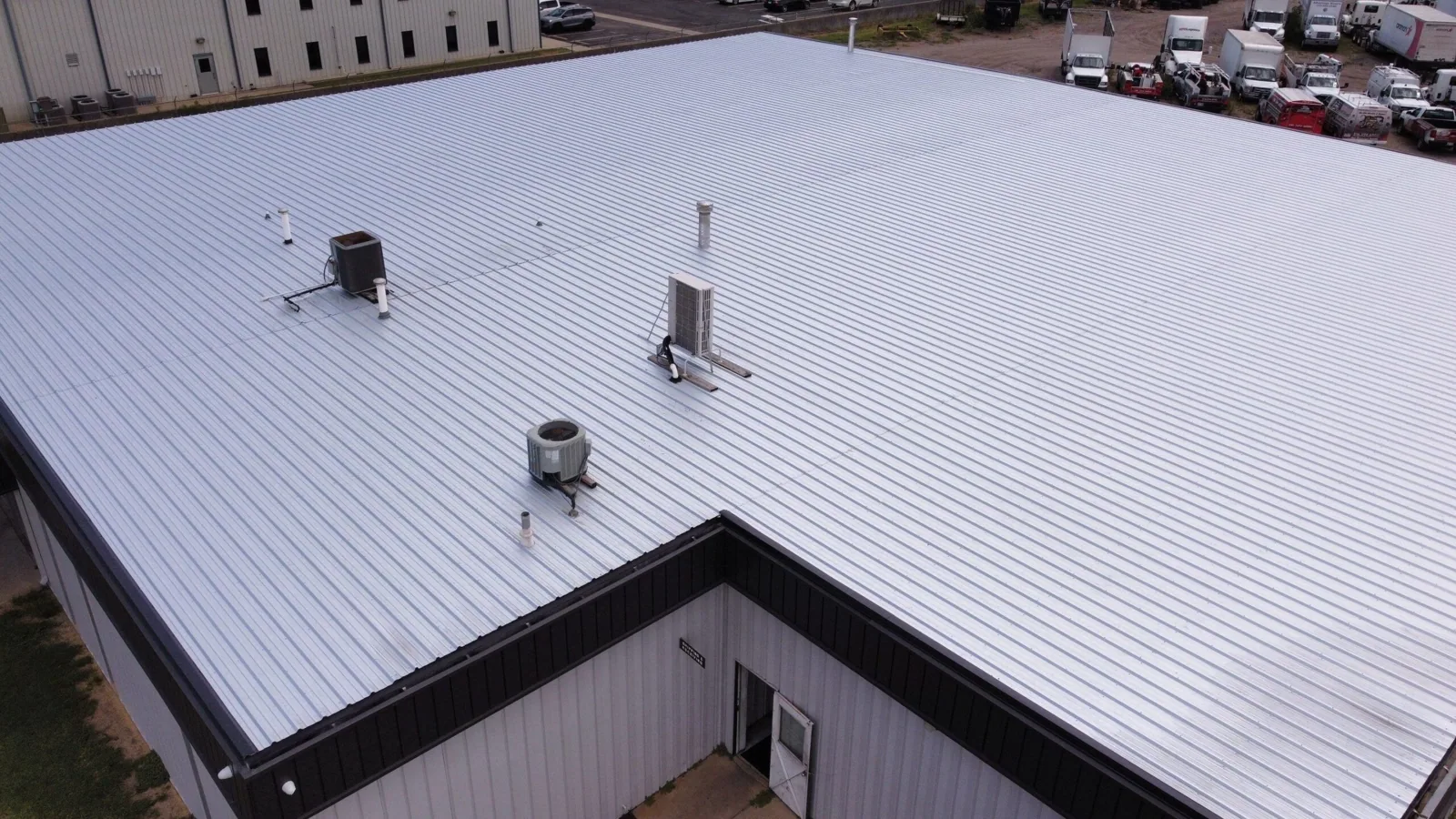
Why does the screw line on an old metal roof leak even though nothing on the building has changed? A facility director who has chased that drip across a warehouse ceiling is usually looking at fastener back-out, and the first sign an inspector would see is a row of screws standing a fraction of an inch proud of the panel, with a rubber washer that has gone hard and split. Exposed-fastener metal roofing is panels screwed straight through the metal into the purlins, so every screw is a hole that depends on a washer to keep it closed.
In New Bedford, MA, that washer faces about 52 inches of precipitation, roughly 32.5 inches of snow and swings from a record low of minus 12 F. We walk the panels, laps, fasteners and trim, mark each defect on the roof plan, and show the owner what a retrofit or a restoration would change.
Why do exposed fasteners loosen over the years?
Metal expands in the afternoon sun and shrinks overnight, and every cycle drags the panel against its screws. The washers harden, the holes elongate, and the screws begin to back out of the purlin. In cold weather the effect reverses, and condensation forming under a panel can run down a screw shank and mimic a roof leak. We pull a sample of fasteners across the roof, test whether they still hold in the purlin, and note rust at the heads. A loose screw can often be replaced with an oversize fastener and a fresh washer, but a purlin that has been chewed by years of movement needs a different answer. We pull screws at the eaves, the ridge and the middle of the roof separately, because the pattern of failure tells us whether the problem is the washers, the purlins or the movement of the building itself. A repair that ignores that pattern tends to come back at the next row of screws.
What do open laps and bad sealant tell us?
Panels overlap along their ribs and at their ends, and the joint is closed by a bead of butyl tape or sealant that dries and shrinks. When we find dirt tracking inside a lap, it means water has been moving through it. Along the eave we check the closure strips and the drip edge, and at the ridge we look at the cap and its fasteners. Sealing a lap is a repair that lasts only if the joint is clean and dry, so the work often starts by cutting back old sealant, brushing the metal and re-bedding the lap with a compatible tape. A coating can bridge small gaps, but it will not close a lap that has opened. Where a lap runs across a long slope, water that enters at the high end can exit three bays away, so the inspector follows the lap down the slope and marks every point where the tape has lost contact. Those marks make the repair estimate concrete: so many feet of lap to reseal, so many screws to replace.
Is the rust surface or structural?
Surface rust at a scratch is a coating problem. Rust that has opened pinholes in the panel, or that has eaten the lower edge of a rib where water collects, is a panel problem. We tap the metal with a hammer to hear the difference, check the gutters and valleys where rust starts first, and look at the purlins underneath from inside the building when we can. A restoration plan separates the panels that can be saved from those that need to be replaced. Panels that ring solid under the hammer and show only surface rust get cleaned and coated. Panels with soft, flaking metal at the lap or the lower rib are listed for replacement, with the count and the locations on the plan so the owner can price the work by the sheet.
How do storms and snow affect an older metal roof?
Hurricane Carol's winds of 80 to 110 mph across eastern Massachusetts in 1954 set the benchmark for storm loads in this region, and any retrofit has to be fastened with that history in mind, not just the code minimum. Loose fasteners at the eaves, rakes and ridge are the first places wind lifts a screwed-down panel. The January 2015 blizzard dropped 26.0 inches of snow in East Freetown, and snow load adds weight to panels already weakened at their fasteners. We check the edge metal and gutters for loose fasteners and open joints, and we note any sag between purlins that suggests the structure is working harder than it should.
What are the retrofit and restoration options?
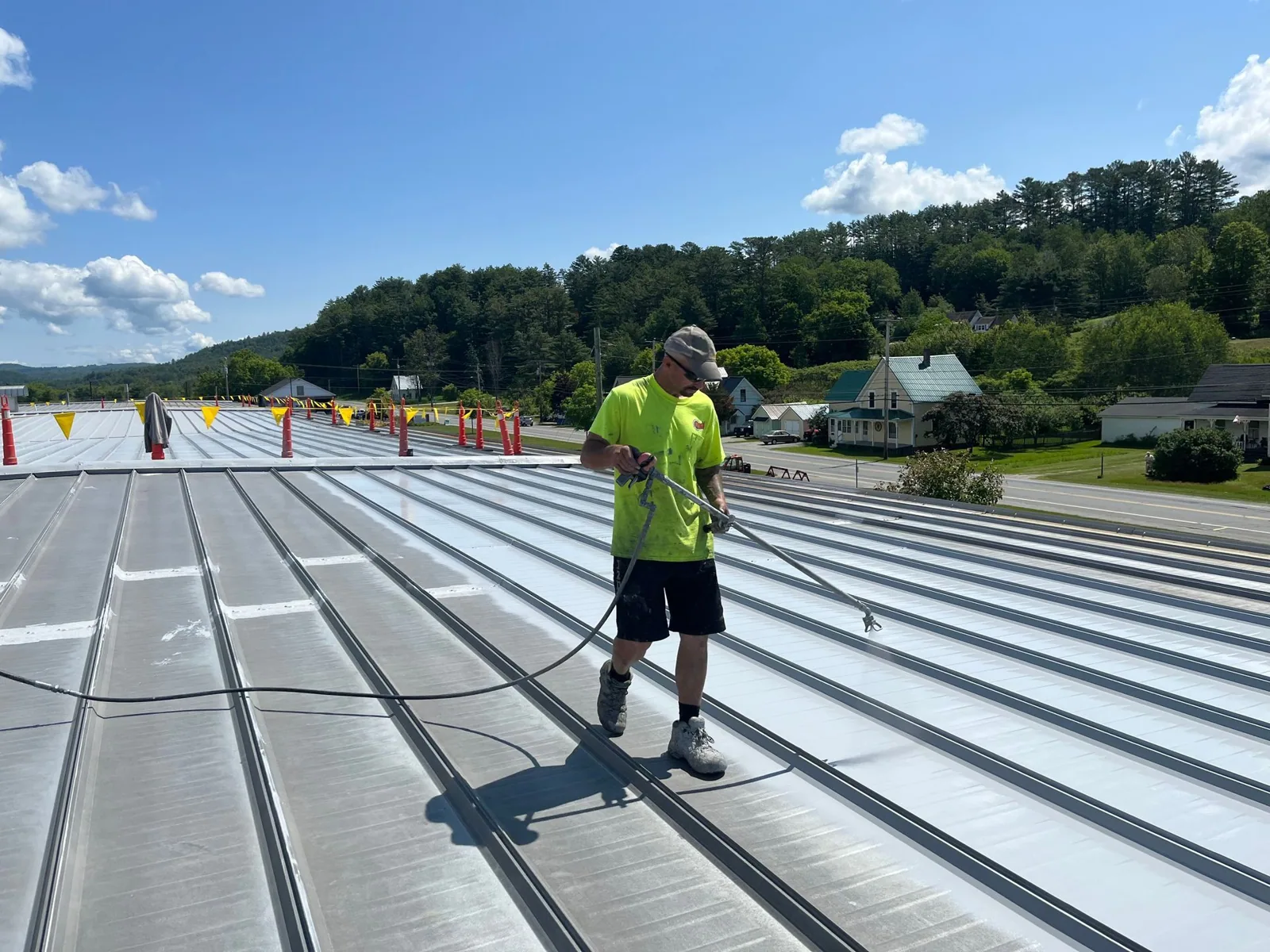
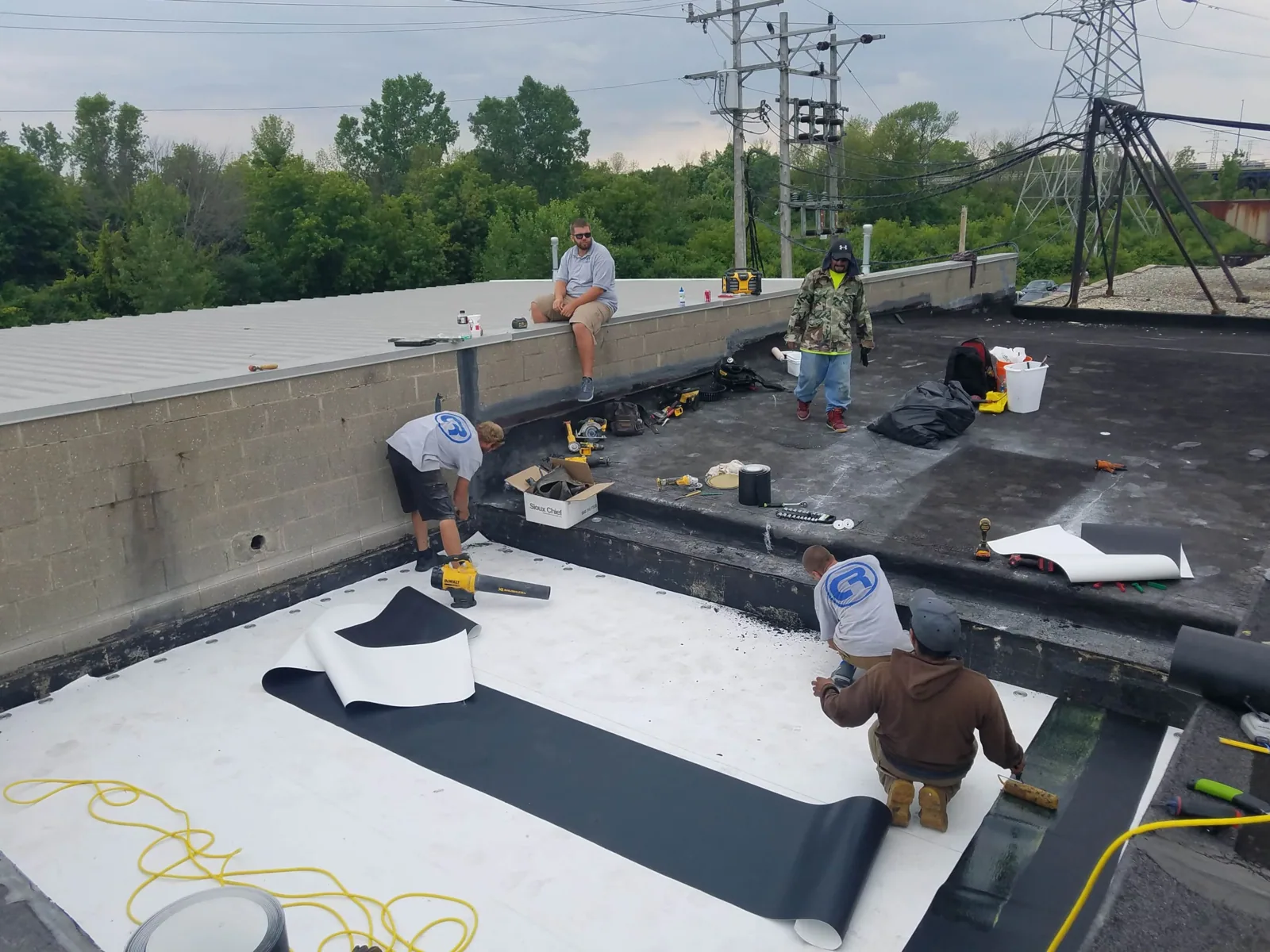
A restoration keeps the existing panels. We replace failed fasteners, reseal laps and penetrations, repair rust and apply a coating, typically silicone or acrylic, to protect the metal and seal what remains. A retrofit adds a new roof over the old: either new framing and a new standing seam metal system, or insulation and a membrane over the panels. A retrofit avoids a tear-off and keeps the building in use, but the old panels must be sound enough to carry the new load, and the structure must accept the added weight. A retrofit scope falls under Massachusetts' 10th Edition building code, which is based on the 2021 International Building Code and took effect October 11, 2024, and we confirm the permit path before we price. For owners who prefer to recover a section at a time, the plan shows which bays go first and how the new roof ties into the old one at each break.
Which owners ask about retrofits?
An owner of an older industrial or storage building, whether along Route 24, which serves Freetown, Berkley and the Fall River Industrial Park, or near a working port such as the Marine Commerce Terminal, which has been leased for staging wind turbines and platforms, weighs a retrofit against a tear-off when the interior is full of equipment or inventory that cannot be moved. In that case the question is how long the building can stay exposed, and a retrofit shortens that time. The cost drivers are the number of panels to replace, the condition of the purlins, the access around the building and how much of the interior must be protected during the work.
Commercial Roofing Questions
Can a leaking metal roof be fixed by replacing screws?
Sometimes. If the panels and purlins are sound, new oversize fasteners with fresh washers stop screw-line leaks. If the purlin is damaged or the panel is rusted through, the fix goes beyond screws.
Is a retrofit cheaper than a tear-off?
Often it is, because it avoids removing and disposing of the old roof and shortens the time the building is exposed. The comparison depends on the structure, the access and the insulation plan.
Do I need to coat a metal roof?
A coating protects sound metal and seals small defects. It is not a substitute for replacing failed fasteners or panels, and it adheres only to clean, dry, properly prepared metal.
What causes drips that look like leaks on a dry day?
Condensation. Warm, humid air inside meets cold metal and forms water on the underside of the panel, which runs to a seam or a screw. Insulation and ventilation changes address it.
How long does a restoration last?
It depends on the panel condition, the coating system and the maintenance after it. A yearly walk after a coating is applied catches any open lap or loose fastener early, while it is still a small repair.