Service Areas
Commercial Roofing in Berkley, MA
Commercial roof inspection, drain clearing, repair and replacement for Berkley, MA industrial, service and office buildings along Route 24.
Request a Roof Assessment
Beside a four-lane freeway, what does a roof collect first? In Berkley, MA, the first thing to check is grit: road dust, exhaust residue and blown debris can collect in drains and at wall bases, where they hold moisture against the membrane. Route 24 is a four-lane divided freeway that bisects the town, with one town exit at Padelford Street, and Route 79 runs along the border with Lakeville before meeting Route 140 just across the line in Taunton.
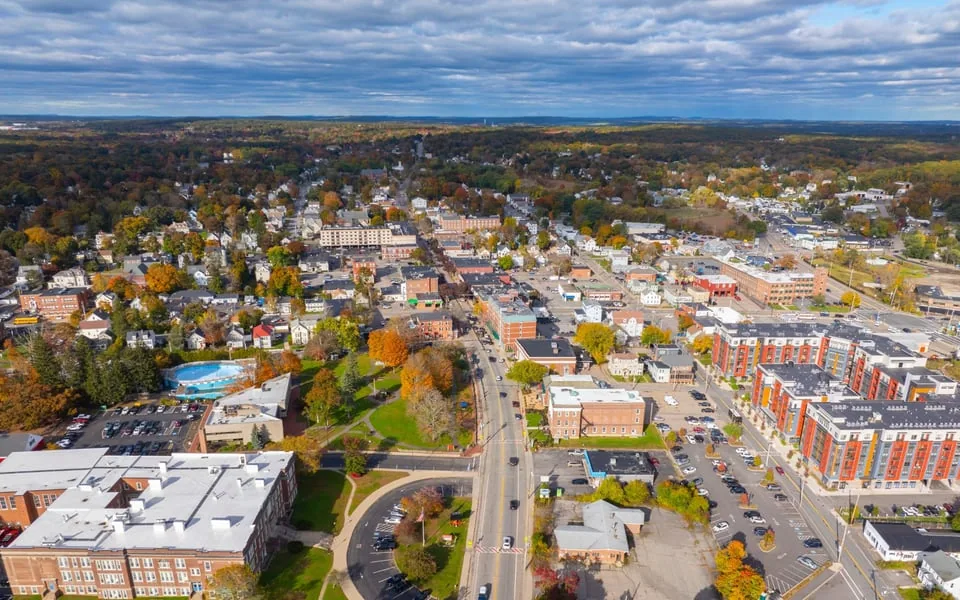
Berkley covers about 17.4 square miles, and the roof work we plan there covers small industrial, service and office buildings. Seams get probed, drains get cleared, and every finding lands on the roof plan ahead of any price.
Why does roadside grit matter to a membrane?
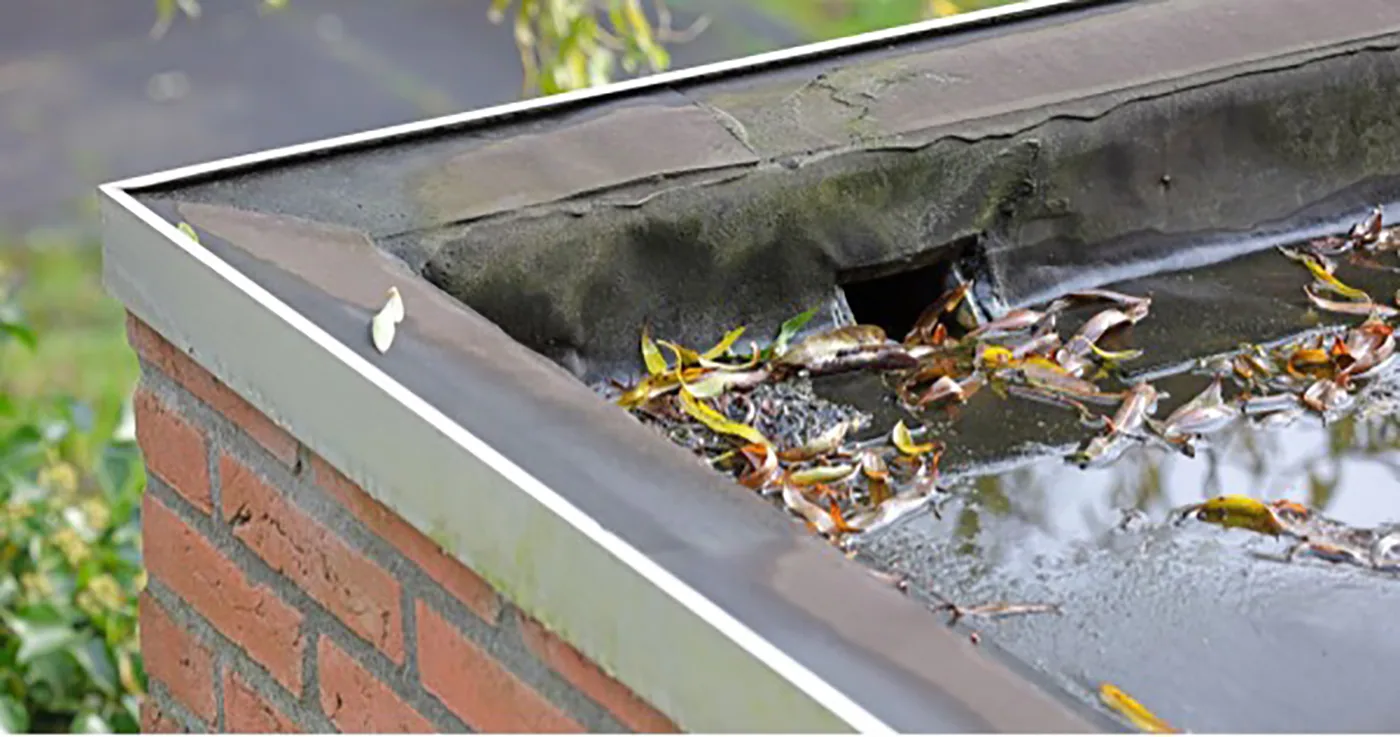
Dust and debris pack into drain sumps and scupper throats, and a clogged outlet turns an ordinary rain into a ponding event. Grit also scours membrane at foot-traffic paths and settles at the base of walls, where it holds water against flashing.
We clear every outlet, check the strainers and probe the lap sealant near walls. A dirt ring left by dried water, the ponding line, shows how long water stood after the last storm. Dirt left by a puddle that dried over a firm deck points to drainage, while the same ring over a spongy patch points to moisture in the layers. Our ponding water repair work starts from that split.
The fix follows the cause: a cleared outlet for a clog, a drain set at the low point for a sag, and tapered insulation where the deck has settled. We price each against a simple cleaning so the owner sees the whole range before choosing.
What does a rail junction add to the picture?
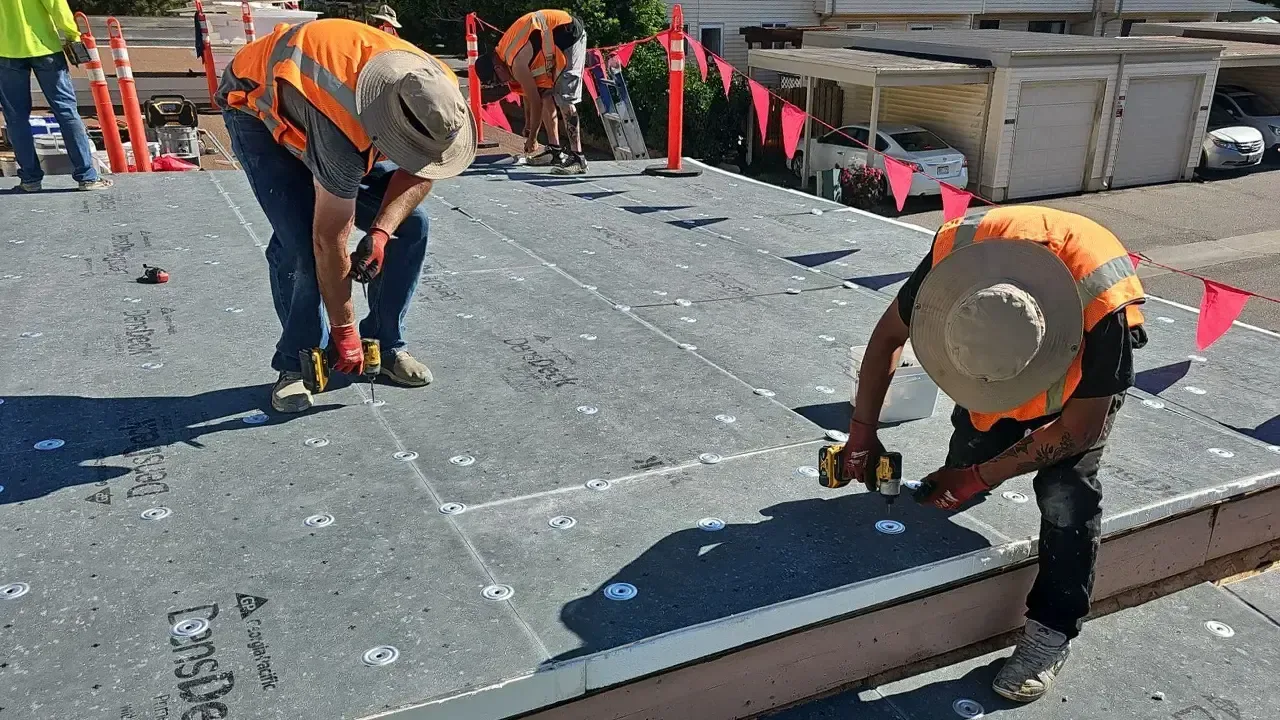
Myricks is a junction of railroad lines in Berkley. A building near an active rail corridor can see vibration, diesel exhaust and dust, and none of those helps a membrane. Fasteners can work loose, and soot that sticks to the surface speeds wear on sealants.
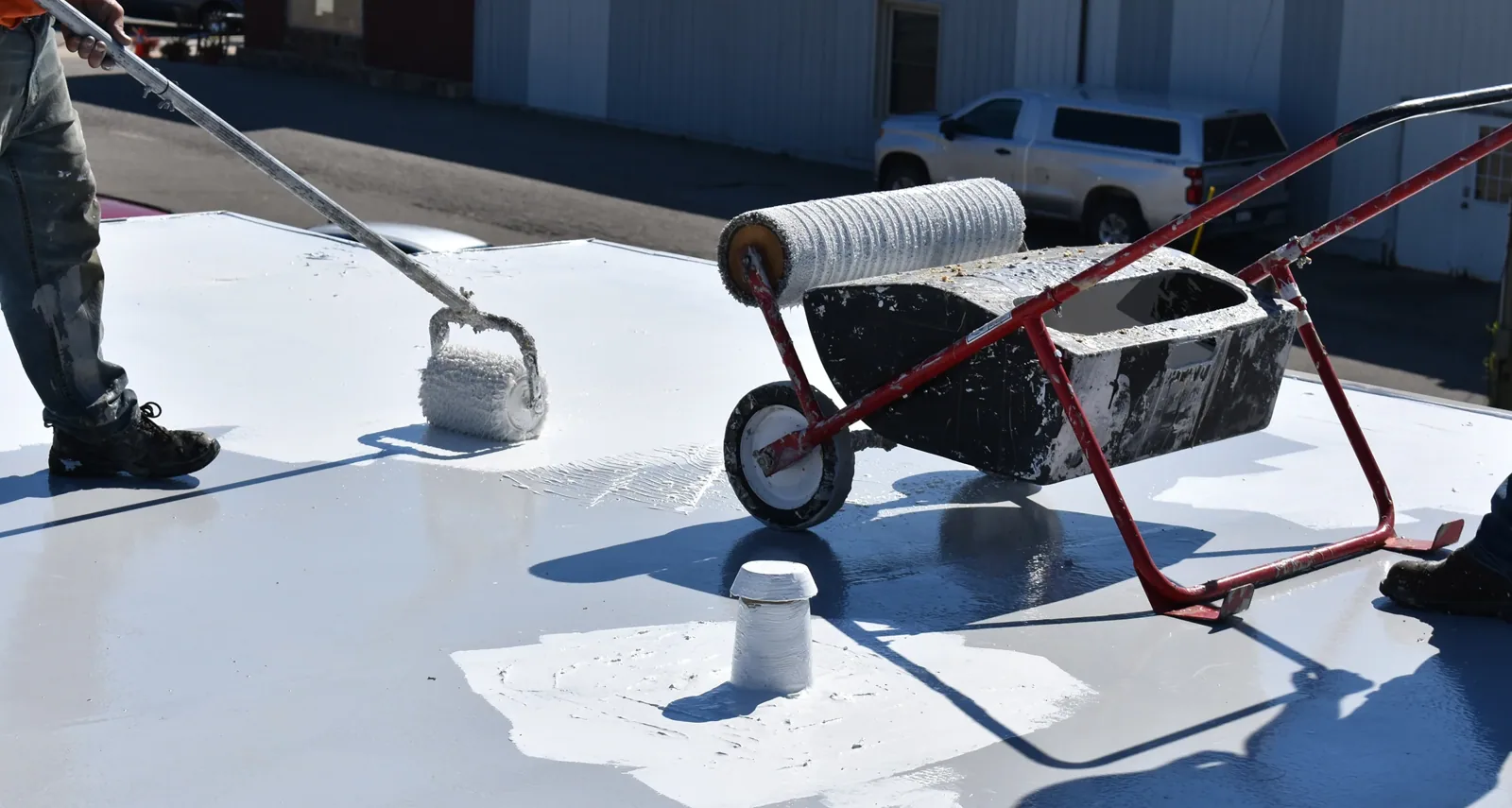
We check for fastener back-out on mechanically attached systems and for ridging near walls, which signals membrane shrinkage. Where a coating is on the table, we clean the surface thoroughly, because dirt left under a coating becomes a bond failure. A roof coating restoration is worth considering only on a dry, sound roof, and the surface must be tested for adhesion first with a small patch.
Rail junctions also bring noise and schedule limits for neighbors. We agree on work hours, fence the staging area and keep deliveries clear of the tracks and road crossings, so the crew never blocks access that others need.
Where does wind start on a freeway-side building?
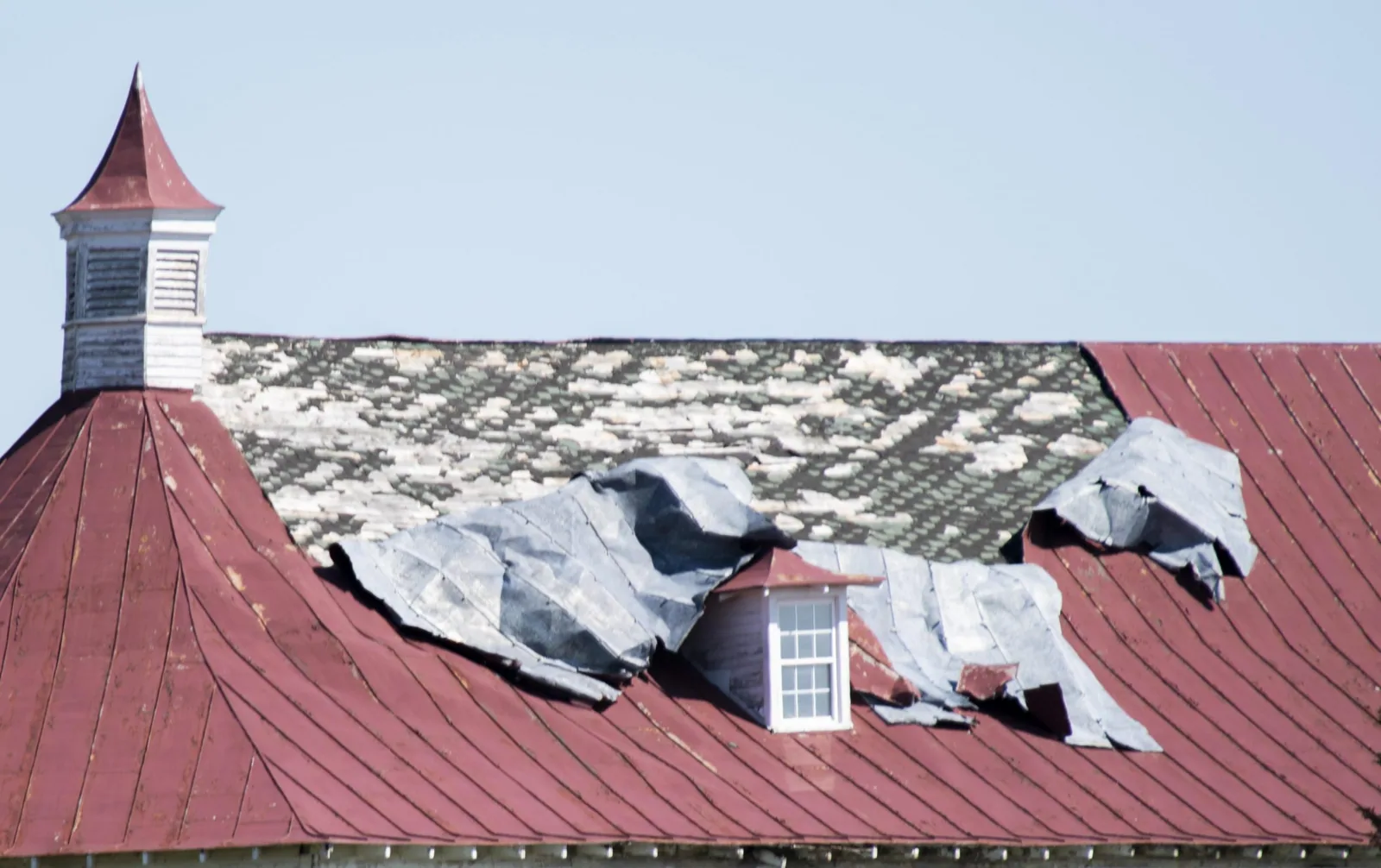
Open lots beside a freeway give wind a long run at the roof. It finds the corner, then the edge metal, then the first row of fasteners. Wind history in the region includes Hurricane Bob, when a Buzzards Bay station recorded sustained winds of 77 mph in 1991. That record belongs to the area at large, and it sets the order of our check: perimeter first.
We pull on edge metal, probe the fasteners behind it and look at gravel stop where one is present. A lifted length gets marked for refastening, and a loose joint gets resealed. Corners matter most, since they take the highest suction in a wind event. After a storm, a wind damage survey adds a look for torn flashing and displaced ballast.
How do snow and thaw cycles work on a flat roof?
A typical New Bedford winter drops about 32.5 inches of snow, concentrated from December to March. A Berkley roof has its own conditions, yet the regional pattern shows what a flat roof must carry through repeated freezes and thaws.
Snow sits behind rooftop units and in valleys, and meltwater refreezes at drains. Tapered crickets, sump depth and outlet slope get measured, and low areas that stay wet after a thaw go onto the sketch. A preventive maintenance visit in late fall clears the drains before the first heavy snow.
Roof access in winter needs care. Ladders, hatches and edges ice over, and snow hides skylights and low parapets. We clear a safe path, tie off at edges and inspect only when the surface can be seen. A winter visit after a storm often catches a failure that spring would hide.
Which building types are common, and what do their roofs need?
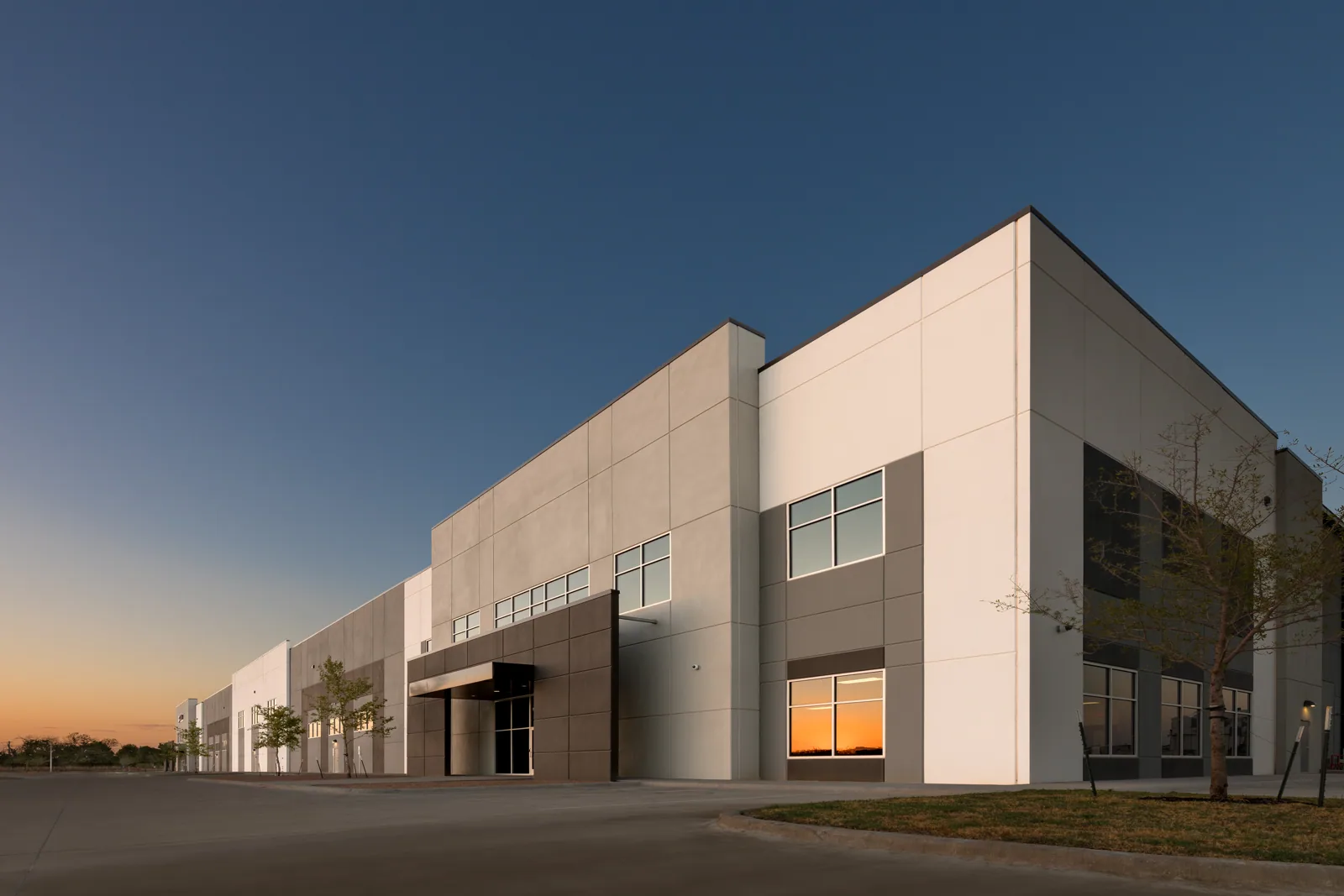
A small industrial building has a long, low-slope roof with a few units and vents. A service building may have a metal roof with exposed fasteners. An office has a flat roof with a parapet and interior finishes that make leaks costly. We name each type on the first visit, because the repair follows from it.
For a flex industrial roof we pair the seam probe with a moisture scan, since a leak above an office area causes more damage than one above a storage bay. Metal roofs get a fastener check and a rust check, and membrane roofs get a probe at every lap and flashing. Each answer goes on the roof plan, so the next visit starts from a record and not from memory.
Repair, coat, recover or replace?
A core cut settles it. One small plug shows the layers and the moisture in the insulation. A dry core under sound membrane means repair or coating. A wet core across several zones means replacement, because a recover would seal the water in.
Owners in Lakeville and Taunton use the same decision path. Price follows roof section size, deck condition, crew access and penetration count, and the report ties each driver to the finding behind it, with the timing each option needs. A director who knows the timing can pick the work that fits the building's calendar, and a late-fall visit to clear drains ahead of the first heavy snow costs little against the water damage a frozen clog allows.
Commercial Roofing Questions
Does highway dust really shorten a roof's life?
It speeds wear when it clogs drains and stays against flashing. Clean outlets and a rinse of the surface during maintenance keep the effect small. We clear debris at every visit.
What sign shows fasteners are backing out?
Raised heads and ridges in the membrane over the fastener rows. On metal, look for rust rings and stains along the ribs. A few tapped screws or plates will confirm it.
Can a coating go over a dirty roof?
No. Dirt under a coating fails the bond. The roof must be cleaned, repaired at every known opening and tested for dry insulation before any coating goes on.
When is a freeway-side roof worth restoring and not replacing?
When the membrane is sound, the insulation is dry and the damage is surface wear. A restoration then adds service life at a fraction of replacement cost. If a moisture scan finds wet insulation, restoration is off the table and the scope moves toward replacement.
How does Route 24 affect a delivery schedule?
The freeway carries commuter traffic, so material drops and lift moves are set for off-peak hours. We agree on the route in and out with the owner, and we stage on the lot so that no equipment waits on a shoulder.
What should I send before a visit?
Anything on file helps: a roof plan, the install year, what the building is used for and where water has shown up. The first visit covers the rest, and you hear the findings on the roof before a quote exists.
Ready to review the roof scope?
Request a Roof AssessmentKeep Reading