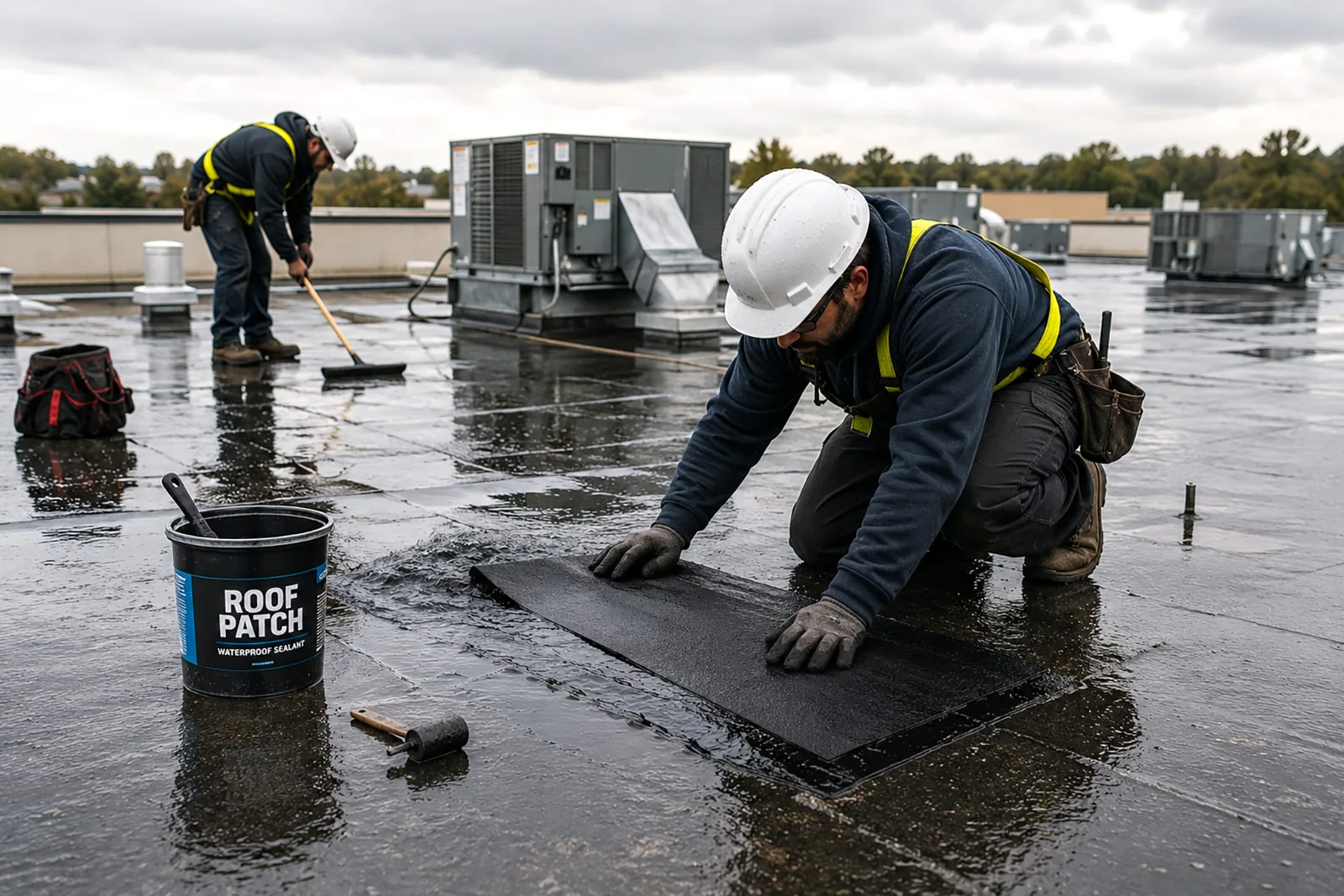
Property Types We Roof
Grocery Store Roofing in New Bedford, MA
Roof inspection, condenser curb repair and moisture surveys for grocery stores near New Bedford, MA, planned around food safety and early-morning stocking.
Request a Roof Assessment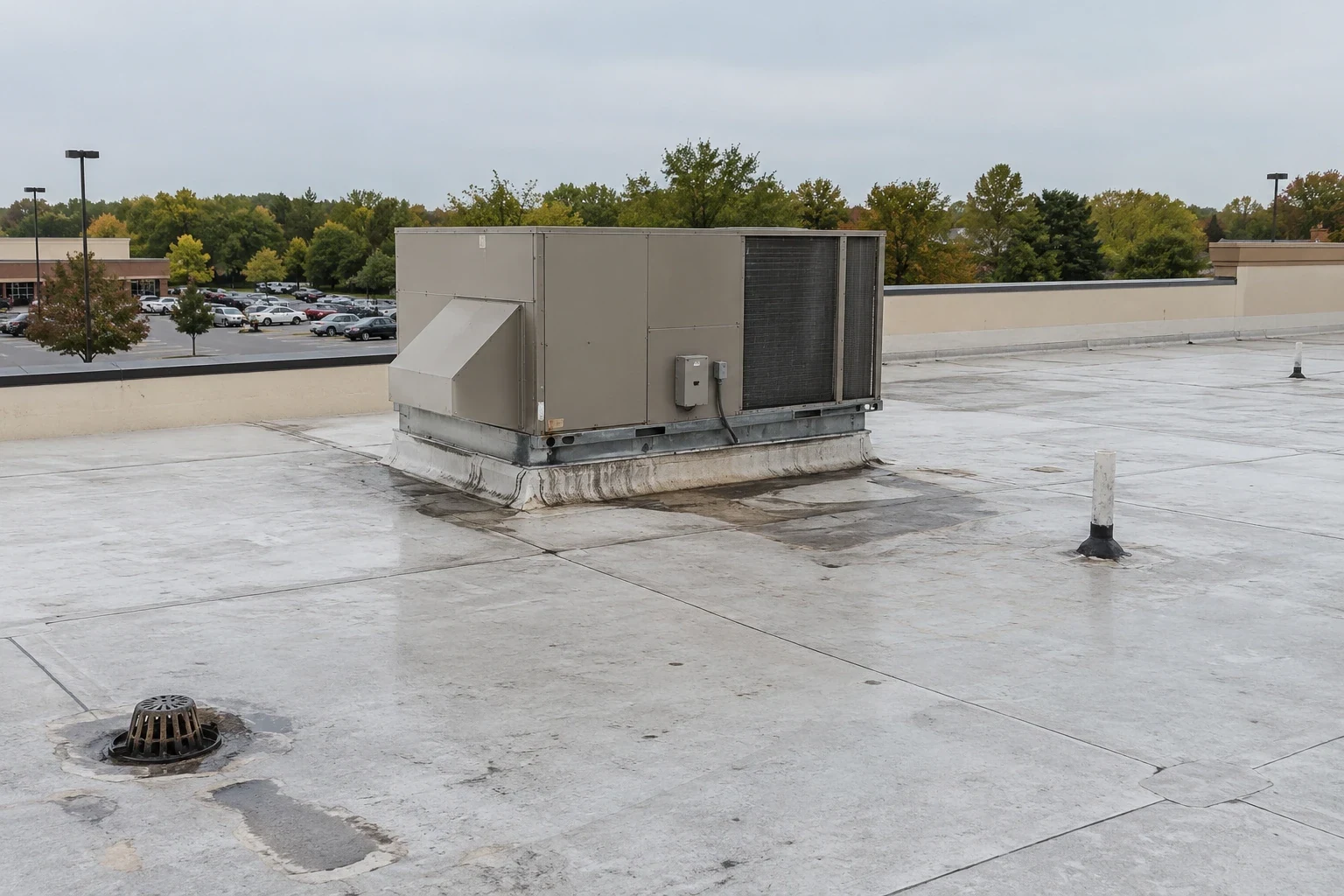
Is that drip over the dairy case coming from the roof or from the refrigeration line above the ceiling? A store manager asks it with a towel in one hand and a call to head office in the other, and the first step is to find out before anyone pays for the wrong repair. The first thing an inspector finds on a grocery roof near New Bedford, MA is a crowd of equipment: condensers, rooftop units, exhaust and refrigerant lines running to curbs that were flashed in different years. We probe the seams around each curb, scan for wet insulation and trace the line from the stain to its source.
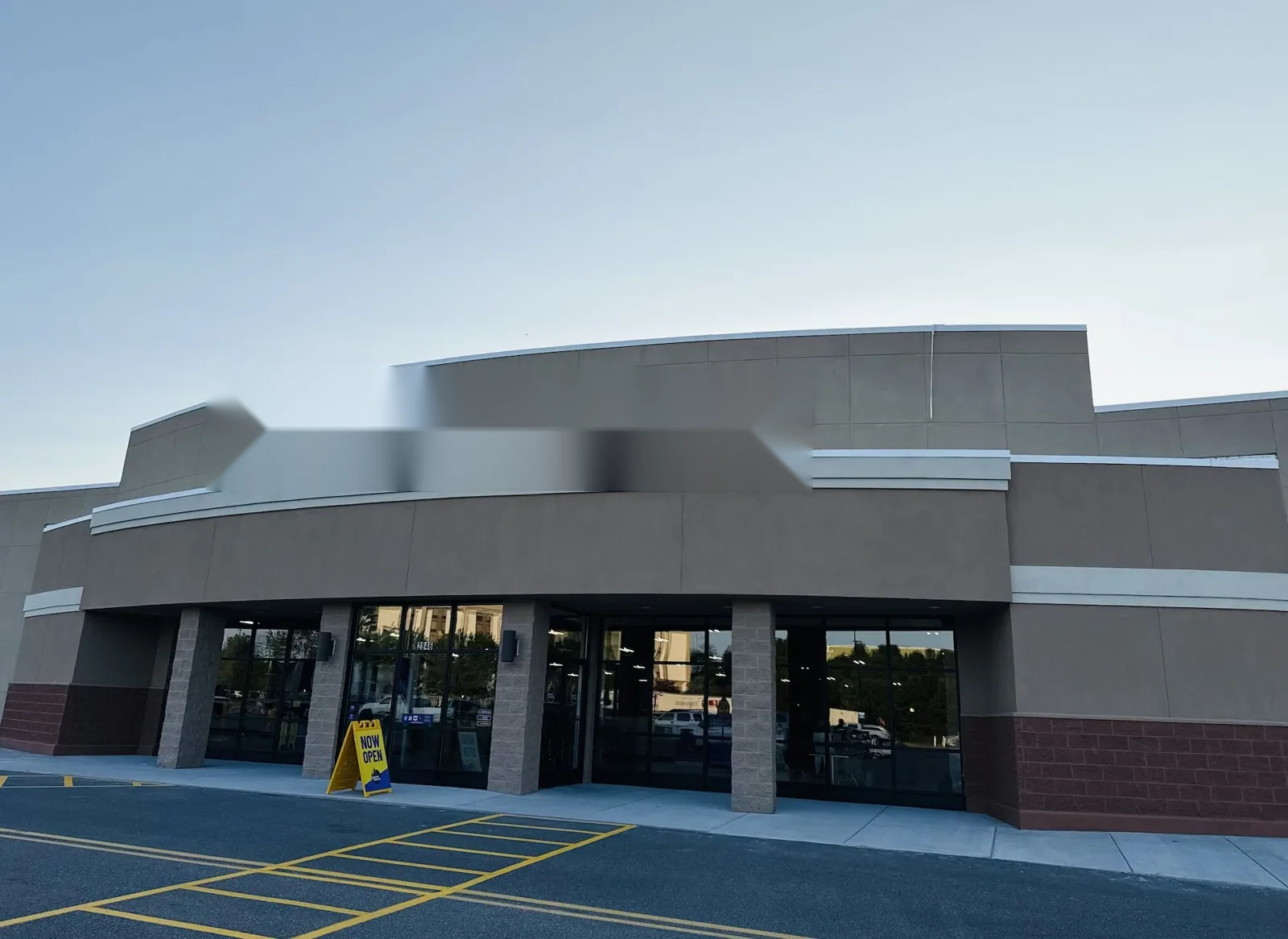
Food stores cannot close for a roof, so the plan has to protect product, customers and staff as carefully as it protects the building.
What does the inspector find on a roof crowded with refrigeration?
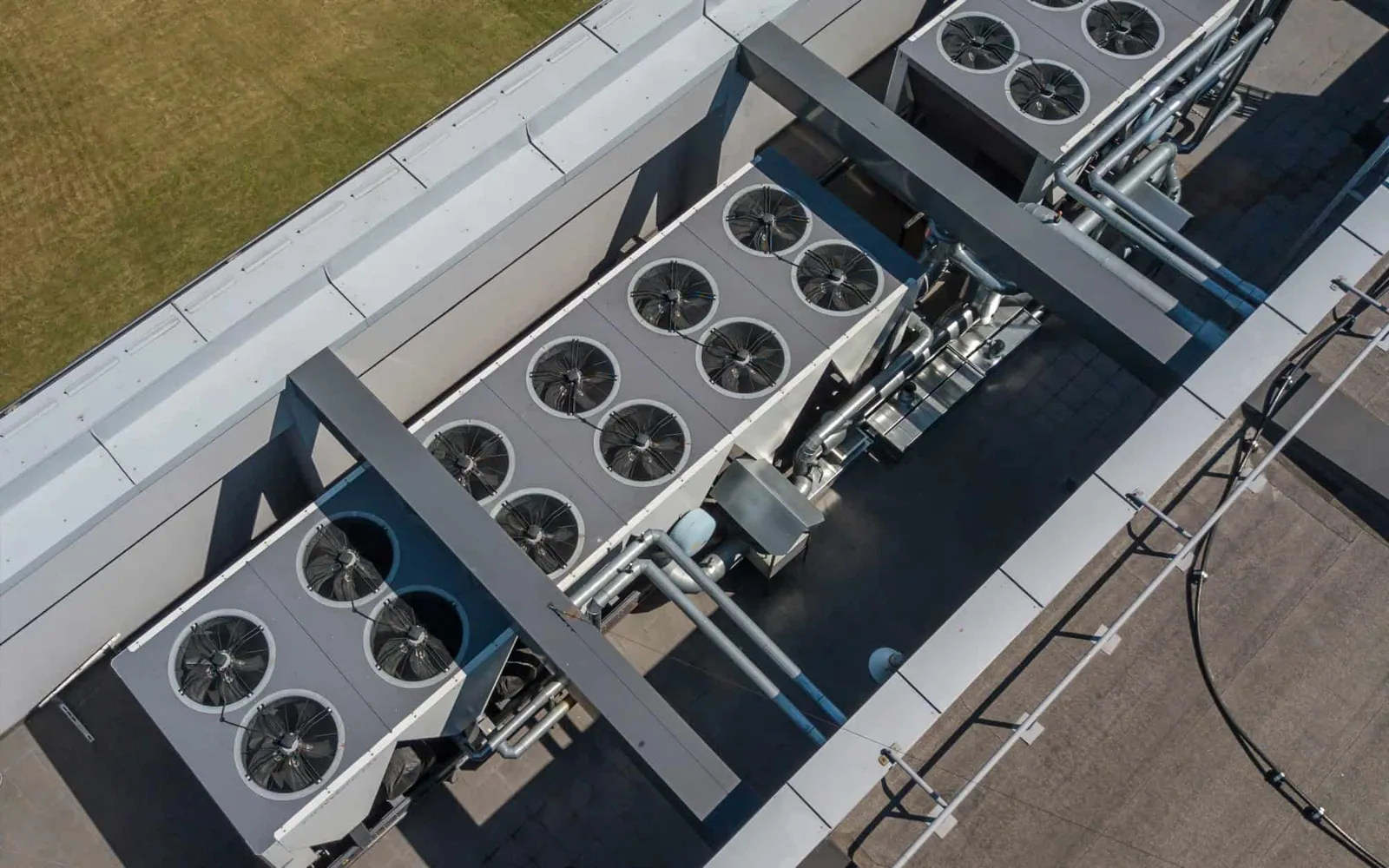
A supermarket roof carries condensers, air handlers, make-up air units, exhaust fans and the refrigerant and electrical lines that join them. Each connection is a penetration, and the supports that carry the lines rest on the membrane. We check support pads for crushed sheet, pipe boots for splits, curbs for open flashing and condensate drains for staining, then follow the lines to find where water could enter along them.
Fastener back-out and lap sealant failure show up where service technicians walk, because foot traffic loosens what thermal movement has started. We mark the worn routes, recommend walk pads where the sheet is thin and photograph every curb so the store has a record of what was found around each unit.
Roof access itself deserves a look. Hatches, ladders and guard rails on a store roof are used by refrigeration and HVAC technicians year-round, and a hatch that does not seal or a ladder that rubs the membrane becomes a leak and a safety item. We list both.
Why does a roof leak become a food safety problem?
Water over food, packaging or a prep area is a safety event. Stock may have to be discarded, aisles closed and cases emptied, and any ceiling tile that has absorbed water can grow mold that the store must remediate. The cost of the repair is small next to the cost of a day of lost product and a visit from the health department.
For that reason we rank grocery roofs by what lies below. The areas over produce, deli, dairy and freezers come first; the areas over storage and office come next. An infrared moisture survey finds insulation that is already wet, so the store learns about a problem before a stain reaches the ceiling.
Where does the region's food supply put pressure on a roof?
From 1999 to 2019 New Bedford Harbor led the country in the value of its commercial catch, and a Stop & Shop distribution center is the specific employer named in Freetown. Stores that handle fish, dairy and frozen goods run refrigeration all year, and their roofs work hard. A cold storage roof shares many details with a supermarket's.
For store roofs, the lesson is that refrigeration load is constant and year-round. Condenser exhaust heats the membrane around it, and the heat accelerates aging in the hottest zones. We check the sheet near each condenser for hardening, cracking and blistering, and we mark the areas as candidates for earlier replacement.
What do snow and ponding do to a store roof?
Average snowfall is 32.5 inches, concentrated December through March, and East Freetown took 26.0 inches in the January 2015 blizzard. Snow drifts against condensers and parapets, and meltwater finds the low spots. A refrigerated building also loses heat through the roof, so melt happens unevenly, and refrozen water can form ridges near drains.
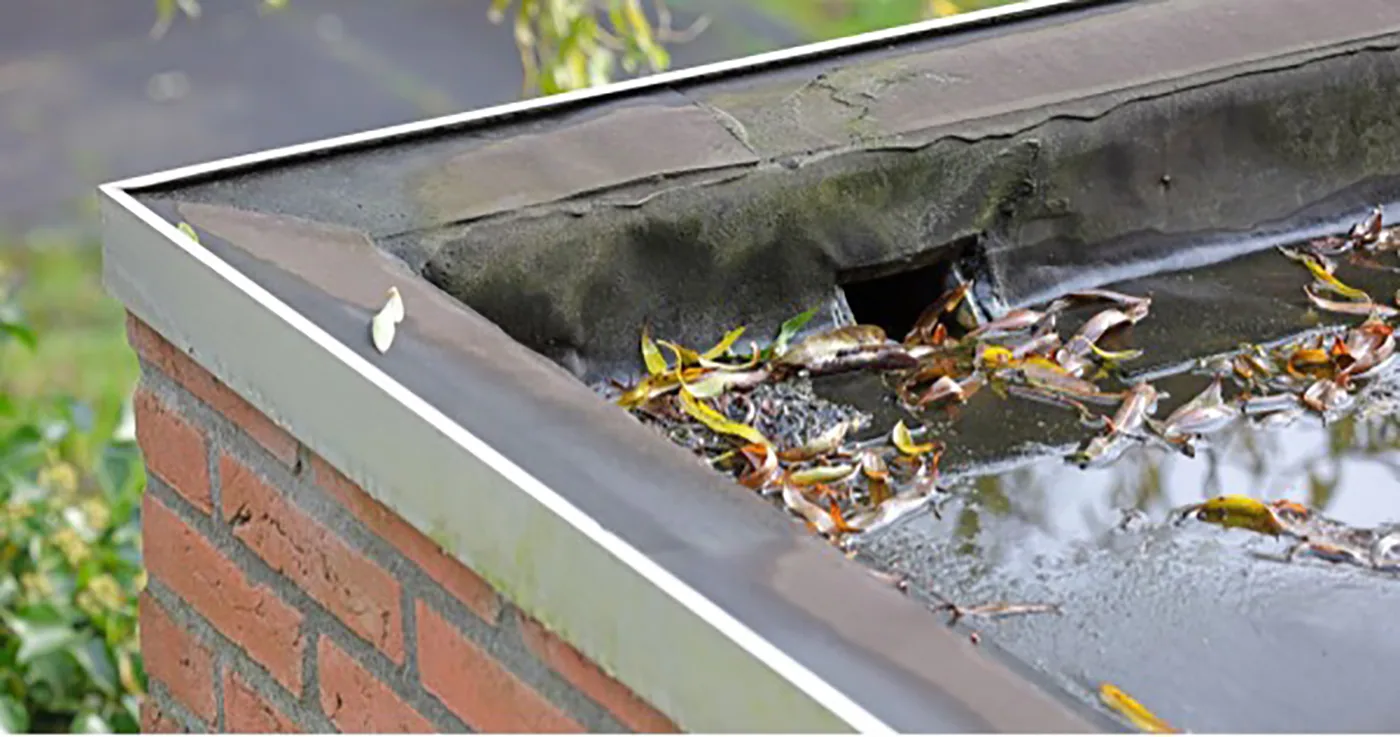
We clear and check every drain before winter, look at the slope toward each outlet and mark places where a ponding water pattern has left a stain. Standing water through repeated freeze and thaw is what opens seams, and a seam over a produce aisle is the last place a manager wants to find one.
How does coastal wind treat a flat grocery roof?
A large condenser has to survive what Hurricane Bob delivered in 1991, gusts of 89 mph over Buzzards Bay, and what Carol delivered in 1954, winds of 80 to 110 mph across eastern Massachusetts. A grocery roof has large condensers that act as sails and a perimeter that takes the first load. Units must be strapped to their curbs, curbs must be fastened to the deck and the membrane around them must be tight.
We check unit restraint, the integrity of each equipment curb, the edge metal at the perimeter and the parapet terminations. If a unit has shifted, the flashing at its base has often opened, so we repair both together.
After any named storm we revisit the units that the wind may have moved. A condenser that has shifted a fraction of an inch can open its flashing and tear a refrigerant line, and the first sign is often a stain below a week later. Early inspection catches it while the repair is a sealant and a strap.
What should a grocery manager ask before the crew arrives?
Ask when the crew will be on the roof relative to deliveries and early stocking, how product will be protected below the work area and who will be told if a section has to stay open overnight. Ask how an emergency call is handled at three in the morning, because grocery leaks do not wait for business hours.
We schedule loud and dusty tasks away from the opening of the store, keep the work area out of delivery lanes and close every section by evening. The same planning serves a restaurant or any other food business, with different kitchens and different hours.
Ask for the report to name the units by the labels the store already uses, such as rack, condenser or make-up air, so that a refrigeration contractor and a roofer are talking about the same piece of equipment.
Ask whether the crew can work from the loading side so the customer entrance stays clear, and whether refrigeration alarms will be silenced for the work or left live; the answer shapes where the lift stands.
Commercial Roofing Questions
How can a manager tell whether a ceiling drip is a roof leak or a refrigeration line?
Check timing and temperature. Roof water appears after rain or thaw and is cool, while condensation and line leaks show up in dry weather and may be tied to a defrost cycle. A moisture scan and a trace along the line from the stain to the roof settle it, and the repair then targets the real source.
Can a grocery roof be repaired while the store is open?
Yes, with the right planning. The crew works in small sections, protects the area below with barriers and covers where needed, keeps noise and dust away from entrances and closes the section by evening. Food-handling areas get extra care, and the manager gets notice before any work above them begins.
Why do condensers shorten membrane life?
Exhaust heat raises the surface temperature around each condenser, which hardens the sheet and speeds cracking. Vibration and service traffic add wear. A reflective membrane, walk pads and a clear zone around the unit slow the damage, and we mark the zones that need earlier replacement than the field.
What belongs in the roof file for a store?
A roof plan with every unit located, the system and age of each area, dated photographs of curbs and penetrations, moisture readings, the open findings by location and the invoices for earlier repairs. With that file, a new manager or a regional facilities lead can see the roof's history without relying on anyone's memory.
Ready to review the roof scope?
Request a Roof AssessmentKeep Reading