Roof Damage Repair
Fire Damage Roof Repair in New Bedford, MA
Fire, heat and smoke damage repair for commercial roofs in New Bedford, MA, from structural checks and dry-in to insulation removal and claim records.
Request a Roof Assessment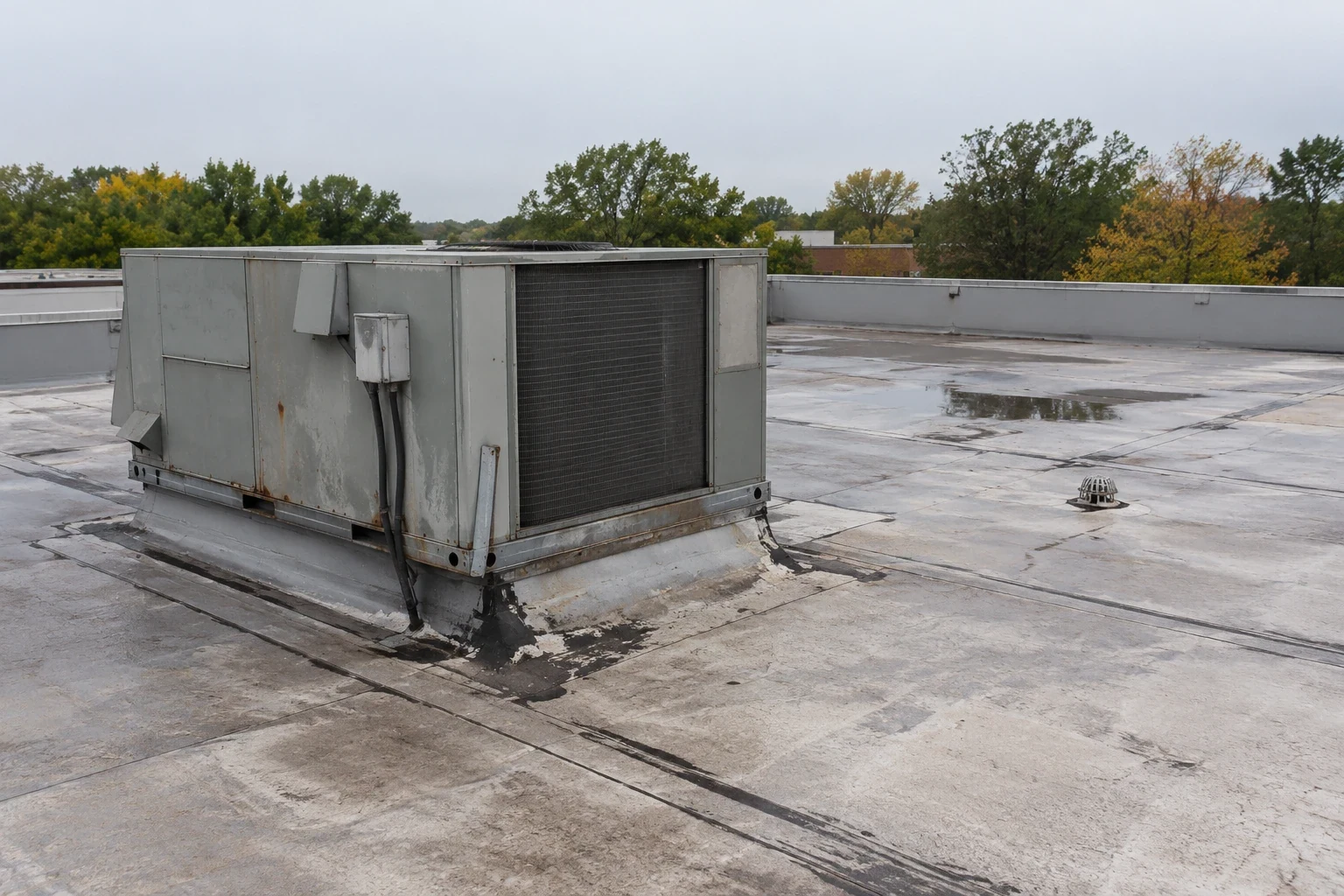
What does a fire do to a roof the flames never reached? A facility director standing in a smoke-stained corridor the morning after a blaze two bays away is usually asking whether the ceiling above is safe and whether it will keep the rain out tonight, and the inspector's first finding up top is a blistered, wrinkled membrane, a scorched edge metal run or a row of ventilation cuts that the fire department opened to release heat. Fire damage roof repair in New Bedford, MA starts with a structural check before anyone carries a tool up, moves to dry-in, and ends with every burned, melted or soaked section marked on the roof plan so the scope follows what actually changed.
What does the inspector check before anyone steps on the roof?
The deck comes first. Fire can char a wood deck, soften a steel deck until it sags and spall the concrete under a topping, and a surface that looks sound from the ladder may carry less weight than it did last week. We ask for the fire department's release of the building, we look at the ceiling below from inside to see where the deck has dropped or discolored, and we bring in a structural engineer whenever the deck type or its condition is in doubt.
Only after that do we walk the surface, testing each step by feel and staying on the routes the engineer has cleared. We mark soft or charred areas with paint and a number, and those areas stay closed until the deck beneath them has been repaired or replaced.
How far do heat and smoke travel through the assembly?
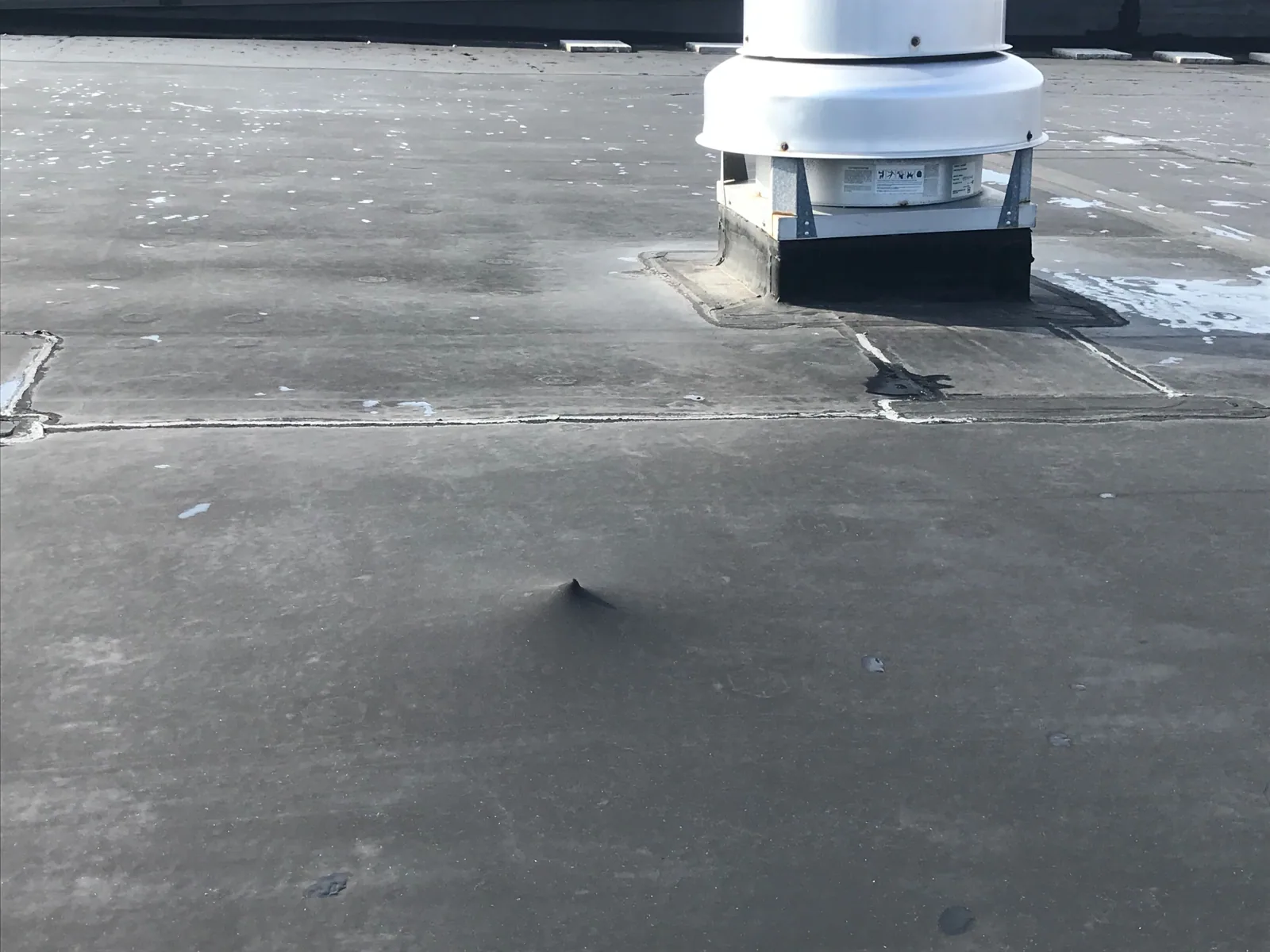
Heat travels sideways and downward through a roof as well as up, and it leaves different marks in different layers. A single-ply membrane may shrink, wrinkle or fuse near the fire, rigid foam insulation can melt into voids or shrink away from the deck, and an asphalt roof can soften and slide. Smoke settles into insulation joints and seams far from the burn, and the odor can return in summer heat if the contaminated board stays in place.
We probe the sheet in widening rings from the damage, cut small cores to look at the insulation and deck, and run a moisture scan to find water and thermal damage that the surface hides. The result is a map of three zones: material that must be removed, material that can be cleaned and kept, and material that is untouched.
What does firefighting water do to the roof that is left?
Hose streams and sprinklers put far more water into a building than a rainstorm does, and a good part of it ends in the insulation and the deck. Firefighters also cut ventilation openings in the roof to release heat and smoke, and each opening is a hole through the membrane that has to be closed properly, with the cut edges squared, the insulation replaced and the sheet restored, much as a membrane puncture is repaired but larger and with more to dry.
Wet insulation under an intact-looking sheet is the quiet problem. It holds water against the deck for weeks, adds weight, and corrodes a steel deck or rots a wood one. With about 52 inches of precipitation falling in New Bedford over roughly 124 days in a typical year, a roof left open after a fire sees rain soon, so we dry in first and scan again before any new layers go down. A coastal blow makes the same point harder: Hurricane Bob's gusts topped out at 89 mph on the bay in 1991, and a temporary cover that is not battened to the deck will not survive anything close.
How do older masonry and mill buildings change the work?
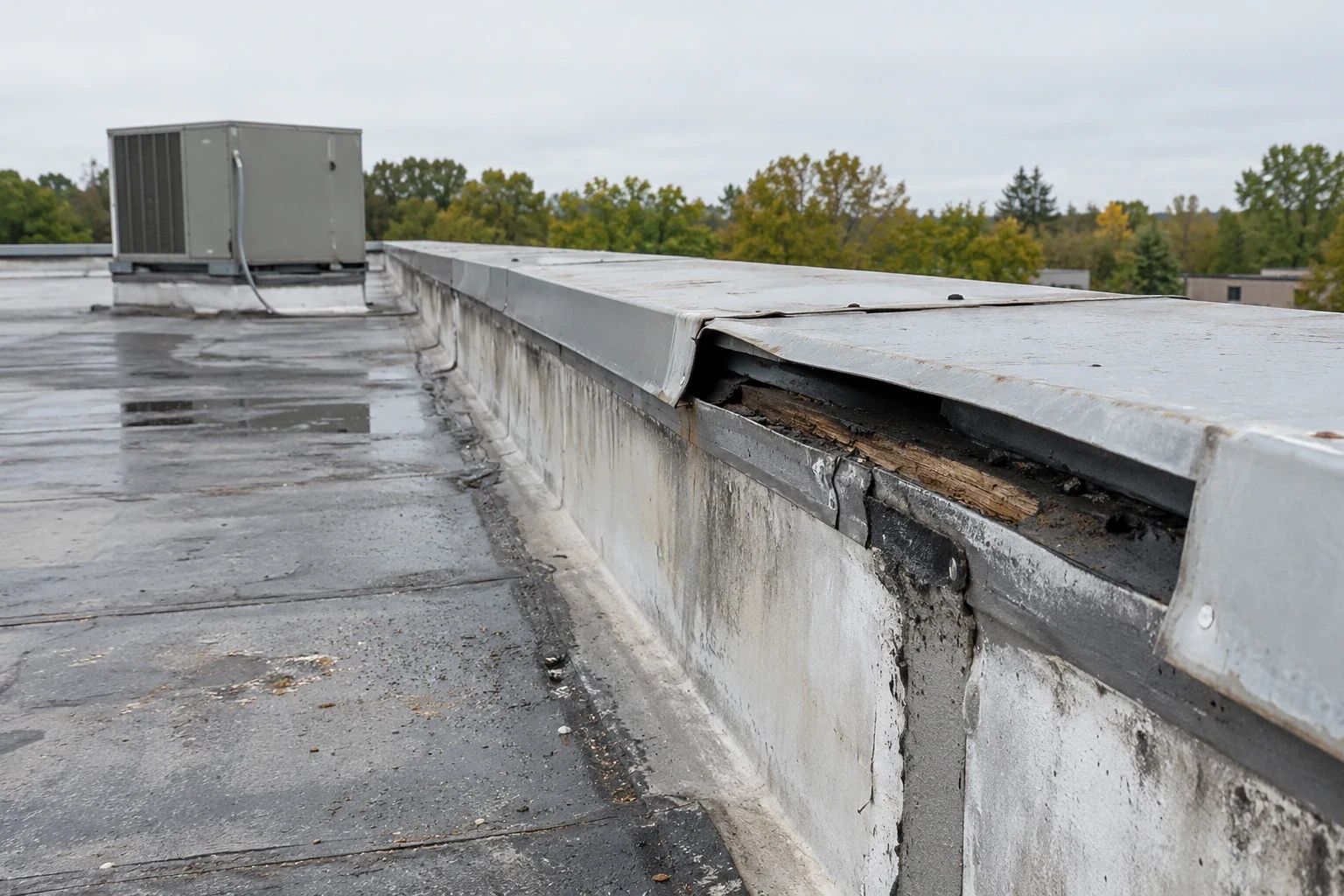
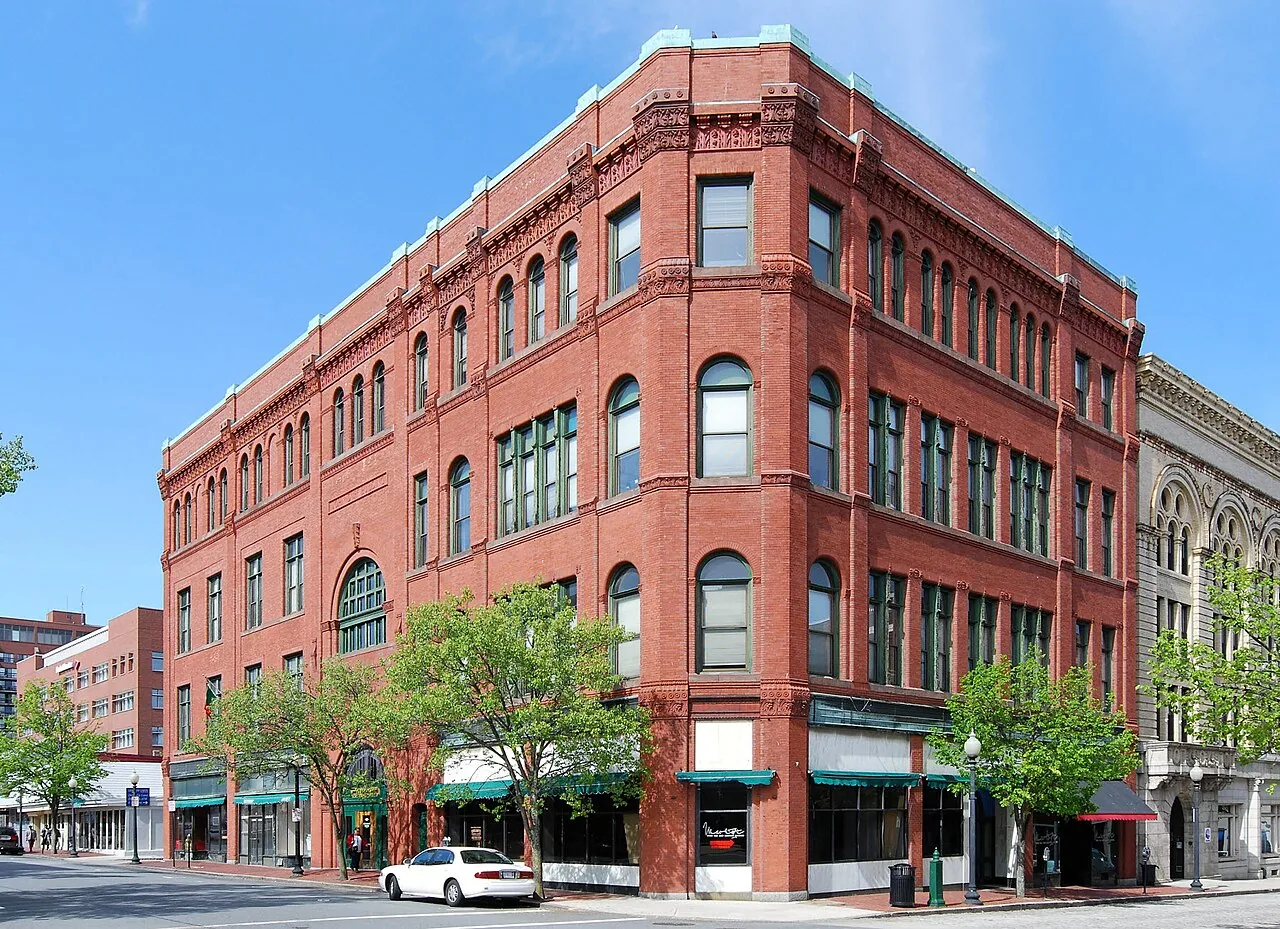
The 19th-century mills in New Bedford, among them the Wamsutta, Hathaway and Kilburn buildings, and the granite and red-brick mills in Fall River, share a roof condition that matters after a fire: the deck type and the parapet construction cannot be assumed and have to be established on site. Heat can crack masonry at a parapet or loosen the through-wall flashing that sheds water from the wall into the roof, so we examine those transitions with the same care as the field.
Fall River has turned some empty mill space into studios and performance venues, which means a fire in one part of a building may leave occupied space next to the damaged roof. We plan the work in sections, protect the adjoining space and coordinate the hours with the manager. A repair at a parapet often turns into a flashing failure repair because the heat has opened the termination as well as scorched the sheet.
What goes on the roof first to stop the next rain from doing damage?
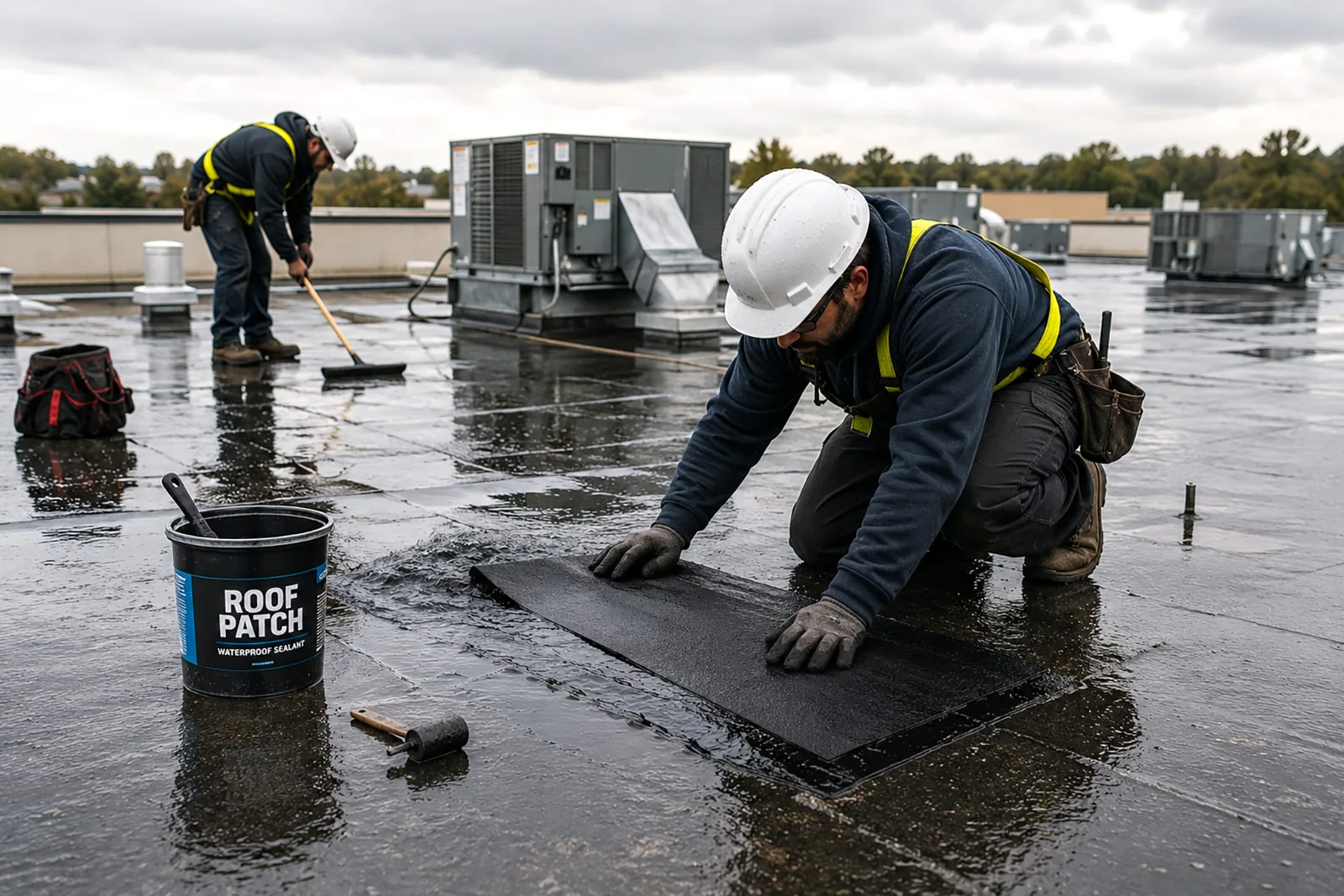
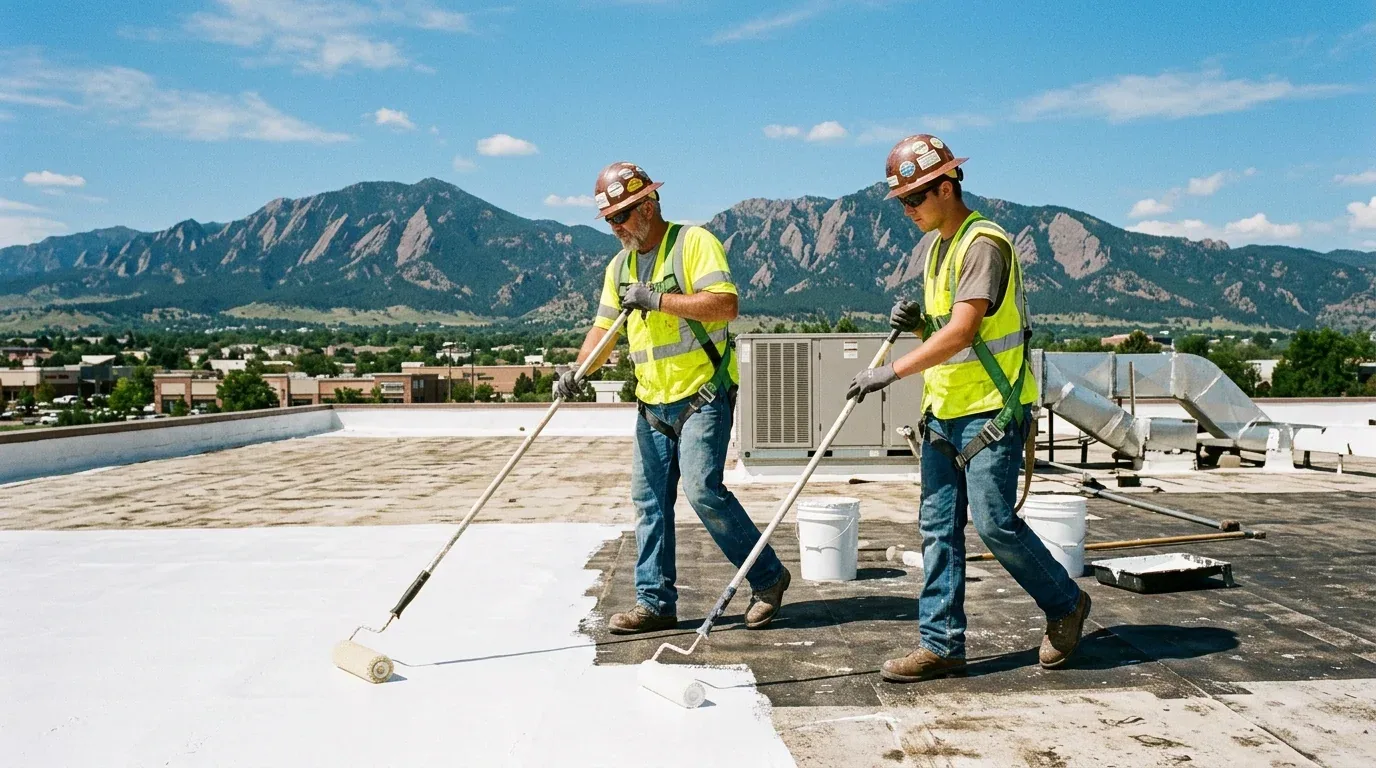
Dry-in is the first repair, and it should be rated for the weather coming. We tarp and batten openings, seal ventilation cuts with a temporary membrane, redirect drains that the fire or the water has blocked and cover any exposed insulation. Where the building must stay in use, emergency roof repair crews can be on site around the clock to keep the dry-in intact until the permanent scope is approved.
Hot work is the hazard to avoid at this stage. Torches and open flame on a roof that has just burned invite a second fire in insulation that is still smoldering, so we use cold-applied and mechanically fastened temporary methods, keep extinguishers and a fire watch on the roof, and check the area again after the crew leaves.
What records does the claim and the building department need?
An adjuster wants dated photographs of the roof before and during the work, a sketch that shows the burn, the soaked zone and the cut openings, and a scope that separates fire and smoke damage from earlier wear. We write the scope that way because a claim that mixes old membrane aging with fire damage is slow to settle, and the owner is the one waiting. The roof insurance claim assistance record also lists the temporary measures so their cost is documented.
The state building code (780 CMR, 10th Edition) follows the 2021 IBC and became effective October 11, 2024, so a repair that replaces much of the roof can raise assembly questions that we put to the building department before the order is placed. Owners in the New Bedford mill district or in Fall River get the same sequence: safety, dry-in, scope, records.
Commercial Roofing Questions
Is it safe to repair a roof right after the fire department leaves?
Not until the deck has been checked. The fire department's release covers the building, and a structural engineer's review covers the roof. Charred wood, sagging steel and spalled concrete can look sound from above. We mark soft areas, keep traffic to cleared routes and close off any section that is not yet cleared.
How can smoke damage stay hidden in a roof?
Smoke and soot settle into insulation joints, seams and the underside of the sheet, and the odor can reappear in warm weather if contaminated board stays. We cut cores and scan the roof to find affected insulation beyond the visible burn, then mark it for removal on the plan before the scope is written.
What does an infrared scan add after a fire?
It shows wet insulation and some thermal damage that the surface hides. Water from hoses and sprinklers collects in insulation under an intact sheet, so the scan outlines the wet zone before tear-off is priced. It is paired with cores that confirm what the camera suggests.
Why avoid torches on a roof that has just burned?
Insulation and decking can smolder after the visible fire is out, and an open flame can restart it. We use cold-applied adhesives, mechanical fastening and heat-welded methods under a fire watch, with a re-check after the crew leaves. The choice costs little and removes the most serious risk of the repair.
What if the fire damage covers only a small part of a large roof?
We repair the burned and soaked sections, tie the new work into sound membrane and photograph every layer. If the remaining sheet is old, we show the owner a side-by-side price for repairing only the damaged area and replacing the roof, so the decision is made with both numbers in view.