Roof Damage Repair
Membrane Puncture Repair in New Bedford, MA
Membrane puncture and foot-traffic damage repair on flat commercial roofs in New Bedford, MA, with moisture scans, welded patches and walk pads at worn routes.
Request a Roof Assessment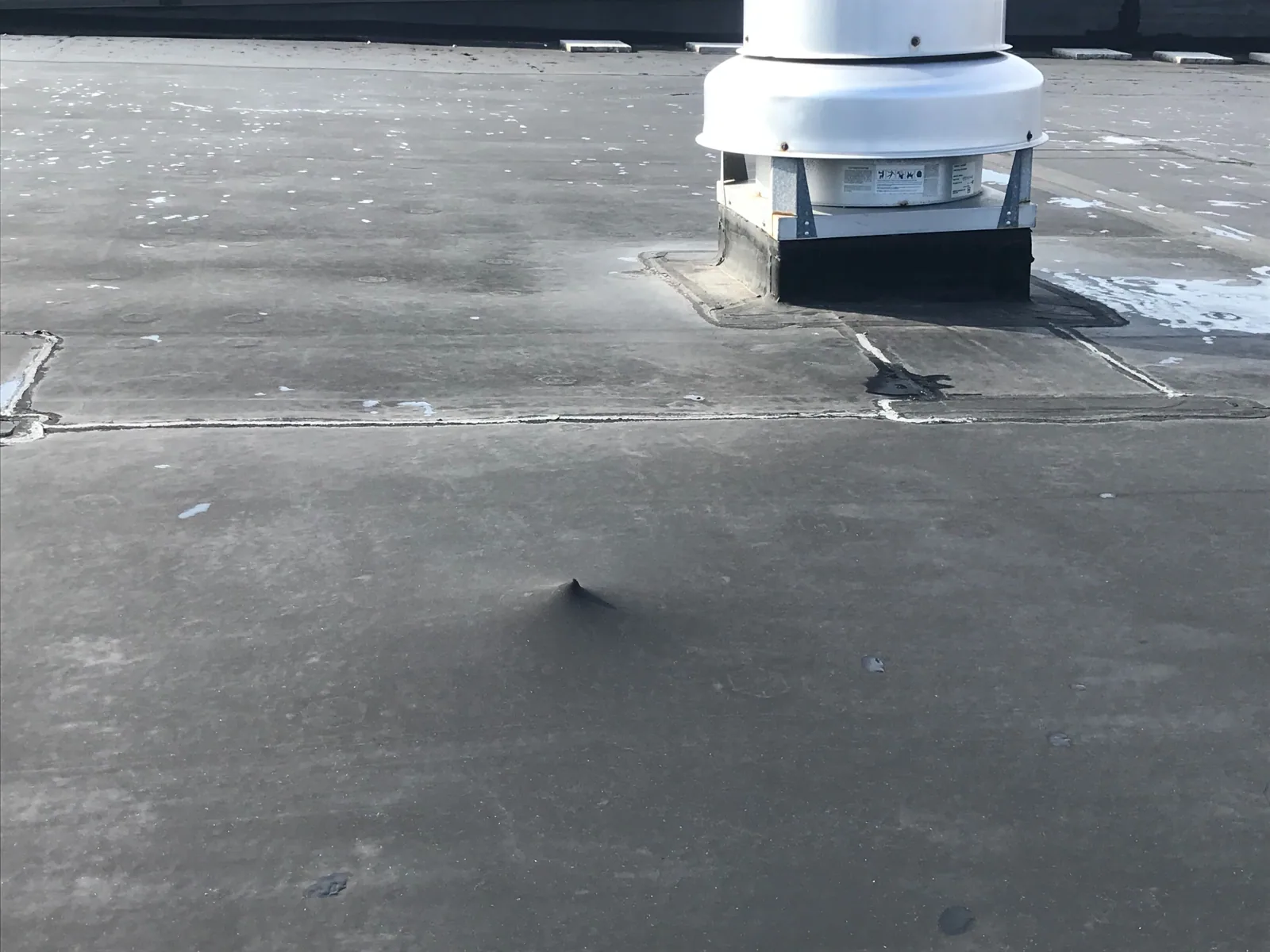
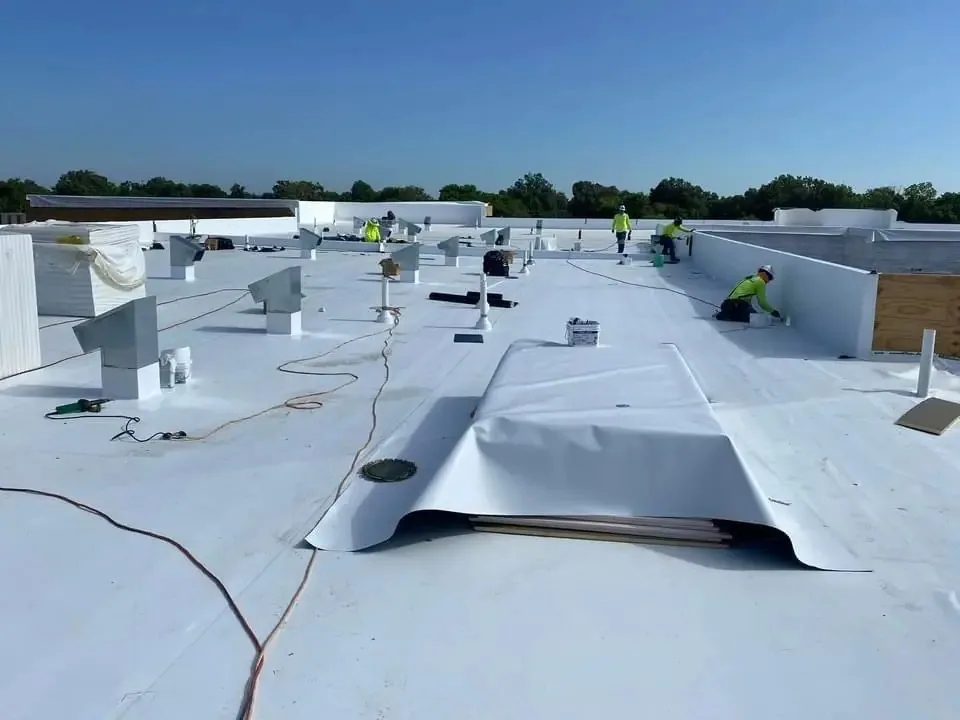
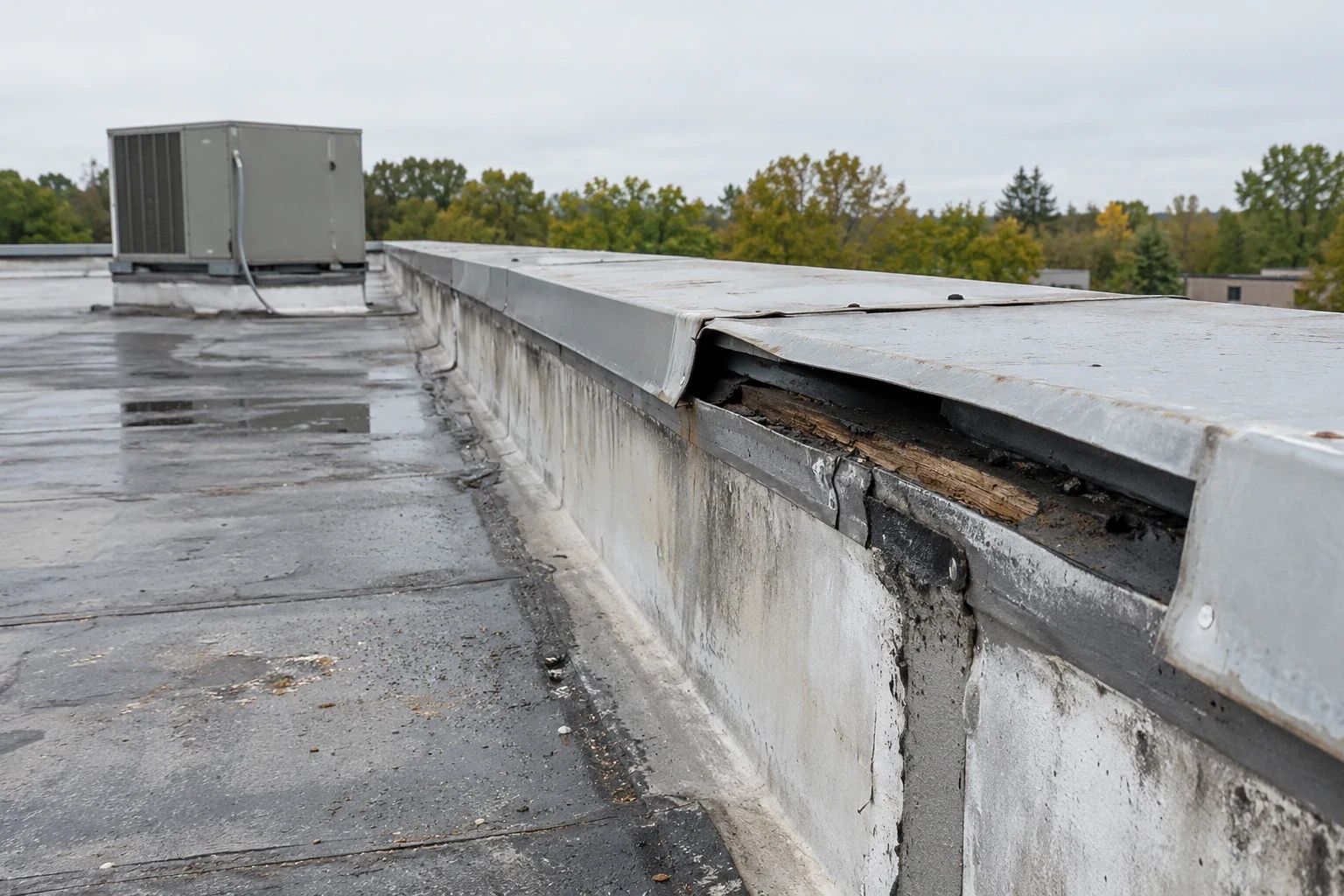
Did a technician's boot, a dropped tool or a wind-blown branch put that hole in the sheet, and is the insulation under it already wet? A facility director with a drip over a loading dock is usually standing under a puncture that is smaller than a coin and weeks old, and what the inspector sees from the roof edge is a bright, scuffed route from the hatch to the nearest rooftop unit with a pinhole or a crushed seam somewhere along it. Membrane puncture repair in New Bedford, MA begins with locating every opening, scanning the insulation around each one for moisture, and marking the findings on the roof plan so the patch, the cut-out and the walk-pad layout follow the evidence.
How do we tell a puncture from a seam or a flashing problem?
A puncture leaves a clean edge, a fiber tear or a crushed dimple, and the membrane around it usually stays bonded, whereas an open lap shows a straight line of lifted sheet (the pattern behind a seam failure) and a failed flashing shows a gap at a wall or a pipe, as in flashing failure. We probe the seams nearest the stain first, because most of the water that reaches a ceiling tile travels along the deck before it drops, and a hole thirty feet uphill is a common answer.
Once we have found a candidate hole, we press the membrane around it with a blunt tool to feel for softness, which tells us whether water has reached the board below. A moisture scan across the surrounding zone then outlines the wet area in a way no photograph can, and the outline is what sets the size of the repair. If the scan shows a dry zone, a small patch will do; if it shows a wet halo, the insulation under the hole has to be cut out and replaced first.
Where does foot traffic wear a membrane through?
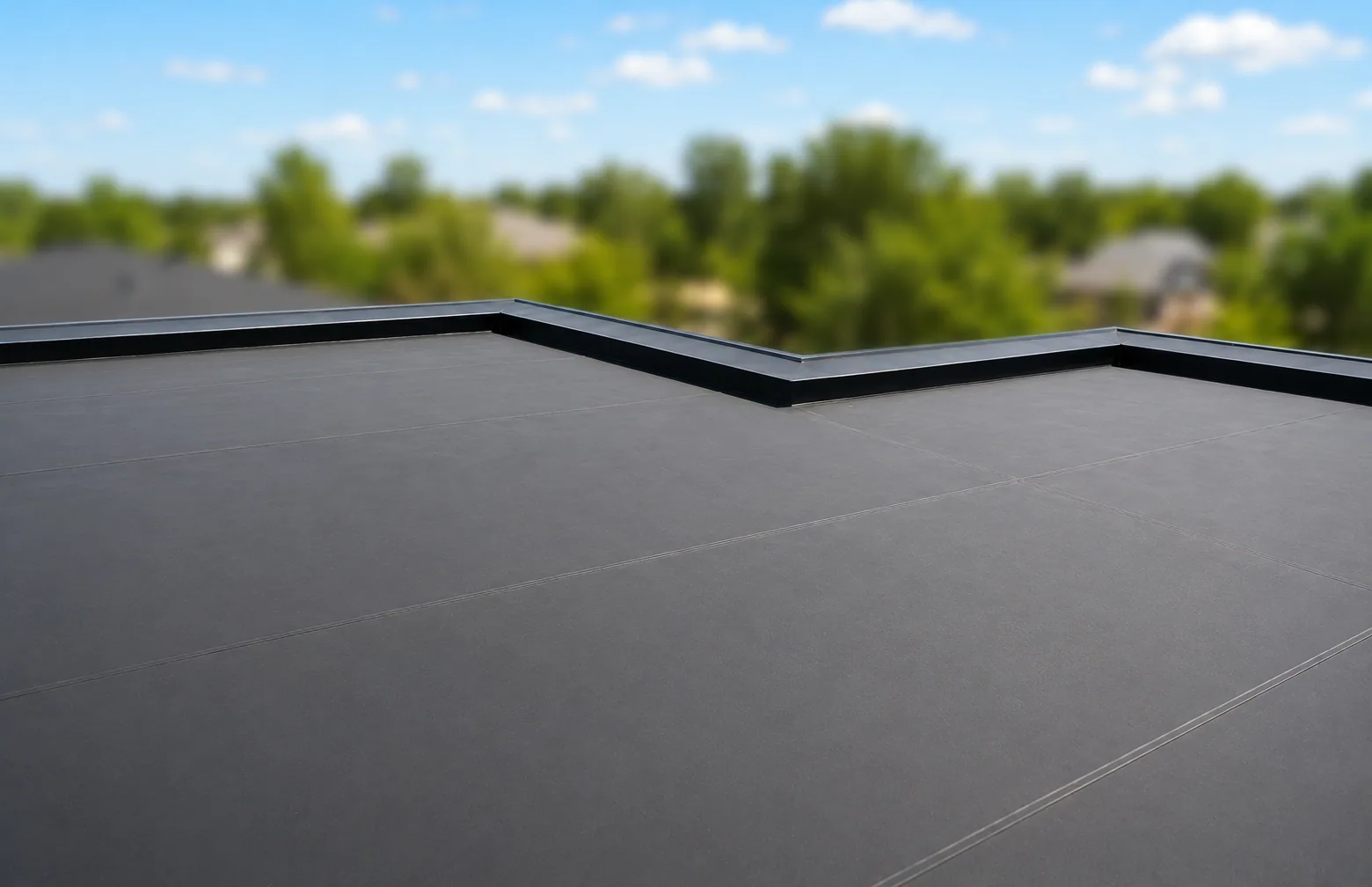
The wear follows the route that trades take, and the route is rarely random. It runs from the roof hatch or ladder to the nearest air handler, past the drain sump where debris collects, and along the line sets that serve each unit. Technicians carry filters, belts, coils and hand tools across that path several times a year, and a sheet that was fine when the equipment was set will show scuffing, shiny abrasion and eventually thin spots under repeated steps.
Winter adds its own traffic. Snow totals 32.5 inches in a typical New Bedford year, nearly all of it between December and March, and when crews shovel or chip ice off drains the corner of a shovel can cut through a thin or aged membrane. Storm debris is the third source: a hurricane-force gust, such as Hurricane Bob's 89 mph over the bay in 1991, will carry loose metal, branches and gravel across a roof and drop them on the sheet. We mark each scuffed route and each impact point so the owner can see which damage came from people and which came from weather.
How is the hole repaired on each kind of membrane?
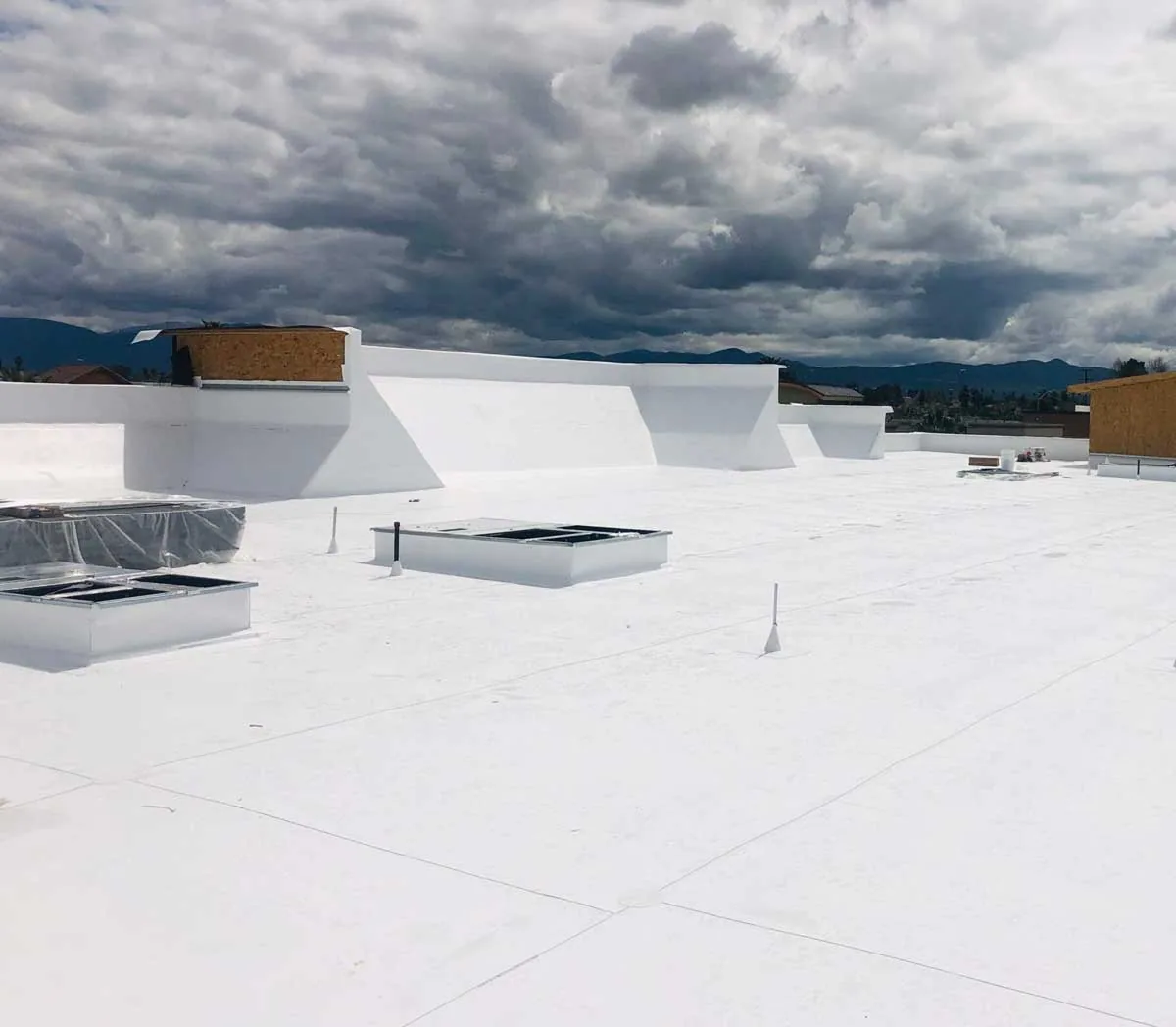
The patch has to match the sheet. On a TPO or PVC roof we clean the area, round the corners of a cover patch so they cannot peel and weld it with hot air until the edge shows a continuous bead. On EPDM we use a primed, cured splice or tape because the rubber does not weld, and we press the patch with a roller from the center outward to drive out air.
A modified bitumen roof is repaired with a layered patch of the same sheet, set in cold adhesive or heat-fused where the building allows, and a built-up roof needs the felts cut back and replaced ply by ply. In every case the patch extends well beyond the damage, the edges are probed after curing, and the location is added to the roof plan with a photograph so the next inspector can find it. A patch that cannot be probed and photographed is not finished.
When does a patch turn into a larger scope?
Three findings change the scope. The first is wet insulation, because a patch over saturated board holds water against the deck and the repair fails in a season. The second is a pattern of holes across a zone, which usually means the membrane has gone brittle or thin and the next trade will make another one. The third is a thin cover over soft insulation, where even a light step compresses the board and the sheet tears along the edge of the dent.
In those cases we price the cut-out of the wet area, a cover board under the new sheet and a moisture survey of the whole roof, so the owner can compare spot repair with zone replacement on the same page. A roof on one of the 19th-century mill buildings such as Wamsutta, Hathaway or Kilburn and a flat roof in the New Bedford Business Park get graded on their own membrane age, since a patch on a young sheet is a different decision from a patch on an old one.
How do we keep the next trade off the bare sheet?
We lay walk pads along the route from the access point to each unit and around every service panel, and we bond them so they cannot slide and bunch. Pads are a repair that costs little, and they move the wear onto a layer that is meant to be replaced. We also add a short note to the roof plan that names the approved route, so a mechanical contractor arriving on a cold morning knows where to step.
A short preventive maintenance visit after each heating season and each storm checks the pads, the drains and the marked patches, and it keeps a dated record of every opening that was closed. Owners with several buildings can use the same record to see which roofs take the most traffic and budget pads, cover board or a new sheet where the wear is heaviest.
Commercial Roofing Questions
Can a small puncture be patched without removing any insulation?
Only if the scan around it reads dry. A moisture scan across the zone shows whether water has reached the board, and a dry halo means a welded or adhered patch is enough. A wet halo means the board is cut out and replaced first, since a patch over saturated insulation fails within a season and the leak returns.
Why does a leak appear far from the hole that caused it?
Water runs along the deck and through insulation joints before it finds a way down, so the stain can sit thirty feet from the opening. We start at the stain, follow the slope uphill, probe seams and flashing, and then scan the membrane. The hole is usually found along the route the water took, not above the mark.
Do walk pads really protect a roof?
They move the wear from the membrane to a replaceable layer. Pads go along the route from the access point to each unit and around service panels, bonded so they stay put. The record names the route, which keeps the next contractor from cutting a new path across a seam or a flashing corner.
What does snow shoveling do to an older membrane?
A shovel corner or an ice chipper can cut through a sheet that has hardened with age, particularly near drains where crews clear ice. Snow removal on a flat roof should leave a thin layer over the membrane and avoid metal blades. We mark drain areas as high-risk and recommend a rubber-edged tool or a hand-cleared sump.
How is a repair recorded so a later inspector can find it?
Each patch gets a number on the roof plan, a dated photograph, the material used and the probe result after curing. If the moisture scan found a wet area, the outline goes on the plan too. The next inspection starts from that record, so an old patch is checked rather than rediscovered.
Ready to review the roof scope?
Request a Roof AssessmentKeep Reading