Roofing Manufacturers
Soprema Roofing Systems in New Bedford, MA
Soprema modified bitumen and liquid-applied roofing in New Bedford, MA: laps, stripping plies, parapet flashing and hot-work planning for older masonry.
Request a Roof Assessment
Where does a leak start on a modified bitumen roof that has no visible hole? Most often at a lap edge or a stripping ply along a parapet, and that is the first place an inspector would look on a Soprema roof. Soprema makes modified bitumen membranes in torch-applied, self-adhered and cold-applied forms, a liquid-applied flashing resin line that includes Alsan, and insulation to go with them. Our work on these systems in New Bedford, MA keeps the order fixed: finding, roof plan, facility director, and only then a number.
How is a modified bitumen roof put together, and where does it open?
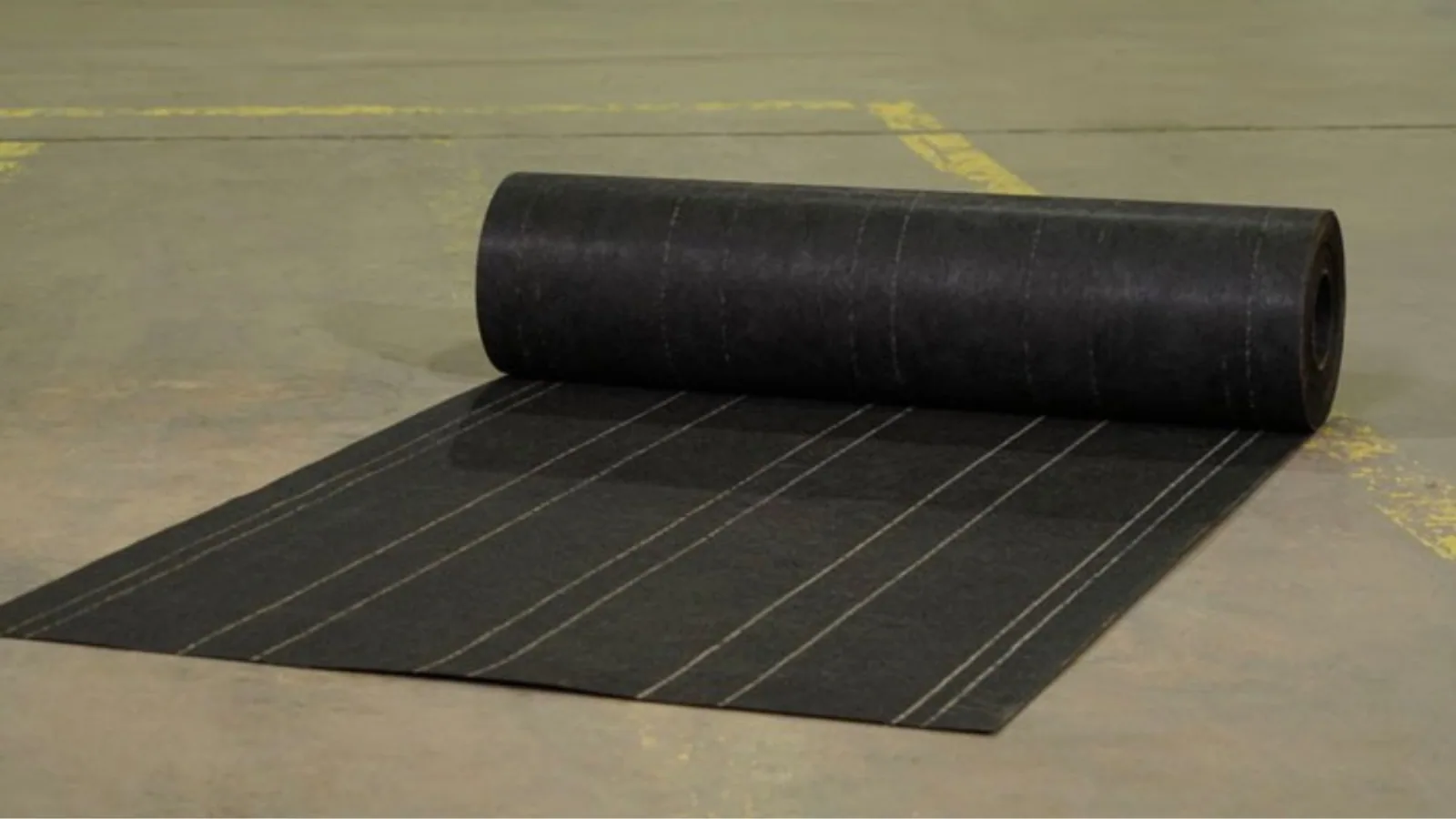
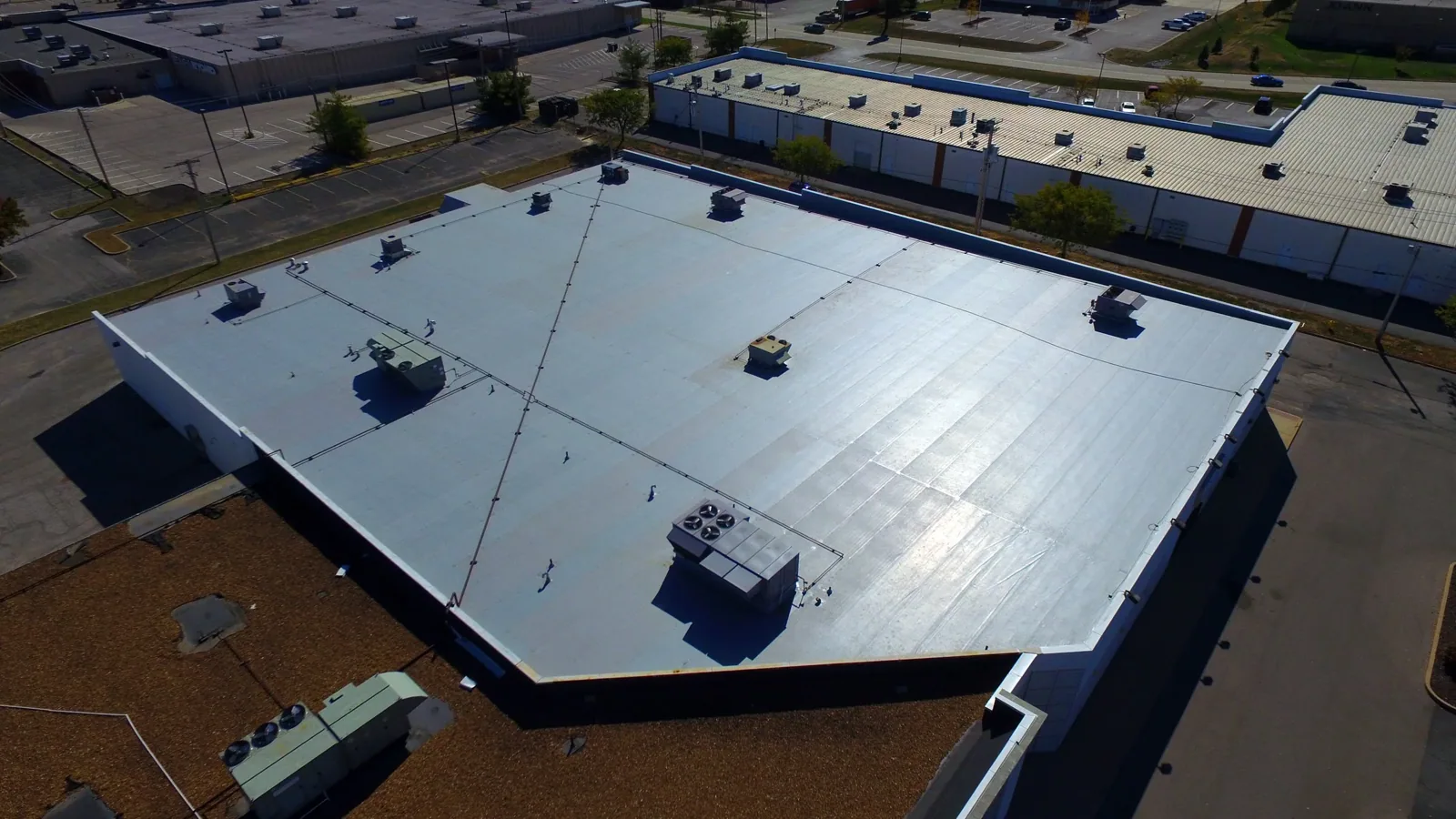
A typical assembly has a base sheet, one or more reinforced plies and a cap sheet, often with granules for sun protection. Each sheet overlaps the next, and the laps are bonded by heat, adhesive or a self-adhesive backing. Flashings run up walls and curbs, and stripping plies cover the joint between the field membrane and the metal edge. Those joints, laps and terminations are where the roof gets old first.
We probe each lap, check the cap sheet for lost granules and blisters, and look at stripping plies for cracks or lifting along edge metal and gravel stops. A cap sheet that has alligatored or split along the field usually points to movement in the layers beneath. A modified bitumen sheet ages at its laps and stripping plies, and a built-up roof with its layered felts ages at blisters and splits.
Insulation sits under the plies, and its condition decides how much of the roof can be saved. A moisture scan before any repair maps the wet zone, and a few core cuts confirm the layers, since older roofs may hold several generations of material. If the insulation is dry and the deck sound, a recover or a cap-sheet replacement can extend service. If water has moved through the layers, the wet portion comes out, and the repair is sized to that boundary.
Why do old brick mills need through-wall flashing checked every time?
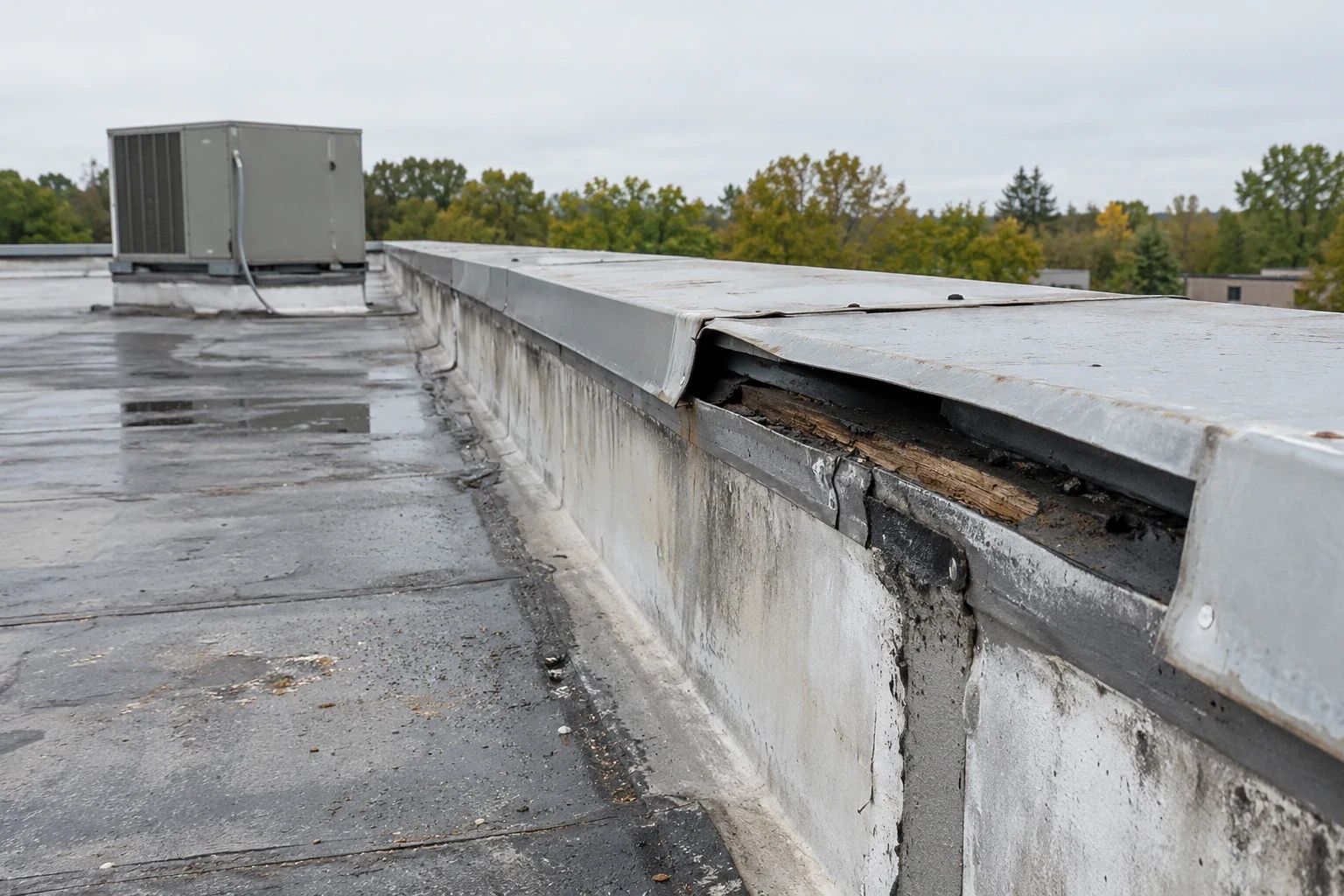
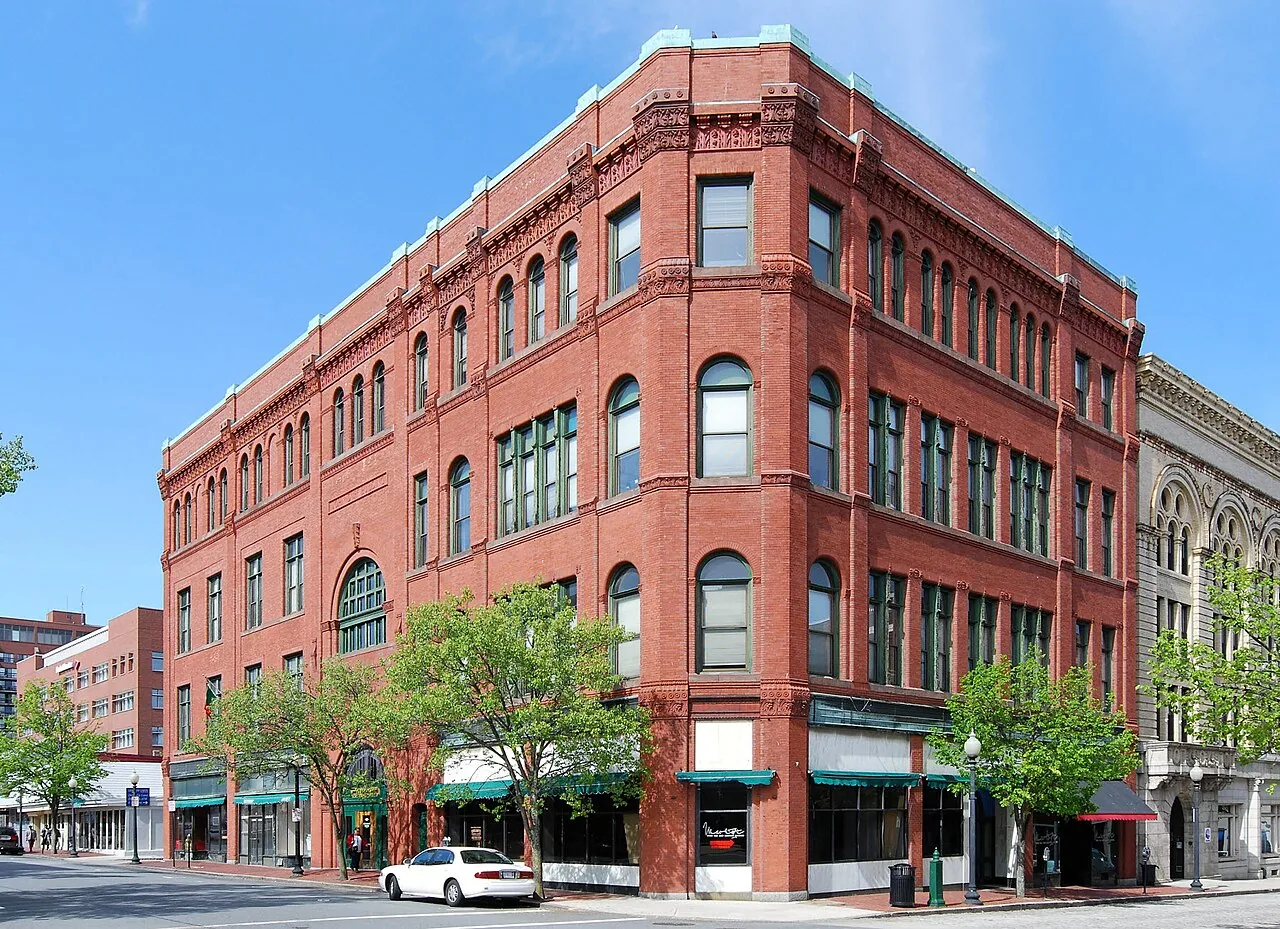
The 19th-century mill buildings of New Bedford include the Wamsutta, Hathaway and Kilburn mills, and across in Fall River the granite and red-brick mills include Metacomet Mill, dated 1847, and Union Mills, dated 1859. A roof behind a masonry parapet depends on through-wall flashing and wall-to-roof transitions that carry a full season of weather on exposed brick. When mortar erodes or a flashing lifts, water follows the wall into the building rather than the drain.
We probe the termination, push on the counterflashing, sound the parapet cap for loose masonry and look inside for staining that tracks the wall. Where the flashing is the failing part, a flashing failure repair rebuilds it with compatible materials and a proper termination instead of sealing over a joint that will move again. The New Bedford mill district is the setting where this check matters most.
When does a liquid-applied flashing resin make more sense than a membrane patch?
A liquid-applied resin cures into a continuous layer, which is useful at awkward shapes: clusters of pipes, irregular curbs, drains and transitions where a cut sheet would need many seams. It is reinforced with fabric at stress points and bonds to the prepared substrate. It works only on a clean, dry, sound surface, and it must be applied within the temperature and moisture limits of the product.
We use resin-type flashings for complex details, and sheet materials for regular ones. In both cases the substrate decides whether the repair will last, so we scan for moisture and test adhesion before we choose. A wet substrate under a resin is a trapped problem, not a repair, and the scope version states what has to be dried or replaced first.
Cost drivers differ between the two approaches. Resin flashing is labor-heavy at complex details but uses little material and avoids cutting many small sheet pieces. Sheet flashing is faster on regular curbs and long runs. We price each location separately where it helps, so the owner sees where the money goes instead of one blended figure.
What does hot work require on an older occupied building?
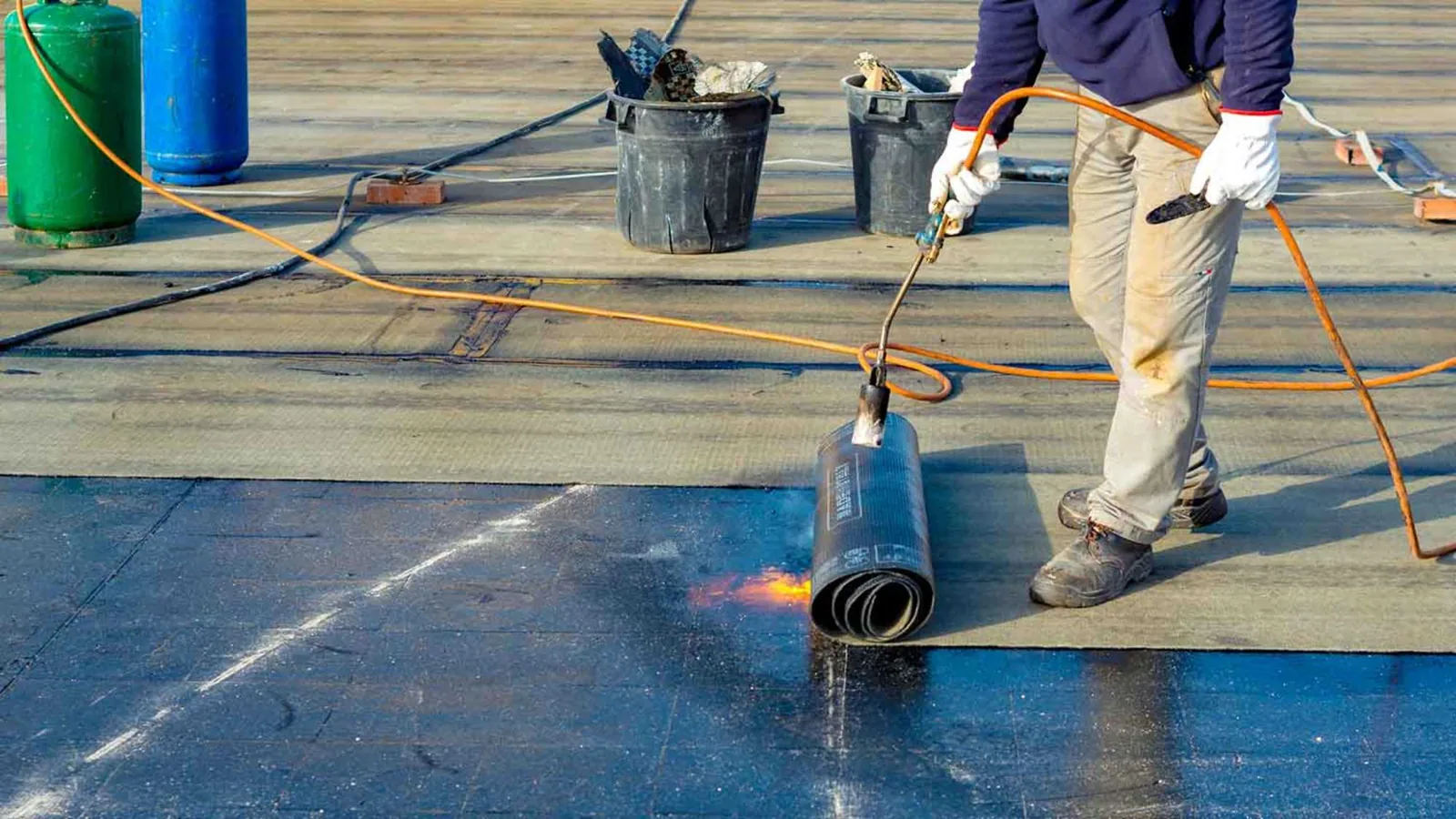
Torch-applied membranes use open flame, and older buildings may have combustible decking, wood blocking or insulation near the work area. A responsible plan includes a fire watch, extinguishers on the roof, a clear review of what is under the work area and a decision about whether a cold-applied or self-adhered alternative is safer for that building. Some insurers and owners prohibit torches altogether, and we adjust the method accordingly.
On an occupied building we also protect air intakes from fumes, schedule work around tenants and keep the staging area controlled. For a mill with mixed tenants, those details are worked out at the first walk with the facility director, and the scope version records which method is used on which roof section and why.
Weather windows matter just as much. Cold-applied adhesives and self-adhered sheets need the surface within a temperature range, and rain or frost during application can ruin a section. The crew watches the forecast each morning, sizes the day's work to what can be closed before conditions change and covers any open edge at the end of the shift.
How do blizzards and hurricanes show up in the laps?
One blizzard in January 2015 left Fall River with 24.1 inches, against a New Bedford norm of 32.5 inches over a whole winter, mostly between December and March. Snow, ice and meltwater test laps and flashings, and ice dams along parapets push water under edges. Edge details here have a long record of being tested: Carol in 1954 came with a record 20-foot storm tide and 80 to 110 mph winds, and Bob in 1991 added 89 mph gusts over Buzzards Bay.
After a major storm we walk the perimeter, check gravel stops and edge metal, and note any lifted laps. A mixed portfolio may also hold a Johns Manville or Sika Sarnafil roof, and the walk after a storm is the same.
Drainage is the other part of the winter picture. Tapered crickets behind curbs, clear drain sumps and open scuppers carry meltwater away, and a roof that holds water through a thaw-freeze cycle loads its laps with ice. We clear and inspect those parts before the season, and we mark any low spot for correction in the next scope. That attention usually costs far less than a repair after a winter of standing water.
Commercial Roofing Questions
Is a torch always required for modified bitumen?
No. Self-adhered and cold-applied versions exist and are often chosen where open flame is a concern. The building's construction, insurer rules and tenant sensitivity guide the method.
How do I know if a cap sheet has reached the end of its life?
Widespread granule loss, alligator cracking, open laps and blisters that have split are the signs. A few scattered defects can be repaired, but a cap sheet failing across most of the field points to recover or replacement.
Can through-wall flashing be fixed without taking down the parapet?
Often it can, when the masonry is sound. We rebuild the flashing and termination from the roof side. If the masonry itself is failing, the parapet needs a mason before the roofing work.
What makes a liquid-applied resin fail?
A wet or dirty substrate, a cure interrupted by rain or cold, or movement the resin was not reinforced for. Preparation and weather windows are the deciding factors.
Who covers the roof if a storm opens a lap overnight?
Emergency crews respond all day and night, holidays included. They cover the opening, record its location and cause, and schedule the permanent repair for suitable weather.
Ready to review the roof scope?
Request a Roof AssessmentKeep Reading