Roofing Manufacturers
Sika Sarnafil Roofing Systems in New Bedford, MA
Sika Sarnafil thermoplastic roofing in New Bedford, MA: heat-welded seams, grease and chemical exposure, waterfront wind and snow load, checked and repaired.
Request a Roof Assessment
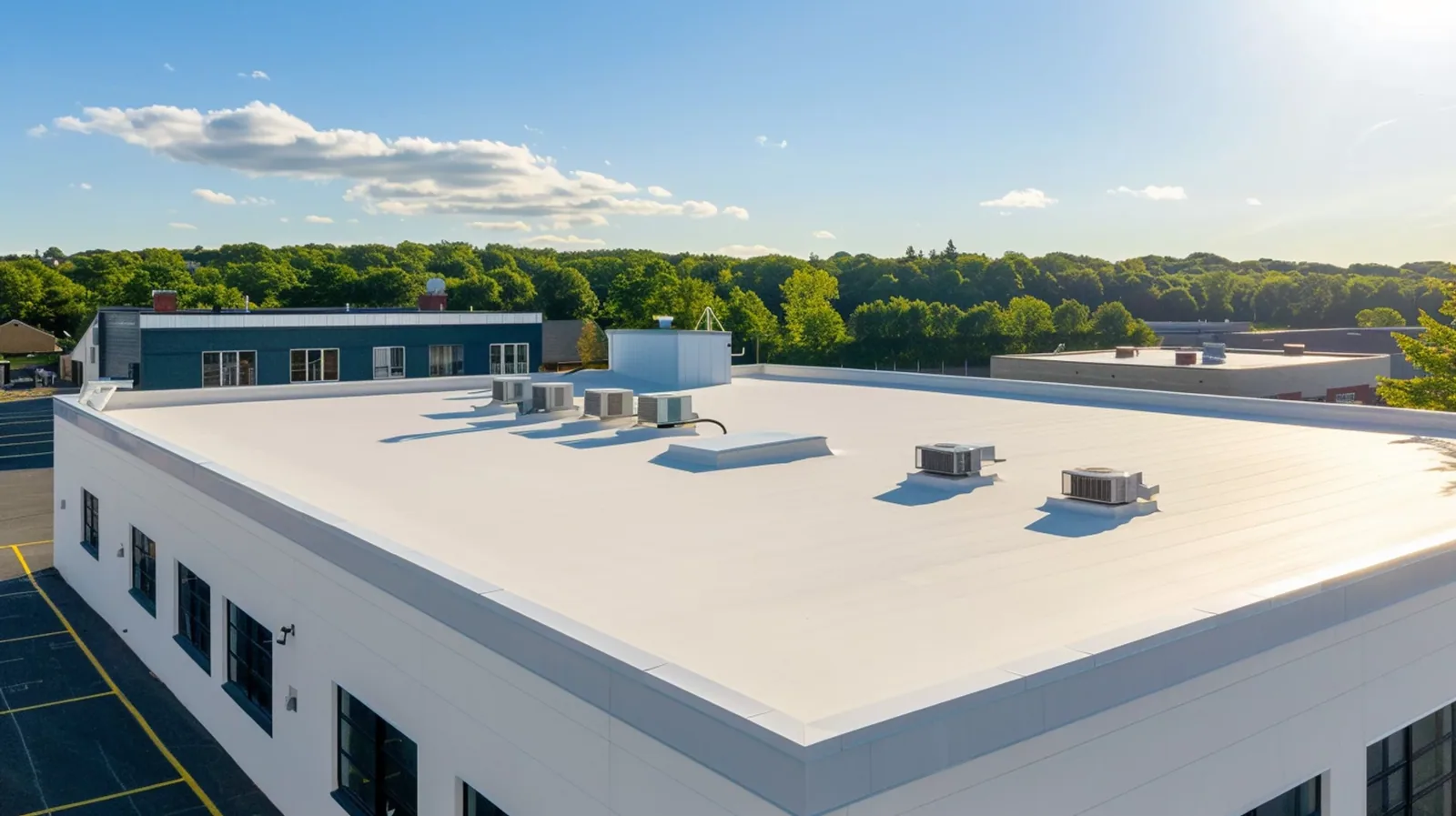
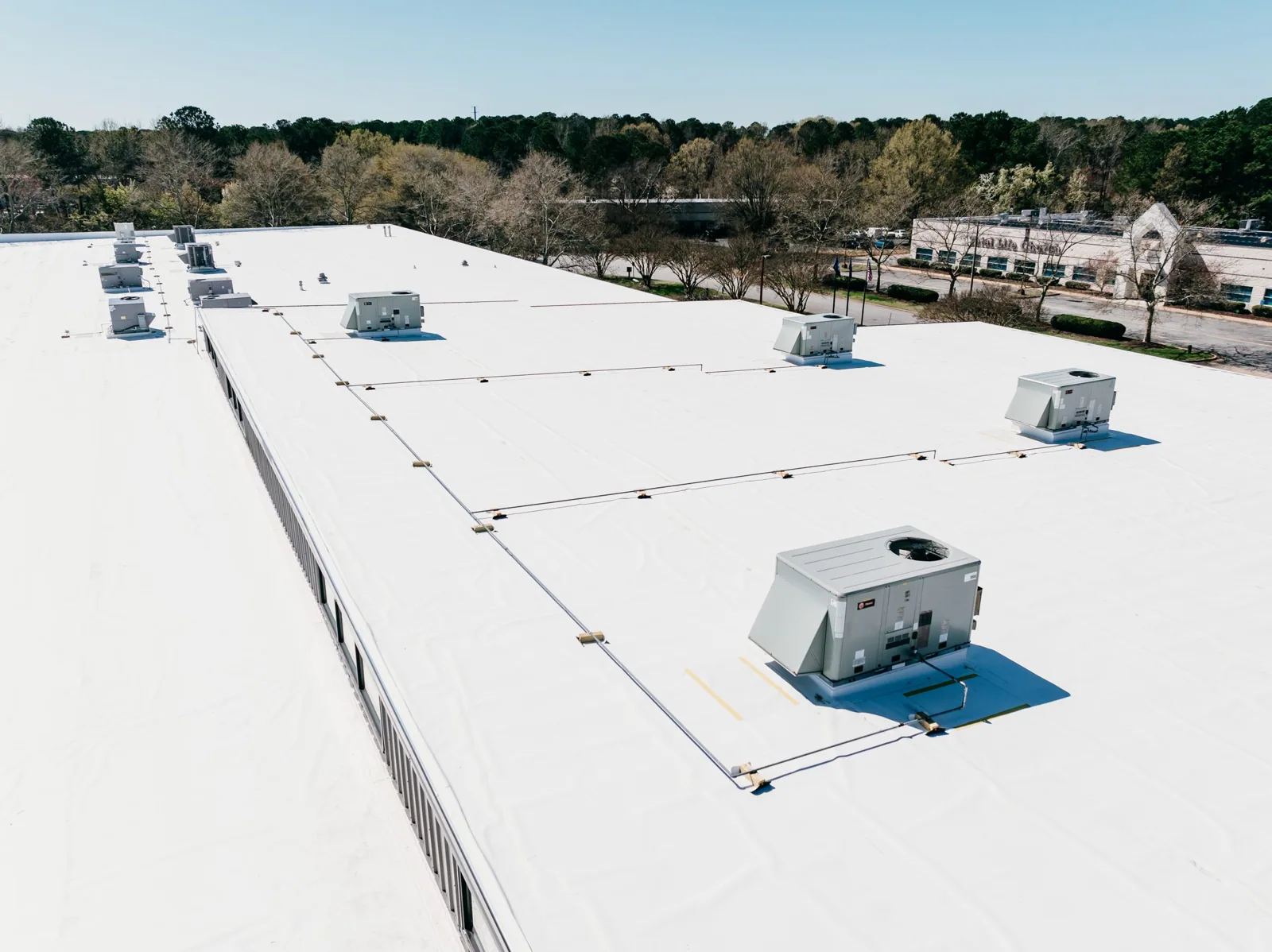
Is the weld still sound, and what has been landing on the sheet around the exhaust fan? Those are the two questions a facility director should ask when a ceiling tile stains under a thermoplastic roof, and the first thing an inspector would find is usually a probe sliding into a seam that has lost part of its bond or a patch of membrane softened by whatever the building vents. Sika Sarnafil makes heat-welded thermoplastic membranes, principally PVC, along with flashings and accessories. Our work on these membranes in New Bedford, MA starts with the roof plan, and no cost is discussed until each finding has a number, a photograph and a location.
What does a healthy heat-welded seam look like under a probe?
A good weld is flat, consistent in width and fused across its full overlap, and a probe drawn along its edge meets resistance everywhere. A weak weld takes the probe tip, shows a wavy edge or has a gap where two passes met. Because a welded sheet can be rewelded, a failed section is often a small repair, which is a practical advantage of thermoplastics, provided the surface is clean and the membrane has not aged past the point where it will fuse.
Older thermoplastic sheets can become harder to weld as plasticizers migrate out, so we test-weld a small area before committing to a repair, and we use patches and flashing pieces from compatible material. How PVC roofing ages is well understood, and KEE roofing is the higher-resistance variation used where grease and oil are present.
Seams are not the only places to probe. Flashing around curbs and pipes is welded to the field sheet, and the corners are where the sheet must be cut and formed to fit an inside or outside angle. A cold weld at a corner patch shows as a thin, unfused line, and we mark each one. Details at drains matter as well: a clamping ring that has loosened or a membrane that has pulled out of the sump will let water under the sheet at the lowest point on the roof.
How do grease, oils and chemicals change the choice of membrane?
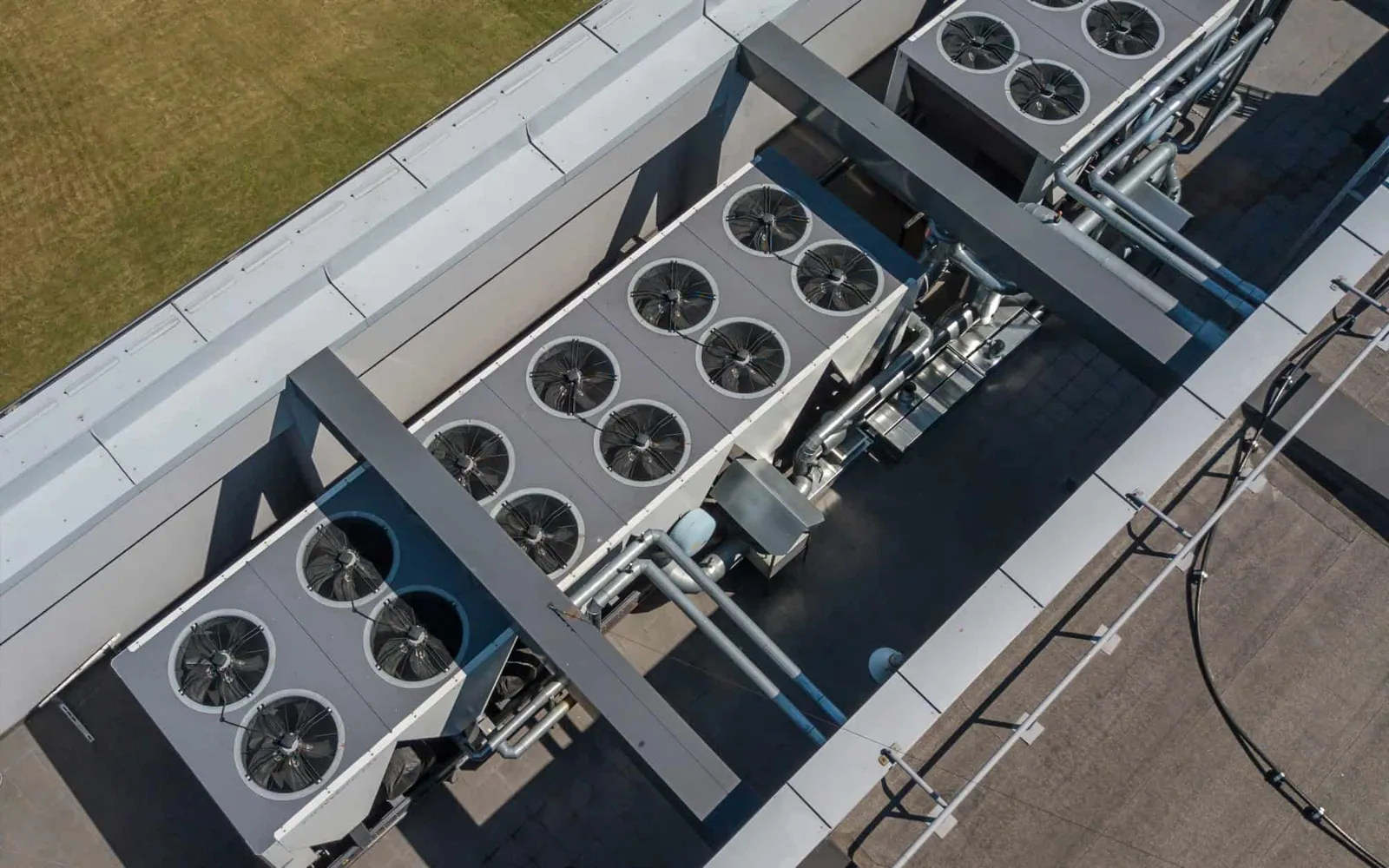
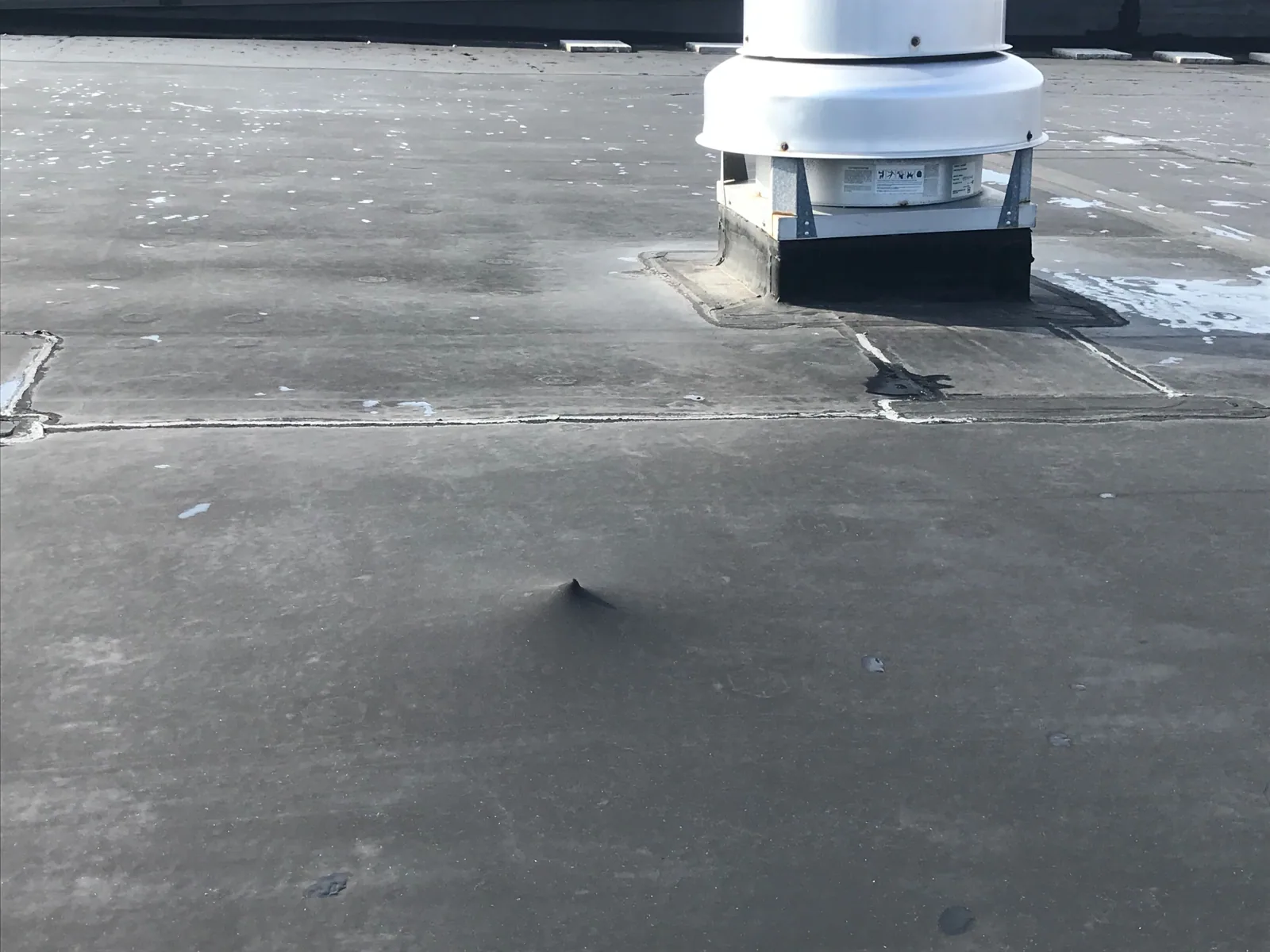
Thermoplastic sheets are often chosen where a roof receives exhaust containing fats, oils or chemical vapors, because some formulations resist those exposures better than other single-ply materials. A building that vents cooking, refrigeration or processing air should be checked for staining, softening and blistering around each discharge, and for the condition of the walkway pads and containment around the units.
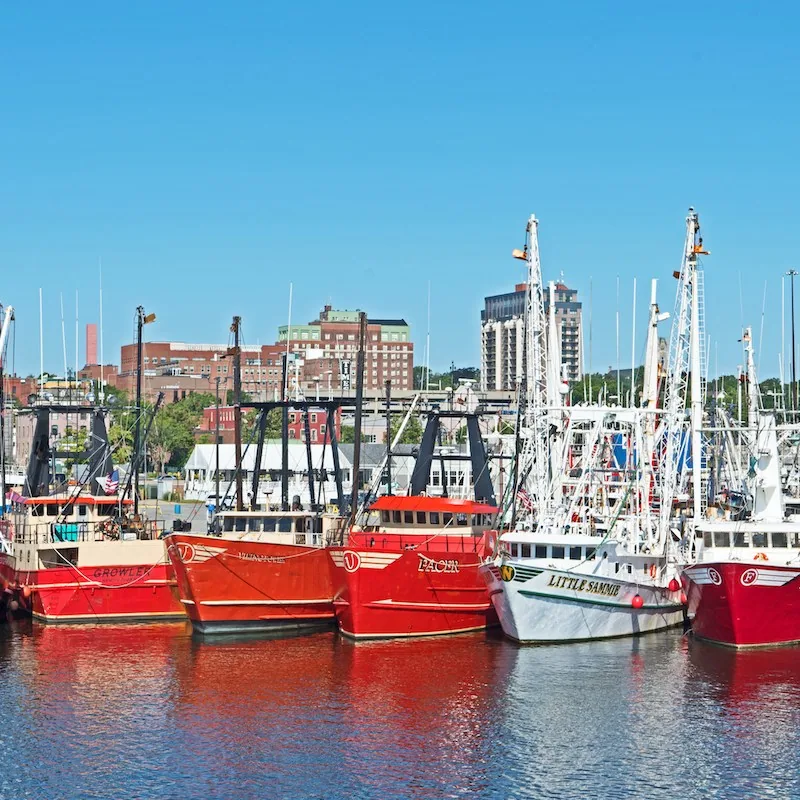
From 1999 to 2019 the harbor led the country in the value of its landings, $451 million in 2019 alone, and the buildings of the New Bedford waterfront that handle that catch stand behind the harbor barrier. Where a building near the harbor vents food-related exhaust, the roof needs a membrane and details suited to it. We check each discharge point, and our rooftop equipment curb and support work rebuilds curbs so the flashing rises above the membrane and drains away from the unit.
Walkway pads, grease trays and a clear route for technicians also make a difference. If service staff step directly on the membrane around an exhaust fan, the sheet scuffs and thins, and in time a leak starts at the most frequently walked spot. We recommend pads along regular routes and containment under discharge points, and we document where they were added.
How does harbor wind test a membrane's edge?
A harbor-side membrane edge has to answer to Hurricane Bob: 89 mph gusts over Buzzards Bay in 1991 and a surge of 5.8 feet at New Bedford. Hurricane Carol in 1954 set the 20-foot tide record at New Bedford, with winds of 80 to 110 mph over eastern Massachusetts, and that figure still guides how a perimeter is fastened. A roughly two-mile hurricane barrier protects the inner harbor, but it does nothing for a loose edge or a lifted termination, so those details are checked on foot at every inspection.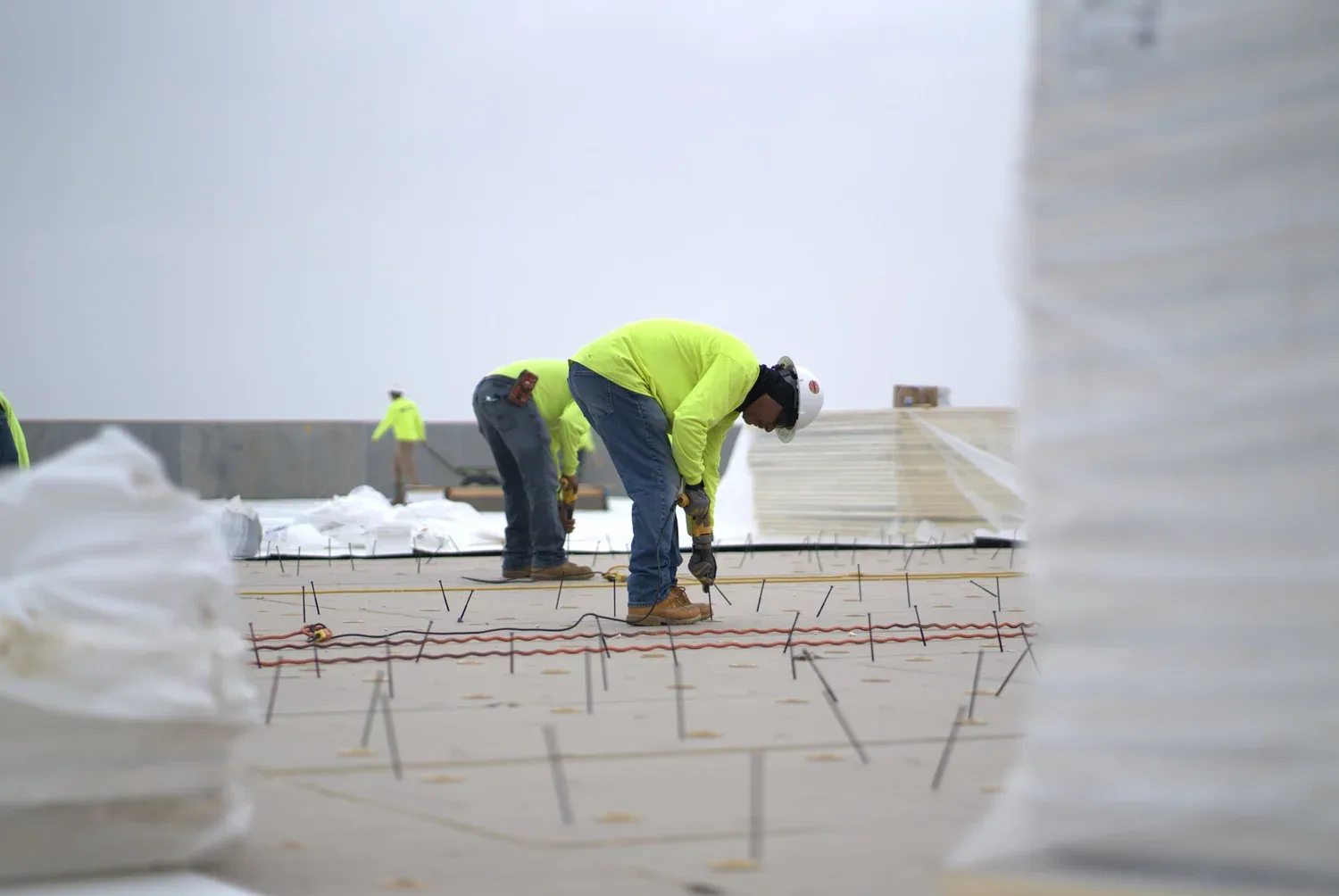
On a thermoplastic roof, we look at the perimeter attachment, the welded flashing at the edge and the metal that clamps it. A fastener that has backed out leaves the membrane free to flutter, and flutter wears a ring into the sheet at the fastener plate. We recommend adding fasteners or reinforcement at corners and edges where the evidence calls for it, and we log the work with photographs.
The code frame matters when edges are rebuilt. A permitted reroof here answers to the 10th Edition of 780 CMR, which follows the 2021 IBC and has applied since October 11, 2024. We confirm wind-uplift and insulation requirements with the building department before pricing, so the scope version reflects the edition that applies.
What happens when a thermoplastic sheet is punctured?
Punctures come from dropped tools, rooftop traffic, debris carried by storms and the sharp edge of an unprotected conduit. A thermoplastic sheet is relatively thin compared with a built-up roof, so a puncture can let water reach the insulation quickly. A membrane puncture repair starts with finding the hole, which may be hidden under ballast or debris, and then with checking the insulation beneath for moisture.
If the board is dry, a welded patch closes the opening. If it is wet, the wet section is cut out, replaced and sealed. The record shows the location, the cause if it can be found and the cure. Walkway pads along service routes cut the chance of a repeat, and a roof with frequent technician traffic benefits from them in any case.
How should the owner plan for snow load and the next decision?
Roughly 32.5 inches of snow in a normal winter arrives between December and March, and Fall River's 24.1 inches in January 2015 shows how much a single storm can add. Snow sits on low spots, and meltwater has to find a drain. We inspect drain sumps, tapered crickets and scuppers before winter and flag any area that holds water. Waterfront buildings stay in daily use, so a roof near the end of its life is best planned a year ahead of the failure.For owners with several buildings, the comparison with other families is useful. Prefabricated PVC from Duro-Last and modified bitumen from Soprema are different families, and the same inspection method, with a probe, a moisture scan and a core cut, applies to each.
Commercial Roofing Questions
How can I tell if grease is damaging my thermoplastic roof?
Look near each exhaust discharge for staining, softening, blistering and wrinkled membrane. A roof that stays tacky or discolored there, or a flashing that has lifted at the curb, is showing it. We mark each affected area and recommend containment and repair.
Can an older PVC seam still be rewelded?
Often yes, but not always. As the sheet ages it can lose plasticizer and become harder to fuse. We test-weld a small area first, then proceed or choose a different repair method.
What should a roof near the harbor have at its edges?
Tight edge metal, secure terminations and enough fasteners at corners and perimeters. We check each by hand, because wind from the bay finds the weakest edge first.
Does one puncture mean the insulation is wet?
Not necessarily. A moisture scan and a small core cut near the hole show whether water reached the board. If it did, the wet section is replaced, and if not, a welded patch is enough.
How quickly can an emergency opening be covered?
Emergency crews are available all day and night, including holidays. The first visit covers the opening and records its location, and permanent repair follows in suitable weather.
Ready to review the roof scope?
Request a Roof AssessmentKeep Reading